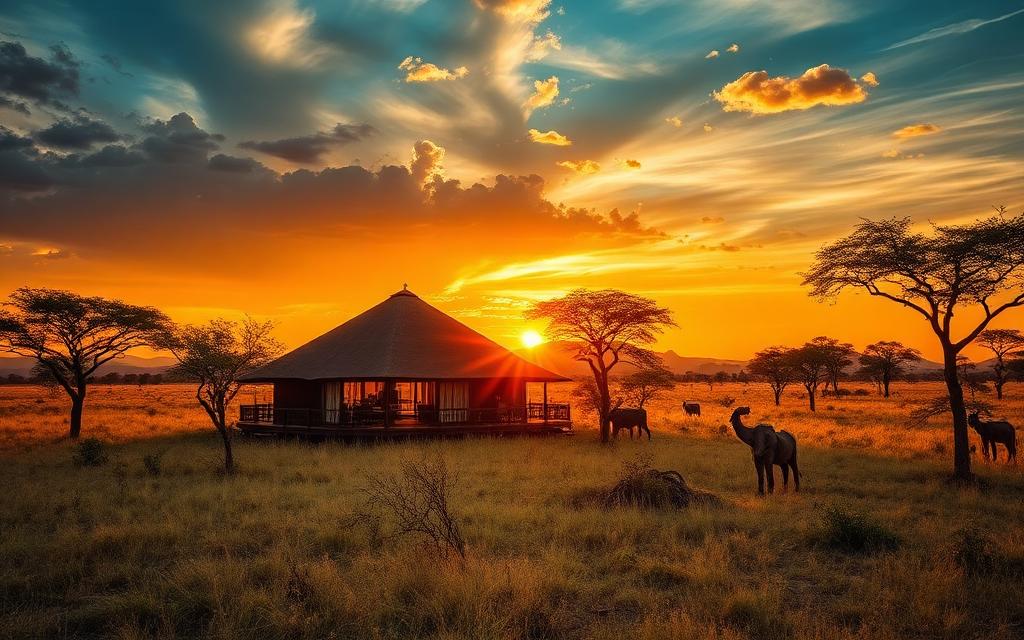
The Okavango Delta with Teens: Water Safaris for Families

Marlene Azeez
Director of Travel
The best Okavango Delta safari for a family is built around teenagers: children of 13 and over can join mokoro and walking excursions at several of the Delta's flagship camps, and the annual flood usually peaks from June to August, right across the American summer break. Plan eight to ten nights in three parts: a water-based Delta camp, a land camp on or near Chief's Island in the Moremi Game Reserve, and two or three nights on the Chobe River for elephants, with a private vehicle and a family suite secured before anything else.
This guide is the family companion to our Botswana Okavango journey, which sets out the full eight-night Delta, Moremi and Chobe route. Our Botswana safari guide compares the regions and our Botswana seasonal guide goes month by month. Here the questions belong to parents: what teenagers can actually do on the water, which camp rules shape the trip by age, how to fit the flood around school calendars, and how to arrange suites and vehicles so the whole family travels well.
Why the Okavango Is a Teenager's Safari
Most safaris happen from the seat of a vehicle. The Okavango is different because so much of it is water. The Okavango River fans out across the Kalahari sands of northern Botswana into a maze of channels, lagoons, islands and floodplains, and the Delta became a UNESCO World Heritage Site in 2014. In a mokoro, the traditional dugout canoe, a poler guides you silently through papyrus and water lilies at eye level with reed frogs, kingfishers and grazing red lechwe, and the only engine noise is the occasional exhale of a hippo in the reeds.
That combination of quiet, skill and a hint of risk is exactly what holds a teenager's attention. Add bush walks in private concessions, tracking lessons, night drives where the concession allows them and the light-aircraft hops between camps, and the Delta becomes a real adventure rather than a scenic drive. Younger children can enjoy it too, but many of the best activities are age-restricted, which is why we usually recommend the Okavango once the youngest child is around 13.
Seasons and Flood Timing
The Okavango runs on two calendars. Rain falls in the Angolan highlands from roughly January to April, and that water takes months to travel south. The flood typically reaches its peak in the Delta between June and August, during Botswana's dry winter, so the Delta is at its wettest just as the surrounding country dries out and wildlife concentrates near water. Flood levels change every year, and mokoro access depends on the water rather than a fixed date, so we confirm the conditions at each camp for your dates.
Summer Break (June to August): Peak Flood, Peak Demand
For families on an American school calendar, this is the headline window. The water is high for mokoro and boating, game viewing is excellent, mornings and evenings are cold enough for fleeces and blankets on the vehicle, and the days are dry and clear. It is also the most requested period of the year, and the finest camps are small, so family suites and private vehicles go first. Plan nine to twelve months ahead for July.
Thanksgiving and the Festive Season (November to December)
Thanksgiving falls on November 26, 2026 and November 25, 2027. By then the summer rains are beginning, the landscape turns green, birdlife is superb and many antelope give birth, which teenagers often find unexpectedly moving. Water activities are more variable at this time of year, so choose a camp in permanent water if the mokoro is a priority. Christmas and New Year are busy, and some camps close or run reduced operations during the green season.
Spring Break and Easter (March to April)
Easter Sunday falls on March 28, 2027. Spring break lands in the late green season: hot, lush and quieter, with dramatic skies and strong photography. It suits families who value space over the classic dry-season spectacle and are comfortable with afternoon storms and more limited water access in some areas.
Rule of thumb: If the mokoro is the reason for the trip, travel between June and August and book a camp that sits in permanent water. If the budget or calendar points elsewhere, the green season still delivers, but treat the water as a bonus rather than a promise.
Ages: What Teens and Younger Children Can Do
Age rules in Botswana are set camp by camp, and they matter more here than almost anywhere in Africa because the signature activities take place on foot and on the water. These are the rules published by the camps themselves.
Under Six
Several of the Delta's flagship camps, including Xigera Safari Lodge and Chief's Camp, welcome children only from the age of six. For families with very young children, we look at camps with more flexible policies or suggest saving the Delta for a few years and starting with a gentler first safari.
Six to Twelve
This is the private-vehicle age. At Xigera, guests travelling with children aged six to 12 must book a private vehicle for the whole stay, and children under 13 may not join walking or mokoro excursions. At Wilderness Mombo, children under 13 are not allowed on game drives unless a private vehicle is booked for the group. Children this age still have a wonderful time on game drives, motorboat outings and in camp, and at Chief's Camp a dedicated children's retreat with a games room and nature lessons keeps them busy between drives.
Thirteen to Seventeen
This is the sweet spot. From 13, Xigera allows walking and mokoro excursions, with life vests worn on every boating and mokoro outing, and at Mombo the private-vehicle requirement no longer applies to game drives. Teenagers can learn to read tracks with a guide, photograph wildlife from a mokoro at water level, ask about the camp's conservation work, and, where the concession allows it, join a night drive or a guided walk. Some operators set the walking age higher; Abercrombie & Kent, which runs Chief's Camp, says walking safaris are restricted to guests aged 15 and over at most of its properties, so we confirm the rule at each camp before you travel.
Rooming rules matter for teenagers too. At Xigera, children aged six to 16 must share a suite with an adult, and at Chief's Camp children aged 15 and under must share with an adult. A family of four with two teenagers therefore needs either a family suite or two suites, with one parent in each.
Haute Intel: Book the family suite and the private vehicle before you think about flights. The Delta's best camps have only a handful of family units, and they are the first rooms to sell for the July flood. A private vehicle also lets you set the pace: an early return for a teenager who has had enough, a longer sighting for the family photographer, and a mokoro outing timed for the best light.
A Sample Nine-Night Family Itinerary
This itinerary follows the same arc as our Botswana Okavango journey, adapted for a family with teenagers travelling in the July flood.
DAY 1 · MAUN
Arrive in Maun, the gateway to the Delta, usually via Johannesburg. If the long-haul journey has been tiring, we hold one night near Maun so the bush flights begin fresh the next morning. Light aircraft carry strict soft-bag weight limits, typically around 20 kilograms per person including camera gear, so pack the night before. Our luxury safari packing guide covers what fits.
DAYS 2–4 · A WATER CAMP IN THE DELTA
Fly into a camp in permanent water for three nights. Make the first afternoon a gentle boat outing and sundowner, then build the next two days around the water: a dawn mokoro excursion through the lily channels, a motorboat trip across the lagoons to look for fish eagles and sitatunga, and a game drive on the larger islands. Where the camp offers it, seasonal catch-and-release fishing is a favourite with teenagers.
DAYS 5–7 · CHIEF'S ISLAND AND MOREMI
Move by light aircraft to a land camp on or near Chief's Island in the Moremi Game Reserve for three nights. The island holds dry ground above the floodplain, and in the flood months animals concentrate on it, so this is the predator chapter of the trip: lion, leopard and, with luck, African wild dog hunting in daylight. Mix morning and afternoon drives with a walk where the age rules allow, and give everyone one slow afternoon by the pool.
DAYS 8–9 · CHOBE RIVERFRONT
Fly northeast to Kasane for two nights on the Chobe River, where dry-season elephant herds come down to drink and bathe. A boat safari puts the family at eye level with elephants, hippos and crocodiles, a change of pace that teenagers often remember as the highlight. Kasane is also the natural starting point for an optional Victoria Falls extension, and we can tell you whether it fits without rushing the Delta.
Where to Stay: Family-Friendly Okavango Camps
Choose the concession first and the camp second. Private concessions can allow walking, night drives and off-road tracking that national park rules do not, while camps in permanent water keep mokoro and boating on the menu even when the flood is lower. These camps already appear in our Botswana coverage, and each has a published family policy.
Xigera Safari Lodge (Moremi Game Reserve)
Set in the Moremi Game Reserve, with suites linked by raised walkways above the wetlands, Xigera has a two-bedroom Family Suite in which each bedroom has its own bathroom, dressing area and outdoor shower, sharing a lounge and deck over the Delta. Children are welcome from six, a private vehicle is required with children aged six to 12, and walking and mokoro excursions are open from 13. The lodge also runs age-appropriate activities for children, and our Xigera Safari Lodge guide covers the design and the setting in detail.
Chief's Camp (Chief's Island)
Chief's Camp, now operated by Abercrombie & Kent, sits on Chief's Island in the heart of the Moremi Game Reserve, among the richest wildlife areas in the Delta. It welcomes children from six, has a dedicated children's retreat with a games room, and offers a two-bedroom Geoffrey Kent Suite spread across two pavilions for families who want their own space. Seasonal mokoro outings depend on the water. Our Chief's Camp guide explains why the island draws so much game.
Wilderness Mombo (Chief's Island)
Mombo, also on Chief's Island, is one of the most celebrated camps in Africa for predators and has a family unit of two adjoining tents, each with its own bathroom. Wilderness requires a private vehicle for game drives with children under 13, so it suits families whose youngest child is a teenager or who are happy to book their own vehicle.
Vumbura Plains and Belmond Eagle Island Lodge
In the north of the Delta, Vumbura Plains offers two-bedroom family units at its North camp and a full mix of water and land activities, while Belmond Eagle Island Lodge is a water-focused choice for travel in peak flood. Family and age policies at both should be confirmed for your dates before booking.
On the Chobe River, we match a riverfront lodge with family rooms and boat access to your dates, and on the first night in Maun we choose a quiet, well-run stay near the airport. We share our specific recommendations privately once we know your party and season.
Health, Malaria and Practicalities
The CDC recommends malaria prevention for travelers to the districts that include the Okavango Delta and Chobe National Park, with options including atovaquone-proguanil, doxycycline, mefloquine and tafenoquine. Not every drug suits every child: doxycycline is not used under the age of eight, and children's doses depend on weight. Book a travel-clinic appointment six to eight weeks before departure, and check the CDC's Botswana travel health page for current advice when you book and again before you leave.
Pack layers. Dry-season mornings in an open vehicle or a mokoro are genuinely cold, while afternoons are warm. Neutral colours, a warm hat, a good pair of binoculars for each teenager and a camera with a zoom lens make the biggest difference. For long-haul private aviation into the region, Haute Jets can arrange the international legs; within Botswana, camp transfers are by scheduled light aircraft or private charter.
Beyond Botswana
If your children are younger or you want a different landscape, our family safari guide to Namibia and South Africa by age covers malaria-free reserves and the Namib desert, and our Kenya safari with kids guide sets out private conservancies and migration timing. First-time safari families should start with your first African safari, and multi-generational groups will find more in our family safari guide for every generation. Botswana pairs naturally with the Cape on our Cape Town, Winelands and safari journey.
Plan Your Okavango Family Safari
The Okavango rewards families who plan early and precisely: the right month for the water, the right camp for each child's age, and a private vehicle and family suite held before the flood season sells out. When you are ready, plan your journey with Haute Black and we will build the camps, flights and timing around your teenagers. You can also explore more ideas for family travel.
The Okavango Delta with Teens: Water Safaris for Families — Frequently Asked Questions
Thirteen and over is ideal. At several flagship camps, including Xigera, children under 13 may not join walking or mokoro excursions, and camps such as Xigera and Mombo require a private vehicle for younger children. Children from six are welcome at many camps, but teenagers get the full water safari. Our Botswana Okavango journey shows the full route.
June to August, when the flood usually peaks and US summer break gives you time for eight to ten nights. Water levels vary year to year, so mokoro access is never guaranteed by date alone. The green season from November to April is quieter and lush, with more variable water activities.
Yes, at many camps. At Xigera, mokoro and walking excursions are open from age 13 and life vests are worn on every boating and mokoro outing. Rules differ by camp and season, and mokoro outings depend on the water level, so we confirm each camp's policy before you book.
Xigera Safari Lodge and Wilderness Mombo both have two-bedroom family accommodation, Chief's Camp has a dedicated children's retreat and the two-bedroom Geoffrey Kent Suite, and Vumbura Plains has two-bedroom family units at its North camp. Each has its own age and private-vehicle rules.
The CDC recommends malaria prevention for the districts that include the Okavango Delta and Chobe National Park. Drug choice and dose depend on your child's age and weight, and doxycycline is not used under eight, so see a travel clinic six to eight weeks ahead. Plan your journey and we will time the trip around your family.
Related Reading


Related Experiences
From the Journal

Your Journey Starts Here
Ready to Experience This
the Haute Black Way?
Our travel concierge team can arrange every recommendation in this guide — from priority reservations to private experiences and preferred room upgrades.
Begin Your Journey