Kenya Safari with Kids: Private Conservancies, Ages & Migration Timing

Marlene Azeez
Director of Travel
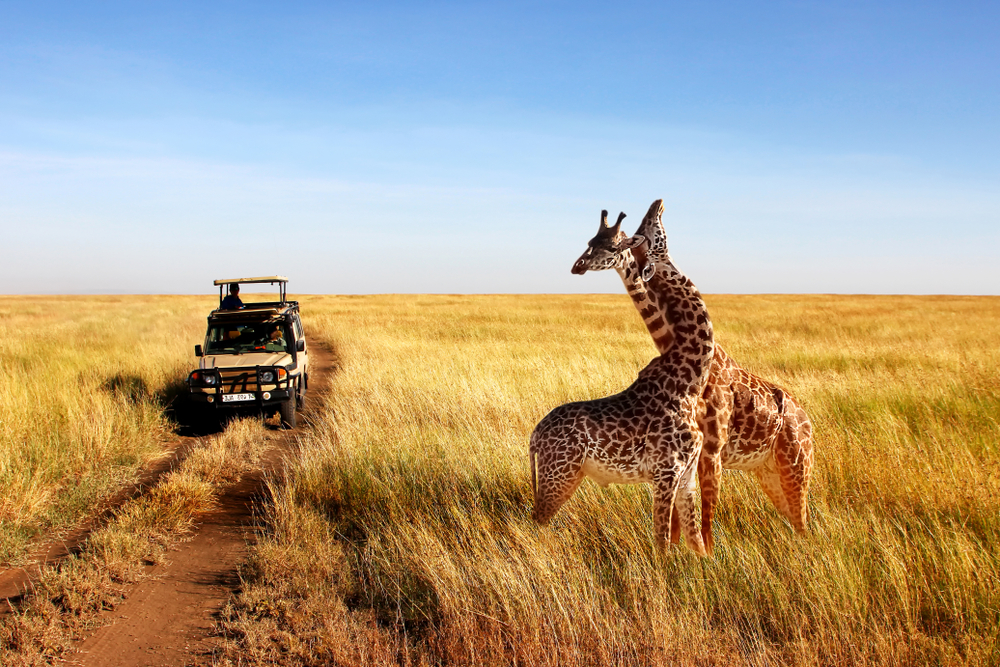
The best Kenya safari with kids pairs a private conservancy with a family tent and a private vehicle, timed to your school calendar rather than to a single river crossing. Children of six to twelve are the sweet spot for most camps; younger children can come too, but the right camp, vehicle and malaria plan matter more than the month.
This guide is the family companion to our best time to visit Kenya for a safari and our luxury safari camps in Kenya. Here the questions are different: which camps actually welcome children, what each age can and cannot do, how the Great Migration lines up with American school holidays, and what a ten-night family itinerary looks like day by day.
Why Kenya Works for Families
Kenya gives children the full safari story in a short flying distance. The Maasai Mara delivers big cats and, in season, the migration herds; Laikipia and Samburu add rhino, reticulated giraffe and camel walks in drier, quieter country; and the Indian Ocean coast at Lamu, Malindi or Watamu offers a beach finish without another long-haul flight. Light aircraft link the regions, so transfers are measured in an hour or two rather than days on the road.
For families, the decisive advantage is the private conservancy model. Outside the national reserve, Maasai landowners lease their land to a limited number of camps, which typically allows walking, night drives and off-road sightings that are not permitted inside the reserve. Fewer vehicles at a sighting also means a calmer experience for a seven-year-old who wants to watch lion cubs for forty minutes without a crowd.
Private Conservancy or National Reserve?
The Maasai Mara National Reserve
The reserve, including the Mara Triangle on its western side, is where most of the famous Mara River crossings take place. Its strengths are the density of game and the drama of the river. Its rules are stricter: game drives stay on tracks and keep to park hours, and walking safaris and night drives are generally not permitted. In peak season, popular sightings can draw many vehicles.
Angama Mara sits on the escarpment above the Mara Triangle, so families drive down into the reserve, with walking offered on the escarpment itself rather than on the plains below. According to Angama, children of all ages are welcome year-round.
The Private Conservancies
Conservancies such as Mara North, Olare Motorogi and Naboisho border the reserve to the north and east, and Olderkesi is another private conservancy in the greater Mara. Camps here can usually offer guided walks, night drives and bush breakfasts on their own land, then drive into the reserve on crossing days. For most families, the ideal is a conservancy base with one or two full days in the reserve when the herds are at the river.
Rule of thumb: Choose the conservancy for the children's experience, and the reserve for the crossing. A good camp gives you both.
Ages: What Each Stage Can Do
Age policies are set by each camp, not by Kenya, and they change. Treat the rules below as examples sourced from the camps' own websites, and confirm them at booking. Where a rule is not published, it is operator-dependent.
Under Six
A safari with toddlers is possible, but it is a private-vehicle trip. Shared game drives are long, quiet and early, and most camps will not seat very young children in a shared vehicle. Angama Mara asks families with children aged 0 to 6 to reserve a private vehicle when booking fewer than three suites. andBeyond's Bateleur Camp does not take children aged 0 to 5 on regular game drives, offering a private vehicle or shorter children's drives on request. Mahali Mzuri accepts children from age two, with game drives from age six with a parent.
Malaria prevention is the real consideration at this age; see the health section below and speak to your pediatrician or a travel clinic early.
Six to Eleven
This is the sweet spot. Children are old enough to sit through a morning drive, use binoculars and a field guide, and remember the trip, yet young enough to be thrilled by every dung beetle. Bateleur Camp allows regular game drives for children aged 6 to 11 at the lodge manager's discretion and runs its WILDchild programme for children. Cottar's 1920s Camp lists a children's entomology safari, a Maasai warrior school, guided walks and stargazing among its activities. andBeyond itself recommends Kenya for children eight years or older.
Twelve to Fifteen
Pre-teens and young teens can join almost everything except, in many camps, walking safaris. At Mahali Mzuri, children under 12 must share a tent with a parent or guardian, while those aged 12 to 15 may have their own tent, although sharing is recommended. At Bateleur Camp, children 12 to 15 join game drives, but walks outside the lodge are not offered to anyone under 16.
Sixteen and Over
Older teenagers are effectively adults on safari. Walking safaris, night drives, photography sessions with a guide and longer days in the reserve all open up. This is also the age at which a teen may value a separate tent and a little independence within the camp.
Haute Intel: Book the private vehicle even if your children are old enough for shared drives. It lets you start early, stop for snacks, return for a nap and stay with a sighting as long as your youngest is interested. It is the single most important upgrade on a family safari.
Migration Timing vs School Holidays
The herds move with the rain, so there is never a guaranteed date for a river crossing. In most years, the migration is in the Kenyan Mara roughly from July to October, with crossings most often reported from late July into September. Read our Great Migration guide for the full annual cycle, and our Kenya migration season itinerary for how we build a crossing trip.
Summer Break (Late June to August)
This is the best overlap between the migration and the American school calendar. Early July can be quiet, as the herds may still be arriving; August is typically the strongest month for crossings and also the busiest. Family tents are limited and book early, often a year ahead for August.
Thanksgiving (November 25, 2027)
November falls in Kenya's short rains. Showers tend to come in the afternoon, the landscape turns green and visitor numbers fall, but the migration herds have usually moved back toward Tanzania. Some camps close briefly at this time; Sasaab, for example, closes for two weeks in November, so check dates before planning around it.
Winter Break (Late December to Early January)
The short dry season after the November rains is a lovely time in Kenya: green, warm and full of newborn animals. The migration herds are typically in Tanzania's southern Serengeti, so Kenya at Christmas is about resident wildlife, Laikipia rhino and a beach finish rather than river crossings.
Spring Break and Easter (Easter Sunday Is March 28, 2027)
Mid-March can still be dry, but the long rains generally build from late March through May. An Easter 2027 safari is feasible with flexibility, and some camps offer quieter conditions at this time; we would weight it toward Laikipia and Samburu and keep the Mara short.
A Sample Ten-Night Family Itinerary
The shape below is how we build most first Kenya family safaris. Camp choices depend on your children's ages and availability.
DAYS 1–2 · NAIROBI
Arrive in Nairobi and rest overnight at a garden hotel or private house close to Wilson Airport, where the light aircraft depart. With younger children, a second night here softens the jet lag before the bush. Many families visit a conservation project in the city before flying north.
DAYS 3–5 · LAIKIPIA OR SAMBURU
Fly north to Laikipia or Samburu. Ol Pejeta Conservancy, one of our recommended picks for conservation and families, is the place to see rhino and to understand how they are protected. Farther north, Sasaab sits in Westgate Community Conservancy, just outside Samburu National Reserve, with night drives, nature walks and camel rides on offer. In Laikipia, Segera Retreat's Family Garden Villa has four bedrooms over two floors and a pool deck facing a waterhole, which suits multigenerational groups.
DAYS 6–9 · MAASAI MARA CONSERVANCY
Fly to the Mara for four nights in a private conservancy. Spend the first day settling in with a short afternoon drive and an early night. Use the middle days for a full morning drive, a guided walk where your children's ages allow, a visit to a Maasai community, and, in season, a picnic day in the reserve waiting at the river. Keep the final afternoon free for the pool and the journal.
DAYS 10–11 · COAST OR HOME
Either fly home via Nairobi or add three nights on the coast at Lamu, Malindi or Watamu, where a private villa or beach house gives children space to swim and sleep. The coast rarely disappoints after a week of five-thirty wake-ups.
For long-haul private aviation into Nairobi, Haute Jets can arrange the long-haul legs; within Kenya, families fly by scheduled light aircraft or private charter with strict soft-bag weight limits. Our luxury safari packing guide covers what fits.
Where to Stay: Family Camps in Kenya
Each camp below appears in our Kenya recommendations. Family details are as published by the camps; we confirm them at booking.
Angama Mara (Above the Mara Triangle)
Each of Angama's two camps has interconnected family tented suites linked by an enclosed passageway; a family set sleeps two adults and four children. Children 12 and under share a triple unless a second suite is booked, and childminding is included in the evening. Its position gives the easiest access to the reserve's river crossings.
Mahali Mzuri (Olare Motorogi Conservancy)
A Family Tented Suite here has a king bed and two twins with two en-suite bathrooms. Children must be at least two, game drives start at six, and there is no babysitting service and no lifeguard, so under-12s must be supervised at the pool. The camp is unfenced, and askari watch the tents at night.
Cottar's 1920s Camp (Olderkesi Conservancy)
Four family tents each have two en-suite bedrooms, a lounge with a wood-burning stove and a deck. Cottar's includes a dedicated guide, a private vehicle and complimentary babysitting with its family tents, which makes it one of the easiest camps for families with younger children.
andBeyond Bateleur Camp (Private Concession at the Edge of the Mara)
Two camps of nine tented suites each can be booked exclusively by a family group, as we noted in our family reunion destinations guide. Each camp has one family tent for two adults and two children, with a third child on request. The camp is unfenced, so adults must accompany children at all times.
Sasaab (Samburu) and Ol Pejeta (Laikipia)
Sasaab welcomes children, offers a baby-listening service and has two family suites. The Poolside suite comes with an exclusive vehicle but is not recommended for very young children, because its unfenced pool is level with the bedrooms. Ol Pejeta is a conservancy rather than a single camp, and we match families to the right stay there by age.
Health, Malaria and Entry
According to the CDC, antimalarial medication is recommended for travelers to all areas of Kenya below 2,500 meters, including the game parks; in highly urbanized central Nairobi, only mosquito-bite prevention is advised. Options include atovaquone-proguanil, doxycycline, mefloquine and tafenoquine, but not every drug suits every child: doxycycline is not used under age eight, and children's doses are based on weight. Book a travel-clinic appointment well ahead of departure, ideally six to eight weeks.
The CDC also recommends yellow fever vaccination for travelers aged nine months or older, except for trips limited to Nairobi, the former North Eastern Province or the former coastal counties other than Taita-Taveta, and it advises against swimming in fresh water. Check the CDC's Kenya travel health page for current travel notices when you book and again before departure.
Every traveler to Kenya, including infants, needs their own Electronic Travel Authorization, and US passport holders are not exempt. A parent can apply on a child's behalf, and our team will remind you when to file.
Family checklist: a private vehicle, a family tent or interconnected suites, a pediatrician-approved malaria plan, an eTA for every child, and soft bags within the light-aircraft limit.
Plan Your Family Safari
Kenya rewards early planning: family tents are few, the best August dates go first, and the right camp depends on the exact ages in your party. For a wider view, compare our multigenerational African safari guide, our first-timer's safari guide and our family safari in Namibia and South Africa by age, or explore all our luxury family travel.
When you are ready, plan your journey with Haute Black and we will build the camps, vehicles, flights and timing around your children.
Kenya Safari with Kids: Private Conservancies, Ages & Migration Timing — Frequently Asked Questions
Six to twelve is the sweet spot: children can join most game drives and remember the trip. Younger children can come with a private vehicle, and andBeyond recommends Kenya for children eight or older. Policies vary by camp, so we confirm each one when we plan your journey.
Late July to September usually offers the best chance of Mara River crossings and fits the American summer break. August is the strongest and busiest month, so family tents should be booked early. There is never a guaranteed crossing date; see our Great Migration guide.
For most families, yes. Conservancies typically allow walks, night drives and off-road viewing with fewer vehicles, and you can still drive into the reserve on crossing days. Read more about the regions in our best time to visit Kenya for a safari.
The CDC recommends malaria prevention for all areas of Kenya below 2,500 meters, including the game parks. Drug choice and dose depend on your child's age and weight, and doxycycline is not used under eight, so see a pediatrician or travel clinic six to eight weeks before departure.
Angama Mara has interconnected suites for two adults and four children, Mahali Mzuri and Cottar's 1920s Camp have family tents with two en-suite bathrooms, Bateleur Camp has a family tent at each camp, and Sasaab has two family suites. Compare them in our luxury safari camps in Kenya.
Related Reading
Related Experiences
From the Journal

Your Journey Starts Here
Ready to Experience This
the Haute Black Way?
Our travel concierge team can arrange every recommendation in this guide — from priority reservations to private experiences and preferred room upgrades.
Begin Your Journey