Haute Black Journal
The Luxury Safari Packing Guide

Marlene Azeez
Director, HauteBlack
View all articles →
The most popular safari packing advice is wrong for luxury travel. You don't need a large trunk, a different outfit for every dinner, or expedition-grade equipment for a journey built around elegant lodges and guided game drives. You need a disciplined system that respects bush aviation, performs in dust and changing temperatures, and still looks composed when the day ends with a private chef dinner.
A polished safari wardrobe is therefore less about quantity than precision. Every piece should earn its place by serving more than one purpose, fitting within a soft-sided bag, and moving naturally from an open vehicle to a candlelit terrace. This safari packing guide treats luggage as part of the itinerary, not an afterthought.
Redefining Luggage for Bush Flights and Private Transfers
Bush flights impose rules that luxury travelers cannot negotiate. A large wheeled suitcase may suit a commercial journey, yet light aircraft and safari vehicles often have narrow cargo areas, limited storage, and strict weight controls. For routes in Kenya, Tanzania, and Namibia, guidance from African Safari Magazine's packing guidance commonly cites 15 kg (33 lb) per person, often covering checked and carry-on luggage.
Southern African routes may allow more, but confirm the precise allowance for every sector. Guidance commonly cites 20 kg (44 lb) per person for South Africa, Botswana, Zambia, and Zimbabwe. Some operators permit only one soft-sided checked bag and a small carry-on. Certain itineraries also impose a carry-on limit of about 15 lb or a total-dimensional cap of 43 inches, as noted in Odysseys Unlimited's African safari packing guide.
Choose the bag before the wardrobe
A soft-sided, collapsible duffel should determine the rest of your packing plan. Hard-shell cases, rigid frames, and wheels resist the narrow cargo spaces of light aircraft and waste room in safari vehicles. Select a refined duffel with reinforced handles, discreet hardware, a wide opening, and internal organization that keeps small items accessible.
Luxury comes through material and proportion, not prominent branding. Quiet canvas or technical fabric in black, olive, taupe, or charcoal looks composed at a lodge and performs better during dusty transfers than a glossy case. Use packing cubes sparingly. Soft compression pouches adapt more easily when staff must reshape the bag to fit a cargo pod.
Practical rule: Weigh the fully packed bag at home, including the carry-on, chargers, and personal items. Discovering an excess at the airstrip is an avoidable disruption.
Keep documents, medication, glasses, and valuables in a separate personal item that remains with you during transfers. Ask your advisor whether the operator counts that item toward the total allowance, especially when private aviation and scheduled bush flights share one itinerary. For planning around premium aviation arrangements, review HauteBlack's air travel services.
Luxury lives in selection
Build around the strictest allowance from the outset, often 15 kg (33 lb), rather than packing freely and cutting items under pressure. Carry a small luggage scale, wear the heaviest shoes on travel days, and remove duplicate versions of the same garment. A tightly edited wash kit preserves comfort without consuming valuable capacity. Even toothpaste deserves attention, and practical travel-friendly toothpaste options can keep the kit controlled.
The finished bag should close easily, stay flexible, and have no loose exterior straps that could catch during loading. This is disciplined luxury: one adaptable bag that moves cleanly through aircraft, vehicles, boats, and lodges while supporting a polished transition from dusty game drive to private chef dinner.
Curating a Versatile Safari Wardrobe
A successful safari wardrobe performs two jobs at once. It protects you from sun, dust, insects, and cool early departures, then shifts into a polished evening look without requiring a full change of clothes. The answer is a restrained palette, breathable fabrics, and layers with enough structure to look considered.
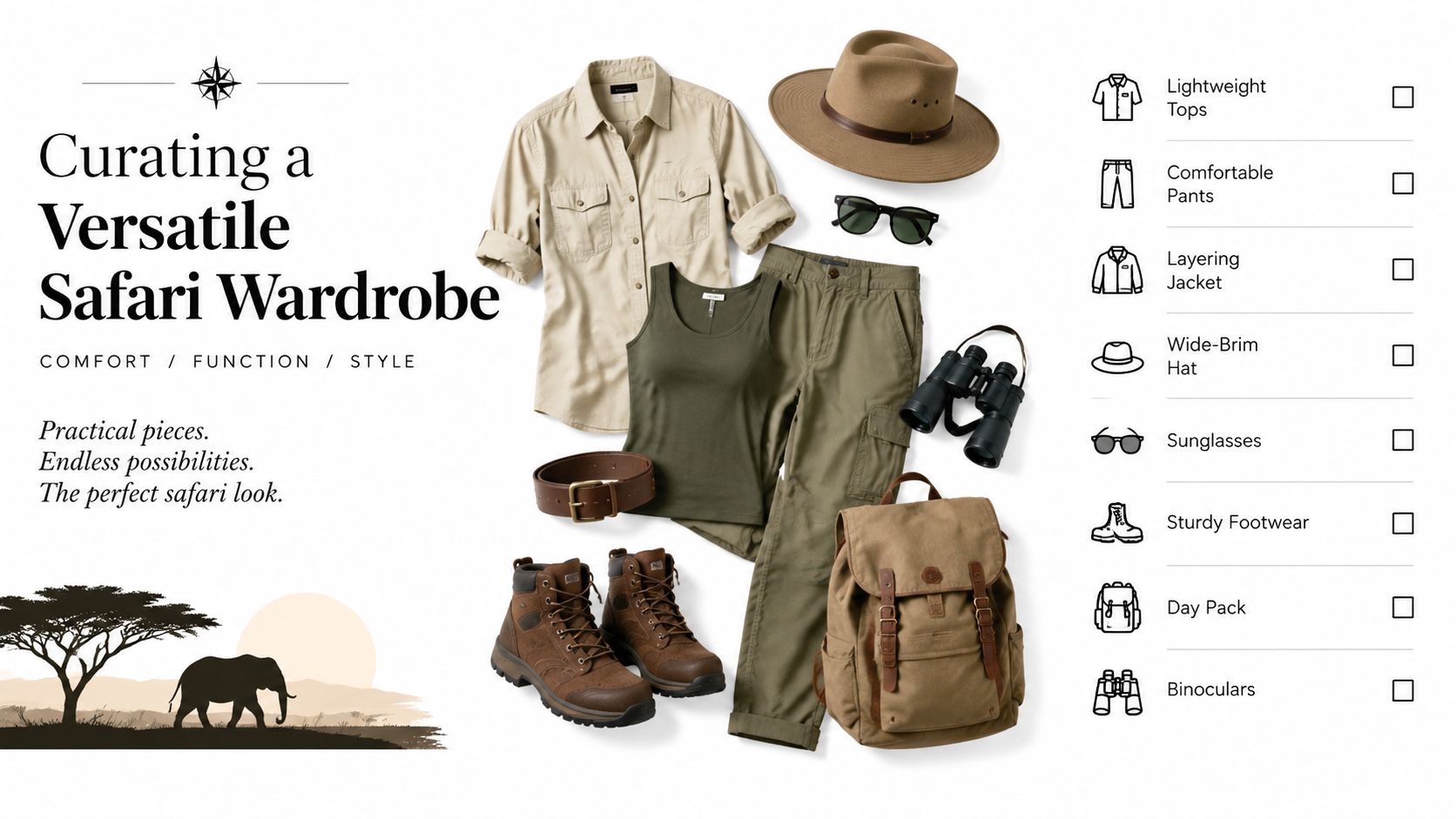
Start with neutral tones such as stone, olive, khaki, beige, and soft grey. They work together, disguise dust, and look natural in the bush. Avoid building a wardrobe around bright or highly saturated colors. Neutral dressing also makes every layer compatible, which matters when luggage space is fixed by aircraft logistics.
Build around fabric performance
Choose lightweight cotton, linen blends, merino, or technical quick-dry fabrics with a soft hand. A quick-dry shirt is useful after a warm drive, while a fine merino layer offers warmth without the bulk of a heavy sweater. Linen is elegant, but select blends that resist excessive creasing and keep one more structured layer available for dinner.
A strong capsule might include:
- Long-sleeved shirts: Choose breathable button-downs that work open over a T-shirt, tucked into trousers, or worn beneath a jacket.
- Trousers: Pack comfortable neutral trousers in a quick-dry or wrinkle-resistant fabric. One relaxed pair and one cleaner, polished pair create useful separation between field and evening.
- Shorts or a skirt: Add a single warm-weather option for midday lounging, pool time, or relaxed lunches.
- Outer layer: Select one lightweight fleece, softshell, or wind-resistant jacket for early drives and cool transfers.
- Evening piece: A fluid shirt dress, understated jumpsuit, or refined knit separates can look elegant without demanding special shoes.
- Accessories: Use a silk scarf, leather belt, understated watch, or sculptural hat to change the character of repeated outfits.
Shoes should remain controlled. Comfortable trainers or refined walking shoes handle most vehicle-based safari days, while sandals work around camp and by the pool. Add sturdy closed footwear if the itinerary includes walking activities. Heavy technical boots are unnecessary unless your advisor has confirmed a demanding walking component.
Make the transition deliberate
Wear the field layer in the morning, then remove the dust-facing overshirt before dinner. A clean linen shirt, brushed cotton trouser, or simple dress instantly changes the silhouette. Keep one evening garment in a separate packing cube so it remains presentable, and choose pieces that don't rely on delicate pressing.
The wardrobe should feel like a private-club capsule adapted for the bush, not a costume. HauteBlack's African safari guide for first-timers is useful when aligning clothing choices with the exact rhythm of a first itinerary.
For a visual reference, this video offers another look at practical safari preparation:
Selecting High-Performance Gear and Optics
The most valuable safari equipment is the gear you'll use repeatedly, not the gear that looks impressive in a catalog. A quality pair of binoculars can transform a distant bird, leopard, or herd into a detailed encounter. A poorly chosen camera system, by contrast, can consume valuable luggage capacity and leave you managing equipment instead of watching the scene.
Prioritize optics first
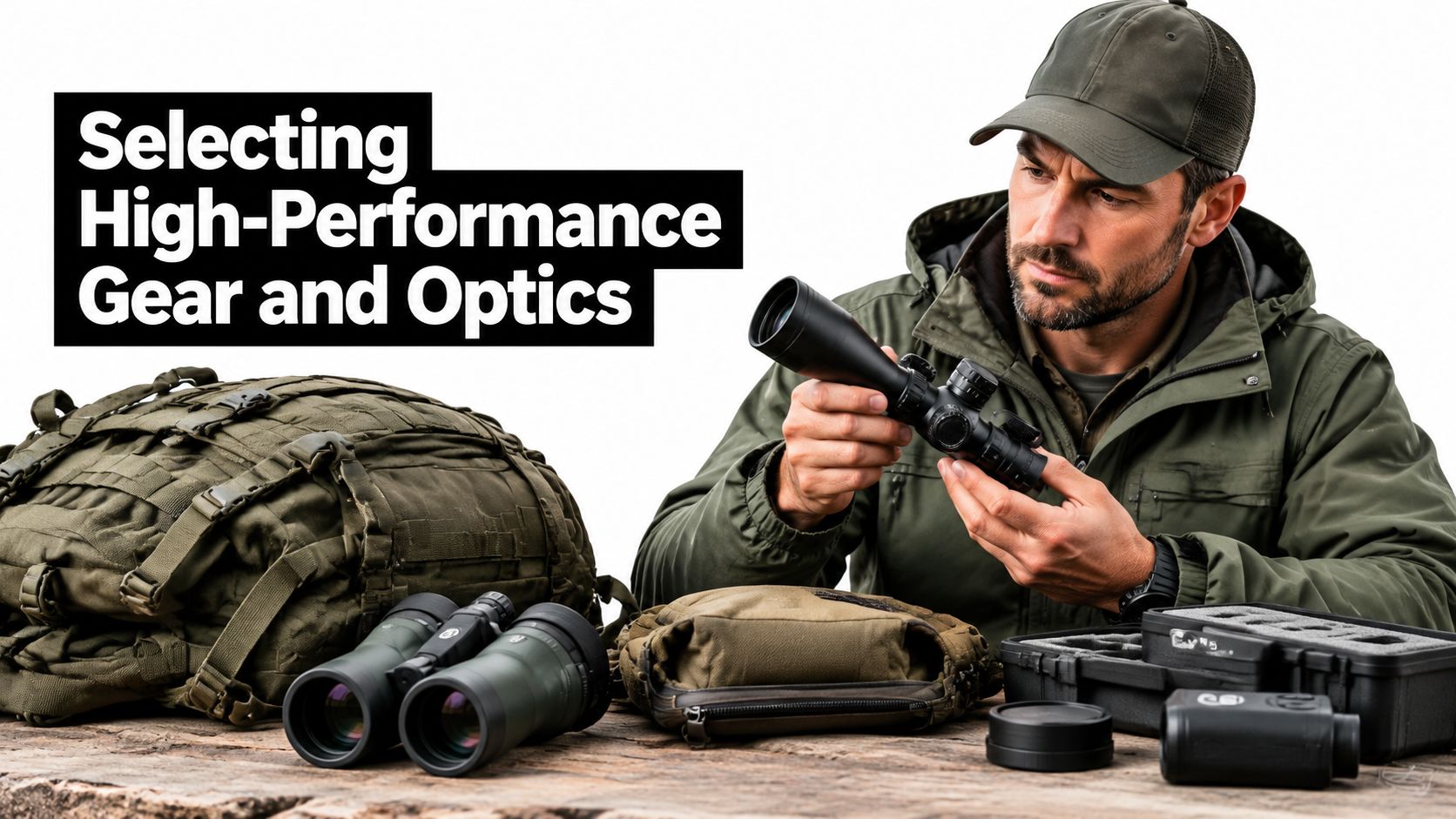
For general wildlife viewing, choose binoculars that are bright in low light, comfortable to hold, and easy to focus quickly. A well-balanced pair matters more than decorative features or oversized magnification. Test the fit before departure, particularly if you wear glasses, and use a slim harness or protective case that won't swing against the vehicle.
Avoid packing multiple optical devices unless each serves a defined purpose. Binoculars should remain accessible in the vehicle, not buried beneath clothing. A compact microfiber cloth and a soft protective pouch are more useful than a collection of specialized cleaning products.
Good optics reduce the distance between you and the landscape. They're one of the few safari purchases that improve nearly every drive.
Keep photography disciplined
A mirrorless camera such as the Sony A6700 offers a capable balance between image quality and portability, but the right setup depends on your priorities. If wildlife photography is central to the journey, choose one versatile telephoto lens rather than carrying an entire studio in miniature. If the trip is experience-led, a compact camera or phone may be the better decision.
Pack spare batteries, memory cards, a compact power bank, and a dust-resistant pouch. Keep the system simple enough to operate quickly from a moving vehicle. A lens hood helps with glare, while a small beanbag or support cushion can be more practical than a bulky tripod in a safari vehicle.
For travelers who want an efficient editing workflow after returning home, Sony A6700 presets with RevelRaw can help organize a consistent visual style without adding anything to the luggage.
Remove the gimmicks
Leave novelty gadgets, oversized speakers, unnecessary drones, and duplicate chargers behind. Remote camps may offer charging facilities, but you should confirm the arrangements before departure and carry the adapters required for your destinations. A small headlamp can be useful around camp, although many high-end properties provide suitable lighting.
Your field kit should fit into one discreet daypack:
- Binoculars: The primary viewing tool, protected but immediately accessible.
- Camera: One body and one considered lens configuration.
- Phone: For communication, notes, and quick images.
- Power essentials: Charging cable, adapter, and compact battery.
- Comfort items: Sunglasses, hat, scarf, and a water bottle if the camp recommends carrying one.
- Protection: Soft dust pouches for electronics and a lens cloth.
If the itinerary includes Botswana, HauteBlack's complete luxury safari guide can help you match equipment decisions to the style of camp, transfers, and activities planned.
Health, Wellness, and Documentation Essentials
Remote travel rewards preparation that stays invisible. Your medical items, prescriptions, insurance details, and travel documents should be organized so you can reach them immediately without turning your main duffel into a pharmacy or filing cabinet.
Keep medication in your personal item, never in checked luggage. Use original packaging where possible, carry the documentation associated with prescriptions, and separate daily medication from a reserve supply so a delayed transfer doesn't create an avoidable problem. Consult your physician or a qualified travel clinic about destination-specific vaccinations, malaria prevention, and any personal medical considerations before departure.
Use a discreet health system
A small medical pouch should cover your known needs and basic contingencies. Include personal prescriptions, suitable sun protection, insect repellent, blister care, antiseptic supplies, pain relief, antihistamines, and any motion-sickness treatment you already know you tolerate. Don't experiment with unfamiliar products for the first time in the bush.
Wellness items should be compact and useful. A moisturizing lip treatment, saline spray, eye drops, and a small supply of preferred sleep aids can make dry air and early starts more comfortable. Select refillable containers and avoid carrying full-size bottles. For a polished overview of compact sun and skin essentials, consult Healtsy's summer travel skincare guide.
Separate documents by function
Create a digital folder and a physical document wallet. The physical wallet should hold passports, visas where required, travel insurance information, flight details, emergency contacts, and any documents requested for border crossings or private charters. Keep digital copies available offline because connectivity can be limited in remote regions.
Use a simple naming system for files, and share the itinerary with a trusted contact at home. Your advisor should confirm entry requirements, transit rules, and operator-specific paperwork before departure. Requirements vary by route, citizenship, and the combination of countries on your itinerary, so a generic checklist isn't sufficient.
Quiet preparation: Keep one document wallet for movement and one secure backup for the room or lodge safe. You'll move faster when every paper has a designated place.
Personal care deserves the same restraint as clothing. Choose a travel-size cleanser, moisturizer, sunscreen, lip protection, dental kit, deodorant, and hair essentials. Ask the lodge whether preferred toiletries can be arranged before arrival, but carry the products you can't replace easily.
The finished system should have three layers: a personal item for documents and medication, a small wellness pouch for daily use, and the main duffel for clothing and gear. That separation protects the essentials while keeping the visible experience calm and uncluttered.
Leveraging Lodge Services and Advisor Insights
The most effective packing strategy includes what you deliberately leave behind. Luxury camps are designed to support guests in remote environments, and many offer laundry services that make a compact wardrobe practical. Confirm the service, turnaround, and any fabric restrictions before departure, then plan to repeat your strongest pieces rather than packing an outfit for every possible mood.
Ask your advisor to identify what the property already provides. Depending on the lodge and itinerary, that may include hairdryers, pool towels, basic toiletries, charging arrangements, or field equipment. Don't assume every property offers the same amenities. A precise pre-arrival conversation is more valuable than adding another kilogram of speculative gear.
Treat the itinerary as the packing brief
A safari that includes vehicle-based game drives calls for a different bag from one that includes serious walking, beach time, city dining, or multiple border crossings. Review each transfer and activity, then classify garments into three groups:
- Field essentials: Clothing and footwear that handle dust, sun, and long hours in the vehicle.
- Lodge refinement: Pieces that feel polished at breakfast, dinner, and private experiences.
- Specialist requirements: Items tied to walking, water, weather, or formal city plans.
This exercise reveals redundancy quickly. If one jacket works for an early drive and a casual dinner, it has a clear role. If a garment suits one imagined occasion and nothing else, it's a candidate for removal.
HauteBlack's editorial coverage is separated by traveler intent on its news page. The entry titled Your Ultimate Safari Trip in Africa: A Luxury Guide was updated on 2026-06-26, while Botswana Chiefs Camp Ultimate Safari Guide 2026 was updated on 2026-06-23. Couples planning a romantic journey can also consult Luxury Safari Honeymoon How to Plan a Bespoke Escape, dated 2026-09-08, for a more focused planning perspective.
Reserve capacity for the return journey
Leave deliberate space for artisan purchases, books, textiles, and other meaningful objects acquired along the route. Don't rely on a fragile tote or an improvised plastic bag to carry them home. A lightweight foldable duffel can serve as a backup, but confirm that the relevant bush-flight operator permits its use and that the final routing accommodates the additional bag.
Your advisor can also coordinate preferences with the lodges before arrival. Request specific laundry handling, dietary details, celebration arrangements, preferred room amenities, and any specialist equipment. That preparation reduces what you need to carry and improves the experience once you arrive.
Luxury is not measured by the number of objects in your bag. It's measured by how little friction remains once the journey begins.
Finalizing Your Bespoke Packing Strategy
The final review should resemble editing a private wardrobe, not preparing for an expedition. Lay everything out by category, then remove pieces that duplicate another item's function. A shirt that works beneath a jacket, over swimwear, and at dinner earns its place more readily than a striking garment suited to one occasion.
Start with the itinerary and trace every transfer between cities, airstrips, lodges, and special activities. Recheck the strictest baggage allowance, confirm whether carry-on items count toward it, and verify whether soft-sided luggage is required. Many East African bush routes commonly use a 15 kg (33 lb) limit, while some Southern African itineraries allow 20 kg (44 lb). Treat those figures as planning parameters, as noted earlier in the guidance from Odysseys Unlimited, rather than assumptions that apply to every operator.
Use a final edit
Ask four questions about every item:
1. Does it serve a confirmed activity?
2. Can it work with at least one other outfit?
3. Will it remain comfortable in heat, dust, or cool mornings?
4. Would the lodge or advisor already provide an equivalent?
Use the answers firmly. Remove the spare “just in case” shoes, full-size beauty products, and formal garment that depends on accessories you are not packing. Retain dependable pieces that wash easily, layer well, and remain comfortable from a dusty game drive to a private chef dinner.
Pack the bag, close it, lift it, and unpack it once. If the weight or volume surprises you, edit again.
A polished safari kit includes a neutral capsule wardrobe, one dependable outer layer, comfortable closed footwear, personal medication, practical optics, and a compact system for documents and electronics. A clean shirt, fresh layer, and considered accessory should shift the look from the vehicle to the lodge terrace without requiring a second outfit or bulky extras.
That discipline creates genuine luxury. You move more easily through airstrips and camps, spend less time managing possessions, and stay available for the experience. Leave room for an unexpected sundowner, a private dinner under the stars, or an artisan piece you will want to bring home.
The right packing strategy ends with judgment rather than a shopping list. Pack only what supports the itinerary, confirm what the lodge and advisor will provide, and let their arrangements reduce your load.
HauteBlack creates bespoke safari itineraries with dedicated advisor support, VIP recognition, private aviation options, and coordinated lodge experiences. For a packing plan built around aircraft allowances, activities, and your preferred level of service, visit HauteBlack and begin planning a journey designed for easy movement.
Explore Our Guides
Signature Experiences


