Haute Black Journal
African Safaris for Families: A Multigenerational Guide

Marlene Azeez
Director, HauteBlack
View all articles →
You're looking at lodge photos late at night while trying to solve an impossible equation. Your six-year-old needs an early bedtime, your teenager wants adventure, you need an hour without email, and your father can't manage steep steps or a dawn start every day. That's not a booking problem. It's a design problem, and African safaris for families succeed only when you treat it that way.
Designing a Family Safari Around Three Generations
Most families start with animals. Start with people instead. A child, a parent, and a grandparent don't experience the same drive, the same heat, or the same bumpy road in the same way, and pretending they do is how expensive trips become exhausting.
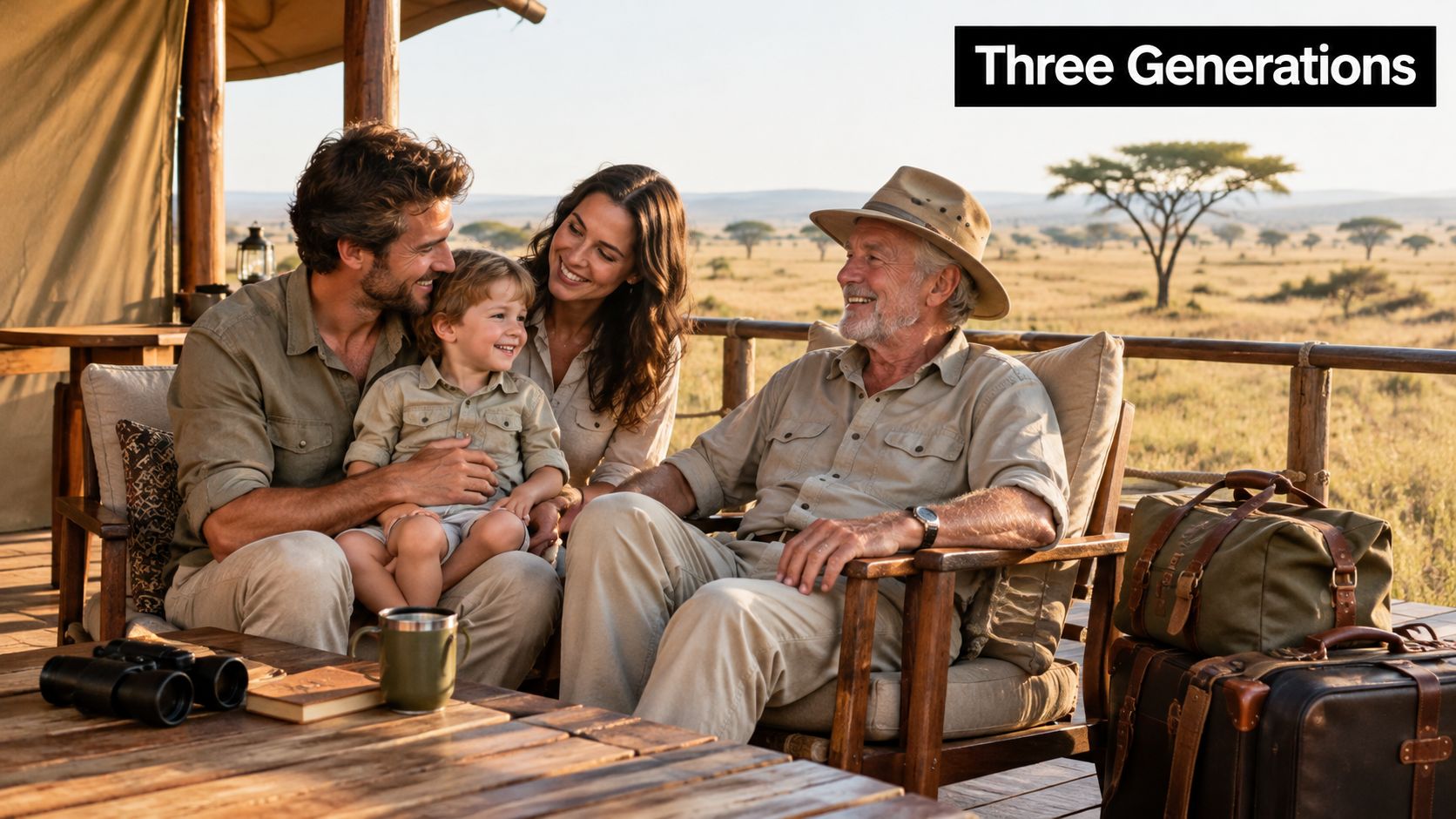
[Famlies represent roughly 28% of safari inquiries, while multigenerational and legacy trips are gaining traction](https://www.go2africa.com/african-travel-blog/state-of-safari-2025), yet most advice still treats a family as one traveler type. You have three. Children need shorter outings, food on demand, and a pool. Parents usually want excellent guiding, good food, and adult quiet. Grandparents often value comfort, shade, accessible rooms, and not being rushed.
Design Around Energy, Not Sightings
Build the day in blocks, then let people opt in or out.
- Early block: One private vehicle leaves at dawn for whoever's alert. Everyone else sleeps.
- Midday block: Shared brunch, pool time, naps, reading, and no scheduled activity that requires enthusiasm.
- Late block: A shorter afternoon drive, a cultural visit, or sundowners near camp, ending before younger children unravel.
A private vehicle is the single most useful purchase you can make. It lets you return early, linger at elephants, skip a sighting, or stop for a bathroom break without negotiating with strangers. For first-timers, work through a practical first-time African safari planning guide before you compare lodges, because vehicle rules and pacing matter more than thread count.
The most luxurious family safari often involves less shared time, not more. Split the day, then reunite for the moments everyone actually wants to remember.
Limited connectivity, long transfers, and early light aren't flaws to endure. They're constraints to design around. When you do, nobody has to perform stamina they don't have.
What Your Safari Dollar Is Actually Buying
A luxury safari looks expensive because you're not buying a hotel room with animals outside. You're buying access to a protected natural area, specialist guiding, low guest density, remote logistics, and the conservation system that keeps that natural area viable.
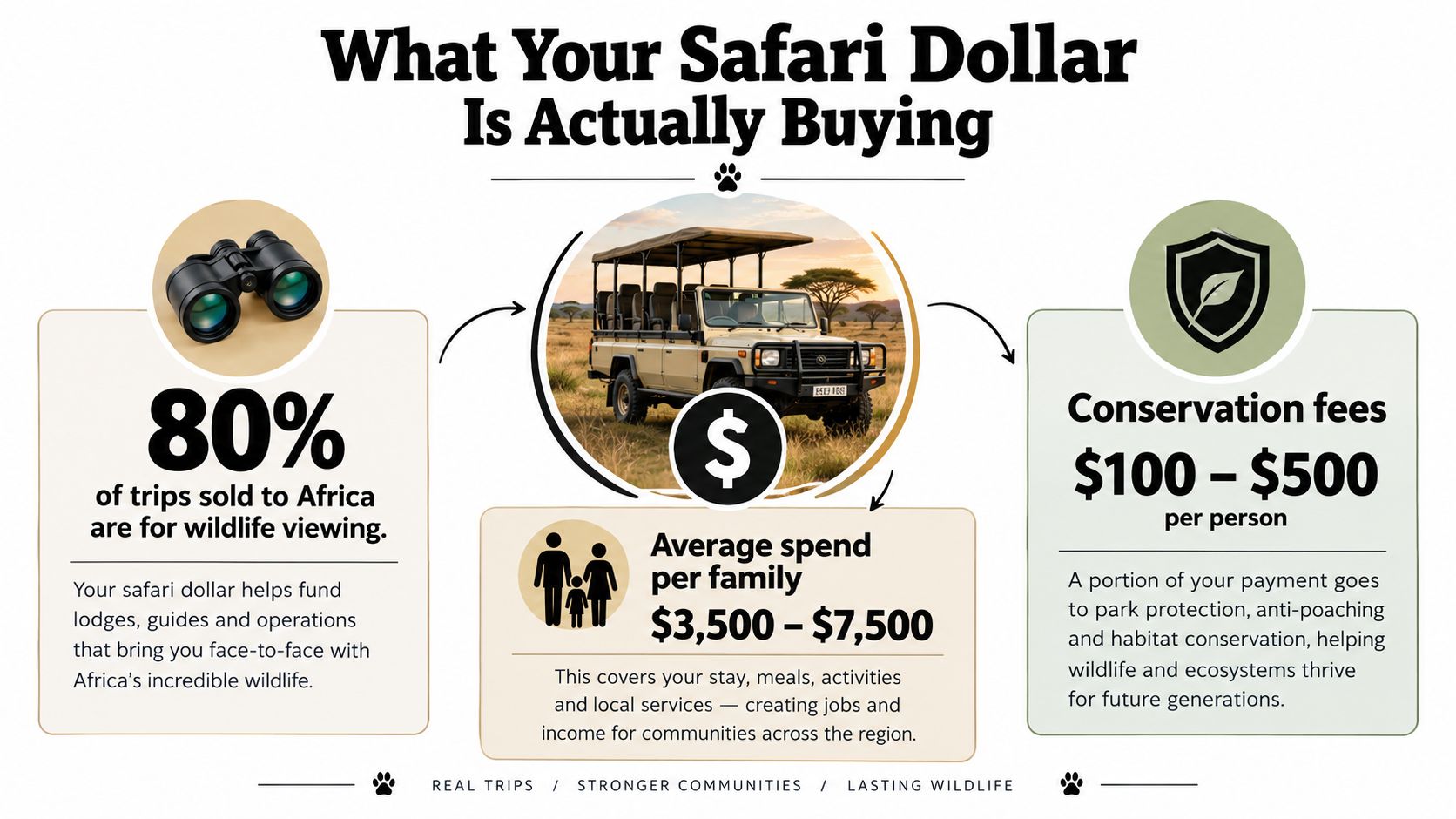
Wildlife tourism is the core of the market, not a niche add-on. [World Bank research estimated Africa's wildlife-safari industry at approximately US$12.4 billion in direct economic value and as much as US$42.9 billion including wider economic effects, with 14 African countries producing an estimated US$142 million in protected-area entrance fees](https://documents1.worldbank.org/curated/en/494211519848647950/pdf/123765-WP-REVISED-PUBLIC.pdf). A 2015 United Nations World Tourism Organization survey also found approximately 80% of trips sold to Africa were for wildlife watching.
Where the Premium Actually Goes
- Protected-area access: Park and conservation fees help fund the places you're visiting. They're structural, not decorative.
- Expert guiding: A strong guide reads tracks, positions the vehicle well, manages children's attention, and knows when to stop explaining.
- Low density: Private concessions and smaller camps cost more because fewer guests share the same roads, sightings, and staff attention.
- Remote operations: Fuel, food, staff housing, water, and maintenance all cost more when the nearest town isn't nearby.
This is why I steer affluent families toward conservation-linked lodges, locally operated guides, and longer stays in fewer places. Moving every two nights looks efficient on a map. In practice, it burns transfer days, fragments sleep, and gives children no time to settle into a camp routine.
Don't judge value by the number of parks ticked off. Judge it by guiding quality, vehicle privacy, room layout, and whether the camp can flex meal times and activity lengths. Those operational details determine whether three generations enjoy the same trip or merely survive the same itinerary.
A well-built safari also spreads spending beyond the lodge. Private guiding, community visits, and extra nights support the local tourism economy that protects wildlife habitat. That's a better legacy story for your children than a rushed checklist.
Matching Destinations to Your Family's Travel Style
There's no best safari country. There's a best match for your youngest child, your oldest traveler, and your tolerance for transfers, malaria precautions, and early starts.
Use this short comparison to narrow the field before you fall in love with a lodge photograph.
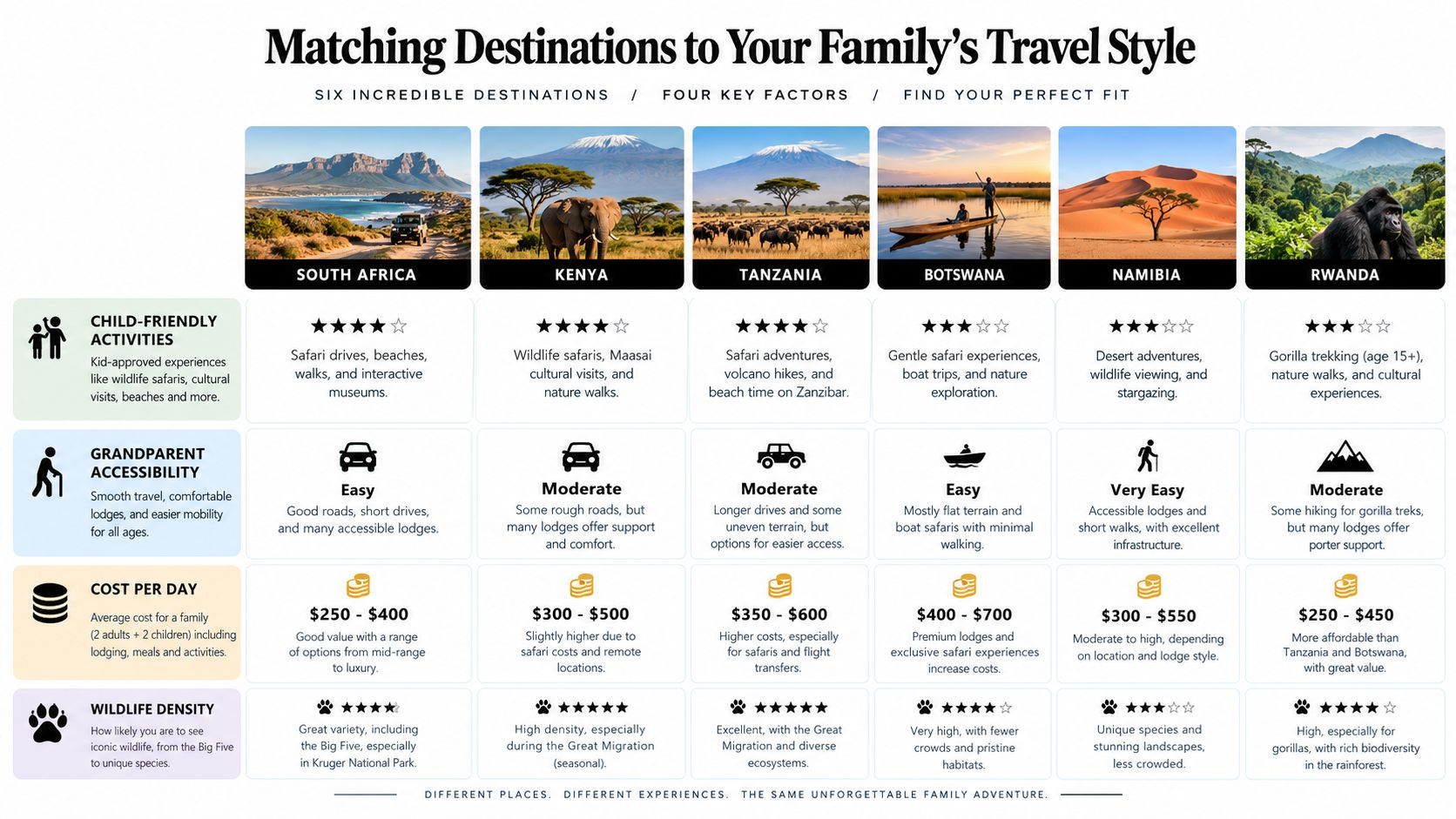
| Destination | Best fit | Watch out for |
|---|---|---|
| South Africa | First safari, younger kids, grandparents | Popular areas book early |
| Kenya | Migration drama, strong family lodges | Busier sightings in peak areas |
| Tanzania | Serengeti scale, classic routing | Longer internal distances |
| Botswana | Privacy, older multigenerational groups | Premium pricing, light aircraft |
| Namibia | Teens, landscapes, self-drive confidence | Long road legs, sparse game density in places |
| Rwanda | Older children focused on gorillas | Trekking fitness and permit planning |
The Three Most Useful Starting Points
South Africa is my default recommendation for a first mixed-age safari. Malaria-free reserves in parts of the country, good infrastructure, and shorter transfers reduce friction for grandparents and young children. You give up some sense of vast wilderness in the most accessible areas, but you gain predictability, which matters on a first trip.
Kenya and Tanzania suit families who want the big East African story, open plains, abundant predators, and the migration ecosystem. Choose private conservancies or well-run smaller camps where possible, because vehicle density can change the feel of a sighting. The trade-off is more complex logistics and a greater need for disciplined pacing.
This short film gives a useful sense of scale and vehicle-based viewing before you commit to a region.
Botswana works beautifully for older families who value solitude over variety. Private concessions, water-based activities in the Okavango, and low guest numbers create calm. It's less forgiving for toddlers, tight budgets, or anyone uneasy in small aircraft.
Namibia rewards teenagers who like desert scenery and road-trip freedom, while Rwanda belongs on the list only when gorilla trekking is a genuine priority and the children involved meet the physical and age requirements. Start your shortlist with HauteBlack's Africa destination overview, then match one country to your family's weakest constraint, not its strongest fantasy.
Age-Appropriate Activities and the Camp Rule Reality
Age rules aren't bureaucracy. They reflect noise, safety, terrain, and whether a child can follow an instruction instantly when an animal moves.
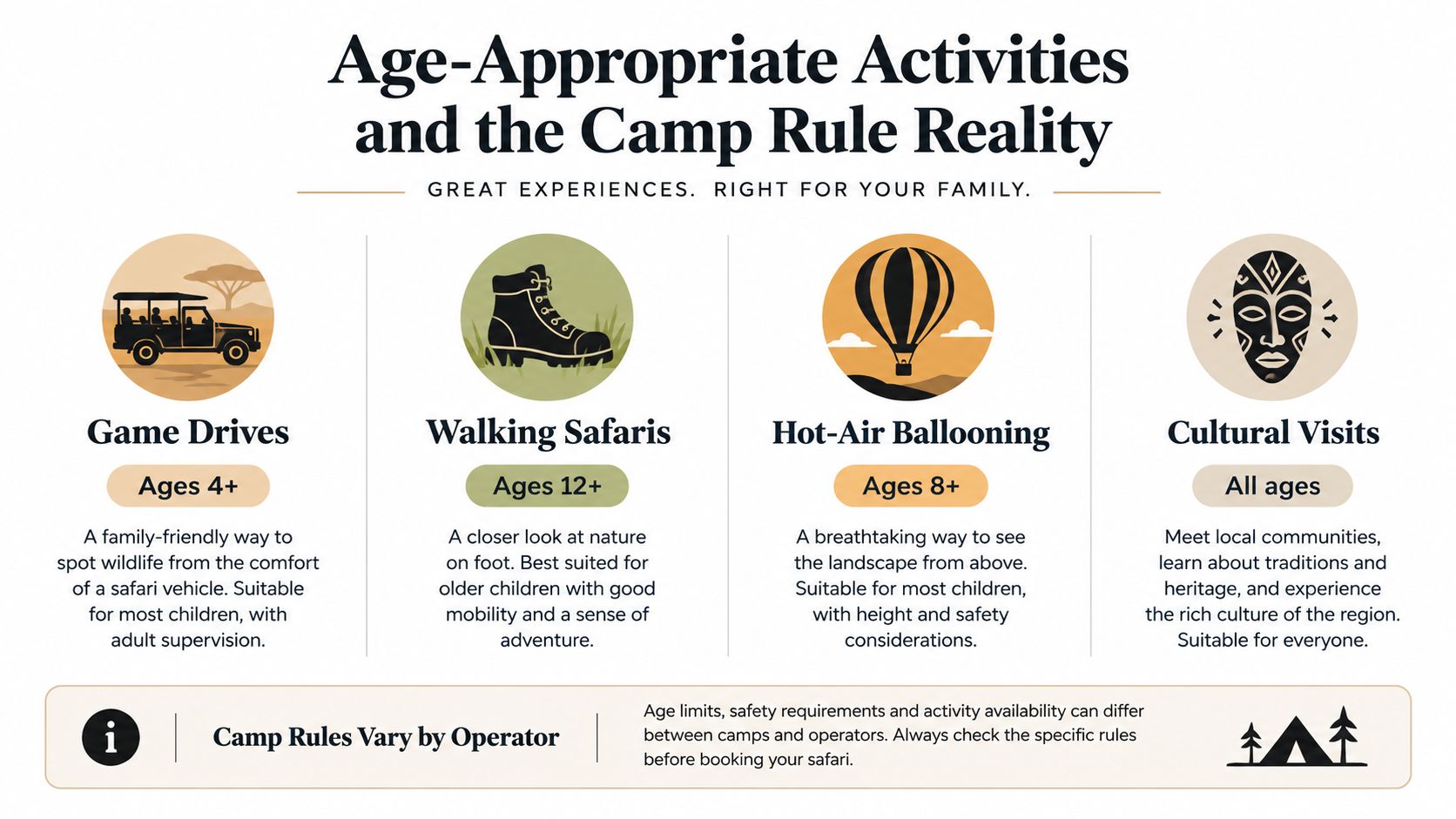
[Reported Masai Mara examples commonly set minimum ages around 6 for game drives and 8 for hot-air ballooning, while walking safaris often require children to be approximately 12 or older](https://safari-consultants.com/south-africa-or-kenya-which-is-better-for-a-family-safari/) because of proximity to wildlife, bush-terrain hazards, and the need for quiet, immediate responses. Treat those figures as examples, not universal law. Every operator sets its own policy.
Build the Day by Capability
- Under the game-drive threshold: Short private drives where permitted, lodge gardens, pool time, tracking games near camp, and early dinners.
- Primary-school children: Morning drives with a clear end time, child-sized binoculars, animal checklists, and downtime after lunch.
- Older children and teens: Longer drives, photography, conservation talks, cycling or walking where permitted, and cultural visits with real context.
Don't fill the gaps with screens by default. Around camp, adapt nature scavenger hunt ideas for kids to tracks, feathers, seed pods, bird calls, and dung identification with your guide's supervision. It's simple, it slows children down, and it teaches them to look properly.
Practical rule: Confirm every activity in writing, for every child, with every camp. A lodge accepting children doesn't mean its balloon, walking, or night-drive partner does.
Alternate intensity. A dawn drive, a lazy middle of the day, and a short late outing beats two long drives that leave a seven-year-old asleep through dinner and a grandparent stiff for the next morning. Ask how the camp handles a child who needs to return early. Their answer tells you whether they're family-ready.
Health Preparation as an Itinerary Variable
Health planning shapes the itinerary itself. It affects destination choice, room type, evening activities, clothing, and how far you should be from medical support. Don't leave it until after flights are booked.
Malaria transmission occurs in most sub-Saharan African game parks, and safari routines increase exposure at dusk, after dark, in tents, and near water. [The CDC recommends combining destination-specific chemoprophylaxis with layered barrier controls, including long sleeves, repellent, permethrin-treated clothing, and insecticide-treated mosquito netting](https://www.cdc.gov/yellow-book/hcp/africa-middle-east/african-safaris-and-climbing-expeditions.html), because children face particularly high risk of severe malaria when prophylaxis is absent or incomplete.
Medication Decisions Need a Clinician
Medication choice depends on age, weight, destination, and medical history.
- Atovaquone-proguanil: Can be used in children weighing at least 5 kg.
- Doxycycline: Generally limited to children older than 8 years.
- Tafenoquine: Restricted to adults over 18.
Those thresholds are starting points for a medical consultation, not instructions to self-prescribe. Book a travel-medicine appointment early enough to discuss vaccinations, routine prescriptions, allergies, motion sickness, and what happens if a child vomits a dose. Carry enough medication for the full trip and the post-travel course, split across bags where sensible.
Treat any fever during travel or after return as urgent until malaria is excluded. Tell the clinician exactly where you've been. Don't wait for a routine appointment because the child seems better the next morning.
Beyond malaria, plan for sun, heat, dust, and dehydration. Hats, refillable bottles, shaded midday breaks, and vehicles with adequate water aren't comforts for children and older travelers. They're risk controls.
Finally, buy evacuation coverage that matches your actual routing. Ask who authorizes evacuation, which airstrips are usable, and whether a companion can travel with a child. If a grandparent has a cardiac history or a child has asthma, that information belongs in the itinerary design, not in a form nobody reads.
Building the Multigenerational Itinerary
Write the traveler profile before you request prices. Names and dates aren't enough.
[HauteBlack recommends recording each traveler's age, sleep preferences, medical needs, dietary requirements, activity level, and mobility limitations before planning, then building a realistic three-to-seven-day itinerary with shared activities, independent options, rest periods, and recovery buffers](https://www.hauteblack.com/news/10-multigenerational-family-vacation-ideas-2026). Apply that same discipline to each safari stop, even on a longer journey.
Rooms Determine the Mood
Choose the configuration deliberately.
- Connected suites: Best for young children who need parents close but not in the same room.
- Separate residences or tents nearby: Better for teens, adult siblings, and grandparents who sleep lightly.
- Staffed villa: Useful for larger parties who want private dining, flexible bedtimes, and one shared living space.
- Ground-level rooms close to the main area: Non-negotiable if steps, sand paths, or night walks are a concern.
Ask about bathroom layout, outdoor showers, distance from the dining area, and whether staff escort guests after dark. A beautiful tent at the far end of camp is a bad choice for a grandparent with a knee replacement or a child who wakes frightened.
A Rhythm That Works
Use a repeating pattern children can learn and adults can trust.
1. Arrival day: No game drive unless it's short and optional. Unpack, swim, eat early.
2. First full day: One substantial drive, long midday break, optional late outing.
3. Second full day: Split programming. Teens walk or cycle where permitted, younger children do a camp activity, grandparents choose a slower drive or rest.
4. Departure day: Protect the morning. Don't squeeze in a dawn drive before a long transfer.
Build recovery buffers into the plan. A buffer nobody needs becomes leisure. A buffer you omitted becomes a meltdown.
Transfers need the same scrutiny as wildlife. Long road legs punish small children and stiff joints, while small aircraft can impose soft-bag and weight limits that surprise families. Private aviation or efficient regional transfers can protect energy, but only if luggage, airstrip transfers, and waiting time are mapped carefully.
Keep one shared anchor each day, usually brunch or dinner. Everything else can flex. That's how a grandparent rests without feeling excluded and a teenager gets adventure without dragging a six-year-old along.
Packing, Seasons, and the Real Value of VIP Upgrades
Pack for temperature swings, not for the brochure. Dawn drives can be cold, midday can be hot, and open vehicles add wind. Layers, neutral colors, closed shoes, hats, and a warm jacket matter more than matching khaki outfits.
Don't forget child-sized binoculars, headlamps for tented camps, refillable water bottles, spare glasses, and medication in hand luggage. For long transfers, sort food before hunger becomes behavior. These travel friendly snacks that survive any trip are useful inspiration for options that tolerate heat, delays, and small-aircraft days.
Use a dedicated luxury safari packing guide to check soft-bag requirements and layering before you buy anything. Families overpack occasion clothing and underpack warm layers, chargers, and comfort items for children.
Timing and Route Length
Season changes both wildlife viewing and family comfort. Dry periods generally make animals easier to find around water and roads easier to use, while greener months can bring dramatic skies, fewer visitors, and more insects. Migration routing needs time and flexibility, not a two-night dash.
[For a private Serengeti-and-Masai-Mara safari, HauteBlack recommends a 10-to-14-day journey using private aviation or efficient regional transfers, with approximately $8,000 to $25,000 or more per week covering private guides, 4x4 vehicles, luxury lodges, and migration-focused routing](https://www.hauteblack.com/news/10-tours-of-a-lifetime-luxury-travelers). Seven to 10 days is the stated minimum for that experience.
VIP recognition matters when it solves family friction. At preferred-partner properties, complimentary upgrades when available, resort credits, flexible benefits, and smoother arrivals can mean a larger suite, an easier first night, or credit spent on a private dinner. The valuable upgrade isn't always the view. Sometimes it's the second bathroom.
A Working Family Safari Checklist
Use this as your decision sheet before deposits are paid.
- Traveler profile: Ages, sleep, mobility, medical needs, diet, and activity levels recorded.
- Destination fit: Country matched to youngest child and oldest traveler.
- Activities: Age thresholds confirmed in writing with each operator.
- Health: Clinician-reviewed malaria plan, medication supply, and evacuation coverage secured.
- Rooms and transfers: Layout, distances, baggage limits, and road time verified.
- Daily rhythm: Private vehicle, split programming, shared anchor meal, and rest buffers agreed.
- Packing: Layers, child optics, medication, and transfer-day supplies checked against a practical kids road trip essentials checklist.
Design for optional time, then protect the shared moments that matter.
HauteBlack designs bespoke African safaris for families around private guiding, thoughtful pacing, conservation-linked lodges, and VIP recognition across its preferred-partner network. If you're planning a multigenerational journey and want the routing, rooms, transfers, and split-day programming handled properly, visit HauteBlack to start the conversation.
Explore Our Guides
Signature Experiences


