Haute Black Journal
Sanctuary Chief's Camp: An Insider's Okavango Guide

Leslie Peterson
Travel Writer
View all articles →

The first time you fly over Chief’s Island, the logic of Botswana becomes obvious. Water, grass, dry ridges, and game all arrange themselves below you like a private map, and by the time you land, sanctuary chief's camp already feels less like a hotel and more like a claim on the best ground in the Delta.
The Legend of Chief's Island A Private World
One of my clients understood Chief’s Island before he ever checked in. His pilot banked low over the Delta, pointed to a broad sweep of dry ground holding steady above the floodplain, and said, “That is where the animals go when the water rises.” In that moment, the choice was settled. You do not come here for a pretty address. You come because the island gives you a strategic advantage from the start.
Chief’s Camp sits on Chief’s Island, the largest island in Botswana’s Okavango Delta, a landform that accounts for a remarkable share of the Delta within the Moremi Game Reserve, according to Discover Africa’s property overview. That matters more than any polished brochure copy. Position determines safari quality, and this is one of the strongest positions in Botswana.
Why the island matters
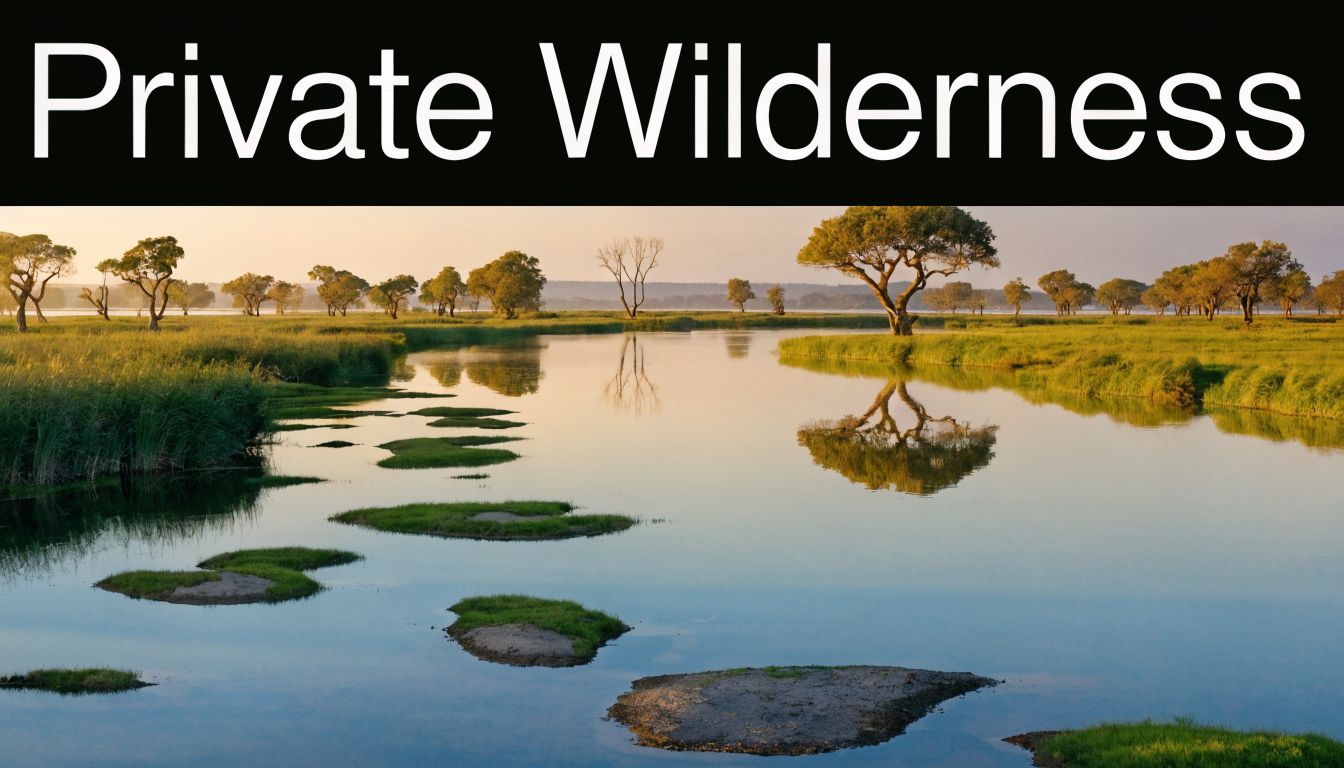
Chief’s Island has myth around it, but geography is what makes it exceptional. The camp stands on higher ground shaped by ancient tectonic activity, which helped create a refuge for wildlife through changing water levels. That is the detail experienced safari travelers should pay attention to. It explains why game density and consistency here can feel different from camps with more romantic stories and weaker ground.
The name also carries weight. This was once the hunting ground of the Batawana chiefs, and that history still gives the island a sense of authority. The atmosphere is not staged or theatrical. It feels established, which is rarer than many travelers realize in the Delta.
You choose sanctuary chief's camp because the land gives it an advantage other camps cannot manufacture.
That is the actual legend of Chief’s Island. It is not nostalgia. It is placement.
How to read the setting like an insider
Clients who get the most from Chief’s Camp understand one thing early. This is not a property to experience passively. Its setting rewards smart decisions.
During higher water periods, the surrounding channels and islands create the visual drama people expect from the Okavango. In drier periods, animal movement often becomes easier to read, and the concentration around productive areas can sharpen the quality of your drives. Either way, the island’s structure keeps you in a part of the Delta where wildlife, water, and access intersect unusually well.
That is why I tell clients to treat Chief’s Island as more than a backdrop. Use it as your planning advantage.
A few points separate this location from the usual luxury safari narrative:
- Scale: Chief’s Island holds real geographic authority. It shapes your safari before the first drive begins.
- Refuge: Higher ground has drawn wildlife here for generations, which affects the rhythm and reliability of sightings.
- Heritage: The Batawana connection gives the island history with substance, not decorative storytelling.
- Positioning: You are based where the Delta’s major ecological forces meet, which is exactly where a top-tier safari camp should be.
Many camps in Botswana are beautiful. Few are this well placed.
And for a discerning traveler, placement is everything. It influences your viewing, your pacing, your choice of season, even which pavilion I would reserve for you. Chief’s Camp earns its reputation because the private world around it was extraordinary long before luxury arrived.
The Ethos of an Icon Why Chief's Camp Stands Alone
The first time a client asks me why Chief’s Camp commands this level of loyalty, I give the same answer. It was conceived at the top end from day one, and that decision still shapes every hour you spend there.
Chief’s Camp entered the market in 1998 after A&K, now Sanctuary, secured one of the concession’s two premier sites through a government tender, a point outlined in the Bradt Botswana travel guide entry. For a discerning traveler, that origin matters. The camp was never a pretty lodge placed on good land and polished later. It was planned as a serious luxury operation inside one of Botswana’s most coveted safari settings.
That pedigree changes the experience in ways many guests only notice subconsciously. The camp feels assured. Rates sit firmly in the ultra-luxury tier, so the property has no room for weak planning, uneven service, or design choices that photograph well and age badly. Chief’s Camp works because the fundamentals were handled properly at the start.
Luxury with discipline
At this level, I am not interested in spectacle for its own sake. I want proportion, privacy, silence, and staff who understand timing.
Chief’s Camp gets those decisions right. Its style draws on classic safari architecture, with high ceilings, exposed beams, and thatch, but the impression is measured rather than theatrical. There is polish, yes, though not the generic polish you find in fashionable properties that could sit anywhere from the Gulf to the Caribbean. Clients who are accustomed to luxury villa accommodations usually respond well here for the same reason. Space is handled with intelligence, not vanity.
The environmental and philanthropic position also carries more weight when it sits inside a camp with genuine standing, not a marketing-first newcomer. That distinction matters.
Advisor’s rule: Book camps with a credible origin story, a serious operator, and a design language that still makes sense ten years later. Those are the properties that keep rewarding you after the novelty wears off.
Why seasoned safari travelers keep returning
Many luxury camps sell privacy and exclusivity. Chief’s Camp sells confidence.
You feel it in the consistency of the operation and in the absence of compromise. Nothing seems borrowed from a trend cycle. Nothing feels improvised to satisfy a price point. That is rare in safari hospitality, where some camps rely too heavily on atmosphere and ask the guest to overlook practical flaws.
Chief’s Camp does the opposite. It gets the large decisions right first, which is exactly what allows Haute Black to refine the smaller ones for you. Once the foundation is this strong, the strategy becomes more interesting. We can focus on which pavilion suits your priorities, how to order drives, mokoro, and downtime, and where to place your energy across the stay so the trip builds properly instead of peaking too early.
That is why Chief’s Camp stands apart. It is a flagship with substance, not a trendy outpost with excellent photography.
Your Private Pavilion A Guide to the Sanctuaries
On a strong safari, the suite should lower your pulse the moment you return from a drive. At Chief’s Camp, it does. You come back dusty, alert, still replaying a lion sighting, and then the pavilion resets the entire day. That transition is one of the reasons this camp earns repeat clients.
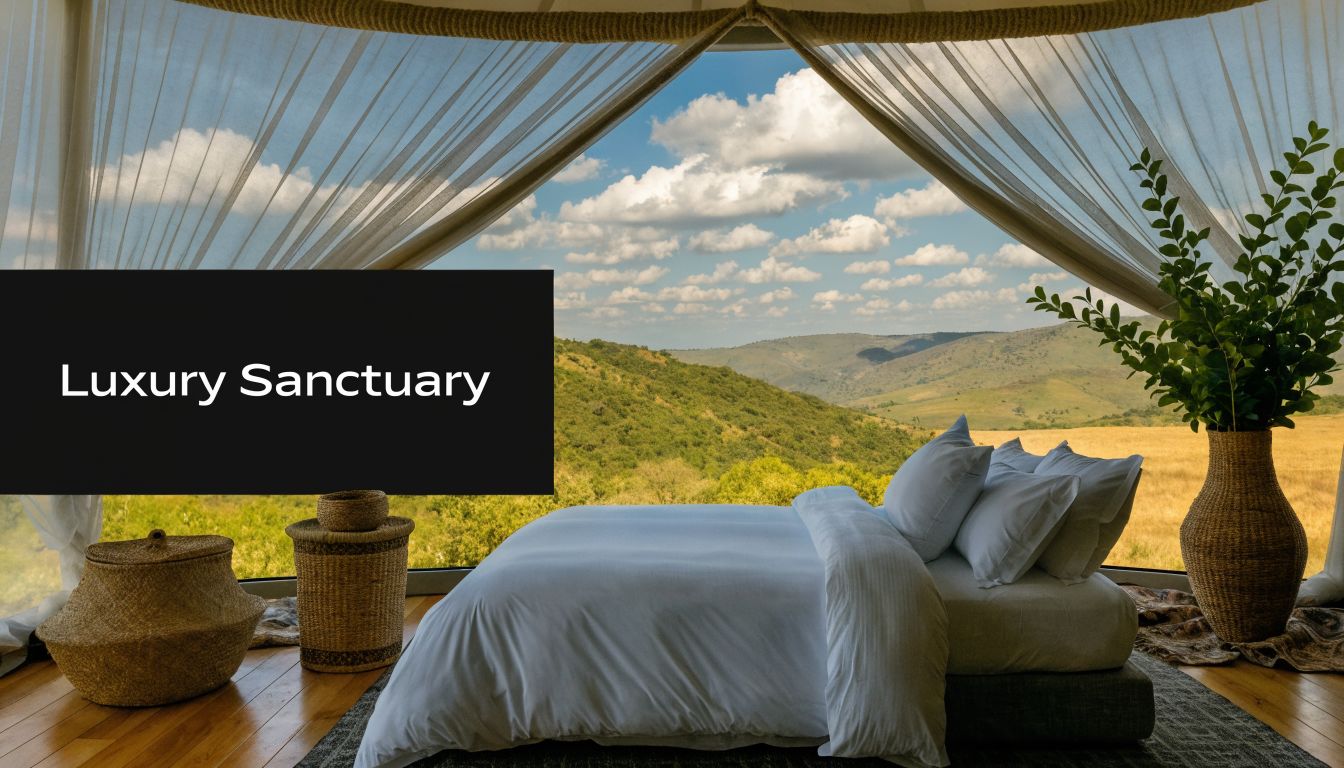
The pavilions are large, cool, and intelligently planned, with private plunge pools, outdoor showers, and enough separation between sleeping, bathing, and lounging to make a multi-night stay feel settled rather than temporary, as noted earlier from Safari.com. That matters more than brochure language. Space only becomes luxury when it changes how you use the room, and here it does.
How to choose the right pavilion
My advice is simple. For most clients, book a standard bush pavilion and request privacy first.
A safari suite fails when it feels exposed, noisy, or too close to the social core of camp. Chief’s Camp works best when your pavilion feels slightly removed, with a clear view and a deck you will use between drives. Travelers accustomed to luxury villa accommodations usually recognize the difference immediately. The best suite is not the one with the loudest category name. It is the one that gives you calm, shade, and a sense of personal territory.
Use the pavilion as part of the safari, not just your sleeping quarters. Early coffee on the deck. Midday recovery by the plunge pool. A proper reset before afternoon tea. If you want the trip to build well, protect those in-between hours instead of treating them as dead time. That is where a polished safari starts to feel personal, and it is exactly the kind of pacing we refine through Haute Black’s privately curated safari experiences.
My recommendation by traveler type
Choose by behavior, not by ego.
- For couples on a first Botswana safari: Book a bush pavilion in a more tucked-away position. Privacy will improve the stay more than quick access to the main area.
- For photographers: Ask for the broadest floodplain outlook available. You will use that view in the soft light before and after drives, and it often becomes part of the trip’s visual memory.
- For guests who spend real time in-suite: Commit to the pavilion experience. Chief’s Camp rewards travelers who read, rest, swim, and watch the day change from their deck.
- For heat-sensitive travelers: Prioritize the cooling advantages of the pavilion and structure your day around them. This camp handles midday comfort better than many otherwise excellent safari properties.
Here is the cleanest way to decide:
| Accommodation choice | Best for | Why it works |
|---|---|---|
| Bush Pavilion | Couples, solo travelers, most safari guests | Strong privacy, generous indoor-outdoor flow, easy rhythm over several nights |
| Geoffrey Kent Suite | Families, couples wanting maximum seclusion, guests who want control over the schedule | Separate living at a larger scale and a much more private operating style |
A closer look helps:
When to book the Geoffrey Kent Suite
Book the Geoffrey Kent Suite for one reason. You want control.
It suits families who do not want their day shaped by the camp’s shared rhythm. It suits couples celebrating something major and unwilling to trade privacy for price discipline. It also suits experienced safari travelers who know they will want to adjust meals, drive timing, and downtime as the stay unfolds. According to Safari.com’s Chief’s Camp listing, the Geoffrey Kent Suite includes two bedrooms and dedicated private arrangements that give you materially more flexibility.
That flexibility is a significant luxury. You can stay out when a sighting develops. You can return early without feeling you have disrupted the day. You can let the trip respond to mood, weather, and energy level.
My recommendation is firm. Do not book the Geoffrey Kent Suite just because it is the top category. Book it if autonomy sits near the top of your priorities. Otherwise, a standard pavilion is the sharper choice, and the money is often better spent elsewhere in the itinerary.
Curated Experiences In the Heart of the Delta
On a well-run stay here, the day is decided before the vehicle leaves camp. The best guide reads light, temperature, spoor, and your appetite for intensity. The best guest does the same. Chief’s Camp rewards people who understand timing.
That is the difference between a good safari and an exceptional one.
This concession is known for reliable, high-level game viewing, so I advise clients to treat activities here as a sequence, not a menu. Start with the experience that has the highest upside, then let the quieter hours restore your attention. If you try to give every activity equal weight, you flatten the trip. Chief’s Camp should feel shaped, not crowded.
How to structure the day properly
Begin with game drives. They are the main event here, and pretending otherwise is a mistake. Early morning delivers the sharpest light, cooler temperatures, and a sense of momentum that sets the tone for everything that follows. In the late afternoon, return to the field with enough flexibility to stay out if a sighting develops. Do not overfill the hours in between.
Midday is for recovery and observation. Eat well. Swim. Read. Sit on the deck and let the Delta come to you. Clients who protect this quiet window almost always enjoy the second drive more, and they notice more once they are back out.
Then add contrast with care:
- Prioritize drives first: This camp earns its reputation on wildlife viewing. Build around that strength.
- Use mokoro selectively: When water levels permit, it changes the mood of the stay and gives the Delta a slower, more intimate register.
- Leave one evening open: The finest sundowner stop is usually the one chosen in response to the day, not fixed in advance.
- Consider a scenic flight if you are a repeat safari traveler: The aerial view gives scale and pattern to what you have been seeing at ground level.
For travelers planning beyond a single camp, Haute Black’s safari experiences collection shows how to sequence camps and regions so each stop adds something distinct rather than repeating the last.
What discerning travelers get right
They do not chase constant motion.
They understand that Chief’s Camp works best in layers. The drive brings urgency. The camp restores calm. A mokoro excursion, when available, resets the pace completely. By the time you head back out, you are alert again, which matters more than people think. Fatigue dulls a safari faster than a missed sighting.
I also recommend keeping your priorities narrow. If your chief aim is predator action, commit to the drives and stay flexible with timing. If your aim is texture and variety, pair those drives with water-based time and one aerial experience. As noted earlier, the concession has the consistency to support that kind of confidence in planning. You do not need to force the itinerary.
The smartest version of Chief’s Camp is disciplined. Do less, in the right order, and the Delta gives you far more in return.
Timing Your Definitive Okavango Safari
Most travelers ask the wrong question. They ask for the “best” time to visit sanctuary chief's camp. There isn’t one universal answer. There is only the best timing for the version of the Delta you want.
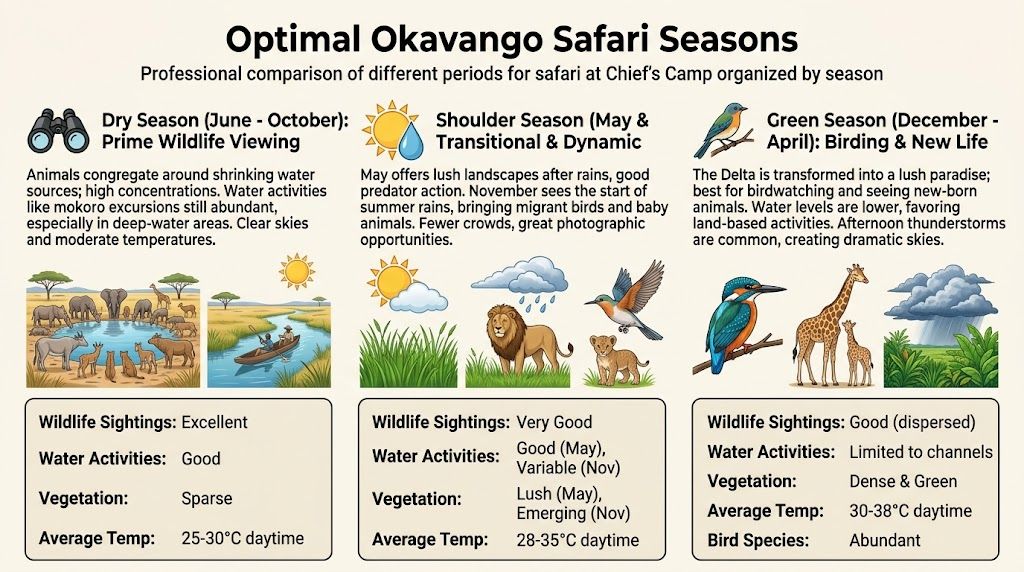
The useful fact is this: the annual flood pulse peaks from June to October, transforming the area, opening waterways for mokoro excursions, and concentrating herbivores on islands, while the drier period from November to April can deliver more intense predator sightings as wildlife gathers around remaining water sources, according to Moremi.com’s overview of seasonal conditions at Sanctuary Chief’s Camp. That choice should drive your planning.
My direct recommendation
If this is your first high-end Okavango trip and you want the iconic visual language of the Delta, go during the flood period. Water defines the place, and for many clients that scenery is part of the dream.
If your priority is predator drama and a more land-focused rhythm, the drier phase can be the stronger choice. It’s less about postcard romance and more about concentration, tension, and sharper wildlife interactions.
For many discerning travelers, the answer is even simpler:
- Choose June to October if you care about classic Delta atmosphere, navigable water, and the interplay of island and floodplain.
- Choose November to April if you care most about land-based game viewing with a harder edge.
- Use May or November if you like transitional environments and don’t mind a more dynamic, less fixed seasonal feel.
Seasonal experience guide
| Season | Months | Landscape & Water Level | Wildlife Highlights | Key Experiences |
|---|---|---|---|---|
| Flood season | June to October | Waterways expand and the Delta feels fully expressed | Herbivores concentrate on islands and game viewing remains strong | Mokoro when conditions allow, classic Delta scenery, broad photographic contrast |
| Transitional periods | May and November | Conditions shift and the landscape changes quickly | A compelling mix of movement, contrast, and seasonal tension | Flexible safari days, strong photography, varied terrain |
| Drier period | November to April | Water is lower in many areas and land-based movement becomes more pronounced | More intense predator sightings can occur as wildlife gathers around remaining water | Strong game drives, dramatic skies, greener seasonal character in parts of the cycle |
What I’d book for different clients
The mistake is treating seasonality as a technical note rather than a design choice. It should shape the entire feel of the trip.
Here’s how I advise clients:
1. Honeymooners and first-time Botswana travelers usually want the flood period. The scenery feels cinematic and the camp’s setting reads at full emotional power.
2. Repeat safari travelers often prefer the drier window because they’ve already had the dreamscape version and now want behavior, tracking, and predator intensity.
3. Photographers should think less about a single “best” month and more about preferred texture. Water reflection, open grass, storm light, and visibility all change the visual language of the trip.
For anyone still deciding, this African safari planning guide for first-timers is a smart companion read because it helps align season, expectations, and style of travel.
If you can only go once and want the canonical Okavango image, I’d book into the flood pulse. If you already know the Delta and want tension over softness, I’d lean drier.
The key is not to chase someone else’s favorite month. Build around the experience you want.
The Haute Black Advantage: Expert Access and Bespoke Journeys
A Chief’s Camp booking can look simple until the first missed connection, the wrong luggage strategy, or a poorly judged camp pairing starts draining energy from the trip. Clients at this level should never spend their safari compensating for preventable planning mistakes. The camp is polished. The journey around it needs the same discipline.
Chief’s Camp sits in a part of Botswana where logistics shape the mood of the entire stay. Getting there usually involves light aircraft and tight operational sequencing. Add a larger East or Southern Africa itinerary, a family with different pacing needs, or a celebration that calls for privacy, and average travel planning stops being good enough.
What matters is orchestration.
The best results come from making a few smart decisions early. Start with pacing. Chief’s Camp has enough depth that it should not be treated as a quick stop between flashier names. Give it room. Then look at pairings. I usually advise clients to combine it with a camp that offers a clearly different rhythm or terrain, rather than another property that repeats the same visual language and game-drive pattern.
The second decision is accommodation strategy. Some clients should reserve the Geoffrey Kent Suite. Others gain more by putting that budget into a longer stay, private guiding, or a stronger pre and post safari structure. This is where insider judgment matters. The right choice depends on who is traveling, how private the trip needs to feel, and whether the journey is about maximum exclusivity, family ease, or a milestone done with discretion.
A well-built plan also handles the details that inexperienced bookers tend to miss:
- Flight design: International arrivals, regional connections, and bush flights need to work as one chain, not as separate reservations.
- Baggage control: Soft bags, weight limits, and smart staging matter more in Botswana than clients expect.
- Guide fit: The right guide changes the trip. Some guests want rigor and tracking depth. Others want warmth, patience, and a lighter interpretive style.
- Activity sequence: The strongest stays are paced properly, with early game-drive intensity, enough downtime at the pavilion, and no pressure to fill every hour.
That last point is where Haute Black adds an edge. The difference is not access for its own sake. It is judgment. Through Haute Black’s safari planning team, the trip is shaped with the kind of strategic clarity that turns a strong camp stay into a fully composed journey. You want the right pavilion, the right air routing, the right camp combination, and enough restraint to let Chief’s Camp do what it does best.
I also protect against a common luxury travel mistake. Too much itinerary. Botswana punishes overdesign. If every transfer is ambitious and every stop is meant to impress, the trip starts to feel managed rather than lived. Chief’s Camp works best inside a plan that is precise, calm, and confident.
Luxury safari planning shows up in the absences. No rushed arrivals. No duplicated experiences. No sense that a better version of the trip was available if only someone had designed it properly.
That is the Haute Black advantage. You are not just reserving a tent and arranging flights. You are building the highest-performing version of the experience, with each decision made in service of privacy, flow, and time used well.
An Unrivaled Legacy
Sanctuary Chief’s Camp earns its reputation the hard way. Through land. Through pedigree. Through a style of luxury that doesn’t need to shout. Plenty of safari camps are beautiful. Far fewer combine a legendary island setting, serious wildlife credibility, and accommodation that feels expansive enough for clients who are used to the best addresses anywhere in the world.
That’s why I recommend it so decisively. If you want a first Botswana safari that sets the bar dangerously high, this is it. If you’re a repeat Africa traveler who has lost patience for compromise, this is also it. The camp gives you what most high-end travelers are looking for: privacy, a sense of placement, and the feeling that every major decision was made correctly long before you arrived.
The result is rare. Not just luxury in the bush, but confidence in the experience. You don’t spend your time second-guessing the location, the room, the season, or the program. You settle in, go out with purpose, come back to real comfort, and let Chief’s Island do what it has done for centuries.
That’s the standard. And in Botswana, it’s one of the clearest expressions of what an elite safari should be.
If you’re ready to plan sanctuary chief's camp at the highest level, Haute Black can curate the full journey with the precision this kind of safari deserves, from pre-arrival strategy to meticulously organized onward connections.
Frequently Asked Questions
Explore Our Guides


Signature Experiences