Haute Black Journal
Best Time to Visit Botswana: A Luxury Seasonal Guide

Marlene Azeez
Director, HauteBlack
View all articles →
# Best Time to Visit Botswana: A Luxury Seasonal Guide
July 9, 2026
You're probably deciding between two very different trips and calling them by the same name. One is the classic Botswana safari: ochre dust, clear skies, dramatic game drives, elephants packed around water, polished service in camps that book far in advance. The other is softer, greener, quieter, and far more nuanced: storm light over the plains, newborn antelope in fresh grass, migratory birds everywhere, and a stronger sense that the bush belongs to you alone.
Both are Botswana. They are not the same experience.
If you want my direct view on the best time to visit Botswana, start with this: first-time visitors should usually go in the dry season, and seasoned travelers should stop dismissing the green season. The right answer depends less on weather than on what kind of luxury experience you want to buy yourself. Do you want certainty, spectacle, and easy game viewing? Or privacy, atmosphere, and a more layered sense of place?
Defining Your Perfect Botswana Journey
One client wants the Botswana they've seen in their imagination for years. They picture a late-afternoon waterhole in Chobe, the air still, the bush pared back, and elephants arriving in numbers that make conversation stop. They want a strong first safari, the kind that delivers quickly and magnificently. For that traveler, timing is about access to the most cinematic version of Africa.
Another client wants something entirely different. They want green plains, dramatic skies, quieter camps, and those fleeting moments that don't feel staged by seasonality at all: a newborn zebra standing uncertainly beside its mother, a lion appearing through silver rain light, the soundtrack of birds carrying across flooded grass. That's still luxury. It's a more insider kind of luxury.
Best doesn't mean universal
Botswana isn't one destination with one answer. It's a sequence of ecosystems, moods, and logistical decisions. Chobe is not the Okavango. The Delta in flood is not the Delta in summer rain. A family taking over a camp has different priorities than a couple on a honeymoon or a photographer chasing cloud texture and low-angle light.
That's why generic advice fails wealthy travelers. "Go in peak season" is incomplete. Peak for what? Peak wildlife density, yes. Peak demand too. Peak rates. Peak pressure on the best inventory. Sometimes that's exactly right. Sometimes it's lazy advice.
The smartest Botswana itineraries aren't built around a calendar alone. They're built around the moments you refuse to miss.
For travelers making their first safari decision, a strong starting point is this African safari guide for first-timers. It helps clarify what kind of experience you want before you start selecting months, camps, and regions.
The luxury lens matters
High-end Botswana planning should ask different questions from the start:
- Private camp atmosphere: Do you want the social energy of high season, or do you want a lodge that feels almost privately held?
- Visual priorities: Are you after sparse bush and clean sightings, or lush backdrops and dramatic sky structure?
- Travel party needs: Are you coordinating grandparents, children, and private vehicles, or building a romantic itinerary with maximum seclusion?
- Activity mix: Is a mokoro safari essential, or is your trip really about land-based game drives and photographic timing?
Once you've answered those questions, the best time to visit Botswana becomes much easier to choose. Not because Botswana becomes simpler, but because your priorities do.
Botswanas Two Seasons At A Glance
Botswana is easy to understand on paper. It has two defining travel seasons: the dry season from May to October and the green season from November to April. In practice, the choice is more refined. Luxury travelers aren't only choosing weather. They're choosing visibility, atmosphere, privacy, and the rhythm of each day in camp.
The dry season is the classic answer because it delivers the easiest wildlife viewing. According to Audley's Botswana season guide, the optimal period for wildlife viewing in Botswana is the dry winter season, spanning from May to October, when game viewing peaks due to animals concentrating around diminishing water sources. Daytime temperatures range between 22°C and 35°C (72°F to 95°F), while nights can drop significantly, requiring warm clothing. That's the season most first-time safari travelers imagine when they picture Botswana.
The green season is the refined alternative. It's hotter, more humid, and less immediately obvious. But it also brings richer color, fewer travelers, more birdlife, and a different type of exclusivity. If the dry season is about clarity, the green season is about atmosphere.
Botswana Seasonal Comparison for the Luxury Traveler
| Factor | Dry Season (May - October) | Green Season (November - April) |
|---|---|---|
| Wildlife viewing | Easiest and most consistent. Animals gather near remaining water sources. | More dispersed, but still rewarding with a skilled guide. |
| Landscape | Sparse vegetation, open sightlines, pale grasses, blue skies. | Lush, vivid, dramatic skies, fresh growth across the bush. |
| Photography style | Clean sightings, dust, contrast, classic safari scenes. | Storm light, saturated color, young animals, moodier compositions. |
| Atmosphere in camp | High demand, buzzy energy, strong social scene in popular months. | Quieter, more intimate, often more private-feeling. |
| Birding | Good, but not the standout reason to travel. | Strongest choice for birders because migratory species arrive. |
| Family ease | Excellent for first-timers and multi-generational groups. | Better for repeat travelers comfortable with a less predictable rhythm. |
| Value | Highest demand and least flexibility at top camps. | Lower rates and fewer visitors. |
| Packing mood | Layered clothing for warm days and cold mornings or nights. | Breathable clothing, rain readiness, and tolerance for heat. |
Which season should you choose
If you want my clean recommendation, it breaks like this:
- Choose the dry season if this is your first Botswana safari, if you're bringing family, or if you want the strongest odds of dense wildlife activity with minimal effort.
- Choose the green season if you care about privacy, birding, atmosphere, or photography that feels more editorial than documentary.
- Choose shoulder moments if you want a more balanced outcome and you dislike the crowd dynamics that come with the most coveted dates.
Practical rule: If you want Botswana to impress you immediately, go dry. If you want Botswana to unfold slowly and reward patience, go green.
That distinction matters more than is commonly realized.
The Dry Season The Classic Safari Experience
If you want the Botswana that converts first-time safari travelers into lifelong Africa obsessives, go in the dry season.
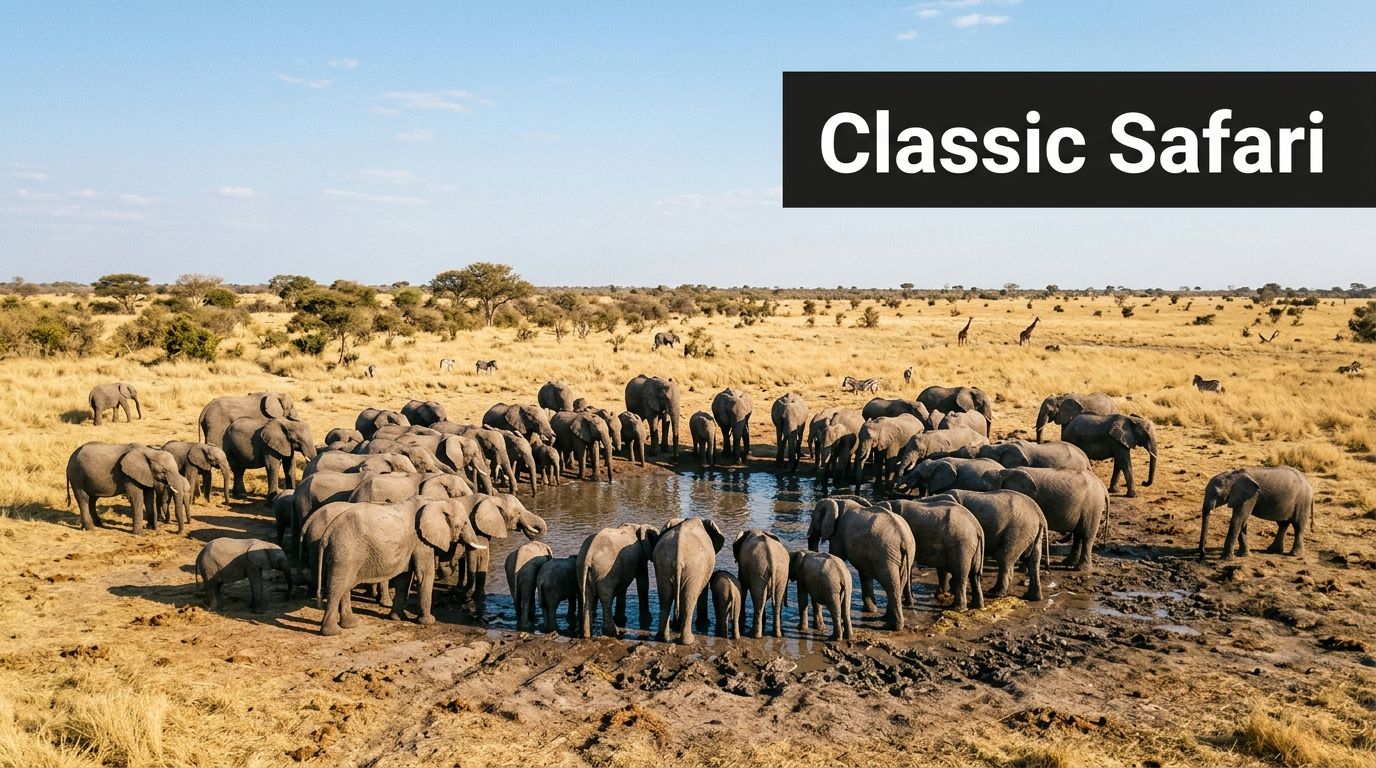
From May through October, the country simplifies in the best way. Water becomes the organizing principle of the terrain. Wildlife responds accordingly. The bush opens up, movement becomes easier to read, and each game drive has a sense of rising inevitability. Animals have fewer places to hide and fewer places to go.
Why first-time visitors should favor August to October
This is the period I'd recommend most confidently to a client who wants Botswana to feel unmistakably major from the first drive. Responsible Travel's guide to the best time to visit Botswana notes that the optimal window for first-time safari visitors to Botswana is specifically August to October, coinciding with the dry winter season when vegetation thins dramatically and huge herds of elephants and buffalo concentrate exclusively around the few remaining water sources in the Okavango Delta and Chobe National Park.
That concentration changes everything. It means less time searching and more time watching behavior. It means children stay engaged. It means older family members don't need patience as their main safari skill. It means your guide can spend more time interpreting what you're seeing instead of trying to find it.
What luxury travelers gain in the dry season
The obvious gain is game viewing. The less obvious gain is ease.
- Cleaner daily rhythm: Clear skies and minimal rainfall make logistics simpler.
- Sharper sightings: Thinner vegetation gives guides and photographers a visual advantage.
- Comfort at camp: Cool mornings and nights suit fireside dinners, early departures, and long evenings outdoors.
- Less mosquito interference: That changes how relaxed the whole trip feels.
Dry season also suits high-touch itineraries that combine several remote camps. Flight schedules tend to run more smoothly when weather is stable, and private guiding feels especially rewarding when every drive has momentum.
A short visual sense of that atmosphere helps:
The trade-off is demand
This is the best time to visit Botswana for classic safari drama, and everyone knows it. The finest camps in private concessions are small by design. That intimacy is part of the appeal, but it also means prime dates disappear early. If you want the top guides, best family configurations, or a full camp buyout, dry season demands decisiveness.
For honeymooners, I often prefer the edges of this season rather than its absolute center. You still get the atmosphere and the sightings, but with a little more breathing room. For first-time safari travelers who hate uncertainty, though, the answer remains straightforward: August through October is Botswana at its most instantly legible and most rewarding.
The Green Season A Connoisseurs Choice
The dry season gets the headlines. The green season gets the loyalty of travelers who've already done the obvious version of safari and want something more textured.
From November to April, Botswana changes temperament. The land softens. The air thickens. Storms roll in, pass, and leave behind extraordinary light. The bush no longer offers itself up so easily. You need better guiding, more patience, and a willingness to appreciate a safari that doesn't hand over every sighting at once.
That's precisely why many experienced travelers prefer it.
Why the green season is undervalued
People often confuse "easier" with "better." Easier wildlife viewing is not the same as a better trip. The green season gives you things the dry season cannot: a fresher palette, more dramatic weather, a stronger sense of solitude, and scenes of renewal that feel almost impossible to stage.
According to Jacada's Botswana timing guide, Botswana's green season, occurring from November to April, is ideal for birdwatching as migratory birds arrive, and for witnessing newborn antelopes. The season also features the zebra migration and offers lower visitor numbers and prices.
That combination matters. Lower visitor numbers don't just save money. They alter the emotional shape of the trip. Camps feel calmer. Common areas feel private. Sightings can feel less choreographed and more intimate.
Who should go in the green season
The green season is right for you if your idea of luxury includes quiet rather than just certainty.
- Photographers: You'll get richer skies, cleaner air, greener backdrops, and softer tonal variation.
- Birders: This is the clear choice. Migratory species transform the experience.
- Repeat safari travelers: You don't need every drive to look like a wildlife documentary highlight reel.
- Couples who want privacy: Fewer guests often means a more secluded camp atmosphere.
Dry season gives you precision. Green season gives you mood.
What the experience feels like
The most dynamic Botswana trips often happen when the natural world is doing more than one thing at once. You might spend part of the day watching young antelope test unsteady legs in open grass, then shift into a late-afternoon sky filled with towering cloud and electric light. The bush is alive in a different register.
This season also rewards travelers who are interested in ecology, not only sightings. Predator movement around newborn plains game, migratory birdlife, and the transformation of the Central Kalahari all add depth. If your taste leans toward atmosphere, the green season isn't a compromise. It's a preference.
The mistake is thinking the best time to visit Botswana must be the same for every traveler. It isn't. For many seasoned clients, the green season is the more memorable choice because it feels less expected and more personal.
Decoding The Okavango Deltas Unique Flood
If you misunderstand one thing about Botswana, let it not be the Okavango Delta.
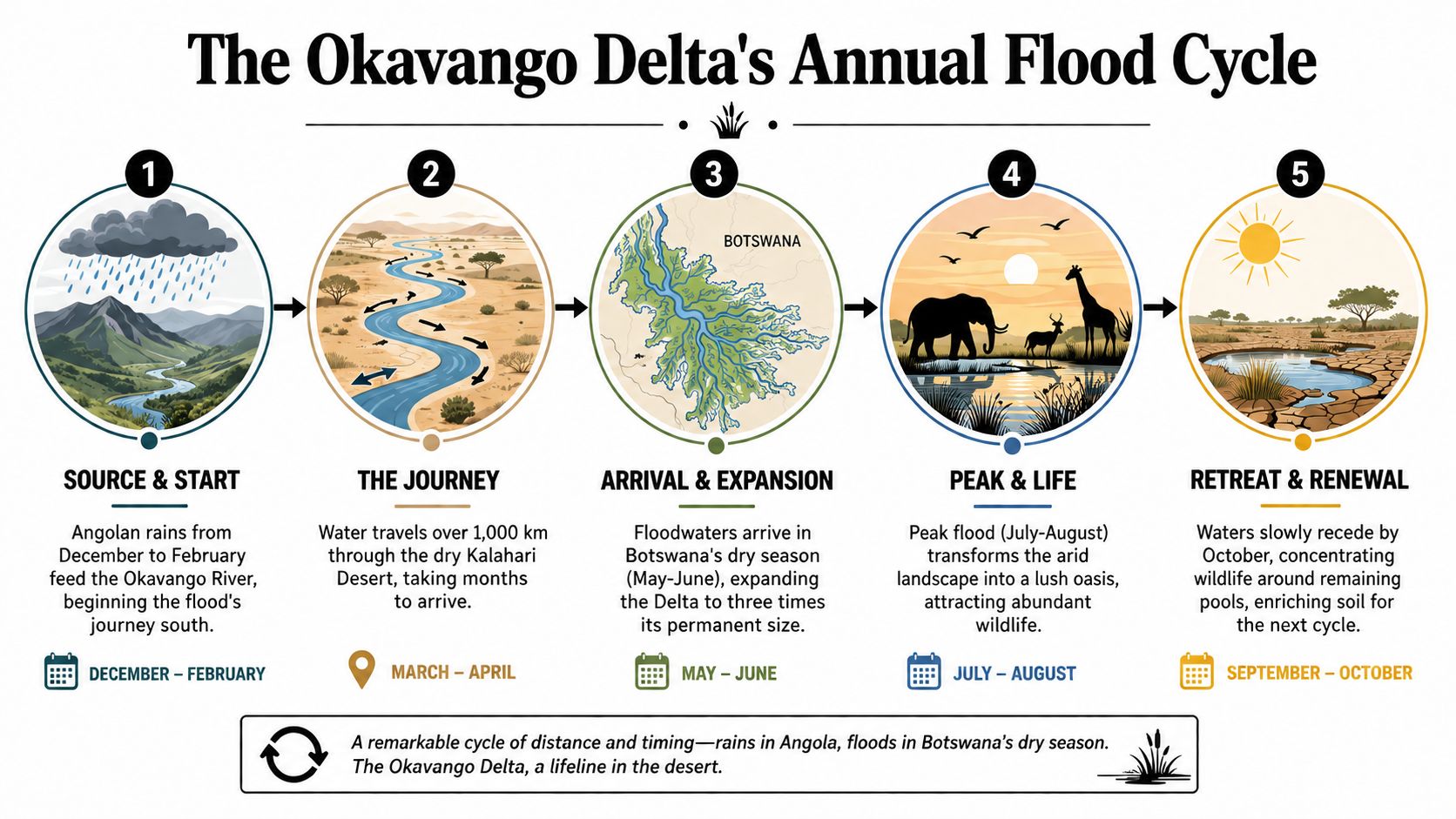
Most travelers assume floodwater arrives with local rain. In the Delta, that instinct fails. The Okavango works like a delayed pulse. Rain falls far away in Angola's highlands, then the water begins a long, slow journey south. By the time it reaches Botswana, the local terrain is in its dry season.
That's why timing the Delta requires precision. If you want water-based safari experiences, you don't chase the rainy months. You chase the flood's arrival.
The timeline that matters
andBeyond's Botswana planning advice explains the key fact clearly: the Okavango Delta's flood cycle is a critical factor, with peak water arriving in July during the dry season. This occurs because summer rainfall in Angola's highlands takes four months to reach Botswana, making May to August the best months for water-based safaris.
That single fact should shape how you plan the Delta. If mokoro excursions, boating, and the full watery magic of the Okavango matter to you, prioritize those months. If you arrive expecting the wettest local period to guarantee the fullest Delta, you may time it poorly.
For a camp-specific look at what this means on the ground, this Sanctuary Chief's Camp Okavango guide is a useful reference point.
How to use this in real trip planning
Think of the Delta as two experiences layered on top of one another. One is terrestrial safari. The other is water safari. The flood cycle controls when the second one becomes extraordinary.
Here's the practical read:
- May to early June: Strong choice if you want rising water with a touch more breathing room.
- July: Peak flood timing. This is the classic Delta water moment.
- August: Excellent if you want high water and strong wildlife viewing at the same time.
- Wet local months: Better for green scenery in broader Botswana, but not automatically the best for classic Okavango water activity.
Botswana's greatest paradox is that the Delta is at its most aquatic when the surrounding country feels at its driest.
That's why the Okavango deserves its own planning logic. It does not obey the assumptions travelers bring from other safari destinations. If the Delta sits at the center of your itinerary, this flood pattern is not a detail. It is the decision.
Timing Your Trip For Your Travel Style
The best time to visit Botswana becomes much easier to answer once you stop asking one broad question and start asking a more expensive one: what exactly are you trying to optimize?
Luxury travel isn't only about access. It's about fit. The right month for a wildlife photographer is not the right month for a family taking over a camp. The right timing for a honeymoon is not the right timing for a birder who would gladly trade textbook game density for layered skies and migratory color.
For the ultimate wildlife photographer
Photographers should ignore generic peak-season advice and think in terms of visual intent.
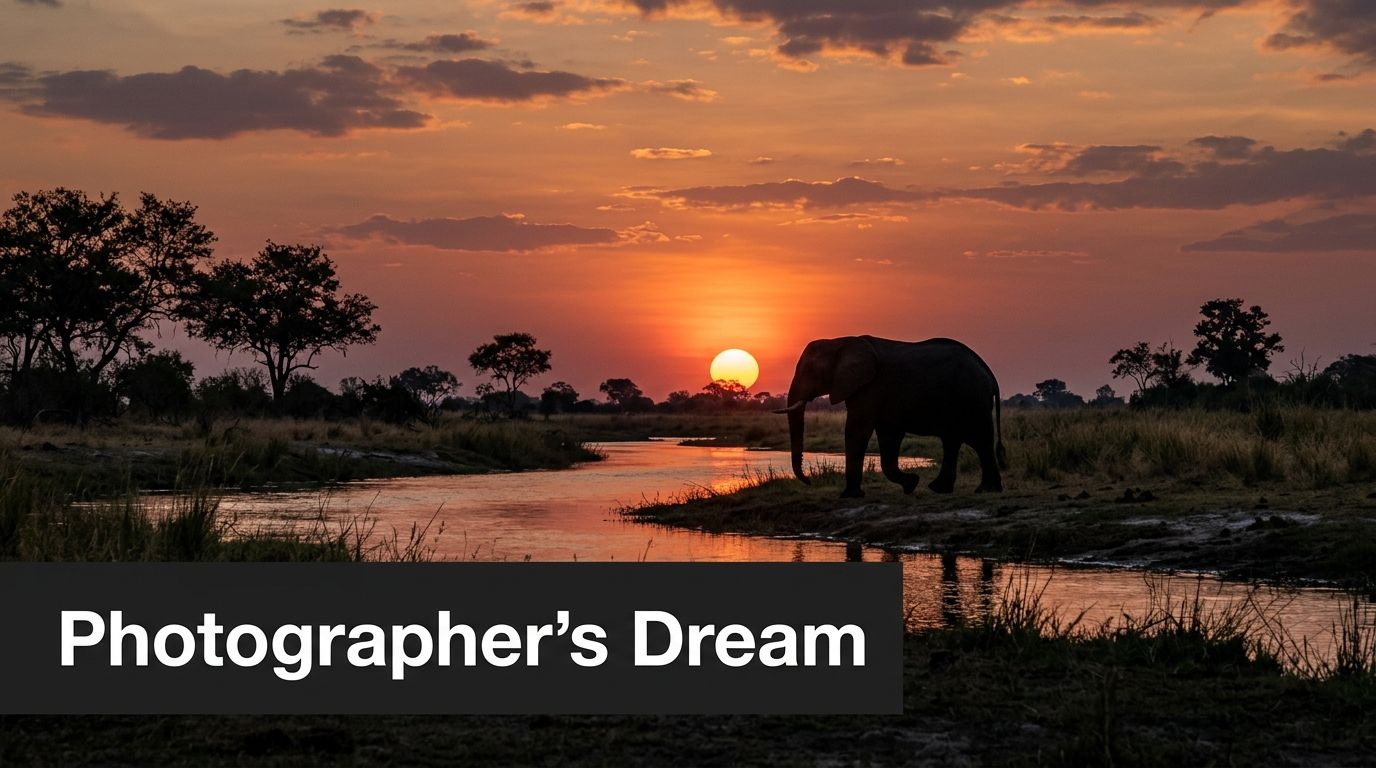
If you want clean animal visibility, dust, strong contrast, and the archetypal safari frame, lean toward the late dry season. Waterholes become theaters. Animal behavior intensifies around limited water. The visual story is stark and unmistakable.
If you want drama, color, and tonal complexity, the late green season is far better. The scenery carries more emotional charge. Storm systems create depth. Young animals add narrative. This is the better timing for photographers who don't just want sightings. They want atmosphere.
For honeymooners and romantic escapes
Couples rarely need the busiest safari dates unless wildlife density is the only priority. Romance in Botswana comes from silence, privacy, and a camp that doesn't feel over-programmed.
The best choices are often:
- May and June: Dry-season quality begins, but the atmosphere can feel calmer.
- Early October: Strong safari energy, but with a more transitional feel than the heart of peak demand.
- Selected green-season windows: Ideal for couples who value mood, privacy, and lower camp occupancy over textbook visibility.
A romantic Botswana itinerary should feel unhurried. Long lunches, private decks, outdoor baths, and slow afternoons work better when the camp rhythm isn't dictated by full occupancy and packed peak-season expectations.
If you're booking Botswana for romance, don't buy someone else's idea of the perfect safari. Buy privacy.
For multi-generational family buyouts
Families need something different. They need reliability.
Grandparents want comfort. Parents want logistics that don't wobble. Children need frequent wildlife action and enough variety to stay engaged. For that reason, the peak dry season is the strongest answer for multi-generational travel, especially when you're reserving private vehicles or considering a full camp buyout.
The advantages are practical as much as aesthetic:
- Wildlife is easier for all ages to see.
- Weather is generally friendlier for daily game-drive routines.
- The experience feels rewarding even for travelers with different attention spans.
- Private guiding works beautifully when the bush is open and active.
For avid birders and repeat Africa travelers
This one is simple. If birdlife is paramount, choose the green season. That's when migratory species arrive and the country takes on an entirely different soundtrack and visual texture.
Repeat Africa travelers often prefer this period too. They've already done the polished, high-certainty safari. They want a Botswana that feels more alive, less obvious, and more interpretive. Green season suits that instinct beautifully.
My direct recommendations
If I were advising clients at a table, I'd keep it this clean:
- First safari in Botswana: August to October.
- Water-based Okavango focus: May to August.
- Birding and lush photographic scenery: Green season.
- Romantic trip with privacy first: Shoulder periods or selected green-season dates.
- Family celebration or buyout: Dry season, with dates locked early.
That's the answer many travelers need. Not a month-by-month weather lecture. A choice aligned to purpose.
VIP Logistics And Bespoke Itinerary Planning
The best Botswana trips aren't won by broad ideas. They're won by execution.
The finest camps are intimate, remote, and intentionally limited. That's what makes them exceptional. It also means indecision costs you the rooms, guide availability, aircraft timing, and privacy level you prefer. If your standards are high, timing is only half the strategy. The other half is securing the trip before the market compresses around your preferred dates.
What to lock in early
For top-tier Botswana, the most important decisions usually happen long before departure.
- Camp selection: Small camps in private concessions have very little margin for delay.
- Room configuration: Families, couples wanting the best suite, and buyout clients all need priority access.
- Private vehicle requests: If exclusivity matters on game drives, ask early.
- Air coordination: Remote camp combinations live or die on clean aviation planning.
This is especially true for travelers centering their itinerary on the classic dry-season months. That period attracts the highest concentration of demand because it aligns with the most straightforward safari conditions.
The details that shape the experience
Private aviation is usually part of the Botswana equation, even when the trip itself feels beautifully effortless. Light aircraft are standard for camp-to-camp movement, and that affects pacing, luggage, and how tightly you should schedule transitions.
Your luggage should be soft-sided and edited properly. Your clothing should match the month, not the fantasy. In the dry season, early mornings and evenings can feel far colder than many clients expect. In greener months, breathability matters more, and weather flexibility becomes part of the daily rhythm.
The difference between a merely expensive Botswana trip and a properly planned one often comes down to details like these:
1. Build around purpose first. Don't start with whichever camp looks best on social media.
2. Keep transfers elegant. Too many camp hops dilute the experience.
3. Match activity style to region. Land-focused camps and water-focused camps should be chosen intentionally.
4. Protect privacy where it counts. Private vehicles, the right suite location, and smart timing matter more than decorative excess.
For travelers incorporating private aviation beyond scheduled safari flights, this private jet charter services guide is a useful planning reference.
My strongest planning advice
Don't ask only when to go. Ask what standard of access you expect once you arrive.
If you want the best-located suite, the strongest guide, the smoothest aircraft sequence, and the option to keep your safari private, planning needs to happen early and with intent. Botswana rewards precision. It doesn't reward procrastination.
Haute Black designs Botswana journeys for travelers who want more than a reservation. Through Haute Black, clients gain bespoke itinerary planning, insider access, preferred partner benefits, and expert coordination across remote camps, private aviation, and high-touch ground logistics. If you want the best time to visit Botswana matched precisely to your travel style, not handed to you as a generic season chart, that's the right place to start.
Explore Our Guides
Signature Experiences