Best Time to Visit Antarctica: Seasons, Wildlife & the Drake

Marlene Azeez
Director of Travel
The best time to visit Antarctica is the Antarctic summer, from November through March, the only months expedition ships sail to the Peninsula. November brings pristine snow, sea ice and penguin courtship. December and January bring the longest daylight, the first chicks on the beaches and the highest demand. February and March favour whales, older chicks and quieter decks as the season winds down. For a family, the right month is the one that fits both school holidays and the ship's minimum age, which ranges from four to twelve depending on the line.
Our Antarctica by Expedition Yacht journey is the full ten-to-fourteen-night itinerary, from Buenos Aires and Ushuaia across the Drake to the Peninsula and the South Shetland Islands. This guide is narrower: what each week of the five-month season actually delivers, how the Drake Passage changes the decision, which ships take children and from what age, and how far ahead the best cabins are committed.
Antarctica has no hotels, no roads and no fixed schedule the ice will honour. Choosing the month is choosing what the continent will show you.
TIMING
Overview by Season
Early Season: November
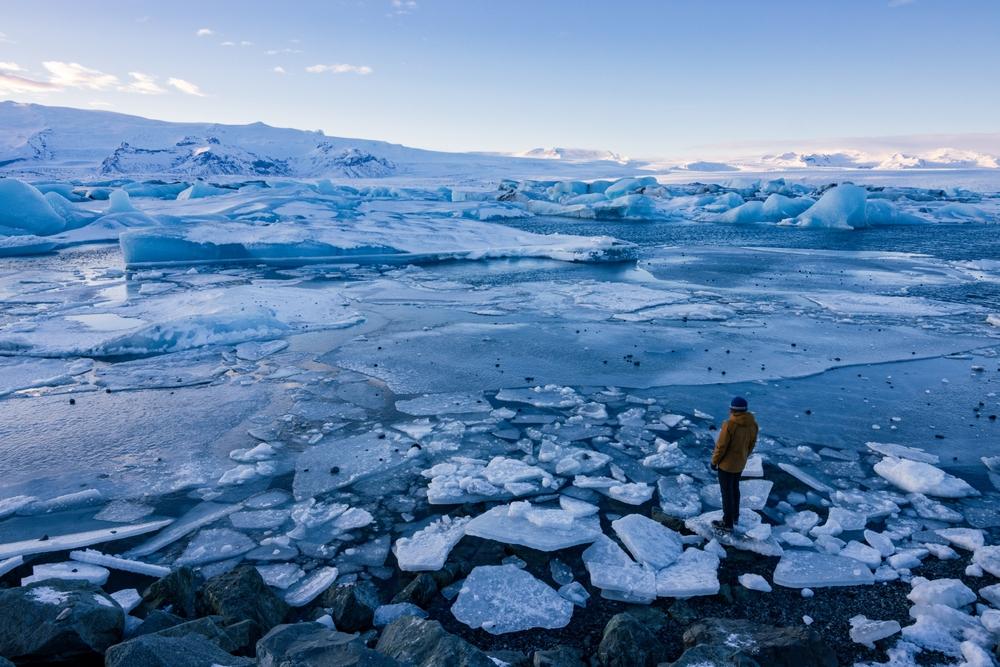
November is the season's opening act. The Peninsula is still dressed in deep, unmarked snow, sea ice lingers in the bays and the light is clean and bright for photography. Penguins are returning to their colonies to court and build nests from stones, and the landscape feels untouched because, for the year, it largely is. Some early-November departures, conditions permitting, offer cross-country skiing or snowshoeing across frozen sea ice, which Lindblad Expeditions lists on its early-season Antarctic voyages. The trade-off is that lingering ice can close some channels and landing sites, so the expedition team is more often improvising.
High Summer: December and January
This is the heart of the season. Daylight is close to continuous around the December solstice, the air is at its mildest, and penguin chicks begin hatching from around late December, so the colonies are noisy, busy and full of life. It is also the most in-demand window, especially mid-December through mid-February, and the Christmas and New Year departures are usually the first to be committed. Voyages that aim to cross the Antarctic Circle generally run in midsummer, when the ice is most likely to allow it, and still depend on conditions on the day.
Late Season: February and March
Late summer belongs to the whales. Humpback and minke whales are feeding in numbers, the chicks are older, curious and beginning to fledge, and the decks are often quieter. Sunsets return, so the light turns golden and pink again, which many photographers prefer to the flat brightness of midsummer. Snow has retreated from many landing sites, revealing more rock and moss, and by late March the season is closing. For families, March can coincide with spring break, one of the few school holidays that falls inside the season.
Why Not April to October?
Antarctic winter brings sea ice that spreads far from the coast, temperatures well below freezing and very short days, and tourist ships do not sail to the Peninsula. If your dates fall in the northern summer, the polar alternative is the Arctic; our Svalbard polar bear guide and our overview of luxury Arctic expeditions cover that season.
Month by Month
November: Pristine snow, sea ice and penguin courtship. Some departures offer skiing or snowshoeing on frozen sea ice. Often easier to secure than high summer.
December: Near-continuous daylight around the solstice, nesting penguins and the first chicks from late in the month. Christmas and New Year voyages are the most sought-after of the year.
January: Peak summer. Busy colonies, the mildest weather of the season and the best chance of reaching farther south. Demand stays high throughout.
February: Whale activity builds, chicks are growing fast and the ice has opened up. Still high demand in the first half of the month.
March: The season's last voyages. Whales, golden light, quieter decks and the closest overlap with spring break.
THE DRAKE
The Drake Passage and Your Choice of Month
Sailing the Drake
Most Peninsula voyages begin in Ushuaia, the world's southernmost city, after a night or two in Buenos Aires, and cross the Drake Passage: roughly 600 miles of open Southern Ocean between Cape Horn and the South Shetland Islands, typically two days each way. No month guarantees a calm crossing. What makes the difference is the ship: good stabilisation, a cabin placed low and midships, and a doctor on board. If anyone in your party is sensitive to motion, tell your advisor at the start, and speak to your own doctor about seasickness medication well before you travel.
Flying the Drake
For travelers who would rather skip the open-water crossing, some operators fly guests across. Lindblad Expeditions' Antarctica Direct programme, for example, flies from Puerto Natales in Chilean Patagonia to King George Island in the South Shetlands, where guests board the ship. It saves sea days and suits families with younger children or a motion-sensitive traveler, but flights depend on weather at both ends, so the plan keeps a buffer day. Pairing it with Patagonia is natural; see our guide to the best time to visit Patagonia with kids.
FAMILIES
Antarctica with Kids: Minimum Ages by Line
Antarctica is one of the most extraordinary places a family can share, but every line sets its own minimum age, and the ship's captain and expedition leader decide who joins each landing on the day. These are the published policies of the lines most often discussed on our site, which we confirm again for your departure before any deposit:
Lindblad Expeditions: Children must be at least four years old at embarkation on all Antarctic voyages. Select Antarctic departures include National Geographic Explorers-in-Training, the line's family programme for travelers 18 and under, with hands-on activities from plankton under the microscope to photography.
Seabourn Venture: Guests must be at least six years old at embarkation on Seabourn's Antarctic and expedition voyages, and the captain and expedition leader decide participation in each excursion based on weather and sea conditions.
Abercrombie & Kent: Its current Antarctic voyage pages list a minimum age of six, and its Christmas and New Year holiday voyage, which adds South Georgia and the Falkland Islands, is presented as family-friendly, with dedicated Young Explorers guides.
Scenic Eclipse: Scenic's own terms say children under 12 are not encouraged on its Antarctic voyages, with the exception of Christmas voyages, and are accepted at Scenic's discretion. It is best suited to adults and older teenagers.
Which Weeks Suit a Family?
The holiday calendar decides most family trips. Christmas and New Year fall in high summer, with chicks, long days and the most festive atmosphere on board, and they are the most in-demand departures of the season. Thanksgiving week works for families who want the pristine early-season ice. Spring break in March brings whales and quieter decks at the very end of the season. Because each trip runs ten to fourteen nights door to door, many families add a few days in Patagonia either side; our guide to Christmas and New Year in Patagonia for families shows how the two fit together.
What Each Age Enjoys
Children of four to seven tend to love the penguins, the Zodiac rides and the scale of the ice, but long sea days and layered cold-weather clothing ask a lot of them, so a family programme and a flown Drake crossing help. From around eight to twelve, children can follow the naturalists' briefings, keep a wildlife journal and join most landings. Teenagers are the ideal age: kayaking and other optional activities on many ships carry their own minimum age and height rules, and older teens can take on the longer hikes and the photography in earnest.
Haute Intel: Ask about the ship's family programme before you choose the month. On many lines it runs only on select departures, usually around school holidays, and it shapes the whole trip for a child far more than the cabin category does.
ACCOMMODATION
Where to Stay: Choosing the Ship
In Antarctica, the ship is the hotel. Nobody stays ashore, so the choice of vessel shapes the comfort, the pace and who can join you.
Seabourn Venture
Our ultra-luxury expedition reference for families with children six and over and for couples who want polar capability with refined onboard service. Suites, dining and the expedition programme come together in one vessel; we confirm the suite category and optional activities for your dates. Read how it features among our 10 Tours of a Lifetime.
Scenic Eclipse
A discovery yacht with deep onboard amenity and, where offered, helicopter or submersible options at extra cost. It suits adults and older teenagers best, given Scenic's own terms on children under 12.
Smaller Expedition Yachts
Smaller vessels trade some amenity depth for nimbler landings and a quieter social mood, and they suit travelers who value time ashore above everything else. We shortlist them by party, month and minimum age rather than naming a single favourite.
Before and After the Voyage
Plan at least one night in Buenos Aires before the flight to Ushuaia, so a delayed international arrival never puts the voyage at risk, and add Patagonia afterwards if time allows. Our Patagonia Wilderness journey is the natural extension.
INSIDER INTELLIGENCE
When to Book
Hold peak departures, especially mid-December through mid-February and every Christmas and New Year voyage, 12 to 18 months ahead. The best-placed suites go first, because each expedition ship carries a limited number of them. Shoulder weeks in November and March can be kinder on demand while still delivering the ice. Our note on how far ahead to book a luxury trip explains the timing in more detail.
Haute Intel — landings are capped: Under Antarctic Treaty guidelines and IAATO rules, ships carrying more than 500 passengers make no landings, and no more than 100 people may be ashore at one site at a time. That is why a smaller expedition ship means more time on the ice.
Haute Intel — every landing is provisional: Weather and ice set the day. The best expedition leaders swap a risky landing for a Zodiac cruise among icebergs rather than force it, so plan the trip around the season, not around a single site.
Haute Intel — insurance matters: Lines commonly require proof of medical evacuation cover for Antarctic voyages; Scenic, for example, requires it in its Antarctic terms. We confirm the requirement for every traveler, children included, before booking.
Haute Intel — respect the wildlife: IAATO guidelines keep visitors at a distance from penguins and seals, and nothing is taken from the ice. Children take these briefings seriously, and they become part of the story they bring home.
MEMBER ACCESS
Planning the Journey
Your advisor holds every moving part: international and domestic flights, the ship and cabin, the minimum-age and insurance checks for every traveler, polar clothing guidance, nights in Buenos Aires and any Patagonia extension. Private flights into Argentina or Chile can be arranged through Haute Jets.
Comparing family expeditions? See our Galápagos with kids guide, our Patagonia with kids itinerary and the 7 Best Family Adventure Vacations. When you are ready, share your dates, your party and the ages of any children when you plan your journey. An advisor responds within 24 hours, and no membership is required.
Best Time to Visit Antarctica: Seasons, Wildlife & the Drake — Frequently Asked Questions
November through March, the Antarctic summer and the only season ships sail to the Peninsula. November brings pristine ice and penguin courtship, December and January bring the longest daylight and the first chicks, and February and March bring more whales and quieter decks. See our Antarctica by Expedition Yacht journey for the full route.
Penguins are present all season: courting in November, nesting in December and with chicks from around late December into February. Whales are most active later in the season, in February and March, when humpback and minke whales are feeding in numbers.
Yes, within each line's published minimum age. Lindblad Expeditions accepts children from four on its Antarctic voyages, Seabourn Venture from six, and Abercrombie & Kent lists six on its current Antarctic voyage pages. Scenic's terms say children under 12 are not encouraged, except on Christmas voyages. We confirm the policy for your departure before any deposit.
It varies from gentle to lively, and no month guarantees a calm crossing. The crossing is typically two days each way. A well-stabilised ship and a low, midships cabin help, and some operators offer flights across the Drake to King George Island for travelers who would rather skip the open water.
Hold peak departures, mid-December through mid-February and every Christmas and New Year voyage, 12 to 18 months ahead, because the best suites and cabins go first. Shoulder weeks in November and March can be easier. Share your dates when you plan your journey.
Related Reading
Related Experiences
From the Journal


Your Journey Starts Here
Ready to Experience This
the Haute Black Way?
Our travel concierge team can arrange every recommendation in this guide — from priority reservations to private experiences and preferred room upgrades.
Begin Your Journey