Haute Black Journal
Visit Uganda Safaris: A Bespoke Journey Through the Pearl

Marlene Azeez
Director, HauteBlack
View all articles →
You've chosen Uganda because a conventional safari isn't enough. You want the hour in Bwindi when the forest closes around the trail, the quiet concentration of a serious guide, and a lodge that feels private without disconnecting you from the surroundings. The challenge is that Uganda rewards a different kind of planning. The decisive luxury isn't the suite or the vehicle. It's securing the right permit, matching it to the right forest sector, and building the rest of the journey around that fixed point.
Uganda's recovery makes early planning more important, not less. The country recorded 1,371,895 international visitor arrivals in 2024, up 7.7% year on year and at 89.2% of its pre-pandemic level, while tourism receipts reached approximately US$1.28 billion. Uganda's official tourism figures show a destination with expanding demand and a serious economic stake in conservation-linked travel.
Why Uganda Rewards Travelers Who Plan Around Access
A private aircraft lands near Bwindi, and the scene changes immediately. The warmth of the lowlands gives way to damp mountain air. Mist hangs over the ridges, boots meet dark soil, and your guide pauses before the forest seems to move. The gorillas aren't waiting beside a road. You enter their environment on terms set by altitude, terrain, wildlife protection, and a permit tied to a particular date.
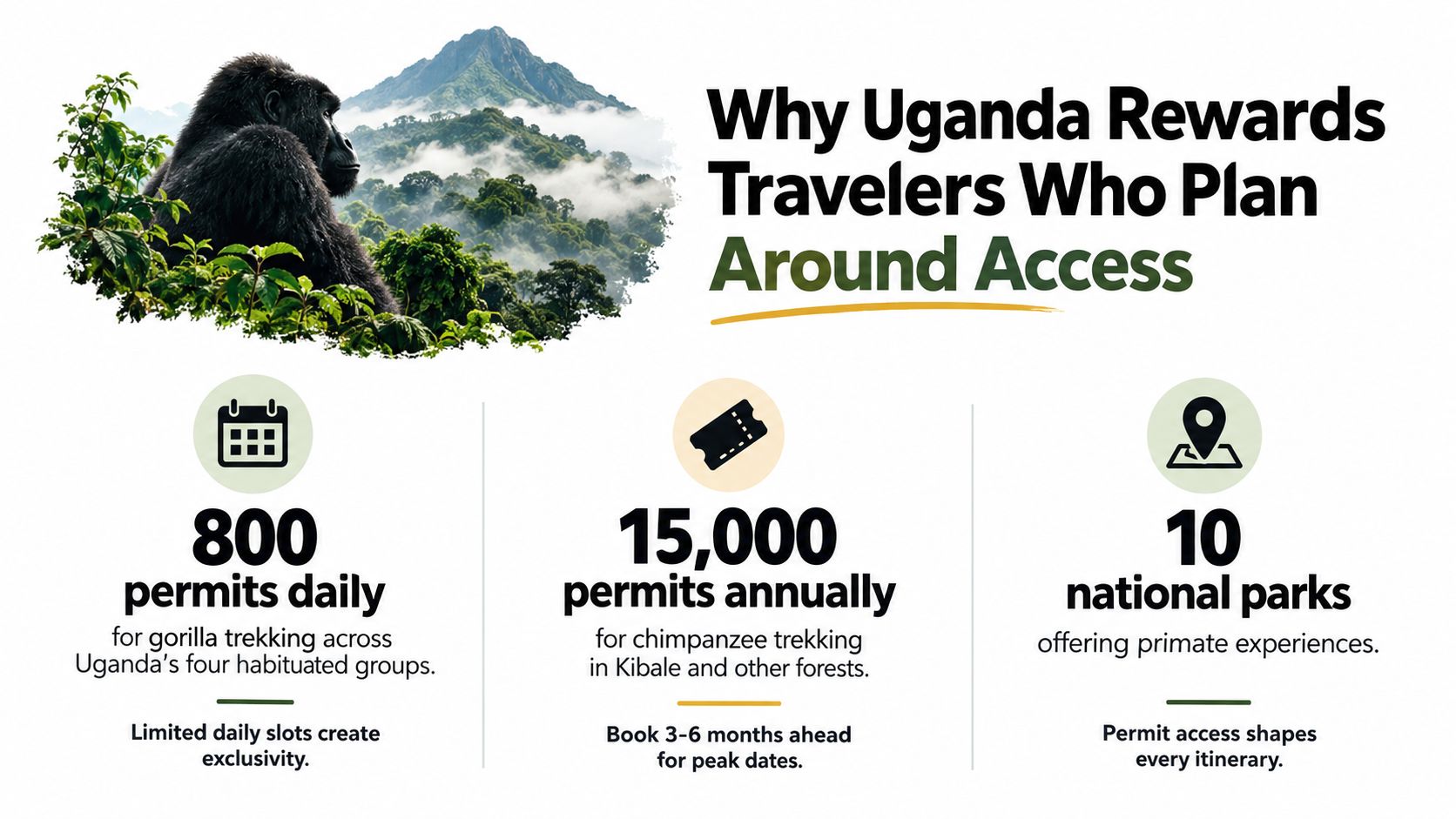
That controlled access is Uganda's central luxury proposition. The country isn't built around one flagship reserve. Its official tourism system includes 10 national parks and 12 game reserves, with experiences ranging from gorilla and chimpanzee trekking to savanna drives, guided walks, birdwatching, village visits, and rare flora. Uganda's national tourism statistics support a route designed across several ecosystems rather than a single park stay.
Uganda can compete strongly with Kenya and Tanzania for travelers who care more about species intimacy and quiet expertise than about covering the greatest possible density of plains wildlife. Kenya and Tanzania remain formidable for classic savanna drama. Uganda earns its place when the journey needs to combine mountain gorillas, chimpanzees, forest terrain, water-based wildlife viewing, and private guiding without turning every day into a race between game drives.
Advisor's view: In Uganda, the permit is the spine of the itinerary. The lodge, vehicle, and flight schedule should support it, not the other way around.
The national recovery also affects the high end directly. More visitors mean stronger demand for preferred lodges, private transfers, experienced guides, and the limited dates that make a forest trek comfortable. A traveler who waits to confirm the gorilla date before arranging everything else may find that the most elegant route has already disappeared.
Two Operating Environments You Must Plan For
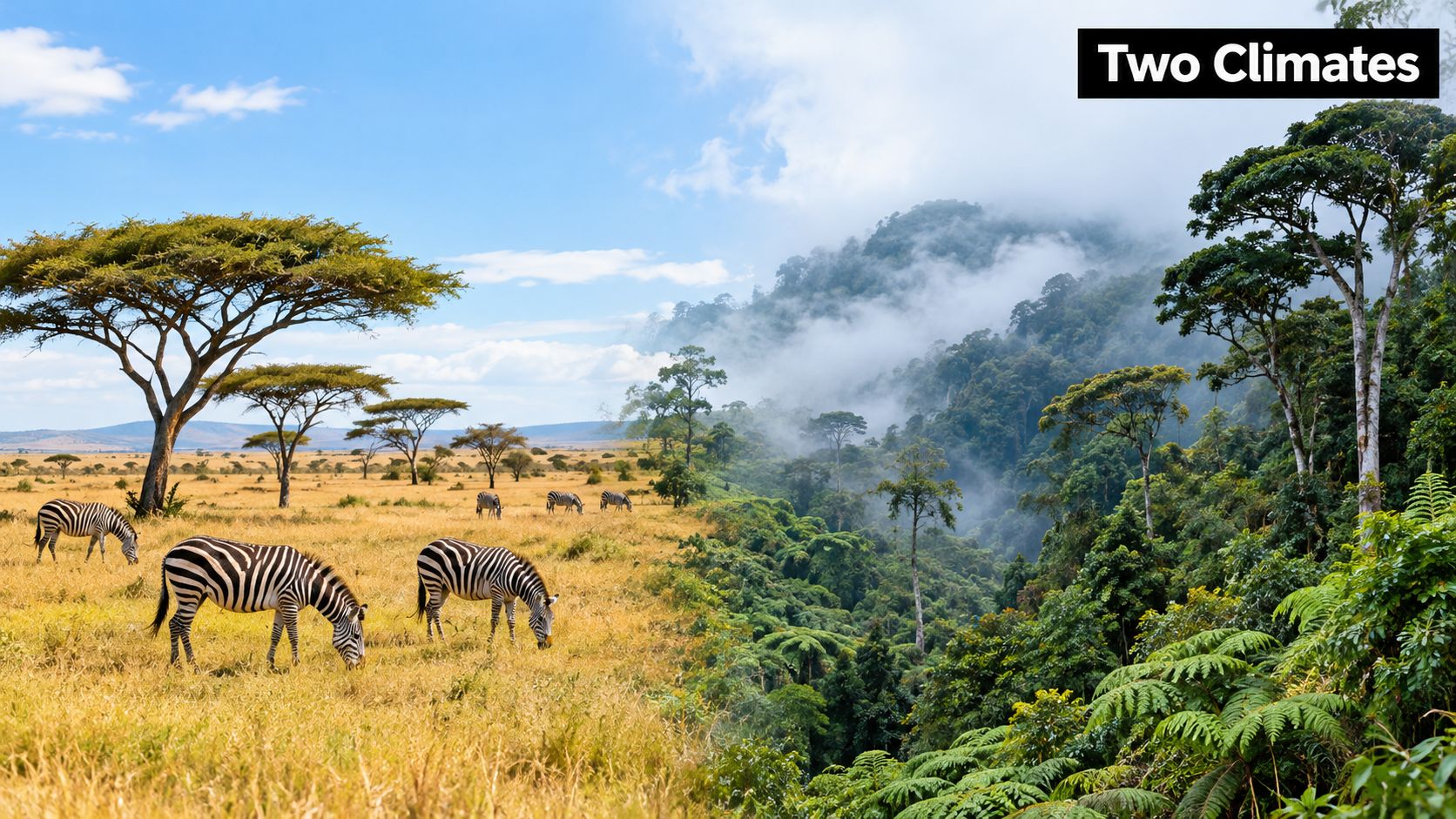
Uganda asks one suitcase to serve two different climates. On a lowland game drive, the day can feel warm, bright, and exposed. In a montane forest, the same traveler may be walking through rain, mud, steep ground, and much cooler air. Treating those environments as interchangeable is how a polished safari becomes physically uncomfortable.
The CDC identifies March–May and September–November as Uganda's principal rainy periods, and notes that elevations around 2,700 m can be substantially colder than the warm lowlands. CDC safari and climbing guidance provides the practical reason to pack for contrast rather than relying on a single warm-weather wardrobe.
Pack for the trail, not the lodge
For the savanna, choose breathable layers, lightweight trousers, sun protection, and a light outer layer for early departures and evening drives. Game drives may take place around dusk or after dark, so your clothing needs to work beyond the warmest part of the day.
For Bwindi or Mgahinga, add insulated layers, waterproof outerwear, and boots with dependable grip. Forest trails become slippery, and a handsome but smooth-soled travel shoe is a poor substitute for proper trekking footwear. Gloves can also make a difference when vegetation is wet and the temperature drops.
Schedule the body intelligently
Put intensive vehicle-based game viewing and high-altitude trekking on different days. A private vehicle gives you flexibility, but it can't remove the physical demands of a forest walk. Older travelers, executives arriving after long-haul flights, and multigenerational groups benefit from a buffer night before the trek and a slower recovery day afterward.
Health planning belongs in the same conversation. Dusk drives, nighttime exposure, and tented stays near water can increase contact with malaria-carrying mosquitoes. A clinician-led malaria protocol, long sleeves, insect repellent, and a protected sleeping arrangement are more useful than vague assurances about the lodge category.
For a broader packing perspective, this luxury safari planning guide is a useful companion. The central rule remains simple: build around the forest permit, then allow the itinerary to move gradually between climates.
Choosing Between Bwindi, Queen Elizabeth, and Murchison Falls
The famous parks aren't automatically the most private parks. Uganda's national parks received 467,065 visitors in 2025, a 6.9% year-on-year increase. Murchison Falls recorded 150,831 entries and Queen Elizabeth 123,521, together accounting for more than 59% of all park visits. The published Uganda travel statistics make the implication clear: route design matters if exclusivity is a priority.
Bwindi is the essential choice for a gorilla-led journey, but it's not a conventional game-viewing park. Queen Elizabeth is the most efficient western complement, combining savanna, crater views, the Kazinga Channel, and a strong range of wildlife experiences. Murchison Falls gives the broadest classic safari feeling among the three, with open terrain and the Nile shaping the experience, but it demands more time and can feel less smooth in a tightly edited itinerary.
| Park | Signature Experience | 2024–25 Visitor Volume | Best Fit |
|---|---|---|---|
| Bwindi | Gorilla trekking in misty montane forest | Not specified in the available data | Travelers prioritizing rare primates and conservation-led access |
| Queen Elizabeth | Savanna viewing and water-based wildlife along the Kazinga Channel | 123,521 entries in 2025 | First-time visitors seeking variety with manageable western routing |
| Murchison Falls | Nile landscapes, classic game viewing, and the falls | 150,831 entries in 2025 | Travelers with time for a northern circuit and a broader safari canvas |
| Kibale | Chimpanzee trekking and forest experiences | Not specified in the available data | Primates-first travelers and routes pairing chimps with gorillas |
My recommendation by traveler type
For a honeymoon, choose Bwindi with Queen Elizabeth. The combination gives you a defining primate encounter, private vehicle time, and a softer rhythm around the channel and lodge. Add Kibale only if chimpanzees matter as much as gorillas.
For a family, keep the route shorter and avoid collecting parks for its own sake. Queen Elizabeth works as the wildlife anchor, while Bwindi supplies the signature experience for members of the group who are fit enough for the trek. Those who aren't trekking can follow a separate forest or community program, subject to local arrangements.
For a repeat safari traveler, consider replacing some of the high-volume routing with a quieter addition. Mgahinga recorded 6,222 visitors in 2024/25, compared with 43,716 at Bwindi, according to the available published statistics. That contrast makes Mgahinga worth discussing when scale and lower visitation matter more than having the widest choice of accommodation.
Murchison is excellent when the Nile and broad savanna are priorities. It's less persuasive when the brief is a short, intimate western circuit. Uganda's strength is choice, but luxury comes from refusing to visit every headline destination just because it appears on the map.
How Gorilla and Chimpanzee Permits Actually Work
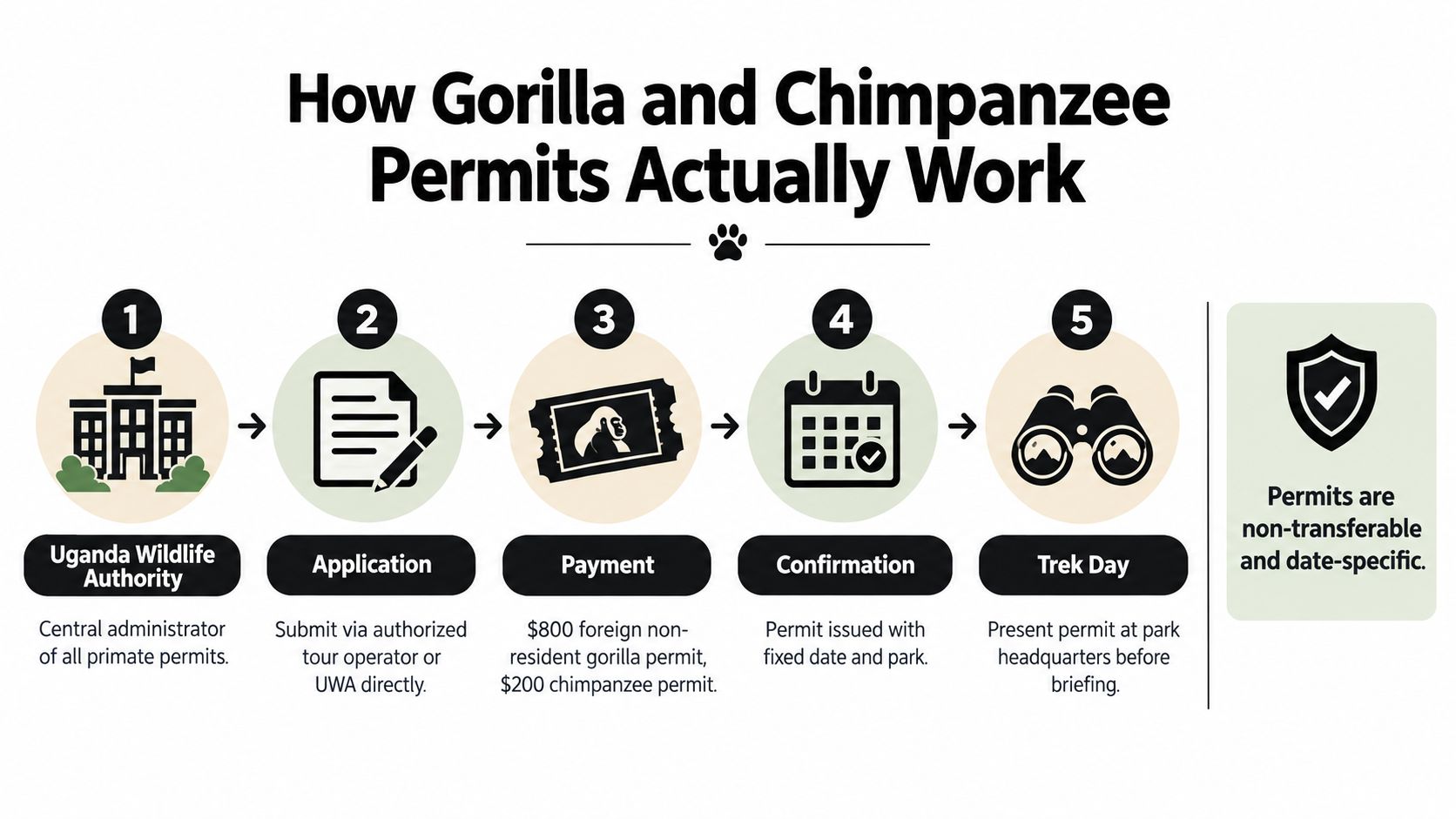
The Uganda Wildlife Authority is the administrative center of the experience. It manages national parks, game reserves, and wildlife sanctuaries, and issues or controls the permits, park-entry fees, and activity bookings that shape primate itineraries. A gorilla or chimpanzee trek is therefore not an on-demand excursion that can be added casually after flights are confirmed.
Foreign non-residents pay up to $800 per gorilla permit. Uganda recorded 41,468 gorilla permits sold in 2024 against 71,372 available, while $10 from each permit was directed to local communities through a formal revenue-sharing model. The Uganda tourism publications provide the relevant permit and conservation figures.
The utilization pattern matters more than the headline price. Overall utilization fell from 69% to 58.1%, which indicates that travelers who can consider less demanded dates may have more practical flexibility. It doesn't mean every date is easy, nor does it remove the need to confirm the precise gorilla sector before choosing the lodge.
The booking logic
1. Select the experience. Decide whether the priority is standard gorilla trekking, chimpanzee trekking, or a more research-oriented habituation experience where available.
2. Confirm the date and sector. A permit is tied to a particular activity, date, and location. The sector determines where you sleep, how early you depart, and what terrain you may encounter.
3. Use an authorized channel. A reputable operator can coordinate the permit request with accommodation, transfers, and contingency planning. Direct administration remains with UWA.
4. Build the itinerary around confirmation. Only after the primate date is secure should you lock flights, vehicle movements, and lodge nights.
5. Respect the allocation. A date-specific permit cannot be treated like a flexible restaurant reservation. Missed connections, late road departures, and poorly chosen accommodation can create avoidable pressure around the trek.
The conservation economics are part of the experience, not an administrative footnote. Permit revenue supports the regulated system that protects access and connects tourism with local benefit. It also explains why licensed booking channels matter: they keep the trip within the authority's ecological and operational limits.
For travelers weighing regional alternatives, this guide to gorilla tours in Rwanda offers useful context for comparing permit structures and route design without reducing the decision to price alone.
Designing a 10-Night HauteBlack-Style Itinerary
A strong ten-night journey should feel edited, not compressed. I'd start with Entebbe, move west toward the primate forests, and use Queen Elizabeth as the wildlife counterpoint. I wouldn't force Murchison Falls into this version unless the Nile and northern savanna are more important to you than a calmer western flow.
The route I would propose
Nights 1 and 2, Entebbe and transition. Arrive without rushing into a long road movement. Use the first night to sleep properly, complete a quiet orientation, and confirm that luggage, permits, and vehicle arrangements are aligned.
Nights 3 and 4, Bwindi. Place the gorilla permit at the center of the itinerary. The lodge should be close to the assigned trekking sector, not merely attractive on a website. That decision protects the morning briefing, reduces pre-dawn vehicle time, and gives the party a better chance to recover afterward.
Nights 5 and 6, Queen Elizabeth. Move from forest to lowland wildlife, with a private vehicle and a guide who can shift between game drives, channel viewing, and scene interpretation. Two nights provide a cleaner rhythm than trying to cross the park in a hurry.
Nights 7 and 8, Kibale or a quieter western add-on. Choose Kibale if chimpanzees are central to the brief. Choose a less-trafficked alternative if the party has already received its primate highlight and values space, slower mornings, or a different habitat more than another permit-controlled trek.
Nights 9 and 10, recovery and return. Use the final nights to absorb the journey rather than adding another headline attraction. A private transfer or charter can be considered where it meaningfully reduces backtracking, but the decision should reflect weather, aircraft availability, luggage constraints, and the risk of missed connections.
What makes it feel high end
HauteBlack's safari guidance emphasizes privacy, serious guiding, and a credible conservation model alongside the accommodation. Its luxury destination guidance supports a useful standard: a beautiful lodge is not enough if the vehicle is shared, the guide is inexperienced, or the operator can't explain how activities support conservation.
For a honeymoon, I'd protect private time and avoid unnecessary lodge changes. For a family, I'd separate the trek day from intensive game viewing and brief every traveler on fitness expectations. For an executive, I'd prioritize private aviation only where it protects the schedule rather than using it as decoration.
A bespoke route should answer three questions before it is priced: How much wildlife variety do you need? How much physical exertion is comfortable? Where does privacy matter most? This bespoke itinerary planning guide is relevant for turning those preferences into a workable sequence.
The Case for Shoulder-Season Travel
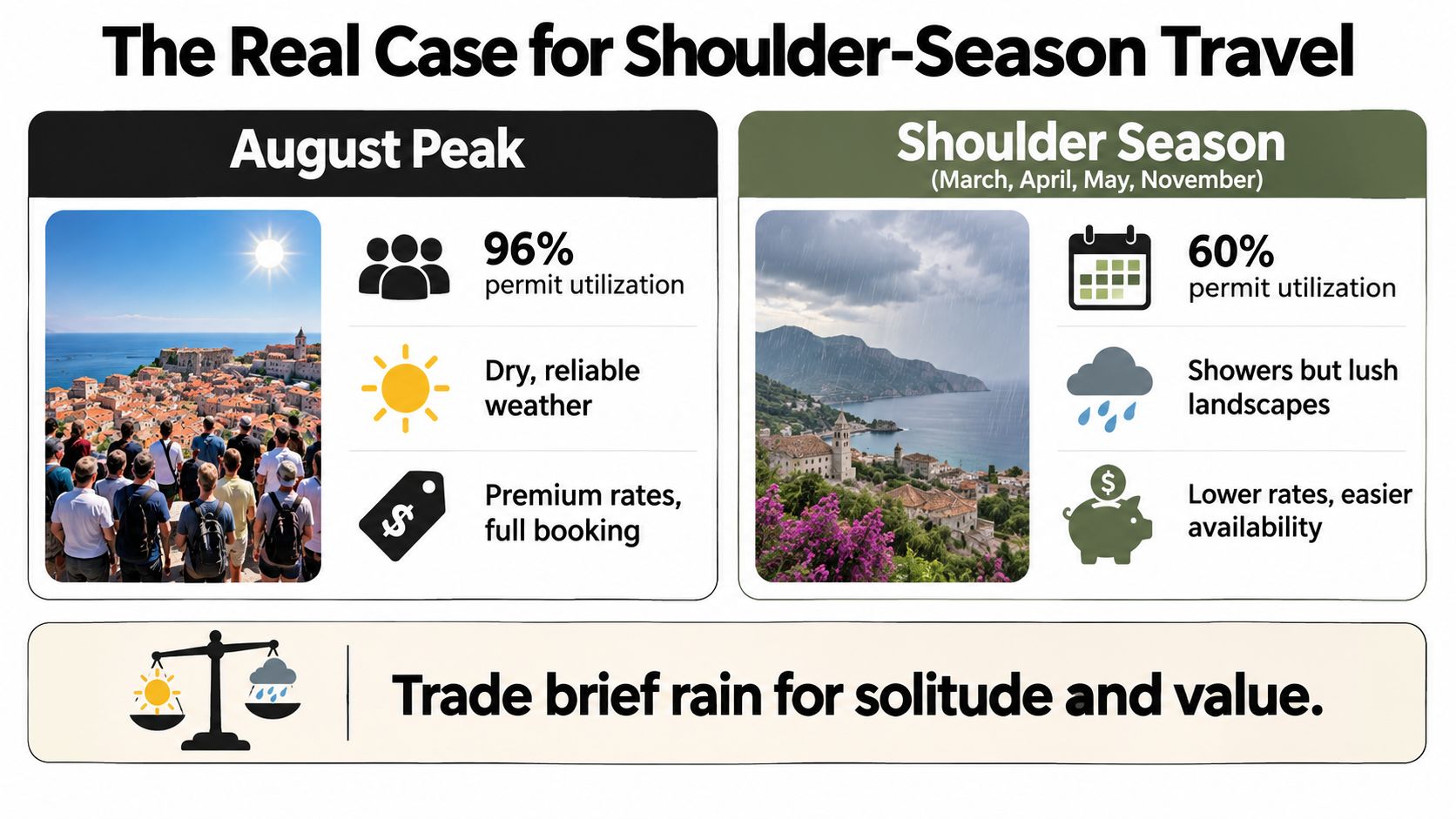
Luxury advisors often default to the driest months because reliable trails and predictable vehicle movement simplify the itinerary. That choice misses Uganda's other advantage: lower-density access for travelers who value privacy, permit availability, and a quieter forest encounter.
Published tourism material shows the trade-off clearly. August approached 96% utilization, while April was approximately 20%. April is not automatically better, but lower demand can give an advisor more room to shape dates, routes, and private arrangements around the traveler rather than around peak-season availability.
What you gain outside the peak
A wetter period can bring quieter trekking conditions, more choice among available permit dates, and a forest that feels intensely alive in the rain. For private parties, that trade can matter more than guaranteed sunshine. Permit-controlled access means lower demand may also make it easier to build a route around the preferred trekking window.
The trade-off requires competent operations. Trails can turn muddy, visibility can change quickly, and transfers need flexibility. Choose a lodge for attentive staff, practical access, indoor comfort, drying arrangements, and the ability to adjust meals and activities without treating weather as a crisis.
The right compromise
I recommend shoulder season to travelers who accept weather variability and prioritize low-density access. Build a buffer around the trek, keep cancellation terms visible, and do not place a critical onward flight immediately after the forest activity.
August suits travelers seeking the strongest probability of dry trails and willing to accept fuller demand. April, or another lower-utilization period, can suit a private party with schedule flexibility and a firm preference for solitude. The decision comes down to the trip's scarcer resource, sunlight or access.
Health, Safety, and Ethics Beyond the Brochure
A polished safari begins with a medical conversation, not a packing list. Ask a clinician about destination-specific malaria chemoprophylaxis, review your vaccination status, and discuss any condition that could affect exertion, altitude, or recovery. Travelers should also understand that forest trekking and vehicle safaris expose them to different physical and environmental demands.
Build a practical pre-departure protocol
- Malaria prevention: Follow a clinician's prescription, then combine it with long sleeves, repellent, and protected sleeping arrangements. Dusk and nighttime drives, along with tents near water, can increase exposure to Anopheles mosquitoes.
- Trail protection: Use footwear with reliable grip, pack waterproof outerwear, and carry layers for the cooler montane environment. Clothing that works beautifully on a warm game drive may be inadequate in wet forest conditions.
- Pacing: Separate the trek from the most demanding vehicle days. Older travelers and multigenerational groups should discuss walking ability before permits are assigned, not after the guide has set out.
- Pre-travel review: For a broader medical checklist, consult the guidance on what to consider before you travel abroad, then confirm the recommendations with your own clinician.
Uganda's mountain-gorilla population has reached 459, representing roughly half of the global population. That figure, documented in the country's tourism publications, makes visitor behavior consequential. A quiet approach, compliance with guide instructions, and respect for distance are not formalities. They reduce stress on animals whose habitat and habituation are carefully managed.
Spend through the regulated system
The Uganda Wildlife Authority manages the protected-area framework and the permit system. Choosing licensed operators and formally booked activities helps keep spending within the conservation and local-livelihood structure. The revenue-sharing model directs $10 from each gorilla permit to local communities, and communities are also entitled to 20% of annual park-entry fees, as reported in the official tourism material.
That doesn't make every operator equally responsible. Ask who employs the guides, how the company handles waste and water, whether porters are paid fairly, and how the lodge describes its community relationships. A luxury itinerary should make those answers easier to obtain, not hide them behind polished language.
Ethical standard: Ask where the money moves, who controls access, and how the operator protects the people and animals that make the journey possible.
Booking Windows and the Questions to Ask Your Advisor
Start with the permit, not the flight. For a peak-date journey, begin the gorilla conversation six to twelve months out. Discuss charters, preferred lodges, and private transfers roughly three to six months ahead, with more time if the party needs a particular sector, room configuration, or aircraft schedule.
Bring your advisor a clear brief:
- Which experience is essential? Gorilla trekking, chimpanzees, classic wildlife, birding, or a balanced combination?
- How much exertion is comfortable? State whether the party includes older travelers, children, or guests managing an injury.
- Is privacy worth changing the season? Compare high-season certainty with shoulder-season availability and trail conditions.
- Where should the route use air? Ask whether a private charter improves the journey or just adds complexity.
- What happens if weather disrupts movement? Require buffer time around permits, road transfers, and onward flights.
- Which operator manages the conservation relationship? Ask for specific answers about licensing, guides, community benefit, and activity bookings.
The right itinerary won't include every celebrated park. It will place the most important experience first, then make every lodge, guide, transfer, and recovery night serve it.
HauteBlack designs bespoke Uganda and Rwanda safari journeys with private camps, expert guides, VIP transfers, and assistance securing limited trekking permits. Brief the team on your preferred balance of gorillas, wildlife, privacy, and physical pace by visiting HauteBlack.
Explore Our Guides
Signature Experiences


