Haute Black Journal
Thailand Cambodia Vietnam Trip: A Stress-Free Itinerary

Marlene Azeez
Director, HauteBlack
View all articles →
Forget the casual overland loop. That advice made sense when you could drift from Bangkok to Siem Reap to Ho Chi Minh City on a bus, change plans at a border post, and lose nothing but an afternoon. If you're booking private villas, temple guides, and time-sensitive restaurant reservations, that model now puts the whole journey at risk. A Thailand Cambodia Vietnam trip works best today as one coordinated itinerary, not three loose trips stitched together on the road.
Why a Thailand Cambodia Vietnam Trip Needs a New Playbook
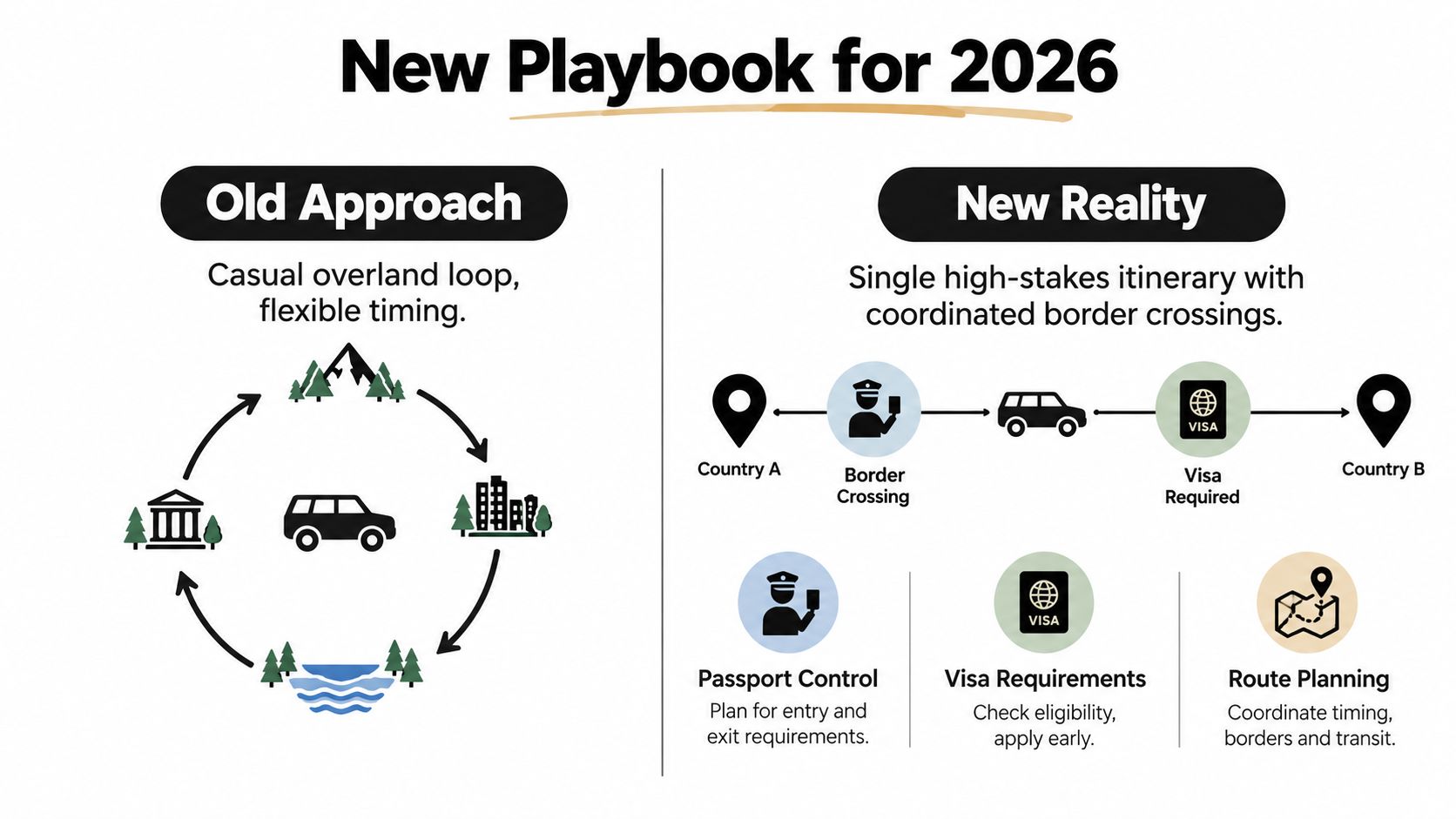
Most guides still sell this corridor as effortless. Cross a border, catch the next bus, repeat. Don't build a luxury journey on that assumption. Border reliability, not your attraction list, is the defining variable in 2026, and the smoothest route is usually the one with fewer land crossings, even if it looks less efficient on a map.
Cambodia's recent numbers show why planners have shifted. The country recorded 5.57 million international arrivals in 2025, down 16.9% year over year, and reporting on the first five months of 2026 described arrivals down 47.8%, with land arrivals falling 68% compared with a 20% decline in air arrivals, according to coverage of Cambodia's 2025 arrival decline and land traffic drop. Air held up far better than land. That's the planning signal.
Build Air First, Then Add Land Only Where It Earns Its Place
Start with an air-first spine, typically Bangkok, Siem Reap, then Ho Chi Minh City or Hanoi. Add a scenic overland leg only if conditions, timing, and your tolerance for delay justify it. You're not avoiding adventure. You're protecting the expensive, non-refundable parts of the trip that can't move.
This region was always interconnected, which is why disruption travels fast. Cambodia welcomed 6,700,125 international arrivals in 2024, up about 22.9% from 5,453,231 in 2023, with Thai visitors at 2,146,674, about 32.0% of the total, and Vietnamese visitors at 1,340,587, about 20.0%, based on reporting on Thai, Vietnamese, and Chinese shares of Cambodia's 2024 arrivals. When more than half your market comes from two neighbors, border friction hits hotels, flights, and guide availability across the route.
Planning rule: Never place your most important experience on the morning after a land crossing. Put a buffer night between any border movement and a sunrise temple visit, charter, or chef's table.
What Changes in Practice
- Fallback gateways: Hold a viable air alternative for every land leg, and know which airport you'd pivot to.
- Buffer nights: Add slack in Siem Reap and your Vietnam entry city, not at the end when it's useless.
- Pre-arranged transfers: Lock drivers and VIP fast-track before departure, so a late arrival doesn't cascade.
Treat margin as a luxury feature. It's what lets you enjoy the properties you're paying for.
Visas, Documents, and Pre-Departure Logistics
There's no single Southeast Asia entry rule. You're dealing with three separate immigration systems, and assuming otherwise is the most common pre-departure mistake I see. Handle each country as its own jurisdiction, in order, before you fly.
Thailand is the simplest leg. Cambodia and Vietnam require advance work. HauteBlack's Southeast Asia visa overview states that Thailand is visa-exempt for 30 days, while Vietnam and Cambodia use e-Visas. Complete both e-Visa applications before departure and verify eligibility for your passport. Don't leave this to the airport.
A Clean Pre-Departure Sequence
1. Check passport validity first: Confirm every traveler, including children, meets each country's validity requirement for the full route.
2. File Vietnam and Cambodia e-Visas: Use names exactly as printed in passports, then save approvals offline and in print.
3. Assemble arrival documents: Keep hotel confirmations, onward flights, and transfer contacts in one shared folder your whole party can access.
4. Confirm entry points: Make sure your approved arrival airport matches your actual flight, especially if you switch from land to air.
That last step matters more than people expect. Visa eligibility and border conditions are different questions. You can hold a valid visa and still face a disrupted crossing, which is why your documents should support the air-first route, not just the original plan.
Health Preparation by Exact Stop, Not Country Name
Book a travel-medicine consultation at least one month before departure. Classify each overnight stop as metropolitan, coastal or river-delta, or rural and forested, then decide medication against that map. Don't choose prophylaxis by country label alone.
CDC guidance for Thailand and the wider route recommends routine immunizations plus hepatitis A and typhoid protection for Cambodia and Vietnam, with hepatitis B particularly relevant for longer Vietnam stays. It also notes malaria prophylaxis generally isn't recommended for Bangkok, Chiang Mai, Phuket, or Vietnam's Mekong and Red River deltas, but is recommended for rural forested areas, and that some regimens begin 1 to 2 days before entry and continue daily during exposure and for seven days afterward. Your clinician also needs to account for resistance patterns near the Thailand-Cambodia border and in southern Vietnam.
Pack documents and medication in hand luggage, never checked bags. If you're refining what stays within reach during long-haul and regional hops, find smart travel packing ideas before you finalize your carry-on. Any fever during or after rural exposure needs prompt medical evaluation, and you should disclose the full route.
Best Time to Travel Across Thailand Cambodia and Vietnam
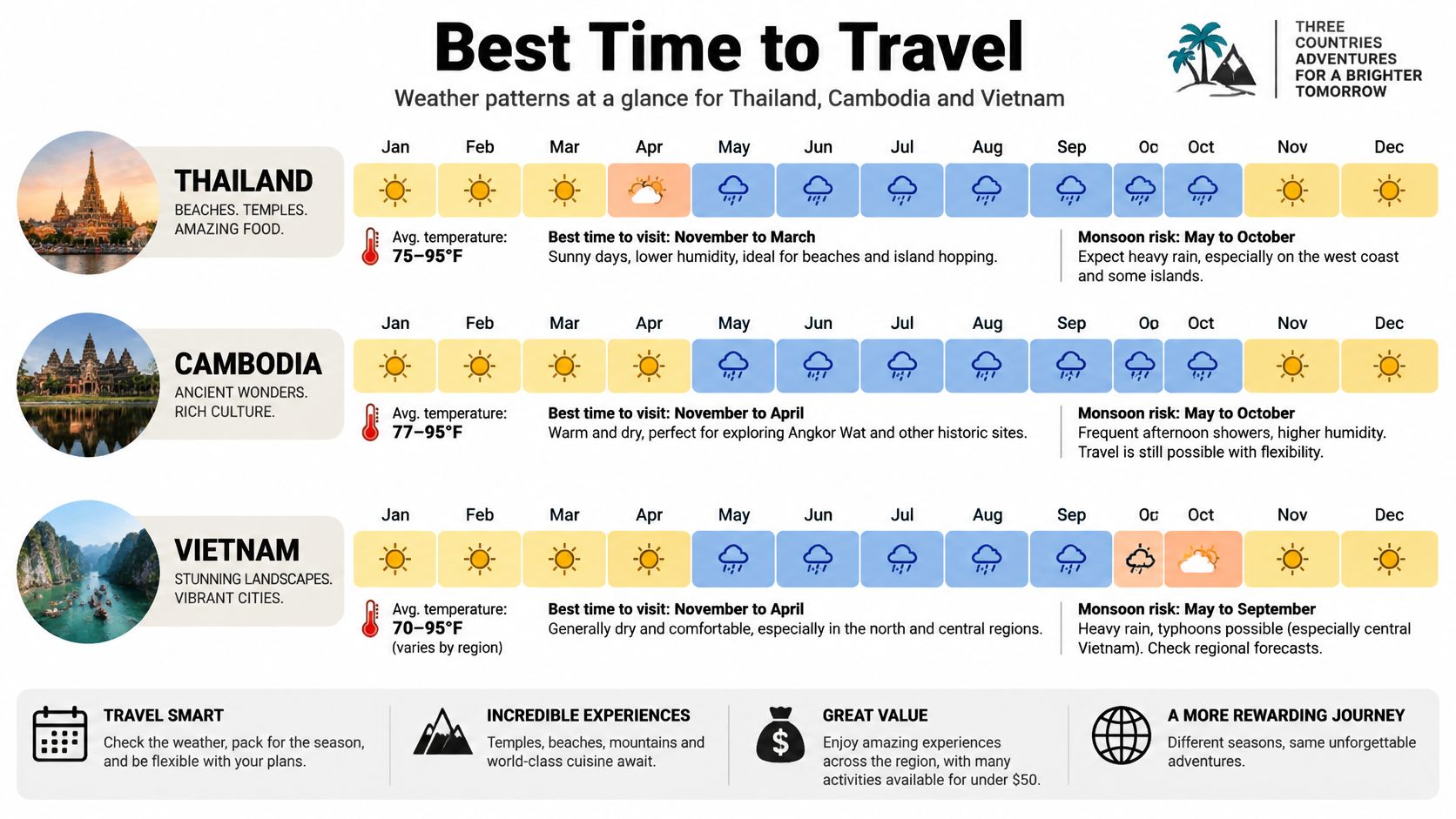
Don't ask for the best month for three countries. Ask which regional weather window you're building around, then sequence stops to follow it. Thailand, Cambodia, and Vietnam don't share one climate, and Vietnam alone doesn't behave as one destination.
Read the Calendar by Region
Thailand's most comfortable window is generally its cooler, drier period from November through February, which also suits Cambodia and early mornings at Angkor before heat builds. Those months are popular for a reason. You'll get better touring conditions, but you'll compete harder for top suites, private guides, and prime charter slots.
Vietnam requires finer judgment. Northern, central, and southern Vietnam peak at different times, and one region can face rain, rough water, excessive heat, or poor visibility while another is clear. A route that starts in Hanoi, moves through central Vietnam, and finishes on a southern island can work beautifully, but only if you choose dates around the strongest regional window rather than forcing all three into one generic season.
Choose your non-negotiable first. If Ha Long visibility, a Phu Quoc beach finish, or comfortable Angkor touring matters most, let that destination set the dates and fit the others around it.
Sequence for Weather, Not Just Geography
- North-to-south Vietnam: Works when you want Hanoi and the bay early, then central heritage towns, then warmth in the south.
- South-first routing: Better if you're entering Vietnam from Cambodia and want Ho Chi Minh City and the Mekong before flying north.
- Thailand as bookends: Bangkok at the start absorbs jet lag well. A Thai island finish only works if its coast is in season, because the Gulf and Andaman sides don't peak together.
Shoulder periods deserve serious consideration. You'll often find better villa availability, calmer flagship hotels, and more attentive VIP recognition than in peak weeks, provided you accept some weather variability and keep outdoor plans flexible. School holidays and major regional events also compress availability, so check those before you lock flights.
My direct recommendation for a first three-country journey is the cooler dry window, booked early, with Vietnam kept geographically coherent. Don't add a distant Vietnamese stop just because it's famous. Transfer distance in bad weather turns a luxury itinerary into an endurance exercise, and that's poor use of your time.
Sample Itineraries for Every Kind of Traveler
Pick the trip shape that matches your purpose. A first-time cultural survey, a honeymoon, and an executive week shouldn't share the same pacing, hotels, or border strategy. All three routes below use air between countries and protect key experiences with buffer time.
Three Itinerary Shapes at a Glance
| Itinerary | Length | Core Flow | Best For |
|---|---|---|---|
| Grand Journey | 14 days | Bangkok, Chiang Mai, Siem Reap, Ho Chi Minh City, Mekong | First-time visitors who want breadth without rushing |
| Honeymoon | 10 days | Bangkok, Siem Reap, southern Vietnam coast or island | Couples prioritizing privacy, spa time, and scenic stays |
| Executive | 7 days | Bangkok, Siem Reap, Ho Chi Minh City | Time-poor travelers who want the highlights executed cleanly |
The 14-Day Grand Journey
Spend three nights in Bangkok for palaces, canals, and serious dining, using a guide to Thailand's essential sights to prioritize rather than overfill days. Add two nights in Chiang Mai if northern culture matters to you, then fly to Siem Reap for three nights. That gives Angkor two full touring days plus recovery time, instead of the rushed single sunrise most visitors accept.
Finish with four nights split between Ho Chi Minh City and the Mekong region. You'll get modern Vietnam, war history, markets, and river life without adding a second domestic flight. This is the right default for families and first-timers because each stop has a clear role and no day depends on a fragile land crossing.
The 10-Day Honeymoon
Keep Bangkok to two nights in a riverside suite, then slow down. Three nights in Siem Reap allow a private sunrise temple visit, a spa afternoon, and an unhurried Khmer dinner. End with five nights at one Vietnamese beach or island property rather than splitting the finale. One unpacking, one private pool, no transfer fatigue. Couples consistently value that final stillness more than an extra city.
The 7-Day Executive Route
Two nights in Bangkok, two in Siem Reap, three in Ho Chi Minh City. Fly every international leg, use VIP fast-track, and pre-book one signature experience per country. Don't add Chiang Mai, Hanoi, or an island. At seven days, discipline is the luxury. You'll leave having done three places properly instead of five places badly.
Whichever shape you choose, brief your advisor on your requirements, your flight tolerance, and how much downtime you want. Those three answers determine the route more directly than any bucket list.
Luxury Stays That Define Each Country
Choose one flagship property per country and book the right category, not just the brand. In this corridor, the difference between a standard room and the correct suite or villa determines privacy, view, service flow, and whether the hotel becomes part of the experience.

Bangkok Sets the Standard
Start at an Aman or Four Seasons caliber riverside property and book a river-facing suite or residence style room. You want space to recover from long-haul travel, a concierge who can secure difficult dining, and boat access that lets you avoid traffic for temple touring. Ask specifically about early check-in handling after overnight flights. A guaranteed smooth arrival is worth more than a minor rate saving.
Use Bangkok to test service. If the hotel handles your airport transfer, luggage, and first dinner flawlessly, you'll trust the rhythm for the rest of the trip. If it doesn't, tell your advisor immediately so Siem Reap and Vietnam arrivals can be tightened.
Siem Reap Should Feel Like a Private Residence
In Siem Reap, Amansara or a comparable intimate flagship is the model to aim for. Book a suite or villa category with private outdoor space and confirm how the property sequences Angkor touring. The best stays build your day around dawn entry, a return for breakfast and rest during peak heat, then late afternoon temples when light improves.
Advisor note: In Siem Reap, guide quality matters as much as room category. Confirm your private guide's experience with crowd timing before you confirm the hotel.
Don't judge this stop by lobby scale. Judge it by whether staff anticipate heat, hydration, temple pacing, and quiet evenings. That's what you remember.
Vietnam Rewards One Strong Base
For Vietnam, choose a Rosewood or Six Senses caliber flagship that matches your finale, whether that's an urban suite in Ho Chi Minh City, a central coast villa, or an island pool villa. Read the definitive guide to luxury travel in Vietnam alongside property options, because regional weather should influence which base you pick. Book the villa category with a private pool if the trip is celebratory. You'll use it daily.
That is why booking channel matters. HauteBlack, as a Virtuoso-affiliated agency with preferred partner relationships across brands such as Aman, Four Seasons, Rosewood, Belmond, and Ritz-Carlton, can attach benefits that may include complimentary upgrades when available, resort credits, and breakfast inclusions. Those perks aren't automatic on a direct booking, and upgrade strength is highest when your advisor flags a celebration, arrival time, and room preference before check-in.
Ask three questions before confirming any property. Which exact category gives privacy, what experience does the hotel do better than anyone nearby, and what recognition will staff have on file when you arrive? If nobody can answer clearly, you're buying a brand name, not a planned stay.
Choosing the Right Transport Between Countries
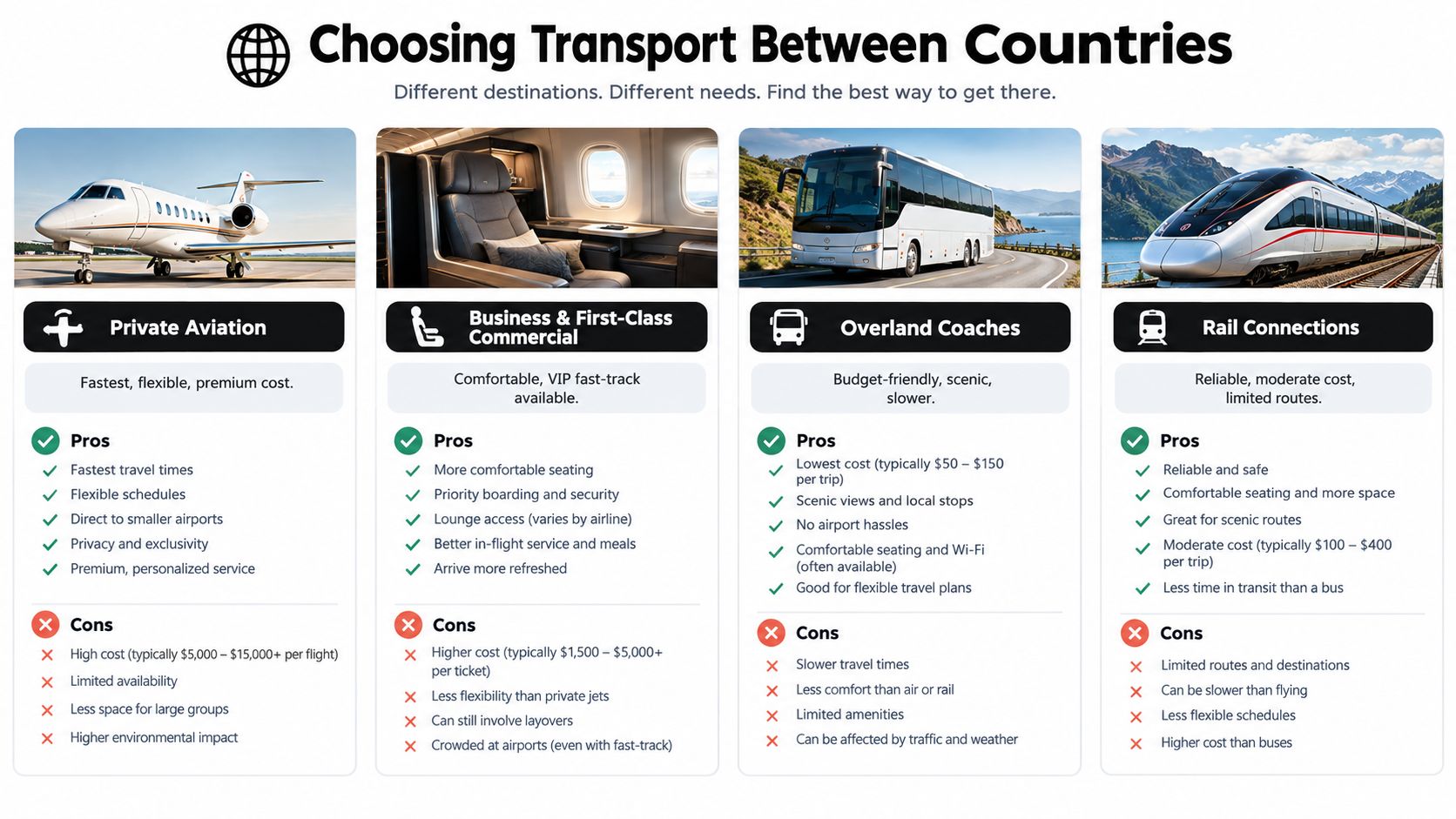
Decide transport leg by leg. No single mode wins across Bangkok, Siem Reap, and Vietnam, and habit is a poor substitute for judgment. You're balancing time, cost, comfort, and operational risk, with risk carrying more weight than it used to.
When Private Aviation Earns Its Premium
Private aviation makes sense when schedules are tight, your party is larger, or a commercial timetable would waste a full touring day. It also helps when you're connecting a flagship experience that can't move, such as a private temple morning followed by a same-day arrival in Vietnam. Through services such as Haute Jets and partner operators, you gain departure control and simpler ground handling.
Don't buy it automatically for short hops with frequent commercial service. If a premium commercial flight departs at the right hour and VIP fast-track is arranged on both ends, the practical difference narrows and the savings can fund a better villa category. Spend where you'll feel it.
Premium Commercial Is the Default for Most Travelers
For most itineraries, business or first-class commercial flights with VIP fast-track deliver the best balance. Book the earliest sensible departure that doesn't destroy the previous evening, confirm baggage handling, and have a greeter waiting at arrival. In Bangkok, Siem Reap, and Ho Chi Minh City, that last detail removes more friction than an upgraded seat alone.
- Private transfers: Non-negotiable after international arrivals. Your driver should track the flight and coordinate with the hotel.
- Helicopters: Useful selectively for scenic transfers or difficult ground routes, not as a blanket solution.
- Overland travel: Consider only when the journey itself is the experience, borders are confirmed workable, and the next day has no fixed commitment.
- Rail: Enjoyable within certain domestic stretches where geography allows, but limited as an international strategy across these three countries.
Never judge a transfer by flight time alone. Door-to-door time, immigration queues, baggage, and traffic at arrival decide whether a leg feels seamless.
Regional demand explains why air capacity matters here. During January to July 2024, Cambodia received 3,742,230 foreign visitors, with Thai travelers at 1,147,534, or 30.7%, and Vietnamese travelers at 757,437, or 20.2%, together 50.9% of arrivals, according to Nation Thailand reporting on Cambodia's January to July 2024 visitor mix. These are mature travel flows. Use the gateways that already carry them, and reserve overland romance for legs where delay costs you nothing important.
VIP Experiences Worth Building the Trip Around
Build the route around four or five signature moments, then let hotels and flights serve them. Geography alone produces a tour. Sequenced experiences produce a journey you'll talk about years later.
In Siem Reap, anchor the stay with a private sunrise visit to Angkor followed by a slower second temple session with an expert guide who reads crowd movement well. Pair it that evening or the next with a private Khmer chef dinner, and use an introduction to Cambodia's defining dishes to brief the chef on what you want to explore. Don't schedule both on arrival day. You need sleep to appreciate either.
In Thailand, a private long-tail boat or yacht charter out of Phuket or the Gulf, chosen according to which coast is in season, gives you the island scenery without group tour pacing. In Bangkok, I'd prioritize a canal journey by private boat and one exceptional chef-led dinner over a checklist of minor attractions. Depth beats coverage.
Vietnam Experiences Need the Right Sequence
- Hanoi cooking with a master chef: Book early in a northern stay, when market touring still feels fresh and you can use what you learn at later meals.
- Ha Long or Bai Tu Long overnight cruise: Choose a smaller luxury vessel and protect the following morning. Rushing from the bay to a flight erases the calm you paid for.
- Mekong private boat time: Best after Ho Chi Minh City's intensity, when river pace feels like contrast rather than another transfer.
These moments depend on local relationships, from temple guides and chefs to boat crews and hotel concierges who know when to move a reservation. That's why sequence matters. A brilliant experience placed after a red-eye, a border delay, or a monsoon transfer becomes merely adequate.
Choose fewer signatures and execute them properly. One private temple dawn, one water day, one serious food experience per country, and one evening that feels commissioned for you. That's enough. The rest of the trip should breathe around them.
If you're planning a Thailand Cambodia Vietnam trip and want the routing, properties, private aviation, and signature experiences handled as one coordinated journey, HauteBlack can design the itinerary around your dates and priorities with VIP recognition at partner hotels. Share your travel window and key requirements, and an advisor can turn the framework above into a bookable, buffer-protected plan.
Explore Our Guides


Signature Experiences


