Haute Black Journal
Famous Food in Cambodia: 10 Culinary Delights

Marlene Azeez
Director, HauteBlack
View all articles →
# Famous Food in Cambodia: 10 Culinary Delights
July 14, 2026
Cambodia once nurtured more than 2,000 species of rice, and that single fact tells you almost everything about the country's cuisine: this is not a secondary food culture, but one of Southeast Asia's oldest and most firmly rooted culinary traditions according to Moon Travel Guides. For a traveler who's used to polished tasting menus and overexposed food capitals, that's the surprise. Cambodian food still feels discovered rather than marketed.
Beyond Angkor, a culinary kingdom awaits. Rice sits at the center of daily life, often served with soup, prahoc, and fish or meat, but the cuisine reaches far beyond the expected staples into fragrant curries, herb-heavy noodle bowls, charcoal-grilled seafood, and refined dishes that reward a slower, more attentive palate. If you already know your way around authentic Thai and Malaysian food, Cambodia offers a more restrained and aromatic register.
For the luxury traveler, the right approach isn't to chase random “best of” lists. It's to curate experiences. Start with market breakfasts in Phnom Penh, move into chef-led lunches in Siem Reap, then reserve one or two refined Khmer dinners where technique and presentation sharpen the familiar into something memorable. The strongest itineraries mix street-level immediacy with private access, including tailor-made cooking sessions at resort properties and subtly excellent dining rooms that most visitors miss.
If you want famous food in Cambodia done properly, order with intent, reserve selectively, and let each dish reveal a different facet of the country.
1. Nom Banh Chok
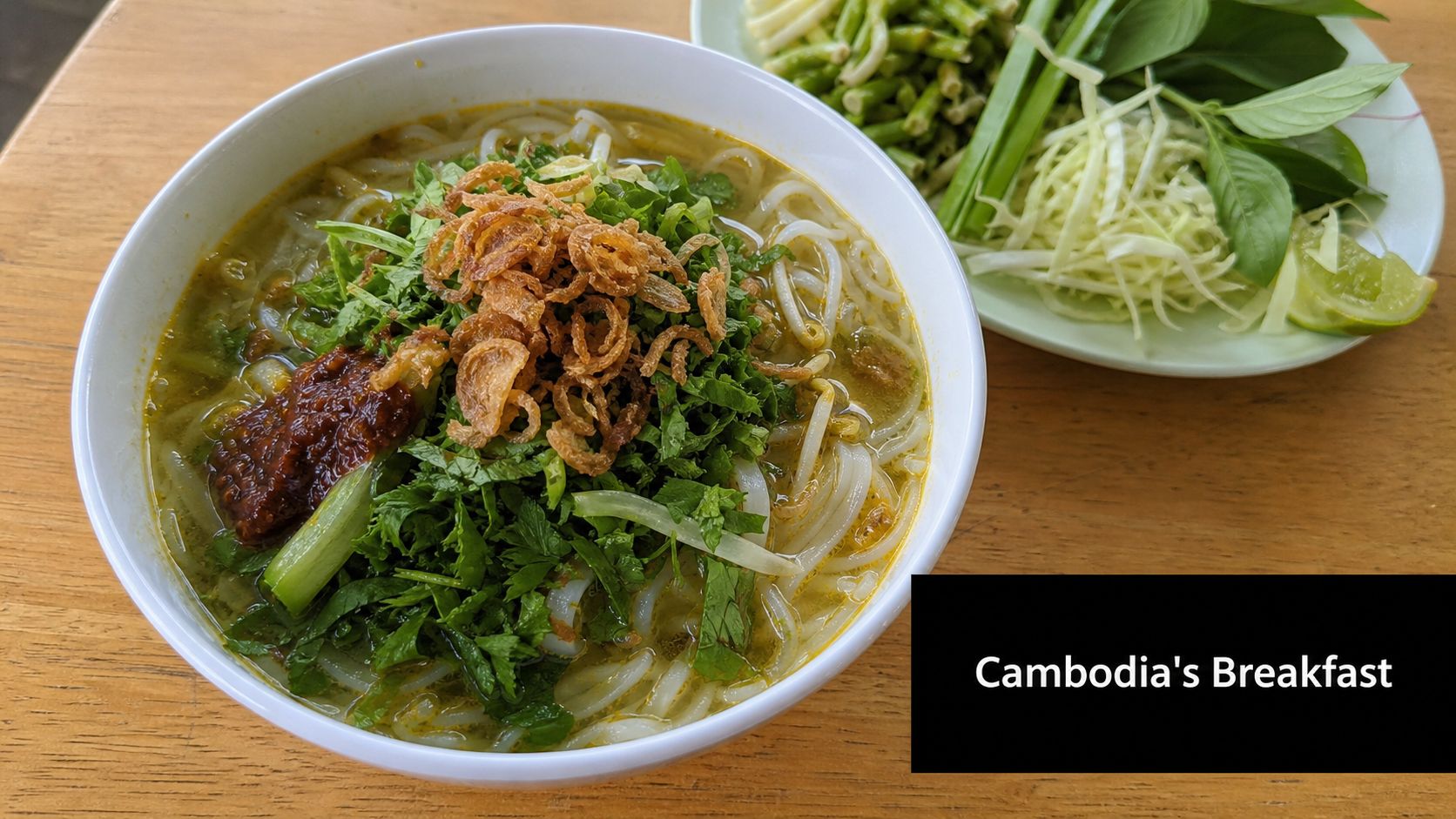
Nom Banh Chok is where I'd begin. It's one of the clearest expressions of Khmer cooking: soft rice noodles, a fish-based gravy fragrant with lemongrass, turmeric, and galangal, plus a generous layer of herbs and vegetables that keeps every bite fresh rather than heavy.
The best version isn't always in a formal dining room. It's often at breakfast, in Phnom Penh or Siem Reap, when the noodles are still springy and the toppings haven't wilted in the heat. If you want a more polished interpretation, ask your advisor to fold it into a broader bespoke dining program in Cambodia, then keep one morning free for a market stop so you can taste the original context as well.
How to experience it well
Street vendors and market stalls handle this dish with the most confidence because they make it continuously. Orussey Market is the kind of place where you can compare versions side by side, while refined Cambodian restaurants in Phnom Penh sometimes present a cleaner, more composed bowl with sharper herb selection and neater plating.
For a luxury itinerary, do both. Have the first bowl early, standing or seated on a low stool, then schedule a later lunch where a chef can talk you through the balance of fish paste, aromatics, and fresh greens.
- Go early: Morning service is the sweet spot, when the broth tastes brightest and the noodles have the best texture.
- Ask for herb control: A good vendor or chef will let you adjust the ratio of herbs and raw vegetables.
- Add lime at the table: It tightens the flavor and lifts the fish base without overwhelming it.
Practical rule: Don't treat Nom Banh Chok as just a noodle soup. Treat it as breakfast with terroir.
2. Amok
If there's one dish most closely associated with famous food in Cambodia, it's Amok. Fish Amok is widely recognized as Cambodia's national dish, and in the most authoritative culinary framing, Amok trey is often described as the country's unofficial national dish, a distinction worth knowing if you care about precision as detailed by Rainforest Cruises and One Vasco's Cambodian food guide.
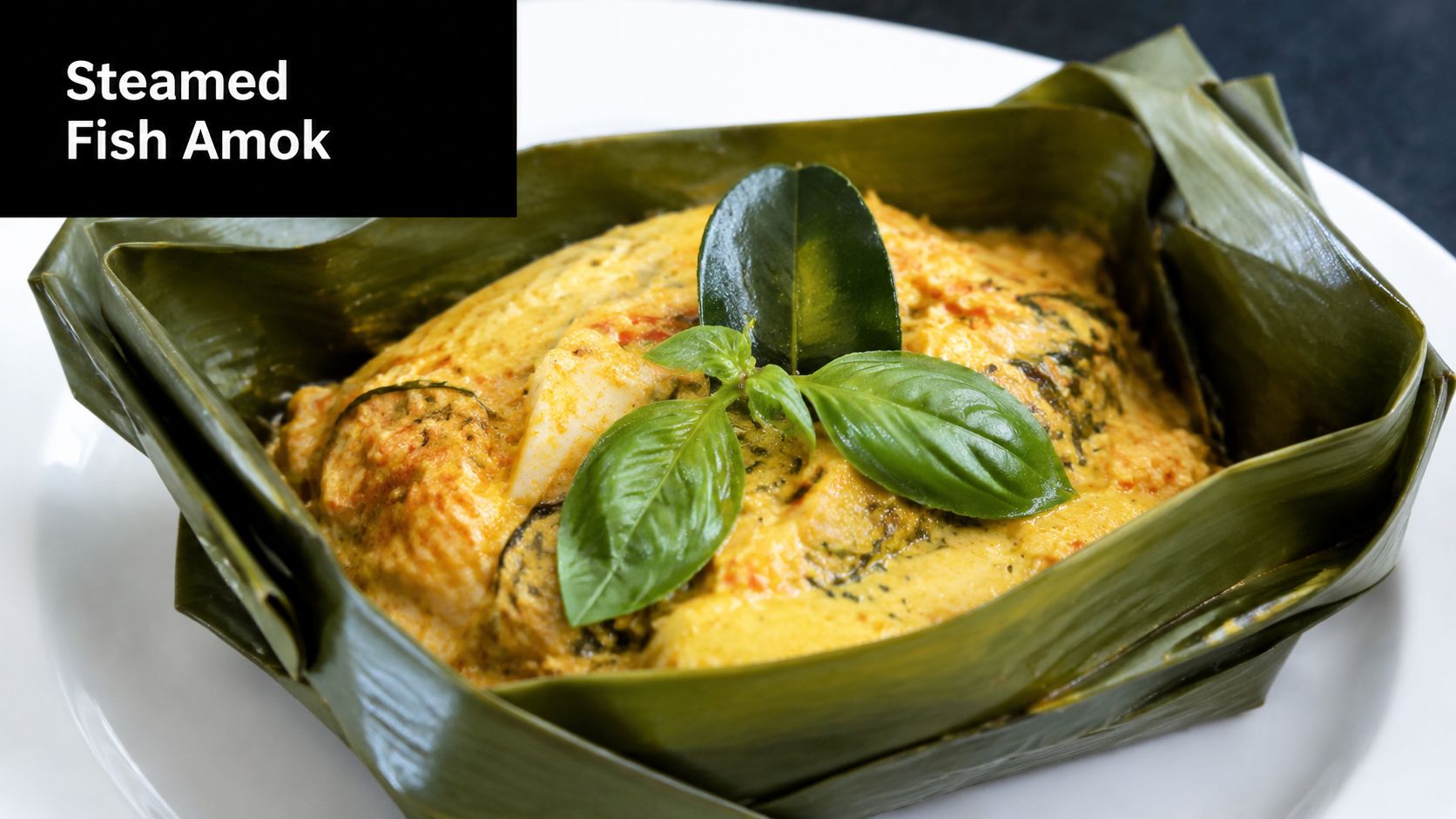
What matters at the table is texture. Proper Amok isn't a loose curry. It should arrive steamed in a banana-leaf cup, fragrant rather than fiery, with a mousse-like, custard texture built from freshwater fish, coconut milk, and kroeung.
What separates a serious version
Amok's identity comes from method as much as ingredients. The fish is typically snakehead or catfish, and the aromatic base relies on lemongrass, galangal, turmeric, and kaffir lime leaves. Gentle steaming inside banana leaf preserves moisture and gives the dish its defining shape and perfume as explained by Adventure World.
That's why this dish deserves a reserved dinner, not an afterthought lunch. In Siem Reap, make it part of a longer Cambodia and Vietnam luxury journey so it's served in the right setting, ideally with jasmine rice and enough time to appreciate the aroma before the first spoonful.
Smell the banana leaf before you eat. The herbal note is part of the dish, not a garnish.
Ask whether the kitchen steams each portion to order or batches it in advance. The best versions hold their structure and stay delicate, never rubbery, never overly sweet, and never aggressively spicy.
3. Samlor Korko
Samlor Korko tells you more about Cambodian domestic cooking than almost any ceremonial dish. It's a thick vegetable-forward soup, often built around seasonal produce, herbs, and a savory depth that feels grounded and rural in the best way.
This is the dish to seek out when you're tired of restaurant signatures and want to understand what a Khmer table feels like. In family-style restaurants and boutique hotels that take local cooking seriously, Samlor Korko often appears unassumingly on the menu, without fanfare. Order it anyway.
Why it matters on a luxury itinerary
A well-rounded trip shouldn't be all tasting menus and polished service choreography. It should also include dishes that reveal structure. Samlor Korko does that because it shows how Cambodian meals center balance: rice, soup, fish or meat, herbs, and contrast in texture.
It pairs especially well with grilled fish or a lighter protein. If you're arranging a private villa dinner or chef-hosted lunch, ask for Samlor Korko as part of a shared spread rather than a standalone course. It makes more sense that way.
- Request a seasonal version: The best bowls depend on what's fresh, not what's fixed.
- Eat it family-style: This soup opens up when it sits among several dishes on the table.
- Balance the meal: Pair it with something grilled, not another rich curry.
The luxury move here is restraint. Don't demand a “refined” reinterpretation. Ask for a faithful one, beautifully sourced and properly seasoned.
4. Saik Chrouk
Saik Chrouk is direct pleasure. Pork, marinated with Khmer aromatics and grilled until the exterior caramelizes while the interior stays juicy. You'll find it in casual morning and evening settings, but that doesn't make it ordinary. It makes it indispensable.
For travelers who usually default to ambitious signature dishes, this is the reminder that Cambodian food excels at clarity. Garlic, lemongrass, galangal, and a little sweetness from the marinade do the work. The grill finishes the argument.
Where to order it
Street grills in Phnom Penh often deliver the most compelling versions because the smoke is real and the turnover is fast. But upscale properties can turn Saik Chrouk into a polished plate worth your time, especially if the kitchen uses charcoal and serves it with well-judged vegetable sides rather than crowding the plate.
I'd reserve this for a relaxed dinner, ideally near the river or as part of a resort meal where the grill is visible. Sunset helps. So does ordering something crisp and fresh alongside it.
- Ask for charcoal: Gas heat won't give you the same depth.
- Give the kitchen time: This dish benefits from a proper marinade, not a rushed one.
- Pair: Sticky rice and grilled vegetables are enough.
What makes Saik Chrouk memorable isn't complexity. It's confidence. Cambodia does grilled food with an ease that high-end travelers often overlook.
5. Nom Sach Ko
Nom Sach Ko belongs in any serious survey of famous food in Cambodia because it captures another side of Khmer cuisine: lightness, herbs, and precision in assembly. These fresh rolls use rice paper to wrap vermicelli, greens, and protein into something that feels refreshing even in the tropical heat.
In a high-end context, this is an ideal opening course. It cleans the palate, looks elegant on the plate, and invites variation, especially if the kitchen offers shrimp, tofu, or delicate slices of meat with a balanced dipping sauce.
Best use in a private dining setting
This is one of the smartest dishes to include in private chef dinners and bespoke dining experiences. It's interactive without becoming performative, and a chef can demonstrate rolling technique tableside while still keeping the mood refined.
If you're staying in a villa or suite with outdoor dining space, ask for Nom Sach Ko at lunch or as the first course before grilled seafood. The contrast works beautifully.
A fresh roll should taste cool, herbaceous, and composed. If it's soggy or overstuffed, it's been handled carelessly.
A few details matter. Rice paper should be softened just enough to bend, not dissolve. Herbs should be abundant. The dipping sauce should add depth without burying the freshness that makes the dish work in the first place.
6. Kroeung
Kroeung isn't a complete dish, but if you don't understand it, you don't understand Cambodian food. This aromatic paste is the flavor architecture behind much of Khmer cooking, built from ingredients such as lemongrass, galangal, turmeric, and kaffir lime leaves.
In luxury travel terms, kroeung is where the chef encounter becomes worthwhile. Watching it pounded fresh, rather than scooped from a prepared container, immediately explains why Cambodian cuisine tastes layered without relying on aggressive heat. It's also the thread that connects humble market dishes to formal restaurant cooking.
Why chefs start here
Some of the most revealing culinary experiences in Cambodia aren't dinners. They're prep sessions. Ask for a private cooking class or back-of-house visit where the chef walks you through fresh turmeric, trimmed lemongrass, and the pounding sequence that creates the proper texture.
That matters because pre-made pastes flatten the aroma. Fresh kroeung has a vivid, almost electric quality that changes a dish before it even hits the heat.
A useful visual primer sits below.
- Choose fresh over convenient: A hand-made paste gives cleaner aroma and depth.
- Book a chef-led lesson: This is one of the few culinary techniques that repays close observation.
- Use it as a tasting key: Once you recognize kroeung, menus across Cambodia become easier to read.
Kroeung is also what distinguishes Khmer food from simpler tourist shorthand. The cuisine isn't “mild Thai food.” It's its own system, and this paste is the clearest proof.
7. Cha Gor
Cha Gor is Cambodia's fried answer to the fresh roll. Crisp shell, tender interior, and a filling that usually combines vegetables, noodles, and sometimes meat in a way that feels comforting rather than heavy when done well.
I wouldn't build a meal around it, but I would absolutely order it. This is one of the most satisfying appetizers to share with drinks before a longer Khmer dinner, especially in family restaurants and night market settings where frying happens to order.
How to keep it from feeling ordinary
The difference between forgettable and excellent Cha Gor is freshness from the fryer. If the shell has sat even briefly, the texture dulls and the filling turns flat. In better kitchens, the roll stays shatteringly crisp while the inside remains moist and aromatic.
Order it as a mid-meal contrast rather than the opening overload. That lets it function as texture, not bulk.
- Ask for a fresh fry: This is essential.
- Use the sauce carefully: The dip should brighten the roll, not soak it.
- Keep the portion moderate: Two or three well-made pieces beat a heavy platter.
This dish also plays well in a split itinerary. Eat the humble version at a night market, then compare it with a neatly plated hotel rendition. The contrast is part of the pleasure.
8. Samlor Machu Teuk
When a Cambodian menu feels rich with grilled meats, coconut-based dishes, or multiple shared plates, Samlor Machu Teuk is the course that restores order. Hot, sour, savory, and often built on fish stock with vegetables and seafood, it refreshes the palate while still feeling authentically local.
This is a dish I'd place strategically. Not first. Not last. Right in the middle, when you want the table to wake up again.
Use it like a palate reset
In fine dining contexts, Samlor Machu Teuk can serve the same role a chef might give a lighter consommé or an acidic intermediate course. The difference is that this one still belongs fully to the Khmer table. Tamarind or lime brings the sourness, chilies can bring heat, and ingredients like tomato or pineapple add brightness.
Order this when the meal starts to feel too rich. It sharpens everything that follows.
If you're planning with a chef or concierge, ask for the heat level to be calibrated in advance. A refined version should stay lively, not punishing. Pineapple, when included, often gives the soup a more rounded, more luxurious finish.
Pair it with jasmine rice if the rest of your meal runs spicy or heavily grilled. That simple addition makes the dish feel complete.
9. Trey Sach Ang
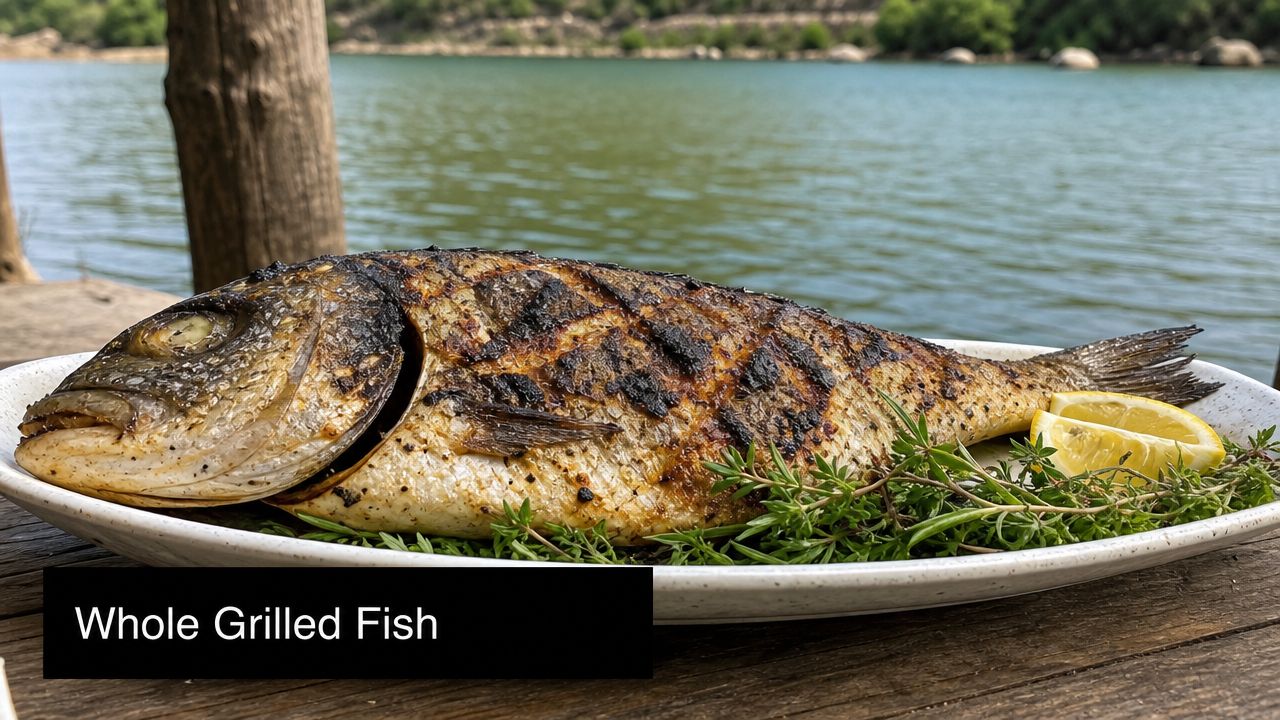
Trey Sach Ang is one of the strongest arguments for dining by the water in Cambodia. Whole fish, grilled over charcoal, seasoned with herbs and often kroeung, then brought to the table with crisp skin and tender flesh. It's straightforward, beautiful, and exactly the kind of dish that benefits from excellent sourcing rather than excess chef intervention.
Cambodia's daily food culture is built around rice, commonly accompanied by soup, prahoc, and fried fish or meat, which is part of why grilled fish feels so foundational rather than performative [as described by Moon Travel Guides earlier in this article's opening source]. Trey Sach Ang belongs to that broader rhythm, just more refined.
Best setting for the dish
Reserve this for a riverside lunch or sunset dinner in Phnom Penh or Kampong Cham, or have it included in a resort dinner where the kitchen can source a pristine fish and grill it close to service. This is not a rushed order.
A few requests improve it immediately:
- Take the chef's fish recommendation: Species and freshness matter more than the menu description.
- Ask for herbs inside the fish: That perfumes the flesh as it cooks.
- Keep the sides light: Herb salads and clean vegetable preparations are enough.
The luxury traveler's mistake is overcomplicating fish. Trey Sach Ang proves that Cambodia doesn't need to.
10. Nyam Neang
Nyam Neang is the dish for travelers who've already tried the famous standards and want something more insider-facing. Grilled beef or chicken, marinated with Khmer aromatics, wrapped in fragrant leaves, then served with a dipping sauce that brings the whole composition together. It's refined, slightly elusive, and exactly the sort of dish that rewards advance planning.
Concierge service proves invaluable in such situations. You may not find Nyam Neang on every menu, and that's part of the appeal. Ask for it at a serious traditional Khmer restaurant, or better yet, have it designed into a private chef meal where the preparation can be demonstrated and paced properly.
Why it works for special occasions
Some Cambodian dishes are best in bustling public settings. Nyam Neang is better in a controlled one. It has a ceremonial quality, especially when the wrapping and grilling happen in view of the table.
The broader dining context in Cambodia supports that kind of curation. The country's foodservice market is projected to reach USD 3.17 billion in 2026 and USD 4.86 billion by 2031, with full-service restaurants holding 53.68% of market share in 2025 and sit-down dining accounting for 56.88% of revenue, according to Mordor Intelligence. For a luxury traveler, that means the dine-in culture remains the right place to pursue dishes that need attention and service.
A final detail: much travel content still treats Cambodia as a purely budget street-food destination, even though premium dining experiences exist, including upmarket Khmer venues such as La Table Khmere in Phnom Penh, which has been noted as an upscale option at approximately KHR 162,000 per person by 12Go Asia. That's exactly the gap discerning diners should exploit.
Comparison of 10 Famous Cambodian Dishes
| Dish | Preparation 🔄 | Resources ⚡ | Outcome 📊 | Ideal Use Cases 💡 | Key Advantages ⭐ |
|---|---|---|---|---|---|
| Nom Banh Chok | Moderate, simmer fish-curry gravy and assemble fresh noodles | Fresh fish/paste, rice noodles, herbs, spices | Fragrant, savory breakfast noodle; bold fish aroma | Street breakfast, authentic culinary introduction, budget dining | Nationally representative; customizable; light yet satisfying |
| Amok | High, balance coconut curry and steam in banana leaf parcels | Fish/chicken, coconut milk, banana leaves, Kroeung ingredients | Creamy, delicate curry with refined presentation | Fine dining, special occasions, cooking classes | Elegant plating; versatile proteins; can be made ahead |
| Samlor Korko | Moderate, prepare tamarind broth and seasonal vegetables | Seasonal vegetables, tamarind, local greens | Light, sour-vegetable soup; refreshing counterpoint | Family meals, vegetable-forward menus, seasonal dining | Vegetarian-friendly; showcases local produce; digestive |
| Saik Chrouk | Low–Moderate, marinate pork and charcoal-grill to finish | Pork, aromatic marinade, charcoal grill | Smoky, caramelized grilled pork; tender interior | Casual street food, group/shared dining, evening grills | Universally appealing; scalable; visually impressive |
| Nom Sach Ko | Low, careful rolling of fresh rice-paper rolls | Rice paper, vermicelli, fresh herbs, protein options | Light, fresh rolls; healthy appetizer | Starters, light meals, cooking-class demos | Refreshing; highly customizable; elegant presentation |
| Kroeung | High, hand-pounding fresh roots and aromatics | Fresh turmeric, galangal, lemongrass, shallots | Intense aromatic paste; foundational Cambodian flavor | Base for curries/marinades, culinary education, prep-ahead | Versatile foundational paste; essential for authenticity |
| Cha Gor | Low–Moderate, prepare filling and deep-fry to crisp | Vegetables, glass noodles, wrappers, frying oil | Crispy fried rolls; crunchy, comforting appetizer | Night markets, casual eateries, shared plates | High crowd-appeal; reheatable; consistent quality |
| Samlor Machu Teuk | Moderate, balance hot, sour, and savory elements | Fish/shrimp, tamarind or lime, chilies, fruit (pineapple) | Hot-and-sour soup; palate-stimulating and digestive | Palate cleanser, middle course, customizable-heat menus | Complex flavor profile; aids digestion; adjustable heat |
| Trey Sach Ang | Moderate–High, whole fish prep and precise charcoal grilling | Whole fresh fish, herbs, Kroeung, charcoal | Crispy skin, tender flesh; smoky charcoal character | Riverside dining, special-occasion entrée, showpieces | Highlights fresh fish; minimal processing; dramatic plating |
| Nyam Neang | High, marinate, wrap in aromatic leaves, and grill carefully | Quality meat, aromatic leaves (betel/basil), Kroeung | Aromatic, delicate leaf-wrapped grilled protein | Fine dining, tasting menus, private-chef experiences | Sophisticated presentation; layered aromatics; customizable |
Your Table Is Ready: A Bespoke Culinary Journey
The most rewarding way to approach famous food in Cambodia isn't to race through a dish list. It's to build a sequence of meals that reveals the country gradually. Start with Nom Banh Chok at breakfast, when the city is still cool and the markets feel local rather than performative. Follow with a chef-led lesson on kroeung so the aromatic logic of Khmer food clicks into place. Then reserve dinner for Amok, Samlor Korko, or a whole grilled fish served in a setting that gives the cuisine the attention it deserves.
That's the difference between eating well and traveling well. Cambodia's food culture is subtle. It won't always shout for your attention the way some neighboring cuisines do. But once you start noticing the fragrance of lemongrass and kaffir lime, the restraint in spice, the centrality of rice, the role of fish and herbs, and the way dishes are meant to be shared, the cuisine becomes far more compelling than a simple checklist of “must-tries.”
Luxury in Cambodia also means access. The obvious route is to book one polished restaurant and call it a night. The better route is layered. Arrange a private market walk with a chef, then follow that with a custom lunch. Ask for a villa dinner that pairs fresh rolls with grilled river fish. Use a resort kitchen for a quiet cooking session. Reserve one ambitious Khmer table in Phnom Penh and one in Siem Reap, then leave room for an unplanned breakfast stall that your driver or guide swears by.
This is also where a strong advisor matters. The right itinerary doesn't separate culture from comfort. It connects them. A morning bowl of noodles can sit naturally beside a private transfer, a spa afternoon, or a sunset cruise with a custom menu. A discussion with a chef about banana-leaf steaming can become the highlight of a honeymoon as easily as a temple visit. For families, shared dishes make the cuisine particularly easy to explore across generations. For couples, Cambodia lends itself to intimate private dining. For executives and members traveling on tight schedules, the best culinary moments can be built into the trip without friction.
Through Haute Black, Cambodia becomes more than a destination with famous dishes. It becomes a carefully orchestrated culinary narrative. One where every reservation, market stop, chef encounter, and table setting works together, and where the country's most memorable flavors arrive at exactly the right moment.
Haute Black crafts Cambodia journeys with the kind of culinary access most travelers never see, from private chef dinners and chef-led market visits to preferred tables at standout Khmer restaurants and fully bespoke itineraries built around your tastes. Explore Haute Black to arrange an effortless, high-touch trip where Cambodia's most memorable meals are planned with the same precision as every suite, transfer, and VIP arrival.
Explore Our Guides


Signature Experiences


