Haute Black Journal
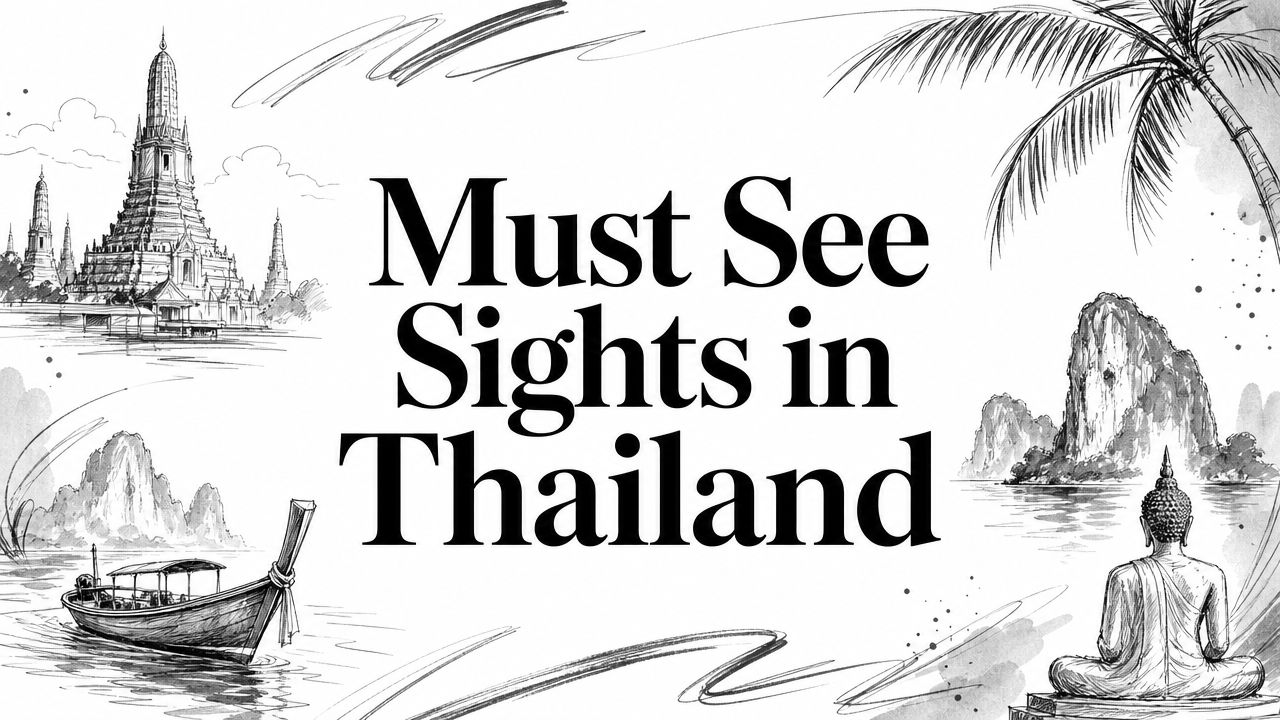
Must See Sights in Thailand

Marlene Azeez
Director, HauteBlack
View all articles →
# Must See Sights in Thailand
July 10, 2026
Thailand's headline sights are easy to book and easy to get wrong. The difference between a crowded, predictable trip and a properly curated one is enormous.
At ground level, standard tourism in Thailand follows an obvious pattern. Late arrivals. Long queues. Heat, noise, hurried photos, and too little context. A better approach changes the entire experience. You arrive early or after hours. Transfers are handled privately. Guides are chosen for cultural fluency, not just logistics. The setting has space to breathe, and the destination finally feels worthy of its reputation.
That distinction matters more in Thailand than almost anywhere else. The country's icons attract constant attention, but their real value sits beneath the surface. Timing, route planning, private access, and the quality of interpretation shape the day far more than the landmark alone. A temple, bay, historic quarter, or marine park can feel either overexposed or exceptional, depending on how it is arranged.
Thailand also rewards range. A strong itinerary should not stop at Bangkok's royal ceremonial core or the southern beaches everyone already knows. It should move with intention across culture, architecture, coastline, food, and wilderness. Done well, the country feels layered rather than busy.
Haute Black treats these sights as private, high-touch experiences with customized access and a clear point of view. That can mean a yacht charter through Phang Nga Bay instead of a shared speedboat circuit, a refined cultural specialist at the Grand Palace, or a quieter reading of Chiang Mai and Sukhothai that avoids the usual tourist rhythm. For a broader sense of that approach, see Haute Black's luxury guide to must-do experiences in Thailand.
What follows is not a generic checklist. It is a curated view of Thailand's essential sights for travelers who want privacy, precision, and a version of the country that still feels rare.
1. Grand Palace and Temple of the Emerald Buddha Bangkok
The Grand Palace is the first call for first-time visitors because it remains Thailand's most sacred and iconic site. Completed in 1785 and spanning 218,400 square meters, it houses the Temple of the Emerald Buddha, where the 66-kilogram jade Buddha sits beneath a 16-tiered umbrella. That scale and symbolism are precisely why a generic mid-morning visit feels wasteful.
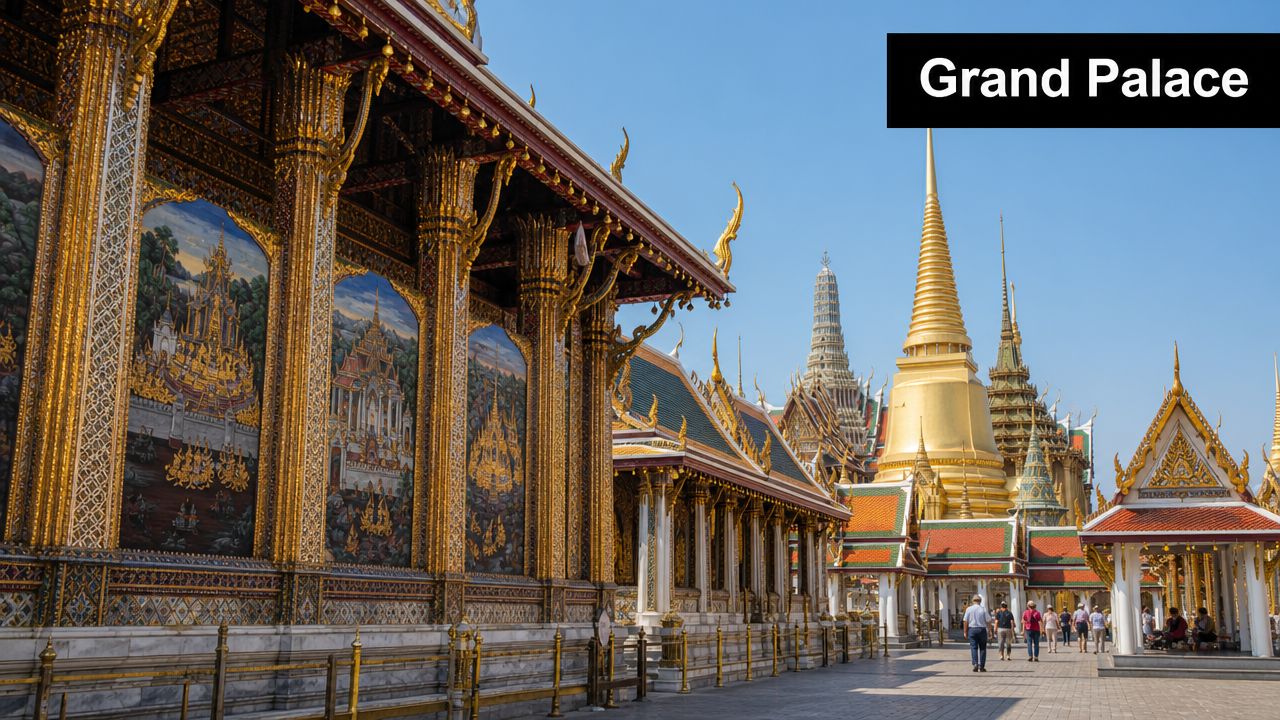
A curated visit changes the pace immediately. Instead of arriving in traffic and entering with the main flow, arrange private transport, an expert guide, and an early slot that preserves silence in the courtyards. If you want context rather than just spectacle, pair the visit with a cultural specialist who can decode the murals, royal symbolism, and the hierarchy embedded in the architecture.
How to do it well
Haute Black can position this as a ceremonial Bangkok experience rather than a sightseeing stop. Its own luxury guide to 10 must-do experiences in Thailand aligns especially well with private temple access and a more refined rhythm through the capital.
- Arrive before the city fully wakes up: Early morning gives you softer light, fewer interruptions, and a more composed atmosphere.
- Dress correctly from the start: Lightweight, breathable, modest clothing avoids delays at entry and keeps the visit elegant.
- Stay long enough for meaning: Give the complex at least a few uninterrupted hours. Rushing through it defeats the point.
Practical rule: At the Grand Palace, interpretation matters as much as access. Without a serious guide, most travelers see ornament. With one, they understand power, faith, and monarchy in a single complex.
For a high-net-worth traveler, the best add-ons are private blessing ceremonies with English-speaking monks, multilingual VIP guides, and after-hours photography when available through premium arrangements.
2. Wat Arun Bangkok
Wat Arun works best in the evening, not in the heat of late morning. Set on the Chao Phraya River's western bank, it's less about ticking off another temple and more about seeing Bangkok in silhouette, reflection, and porcelain detail. Here, the city's river identity feels intact.
The most refined way to arrive is by private long-tail boat from a luxury hotel rather than by road. That approach strips out congestion and turns the river crossing into part of the experience. If you time it for late afternoon, you get the prang in warm light, then the transition to evening when the temple starts to glow against the water.
Best private setup
The strongest version of Wat Arun combines three pieces. First, a guide who knows when to move to the upper platforms for cleaner views. Second, a private river circuit so you're not dependent on public ferry timing. Third, a riverside dinner with direct temple views after the visit, when the skyline feels ceremonial rather than crowded.
Go late, move by water, and stay for dusk. Wat Arun is one of the few Bangkok landmarks that's better as a sequence than a single stop.
If privacy matters, arrange a photography-led visit or a monk-led meditation session through a vetted concierge. That creates a more intimate encounter than the standard photo stop. This is also one of the clearest examples of how the must see sights in Thailand reward timing more than speed.
3. Phang Nga Bay and James Bond Island Phuket
Phang Nga Bay is one of the most cinematic marine scenes in Asia. Limestone karsts rise straight out of emerald water, with sea caves, hidden lagoons, and narrow passages that change character by the hour. James Bond Island is the familiar name, but the bay is the main attraction.
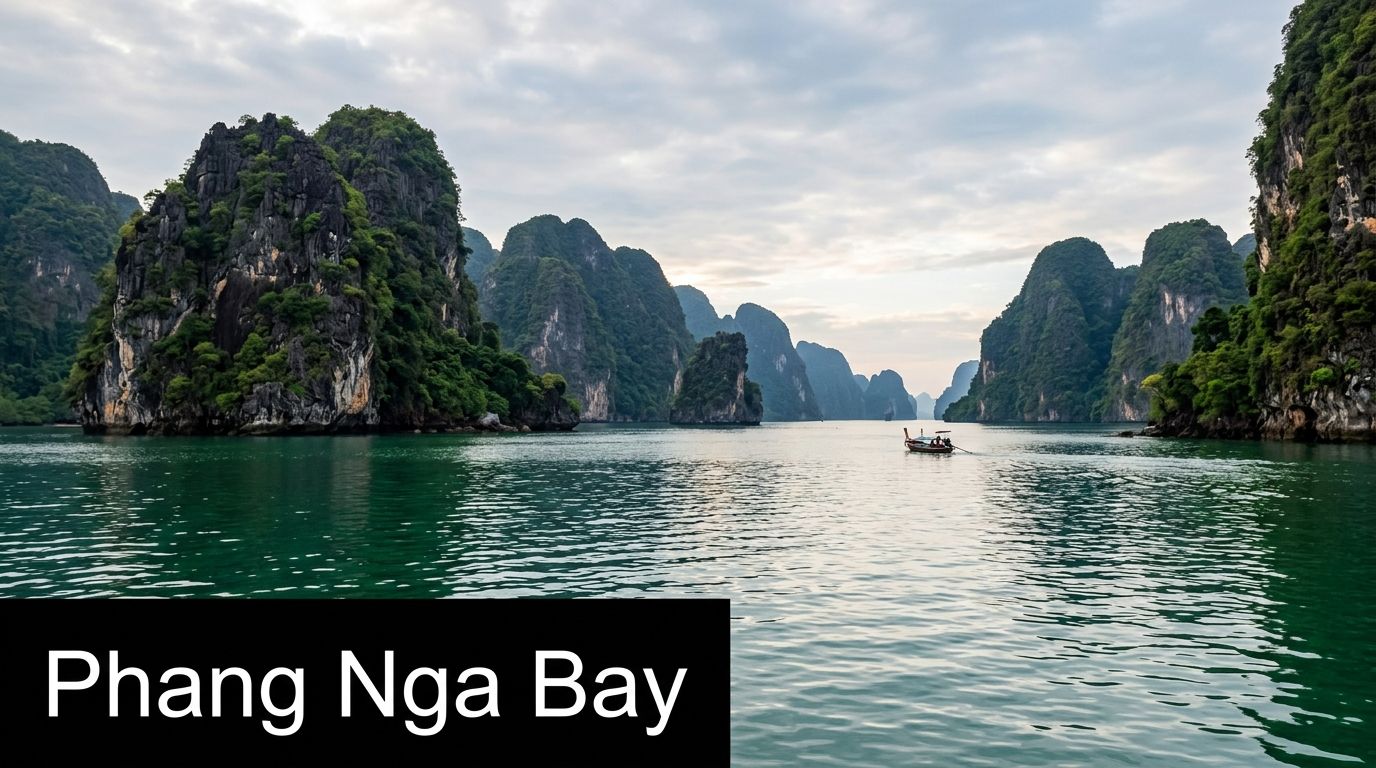
Don't do this by standard group boat. Charter a private yacht and leave early, before the bay turns into a parade of day tours. That gives you first access to quieter channels and enough flexibility to stop for cave exploration, a chef-catered beach lunch, or a slow pass through the most dramatic karst formations without being rushed by a set route.
Bespoke access that changes the day
This part of Thailand suits travelers who want multiple layers of transport. Yacht first, then kayak into enclosed lagoons, then helicopter if you want the aerial geometry of the bay. Haute Black's editorial coverage of Iniala Beach House in Thailand is a useful complement for anyone building a Phuket-based stay around marine charter days and high-touch coastal access.
- Depart at first light: The bay feels completely different before the tour circuit begins.
- Use specialists, not general boat crew: For cave routes and marine interpretation, bring guides who know tides and local geography.
- Treat lunch as part of the itinerary: A private beach setup or yacht dining service keeps the day polished.
This is also where luxury logistics matter. Thailand's premium segment is being driven in large part by affluent visitors from key source markets, and luxury travelers spend an average of $3,200 per trip, with Phuket among the most in-demand destinations for bespoke experiences. In practice, that demand means the best vessels, crews, and landing arrangements should be locked in early.
4. Chiang Mai Old City and Night Bazaar
Chiang Mai shifts the mood of a Thai itinerary. Bangkok is ceremonial and kinetic. The Andaman coast is elemental. Chiang Mai is textured, intimate, and intellectual when you enter it properly. Its appeal isn't only in famous temples. It's in old families, workshops, monk routines, textile traditions, and quiet courtyards behind ordinary facades.
The Old City deserves a private cultural historian, ideally someone connected to local temple communities or the city's artistic circles. Start at dawn, when monk activity and temple bells give the district its authentic rhythm. Then spend the rest of the morning moving between temple compounds, artisan studios, and hidden houses that most visitors pass without noticing.
Where exclusivity matters most
The Night Bazaar can be excellent, but only if you use it selectively. The public version is noisy and broad. The private version focuses on introductions to reputable textile dealers, ceramics ateliers, and artists whose work sits between traditional northern forms and contemporary design.
For travelers considering a seasonal journey, Haute Black's coverage of VIP access and luxury stays around the Thailand Lantern Festival pairs naturally with Chiang Mai and can transform the city from a stopover to a focal point.
- Go early for temples: Dawn gives you ritual, calm, and cleaner interactions.
- Use the bazaar as a sourcing ground: Shop with an advisor who can distinguish craft from tourist merchandise.
- Add a private culinary layer: A serious cooking class or chef-led market conversation deepens the city immediately.
A strong Chiang Mai day often ends with a private meditation session or a salon-style dinner with a local scholar, designer, or collector. That's how the city opens up.
5. Railay Beach and Phi Phi Islands Krabi
Railay and Phi Phi represent the Thailand many imagine before they arrive. Sheer limestone cliffs, bright water, fine sand, and that improbable tropical contrast of jungle against rock. They're iconic for a reason. They're also easy to flatten into a rushed day-tour experience if you approach them casually.
Maya Bay in the Phi Phi Islands became famous for its cinematic beauty and drew millions of visitors for that reason, but the better strategy is to treat the entire Krabi and Phi Phi corridor as a private marine region rather than a single famous beach. Base the day around a yacht or premium speedboat with a crew that can shift timing according to weather, light, and crowd movement.
The version worth paying for
Railay should be approached from the water. That arrival preserves the drama of the cliffs and avoids the sense of joining a conveyor belt. Phi Phi works best as either an early-entry marine day with snorkeling and lunch off the main public circuit, or as part of a longer yacht itinerary with flexible anchorage and private diving support.
If you only see Maya Bay from a crowded approach lane, you've seen the headline and missed the destination.
For couples and honeymooners, this is one of the most effective places to add a marine biologist, underwater photographer, or private beach dining setup. For families, it's ideal for a split program where one group dives and another enjoys a customized beach landing with concierge support. The scenery is public. The way you sequence it doesn't have to be.
6. Sukhothai Historical Park Sukhothai
Sukhothai is one of the most important cultural stops in Thailand, and too many travelers treat it as secondary because it sits outside the standard island-temple circuit. That's a mistake. It preserves the first capital of Siam from the 13th and 14th centuries and stands among the country's defining UNESCO heritage sites, alongside Ayutthaya, the second capital.
At this site, a slower pace pays off. The site doesn't call for spectacle. It calls for interpretation, space, and an eye for form. The elegant Buddha images, lotus-bud chedis, ponds, and axial planning create a very different emotional register from Bangkok's royal intensity.
How to experience it with depth
The best way through Sukhothai is by private bicycle tour with an archaeological guide who can explain artistic motifs, dynastic transitions, and the site's role in the development of Thai civilization. Start early, when the park is cooler and the stone surfaces catch softer light. Then add a second pass later in the day for photography or a quieter reading of the major temple compounds.
- Use a historian, not just a driver-guide: Sukhothai rewards scholarship.
- Stay nearby instead of rushing through: One night improves the visit dramatically.
- Pair it with a lecture or curated briefing: Even a short session before entry changes what you notice.
This is one of the strongest additions for travelers who've already done Bangkok and beach Thailand. It gives intellectual shape to the rest of the journey.
7. Phuket Old Town and Sino-Portuguese Architecture Phuket
Phuket Old Town is the antidote to generic resort time. If your only experience of Phuket is a villa, beach club, and marina, you've missed the island's trading history and social texture. The district's restored shophouses, Chinese temples, and merchant-era facades reveal a more layered Phuket than the usual coastal narrative.
Go in the morning, before the streets fill and before the heat flattens the walk. This district is best explored with an architectural historian or preservation-minded guide who can point out the details most visitors overlook, including decorative stucco, inner courtyards, color palettes, and Chinese-European hybrids that define the area.
Best way to curate the district
A polished half-day usually includes architecture, a gallery stop, and private lunch or dinner in a heritage building. The strongest version also includes conversation with a local resident, collector, or chef whose family has ties to the town's trading past.
There's a useful strategic reason to include Phuket Old Town in an otherwise sea-focused itinerary. It balances the island, and it gives context to the money, migration, and commerce that shaped modern Phuket. For executives and repeat visitors, that kind of layer often matters more than another resort afternoon.
8. Khao Yai National Park Nakhon Nayok
Khao Yai is the countryside escape Bangkok-based insiders book when beach traffic and city spectacle lose their appeal. The draw is not novelty. It is access to real wilderness, serious wildlife viewing, and vineyard-lined highlands that can be done properly without wasting days in transit.
A rushed day trip undersells the park. Stay nearby for at least one or two nights and build the visit around a private naturalist, not a generic driver-guide. Wildlife activity dictates the schedule. Dawn and dusk matter. Midday is for a long lunch, spa time, or a quiet tasting at one of the region's better estates before heading back out when the forest becomes active again.
Khao Yai rewards patience and control. Guests who want the strongest version of it should avoid crowded lookout stops and instead arrange curated routes with restricted-access timing where possible, premium hides for birding and photography, and a guide who can read tracks, calls, and movement patterns in real time. Haute Black can position this as a refined wilderness interlude within a wider Thailand itinerary, especially for clients who want contrast after Bangkok.
What makes the experience exceptional
The park's appeal lies in what standard tourism misses. You are not here to tick off viewpoints. You are here for the hush before sunrise, the possibility of encountering wild elephants at a responsible distance, and the rare pleasure of having an expert interpret the forest with precision.
Bring a wildlife photographer if the brief is imagery. Bring a top naturalist if the brief is understanding. The second option usually delivers the richer day.
Khao Yai works best for travelers who value privacy, pacing, and substance over spectacle.
9. Floating Markets of Bangkok and Damnoen Saduak Bangkok and Ratchaburi
Floating markets can feel either magical or overexposed. The difference comes down to timing and control. If you arrive after the tour buses and shared boats, you'll spend more energy navigating congestion than absorbing the setting. If you arrive before sunrise by private long-tail boat, the canals still feel connected to their trading roots.
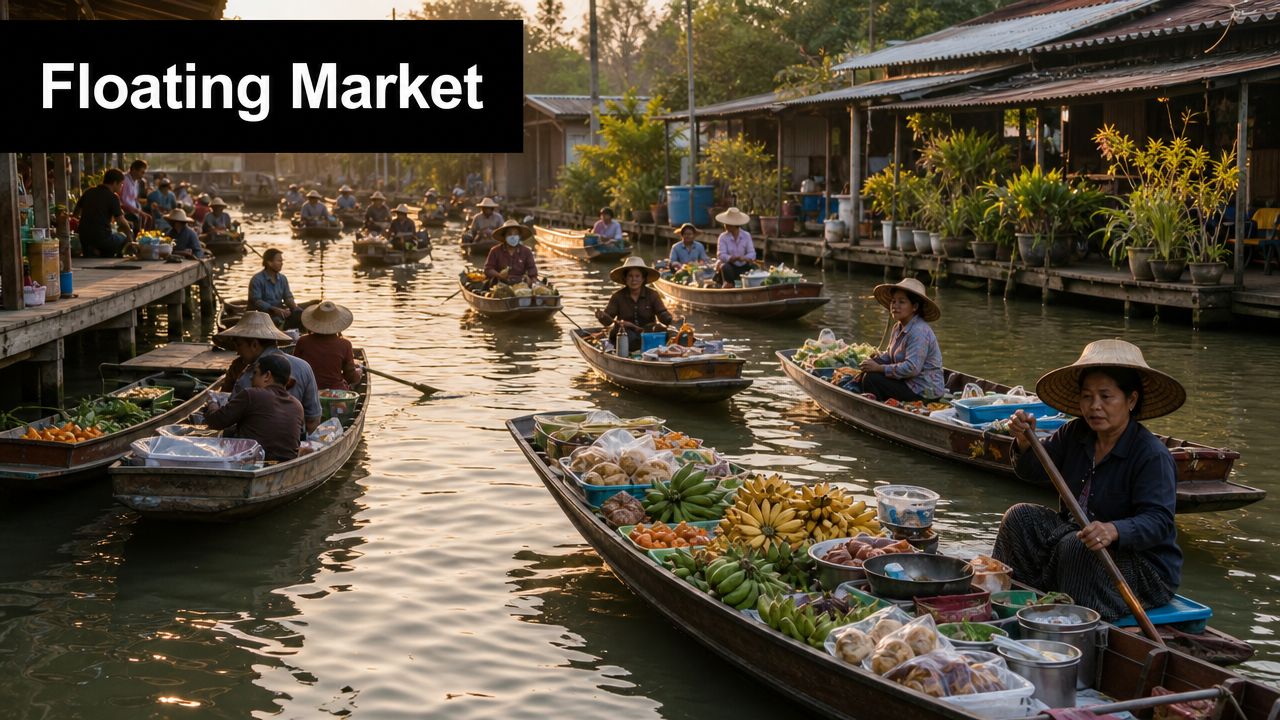
Damnoen Saduak is the most photographed option, but the point isn't only the photographs. It's the sensory detail. Wooden boats loaded with fruit, hot food cooked at canal level, and vendors who move with practiced ease through narrow waterways. For a luxury traveler, this works best as a culinary morning rather than a sightseeing errand.
Private market strategy
Charter a boat before the main rush and go with a guide who knows actual vendors, not just the route. Then build the second half of the morning around a private cooking session or a chef-led tasting based on market purchases.
- Depart extremely early: That's the single biggest quality variable.
- Use the market for sourcing: Ingredients bought on the water can shape the rest of the day.
- Add a photographer only if you trust the pace: Documentation should never dominate interaction.
This is one of the easier wins in Bangkok if you want contrast. It gives you a different Thailand from palace complexes and rooftop dining, and it does so in a format that can still feel private with the right setup.
10. Similan Islands National Marine Park and Diving Phuket
The Similan Islands are the marine section of this list that deserve real effort. If you want Thailand at its most pristine, skip the rushed speedboat circuit and approach the park as a private water-access experience built around reef quality, timing, and protected seclusion.
These islands are prized for bright water, pale granite boulders, and dive sites that still justify serious expectations. For affluent travelers, the appeal is not just beauty. It is access to that beauty before the day-tripper traffic strips away the calm.
A standard shared excursion gets you the view. It does not get you the Similans at their best. Haute Black should be arranging this as a private liveaboard, custom dive yacht, or tightly planned charter with a captain and marine team who can adjust around weather, currents, and crowd flow. That gives you a proper dive briefing, better pacing between sites, superior onboard dining, and the privacy to treat the park as a refined escape instead of a public outing.
Here's a look at the marine environment before you plan your route.
Why private access matters here
Mainstream guides often fail affluent travelers on logistics. They praise the islands, then gloss over the practicalities of crowded departures, rigid schedules, and limited control once you are on the water. Even premium transfers can become expensive quickly, including options listed through Tripadvisor's Thailand helicopter and air tour listings. You need that context before committing.
Set the objective first. Serious diving requires a different vessel and crew from a snorkeling day focused on comfort, and both differ from a privacy-led charter built around quiet anchorages, long lunches, and time on deck.
Marine stewardship matters here, too. Travelers who care about reef protection should favor operators who respect seasonal closures, site restrictions, and responsible mooring practices, and who understand the broader principles behind eco-conscious ocean travel.
Among the must see sights in Thailand, this is one of the clearest proof points that elite access changes the experience completely. The Similans are beautiful for everyone. They become exceptional when you arrive with space, privacy, and a route designed around you.
Top 10 Must-See Sights in Thailand, Comparison
| Site | Implementation complexity 🔄 | Resource requirements ⚡ | Expected outcomes ⭐📊 | Ideal use cases 💡 | Key advantages |
|---|---|---|---|---|---|
| Grand Palace and Temple of the Emerald Buddha (Bangkok) | 🔄 High, VIP scheduling, temple protocols, dress-code enforcement | ⚡ Medium, private guide, transport, early-access fees | ⭐ Exceptional cultural & architectural insight; 📊 Intimate, crowd‑free access when private | 💡 Ceremonial experiences, deep cultural immersion, architectural photography | Iconic royal and religious heritage; exquisite artistry; curated VIP access |
| Wat Arun (Temple of Dawn, Bangkok) | 🔄 Medium, boat logistics and timed golden‑hour access; steep site access | ⚡ Low–Medium, river transfer, photographer/guide optional | ⭐ High visual/photographic impact; 📊 Short visit window (45–90 min) | 💡 Sunset photography, riverside dining, brief cultural stop | Spectacular riverside silhouette; dramatic illumination at dusk |
| Phang Nga Bay and James Bond Island (Phuket) | 🔄 High, yacht/helicopter charters, protected‑area coordination | ⚡ High, yacht/boat hire, guides, safety gear, possible heli support | ⭐ High natural spectacle; 📊 Diverse water activities and secluded sites | 💡 Luxury island hopping, marine photography, private beach lunches | Dramatic limestone karsts; flexible bespoke activities; strong photo ops |
| Chiang Mai Old City and Night Bazaar | 🔄 Medium, arranging private studio/temple access and specialist guides | ⚡ Low–Medium, walking guides, studio visits, local accommodations | ⭐ High cultural depth and artisan engagement; 📊 Multi‑day discovery potential | 💡 Artisanal workshops, cultural salons, temple rituals & meditation | Authentic northern Thai culture; rich crafts tradition; cooler climate |
| Railay Beach and Phi Phi Islands (Krabi) | 🔄 High, boat‑only access, dive logistics, private resort coordination | ⚡ High, yacht charters, dive teams, luxury resort bookings | ⭐ High natural beauty and marine experiences; 📊 Multi‑day coastal exploration | 💡 Diving/snorkeling, rock climbing, secluded resort retreats | Pristine beaches and reefs; world‑class diving; dramatic cliffs |
| Sukhothai Historical Park (Sukhothai) | 🔄 Medium, archaeological coordination for specialist programs | ⚡ Medium, private historians, bicycles, multi‑day stays | ⭐ High historical/academic insight; 📊 Quiet, low‑tourist exploration | 💡 Archaeological study, cycling exploration, scholarly retreats | Birthplace of Thai culture; extensive, authentic ruins; intimate touring |
| Phuket Old Town and Sino‑Portuguese Architecture | 🔄 Low–Medium, walking tours and curated dining/archival access | ⚡ Low, local guides, dining reservations, gallery access | ⭐ Moderate cultural authenticity; 📊 Compact, walkable exploration | 💡 Architectural tours, heritage dining, local interviews | Well‑preserved Sino‑Portuguese architecture; vibrant street life; art scene |
| Khao Yai National Park (Nakhon Nayok) | 🔄 High, wildlife expedition logistics, safety and permit management | ⚡ High, naturalists, lodge stays, night drives, optional helicopters | ⭐ High wildlife viewing potential; 📊 Sightings variable and time‑dependent | 💡 Wildlife safaris, photography‑focused trips, eco‑luxury stays | Exceptional biodiversity; varied ecosystems; close to Bangkok |
| Floating Markets & Damnoen Saduak (Bangkok/Ratchaburi) | 🔄 Medium, very early starts, private boat coordination, vendor access | ⚡ Medium, long‑tail boats, culinary guides, photographers | ⭐ High culinary and cultural immersion; 📊 Extremely photogenic if early | 💡 Market‑sourced cooking classes, food photography, authentic vendor interactions | Unique commerce tradition; direct food sourcing; vivid morning scenes |
| Similan Islands National Marine Park and Diving (Phuket) | 🔄 Very High, liveaboard logistics, dive safety, seasonal restrictions | ⚡ Very High, liveaboard charter, certified dive staff, specialized equipment | ⭐ Exceptional diving and marine biodiversity; 📊 Multi‑day remote marine experience | 💡 Advanced diving expeditions, marine research, underwater photography | World‑class reefs and visibility; minimal development; elite dive sites |
Crafting Your Extraordinary Thai Journey
Thailand is easy to see badly. It is much harder to see it properly.
A standard luxury itinerary gives you famous addresses, polished suites, and a string of well-known stops. A properly curated journey gives you space, timing, and access. That is the difference between standing in a crowd at a landmark and entering with a scholar before the crush, crossing the Andaman on your own charter with the right captain, or seeing a heritage quarter through the doors that do not open to ordinary visitors.
The icons in this guide deserve that level of treatment. The Grand Palace and Wat Arun should be arranged around quiet hours, serious interpretation, and fast, discreet movement through Bangkok. Phang Nga Bay, Railay, Phi Phi, and the Similan Islands are best handled by private yacht or expedition-grade vessel, with a route built around light, tides, and privacy rather than the usual parade of photo stops. Chiang Mai, Sukhothai, Phuket Old Town, Khao Yai, and the floating markets all improve when the right people are attached to them. Historians, conservationists, temple specialists, chefs, collectors, and naturalists create the trip clients remember.
This matters more in Thailand than in many destinations because the gap between public access and privileged access is wide. The same sight can feel chaotic, thin, and overexposed in one format, then precise and memorable in another. A dawn arrival, a private mooring, a closed-door gallery viewing, or a host with real authority changes the experience completely.
It also requires honesty about what fits a high-expectation journey. Some remote regions can be fascinating, but they are not always ideal for travelers who prioritize privacy, rapid transfers, strong medical backup, and consistently high service standards. For this tier of travel, romance alone is not enough. Logistics decide whether a trip feels composed or compromised.
Even broad public review patterns support the same point. Across Thailand's major attractions, travelers consistently reward experiences that are well-paced, well-guided, and thoughtfully personalized, according to Tripadvisor's Thailand attractions listings. That should not surprise anyone who travels well. Access matters. Timing matters. Judgment matters most.
Haute Black fits this type of itinerary because Thailand rewards serious orchestration. Private transfers, marina coordination, temple scheduling, vetted guides, security-minded planning, and off-menu cultural access all need to work together. If you want Thailand as a polished collection of tourist highlights, you can book it anywhere. If you want it arranged with privacy, discernment, and unusual access, start with Haute Black. You can also keep broader adventure planning in view as you plan your next backpacking trip, then decide where a fully bespoke approach makes more sense.
Explore Our Guides
Signature Experiences