Haute Black Journal
Vietnam Luxury Travel: The Definitive UHNW Guide

Marlene Azeez
Director, HauteBlack
View all articles →
Vietnam's luxury travel market was estimated at US$3.2 billion in 2025 and is projected to reach US$6.84 billion by 2032. Luxury traveler trips climbed from about 0.56 million in 2020 to 1.83 million in 2025, a more than threefold rebound in premium demand after the pandemic period.
The popular advice is to follow Hanoi, Ha Long Bay, and Hoi An, then add a beach resort. That route works for a first visit, but it's no longer the most intelligent answer for a traveler who values discretion, private access, and frictionless movement more than a checklist of landmarks. Vietnam has moved beyond its old value-luxury reputation. The opportunity now lies in building a quieter circuit around secluded bays, protected islands, private cultural access, and carefully managed transfers.
Vietnam recorded 21.2 million international arrivals in 2025, up 20.4% year over year, according to market coverage of Vietnam's luxury travel sector. More visitors create more demand, but they also make timing and route design decisive. The best Vietnamese journey isn't expensive. It protects your time and keeps you away from predictable congestion.
Vietnam Beyond the Iconic Triangle
A Vietnam itinerary often begins with a deliberate refusal. Don't start by asking how many famous sights you can fit into a week. Ask where you can experience the country without feeling processed through it.
I once advised a family who had already seen the standard Vietnam itinerary proposed by several agencies. They didn't want to eliminate Hanoi or Hoi An, but they refused to spend the trip moving from one crowded highlight to another. Their preferred rhythm was a private arrival in the capital, a discreet cultural introduction, several nights in a remote coastal setting, and an island retreat where grandparents, parents, and children could occupy separate spaces without losing contact.
That distinction matters. Hanoi offers extraordinary texture, but its energy is public and immediate. The Old Quarter is noisy, aromatic, and wonderfully alive. A private guide can make it more comfortable, yet no guide can turn a busy street into a private estate. The answer is to use the city for access, dining, and culture, then move decisively toward places where the setting itself creates privacy.
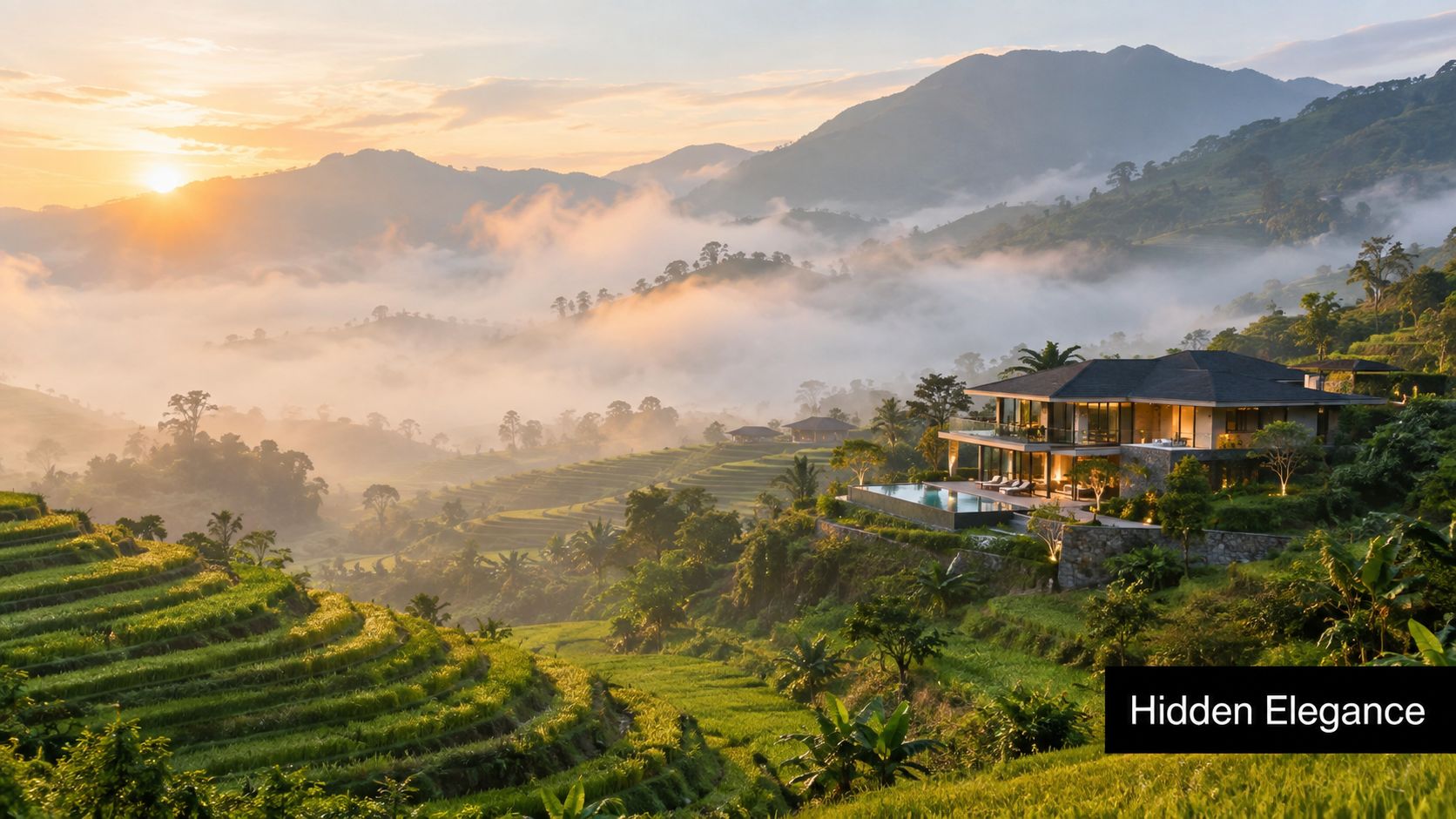
The new premium circuit
Vietnam's luxury offer now includes more than polished resorts beside familiar attractions. The official tourism platform highlights sustainable spa villas, bespoke cruises, colonial-era hotels, riverside retreats, high-end shopping, and privacy-focused destinations such as Con Dao, Cam Ranh, and Bai Tram in its luxury travel guide. These places give an advisor more room to tailor the experience around seclusion, wellness, and multi-generational comfort.
The country's hotel market is expanding quickly. One industry report describes more than 185,000 hotel rooms across over 1,500 hotels, with upscale-to-luxury inventory representing 57% of total rooms and hotel inventory growing at about 7% annually over the last decade (industry coverage from TOPHOTELNEWS). That growth strengthens choice, but it also makes property selection more important. A luxury label doesn't automatically mean quiet beaches, mature butler service, or effortless access.
Practical rule: Use the iconic triangle as an introduction to Vietnam, not as the entire definition of Vietnam luxury travel.
For additional destination perspective, I keep a short list of top travel blogs worth following, especially when comparing on-the-ground travel styles and seasonal nuances. Inspiration is useful, but UHNW planning needs a higher standard than attractive photographs. It needs a route that accounts for privacy, transfer fatigue, weather, and the practical limits of each property.
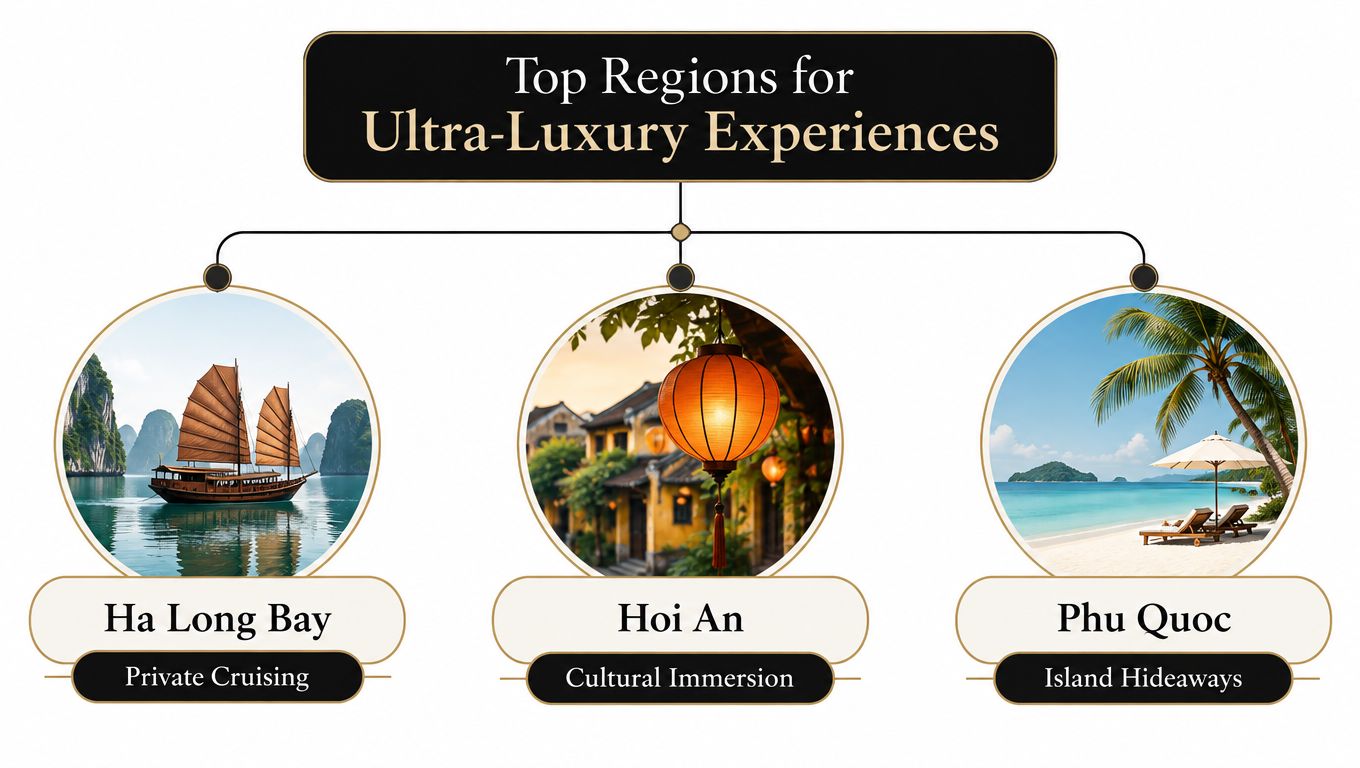
Top Regions for Ultra-Luxury Experiences
Vietnam's luxury regions serve different purposes. Ha Long Bay is about waterborne seclusion. Hoi An delivers cultural depth with a strong hospitality base. Phu Quoc offers the easiest version of expansive island privacy. Con Dao and Bai Tram are more compelling when you want remoteness to do most of the work.
Ha Long Bay for private cruising
Ha Long Bay remains visually essential, but the standard group cruise is the wrong product for a high-touch journey. A private charter changes the experience from scheduled sightseeing to controlled pacing. You can choose when to leave the marina, how long to remain on the water, and whether the day should focus on scenery, kayaking, dining, or an uninterrupted deck.
The bay is most effective when treated as a moving villa rather than a transportation segment. Request a vessel with private outdoor space, a crew briefed on your preferences, and meals designed around your party rather than a fixed dining schedule. If weather or congestion affects the route, your operator should have an alternative plan rather than repeating the published program.
Hoi An and the central coast
Hoi An is the strongest base for travelers who want cultural immersion without sacrificing comfort. Private access can include personalized visits to artisans, discreet culinary appointments, countryside excursions, and after-hours exploration arranged around your interests. The town itself can feel busy, so the best stays place you close enough to reach the heritage center while giving you a retreat with gardens, water, or generous private space.
Da Nang strengthens the region's logistics. It provides a practical gateway for high-end stays along the central coast and gives families more flexibility than a remote-only itinerary. Hue can add imperial history, but it should be included for travelers who care about architecture and political heritage, not because every itinerary needs another stop.
Phu Quoc, Con Dao, and Bai Tram
Phu Quoc is the most straightforward island choice for a polished beach extension. Its larger resort ecosystem makes it easier to secure villas, wellness programming, private dining, and family-friendly service. The trade-off is that a broader hospitality base can create a less secluded atmosphere than a remote retreat.
Con Dao is the sharper recommendation for travelers who put privacy above convenience. Its appeal comes from distance, protected areas, and a slower rhythm. Bai Tram serves a similar purpose on the mainland, with a retreat-oriented character that suits couples and small groups seeking quiet rather than a busy social scene.
Vietnam's coastal markets already account for roughly 60% of midscale-to-luxury hotel rooms, while leading resort destinations such as Danang and Nha Trang have regularly reached 70% to 75% occupancy, according to Luxury Tribune's reporting on Vietnam's luxury hospitality growth. That's why I recommend reserving the most secluded component first. Popularity concentrates quickly around the strongest coastal properties, and the most private room category is usually the first to disappear.
Ultra-Luxury Hotels and Private Villas
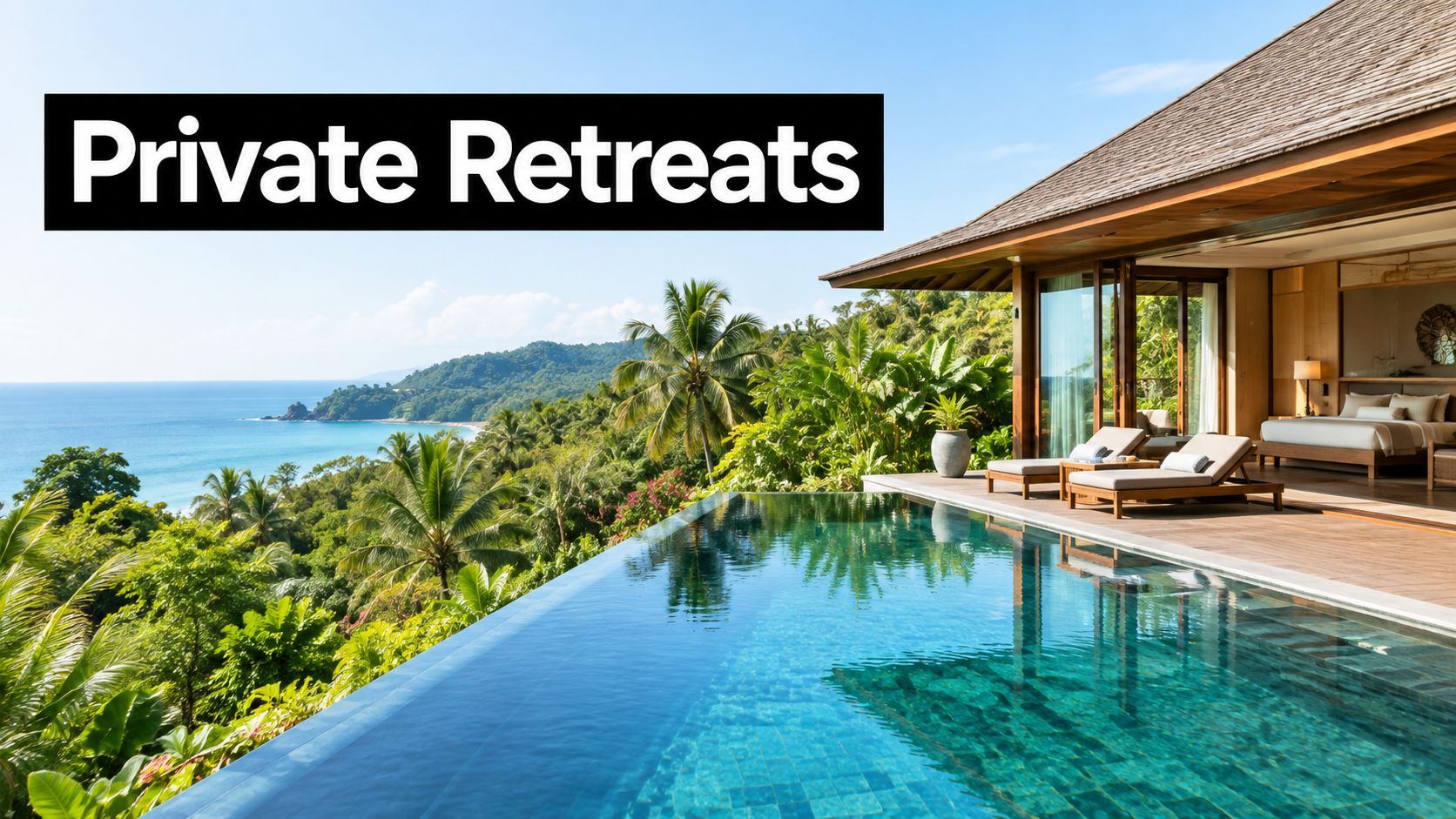
The right accommodation strategy begins with the room category, not the brand name. In Vietnam, privacy can come from a private pool, a hillside position, a separate entrance, a villa compound, or a property accessible only by water. These features matter more than a grand lobby.
Match the property to the traveler
In Hanoi, a historic colonial-style hotel suits travelers who want proximity to galleries, restaurants, and cultural sites. It provides atmosphere and service, but not the same physical privacy as an isolated villa. In Hoi An, a riverside or garden retreat gives you a buffer from the heritage center while preserving access to private cultural programming.
For coastal seclusion, look at properties where geography limits casual foot traffic. Six Senses Ninh Van Bay, near Nha Trang, is reached by boat because no road leads directly to the resort. Its peninsula setting, forested villas, private pools, and spread-out layout create the kind of separation that a busy beachfront resort can't replicate. The same design can create mobility considerations, particularly for guests who don't enjoy stairs, so room selection should follow a candid conversation about fitness, views, beach access, and buggy reach.
Phu Quoc works well for travelers who want generous beachfront villas and a wider range of resort services. Con Dao is better for those who want a more secluded atmosphere and are willing to accept fewer surrounding options. For families, prioritize connected villas, shaded outdoor areas, reliable dining flexibility, and a property team that understands children's routines without turning the stay into a standardized program.
Ask these questions before confirming
1. Where does privacy come from? Is it the scenery, villa orientation, a private entrance, or low occupancy?
2. How does the property handle transfers? Confirm the vehicle, boat, luggage process, and arrival sequence in advance.
3. What happens when weather changes? Ask for indoor alternatives, dining flexibility, and transfer contingencies.
4. Who owns the details? A dedicated guest manager can coordinate preferences, but only if instructions are documented clearly and passed between departments.
For villa sourcing, HauteBlack's private villa service is one route to compare estates and resort villas against the actual needs of your party. The important point is not booking the largest accommodation. It's choosing a space that protects sleep, conversation, children's routines, and personal time.
A visual reference can help you judge the difference between a resort room and a true private setting. Use it as inspiration, then verify the exact view, access, and layout before paying a premium.
Curated Private Experiences and Dining
A standard luxury experience gives you a better seat, a nicer vehicle, or a more polished guide. A bespoke experience changes the terms of access. That difference is most visible in Vietnam's cultural and culinary programs, where the quality of the local relationship determines whether the day feels personal or packaged.
Standard luxury versus genuine access
A private street-food tour is an improvement over joining a group. A culinary advisor who knows your dietary preferences, introduces you to a specific family kitchen, adjusts the route around market activity, and arranges a chef-led meal creates something else entirely. The experience becomes a conversation with a place rather than a sequence of attractions.
The same distinction applies to heritage. A normal temple visit follows opening hours and a fixed explanation. A stronger program may place you with a scholar, artisan, curator, or community host who can interpret details most visitors miss. No one should promise access that hasn't been confirmed, but a well-connected local operator knows which requests are realistic and which are merely marketing language.
The best dining moments are often simple in structure. A private garden dinner, a chef's counter, a seafood meal arranged around the day's catch, or a quiet riverside table can outperform a formal restaurant if the setting and service have been considered properly. Vietnam's cuisine rewards curiosity, but high-end execution requires attention to allergies, spice tolerance, pacing, children's preferences, and the quality of beverages available outside major cities.
For a deeper framework on designing food-led journeys, this guide to culinary travel experiences is a useful reference. The principle is straightforward: reserve the restaurant when the restaurant is the destination, but build a private meal when the relationship and setting matter more than the room.
Experiences worth commissioning
- Private cruising: Charter the vessel, set the rhythm, and keep dining independent from the group schedule.
- Cultural immersion: Pair a heritage site with a specialist who can provide context beyond the standard guide script.
- Wellness retreats: Choose sustainable spa villas or secluded properties where treatments, sleep, movement, and meals can follow one coherent plan.
- Market-to-table dining: Ask the chef or host to adapt the menu to your party, rather than accepting a fixed luxury package.
- Family programming: Build age-appropriate activity blocks without forcing every traveler into the same day.
Luxury isn't the presence of a premium price. It's the absence of unnecessary negotiation once you arrive.
Your concierge should also know when not to add an experience. A private traveler doesn't need every afternoon filled. Empty time in a secluded bay, a late breakfast overlooking the water, or a spontaneous return to a favorite café can be the most memorable part of the itinerary.
Building Your Bespoke Vietnam Itinerary
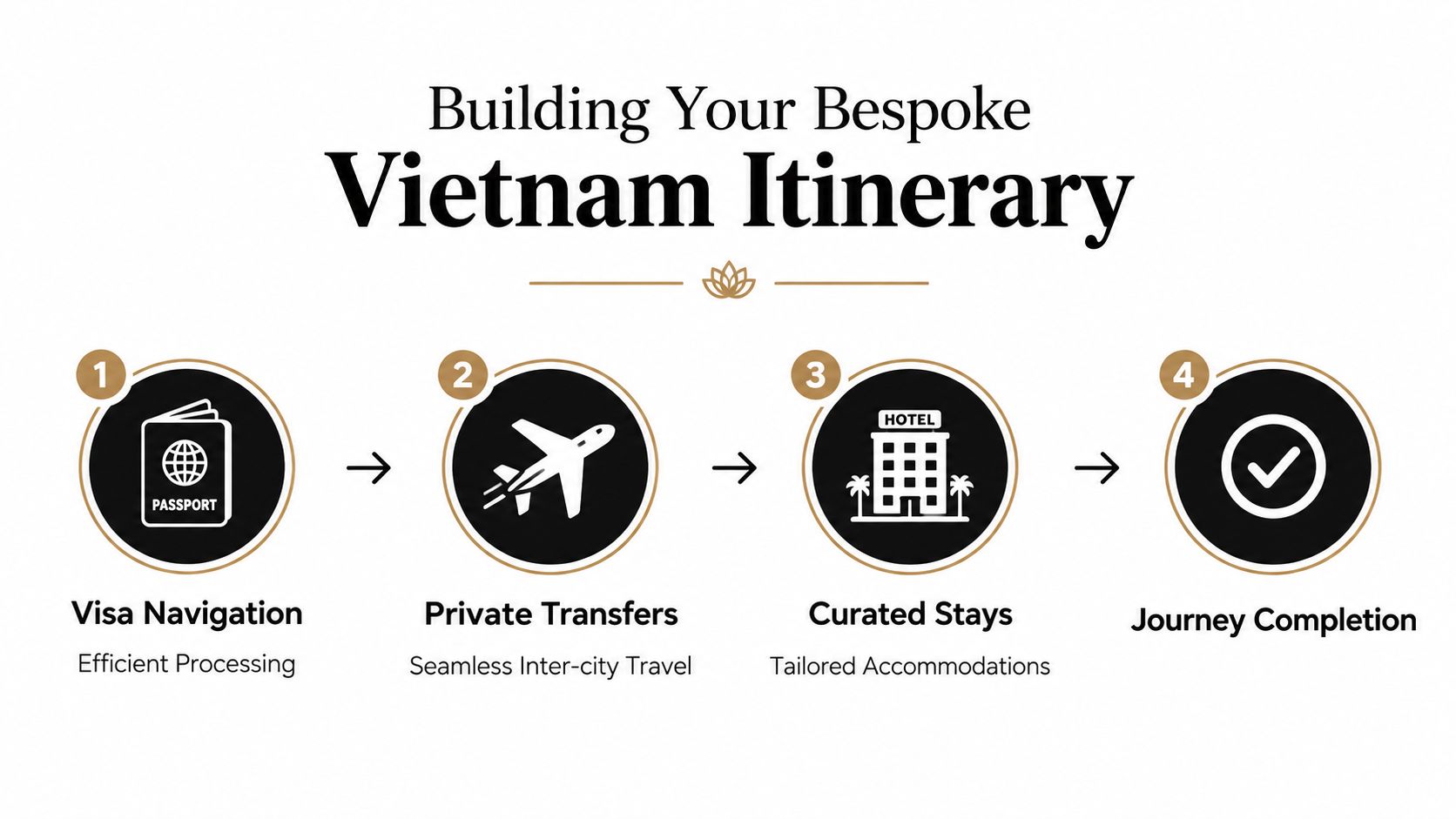
A journey is engineered before departure. Vietnam rewards travelers who sequence regions intelligently, but it exposes weak planning through long road transfers, disconnected reservations, and unnecessary airport changes. Private aviation can reduce friction, but it can't rescue an itinerary that asks the traveler to cross the country without regard for geography or weather.
Start with the journey's purpose
Define the emotional center first. A honeymoon might need romance, seclusion, and carefully protected downtime. A multi-generational trip needs easy access, adaptable meal times, and room configurations that let everyone stay together without compromising privacy. An executive retreat may prioritize secure transport, reliable connectivity, and discreet scheduling.
Only then should you decide how many regions to include. A route built around Hanoi, Ha Long Bay, Hoi An, and Phu Quoc has a different rhythm from one built around Ho Chi Minh City, the Mekong, Con Dao, and a wellness-focused coastal retreat. Don't add Hue, Sa Pa, or Da Lat merely to make the map look ambitious. Each stop needs to justify its transfers.
Build around transfer quality
Use commercial aviation where it's efficient and private aircraft when the time saved, routing flexibility, or security requirements justify it. Private ground transport should meet the aircraft, handle luggage, and take the party directly to the property or a controlled embarkation point. At remote resorts, confirm the final boat schedule and create a buffer for delayed arrivals.
A strong operating plan includes:
- Visa navigation: Check the current requirements for every passport in the party and complete documentation before flights are ticketed.
- Private transfers: Keep vehicles, luggage handling, and airport assistance under one accountable coordinator.
- Curated stays: Match room location and layout to mobility, privacy, children's needs, and preferred view.
- Journey completion: Schedule a final review of transfers, dining, dietary notes, medications, and emergency contacts before departure.
Treat seasons as regional, not national
Vietnam's weather varies significantly between north, central, and southern regions. A beautiful itinerary in one part of the country may overlap with rain, rough water, excessive heat, or limited visibility elsewhere. Ask your advisor to select the route around the strongest regional window rather than promising ideal conditions everywhere.
That approach may mean beginning in the north, moving through central Vietnam, and finishing on a southern island. It may also mean choosing fewer regions so the trip retains its intended pace. The Cambodia and Vietnam luxury trip guide illustrates how private regional travel can be designed around longer, bespoke itineraries rather than a rushed sequence of stops.
Protect the margin
Leave room for weather and human preference. A private cruise may need to alter its route. A child may need a quiet afternoon. A couple may prefer to stay at the villa instead of attending a scheduled excursion. The advisor's job is to build a flexible structure, not to fill every blank space.
Advisor's standard: Every transfer should feel like part of the service, not an interruption between services.
Elevating Your Journey with HauteBlack
Vietnam can be planned through a hotel chain, a local operator, or a generalist agency. For a straightforward resort holiday, that may be enough. For a UHNW itinerary involving private aviation, remote villas, cultural access, multi-generational requirements, and several regional handoffs, the value of a specialist is coordination.
A dedicated advisor protects the details that online booking systems flatten. They can identify whether a villa works for an older guest, whether a private cruise provides meaningful outdoor space, whether a remote resort's transfer sequence will create fatigue, and whether a property can deliver the dining preferences your party expects. Those judgments don't appear reliably in a room category or a glossy destination page.
The practical value of preferred partnerships
HauteBlack is Virtuoso-affiliated through Andavo Travel, with preferred partner status at over 500 properties, including Four Seasons, Aman, and Rosewood, as described on its news page. For eligible bookings, that relationship can support VIP recognition and flexible benefits, subject to each property's terms and availability.
Those benefits matter because luxury service is cumulative. A preferred arrival, a room consideration, a resort credit, or a flexible amenity won't replace a poorly designed itinerary. But when the route, room, transfers, and local access are already right, the relationship with the property can add a layer of recognition that independent bookings may not secure.
HauteBlack's journal hub publishes travel intelligence daily, covering destinations, seasonal timing, elite property reviews, cultural events, and insider access strategies across 120+ countries, according to the publisher's news page. Its Vietnam coverage includes a honeymoon itinerary and a Cambodia and Vietnam planning resource, which makes the platform relevant to travelers comparing romantic escapes, private regional journeys, and concierge-led arrangements.
Why membership changes the operating model
A membership model gives the traveler one person responsible for the whole picture. That advisor can coordinate private villas, aviation, first-class or helicopter transfers, dining, hotel relationships, and last-minute changes without forcing the client to manage separate suppliers.
The strongest reason to use a specialist isn't status. It's accountability. Vietnam's luxury supply is expanding, with 191 projects and 49,800 rooms under construction through 2028, while luxury and ultra-luxury development is concentrated in destinations such as Ho Chi Minh City, Hanoi, and Phu Quoc, according to Vietnam hotel development coverage. More inventory creates more possibilities, but also more decisions. A connected advisor helps you distinguish a private stay from a new property that uses luxury language.
Vietnam is ready for a more considered kind of luxury journey, one built around private movement, secluded enclaves, carefully chosen villas, and access that feels personal rather than packaged. HauteBlack can design that journey around your preferred pace, regional priorities, and level of privacy, so visit HauteBlack to begin planning a bespoke Vietnam itinerary with a dedicated travel advisor.
Explore Our Guides


Signature Experiences


