Haute Black Journal
Culinary Travel Experiences: The Definitive Luxury Guide

Marlene Azeez
Director, HauteBlack
View all articles →
Published August 25, 2026 by Marlene Azeez
You've chosen the villa, confirmed the private transfer, and gathered the family's preferences. Then someone asks the question that can destabilize an otherwise flawless trip: “Which dinners have been booked?” In luxury travel, food is no longer an attractive detail added after hotels and guides. It often determines the route, the length of each stay, the shape of each day, and whether everyone returns home energized or overfed and overtired.
Culinary travel experiences work when an advisor treats food as the itinerary's operating system. That means securing access before arrival, balancing a market morning against an ambitious dinner, and accounting for allergies, religious requirements, mobility, age, and appetite without making the trip feel managed. The most memorable table is rarely the result of a restaurant list. It's the result of disciplined design.
The Moment Dinner Becomes the Trip
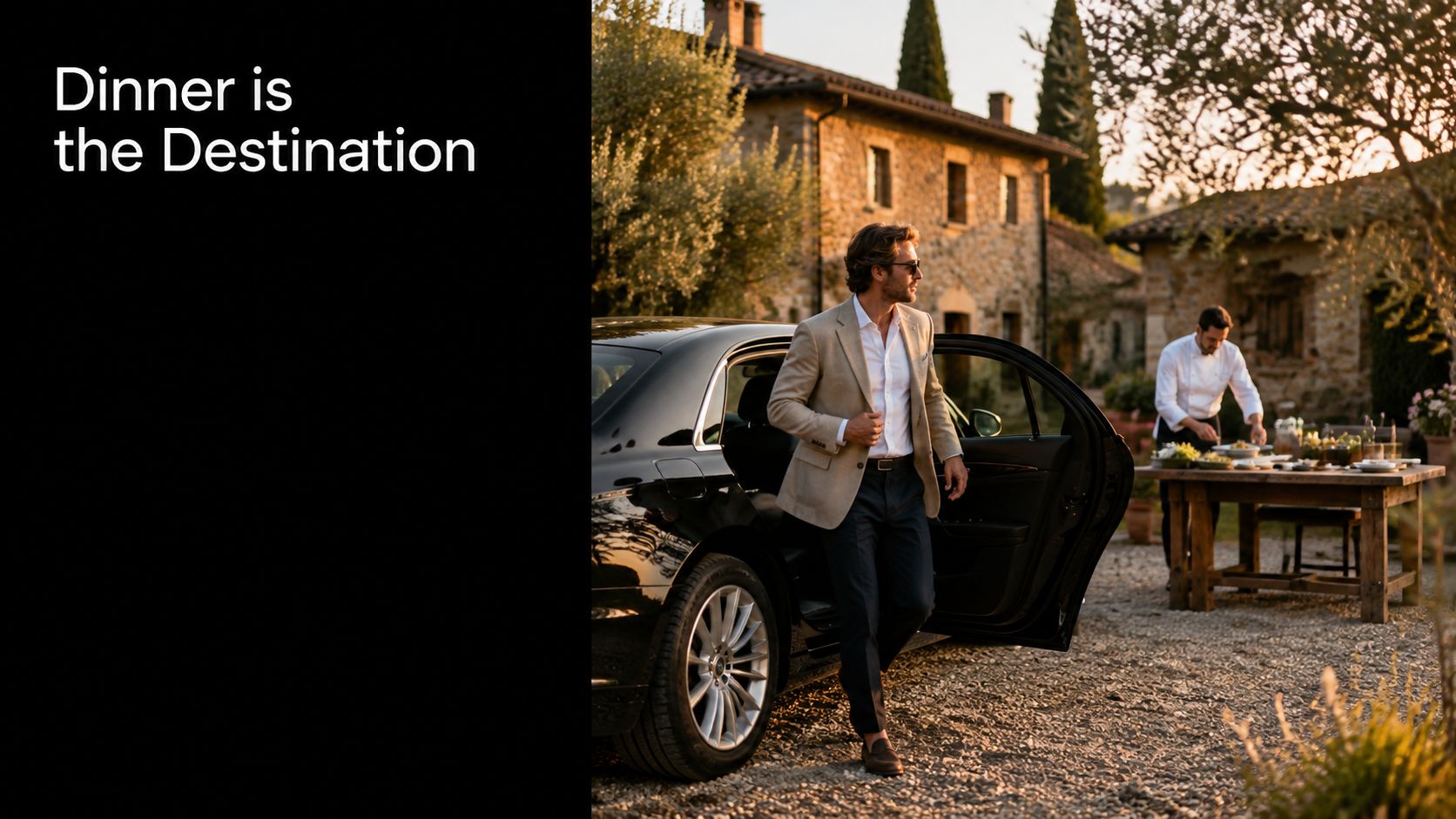
A high-net-worth traveler steps from a private car at a restored podere outside Montepulciano. The evening is warm, the stone courtyard is lit softly, and a Tuscan chef is already plating the first course of a seven-course tasting menu built around the morning's market haul. The guests haven't arrived for dinner. They've arrived at the conclusion of a day that moved through producers, a village market, and the kitchen where the chef translated those ingredients into something personal.
That distinction matters. The villa was selected partly because its kitchen could support the chef, its dining room could accommodate the service team, and its location allowed the party to return comfortably after a winery visit. The route was built around the region's food culture, not around a series of disconnected restaurant reservations.
Food is now an itinerary decision
Global food tourism has become a measurable economic category. One industry estimate values the market at $1.8 billion in 2025 and projects $7.2 billion by 2034, with a projected 16.8% compound annual growth rate. The same estimate assigns 62.5% of the market to international food tourism and 38.2% of revenue share to Asia Pacific (MarketIntelo's food tourism market estimate).
Those figures describe a shift luxury advisors see in practice. Travelers aren't merely asking where to eat after sightseeing. They're choosing destinations because of chefs, regional products, wine estates, markets, and the possibility of entering places that ordinary visitors can't easily reach.
That demand also has a longer institutional history. UN Tourism published its Global Report on Food Tourism in 2019, treating food tourism as a distinct area of global analysis. A separate market estimate places the global culinary tourism market at USD 16.11 billion in 2025, with a projection of USD 76.36 billion by 2033 and a 21.9% CAGR from 2026 to 2033 (Grand View Research's culinary tourism market report).
The operating principle
The trip should have a culinary spine, but it shouldn't force every guest to become a gastronome. A partner may want a chef's counter while another prefers architecture, shopping, hiking, or a long afternoon at the villa. The advisor's job is to make the food-led traveler feel indulged without turning every hour into a tasting.
For travelers looking beyond destination dining, local event calendars can also reveal how a city's food culture is experienced outside formal restaurants. A useful example is this guide to Saskatoon events from a chef, which shows how culinary perspective can help frame a broader destination experience.
The standard is simple: food should give the trip a narrative, not consume the trip's energy.
What Defines a True Culinary Travel Experience
A restaurant reservation alone doesn't create culinary travel. It creates a meal within a trip. Culinary travel begins when food becomes a primary reason for choosing the destination, setting the route, or allocating time.
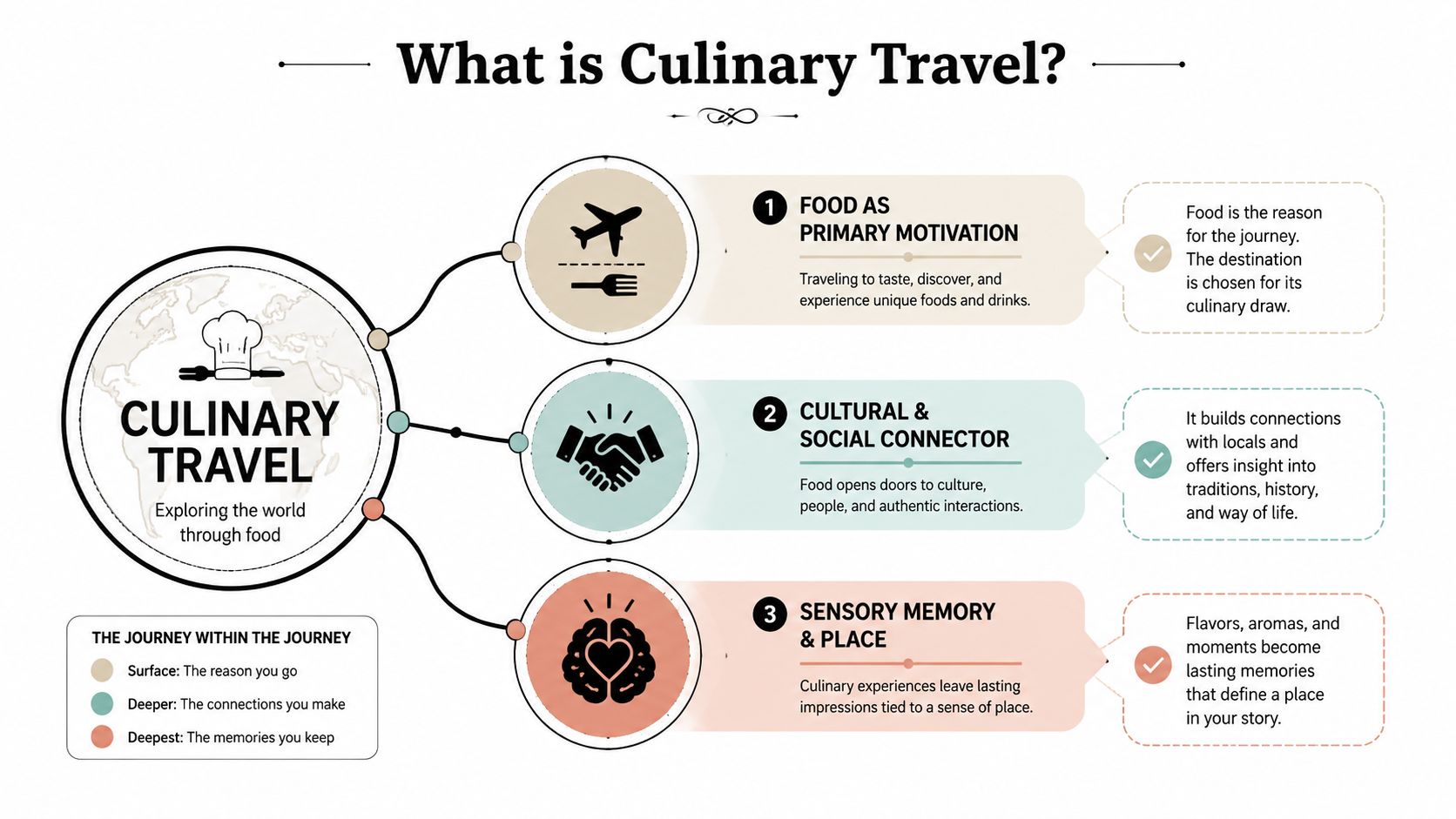
The richer definition has three layers. At the surface, the traveler follows a cuisine, ingredient, producer, or chef. At the cultural layer, food becomes a way to understand local history, labor, ritual, and social life. At the deepest layer, the journey creates sensory memories tied to a place, whether that's the smell of olive leaves at a mill or the texture of pasta shaped by hand.
Four pillars of a serious food-led trip
A well-designed itinerary needs more than desirable restaurants. I use four practical pillars to test whether an experience belongs in the journey.
1. A defined regional focus. Choose a clear culinary identity, such as Basque cooking, Emilia-Romagna's pasta and aged cheeses, or the vineyard culture of Bordeaux. A regional focus gives the trip continuity and prevents a succession of impressive but unrelated meals.
2. Privileged access. The traveler should meet someone who makes, grows, catches, ferments, ages, or cooks the food. That might mean a producer visit, a chef-led market walk, or a private cellar tasting. Access changes the experience from consumption to participation.
3. Intentional pacing. The most expensive menu isn't automatically the right next booking. A demanding dinner after a long transfer, an early market visit, and a winery tasting can turn pleasure into fatigue. Good pacing protects appetite and attention.
4. Integration with place. The experience should connect to its community. Farm-to-table sourcing, seasonal menus, and waste-aware operations aren't merely ethical additions. They can strengthen authenticity and resilience. UNWTO identifies food handling and food waste as significant economic, social, and environmental issues in tourism, while its work on food waste reduction supports more responsible destination practices (UN Tourism on food waste reduction in tourism).
How to apply the test
Ask four questions before confirming a booking:
- What does this meal explain about the destination?
- Who will the traveler meet beyond the dining room?
- Where does it sit in the day's energy curve?
- What happens if a guest can't eat the planned menu?
A private cooking lesson can outperform a celebrated restaurant if it answers all four questions. For couples, a well-curated collection of unique food adventures for couples can also help identify experiences that build shared participation rather than placing two people at a table.
Advisor's test: If the experience could be moved to another city without losing its meaning, it probably isn't place-led enough.
The Five Core Formats Luxury Travelers Actually Book
The format determines the logistics. It also determines who will enjoy the experience, how far in advance it must be secured, and whether an advisor's access changes the outcome.
| Format | Ideal Client Profile | Lead Time | Booking Complexity | Access Level |
|---|---|---|---|---|
| Chef-led private dinners | Couples, families, milestone travelers, villa guests | Advance planning recommended, especially for named chefs | High, menu, staffing, kitchen, wine, and dietary coordination | Advisor access can materially improve selection |
| Immersive market experiences | Curious travelers, multigenerational groups, hands-on learners | Advance planning recommended | Moderate to high, language, timing, and vendor access matter | Often guide-bookable, chef translators add value |
| Private estate and cellar tastings | Wine-focused travelers and collectors | Advance planning required for private rooms and producers | High, transfers and flight sequencing must align | Advisor relationships are useful |
| Culinary festivals | Social travelers and repeat destination visitors | Dates and access should be checked early | High, schedules and coveted events can conflict | Tickets may be public, elite access may require relationships |
| Hands-on producer experiences | Families, couples, and travelers seeking provenance | Seasonal planning is important | Moderate to high, transport and operating calendars matter | Specialist guides often make the difference |
Chef-led private dinners
A villa dinner works best when the chef can inspect the kitchen, source locally, and design a menu around the party rather than force guests into a fixed template. In a restaurant, the appeal is different: a private room, a chef's table, or a controlled service environment can create theater and precision.
The booking complexity is high because the chef, service staff, kitchen equipment, wine pairing, transfers, and dietary requirements must align. Advisor access earns its keep. A self-booked private chef may be excellent, but a named chef with coordinated staffing and menu approval requires a deeper network.
Immersive market experiences
The right market experience isn't a hurried lap through stalls. In Modena, Mercato Albinelli can anchor a morning with a chef who explains pasta, cured meats, and regional products. In Tokyo, Toyosu demands early timing and a realistic plan for what guests will do afterward. San Sebastián's Bretxa is more rewarding when a chef translator can turn unfamiliar products into a coherent lesson.
This format suits travelers who value conversation and context. It breaks down when no one has solved the language, arrival, walking, or dietary details.
Private tastings at estates and cellars
A public tasting is easy to find. A private tasting at a Champagne house, Bordeaux château, Barbaresco cellar, mezcal palenque, or olive estate is an itinerary component. The driver must understand the flight sequence, the party must have enough time between visits, and the host must know whether the guests want technical depth, hospitality, or acquisition guidance.
Culinary festivals
Festivals can deliver energy that a private dinner cannot. Pujol-hosted events, Identità Golose, and Tasmania's Dark Mofo dinners attract travelers who want to encounter a food scene in motion. The risk is schedule overload. Festival programs change, events overlap, and the most interesting access may sit outside the public calendar.
Hands-on producer experiences
A mozzarella di bufala lab, olive mill harvest, or wagyu farm stay gives the journey a physical memory. These experiences suit families and couples who want to understand how food is made, not merely taste the finished product. They also demand seasonal judgment, sensible transfers, clothing guidance, and an honest assessment of whether every guest wants to participate.
The best format is rarely the most prestigious one. It's the one that fits the traveler's curiosity, stamina, and appetite.
Hyper-Local Immersion or High-Status Fine Dining
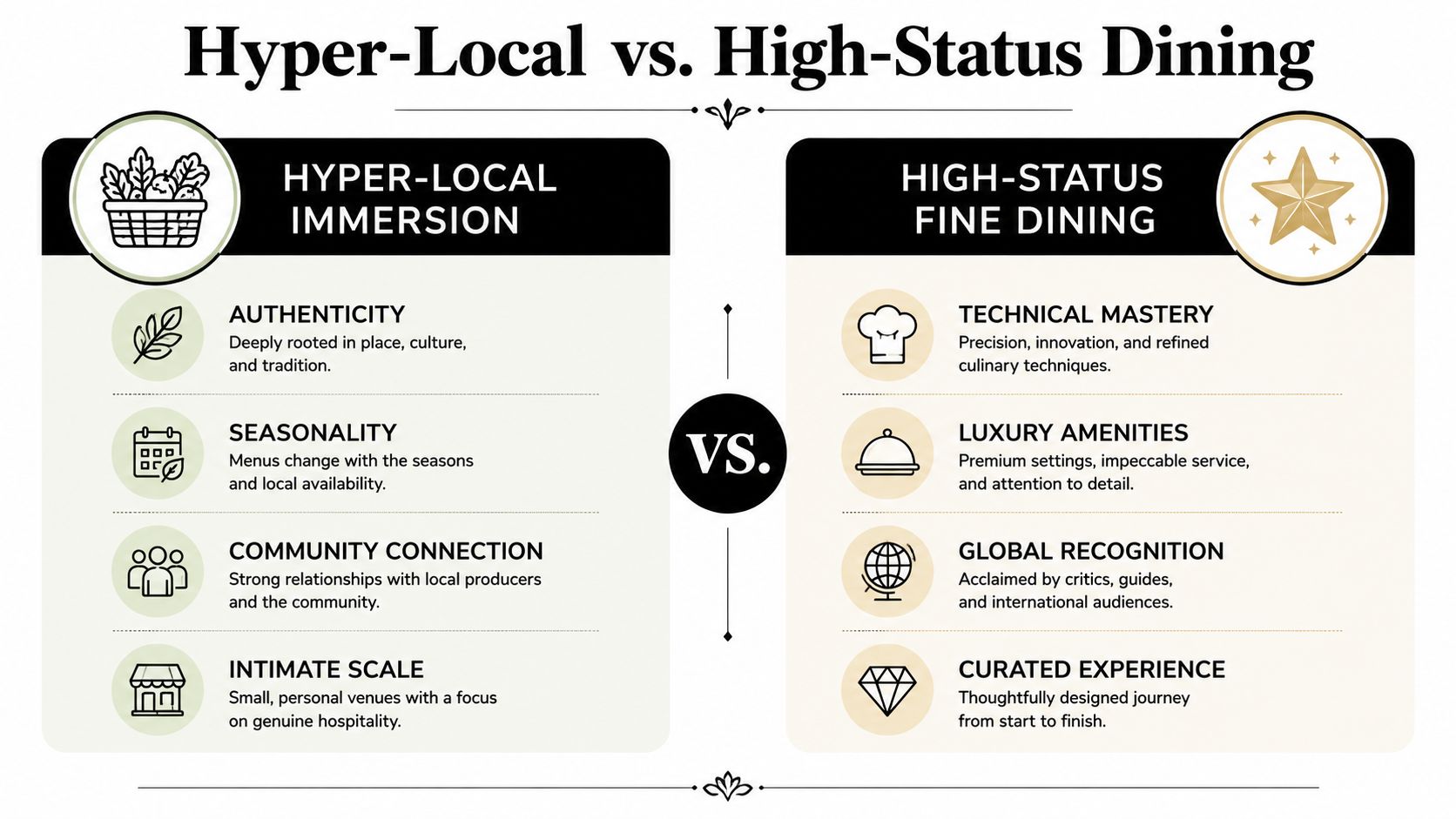
A village bakery and a three-Michelin-star counter answer different travel needs. The bakery offers proximity, informality, seasonality, and the chance to see how a community eats. The elite restaurant offers technical mastery, controlled service, recognition, and culinary theater.
Neither should automatically dominate the itinerary.
Where immersion wins
Hyper-local immersion is the better choice for travelers who want craft and storytelling. A producer can explain why an ingredient matters, how a recipe changes by season, or what local families buy for an ordinary meal. The experience feels specific because it depends on people and place.
The friction is equally specific. Small venues may have limited English, narrow service windows, modest seating, and fewer options for allergies or religious dietary needs. A market morning can also involve walking, early starts, heat, and sensory overload. Luxury service doesn't erase those realities. It anticipates them.
Where fine dining wins
High-status fine dining makes sense for milestone celebrations, short stays, and travelers who value a highly choreographed evening. It offers reliable standards, wine programs, polished hospitality, and a sense of occasion that a casual producer visit may not provide.
The danger is repetition. Several tasting menus in succession can flatten the destination into a sequence of courses. If every dinner follows the same formal rhythm, the traveler may remember the service but lose the sense of place.
The blend is the luxury standard
The strongest itinerary layers both models. A market morning can introduce the ingredients, a hands-on pasta class can turn them into a skill, and a destination restaurant can provide the evening's polished finale. The sequence creates contrast without making either side feel like a compromise.
Wine travelers should also distinguish between a famous label and a meaningful terroir. The story of the ancient chalk of the North Downs is a useful reminder that geology and place can shape a wine experience as much as prestige does.
For route planning, Bordeaux and Burgundy wine travel provides a natural framework for combining estates, dining, transfers, and regional character. The aim isn't to choose between authenticity and luxury. It's to place each one where it carries the most emotional weight.
Designing a Bespoke Food-Led Journey That Works
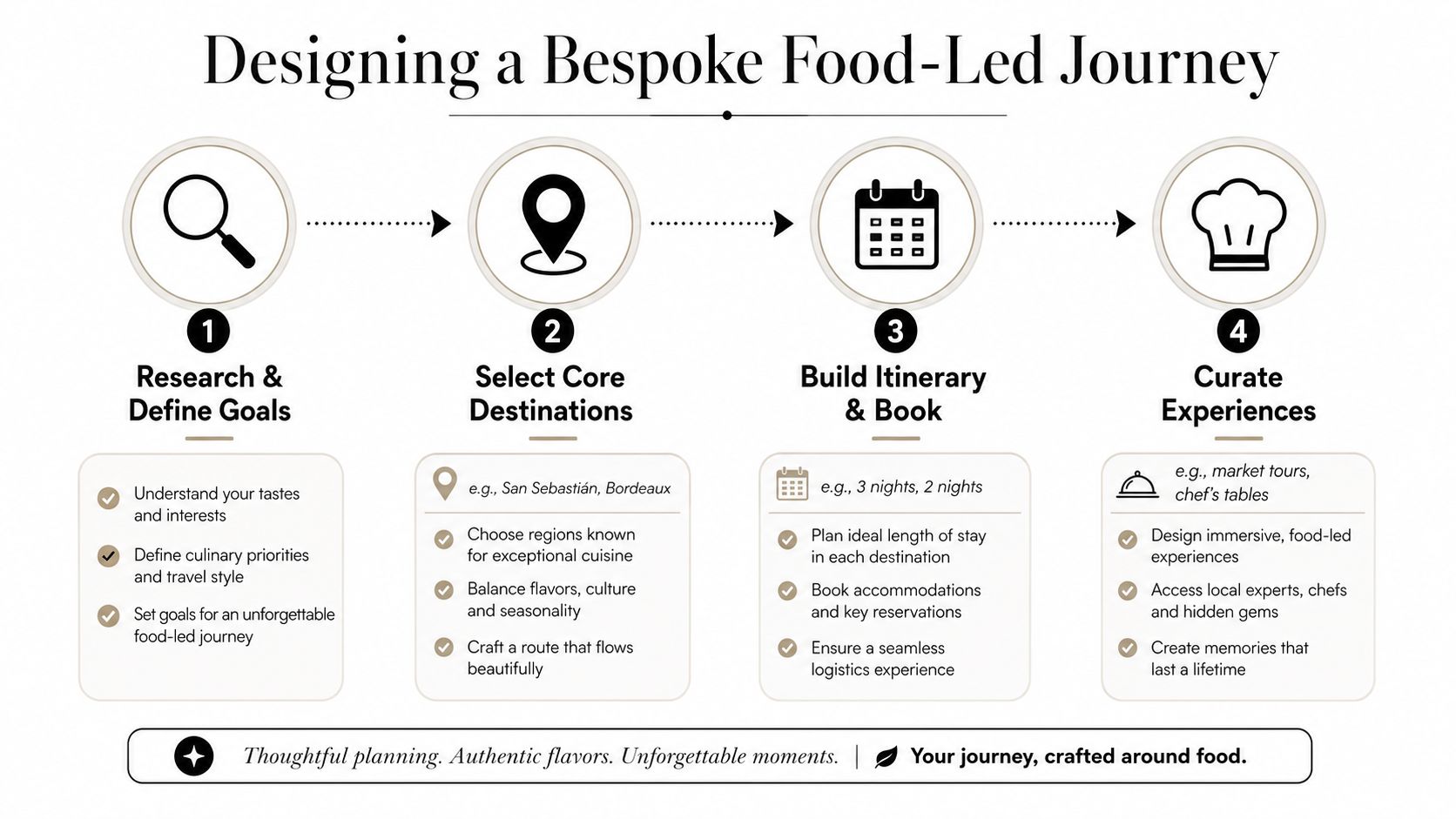
Start with the route, then assign meals. A useful structure might include three nights in San Sebastián, two in Bordeaux, four in Emilia-Romagna, and a final chef-led dinner in Paris. Each stop has a distinct culinary identity, but the itinerary only works if the transfers, recovery time, and reservation strategy support the food rather than compete with it.
Build around anchors, not bookings
Choose one signature dining experience per day. That could be a chef's table, a private estate dinner, or a rare market-led meal. Keep lunch lighter when dinner is the anchor, and use other days for producers, walking, shopping, architecture, or time at the hotel.
A trip becomes exhausting when every meal carries the emotional weight of an event. The traveler needs ordinary meals too. A memorable local lunch can provide relief between major reservations and give the palate space to reset.
Secure access before finalizing the route
Some venues release tables close to the date. Others require months of notice, personal introductions, or agent-level handling. Don't build a nonrefundable route around an unconfirmed restaurant.
The advisor should work in layers:
1. Identify the anchor. Define the meal or producer experience that justifies the stop.
2. Confirm the access path. Establish whether the venue accepts direct requests, hotel referrals, or advisor bookings.
3. Hold the transitions. Match transfers to arrival windows, tasting durations, and the time needed to reach dinner comfortably.
4. Create a backup with a different character. A second tasting menu is a poor contingency if the original dinner fails. Choose a private chef, a producer table, or a strong local restaurant instead.
Pre-negotiate dietary needs
Dietary planning should happen before the kitchen receives the final guest list. Allergies require more than a note in an online reservation. Kosher needs, severe intolerances, vegetarian preferences, and religious restrictions can affect sourcing, equipment, menus, and even whether a venue is appropriate.
A Virtuoso-affiliated advisor can pre-clear those details with the chef, confirm what the kitchen can safely provide, and document the agreement across the hotel, driver, guide, and restaurant. Guests shouldn't have to negotiate their safety at the table.
For a more focused look at the private-dining format, the guide to private chef dinners and bespoke dining is a useful reference point for menu design and service planning.
Keep multigenerational groups comfortable
A twenty-something may welcome a long market walk, while a grandparent needs a seated transfer and a shorter route. Give the group shared anchors, then create optional layers. One guest can join a producer visit while another enjoys the spa or hotel breakfast. A private dining room can also make a family meal more flexible than a crowded counter.
The final design checklist is practical:
- Anchors: Identify the experiences that define each destination.
- Transitions: Leave enough time for traffic, transfers, and decompression.
- Recovery: Place lighter days after demanding tastings or early market visits.
- Contingencies: Prepare alternatives for weather, illness, seasonal closures, and kitchen changes.
How HauteBlack Engineers Culinary Access
The useful question isn't whether an advisor can recommend a restaurant. It's whether the advisor can make the entire food day function.
HauteBlack operates as a Virtuoso-affiliated agency, which can support preferred-partner benefits at participating hotels, including upgrades when available, property credits, and VIP arrival handling. In a culinary itinerary, those benefits matter because the hotel often serves as the operational base. A well-placed property can simplify transfers, protect recovery time, and provide a reliable alternative when a restaurant schedule changes.
From reservation to private moment
For a high-profile restaurant, the difference may be a confirmed table at a difficult venue, a private dining arrangement, or a room that suits the party rather than accepting the first available seating. For a villa dinner in Tuscany, Mallorca, or Kyoto, the work extends further. The advisor coordinates the named chef, menu development, sommelier pairing, service staff, kitchen requirements, table setting, and timing.
The guest experiences one evening. Behind it sits a chain of confirmations that must remain consistent.
HauteBlack's dining services are relevant when the traveler needs restaurant reservations, private chef arrangements, and concierge dining logistics handled as one brief rather than as separate requests.
The details guests shouldn't have to see
A market immersion led by a local guide needs the right meeting point, vehicle access, translation support, and a route that respects the group's pace. A producer visit needs a transfer timed to the tasting, not a car booked for the day. A cooking session needs the chef to know the guests' abilities and restrictions before anyone enters the kitchen.
The advisor also keeps a single operational thread across the trip. If a flight runs late, weather changes the market plan, or a restaurant adjusts its menu, someone must decide what moves and what stays. That is the quiet value of orchestration.
HauteBlack also publishes culinary-relevant travel content on its news page, including The 7 Best Wine Tasting Tours for 2026, 10 Elite Cultural Travel Experiences Worldwide, and 10 Premier Cultural Travel Experiences for 2026. Those articles connect wine tours, Michelin reservations, private chefs, and culinary journeys to the broader mechanics of elite cultural travel.
The result isn't a louder version of luxury. It's fewer visible seams.
What Separates a Good Culinary Trip from a Defining One
A competent culinary itinerary contains attractive meals. A defining one resolves the tensions those meals create.
First, look for producer depth. Restaurant-only travel can be elegant, but producer access gives the destination a supply chain and human memory. Second, look for narrative continuity. The market, cooking lesson, cellar, and final dinner should relate to one another, even when they aren't serving the same menu.
Third, test pace against the actual party. A couple on a short anniversary trip can sustain a denser dining schedule than a family with mixed ages and dietary needs. The right advisor doesn't impose a standard tempo. They calibrate the day to energy, appetite, mobility, and attention.
Fourth, insist on contrast. Fine dining and hyper-local immersion should sharpen each other. A formal tasting menu feels more meaningful after a day spent understanding the ingredients, while an informal meal gains context when the traveler has also experienced the region's highest culinary ambition.
Finally, examine the invisible logistics. Are dietary requirements confirmed with the kitchen? Are transfers timed to the tasting flight? Is there a credible alternative if the restaurant closes? Can one person adjust the plan without forcing the guests to repeat their preferences to every supplier?
The defining trip feels effortless because the friction was handled before departure.
These aren't checklist items. They're design tensions: access versus flexibility, intensity versus recovery, prestige versus local character, and group unity versus individual freedom. A strong advisor resolves those tensions in advance so the traveler can remain present at the table.
Culinary travel has moved beyond trend status. Market forecasts, destination investment, and traveler behavior all point toward food becoming a permanent itinerary pillar, while the practical quality of each journey will depend on the advisor's ability to connect access with pacing and story.
HauteBlack arranges bespoke culinary travel experiences, from private chef dinners and Michelin dining to market immersions, producer visits, and wine-led journeys. Visit HauteBlack to discuss a food-led itinerary built around your destinations, dietary needs, preferred pace, and the guests traveling with you.
Frequently Asked Questions
Explore Our Guides

Signature Experiences