Haute Black Journal
10 Elite Cultural Travel Experiences Worldwide

Marlene Azeez
Director, HauteBlack
View all articles →
# 10 Elite Cultural Travel Experiences Worldwide
July 13, 2026
Cultural travel at the top end of the market is no longer defined by where you stay. It is defined by who opens the door.
Affluent travelers have grown selective about what counts as luxury, and the strongest itineraries now center on access, context, and private participation rather than public-facing privilege. Industry reporting reflects that shift. Monica Poling's cultural tourism statistics roundup notes sustained demand for heritage-driven travel, while IMARC's U.S. luxury travel market analysis points to continued growth in customized private trips. In practice, that means clients are asking for entry into rooms that are not marketed, not searchable, and often not available without a trusted intermediary.
That distinction matters.
A private museum gala, an appointment inside a family archive, or time with a master artisan is rarely secured by filling out a form. It usually requires a chain of introductions, careful timing, institutional trust, and a clear understanding of what should remain private. The trade-off is real. The more exclusive the access, the more important discretion becomes. Some of the finest cultural experiences cannot be bought outright. They have to be granted.
A high-level network such as Haute Black changes the outcome in practical terms. The work involves more than reserving a guide or arranging a driver. It is identifying which curator will host after hours, which chef will open a research kitchen for a heritage tasting, which scholar can interpret a collection in private, and which requests should never be pushed because the relationship matters more than the transaction.
The sections that follow focus on cultural travel experiences that reward that level of orchestration, including a Japan cultural immersion journey designed around private access and regional context. The common thread is not extravagance for its own sake. It is informed access that changes what a traveler is able to see, learn, and take part in.
1. Private Artisan Workshops with Master Craftspeople
The strongest artisan sessions don't feel like classes. They feel like temporary apprenticeships.
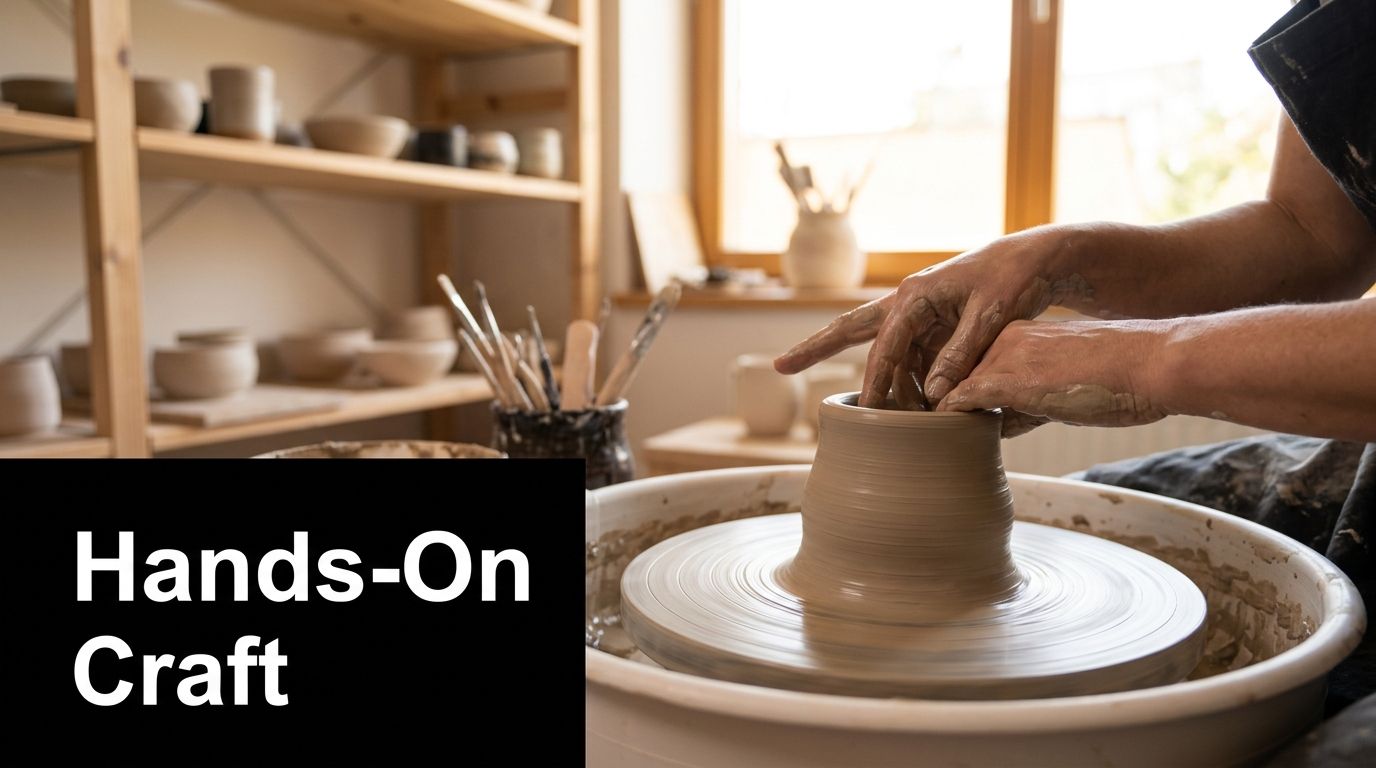
In Kyoto, that might mean a private ceramics session with a Raku master in a working studio rather than a visitor-friendly workshop. In Florence, it could be a leather apprenticeship that starts in the archive room, where old patterns and hides explain the lineage before you ever touch a tool. In London, Savile Row tailoring experiences become far more compelling when the cutter discusses cloth, drape, and posture, then records your preferences for a commission that continues long after the trip ends.
The mistake many travelers make is booking the most visible name online. Visibility usually brings standardization. If you want something rare, the better approach is to secure a multi-day immersion through a well-connected advisor, then layer in historical context with museum access and private collection visits. A one-hour demonstration may be charming. It rarely changes how you understand a craft.
A more considered Japan cultural immersion journey can combine studio time, collector introductions, and regional context in a way that makes the craft legible rather than decorative.
What works best
- Book early: The best masters often commit their private time months ahead, especially when they're balancing commissions, family legacy obligations, and teaching.
- Ask for process, not performance: You want access to sketchbooks, clay bodies, fabric swatches, bench tools, and unfinished work. That's where the education lives.
- Commission selectively: A bespoke object can become a meaningful cultural artifact if the relationship is real. If the session feels transactional, skip the order.
Practical rule: If the artisan can explain why a local material behaves differently from an imported one, you're in the right room.
For travelers interested in movement as much as memory, this short film captures the intimacy of clay work better than any brochure can.
2. Private Museum Galas and After-Hours Cultural Events
A museum changes after closing time. Without queues, ambient noise, and daytime traffic, galleries regain their intended pace.
The most successful after-hours cultural events are tightly curated. A private gala at the Louvre, an evening circuit through the Vatican Museums with scholarly commentary, or a dinner within a major New York or Florence institution only works when the programming is as refined as the setting. You need the right room, the right guide, and the right guest list. Otherwise, it becomes an expensive venue rental wearing the costume of culture.
For seasoned travelers, the appeal isn't just privacy. It's access to interpretation. A curator who can speak candidly about provenance, restoration, patronage, or institutional politics adds a layer the public never receives. That's especially valuable for collectors, trustees, or families trying to teach younger travelers how to look closely.
The real trade-off
There's a common assumption that bigger is better. It usually isn't. A long banquet in a grand gallery photographs well, but a smaller evening with a director, a conservator, and time to linger in two or three rooms often feels more exclusive and far more intelligent.
Museums are at their best when the evening is edited. Fewer galleries. Better voices. More time.
If you're arranging this level of access, ask for a run of show that includes not only service and security, but intellectual leadership. Who speaks matters as much as where you stand.
3. Culinary Heritage Journeys with Michelin-Starred Chefs
Food is often the easiest doorway into culture, but elite culinary travel only becomes exceptional when it moves beyond restaurant reservations.
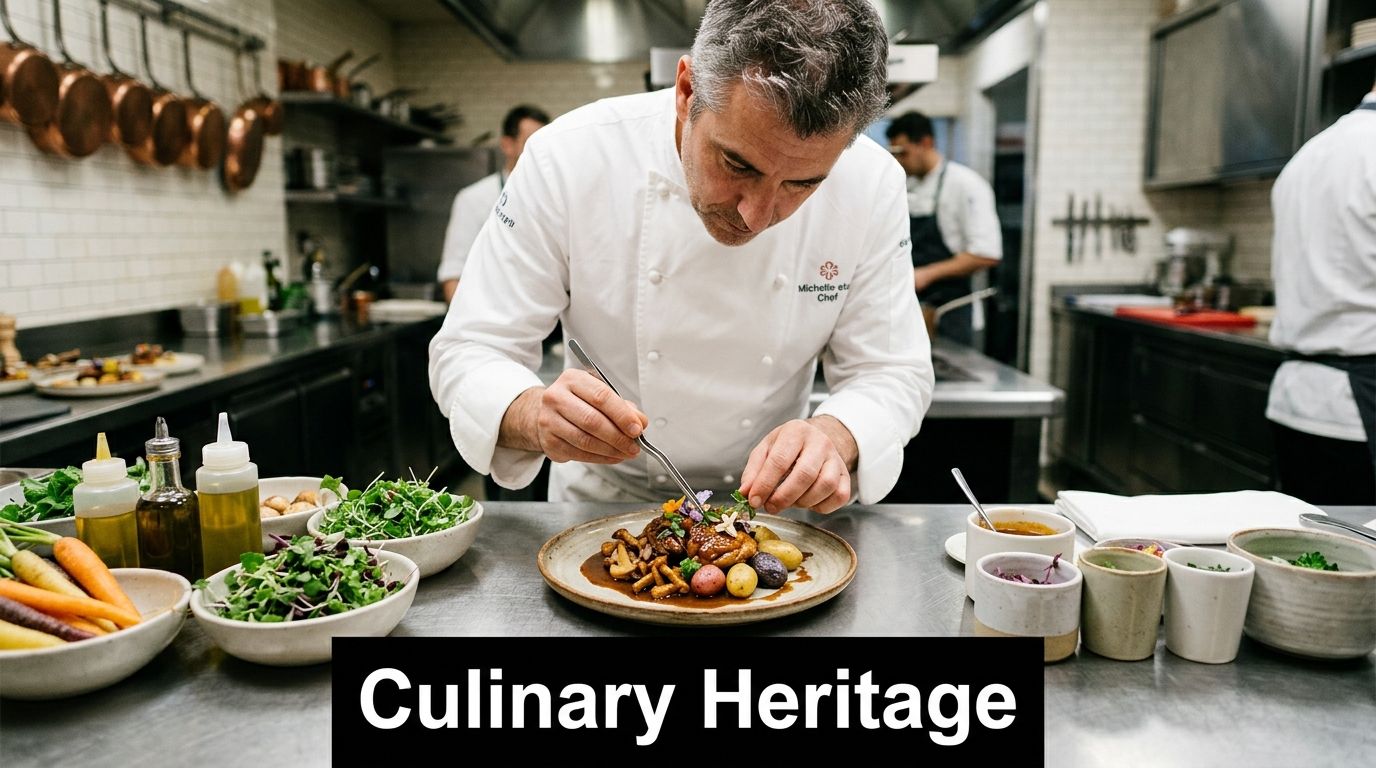
A serious culinary heritage journey might begin in Lyon with a chef-led market visit, continue through private tastings with regional producers, and end in a professional kitchen where technique, memory, and regional identity come together on the plate. In San Sebastián, the point isn't merely to dine well. It's to understand how pintxos culture, seafood supply, Basque identity, and modern tasting menus coexist. In Japan, kaiseki and washoku become much more legible when the sequence includes ingredients, seasonality, vessels, and etiquette, not only the meal itself.
This is one of the strongest categories for private network value because kitchen access is relationship-driven. Public-facing experiences are abundant. Intimate ones are protected. If you want time with names such as Nobu, Daniel Boulud, or Thomas Keller, the route is almost never an open booking page. It runs through trusted advisors and established hospitality relationships, often extending into private chef dinners and bespoke dining.
How to make it worth the flight
- Stay in one culinary region long enough: Five to seven days gives enough room for markets, kitchens, farms, and private dinners to speak to one another.
- Build around technique: One focused lesson in stock, fermentation, pastry, or rice can teach more than a parade of tastings.
- Include producers: Cheesemakers, fishermen, vintners, and foragers often provide the most grounded cultural context.
Nearly 70% of wealthy travelers reject standardized experiences, and about 75% won't pay for luxury accommodations that feel generic, as summarized by AltexSoft's review of luxury travel trends. Culinary travel is where that rejection becomes obvious. A tasting menu alone is no longer enough. Access to the chef's world is what matters.
4. Heritage Family Genealogy and Ancestral Homestead Journeys
The most moving cultural travel experiences are often personal rather than famous.
An ancestral journey to County Cork, Bavaria, Sicily, the Scottish Highlands, or a village in Eastern Europe can do more for a family than any resort holiday. When handled well, genealogy travel turns a surname into geography. Children see records, churches, cemeteries, kitchens, and local customs. Adults hear stories that explain why a family left, stayed, prospered, or fractured.
This category rewards patience. The glamorous version, a car and driver visiting a few symbolic sites, rarely satisfies. The stronger version starts months in advance with archival research, local historians, church registries, migration documents, estate maps, and, where possible, discreet outreach to living relatives or village custodians. Then the trip itself becomes a carefully sequenced narrative rather than a sentimental scavenger hunt.
How experienced planners approach it
- Start with research at home: Family letters, naturalization files, military records, and oral history often solve the first set of questions.
- Use regional specialists: A genealogist who understands Sicilian civil archives is not interchangeable with one working in Prussian records.
- Create something permanent: A bound family history, private documentary, or digital archive gives the trip an afterlife.
One practical reality matters here. Families often discover stories they didn't expect. Migration, poverty, disputed inheritance, religious conversion, or wartime compromise can surface quickly. That doesn't diminish the experience. It deepens it. The best ancestral travel doesn't flatter a family myth. It clarifies it.
5. Private Archaeological Expeditions and Site Excavations
Archaeology strips away fantasy. That's exactly why it appeals to discerning travelers.
A private expedition in Greece, Italy, Jordan, Egypt, Guatemala, or Britain works best when it gives you proximity to method, not a staged brush-in-hand photo. A significant privilege is standing beside an archaeologist while they explain layers, dating, conservation constraints, and the difference between what's known, inferred, and still debated. Even a short participation window can be substantial if it includes active interpretation, storage access, and museum conservation work.
Many travelers assume excavation access is only a matter of paying enough. It isn't. Universities, site directors, ministries, and museums care about academic integrity, permits, insurance, and site protection. Consequently, advisors with strong cultural networks matter. They can frame a traveler not as a vanity participant but as a serious guest with the right expectations.
What to ask before you commit
- Clarify the level of access: Observation, supervised participation, artifact handling, and conservation access are different things.
- Understand conditions: Dig housing may be charmingly rustic or frankly uncomfortable. That can be part of the value, but it should be deliberate.
- Request expert time off-site: Evening briefings, museum reserve visits, and scholar dinners often become the intellectual heart of the trip.
Access to a dig is impressive. Access to the minds interpreting it is rarer.
If your interest leans toward collecting ancient narratives rather than seeing ancient stones, archaeology is one of the richest forms of cultural travel available.
6. Private Performances and Collaborations with Indigenous and Traditional Artists
Discernment holds the most importance. Not every private performance should happen because it can.
Existing travel content often tells people to seek authenticity, but it rarely explains what to do when authenticity includes discomfort or limits. One summary of cultural travel trends notes that while 78% of travelers seek authentic experiences, fewer than 12% are prepared for the realities they may encounter, including poverty, political tension, or deep social stratification, according to Avoya Travel's discussion of cultural travel experiences. That gap is exactly why indigenous and traditional arts programming must be handled with care.
A private Maori performance in New Zealand, an Andean music collaboration in Peru, or a traditional dance and music evening in parts of Southeast Asia can be extraordinary when artists retain control over setting, compensation, timing, and what is shared. The worst version is extractive. It treats living tradition as content.
The ethical standard
- Pay artists directly when possible: Fees should reflect rehearsal, travel, intellectual property, and community protocol.
- Accept boundaries: Some songs, ceremonies, sacred objects, or spaces aren't available to outsiders.
- Choose context over spectacle: Artist studios, cultural centers, or community-approved venues usually create better encounters than hotel ballrooms.
Some of the most discerning travelers now understand that cultural immersion sometimes means accepting refusal. If a community says no, the answer isn't to escalate through money or status. It's to ask what form of exchange is appropriate instead. That could mean a studio visit, a conversation with cultural stewards, support for preservation work, or attendance at a public program on local terms.
7. Bespoke Fashion and Luxury Goods Design Experiences
The rarest fashion experiences are not shopping appointments. They are private entries into houses that usually protect their time, archives, and senior makers from casual access.
For clients who already own the expected labels, the ultimate prize is authorship. A proper couture or luxury goods commission lets you sit inside the making of an object and influence decisions that are normally kept behind the curtain. In Paris, that can mean reviewing archive references with an atelier director before a single sketch is approved. In Florence or Milan, it may involve time with a pattern cutter, leather specialist, or last maker to refine proportion, structure, and finish. In Switzerland, a serious watch commission becomes interesting once the conversation shifts from branding to movement architecture, dial restraint, and which details are worth the wait.
Access at this level is rarely obtained through a public boutique request. It comes through a network that knows who is accepting commissions, which houses will entertain a private introduction, and which clients are a genuine fit for the maker. Haute Black's travel division is part of that equation because luxury hospitality relationships often overlap with fashion access. The same trusted introductions that secure a closed-door hotel event or private cultural evening can also secure time with an atelier principal, a senior fitter, or a family-run workshop that does not advertise these appointments.
For readers already thinking about tailoring, discover bespoke suits as part of a broader wardrobe strategy.
A strong commission usually requires three things: time, clarity, and restraint. Time, because serious work needs fittings, revisions, and production windows that do not bend for impatience. Clarity, because vague requests produce generic results. Restraint, because the most refined pieces are often edited hard, especially when the client has access to every option in the room.
What tends to work well:
- A defined brief: Reference points, intended use, travel habits, and collection goals should be clear before the first meeting.
- Respect for process: Multiple fittings, material substitutions, and prototype adjustments are normal.
- Documentation: Provenance records, atelier notes, and photography add long-term value for collectors.
What tends to disappoint:
- Treating the appointment like retail theatre: The best makers are evaluating the client as closely as the client is evaluating them.
- Trying to compress the timeline: Rush jobs usually weaken workmanship or limit who participates in the project.
- Chasing logos over craft: That approach buys status, not memory.
The finished piece matters. The route to it matters more. When the access is properly arranged, a bespoke commission becomes a cultural record of place, maker, and taste, not just another luxury purchase.
8. Exclusive Literary and Intellectual Salons with Authors and Scholars
Some cultural travel experiences happen around a dinner table, not a landmark.
A private literary salon in a London townhouse, a scholarly gathering in a Florentine villa, or a discreet Paris evening with philosophers, biographers, or curators can rival any front-row event if the conversation is rigorous. The draw isn't celebrity. It's mental access. You're not there to collect a signature. You're there to test ideas with people who've spent decades thinking about history, art, politics, literature, or technology.
The quality of these evenings depends on curation. A weak salon becomes social clutter. A strong one has a precise theme, a host who can moderate without dominating, and a guest list that can sustain disagreement without collapsing into performance. For experienced travelers, this category often produces the most durable relationships because it selects for shared intellectual appetite rather than simple affluence.
How to show up well
- Read beforehand: Even a short stack of essays or one recent book changes the level of conversation.
- Ask for substance: Broad topics disappoint. Narrow ones spark better evenings.
- Follow up intelligently: A note, a book request, or an introduction handled properly can extend the exchange beyond the event.
A good salon doesn't entertain you. It recruits you into the conversation.
For travelers who have already seen the grand sites, private intellectual programming often feels like the most modern form of luxury. It respects time, attention, and curiosity.
9. Private Wellness and Spiritual Immersion Retreats with Masters and Gurus
The rarest wellness journeys are not built by booking a better suite. They are secured through trusted intermediaries who can reach lineage holders, monastery administrators, senior Ayurvedic physicians, ceremonial leaders, and private estates willing to host serious practice under proper conditions.
In this category, access is the product. A closed-door meditation residency in Bhutan, a physician-led Ayurvedic reset in Kerala, a private yoga study program in Rishikesh, or a carefully structured spiritual stay in Bali or Peru only works when the teacher, setting, and protocol belong together. Otherwise, the trip slides into expensive stage design. Experienced travelers should ask who authorized the program, how the practitioner was vetted, what parts of the practice are fixed, and which elements can be adapted without compromising the tradition.
That is also where network quality matters. The right advisor can arrange private introductions, reserve dates that are never publicly released, and coordinate interpreters, security, medical screening, dietary compliance, and discretion agreements before arrival. A more developed wellness travel program with vetted practitioners and sanctuary settings is useful when the goal is not generic relaxation but credible access to teachers and environments that retain their cultural integrity.
The trade-offs to understand
- Comfort can dilute rigor: The more a retreat is redesigned around indulgence, the more likely the practice has been softened for guests.
- Authority matters more than branding: A famous property is less important than a teacher with recognized standing in a specific discipline.
- Privacy requires limits: The most serious masters often accept private audiences only within strict schedules, ritual rules, and clear behavioral expectations.
- Integration decides value: Without follow-up instruction, physician notes, or a disciplined home practice, insight fades quickly and the trip becomes another polished memory.
I usually advise clients to treat these retreats less like hospitality and more like admission to a private school of thought. The right question is not how much can be customized. It is what must remain untouched for the experience to be worth having.
10. VIP Access to International Film Festivals, Art Fairs, and Cultural Competitions
At major festivals and fairs, access is a choreography problem.
You can have the right credentials and still spend a week badly positioned, stuck in traffic, overbooked at lunch, and shut out of the rooms where actual decisions happen. Cannes, Venice, Art Basel, Berlin, Toronto, Sundance, and the Biennale reward planning long before arrival. The best itineraries balance premieres, previews, acquisition meetings, collector dinners, studio visits, and recovery time. Without that balance, even VIP access becomes exhausting.
This is one of the clearest examples of why network quality matters. Virtuoso-affiliated luxury travel agencies have preferred partner status at over 500 properties globally, including Four Seasons, Aman, Rosewood, Belmond, and Ritz-Carlton, with benefits such as complimentary upgrades when available, resort credits, and flexible perks, according to Haute Jets' overview of Haute Black. During festival periods, those relationships can materially improve where you stay, how you're prioritized, and how smoothly your schedule holds.
How insiders structure festival travel
- Anchor the trip around two or three priorities: A premiere, an acquisition agenda, and one private dinner can be enough.
- Use private consultations: Art fairs are better when you arrive with a point of view and someone to pressure-test it.
- Treat after-parties selectively: The right one can matter. The wrong three will erode the rest of the trip.
The most experienced clients don't chase volume. They place themselves where culture is being discussed, traded, premiered, and judged in real time.
10-Point Comparison of Cultural Travel Experiences
Access defines the category. The difference is not comfort or price alone. It is whether a trip secures the room, the host, the permission, and the private time that serious cultural travelers cannot arrange through public channels. The table below compares the main formats by complexity, cost profile, and the kind of access a high-level network such as Haute Black can secure.
| Experience | 🔄 Implementation Complexity | ⚡ Resource Requirements | 📊 Expected Outcomes & Ideal Use Cases | ⭐ Key Advantages | 💡 Tips |
|---|---|---|---|---|---|
| Private Artisan Workshops with Master Craftspeople | High. Requires direct outreach, schedule alignment with the master, translator support, and careful handling of studio privacy | High. Master fees, studio buyout or private access, materials, and international travel | Unique commissioned pieces, meaningful technical instruction, and rare time with a living master. Best for collectors and travelers who value process as much as acquisition | ⭐ One-of-a-kind works; authentic technique transfer; relationships that can lead to future private commissions | 💡 Book 3 to 6 months ahead. Ask for a multi-day format, not a single demonstration |
| Private Museum Galas and After‑Hours Cultural Events | Very high. Institutional approvals, curator availability, security protocols, donor politics, and guest list control all matter | Very high. Venue fees, catering, curator honoraria, special handling, and often philanthropic commitments | Private access to collections, curator-led interpretation, and attendance at events usually reserved for trustees, patrons, and major donors. Best for collectors, philanthropists, and hosts | ⭐ Access unavailable during public hours; stronger institutional relationships; a setting that rewards serious cultural capital | 💡 Use patron circles, museum boards, and established cultural intermediaries. Off-calendar dates often work better than peak season |
| Culinary Heritage Journeys with Michelin‑Starred Chefs | High. Chef schedules are tight, and the strongest itineraries combine private kitchens, market access, producers, and regional movement | High. Chef fees, premium ingredients, transport, villa or hotel kitchen access, and concierge coordination | Sharper culinary knowledge, private meals built around local heritage, and introductions to producers that do not take outside bookings. Best for dedicated gourmands and accomplished hosts | ⭐ Direct chef instruction; privileged sourcing access; techniques and menus you can carry home | 💡 Plan 5 to 7 days. Confirm dietary requirements early so the chef can build around them properly |
| Heritage Family Genealogy and Ancestral Homestead Journeys | High. Archival research, church or municipal records, rural logistics, and family introductions require months of preparation | Moderate to high. Genealogists, interpreters, archive fees, local drivers, and private appointments | Documented family history, reconnection with place, and a record worth passing to the next generation. Best for families building a legacy archive | ⭐ Strong emotional value; educational depth for younger relatives; tangible legacy materials and documentation | 💡 Start research 6 to 12 months in advance. Regional specialists matter more than global genealogy firms |
| Private Archaeological Expeditions and Site Excavations | High. Permits, academic sponsorship, seasonal fieldwork windows, and safety planning are often the limiting factors | High. Expedition contributions, equipment, field logistics, insurance, and expert supervision | Legitimate participation in research, site access normally closed to the public, and informed scholarly context. Best for travelers who want substance, not spectacle | ⭐ Academic credibility; restricted-site access; the chance to contribute to real fieldwork rather than observe from the perimeter | 💡 Reserve 1 to 2 week blocks. Work through universities, research foundations, and museum partners |
| Private Performances & Collaborations with Indigenous Artists | Moderate to high. Community permissions, ethical review, cultural protocol, and reciprocity need careful handling | Moderate. Artist fees, travel, community compensation, interpreters, and hosting costs | Respectful cultural exchange, support for artistic continuity, and private performances or workshops designed on the community's terms. Best for culturally literate travelers who understand boundaries | ⭐ Direct support to artists and communities; intimate access; more integrity than staged tourism products | 💡 Vet the intermediary carefully. Payment structures should benefit the community, not only outside operators |
| Bespoke Fashion and Luxury Goods Design Experiences | Very high. Designer schedules, atelier capacity, sourcing of rare materials, and multiple fittings create a long runway | Very high. Design fees, rare skins or textiles, fittings, shipping, and valuation services | Investment-worthy custom pieces with strong provenance and direct atelier relationships. Best for collectors and clients who commission rather than shop | ⭐ True uniqueness; access to crafts and materials rarely offered publicly; long-term relationships with houses and ateliers | 💡 Allow 12 to 24 months. Review the maker's archive and request provenance or appraisal documentation where relevant |
| Exclusive Literary & Intellectual Salons with Authors and Scholars | High. Private hosts must secure serious speakers, shape the conversation well, and keep the room small enough to matter | Moderate to high. Honoraria, venue costs, curated dining, moderation, and guest curation | High-level discussion, discreet networking, and access to ideas before they circulate widely. Best for patrons, collectors, and intellectually ambitious travelers | ⭐ Private contact with major thinkers; sharper conversation than public events; occasional access to unpublished or pre-publication work | 💡 Distribute reading in advance. The quality of the guest list matters as much as the speaker |
| Private Wellness & Spiritual Immersion Retreats with Masters and Gurus | Moderate. Teacher access, health screening, privacy needs, and the credibility of the host institution all require scrutiny | Moderate to high. Expert fees, sanctuary stays, private instruction, and customized wellness plans | Personal growth, disciplined new practices, and deeper immersion than standard luxury spa programming. Best for committed wellness travelers who want rigor, not décor | ⭐ Private guidance; personalized protocols; access to respected teachers and sacred settings where appropriate | 💡 Commit 7 to 14 days. Request pre-retreat health assessments and confirm what is private, what is ceremonial, and what remains off limits |
| VIP Access to International Film Festivals, Art Fairs & Cultural Competitions | High. Credentials, allocation limits, event timing, and private invitation lists determine the real value of the trip | High. VIP badges, premium accommodations, on-site transport, and strong concierge support | Insider access to screenings, fair previews, juried events, collector circles, and decision-makers. Best for collectors, patrons, and industry-facing travelers | ⭐ Priority entry; private introductions to artists, filmmakers, and curators; stronger market and cultural intelligence | 💡 Coordinate 6 to 12 months ahead. Secure host hotels and private consultation support before public calendars fill |
Orchestrating Your Cultural Legacy
Serious cultural travel is built through relationships, not inventory. The difference is obvious the moment a trip moves beyond public programming and into private access: a closed-door viewing with a museum patron before a gala, a one-to-one session with a lacquer master who rarely teaches outsiders, or an introduction to a family archivist who can open records that never appear in standard heritage tours.
As noted earlier, cultural travel is a growing market. The practical consequence for affluent travelers is simple. Demand has risen faster than meaningful access. Public-facing “authentic experiences” have multiplied, while the rare experiences remain tightly held by curators, collectors, family offices, artist studios, and local intermediaries who care far more about trust than budget.
That is why the essential work happens long before departure. Someone has to know which artisan will accept a private commission, which museum event has substance rather than noise, which scholar can vet a genealogy claim, and which sacred tradition should be observed at a respectful distance. Access is only half the assignment. Judgment matters just as much.
I advise clients to treat cultural travel as legacy planning with a passport.
The best itineraries are sequenced with intent. A private archive visit may come before a return to an ancestral estate. A collector dinner may be more valuable than the gala itself. A chef-led heritage journey often becomes richer after time with growers, historians, or a regional family whose table explains the cuisine better than any tasting menu can. These experiences look effortless on the surface. They are not. They depend on quiet vetting, careful timing, and introductions made by people whose calls get returned.
Restraint also separates thoughtful travel from expensive intrusion. Some communities are limiting visitor access to protect ceremonies, sacred sites, and artistic traditions from overexposure. Worldpackers' discussion of cultural travel reflects that broader reality. The right response is not to push harder. It is to arrange the right alternative, perhaps a private conversation with a cultural steward, a workshop in an appropriate setting, or patron-level access that supports preservation instead of extracting from it.
For travelers who already have the hotels, the aircraft, and the usual VIP treatment, cultural itineraries still offer rarity. They produce knowledge, provenance, personal history, and relationships that remain valuable long after the trip ends. They also lend themselves beautifully to private celebrations and legacy moments, much like the event thinking behind ditch paper guest books, where the point is to preserve memory with more intention.
Haute Black is one relevant option for travelers who want this handled with discretion, insider coordination, and access-oriented planning. Its model suits cultural journeys that require more than reservations and preferred rates.
If you're ready to arrange cultural travel experiences that go beyond standard VIP treatment, Haute Black can help design a journey around private access, trusted introductions, and the kind of cultural context that makes travel matter.
Explore Our Guides


Signature Experiences


