Haute Black Journal
10 Premier Cultural Travel Experiences for 2026

Marlene Azeez
Director, HauteBlack
View all articles →
# 10 Premier Cultural Travel Experiences for 2026
July 18, 2026
Cultural travel at the top end is not about seeing more. It is about getting access that the public cannot buy, in ways that are properly brokered, intelligently timed, and acceptable to the people granting it.
UN Tourism has long identified culture as one of the principal motivations for international travel, with cultural tourism representing a substantial share of global tourism activity according to its policy work on tourism and culture. For a seasoned traveler, that confirms a practical reality. Culture is often the purpose of the trip, not a decorative extra.
The difference at this level comes down to mechanics. Anyone can secure a table, a ticket, or a private guide. Far fewer can arrange entry through the right institutional, family, or community channels so the experience feels legitimate once you arrive. That requires more than spend. It requires relationships, lead time, security discipline, and the judgment to recognize which doors should remain closed.
I have found that the strongest cultural itineraries rarely look crowded on paper. They are structured with restraint. A scholar joins for a private conversation because the subject warrants it. A visit takes place outside public hours because the institution trusts the host making the request. A living tradition becomes available to witness because expectations were handled correctly in advance, the guest was properly briefed, and consent was given by someone with standing.
For clients already fluent in private aviation, palace suites, and priority access, orchestration is the ultimate luxury. These elements, relationships, timing, security, and discretion, are the differentiators. The experiences that follow are valuable not because they are expensive, but because they are difficult to arrange well and easy to mishandle without the right fixer behind them.
1. Private Museum After-Hours Access & Curatorial Tours
The right museum access is rarely about being alone in a grand room. It is about gaining time with the people who shape interpretation inside the institution.
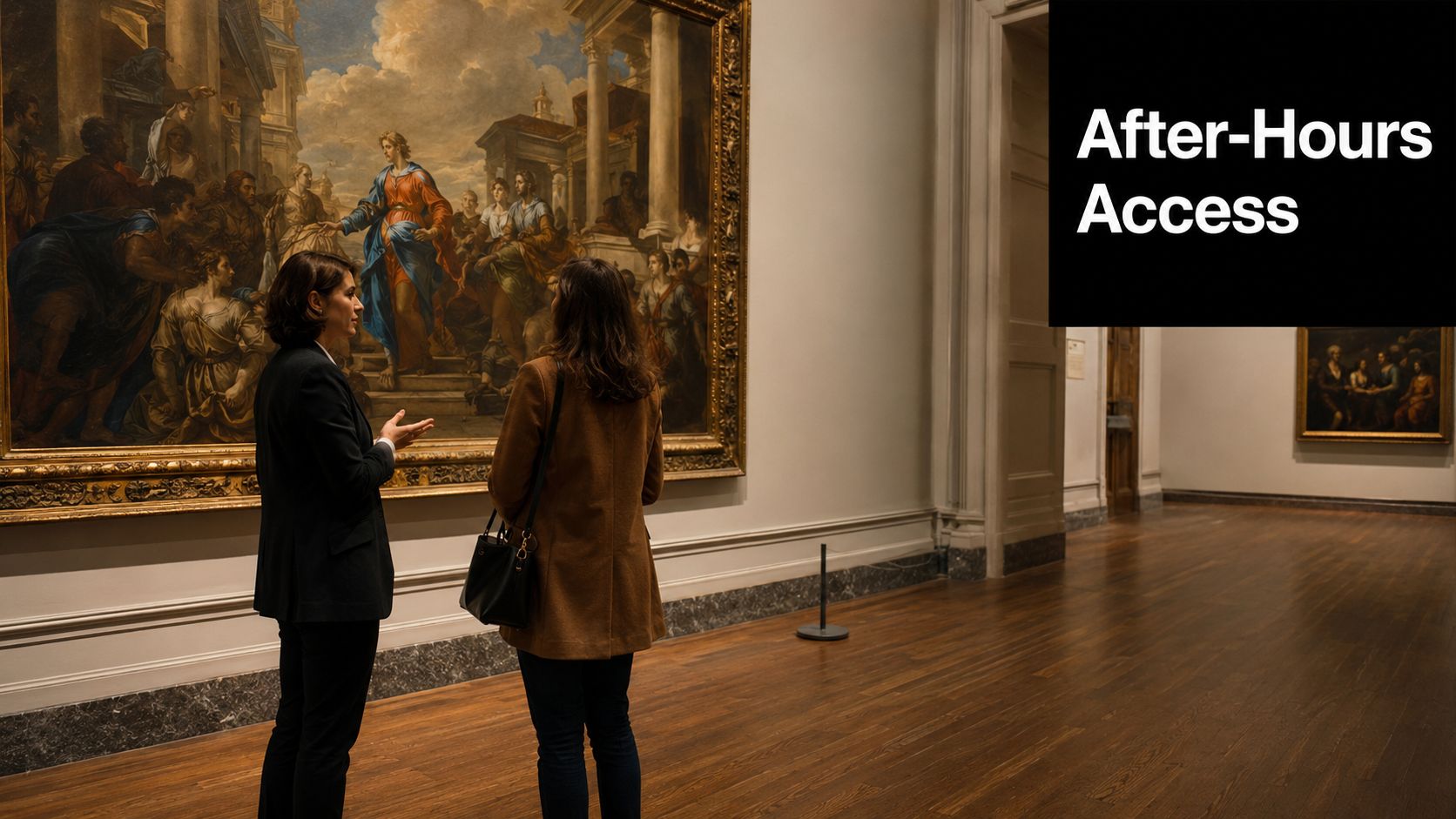
For clients who already know the public circuit, after-hours access changes the quality of the visit because the museum can allocate attention differently. A curator can stay with a question instead of keeping pace with gallery flow. A conservator can discuss condition, restoration history, or material risk without compressing the conversation for a mixed public group. In the strongest cases, the visit is built around one line of inquiry, not a prestige lap through the highlights.
Paris, Florence, New York, and St. Petersburg can all support this format, but the route in is rarely a standard VIP request. Institutions respond better to specificity and credibility. The ask may involve a private evening opening of a single department, a curatorial walk tied to a temporary exhibition, or access framed around a collector's existing interests. That distinction matters operationally. Museums are more willing to involve senior staff when they can see the intellectual purpose, the guest profile, and the handling standards in advance.
What works in practice
A client interested in Renaissance patronage should not be placed on a generic premium tour. The stronger brief is narrower and more useful: Medici influence, workshop organization, devotional commissions, and how those works entered modern collections. With contemporary art, the same rule applies. Collectors usually get more value from a discussion of provenance, conservation liabilities, institutional positioning, and market context than from a polished overview of what is on the wall.
Three decisions usually determine whether the experience feels serious or merely expensive:
- Define the lens early: Name the period, artist, medium, collecting category, or research question before access is requested.
- Match the expert to the objective: Curators, conservators, archivists, and senior educators each produce a different conversation.
- Build continuity around the visit: A private dinner with a scholar, a related archive appointment, or a residence with art-historical relevance gives the museum access a stronger frame.
Practical rule: For institution-led access involving internal staff, start at least two to three months ahead. Shorter lead times can work, but usually only where an existing relationship already exists.
Cultural heritage remains a primary travel driver, as noted earlier, so top institutions now receive a high volume of requests that all describe themselves as bespoke. What gets approved is not enthusiasm. It is a well-judged brief, the right intermediary, and the discretion to ask for access that the institution can grant with confidence.
2. Master Classes with Renowned Artisans & Cultural Practitioners
The difference between a serious master class and an expensive diversion is simple. The practitioner must still be working at the top of their discipline, in their own rhythm, with no need to simplify the craft for outsiders.
That standard changes how these experiences are arranged. In Kyoto, Murano, Florence, Geneva, Lyon, and Tokyo, the strongest sessions are built around a real workshop schedule, not a hospitality calendar. The artisan agrees to teach a narrow slice of practice, often for a very small party, because the request respects the work and the time required to do it properly. That agreement usually comes through an existing relationship, a trusted studio manager, or a cultural intermediary who knows what is reasonable to ask.
A culinary example makes the distinction clear. A demonstration dinner can be polished and pleasant. A private session with a chef such as Daniel Boulud, structured around technique, repetition, sourcing, and correction, gives the guest something far more valuable. They leave with method, not just memory.
How serious access actually gets arranged
The brief has to be precise. “We want a Japanese culinary experience” is too loose to produce quality. “We want a private session focused on knife work, rice handling, and the etiquette of high-level sushi service, with enough time for correction and practice” gives a fixer something usable. The same applies to watchmaking in Geneva, indigo dyeing in Japan, Florentine leatherwork, or Venetian glass.
Three variables usually determine whether the session feels credible or staged:
- Keep the party extremely small: One couple, one family, or a handful of guests preserves concentration and allows real correction.
- Match the craft to the client: Heat, dexterity, stamina, language support, and tolerance for repetition should be discussed before the booking is confirmed.
- Control the logistics around the lesson: A nearby residence, protected arrival, correctly timed fittings, and advance translation support matter more than decorative extras.
There is also a trade-off discerning travelers should understand. The most respected practitioners are not always the most performative teachers. Some are brilliant with process and poor with ceremony. Others are warm hosts but will only offer a diluted version of the work. My rule is straightforward. Choose authority first, then build comfort around it with the right interpreter, setting, and pacing.
Objects can be part of the experience, but they should be handled carefully. A client may leave with a hand-finished notebook, a blown vessel, a small leather good, or a study piece tied to the lesson. In some collecting categories, that curiosity extends into material culture more broadly, including pieces such as an African tribal Nkisi fetish, where context, provenance, and interpretation matter far more than novelty.
Demand for cultural travel continues to rise, as noted earlier. That growth has produced a larger market for polished workshop theater sold as insider access. The screening process matters more than the brochure. Ask who made the introduction, whether the practitioner is still active at a serious level, how much of the session is hands-on, and what has been adjusted for guests. Those answers usually tell you whether you are entering a real working world or a luxury version of one.
3. Private Access to Living Cultural Heritage & Ceremonial Events
Ceremonial access is the quickest way to tell the difference between expensive travel and properly arranged travel. A large budget can buy proximity. It does not create permission, kinship, or the standing required to enter a living tradition without distorting it.
I treat this category as relationship work first and logistics second. The right result depends on who places the call, how the guest is described, what expectations are set in advance, and whether the hosts have a clear reason to say yes. In Kyoto, that may mean a tea gathering arranged through a cultural family rather than a hotel concierge. In Jaipur, it may require a temple-side introduction handled with local advisors who understand which blessings are appropriate for visitors and which are not. In the American Southwest, the answer may be respectful absence, because some rites are not for private viewing at any price.
That is the true standard.
Clients often ask for authenticity. In practice, what they need is accurate access. Those are not always comfortable conditions. Serious ceremonial experiences may involve long waits, conservative dress, gender rules, no photography, no spontaneous conversation, and periods where the guest does nothing except observe and listen. Handled well, that restraint is part of the privilege.
The work happens well before arrival:
- Secure the introducer, not just the invitation: Community acceptance usually rests on a trusted local figure whose reputation is attached to the guest.
- Clarify role in advance: Observer, participant, donor, family guest, and patron each carry different expectations.
- Prepare for protocol: Dress, gifting, timing, security posture, and language support need to be set before the day itself.
- Respect refusal: Some doors should remain closed. A credible fixer knows when not to push.
As noted earlier, demand for cultural travel remains strong. The upper tier of this category has little to do with headline festivals or public-facing spectacle. It is quieter than that. The value lies in entering a protected social setting correctly, with minimal disruption and a full understanding of what should remain private.
Pre-departure context can matter as much as the event itself. For clients interested in ritual art, systems of belief, or the ethics of collecting, an object-led briefing can sharpen judgment before any introduction is made. A carefully framed reference point, such as an African tribal Nkisi fetish, can support a more serious conversation about symbolism, provenance, misuse, and the limits of what a visitor should expect to witness firsthand.
4. Private Collections, Fashion Heritage & Designer Atelier Access
Some of the most interesting cultural travel happens in rooms that were never meant for the public. A private collection, an archive floor, a couture workroom, a family cellar, a sculpture estate. These spaces reveal taste in its raw form, before it's translated for retail or museum interpretation.
A collector visit in Miami might move from Impressionist works into conversation about condition, succession planning, and acquisition discipline. In Paris, a Hermès or Chanel-related atelier conversation may center less on logos and more on hand skill, standards, and why certain processes remain slow by design. In Rome, a Valentino archive viewing can turn into a commission discussion if the relationship and fit are there.
Who gets invited back
This category is social before it's transactional. The traveler has to be curated as carefully as the experience. Discretion, punctuality, dress, and conversational intelligence all matter. So does restraint. The worst way to enter a private collection is to act like a buyer before trust exists.
A few principles separate useful access from vanity access:
- Complete vetting willingly: Background checks and reputation screening are part of the process.
- Arrive with questions, not declarations: Good collectors respond to curiosity and seriousness.
- Know your intention: Browsing, commissioning, learning, and buying each require different introductions.
Haute Black is particularly strong here because it doesn't only trade on destination knowledge. It convenes a relevant audience. The brand curates 80+ intimate cultural and culinary events annually, including private chef dinners with Nobu Matsuhisa, Daniel Boulud, and Thomas Keller, alongside celebrity evenings for its verified member network of founders, executives, and investors. That kind of ecosystem matters when access depends on trust transfer, not brochure inventory.
5. Bespoke Culinary Heritage Journeys with Food Historians & Chefs
Food tourism is oversold and often under-designed. A reservation list isn't a culinary journey. Neither is a market stroll with a guide who can't explain trade routes, agricultural shifts, migration, or why one regional dish exists in the first place.
The strongest culinary itineraries move through history as much as taste. Basque Country works when pintxos, cider culture, fishing traditions, and Michelin kitchens are linked into one coherent sequence. Tuscany works when olive oil, estate life, milling, and family production are treated as a living system rather than separate stops. Peru becomes richer when the Andes and Amazon are placed in one conversation.

For travelers heading into Southeast Asia, a regional reading list and dish strategy matters. Cambodia, for example, rewards clients who study local flavor logic before arrival. Haute Black's own look at famous food in Cambodia and its culinary delights is a useful starting point before building a more private program around chefs, markets, and family tables.
The route matters as much as the menu
This is one area where over-scheduling ruins quality fast. If you're changing tables constantly, no one has time to teach. The better approach is fewer venues, longer meals, and one or two serious guides who can carry historical context across multiple days.
A solid framework looks like this:
- Producers first: Meet growers, fishers, millers, or winemakers before the flagship meals.
- Private transport throughout: Culinary days run long. Comfort and timing matter.
- Take the knowledge home: Ask for recipe notes, ingredient sourcing, and follow-up introductions.
For travelers who want a practical baseline on structuring a food-led itinerary, this expert guide to food tours offers a helpful external perspective. The luxury version raises the standard of access, pacing, and intellectual depth.
6. Exclusive Access to UNESCO World Heritage Sites with Expert Researchers
UNESCO status does not make a visit exceptional. Access design does.
Any luxury operator can arrange a polished guide at Machu Picchu, Angkor, Petra, Mesa Verde, or the Great Wall. The difference at this level is who has standing with the site, who can secure the right timing, and who can bring in a researcher with current field knowledge rather than a memorized script. That is how a landmark visit shifts from scenic to substantive.
A researcher changes the conversation immediately. Instead of repeating chronology, they explain disputed attribution, recent conservation decisions, excavation limits, permit sensitivities, and the politics of preservation funding. Clients hear what is still under debate, what is closed for good reason, and what can be arranged only through institutional relationships built well before arrival.
Demand for heritage travel continues to rise, as noted earlier. That growth has made generic "VIP" language less useful, not more. The practical brief needs to be specific enough for a serious fixer to act on it.
A strong request usually includes one or more of these elements: restricted-timing entry, a conservation briefing, access to a live restoration discussion, archival material prepared in advance, or time with a researcher attached to the site, region, or discipline. Without that layer, the visit may still be beautiful. It will not feel rare.
Operational note: Fragile sites often require restraint. The highest standard of access can mean a controlled perimeter visit, a dawn entry before public hours, or a research-led viewing from a restricted vantage point rather than deeper physical entry. Responsible curation protects the site first.
The ask should also be thematic. "VIP access to Angkor Wat" tells an expert team very little. A better commission is a conservation-focused visit centered on iconography, restoration methodology, Khmer political history, or water management across the wider Angkor complex. Specificity improves permissions, improves briefing quality, and improves the odds of getting the right academic counterpart.
This category rewards preparation more than spontaneity. Research calendars, permit windows, weather pressure, and active preservation work all affect what can happen on the ground. The clients who get the strongest UNESCO experiences are usually the ones who accept a trade-off I often recommend: fewer sites, more context, and enough lead time for the right doors to open.
7. Private Performances & Entertainment with World-Class Artists
Private performance is one of the easiest luxury requests to get wrong. Money can secure a recognizable name. It does not, by itself, produce the right atmosphere, artist comfort, or social texture. The evening has to be built with the same care as a private collection visit or a diplomatic dinner.
The first decision is format. A recital in a residence, a chamber ensemble in a historic palazzo, a traditional performance in a temple-adjacent venue, or a late-night jazz set after a yacht arrival all ask for different production logic. I usually advise clients to start with intent and guest profile, then work backward into artist type, running order, acoustics, arrival choreography, and how close guests should be allowed to the performer once the set ends.
Venue discipline matters.
A strong private performance usually rests on four decisions:
- Scale: The artist must suit the room, the audience size, and the energy of the evening.
- Cultural coherence: The program should make sense in the destination, not feel imported for convenience.
- Technical control: Sound bleed, sightlines, climate, staging, rehearsal access, and back-of-house privacy all affect quality.
- Relational access: A short, well-briefed conversation with the artist or artistic director often carries more value than a longer set.
The trade-off is simple. Bigger names often come with tighter riders, more management layers, less repertory flexibility, and stricter security conditions. Less public but highly respected performers can offer something better for a private client. More intimacy, more customization, and a setting that still feels dignified to the artist. The right answer is rarely the most obvious name on the bill.
In Japan, for example, the strongest private music or performance requests usually sit inside a broader cultural brief rather than as a standalone entertainment booking. A Kyoto program tied to tea culture, seasonal cuisine, or patron-level introductions tends to gain more traction than a vague request for exclusivity. Our perspective on designing a luxury trip to Japan with stronger cultural framing gives a useful sense of how these evenings should be positioned from the outset.
Protocol also matters more than clients are often told. Some artists welcome post-performance conversation. Others will agree only if the guest list, photography rules, language support, and social expectations are settled in advance. This becomes especially important with traditional forms, where register and etiquette shape the evening as much as the performance itself. Even a basic grasp of how to use formal and informal expressions can improve host briefings when the event includes local dignitaries, patrons, or senior cultural figures.
For clients who care about discretion, private format solves several problems at once. It limits exposure, avoids public crowd dynamics, and gives the host control over timing, arrivals, staff visibility, and device policy. That is often the essential luxury here. Not just hearing a world-class artist, but hearing them in a room configured for your circle, under terms that protect everyone involved.
8. Immersive Language & Cultural Diplomacy Experiences
Language changes access faster than almost any other cultural investment. The clients who benefit most are not trying to sound native in two weeks. They want enough command to host a dinner well, read hierarchy in the room, respond with precision, and avoid the small errors that subtly limit trust.
That requires more than a tutor. It requires choreography. We build these programs around the settings where language carries consequence: a private breakfast with an editor, a closed-door foundation visit, a collector lunch, a policy dinner, a family office introduction. The lesson plan follows the diary, not the other way around.
For Japan, that usually means combining etiquette coaching, business register, and social sequencing before the first formal meeting. Haute Black's perspective on a luxury trip to Japan covers the wider cultural framework. For itineraries that move from language into statecraft, protocol hosting, and region-specific social codes, our planning often draws on the same discipline required for a well-structured Nile journey with layered cultural appointments, where every stop needs the right interpreter, briefing note, and local counterpart.
Fluency is rarely the first milestone. Control is.
A guest who can greet correctly, shift register at the right moment, and follow a table conversation without forcing everyone back into English is already operating at a different level. That is often enough to improve the quality of introductions and the candor of what is shared privately.
This practical breakdown of how to use formal and informal expressions is a useful reminder that register changes quickly with context, age, rank, and setting. In practice, we brief clients on far more than grammar. We prepare opening lines, gift language, forms of address, seating sensitivities, acceptable topics, and the point at which humor helps or harms.
The trade-off is straightforward. Intensive instruction without social placement produces polished exercises and weak recall. Constant social exposure without structure creates fatigue and predictable dependence on interpreters. The strongest programs alternate both, with enough downtime to absorb what was heard.
Three choices usually determine whether the experience works:
- Base the client where relevant conversations happen: cultural density, host quality, and proximity to the right tables matter more than headline hotel status.
- Match language coaching to real use cases: philanthropy, collecting, diplomacy, investing, and media all require different vocabulary and different levels of formality.
- Curate introductions with restraint: five well-placed encounters beat a crowded social calendar full of people with no bearing on the client's interests.
The market has shifted toward participation over observation, as noted earlier. That trend favors clients willing to prepare properly. Status may secure the invitation. Language, even partial language, changes what happens once the door closes.
9. Private Yacht-Based Cultural Expeditions & Maritime Heritage Journeys
A yacht is often the most efficient cultural platform in coastal regions where roads fragment the experience. It lets you combine privacy, movement, and access to communities that don't reveal themselves on a fixed hotel itinerary.
Done lazily, though, yacht travel becomes scenic isolation. Guests sunbathe, dine well, and never enter the life of the region. The fix is expert framing. A maritime historian in the Aegean. An anthropologist in island Southeast Asia. A captain who knows which harbor master matters and which family tavern is worth entering.
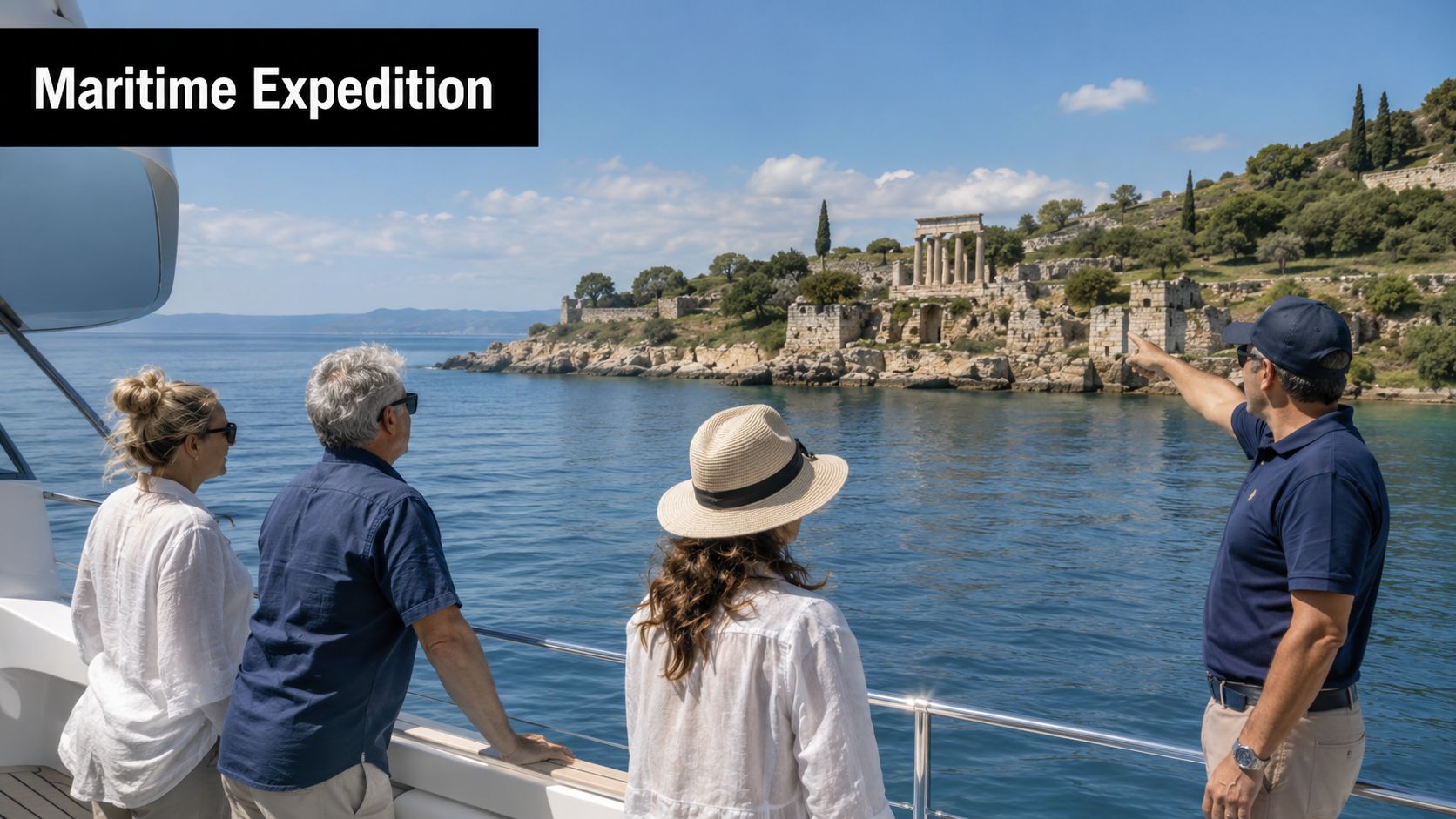
The Nile remains one of the clearest examples of how water-based travel can carry both comfort and historical density. Haute Black's ultimate guide to luxury Nile River cruises shows how strong river planning can anchor broader cultural discovery before or after a private charter.
What to insist on before departure
The itinerary should include deliberate landings with purpose. Island visits tied to religious architecture, trade history, music, cuisine, or craft. Not just anchorages selected for swim conditions.
Ask for these elements up front:
- A cultural brief: Maritime routes, regional history, and local etiquette should be covered before embarkation.
- Flexibility: Some of the best stops emerge from local intelligence during the voyage.
- A captain with relationships: Regional trust often matters more than boat size.
For travelers who value privacy, this format solves a common problem. It creates room for real cultural engagement without repeated public exposure in crowded transit corridors. That's one reason yacht-based cultural travel experiences remain so effective for clients balancing curiosity with discretion.
10. Private Sports & Athletic Heritage Experiences with Legendary Athletes
Sport is culture. In some places, it's one of the fastest ways to enter a national psyche. A private session with a champion can be enjoyable on its own, but the stronger format links training to history, identity, and place.
A tennis clinic with a Wimbledon champion has one energy in London and another on a Mediterranean estate. Alpine work with an Olympic skier in the Swiss Alps becomes richer when the itinerary also addresses mountain culture, discipline, and local sporting institutions. A football session at a professional facility can become a study in civic pride if handled well.
Don't confuse access with relevance
Many celebrity athletic experiences are thin. You meet the name, take the photo, do the drills, and leave. The better version includes a conversation about preparation, pressure, transition, and legacy. For younger family members especially, that exchange often carries more weight than the coaching itself.
Structure matters:
- Match athlete to guest: The right legend depends on age, ability, goals, and temperament.
- Plan recovery seriously: Accommodation, nutrition, and bodywork should align with the physical demand.
- Extend the relationship: A post-session mentorship call or return clinic often creates the actual value.
This category also works particularly well for private members who want cultural crossover, not just sport. Haute Black's VIP Concierge Membership is offered at a $5,000 annual Founder's Rate or unlocked through $100,000 in annual travel spend, with waived planning and development fees, direct access to co-directors, and priority booking for members-only events. For clients who want athletic, cultural, and social access to intersect cleanly, that kind of structure matters.
Comparison of 10 Exclusive Cultural Experiences
| Experience | Implementation Complexity 🔄 | Resource Requirements ⚡ | Expected Outcomes ⭐📊 | Ideal Use Cases 💡 |
|---|---|---|---|---|
| Private Museum After-Hours Access & Curatorial Tours | Very high 🔄 Months of institutional approvals and curator coordination | Very high ⚡ Premium fees, curator time, venue access, travel | Exceptional ⭐📊 Intimate viewing, acquisition insight, exclusive photography | Art collectors, VIP events, multi‑generational cultural trips |
| Master Classes with Renowned Artisans & Cultural Practitioners | Medium‑high 🔄 Scheduling masters and small‑group logistics | Medium ⚡ Instructor fees, materials, interpreters, studio access | High ⭐📊 Hands‑on skills, tangible keepsakes, deep cultural learning | Honeymooners, craft collectors, families seeking skill transfer |
| Private Access to Living Cultural Heritage & Ceremonial Events | Very high 🔄 Long community integration, strict ethical protocols | Medium‑high ⚡ Community liaisons, briefings, possible donations | Profound ⭐📊 Authentic, non‑commercial cultural immersion | Culturally‑conscious travelers, spiritual seekers, educators |
| Private Collections, Fashion Heritage & Designer Atelier Access | Very high 🔄 Rigorous vetting, confidentiality, invitation‑only access | Very high ⚡ Collector introductions, commission budgets, travel to fashion capitals | High ⭐📊 Acquisition opportunities, bespoke commissions, elite networking | Collectors, fashion enthusiasts, investors in luxury assets |
| Bespoke Culinary Heritage Journeys with Food Historians & Chefs | Medium 🔄 Multi‑day coordination of chefs, producers, markets | High ⚡ Michelin chef fees, private transport, tastings, lodging | High ⭐📊 Deep culinary knowledge, producer relationships, signature meals | Culinary enthusiasts, couples, executives exploring food business |
| Exclusive Access to UNESCO World Heritage Sites with Researchers | Very high 🔄 Year‑ahead planning tied to research and conservation timetables | High ⚡ Research team fees, permits, remote logistics, specialist guides | Exceptional ⭐📊 Academic insight, conservation participation, rare access | Intellectually‑curious travelers, preservation‑oriented executives |
| Private Performances & Entertainment with World‑Class Artists | High 🔄 Artist scheduling, production, technical requirements | Very high ⚡ Artist fees, staging, sound/lighting, venue prep | Exceptional ⭐📊 Personalized performances, direct artist interaction, media content | Celebrations, private events, high‑net‑worth entertainment clients |
| Immersive Language & Cultural Diplomacy Experiences | Medium‑high 🔄 Curriculum tailoring and diplomatic/network coordination | Medium ⚡ Private tutors, cultural attaches, accommodation, time investment | High ⭐📊 Functional fluency, authentic social integration, professional networks | C‑suite executives, diplomats, professionals expanding markets |
| Private Yacht‑Based Cultural Expeditions & Maritime Heritage Journeys | High 🔄 Yacht charter logistics, maritime permits, expert onboarding | Very high ⚡ Charter costs, crew, specialist guides, multi‑week commitment | High ⭐📊 Remote site access, privacy, blended adventure and learning | Adventure‑seeking UHNW travelers, families, romantic expeditions |
| Private Sports & Athletic Heritage Experiences with Legendary Athletes | Medium‑high 🔄 Athlete availability, facility access, safety protocols | High ⚡ Athlete fees, training facilities, medical/support staff | High ⭐📊 Performance gains, elite mentorship, exclusive content | Amateur athletes, executives, fitness‑focused high‑net‑worth individuals |
Orchestrating Your Cultural Masterpiece
Access is the easy part. Judgment is what clients pay for.
A first-rate cultural itinerary depends on decisions that never appear on the final schedule. Who makes the introduction. Whether the right setting is a private home, a foundation boardroom, a workshop floor, or no meeting at all. Whether support should take the form of an honorarium, a donation to a local institution, a commission, or time handled with precision and respect. Those choices determine whether an experience feels welcome or merely arranged.
The market has grown large enough to blur that distinction. UN Tourism tracks cultural tourism as one of the major motivations for international travel, and its policy work makes the point clearly: culture draws visitors at scale, which raises both opportunity and pressure on heritage, hosts, and institutions alike. The result is predictable. More intermediaries sell access. Very few know how to secure it in a way that protects reputation on both sides. UN Tourism's cultural tourism work is useful here because it frames culture as an asset that requires stewardship, not just packaging.
For an ultra-high-net-worth traveler, the operating questions are practical. Privacy exposure. Local political sensitivities. Security posture. Family dynamics around attendance. Press risk. Institutional protocol. In my work, the difference between an exceptional visit and an awkward one is often decided weeks earlier, in quiet calls with directors, attachés, estate managers, curators, and community gatekeepers who will never appear in the credits.
Reciprocity has to be structured, not implied. UNESCO's guidance on living heritage is instructive on this point. Communities are not backdrops for a guest's sense of discovery. Their traditions are maintained through consent, continuity, and local control. That is why serious cultural programming builds in approved hosts, clear boundaries on photography and guest behavior, and financial support that the host community considers appropriate, whether that means conservation funding, patronage, apprenticeships, or commissions tied to real craft and real labor. UNESCO's work on intangible cultural heritage sets out that logic better than any trend piece.
Depth also requires expertise, not just taste. The European Cultural Travel Organisation has argued for years that cultural travel succeeds when interpretation is strong, local networks are credible, and experiences are designed around context rather than spectacle. That aligns with what works in practice. A private archive viewing means little without the scholar who can explain provenance. A temple visit gains weight when the timing respects ritual use, local hierarchy, and the institution's own priorities. ECTN's cultural tourism initiatives reflect that more rigorous standard.
This is the standard Haute Black works to.
Haute Black designs cultural travel for clients who expect rare access, intelligent curation, and absolute discretion. From private museum evenings and artisan encounters to chef-led journeys, researcher-guided heritage access, and invitation-only social worlds, Haute Black arranges the kind of experiences that can't be assembled through booking platforms alone.
Explore Our Guides


Signature Experiences


