Haute Black Journal
The Ultimate Guide to Luxury Nile River Cruises

Leslie Peterson
Travel Writer
View all articles →
The defining characteristic of a true luxury Nile experience is that it bears little resemblance to a conventional cruise. At the top end of the market, the Nile is only the setting. What matters is who controls the schedule, who opens doors ashore, and how expertly every handoff is arranged from airport tarmac to temple threshold.
That distinction separates a pleasant holiday from a rare one. Any competent operator can book a handsome cabin and a standard sightseeing circuit. Very few can assemble the full architecture of an ultra-luxury journey: a privately chartered dahabiya drifting past palm groves in near silence, an Egyptologist who can read a wall relief with precision instead of reciting scripts, discreet security that never intrudes on the atmosphere, and aviation planning that eliminates the usual friction of domestic transfers.
The Nile has been associated with prestige travel since the age of grand touring, and that legacy still shapes expectations now. Yet scale has diluted standards. Plenty of vessels sell polished interiors and call it luxury. I would not confuse that with exclusivity.
If you want a floating hotel with scheduled temple stops, Egypt offers no shortage of options. If you want privacy, intellectual substance, controlled logistics, and access calibrated to your exact standards, you need to choose the river very differently from the start.
The Enduring Allure of a Luxury Nile River Cruise
Not all nile river cruises deserve the word luxury.
A standard itinerary can deliver the monuments. It won’t necessarily deliver the feeling. The feeling is what matters on the Nile: early light on sandstone, the hush of the river before breakfast, lantern glow against polished wood, the shift from Cairo’s velocity to Upper Egypt’s measured rhythm. This is one of the few journeys in the world where civilization itself feels close enough to touch.
Why the Nile still matters
The Nile is not just a scenic corridor. It is the reason Egypt became Egypt. The river enabled settlements by 5200 BC and Egypt’s nation-state by 3100 BC, and the route has carried prestige for well over 2,000 years, long before modern hospitality wrapped it in polished brass and chilled towels. That continuity gives the journey unusual weight. You are doing more than passing landmarks. You’re moving through the architecture of one of the world’s foundational civilizations.
That’s why I advise clients to approach the Nile as a cultural rite of passage, not a check-the-box holiday. The wrong mindset produces a busy itinerary and a forgettable result. The right mindset produces a layered experience with privacy, scholarship, and atmosphere.
The Nile rewards travelers who want depth, not speed.
What separates a top-tier journey
The difference isn’t whether your suite is attractive. Most premium operators understand surface-level luxury. The difference is whether the trip feels composed around you.
That means focusing on a few essentials:
- Context before spectacle: Temples are more powerful when a serious guide frames what you’re seeing before you arrive.
- Pacing over volume: Fewer stops, handled properly, outperform a rushed parade of famous names.
- Privacy where it counts: Luxury is controlled space, on board and ashore.
- Service that anticipates: The best crews remember your habits by the second day and smoothly adjust around them.
A Nile journey should feel like entry into an older, grander world. If it feels merely efficient, you chose too low in the market.
Choosing Your Vessel The Hierarchy of Nile Cruising
Choose the wrong vessel and you spend a fortune on the Nile only to share its finest hours with mediocre company, rigid timings, and hotel-grade anonymity. Choose the right one and the river becomes private, theatrical, and personal.
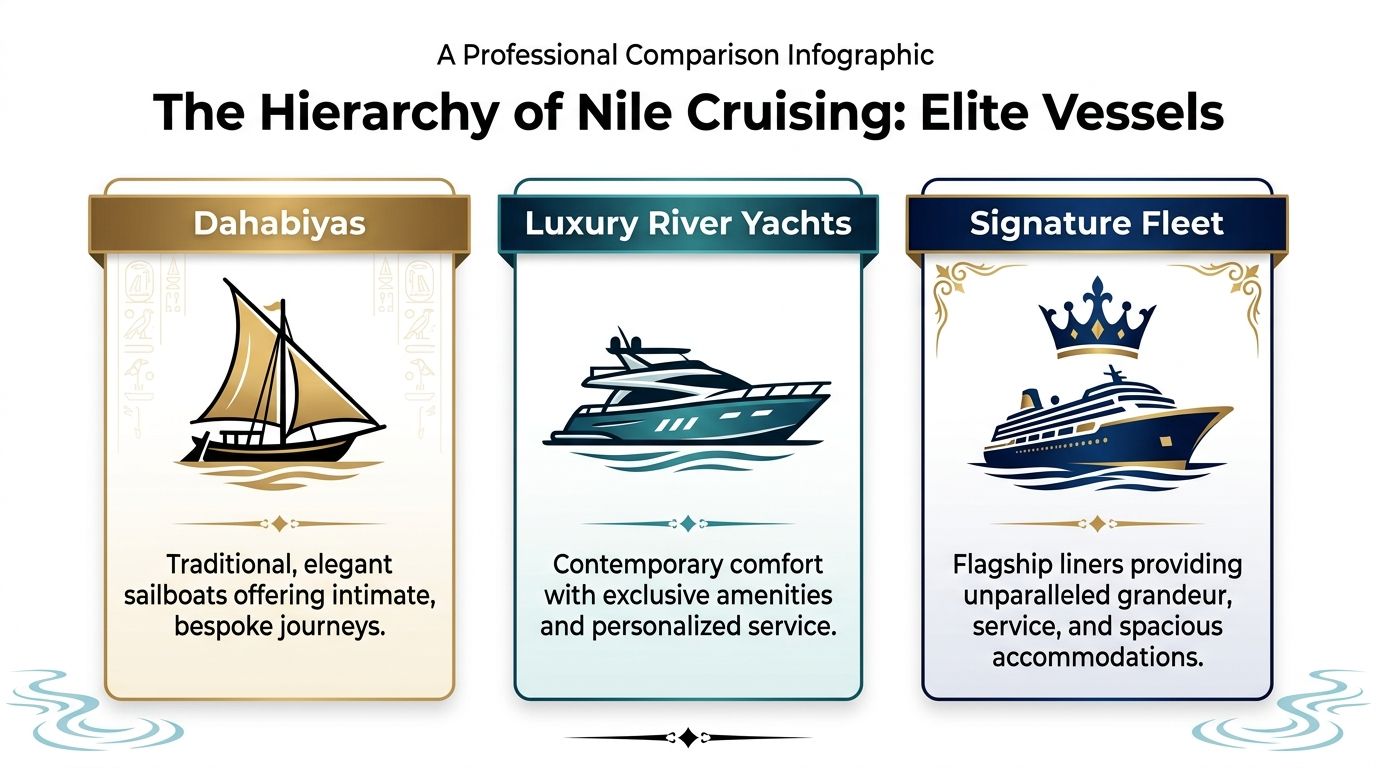
For this tier of travel, the market is easy to sort. There are dahabiyas, luxury river yachts, and signature fleet ships. Everything below that belongs to a different conversation.
The practical hierarchy
| Vessel type | Best for | Strength | Trade-off |
|---|---|---|---|
| Dahabiya | Couples, private parties, style-led travelers | Intimacy, romance, old-world character | Fewer onboard amenities |
| Luxury river yacht | Travelers who want modern design and high-touch service | Balance of comfort and exclusivity | Less atmosphere than a classic sailboat |
| Signature fleet ship | Multi-generational groups, guests who want the most stable operation | Spacious common areas, highly attentive staffing, easy boarding and touring logistics | More social, less private |
What each category actually feels like
A dahabiya is the choice for travelers who care about mood above all else. You hear water against the hull, canvas shifting in the breeze, cutlery set for dinner on an open deck, and very little else. The scale is intimate enough that the crew quickly adapts the day around your habits. For clients booking a full charter, this is the most seductive version of the Nile.
A luxury river yacht suits travelers who want polish without losing character. These vessels usually offer better suites, stronger air conditioning, more reliable spa and dining facilities, and a sharper sense of contemporary comfort. You keep a high service level while avoiding the impersonal feel that can creep in on larger ships.
A signature fleet ship works best when the priority is operational ease. This is the right answer for large family groups, older travelers who want more infrastructure, or clients who value wider decks, larger lounges, and a more predictable onboard rhythm. The compromise is obvious. You gain convenience and scale, but you surrender some of the river’s intimacy.
Why larger premium ships still have a place
The best large Nile ships perform well because staffing is unusually generous and ship design allows more breathing room than many travelers expect. The Points Guy’s review of Nile cruise operations notes that top-end vessels can run with exceptionally high crew levels relative to passenger count, and that the river’s lock infrastructure permits broader ship layouts than the typical European river format. In practice, that means better suite proportions, more comfortable public rooms, and service that feels attentive rather than strained.
That matters if you dislike friction.
A well-run premium ship handles early departures, private dining requests, special dietary arrangements, and last-minute changes with far more grace than a lower-tier boat. For some clients, especially those pairing the cruise with private aviation and tightly timed ground arrangements, that reliability is worth more than old-world charm.
My recommendation by traveler type
I advise clients to choose by social rhythm, not by brochure photography.
- For honeymooners or couples marking a major occasion: book a private dahabiya. It gives you silence, candlelight, and the feeling that the Nile has been cleared for your arrival.
- For families traveling together: take a signature fleet ship or charter a larger premium vessel. Grandparents get comfort, younger guests have room to move, and the group avoids the strain of cramped common space.
- For travelers with strong design standards: choose a luxury river yacht. It usually offers the best balance of aesthetics, privacy, and comfort.
- For clients with no patience for operational weakness: stay with the top premium ships or a fully chartered boat with a proven crew. On the Nile, execution matters as much as décor.
Advisor’s rule: choose the vessel that matches the pace, privacy, and social atmosphere you want on board.
A beautiful suite helps. The vessel’s scale, crew quality, and charter flexibility shape the trip far more decisively. For ultra-luxury travel, the hierarchy is clear. Private dahabiya first for romance and discretion. High-end yacht next for contemporary comfort. Signature fleet ship last, but still viable, when infrastructure and ease outrank intimacy.
Curating Your Itinerary Beyond Luxor and Aswan
A Nile cruise earns its stature only when the itinerary around it is handled with discipline.
The river between Luxor and Aswan is a short, storied corridor. Left on its own, it can feel too concentrated, even for travelers staying in the best suites on the water. The ultra-luxury answer is to build the journey as a private Egypt program with the cruise at its center, then shape everything before and after it with the same level of control. The usual pattern is straightforward. A few days in Cairo establish context, the river provides the core narrative, and a quieter finish by the sea or in the desert restores balance, as outlined in Cruise Critic’s overview of Nile geography, timing, and common extensions.
Start in Cairo and earn the river
Begin in Cairo. Always.
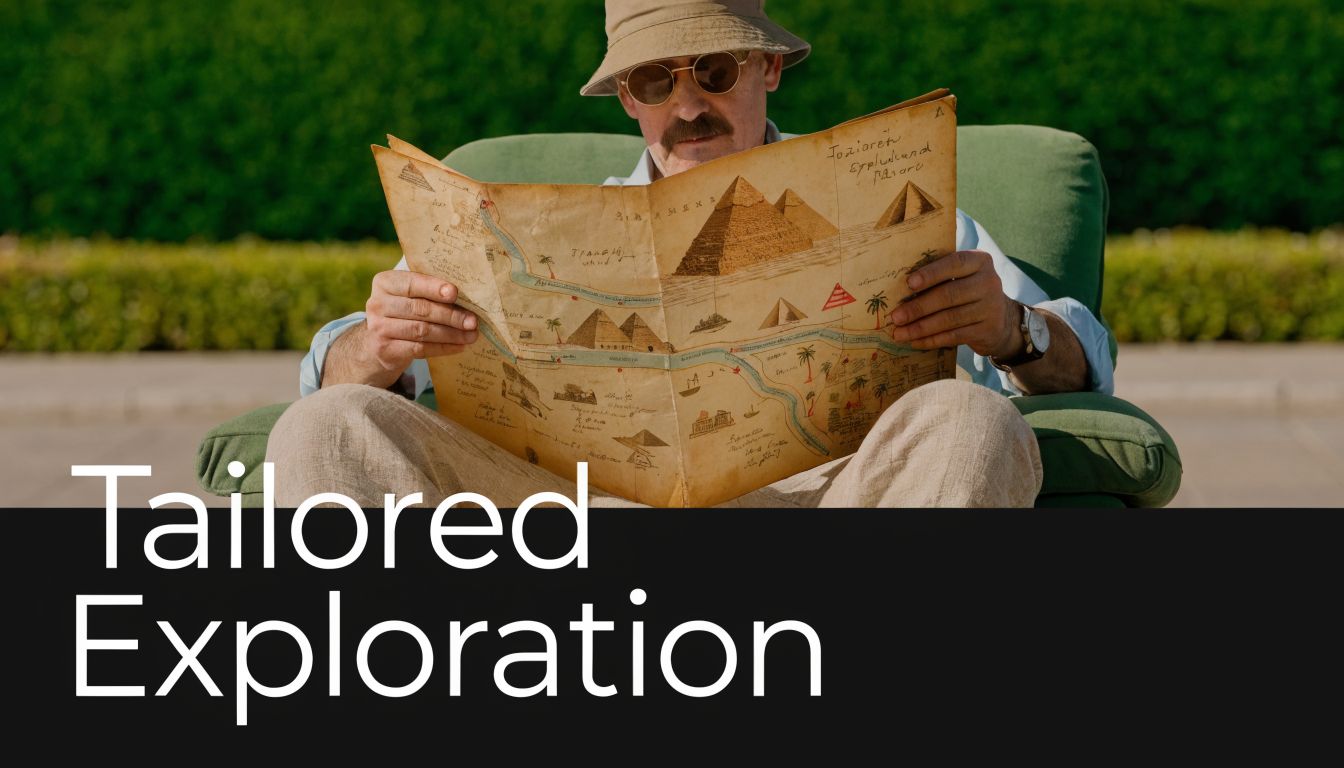
Clients who skip it arrive in Upper Egypt with recognition but not understanding. They know the names. They do not yet have the chronology, symbolism, or visual language that gives the temples force. A properly arranged Cairo stay fixes that fast.
I would structure it around private museum guiding, a selective pass through Islamic and historic Cairo, and tightly timed Giza visits that avoid the clumsy rhythm of general tourism. The point is not to tick off the capital. The point is to train the eye before the river begins.
For travelers planning a wider program, bespoke travel experiences designed around Egypt, the region, and beyond are strongest when Cairo serves as the intellectual opening chapter rather than a transit stop.
Place the cruise in the middle, not at the edges
The cruise works best as the middle movement of the journey.
That placement matters more in the ultra-luxury tier than many travelers realize. After Cairo, the river feels like release. Before a coastal or desert finale, it delivers the historical weight the trip needs. On a private charter or a finely run dahabiya, that middle position also gives the vessel a proper role. It becomes both sanctuary and stage, not just transportation between temple visits.
The best itineraries protect three things. A clean transfer into embarkation, so the day does not dissolve into airport fatigue and dockside waiting. A measured touring rhythm, so every stop has shape and no one feels marched through antiquity. Guide continuity, ideally with one excellent Egyptologist who stays with the party long enough to build an argument, not just recite facts.
Security and logistics deserve the same seriousness. Shore arrangements on the Nile often involve security coordination behind the scenes. High-end travelers should expect that level of planning. Discretion on the Nile is produced by preparation, not luck.
Go beyond the standard ending
Do not finish with more stone.
After Luxor, Edfu, Kom Ombo, and Aswan, another dense block of monuments usually dulls the senses. A stronger close is restorative and highly private. The Red Sea works well for clients who want diving, clear light, and resort privacy. A desert camp or lodge works better for travelers who want silence, stars, and distance from the touring circuit.
The rhythm I recommend is simple:
- Cairo first: private context, museums, dynastic orientation
- Nile second: the main cultural passage, handled at an unhurried pace
- Sea or desert last: recovery, privacy, and a more graceful final impression
That sequence turns a standard cruise into a composed journey. In the ultra-luxury bracket, composition is the difference between a trip that is merely expensive and one that feels personally commissioned.
The Unforgettable Excursions Private Access and Expert Guides
The true luxury on the Nile is not the suite. It is controlled access, serious interpretation, and the rare feeling that antiquity has been arranged around you rather than around a bus timetable.
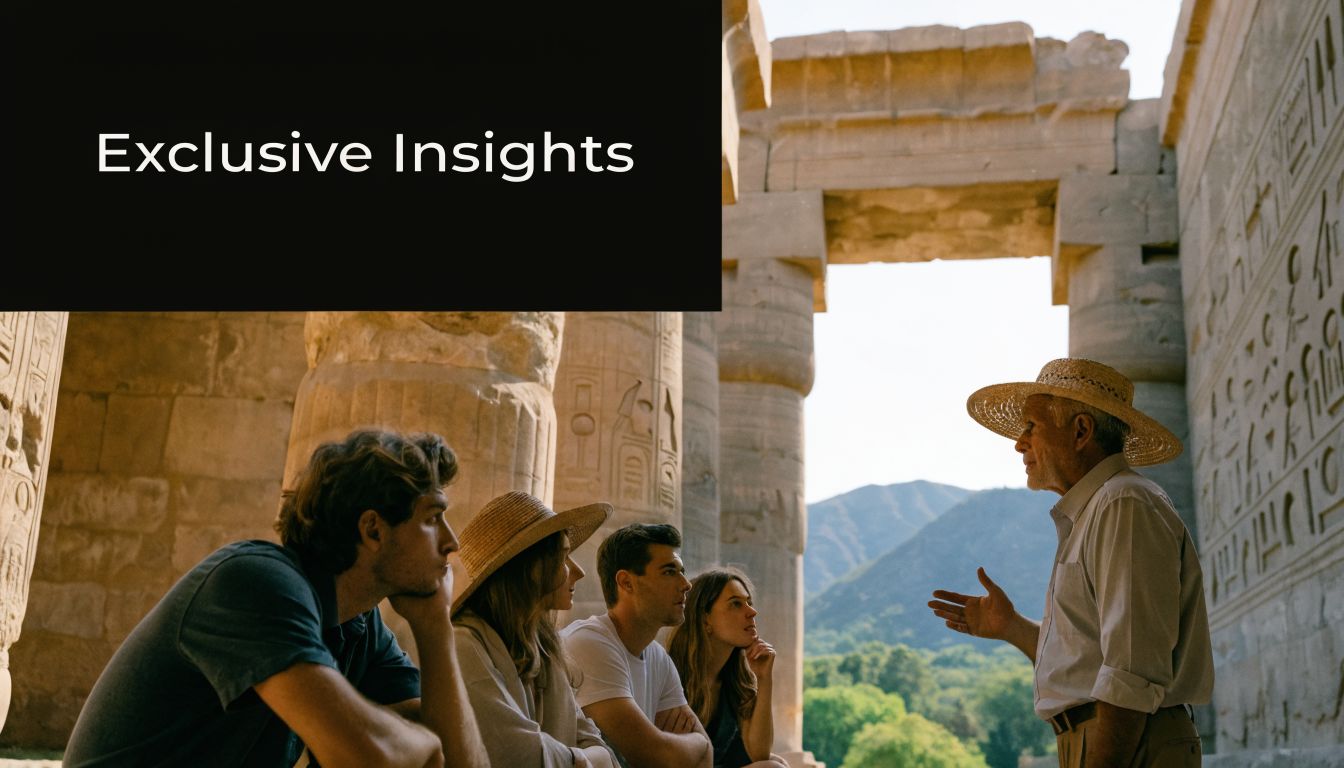
What private access changes
The monuments are world famous. That is precisely why standard touring fails them.
A conventional visit delivers the obvious version of Egypt. You arrive with everyone else, move at the site’s busiest tempo, hear a simplified summary, and leave with photographs that look much like everyone else’s. An ultra-luxury excursion is built differently. Arrival is timed with intention. Routes are chosen to reduce friction. Briefings happen before you step inside, so the first thing you notice is not the crowd but the geometry of a hypostyle hall, the political vanity in a cartouche, the quiet menace in a burial chamber designed to outwit thieves and time.
Private access does not always mean empty monuments. It means superior positioning. It means favored timing, tighter coordination, and the right expert standing beside you when the site begins to make sense.
The best itineraries also add people you would never meet on a standard program. A respected Egyptologist. A museum curator. A conservator who can explain pigment, damage, and restoration with authority instead of theatrical patter. That level of planning usually comes through a luxury travel concierge service with on-the-ground coordination, not through a cruise desk selling generic shore tours.
The guide matters more than the site
Clients often fixate on monuments and underestimate the guide. That is a mistake.
Karnak can feel like overwhelming scale in the wrong hands. In the right hands, it becomes a precise lesson in kingship, ritual, legitimacy, and architectural intimidation. The Valley of the Kings can register as visual spectacle. With a first-rate scholar, it becomes a study in dynastic fear, funerary theology, and the politics of concealment.
Use a demanding standard for guides:
- Academic seriousness: real subject knowledge, not memorized scripts
- Interpretive discipline: clear arguments, selective detail, no flood of trivia
- Social intelligence: the confidence to read the room and leave space for silence
- Operational control: coordination with drivers, escorts, and timing handled discreetly in the background
The best guide on the Nile does not perform history. They illuminate it.
This visual primer gives a sense of why the setting rewards deeper interpretation:
My preferred excursion style
I favor fewer visits, better timed, with far more intellectual depth.
A polished day on the Nile should feel composed from the first arrival to the final lunch. You are not trying to conquer a checklist. You are building memory at a high level of comfort and with a clear point of view. That usually means one headline site explored properly, a second stop with a different mood or historical register, and a private pause afterward where the conversation can continue in peace.
| Standard excursion | Bespoke excursion |
|---|---|
| Fixed group schedule | Private pacing shaped around your interests |
| Broad commentary | Specialist interpretation with real depth |
| Functional transport | Smooth movement with discretion and protection |
| High site volume | Lower volume, higher impact |
The major temples, tombs, and archaeological zones on this route operate within controlled access rules and fixed visiting rhythms, as noted earlier. That is not a drawback. It rewards precision. The clients who enjoy the Nile most are the ones whose day has been choreographed tightly enough to feel effortless.
That is the version worth paying for.
The Ultimate Indulgence Private Charters and Dahabiyas
If you want the most exclusive expression of nile river cruises, charter a dahabiya.
I don’t say that because it’s fashionable. I say it because privacy on the Nile changes everything. The river becomes quieter, your days become more elastic, and the trip stops feeling scheduled by someone else’s operational convenience.
Why a dahabiya sits at the top
Most operators still sell the classic seven-night format. The top of the market has moved in the opposite direction, toward customization, and a private dahabiya charter is the cleanest answer to that demand, as noted in The Telegraph’s expert guide to cruising the Nile. It allows a family, couple, or private group to shape the journey around pace and preference rather than around a fixed shared program.
That matters more on the Nile than on many other itineraries because atmosphere is so central to the experience. The quieter your platform, the more legible the river becomes. You notice the change in wind, the call to prayer drifting across the bank, the texture of evening light on the water, the small villages and palms sliding past without engine noise dominating the scene.
What a private charter gives you
Here, a dahabiya outperforms even an excellent ship.
- Control of tempo: Long breakfasts, slow afternoons, and flexible landing times create space that a fixed itinerary can’t.
- A more intimate crew dynamic: Service feels personal quickly because everyone on board is working for the same small party.
- A stronger sense of place: Traditional styling suits the river. It doesn’t feel imported.
- Privacy worth having: No neighboring tables, no public lounge politics, no low-level social obligation.
Choose a dahabiya if your idea of luxury is silence, discretion, and being able to change course within reason.
Who should charter
Not every affluent traveler wants this format. The right fit is specific.
A private dahabiya is ideal for:
- Honeymooners who want romance without spectacle
- Families who prefer shared intimacy over grand public spaces
- Friend groups built around culture, design, or conversation
- Repeat Egypt travelers who no longer need a broad survey and want refinement instead
If your priority is spa scale, larger public decks, or the broadest possible onboard infrastructure, book a top premium ship. If your priority is control, mood, and old-world elegance, nothing beats a dahabiya.
The Seamless Journey VIP Logistics, Pricing, and Timing
The difference between a pleasant Nile trip and a properly executed one is operational control. On a standard booking, you feel the joins. On an ultra-luxury journey, every transfer, permit, handoff, and site entry has already been solved before you arrive.
That matters more in Egypt than many travelers expect. The visible glamour is easy to buy. Calm movement through airports, disciplined ground handling, correct security posture, and precise timing at crowded archaeological sites are what justify the top tier.
Security and operational realism
Egypt rewards exact planning.
For high-profile travelers, I recommend treating logistics as part of the luxury product itself, not as an administrative afterthought. That means VIP airport reception, fast-track formalities where available, excellent vehicles, one point of contact from arrival to embarkation, and guides who remain consistent enough to avoid the tiring reset that comes with repeated introductions and changing standards.
The security layer should be discreet and proportional. In some cases, official escort protocols affect how overland movements and shore visits are handled, as noted earlier. The right team plans around that reality without making the client feel managed.
Private aviation is often the smartest upgrade. A charter flight within Egypt can remove wasted hours, reduce exposure to crowded terminals, and protect the cadence of the trip. Helicopter transfers are more niche, but they can make sense for estates, remote landings, or tightly choreographed arrivals. Use them for access and time discipline, not for theater.
Pricing at the top end
There is no serious shortcut for pricing a Nile journey at this level because the primary cost sits in the customization. A suite on a good boat is one number. A private charter with top guides, controlled arrivals, specialist permits, security coordination, and bespoke air movement is another proposition entirely.
Budget with the right hierarchy in mind:
1. Buy privacy first. Chartering, or choosing the right small vessel, changes the entire character of the trip.
2. Buy expertise second. A gifted Egyptologist, art historian, or archaeologist will improve the journey more than an extra layer of decorative hotel spend.
3. Buy time protection third. Fast transfers, smart flight selection, and controlled site timing spare you the most common irritations.
4. Buy access last, but selectively. Special openings and curator-level introductions matter when they are genuinely rare and well matched to your interests.
My advice is blunt. Do not compare this trip by cruise fare alone. Compare it by how little of the machinery reaches you.
Timing and standards
The best travel window depends on more than weather. You should also weigh crowd tolerance, tolerance for early starts, appetite for Cairo before or after the river, and whether the journey ends with restoration on the Red Sea or continues into a broader Egyptian program.
For clients who care about environmental standards, ask harder questions than the brochures answer. Public disclosure around wastewater practices, fuel use, waste handling, and carbon accountability on the Nile remains inconsistent, according to Responsible Travel’s guide to responsible Nile cruising. That does not rule out the trip. It does mean operator selection should include scrutiny of maintenance standards, onboard practices, and how candidly a company answers direct questions.
A properly designed Nile journey should feel calm, protected, and highly personal from the first airport greeting to the final departure lounge. If you want to understand the standard of execution that supports that level of travel, this guide to luxury travel concierge services is a useful benchmark.
The Haute Black Difference A Bespoke Nile Journey
A remarkable Nile trip doesn’t come from choosing a nice ship and adding airport transfers. It comes from architecture. Someone has to shape the vessel decision, the pacing, the scholarly layer, the access strategy, and the movement between every point where things can go wrong.
That’s why most self-directed luxury bookings plateau. They can secure comfort. They rarely secure coherence.
What distinguished planning looks like
The best Nile journeys share a common structure:
- The correct vessel for the client, not the one with the loudest marketing
- A Cairo prelude with purpose, not generic sightseeing
- Private excursions led by serious experts, not charismatic generalists
- Operational control from air to embarkation, so the traveler never has to manage complexity themselves
- A finish that restores balance, rather than adding more activity
Those elements sound obvious. In practice, they are rarely aligned.
Why curation beats booking
At this level, relationships matter because they change outcomes. They influence who greets you, how quickly a problem is solved, which room you want, how flexible the team becomes when plans shift, and whether your trip feels transactional or recognized.
That’s the distinction between a travel purchase and a private brief executed properly. One is inventory. The other is judgment.
Clients who want highly customized cultural travel often do better with a broader design conversation rather than starting with a ship shortlist. A useful place to begin is this perspective on customized package tours for discerning travelers, because the Nile is often strongest when it serves as the centerpiece of a larger, more intentional journey.
The Nile doesn’t need to be exaggerated. It needs to be handled well. Choose the right vessel. Build the right itinerary around it. Invest in access and scholarship. Accept that logistics are part of the luxury. Do those four things properly and the river still delivers one of the most refined journeys in the world.
If you want a Nile journey designed at that standard, speak with Haute Black. The right advisor won’t just book a cruise. They’ll orchestrate the aircraft, the river, the guides, the access, and the quiet details that turn Egypt into something unforgettable.
Frequently Asked Questions
Explore Our Guides


Signature Experiences


