Haute Black Journal
Private Chef Dinner for 2 Cost: What to Expect

Marlene Azeez
Director, HauteBlack
View all articles →
A private chef dinner for two typically costs $600 to $2,400 all-in, with premium service fees ranging from $300 to $1,200 per person. HauteBlack's published private-chef reference point is more conservative at $75 to $300 or more per person for chef service, but an intimate luxury evening can rise sharply once sourcing, travel, staffing, and full-service execution are included. (HauteBlack's private chef dinner guide)
You're probably not pricing a routine meal. You're pricing a Friday night when the chef shops before sunrise, arrives at your home while you're opening wine, turns your kitchen into a working pass, plates each course, and leaves the room looking untouched. That privacy has a price, and for two guests, the cost per person is usually higher than expected.
The Two-Cover Private Chef Dinner at a Glance
Two guests can book a dinner that feels entirely private and effortless. The chef consults on the menu, records allergies and preferences, sources the ingredients, prepares the courses, serves at the table, and restores the kitchen afterward. The work starts well before the first plate arrives, even when the evening itself lasts only a few hours.
For a high-end experience in 2026, plan on $600 to $2,400 total, or approximately $300 to $1,200 per person. That is the right planning band for an intimate luxury booking, where the quote may include rare ingredients, a staged tasting menu, extra staff, or a highly credentialed chef. Published guides put a standard date-night dinner for two at about $150 to $300 total for a three- to four-course meal. The lower figure describes standard-market providers, not the high-end tier priced here. A separate 2026 guide places two guests at approximately $190 to $350 per person, or about $380 to $700 for the evening, including planning, shopping, plating, and cleanup. (Chefry's 2026 private-chef cost guide)
Two covers are the most expensive private-dining format on a per-person basis. Consultation, travel, shopping, setup, cooking, plating, and breakdown still require nearly the same work whether the table seats two or eight. With only two diners, the fixed labor is divided by the smallest guest count.
Practical rule: Price a private chef dinner for two as a fixed-fee experience first, then evaluate the per-person figure.
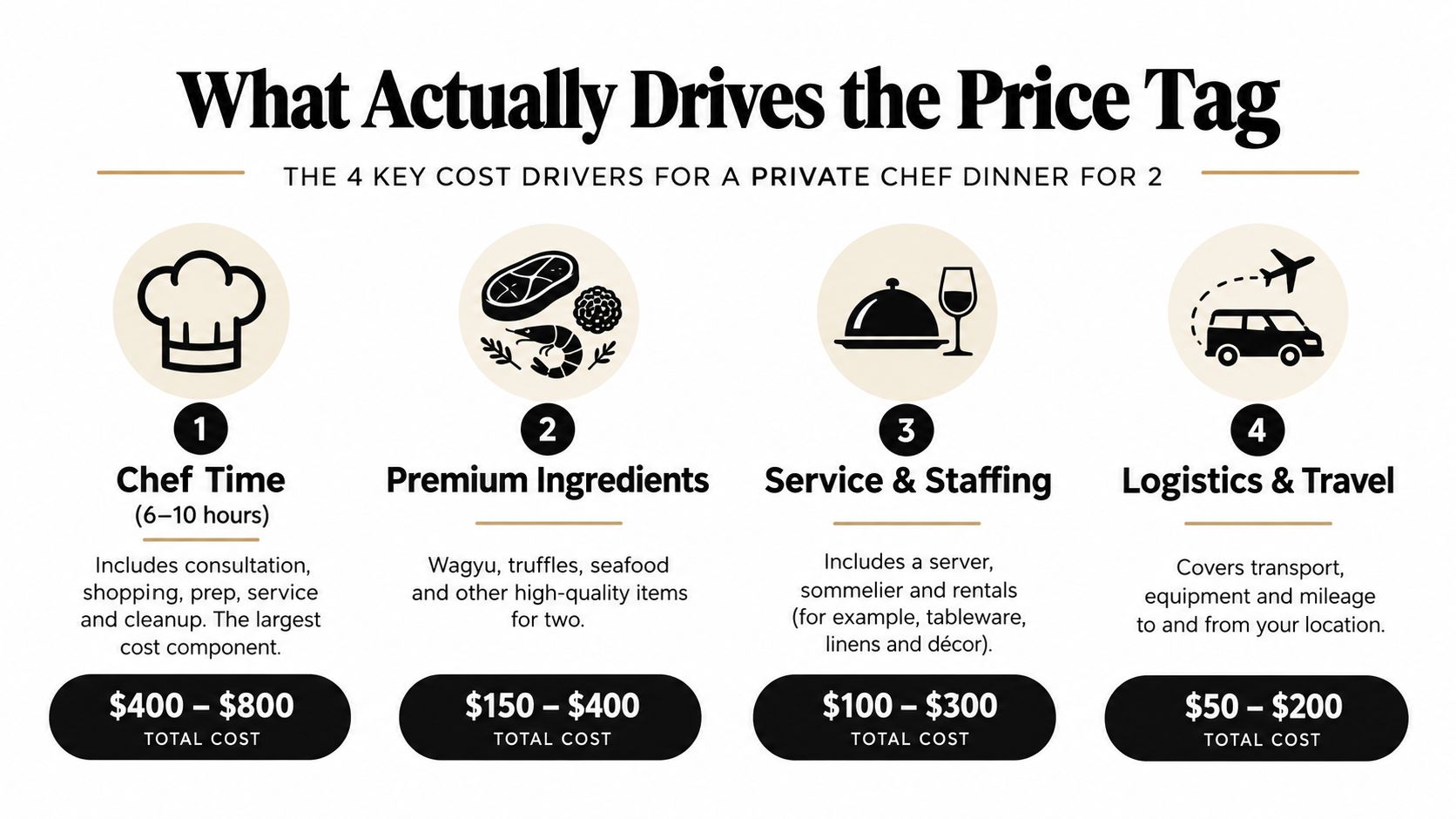
Four cost drivers explain nearly every quote:
- Chef time and reputation, including menu planning, preparation, service, and the value of the chef's record.
- Ingredient sourcing, from seasonal produce to imported seafood, Wagyu, truffles, and specialty products.
- Menu complexity, particularly course count, live-fire cooking, tableside finishes, and precision plating.
- Logistical overhead, including travel, parking, equipment, kitchen restrictions, rentals, and added service staff.
Location can change the invoice as much as the menu. A major-city home, remote villa, or resort residence may require different travel, equipment, staffing, and sourcing arrangements for the same two guests. Start with the all-in range, then require the chef to identify which of these four drivers accounts for each meaningful increase.
What Drives the Price Tag
For two diners, labor sets the floor. A private chef may spend six to ten hours on consultation, shopping, preparation, service, and cleanup. Hourly pricing can range from $75 to $250, with skilled chefs commonly around $75 to $150 per hour and top-tier markets such as New York City and Los Angeles reaching $125 to $250 or more per hour. (2026 private-chef labor benchmarks)
Labor comes first
At $125 per hour for eight hours, labor alone reaches $1,000 before groceries or travel. That calculation is not a universal booking quote, but it shows why two covers can cost more per person than a restaurant meal. The chef is also selling menu design, procurement judgment, timing, kitchen management, plating, and the final reset.
Groceries create the next major swing. Fine-dining ingredients for two can cost $80 to $250. Wagyu, white truffle, whole fish, micro-farm produce, imported products, and single-origin ingredients push the grocery bill upward, especially when the chef handles specialized sourcing.
Logistics can add another layer. Transit, parking, equipment transport, setup, and breakdown all matter, particularly at a distant venue or in a small kitchen. HauteBlack describes its chef service fee as generally covering consultation, preparation, cooking, service, and cleanup. Confirm whether groceries, travel, rentals, and extra staff are included in the quoted total rather than assuming they are. For rental planning, affordable event rentals BC provides a separate way to estimate tables, glassware, and linens.
A simple calculation
A mid-range booking might look like this:
- Chef labor: five hours at $125 per hour, $625
- Groceries: a well-appointed menu for two, $150
- Travel and equipment: $100
- Total: $875
That produces an evening of about $750 to $1,000. A stronger pedigree, longer preparation, premium sourcing, a server, or more elaborate plating can push the total above $2,000. Pay for the work that changes the evening, especially skilled execution and service. Treat decorative extras as optional until the chef explains their purpose.
Request an itemized quote showing labor, groceries, travel, equipment, rentals, staffing, and cleanup. That breakdown reveals whether the premium funds better food and service or adds items you do not need.
How Cuisine Tier Moves the Number
For two guests, cuisine tier determines whether you are paying for a polished meal or a fully staged culinary event. A French menu is not automatically pricier than omakase, and pasta is not automatically inexpensive. Cost comes from technique time, ingredient rarity, course count, equipment, and the amount of service choreography required.
| Cuisine Tier | Per-Person Fee | Total for Two | Example Menus | Typical Ingredient Spend |
|---|---|---|---|---|
| Casual comfort | $300 to $500 | $600 to $1,000 | Italian pasta night, French bistro classics, modern American | Accessible seasonal ingredients |
| Seasonal fine dining | $500 to $800 | $1,000 to $1,600 | Locally sourced tasting menu, modern plating, wine pairings | Premium produce, seafood, specialty proteins |
| Michelin-level tasting | $800 to $1,200 | $1,600 to $2,400 or more | Eight to ten courses, rare ingredients, optional sommelier | Wagyu, truffles, imported seafood, rare products |
Use these figures as planning tiers, not fixed menu tariffs. The broader service reference cited earlier gives context for how widely private-chef fees can vary. The tier table above is more useful for comparing the work behind a luxury two-cover booking.
Casual comfort
This tier suits guests who want a chef's presence without turning dinner into a theatrical production. Handmade pasta, a polished steak course, a composed salad, and a dessert prepared in advance can feel generous without creating excessive sourcing or service demands.
I recommend it for a relaxed anniversary or a first private-chef experience. You still receive a menu shaped around your preferences, while avoiding ingredients chosen mainly to signal luxury.
Seasonal fine dining
Seasonal fine dining earns its premium through balance and precision. Local produce, multiple sauces, fresh seafood, detailed garnishes, and wine pairings require more coordination than a conventional three-course dinner. Portions do not grow dramatically with the price. The labor becomes more exacting.
A booking usually moves from this tier into Michelin-level territory when the chef adds a longer sequence, rare products, or another service professional. Eight to ten courses also change the staffing plan. Each component may need separate preparation, holding, reheating, finishing, and plating, even for only two guests.
Michelin-level tasting
The top tier is an event, not dinner. A sommelier, tableside presentation, and rare ingredients can raise the quote again, especially when the chef must coordinate several finishing points at once.
Pay for this tier when technique, access, and service are the purpose of the evening. Do not choose it because more courses automatically create better value. Ask what each added course changes, then spend on execution that guests will notice.
How Location Reshapes the Same Menu
Two guests create the highest per-person cost in private dining because the chef's labor, planning, travel, and kitchen setup do not shrink with the guest count. The same menu can cost around $1,400 for two in Atlanta and exceed $2,200 in the Hamptons or Aspen, where chef availability, property costs, and seasonal demand reduce the supply of suitable providers. Use those figures as planning estimates, not universal rates.
Major metropolitan markets such as New York, Los Angeles, Miami, San Francisco, and Chicago generally price above the national median, while secondary markets including Nashville, Austin, and Charlotte often come in lower. The difference reflects local labor, venue access, sourcing, and demand. Compare proposals with the nearest major metro rather than a national average.
| City / Region | Estimated All-In for 2 Guests | Cost Premium vs. Median |
|---|---|---|
| Atlanta | Around $1,400 | Baseline example |
| New York City | Higher than the national median | Metro premium |
| Los Angeles | Higher than the national median | Metro premium |
| Aspen | More than $2,200 for the comparable example | Resort premium |
| The Hamptons | More than $2,200 for the comparable example | Resort premium |
Resort destinations such as Cabo, Aspen, and St. Barts can add travel-day charges, accommodation requirements, and minimum-night conditions. International bookings also bring currency conversion, visa logistics, and sourcing premiums when the menu depends on imported products.
Quote test: Benchmark your proposal against the closest major metro. If it sits more than 25% above that benchmark, ask the chef to identify the added travel, staffing, sourcing, or venue costs before you approve it.
For villa bookings, the residence affects the service plan as much as the menu. HauteBlack's villa dining and private-chef guide helps compare an in-home chef dinner with a broader villa-based culinary itinerary. Pay for location-driven complexity only when it improves access, privacy, or the setting guests came to enjoy.
Line Items That Hide Inside the Quote
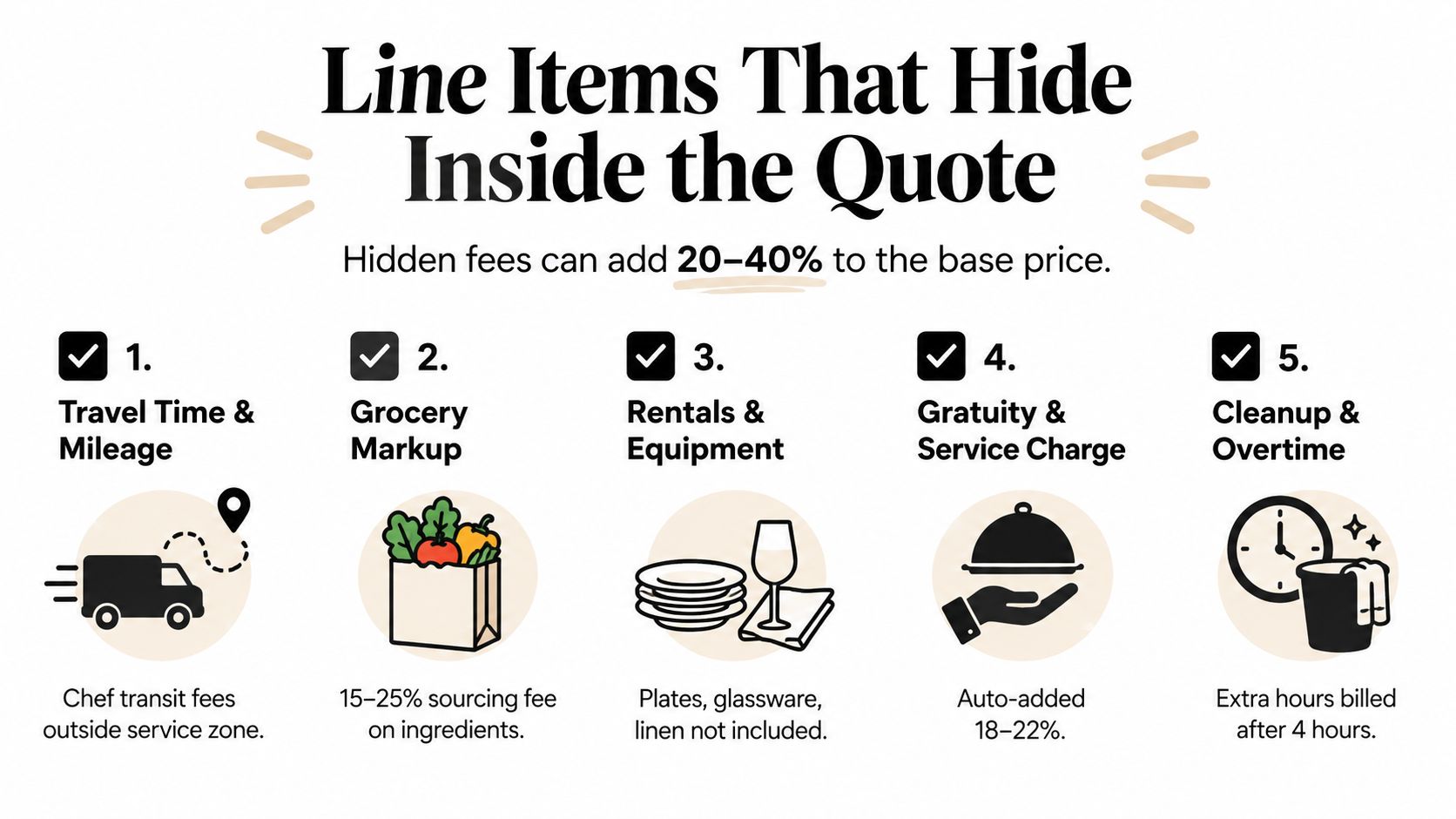
The advertised per-person fee rarely tells the whole story. Depending on the provider and service design, travel, staffing, rentals, beverages, gratuity, and last-minute changes can add 20% to 40% to the base price. A quote that looks attractive at first glance may become expensive once each operational detail appears as a separate line.
Travel and staffing
Chefs often charge for travel when the venue falls outside their normal service zone. Common structures include $1 to $3 per mile round trip or a flat travel fee of $100 to $400. Parking, tolls, equipment transport, and difficult access can create additional friction, particularly at large residences or resort properties.
A server or butler can add $150 to $400 for the evening. A sommelier providing pairings may add $200 to $500. These services are worthwhile when you want the chef out of the dining room and the pacing to feel like formal hospitality. They're unnecessary if the chef can comfortably manage a relaxed meal and you enjoy pouring your own wine.
Rentals, beverages, and gratuity
Tables, chairs, linens, plateware, and glassware can total $200 to $600 for an intimate setup. Ask whether the property already has suitable pieces before authorizing rentals. For local options, HauteBlack's private dining services can help coordinate a broader dining setup when the experience requires more than cooking alone.
Corkage or beverage markup may run $30 to $80 per bottle beyond retail. Gratuity is often added separately at 18% to 22% of the subtotal. Menu changes close to the event can trigger new sourcing, prep, or plating fees, especially when the chef has already purchased ingredients.
Request an itemized quote with these questions:
- Travel: Is mileage, parking, tolls, and equipment transport included?
- Staffing: Is service limited to the chef, or does it include a server or sommelier?
- Rentals: Are linens, glassware, china, tables, and chairs supplied?
- Beverages: Are wine, cocktails, corkage, and pairings separate?
- Gratuity: Is the service charge already included?
- Changes: What happens if you alter the menu or guest requirements?
The negotiable items are usually rentals, staffing, beverage service, and menu complexity. Chef labor, travel, and rare ingredients are less flexible once the booking is confirmed.
The HauteBlack Layer Added on Top
A fully orchestrated private dinner has a different cost profile from a chef arriving alone with grocery bags. The service can include a credentialed chef, sommelier curation, butler support, and sourcing handled before the evening begins. HauteBlack and Haute Living curate 80 or more annual events, including private chef dinners and cultural evenings associated with names such as Nobu and Daniel Boulud, which reflects a recurring program rather than an occasional restaurant referral. (HauteBlack's luxury event programming)
Consider a Manhattan penthouse on a Saturday evening. The chef arrives in the afternoon, supported by a sommelier, a butler, and a sourcing lead. The team has secured a specified dry-aged Wagyu product and white truffles arriving from Alba that morning. Service opens with a Krug reception, moves through a six-course tasting, and ends with a rare vintage dessert wine poured at the table.
That level of execution isn't about making two portions of food. It's about removing every decision from the guests' evening. Someone has confirmed the kitchen, checked the glassware, planned the wine sequence, coordinated arrival times, and built a service rhythm that doesn't depend on the host stepping away from the table.
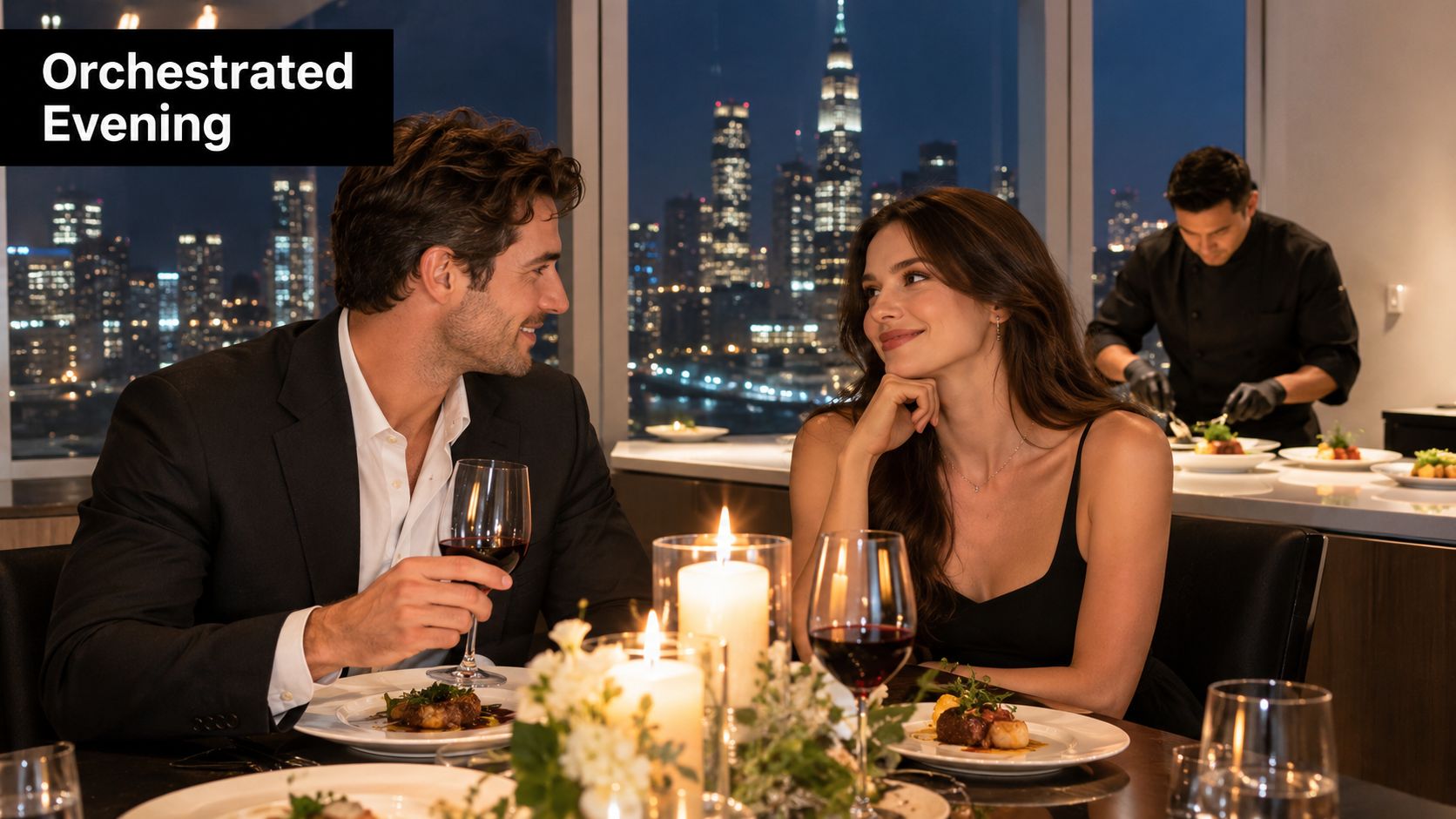
Through HauteBlack, this kind of private chef dinner for two typically costs $2,800 to $6,500 all-in, with the membership fee covering sommelier curation, butler service, and sourcing rather than adding them as surprise charges. The headline price is the price you evaluate.
Events involving name-brand chefs under the HauteBlack banner, including experiences connected with Nobu or Boulud, occupy the upper tier. The lower tier still focuses on a credentialed chef, wine pairing, and white-glove service in a bundled proposal.
What you're buying: Not two plates of dinner, but a private room, a personal kitchen team, and a controlled evening with no operational loose ends.
That premium makes sense for milestone celebrations, executive entertaining, and guests who value privacy more than restaurant economics. It makes less sense for a simple meal where the chef's primary job is to cook and leave.
Why a Private Chef Costs More Than a Tasting Menu
A private chef isn't a discount route to restaurant tasting-menu cooking. A restaurant spreads one kitchen, one brigade, one pass, and one dining room across many covers. A two-person booking assigns the chef's planning, travel, procurement, preparation, and plating to one table.
That distinction explains why a restaurant tasting menu can look dramatically cheaper. The restaurant has already paid for the kitchen, service team, refrigeration, equipment, and front-of-house operation. Each guest absorbs only a fraction of that overhead.
The comparison that matters
Take a restaurant tasting menu priced at $85 per person. For two diners, the menu itself is $170 before drinks, taxes, and service charges. A private chef booking in the same city during the same week may cost far more after labor, retail groceries, travel, and cleanup are included.
The private service can still be the better purchase, but not because the food costs less. You're paying for a menu built around your preferences, a dining room inside your own space, control over the timing, and attention that doesn't have to be shared with another table.
| Consideration | Private Chef Dinner | Restaurant Tasting Menu |
|---|---|---|
| Guest focus | One chef team dedicated to two guests | One kitchen team serving many tables |
| Menu | Fully personalized | Usually fixed or selectively adaptable |
| Setting | Home, villa, hotel suite, or private residence | Restaurant dining room |
| Overhead | Travel, setup, groceries, cleanup assigned to the booking | Shared across the restaurant's service |
| Value | Privacy, customization, and control | Efficient access to a professional kitchen |
The broader distinction between household employment and one-off dining also matters. A full-time private chef can cost approximately $130,000 to $260,000 or more annually, according to HauteBlack's guide, which shows how different a recurring household role is from a single evening booking. (HauteBlack's private-chef employment guide)
My recommendation: Choose the restaurant when you want the cuisine. Choose the private chef when you want the evening to belong entirely to you.
A Short Quote-Ready Checklist Before You Book
A clean quote starts with a precise brief. Send the chef the date, neighborhood, guest count, kitchen setting, and desired service style before discussing a final menu. The more concrete your request, the less room there is for vague allowances and late additions.
1. Define the date and address. State the exact evening, neighborhood, property type, parking situation, and floor access. A private home, penthouse, villa, and hotel suite can require different equipment and arrival plans.
2. List dietary requirements early. Include allergies, intolerances, religious requirements, dislikes, and preferred proteins. Don't describe an allergy casually. The chef needs to know whether separate cookware, sourcing, and storage are required.
3. Choose the cuisine tier. Decide whether you want casual comfort, seasonal fine dining, or a Michelin-level tasting. Specify the number of courses and whether canapés, dessert wine, or a late-night course matters.
4. Confirm the service style. Ask whether the chef cooks, plates, serves, clears, and cleans alone. If you want a butler, server, or sommelier, request that role explicitly instead of assuming it comes with the chef.
5. Ask for the minimum. Some chefs apply a minimum booking fee for two guests because the labor doesn't scale down. Get the minimum, service hours, and overtime policy in writing.
6. Separate food from operations. Confirm groceries, sourcing fees, travel, mileage, equipment, rentals, corkage, beverage purchases, and gratuity. An all-in figure is useful only when you know what “all-in” includes.
7. Review cancellation terms. Ask when deposits become nonrefundable, how rescheduling works, and what happens if the chef can't access the property or a key ingredient becomes unavailable.
8. Vet the provider. Request references, sample tasting menus, relevant food-safety certifications, and a clear description of the chef's background. Credentials matter most when the menu involves raw seafood, rare proteins, or complex allergy controls.
The smartest booking isn't necessarily the cheapest one. It's the quote that makes every responsibility visible before the first ingredient is purchased.
HauteBlack arranges private chef experiences with the sourcing, service coordination, and bespoke dining details that shape the cost of an intimate evening. Visit HauteBlack to discuss a two-person dinner built around your preferred destination, cuisine, level of service, and privacy requirements.
Explore Our Guides


Signature Experiences


