Haute Black Journal
Villa with Private Chef: Your Ultimate Culinary Guide

Marlene Azeez
Director, HauteBlack
View all articles →

# Villa with Private Chef: Your Ultimate Culinary Guide
June 6, 2026
You're probably looking at a villa listing right now that says chef included, and the promise sounds effortless. Breakfast on the terrace. Lunch by the pool. Dinner served at sunset, without reservations, transfers, or a crowded dining room in sight.
That promise can be real. It can also be misleading.
A proper villa with private chef isn't just a house with someone who cooks. At the top end, it's a private hospitality operation calibrated around your pace, your table, and your standards. The difference shows up in small moments: when children eat early without disrupting the adults' dinner, when a guest with allergies doesn't feel managed but understood, when a beach lunch appears exactly when everyone comes in from the water.
The appeal is obvious to anyone who values privacy, rhythm, and control. The practical side is where many bookings go wrong. Staffing, service flow, menu planning, grocery handling, and contract language all matter far more than the marketing headline. If you've ever looked at the best accommodation in McLaren Vale, you'll recognize the same truth: luxury lodging only feels exceptional when the operational details are aligned with the guest experience.
The Allure of the Private Chef Experience
The best private-chef villa stays feel calm from the moment you wake up. Coffee is ready when the house starts to stir. Someone has already thought about the table, the timing, and what the group wants to eat. There's no debate over reservations, no need to split the party, and no compromise between the person who wants grilled fish and the person who wants something lighter.
Hotels can deliver excellent dining, but they work around shared infrastructure. Restaurant hours are fixed. The room-service menu narrows the experience. Even in a top suite, you're still fitting yourself into a property's service pattern. A villa reverses that equation. Service bends around the guest.
Why privacy changes the meal itself
A private dinner in a villa doesn't just remove other diners. It changes the energy of the evening. Multi-generational families can eat in waves without feeling disjointed. Couples can have something understated and elegant instead of performing a big night out. Friends can turn lunch into a long afternoon without anyone watching the clock for the next seating.
The strongest in-villa meals don't feel staged. They feel like the house is running exactly as it should.
That's why the private chef often becomes the center of the stay rather than a side amenity. Good chefs read the room. They know when the group wants ceremony and when it wants simplicity. They understand that a celebration dinner and a recovery breakfast require different kinds of service, even if they happen in the same kitchen.
What draws sophisticated travelers back
The repeat appeal usually comes down to three things:
- Control over timing: You eat when the group is ready, not when a restaurant can take you.
- Consistency for the full stay: One team learns preferences quickly and adjusts without repeated explanations.
- A stronger sense of place: Menus can reflect the destination without forcing you into a public dining schedule.
For guests who are passionate about food, the private-chef model also opens room for nuance. You can ask for regional dishes one night, something clean and restrained the next, and a celebratory tasting-style dinner later in the week. Done well, it feels less like “having meals covered” and more like living in a beautifully run private residence.
The Anatomy of Service Beyond Just a Chef
The difference shows up at 8:30 p.m., not in the villa listing.
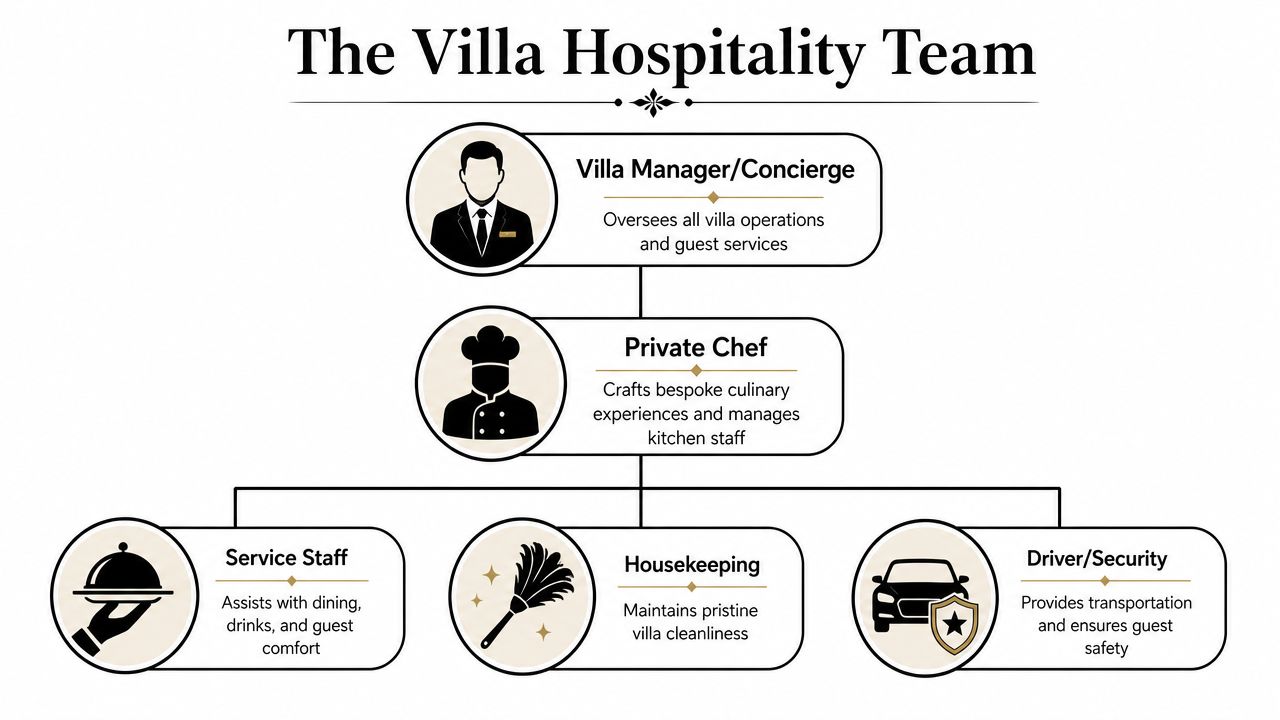
A guest asks for a second bottle of white Burgundy. One child now needs a plain plate of pasta. The birthday cake should be held back ten minutes because two people are still by the pool. In a well-run villa, none of that pulls the chef off the pass. Service absorbs it. The manager cues timing. Someone discreetly resets the table. Someone else handles the wine. That is the operating reality behind a serious private-chef stay, and it is why the phrase chef included has limited value on its own.
Luxury villas work best when the food program is built like a small private hotel. The chef leads the culinary side, but the experience depends on support around that role. A staffed Tulum villa listing on Expedia illustrates the model clearly, with separate culinary, housekeeping, and guest-support functions rather than one person trying to cook, serve, and solve every request.
What actually has to happen behind the scenes
For a low-key stay, one experienced chef can cover breakfast and one main meal if the scope is controlled. That works for a couple in St. Barts who want fruit, eggs, grilled fish, and a simple dinner on the terrace. It works far less well for a six-bedroom villa in Punta Mita with children eating early, adults dining later, cocktails at sunset, and dietary adjustments across the table.
The operational pressure points are predictable. Shopping takes time. Prep takes time. Plating and service take time. Cleanup takes time. If those jobs sit with one person, pacing suffers first, then polish.
A proper setup usually separates responsibilities this way:
- Chef: menu design, ingredient sourcing, production, plating, final quality control
- Sous chef or kitchen assistant: mise en place, prep support, breakfast coverage, dietary modifications, recovery between meal periods
- Service staff: drinks, table setting, clearing, course timing, guest requests during the meal
- Housekeeping: kitchen reset, public-space upkeep, laundry, room readiness during active service windows
- Villa manager or concierge: provisioning approvals, vendor coordination, transport timing, off-menu requests, communication with the household
This is the structure I look for before I recommend a villa. A beautiful kitchen means very little if nobody has assigned responsibility for service, purchasing, and turnover. Guests booking through Haute Black's curated villa services benefit from that filter early, because the key question is not whether a chef is present. It is whether the house can deliver the style of living the trip requires.
Staffing density affects the meal more than the view
In Mexico's top villa markets, the strongest houses in Punta Mita and Puerto Vallarta are rarely chef-only operations. They run with layered staffing because the destination encourages long lunches, poolside service, children eating on a different schedule, and dinners that may shift from casual to formal over the course of a stay. Rental guidance from Villas by Journey Mexico reflects that broader point. High-end villa service is usually built around a team, with staffing levels tied to house size and service expectations.
That does not mean every group needs a butler, bartender, and two kitchen assistants. It means the labor has to match the promise.
A villa can offer elaborate breakfasts, passed canapés, a tasting-style dinner, and late-night cleanup. Someone still has to execute each step. If the menu includes wood-grilled lobster, chilled soups, children's alternatives, and one guest requesting no dairy or gluten, the chef needs support or the meal turns into a series of delays.
The best operators are candid about this. In Tuscany, a cook who prepares rustic family-style lunches may be perfect for a countryside week built around winery visits. In Turks and Caicos, where guests expect beach setup, cocktail service, and a sharper dinner cadence, that same staffing model can feel thin by day two. Service architecture should fit the destination as much as the villa.
One more marker of quality is ingredient handling. A polished chef team can produce quiet details that are hard to fake, proper stock work, sauces mounted at the right moment, fish cooked in sequence rather than all at once, and condiments made for the menu rather than pulled from a generic pantry. For guests who care about flavor development, touches like black garlic sauces and glazes signal a kitchen that is thinking beyond standard vacation fare.
Ask one direct question before booking: who handles each part of the day, from provisioning to breakfast service to post-dinner reset?
The answer will usually tell you whether the villa is genuinely staffed, or merely marketed well.
Crafting Your Culinary Journey
The menu process should begin before arrival, not at the kitchen island on the first morning. The most refined experiences start with a real conversation about how you live, what you avoid, how formal you want dinners to feel, and whether the trip is food-centered or supported by excellent food.
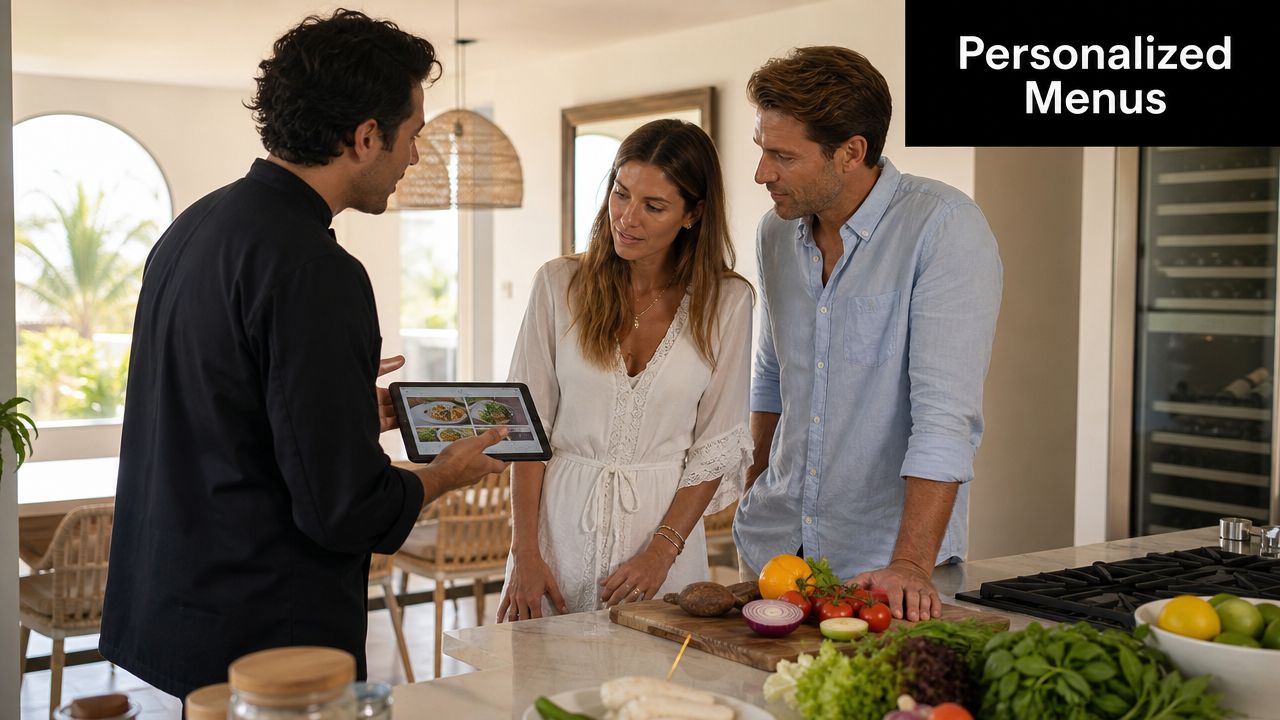
A good chef doesn't ask only for allergies and dislikes. They ask better questions. Do you want breakfast waiting, or made to order? Are pool lunches meant to be light and clean, or generous and social? Should dinner feel local, familiar, festive, or subtly technical? Those distinctions shape the stay.
What a day can look like
A strong in-villa food program usually has range. Not every meal should feel like an event.
Breakfast may be tropical fruit, eggs to order, pastries warmed properly, pressed juices, and coffee handled with care. Lunch might move toward grilled seafood, market vegetables, bright sauces, and food that can be eaten half-dressed after a swim. Dinner is where many chefs stretch, especially when the group wants a more composed table.
For guests who enjoy flavor development, ingredients and techniques matter. A chef may build depth with fermented notes, reductions, herb oils, citrus, char, and layered condiments. If you're curious about pantry elements that add complexity without overwhelming a dish, this guide to black garlic sauces and glazes is a useful reference point.
Dietary precision should still feel luxurious
The right chef never treats dietary needs like an inconvenience. Vegan, gluten-conscious, dairy-free, low-allergen, child-friendly, and performance-focused menus can all be elegant when planned properly.
What doesn't work is vague communication. “One guest is gluten-free” is not enough. Is cross-contact a concern? Is it a preference or a strict medical issue? Are substitutions acceptable, or should the chef redesign the course? The more precise the brief, the better the table.
For curated culinary planning beyond the villa itself, Haute Black dining services are a useful benchmark for how high-touch dining should be organized.
Some of the most memorable villa meals are the simplest. The difference is that every detail has been considered in advance.
This kind of planning also creates room for interactive experiences. Guests may want a local breakfast lesson, a seafood grill by the pool, or a chef-led dinner that feels more like a private supper club than a standard villa service. The format should match the occasion, not force the occasion to fit the format.
A short visual gives a sense of how these bespoke dining experiences come together in practice:
The best menus evolve over the stay. Day one may lean familiar while the group settles in. By day three, the chef should already know who wants more spice, who prefers a lighter lunch, and who always wants something sweet available after dinner. That progression is one of the quiet pleasures of staying in a villa with private chef service that's been designed well.
Understanding Costs and Pricing by Region
A villa in St. Barts may advertise a chef as "included," while a comparable home in Los Cabos quotes a separate culinary line item that grows with the group. The headline can suggest they offer the same thing. Operationally, they often do not.
Pricing gets clearer once you separate three variables: culinary labor, food and beverage purchasing, and service support around the chef. A polished lunch for eight with a sous chef, server, and same-day provisioning is a different product from one person cooking dinner and leaving the kitchen to the house staff.
The three pricing models you'll see most often
The first is daily chef fee plus groceries. This is common in villa markets where owners want the base rate to stay competitive and let guests decide how much dining coverage they want. It usually suits travelers who may dine out some nights, keep lunch simple, or prefer to approve ingredient spending as the stay unfolds.
The second is per guest, per day. In Los Cabos, that structure appears often because it gives larger groups a straightforward way to budget chef labor while keeping grocery costs separate. You will still want clarity on what counts as a meal period, whether children are priced differently, and whether service for cocktails, canapés, or late dinners sits outside that daily figure, as outlined in this Los Cabos villa chef pricing guide.
The third is chef included in the villa rate. This can represent good value in the Caribbean and certain fully staffed estates in Provence or Tuscany, especially when the house already runs with an established kitchen brigade. It can also be the least transparent model if the contract does not spell out hours, meal counts, staffing depth, and provisioning terms.
Private Chef Service Pricing Models at a Glance
| Region | Typical Model | Estimated Daily Chef Fee (USD) | Notes |
|---|---|---|---|
| Mexico luxury villa markets | Daily chef fee plus groceries | N/A | Some villas bill chef labor separately, while others fold limited meal service into the nightly rate. |
| Los Cabos | Per guest, per day | N/A | Chef service is often quoted per person, with groceries usually separate. |
| Caribbean and other staffed-villa markets | Included in villa rate or custom quote | N/A | Terms vary widely. Review meal count, service hours, and staffing support carefully. |
What the numbers don't show
Two proposals can sit close together on price and still deliver very different days on the ground.
One villa includes a chef, steward, breakfast setup, bar support, dishwashing, and post-meal resets. Another includes only cooking, with the chef also expected to shop, plate, clear, and adapt to changing requests without backup. The lower quote may still be fair. It is fair for a narrower service architecture.
That distinction matters most in destinations where expectations run high. In Mykonos, guests may want long pool lunches, sunset cocktails, and a late dinner after beach clubs. In Aspen, the pressure point is often breakfast precision, après-ski timing, and dietary management across a multi-generational group. In both cases, the true cost sits in labor design, not just food cost.
A cheap chef line item usually means a smaller service scope, lighter staffing, or both.
I advise clients to price the day, not the chef. Ask what it takes to execute breakfast through dinner at the standard your group expects. If the answer relies on one person doing every task, the quote may be low because the experience is built to be simpler.
For travelers comparing villas against wider high-touch trip planning, this guide to luxury travel concierge services gives a useful framework for judging how service should be structured behind the scenes.
How to read a quote properly
When comparing proposals, isolate the parts that shape the experience:
- Included meals: Confirm whether the quote covers one meal, full-board dining, or a fixed number of services per day.
- Support staff: Ask if the chef has help for prep, table service, bar service, and cleanup.
- Provisioning method: Confirm whether groceries are reimbursed at cost, prepaid against a budget, or billed with a handling fee.
- Hours and overtime: Check whether early breakfasts, children's suppers, or late-event dinners trigger extra labor charges.
- Menu level: Family-style Mediterranean cooking, wellness menus, and formal plated dinners carry very different labor loads.
The best quotes read like an operating plan. You can see who is doing what, when they are doing it, and what will cost more if the brief changes. That level of clarity is also where a strong advisor network earns its place. Haute Black's value is not just access to attractive villas, but access to properties and local teams that can define service properly before the contract is signed.
Booking and Contracting Key Questions to Ask
Most private-chef disappointments are visible before the stay if you ask the right questions. The issue usually isn't that a villa lied outright. It's that the description compressed a lot of operational detail into a few attractive words.
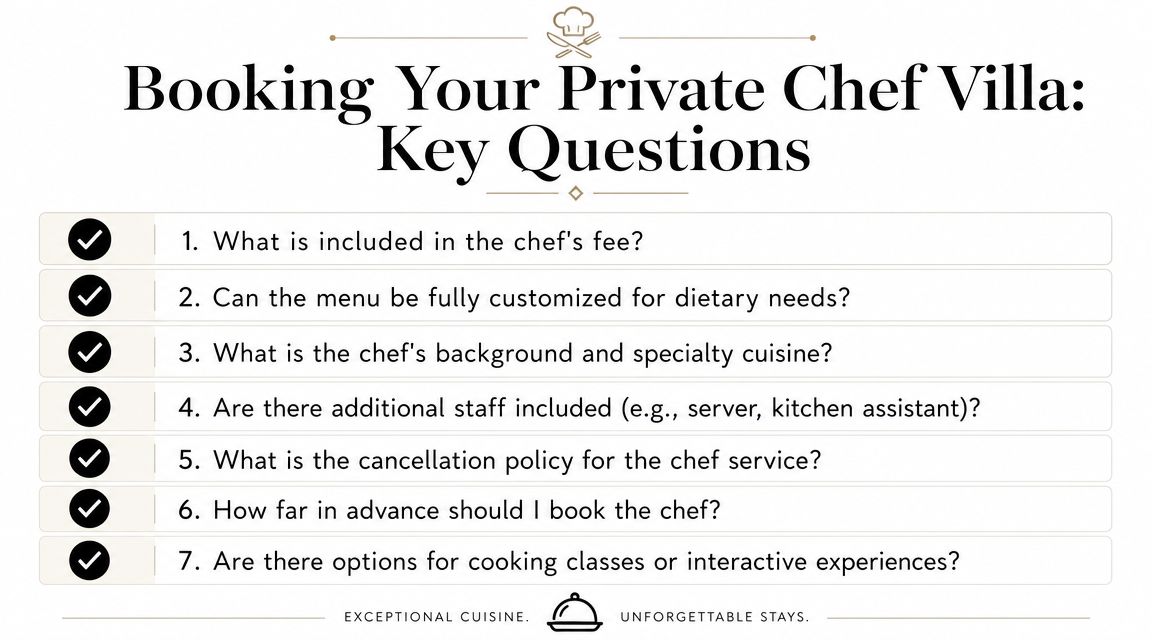
The first question isn't “Is there a chef?” It's “What does chef service include, specifically?” You want names, hours, meal counts, staffing support, grocery mechanics, and sample menu style. Anything less leaves too much room for assumption.
For travelers who want a broader framework for this kind of high-touch planning, this guide to luxury travel concierge services is worth reading alongside any villa proposal.
The questions that matter most
- Who is doing the cooking: Ask whether the villa uses an in-house chef, a rotating roster, or an outside contractor brought in for your dates.
- What's the chef's culinary lane: A chef can be excellent and still wrong for your trip. Family-style Mediterranean service, wellness-focused menus, formal tasting dinners, and celebratory event cooking require different strengths.
- How are groceries managed: Ask whether receipts are itemized, whether approvals are needed for premium items, and how substitutions are handled if local sourcing changes.
- What support exists around the chef: A single chef with no assistance may be fine for simple service, but not for a demanding itinerary.
- What happens when plans change: Guests always change plans. Good operators have a process for late lunches, added children, special birthday requests, and schedule shifts.
Small clauses with big consequences
The contract language around service hours matters. So does arrival timing. If your group lands late and expects dinner on arrival, that should be confirmed explicitly. If the chef's day starts at breakfast and ends after cleanup, understand whether a late-night snack request falls inside or outside the service window.
Cancellation terms also deserve attention. Some chef services are integrated into the villa agreement. Others are treated as third-party arrangements with separate terms. If the kitchen team is secured specially for your stay, flexibility may be narrower than the villa cancellation policy suggests.
Advisor's note: The best bookings remove ambiguity before deposit, not after arrival.
A quick diligence pass before you sign
Read every proposal with these filters in mind:
1. Specificity: Does the quote define meals, labor, and groceries clearly?
2. Fit: Does the chef's style match the reason for your trip?
3. Resilience: If the group changes shape mid-stay, can the villa absorb that smoothly?
A discerning client doesn't need endless details. They need the right details. Once those are in place, the experience can feel as effortless as it should.
The Haute Black Difference Access and Curation
A villa can photograph beautifully and still fail at dinner on the second night.
That gap is usually operational. A listing may say “private chef,” but the key question is whether the residence has a kitchen team, service plan, and management discipline that can support the way high-expectation guests travel. In St. Barts, that might mean a late lunch drifting into sunset canapés, then a polished dinner service with proper pacing and wine handling. In Ibiza, it may mean wellness breakfasts, boat-day timing, and a chef who can switch from clean Mediterranean cooking at noon to a more social dinner format that suits the house by evening.
As noted earlier, top private culinary talent is limited. The better question is not how many villas offer a chef. It is which villas can deliver the right chef, with the right support, under the right operating conditions.
Access is only useful when standards are clear
Access without curation creates noise. Serious travelers do not need fifty villa options with vague staffing promises. They need a short list where the culinary program has been checked properly. That means understanding who cooks, who serves, who shops, who resets the kitchen after each meal, and who steps in when the plan changes.
A family week in Turks and Caicos has one service pattern. Children eat early. Adults want a longer dinner. Beach setup, poolside snacks, and dinner timing all affect the chef's day. A festive stay in Mykonos works differently. Guests may want a lighter lunch, a break in service, then a higher-energy dinner with cocktails and friends joining at the last minute. The house has to be staffed for that rhythm, not just advertised for it.
Haute Black adds value here by filtering for operational fit, not just aesthetics or availability. The point is to match the residence and the culinary team to the occasion from the outset.
Why curation outperforms browsing
The best private-chef stays are built before arrival. Menus are shaped around preferences and restrictions. Provisioning is handled early enough to secure the right ingredients. The villa manager, chef, and service staff work from the same brief. If one part of that chain is weak, guests feel it immediately.
I look for signs that a property runs like a serious private residence rather than a rental with add-ons. In Provence, that may mean a chef comfortable working from local market availability while still meeting exact standards at the table. In Los Cabos, it often means a team that can produce breakfast and lunch efficiently, then reset for a more formal dinner without the house feeling overrun by staff. Good curation catches those differences before a client commits.
A private-chef villa feels easy for the guest because someone has already checked the hard parts.
For Haute Black members, network quality matters as much as property quality. Strong relationships create access to villas and culinary teams that are not interchangeable and, in some cases, not broadly marketed at all. They also make higher-level requests realistic. A one-night guest chef collaboration, a serious tasting menu with paired bottles, or a weeklong food program built around training, celebration, and privacy all depend on trusted operators who know how to execute, not just sell.
If you want a villa stay where the culinary experience is matched to the house, the destination, and the way you travel, Haute Black can help curate it with the level of access and precision that high-stakes luxury travel requires.
Explore Our Guides


Signature Experiences


