Haute Black Journal
Travel Guide PH: A Luxury Journey Through the Philippines

Marlene Azeez
Director, HauteBlack
View all articles →

You're in a private casita at dusk, the sea turning silver beyond the palms, and someone asks the question that can undo an otherwise perfect Philippine holiday: how are we getting to the next island tomorrow? The answer matters more here than another impressive resort name. A beautiful itinerary can lose a day to a missed ferry, a delayed domestic flight, or a transfer planned from airport to airport instead of villa to villa.
This travel guide PH is for repeat travelers who already know Thailand and Bali, honeymooners who want privacy rather than a crowded beach club, families who need comfort across generations, and executive assistants arranging a trip where schedule failure is not an acceptable surprise. The Philippines offers extraordinary private-island hotels and marine experiences, but it rewards planning, restraint, and accurate local judgment, not an ambitious checklist of islands.
Why the Philippines Rewards the Prepared Luxury Traveler
The Philippines has a rare luxury proposition. A private island can feel exclusively private, the marine environment can justify the effort of reaching it, and a well-run villa can make the distance from Manila feel intentional rather than inconvenient. HauteBlack describes the country as a strong Southeast Asian choice for natural beauty, less-visited islands, and privacy, while also assigning it a higher logistical-planning requirement than some competing destinations (Philippine luxury travel insights).
That trade-off defines the trip. Thailand often makes multi-stop travel feel easy. Bali concentrates many high-end experiences into a compact geography. The Philippines gives you more space, but every additional island introduces another operational decision. For a honeymoon, that can mean choosing one exceptional Palawan base instead of three attractive but poorly connected stops. For a CEO, it may mean paying for a private transfer because the cost of a missed meeting is greater than the transfer premium.

Start with the traveler, not the map
Use three decisions before looking at hotels:
- Define the trip's center of gravity. Choose privacy, marine access, family variety, cultural depth, or executive efficiency. Don't try to make one itinerary deliver every version of the Philippines.
- Choose the region before the property. Amanpulo, Pangulasian Island, Balesin, and Nay Palad each solve different travel problems. A resort can't compensate for a region that doesn't suit the guest.
- Protect usable time. Count door-to-door travel, including vehicle loading, boat handling, check-in, and weather buffers. An airport-to-airport estimate is not a luxury itinerary.
The country's tourism economy also supports this value-led approach. In 2019, the Philippines recorded approximately 8.26 million international visitor arrivals and about PHP482.15 billion in international tourism receipts. In 2023, it welcomed 5,450,557 international visitors, while visitor spending reached approximately PHP482.73 billion, or US$8.69 billion (Philippine News Agency tourism data). The contrast matters for high-end operators: recovery can't be judged only by headcount. Spending value, trip length, experience intensity, and traveler mix are more useful when deciding where to place a premium itinerary.
Practical rule: In the Philippines, book the connection before you book the fantasy.
Choosing Your Island Base Across Palawan, the Visayas, and Beyond
Start with the island that matches the trip, not the island with the loudest reputation. In the Philippines, luxury succeeds when the base fits the traveler's tolerance for transfers, weather exposure, and downtime between experiences. Choose well, and the country feels rare and rewarding. Choose badly, and even a beautiful resort spends too much of the trip recovering from its own access.
The practical split is straightforward. Palawan is the strongest choice for couples who want privacy and marine access. The Visayas suits families and mixed-age groups that need flexibility, easier pacing, and more to do off the water. Balesin works for guests who want the resort itself to carry the holiday.
| Region | Seclusion | Transfer logic | Villa and resort character | Best fit |
|---|---|---|---|---|
| Palawan and the Sulu Sea | High, especially around private-island resorts | Requires disciplined air and boat or resort-aircraft coordination | Casitas, villas, marine-focused stays, and dramatic limestone settings | Honeymooners, privacy-led repeat travelers, divers |
| The Visayas | Moderate to high, depending on the estate or island | Often more flexible for families moving through Cebu, Bohol, Panglao, and nearby islands | Larger resort choice, private estates, family-friendly layouts | Multi-generational families and first-time visitors |
| Luzon coastline and Batanes | High in the right season and location | More dependent on regional schedules and weather | Smaller-scale stays, scenery and culture over polished private-island infrastructure | Repeat travelers seeking contrast |
| Private destinations such as Balesin | Controlled and resort-contained | The resort's own schedule is central to the booking | Club-island model, multiple themed environments, villa-led stays | Families, groups, and guests who want minimal external logistics |
Palawan for the honeymoon that should feel private
Palawan earns the extra effort when the trip is about silence, water time, and a real sense of arrival. Amanpulo on Pamalican Island is still the clearest expression of that. The property is reached only by its own aircraft from a private hangar in Manila, and the charter takes approximately 90 minutes. Those flights run on a fixed schedule, so the resort transfer should shape the international routing from the start, not get treated as an afterthought at the end (HauteBlack honeymoon itinerary).
El Nido is different. It is more active, more visual, and better for couples who want their days filled with island runs and time on the water rather than total stillness. Pangulasian Island suits travelers who want a private-island feel with direct access to the Bacuit archipelago. Do not force Amanpulo and El Nido into one short trip unless every connection is unusually clean. If your clients already travel well across the region, our insider's guide to luxury tours across Southeast Asia gives the right benchmark for how the Philippines compares with Thailand and Bali. Fewer stops usually produce the better Philippine itinerary.
The Visayas for families who need variety
Cebu, Bohol, Panglao, and Siquijor give families more room to adjust the pace without rebuilding the whole trip. A strong resort or private estate can anchor the stay while older children head out for marine activities and grandparents keep the schedule lighter. The region also works better when the group wants cultural outings, broader dining choice, and some margin for changing plans.
The best rule here is simple. One reliable base with flexible day experiences beats a sequence of hotel changes.
That matters more in the Philippines than in Thailand or Bali. Inter-island connections remain uneven, and a recent regional tourism analysis noted infrastructure gaps, connectivity issues, and wide regional differences. That is exactly why island-base selection is not a stylistic choice here. It is the core luxury decision.
Balesin when the resort is the destination
Balesin, off the Pacific coast, is the right answer when guests want the property to do the hard work. Its club-island model keeps a family trip, group stay, or executive retreat inside one controlled setting, with less dependence on multiple public connections. It is less persuasive for travelers who want a broader, less filtered Philippine circuit.
Best Times to Visit by Region Rather Than Calendar
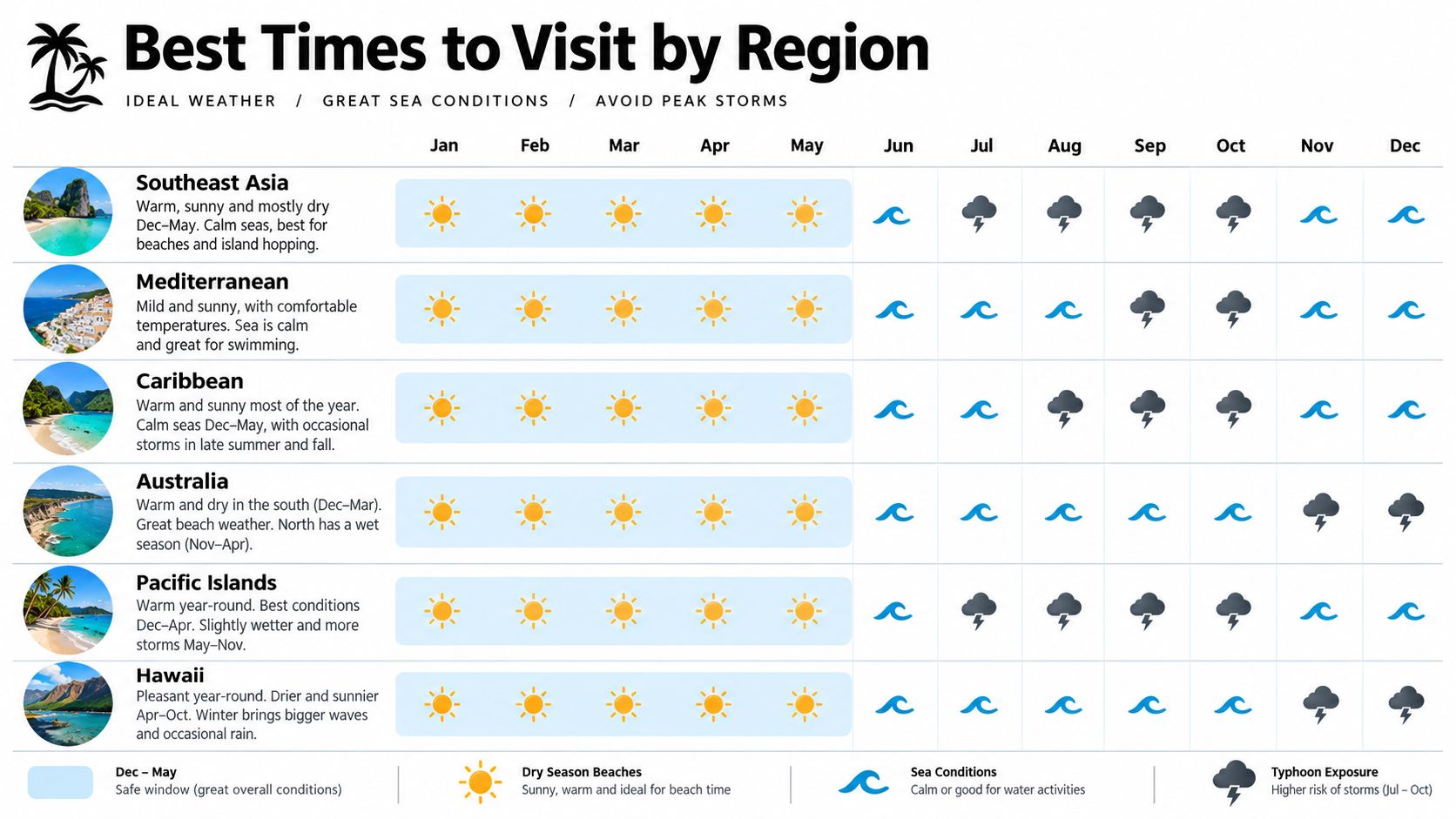
The broad planning window is December through May, but “best time” is too blunt for the Philippines. Choose the region first, then choose dates according to sea conditions, heat, storm exposure, villa availability, and access to medical and utility infrastructure. A Palawan itinerary in June carries a different operational profile from a Bohol itinerary in June.
A regional reading of the year
December through February usually offers the most comfortable foundation for beach and island travel. Conditions can still vary by region, so a private boat day should remain flexible even during the preferred season. Palawan often rewards travelers who prioritize clear marine conditions and strong resort operations, while the Visayas can provide a broader mix of land-based alternatives if the sea turns difficult.
March and April bring attractive beach conditions but higher heat stress. Plan yacht departures early, protect the middle of the day for shaded dining or spa time, and avoid treating a full-day excursion as a test of endurance. May can offer good access and a more relaxed booking atmosphere, but the transition toward wetter conditions makes local forecasting more important.
From June onward, disruption risk deserves more attention. July through October carries greater typhoon exposure across parts of the archipelago, and shoulder-season availability should never be purchased without a clear cancellation, rerouting, and weather decision process. November can be appealing for travelers who value space, but it needs the same disciplined review of sea transfers and regional forecasts.
Climate suitability is not the same as comfort
Successive typhoons and earthquakes in 2025 disrupted flights, damaged tourism facilities, and altered itineraries, according to recent reporting on the country's tourism pressures (Philippine tourism conditions). That reality makes infrastructure part of the season decision. Water, electricity, sanitation, emergency care, communications, and waste management matter most on remote islands, where a luxury traveler can't just move to the next neighborhood when conditions deteriorate.
Pick the destination for its operating resilience, not only for its postcard weather.
For a honeymoon, favor the region with the strongest transfer reliability during the dates available. For a family, keep downtime and alternative activities visible in the itinerary. For an executive, build a buffer before any immovable meeting or departure. Shoulder months can deliver better villa access, but they're only a bargain if the guest accepts the additional uncertainty.
Signature Private Resorts and Island Villas Worth the Flight
The Philippines doesn't need a long resort list. It needs a short list matched accurately to the traveler.

Amanpulo for absolute privacy
Amanpulo remains the benchmark for the guest who wants the transfer to feel like part of the exclusivity. Its casitas and villas deliver a private-island experience on Pamalican Island, but the aircraft schedule creates a fixed planning constraint. Reserve well ahead for villas, honeymoon periods, and peak travel dates, then coordinate international arrivals around the resort's flight rather than assuming a same-day connection will work.
The value of an advisor is practical here. Room category, flight availability, and arrival sequencing matter more than a generic resort credit. Complimentary breakfast, upgrades when available, or a resort credit can be useful, but they don't replace a viable transfer.
Balesin for contained multi-generational travel
Balesin's club-island model is strongest when guests want variety without constant relocation. Families can use different villa configurations and resort environments while keeping the island as the central operating base. It's a good choice for travelers who would rather remove public ferry risk than maximize the number of destinations.
Pangulasian Island for marine access
Pangulasian Island, in the El Nido area, suits couples and families who want a polished base for Bacuit archipelago excursions. It offers more outward-facing adventure than Amanpulo, so the experience depends on the quality of the boat planning, departure timing, and sea conditions. Book early for preferred villa categories and high-demand periods.
Nay Palad Siargao for a more personal island rhythm
Nay Palad Siargao is the choice for couples who want a surf-leaning, design-conscious atmosphere and a different texture from Palawan. It's not the obvious selection for a first-time traveler focused only on classic limestone lagoons. It works for repeat Southeast Asia visitors who want a more individual destination and are comfortable allowing the island to set the pace.
City anchors deserve a role too. Shangri-La at the Fort and Raffles Makati can provide a polished first or final night, especially when a long-haul arrival makes an immediate island connection unnecessarily fragile. Lead time should follow the property and season, not a universal rule, with Amanpulo and preferred villas treated as early-booking priorities.
Bespoke Experiences Beyond the Beach
The defining Philippine journey rarely happens beside the pool. It happens when the transfer, tide, guide, and meal have been coordinated so well that the day feels spontaneous.
A couple leaves Pangulasian Island before the heat builds. The yacht cuts through the Bacuit archipelago, the crew chooses a quieter cove, and lunch arrives aboard rather than in a crowded harbor. By late afternoon, the return route is timed for a low sun over the limestone formations. The point isn't to collect every lagoon. It's to give the couple an unhurried marine day with no visible friction.

A helicopter transfer can change the emotional shape of the trip. Instead of spending the first day negotiating a chain of public connections, guests can move directly from Manila toward a private-island stay such as Amanpulo or Balesin where the aircraft and landing arrangements allow it. That option requires route clearance, weather review, and careful luggage planning, but it can be the difference between arriving for sunset and arriving exhausted after dark.
The serious dive itinerary demands even more patience. Tubbataha's marine environment and World War II wreck sites belong in a planning conversation that starts long before departure, with vessel standards, guide expertise, weather windows, and contingency routing treated as part of the product. Apo Reef offers another compelling expedition for divers who want a marine-focused journey without making every day a resort excursion.
Later, a private guide takes guests through the Cordillera for a cultural and culinary immersion that isn't reduced to a staged photo stop. The best version gives local context, respects community boundaries, and lets the traveler understand how the land, agriculture, and food connect. It's a different kind of luxury, one based on access and interpretation rather than a more expensive room.
The final scene belongs in Manila. A fixer arranges a private dining room, an after-hours gallery visit, or a meeting with a cultural host. That evening has more character than a generic arrival-night restaurant because someone has matched the experience to the guest's interests, schedule, and appetite for visibility.
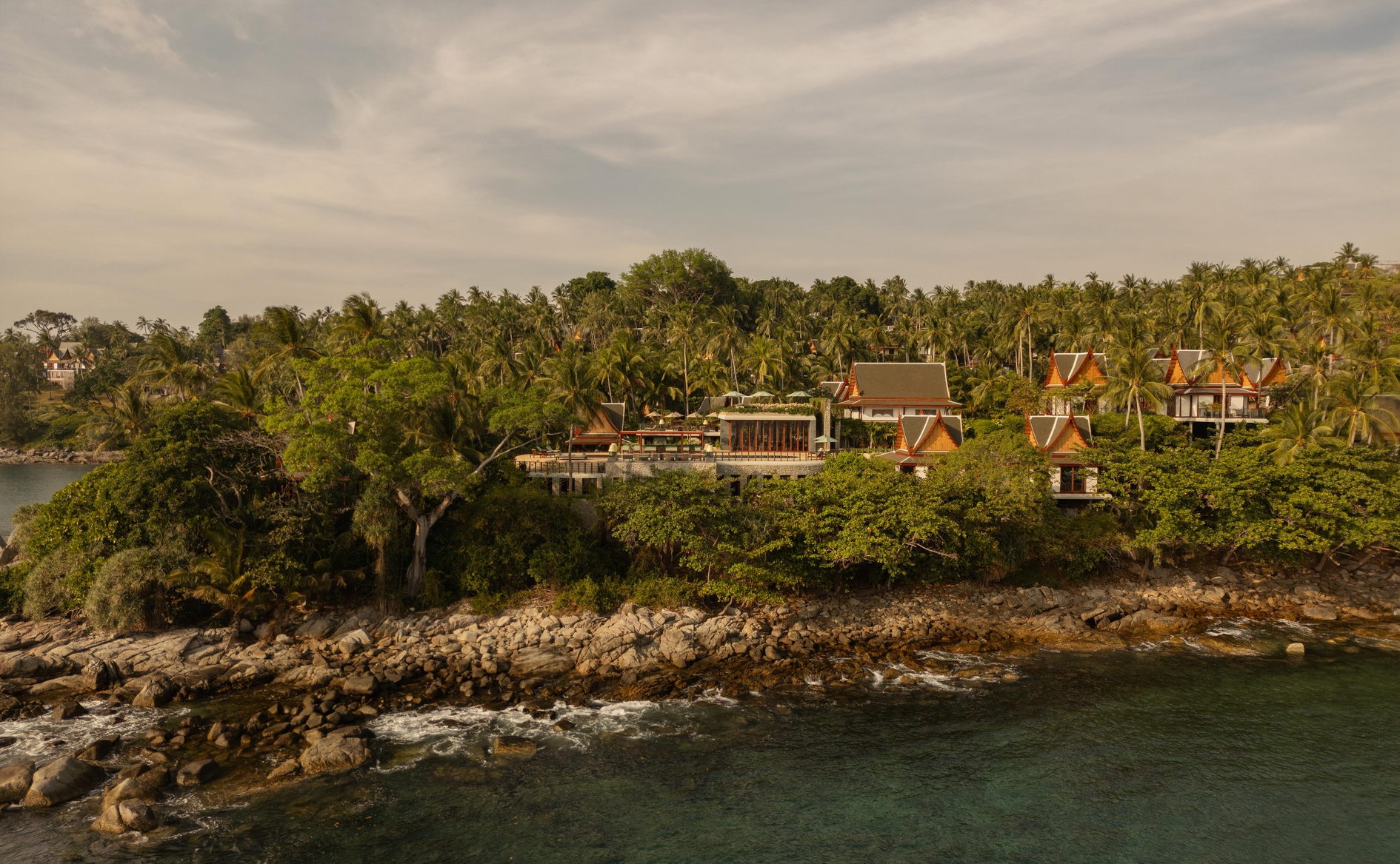
A short visual reference can help clients understand the atmosphere of a private-island arrival before they commit to the routing.
Getting In and Getting Around Without Losing a Day
A Philippines trip goes wrong in the gaps. The international flight lands late, the resort aircraft has already departed, the ferry is off for weather, and half a day disappears before the holiday has properly started. Treat access as part of the luxury product, not an administrative afterthought.
Start before ticketing. Check visa eligibility by passport, confirm current entry rules for that nationality, complete the required eTravel registration, and keep the confirmation with the person coordinating the journey, not only on the traveler's phone. That small discipline saves time when plans shift and someone else needs to step in.
Manila is still the main gateway for many high-end itineraries, and NAIA's terminals do not operate like one simple hub. Clark can help on selected routings, especially when Manila congestion or weather creates risk, but it is not a blanket replacement. Choose the arrival airport with the onward transfer in mind. Do not let the booking default decide for you.
Make the first island transfer a protected event
The first domestic connection deserves protection. Philippine Airlines and Cebu Pacific cover much of the core network, but public schedules are still vulnerable to airport congestion, rolling delays, and weather disruption. If a stay depends on a fixed arrival window, build the itinerary around the transfer that matters most, then fit everything else around it.
Private access changes the trip. Amanpulo's own aircraft is not a nice extra. It is central to how the resort works. Elsewhere, private aviation operators and helicopters can solve specific routing problems, but only when aircraft availability, operating permissions, and weather all line up. Use them selectively, not as a fantasy fix for every missed connection.
Ferries also need a realistic read. In the right corridor, on a calm day, they can be efficient and pleasant. They are not a national solution. If one ferry cancellation wipes out the day, the itinerary was poorly built. For every ferry segment, set the backup option, the luggage handling plan, and the latest acceptable departure time before the client ever leaves home.
A buffer night in Manila is often the smart move, especially after long-haul travel or before a resort flight that runs on a fixed schedule. Executive assistants should protect meetings, family events, and onward departures with a real recovery plan, not a hopeful chain of public connections.
Travelers comparing long-haul comfort can use this guide to find affordable Philippine business class while keeping the domestic routing separate from the international fare decision. A better seat helps on the transpacific or Middle East leg. It does nothing to protect the island connection.
Use data carefully
In 2025, Bureau of Immigration records counted approximately 5.94 million foreign visitors and 543,085 returning overseas Filipinos, for 6.48 million combined inbound arrivals, while preliminary visitor spending reached about PHP694 billion (2025 tourism arrivals and spending). Foreign visitor volume remained roughly 28% below the 2019 peak, so do not assume every route or airport is operating at the same rhythm.
The eTravel system, however, recorded approximately 5.865 million foreign visitor arrivals, lower than the combined immigration total. Categories such as cruise passengers, charter-flight travelers, diplomats, and foreign dignitaries may not appear the same way across both systems (arrival-data methodology). Use the right denominator before quoting arrival figures for airport staffing, transfer timing, or demand assumptions.
Here is where paid judgment matters. A high-touch advisor earns their fee by maintaining backup inventory, pressure-testing each transfer, and fixing problems while the client is still in the air. If you want to understand what a luxury travel advisor actually does, start with the recovery plan. In the Philippines, that is often the difference between a smooth arrival and a lost day.
Sample Itineraries for Honeymooners, Families, and Executives
The honeymoon route
Allow 10 nights for a Manila arrival, Amanpulo, and Pangulasian Island. Start with a city night at Raffles Makati or Shangri-La at the Fort, then use the resort's scheduled aircraft for the approximately 90-minute Amanpulo transfer. Give the couple several unstructured days before moving to Pangulasian, and include a private yacht day through the Bacuit archipelago.
Reserve the Amanpulo villa and aircraft availability early, then place the international arrival far enough ahead that a delay doesn't threaten the island connection. Couples considering a December celebration can use this honeymoon planning guide as a starting point, but the final decision should follow the chosen region's sea and weather profile.
The multi-generational family route
Build 8 nights around Balesin or a Visayan private estate, with separate villa configurations for grandparents, parents, and children. Balesin keeps the group within a controlled resort environment, while a Visayan base can offer more varied regional experiences. Add a Palawan extension only if the family accepts the extra transfer complexity and has enough downtime to make the change worthwhile.
The signature experience should be age-flexible, such as a private boat day with an early return, a guided culinary visit, or a marine outing divided into shorter sessions. Keep at least one full day without a scheduled excursion. Families don't need more activities. They need a trip that remains comfortable when one person wants the beach, another wants sleep, and a third wants to leave the villa.
The executive week
Use 5 to 6 nights with a city arrival at Raffles Makati or Shangri-La at the Fort, followed by two nights in Balesin on the resort's own schedule. Finish with one night at Nay Palad or BG Home for a contrasting atmosphere, but only if the final transfer doesn't compromise the departure.
For a CEO or executive assistant, the signature experience can be a private dining evening in Manila, a discreet helicopter or charter movement where feasible, or a tightly managed island day with a reliable return. Every flight should have a named fallback, every transfer should include luggage handling, and every hotel should know the traveler's arrival priority before the aircraft leaves.
HauteBlack arranges bespoke Philippine journeys through dedicated advisors, including private villas, preferred hotel benefits, first-class and helicopter transfers, private aviation, and concierge access. Visit HauteBlack to build a fewer-islands, better-coordinated itinerary around your dates, traveler profile, and tolerance for adventure.
Explore Our Guides

Signature Experiences