Haute Black Journal
Taste of Latin America: A Luxury Culinary Journey

Marlene Azeez
Director, HauteBlack
View all articles →
# Taste of Latin America: A Luxury Culinary Journey
Published July 27, 2026 by Marlene Azeez
You can do the obvious thing and book a few hot tables in Mexico City, Lima, and Buenos Aires, then call it a Latin America food trip. That's the fast way to spend a lot of money and learn almost nothing.
The better trip starts with a single conviction. The taste of Latin America is not one cuisine, it's a set of culinary identities that change by country, climate, and history. If you want the ultra-premium version, you need to choose the right destination for the palate you want, then layer in private access, the right season, and a route that doesn't flatten everything into one expensive sampler.
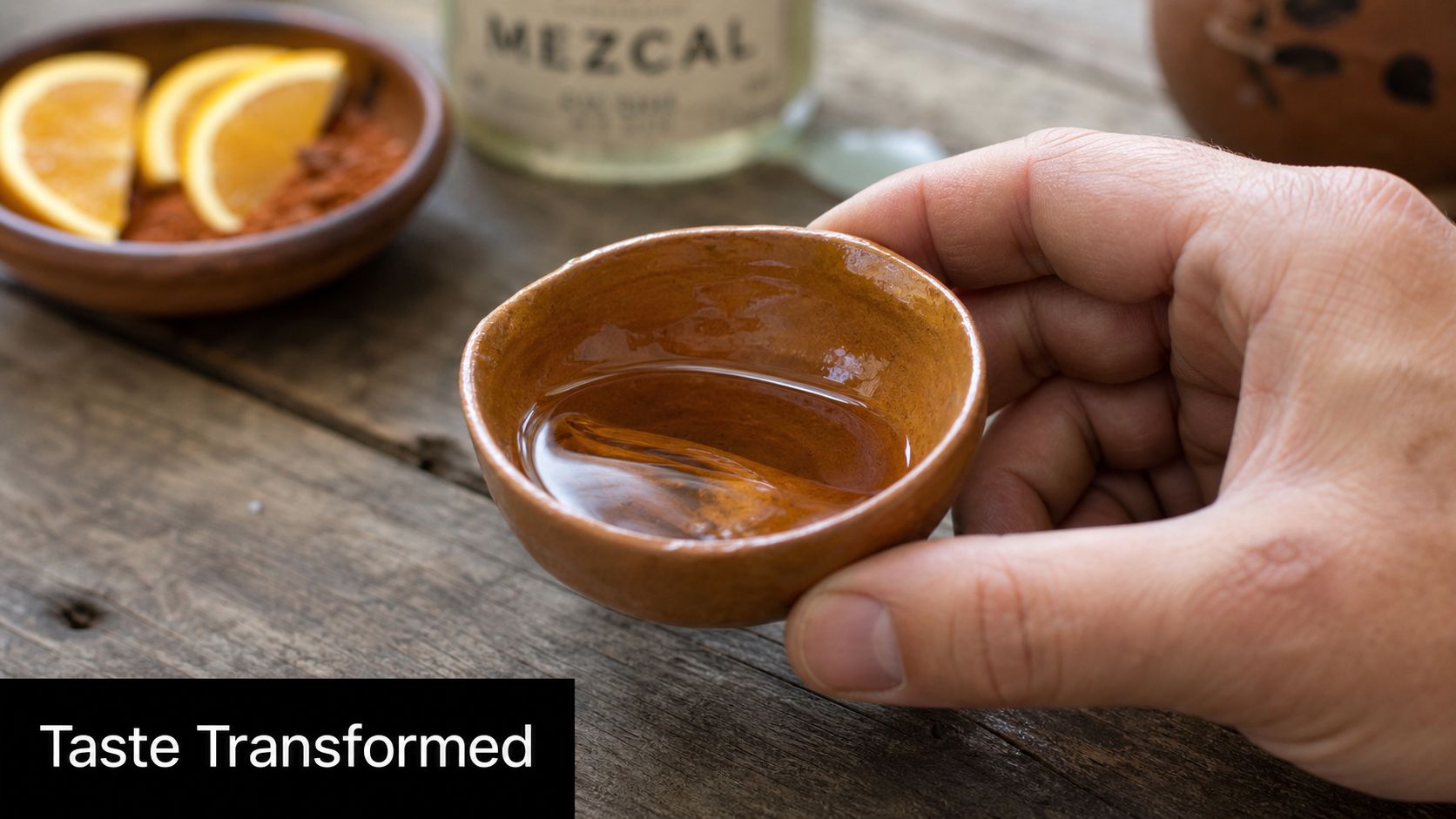
One dinner can make that clear. A private mezcal pairing in Oaxaca tastes nothing like a Nikkei tasting menu in Lima, and neither one tells you what a Brazilian churrasco, an Andean tasting menu, or a Caribbean tasting room will feel like. The mistake most travelers make is treating the region like a single theme. The right approach is more exacting, and far more rewarding.
A First Taste That Changes the Conversation
A good table in Latin America is rarely just a table. It's a controlled experience, often built around a chef's point of view, a producer's cellar, or a market that opens only because someone made the call in advance. That's why the best luxury food travel here feels intimate rather than performative.
Why generic samplers fail
A “Latin American tasting” that tries to cover too much usually misses the point. The region's culinary power comes from specificity, not summary. The best itinerary might be entirely Mexican, or entirely Peruvian, or built around one wine-led country in the Southern Cone.
Practical rule: If the trip needs a continent-wide sampler to feel complete, it's probably not well designed.
For UHNW travelers, the value is in depth. That means one region's kitchen language, one producer network, one clear set of reservations, and one private-access strategy that makes the trip feel rare. If you want breadth, take a longer journey and accept that each stop needs its own logic.
There's also a reason the language around this category keeps getting blurred. The historical palate of Latin America was shaped by centuries of exchange, so the “Latin” in the phrase doesn't mean one fixed flavor profile. It means layered, historical, and regionally distinct. That's exactly why a curated journey works better than a generic list.
A useful outside reference for travelers who like to understand how botanicals shape a drink program is discover botanical gin articles. It's a smart way to think about how flavor frameworks are built, especially when you're comparing Latin American spirits, herbs, and citrus-driven pairings.
What Latin American Taste Actually Means
The modern palate of the region was reshaped by the Columbian Exchange, which began in the early sixteenth century and still shapes what people taste today. Scholars treat it, alongside industrial agrofood, as one of the two most significant shifts in Latin American food history. The sensory balance changed too, especially in Mexico, where the conquest introduced sugar cane and pushed tastes away from pre-Hispanic bitterness toward sweetness, while also adding lime, tamarind, domesticated meats, cinnamon, clove, and pepper to the plate. Cambridge University Press on cooking in Latin America
The ingredient matrix matters more than the menu name
Latin American cuisine is anchored in a small, recognizable set of staples, including maize, beans, rice, potato, yucca, plantain, chiles, herbs, and salsas. That structure creates a shared flavor grammar across very different markets. Starch plus legume gives body and protein complementarity, while salsa, chile, and herb systems bring the freshness and heat that make the food feel alive.
This is why the region can feel consistent at a structural level and wildly different at the cultural level. The raw materials are familiar, but the cooking logic changes from place to place. A Peruvian kitchen, a Mexican regional restaurant, and a Brazilian grill may all rely on a similar backbone, yet the results are not remotely interchangeable.
Industrial food changed the everyday palate
The twentieth century brought another major shift. In Mexico, scholars note that a peasant diet of complex carbohydrates and vegetable proteins was largely replaced by an industrial one based on sugar and fats, and sweetness became the dominant flavor in industrial soft drinks and snack foods. That broader modernization mattered across the region, where processed foods such as canned goods, refined flour, sugar, and oils became widely available. Oxford academic volume on Latin American food history
That history is not abstract. It's part of why a serious tasting menu in Latin America should feel rooted, not engineered to look international. If a restaurant can't show you where its flavor logic comes from, it's probably dressing up a generic fine-dining formula in local language.
A great Latin American meal should feel local first, polished second.
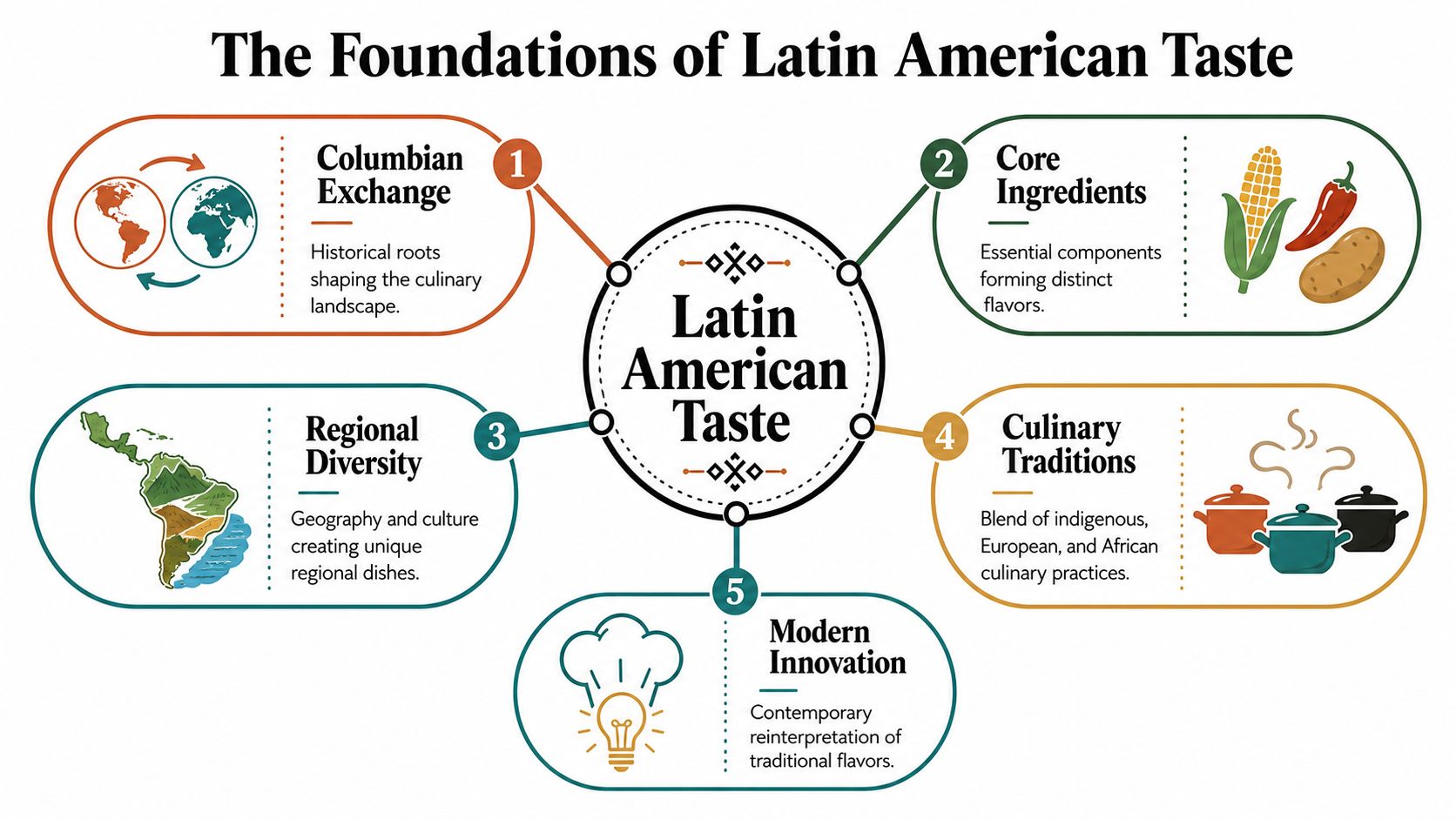
For travelers who want a visual framework, the concept of Latin American taste is best understood as history, ingredients, and tradition moving together, not as a single signature dish. That's the lens you should keep when evaluating every menu on your trip.
Seven Culinary Subregions Worth Traveling For
The smartest way to plan a food journey here is by subregion, not by continent. The point is to match the trip to the palate, the pacing, and the kind of luxury you want.
The comparison that matters
| Subregion | Flavor Logic | Signature Dishes | Luxury Fit |
|---|---|---|---|
| Mexican | Regional depth, chile, corn, smoke, acid | Mole, tacos, tamales, regional moles and market food | Best for travelers who want range and strong private-access potential |
| Andean | Altitude-driven ingredients, potatoes, corn, herbs | Potatoes, grains, stews, highland tasting menus | Best for travelers who want cultural depth and refined storytelling |
| Peruvian | Coastal brightness, Japanese and Andean influence, precision | Nikkei menus, ceviche, tasting-menu cuisine | Best for travelers who want serious fine dining |
| Brazilian | Grilling, tropical produce, Afro-Brazilian roots | Churrasco, seafood, regional stews | Best for travelers who want social, energetic dining |
| Caribbean | Spice layering, seafood, island heat | Fish, plantain, rum-driven pairings, local stews | Best for travelers who want relaxed glamour |
| Southern Cone | Wine-led dining, beef, seasonal produce | Asado, lamb, wine pairing menus | Best for travelers who want cellar-driven travel |
| Central American | Indigenous continuity, corn-based traditions, coastal produce | Tortillas, stews, plantain, market dishes | Best for travelers who want authenticity and fewer distractions |
Where the money is well spent
Mexico deserves more respect than the usual taco shorthand. If you want to understand its complexity, start with Oaxaca, Mexico City, Puebla, and Yucatán, then build from there. A traveler who only wants a highlight reel can stop at tacos; a traveler who wants the full story should look deeper, including ingredients that rarely make generic luxury lists. For a sharper dive into one of the more unusual corners of that story, browse insect cuisine in Mexico.
Peru is still one of the best answers for a high-end culinary trip because the fine-dining ecosystem gives you both precision and cultural layering. The country's Nikkei and Andean dining scenes make it especially strong for travelers who care about technique as much as ingredients. If you're pairing food with cultural depth, this Peru itinerary on Haute Black is the right model to study.
Brazil is different. It's about energy, hospitality, and a dining culture that feels broader and less serialized than the white-tablecloth circuit elsewhere. Argentina and Chile are the Southern Cone's obvious anchors, especially for wine-led travel, while the Caribbean is best when you want spice, island pace, and a looser rhythm. Central America and the Andes reward travelers who want continuity of Indigenous foodways rather than a polished international script.
The wrong move is trying to do all seven on one trip. The right move is choosing the one that fits the mood, then building around it.
When to Go for the Best Culinary Windows
Seasonality changes what a luxury trip can deliver. It affects what lands on the menu, how hard it is to book private rooms, and whether you're dealing with calm service or overworked restaurants that are stretched to the limit.
Weather and harvest shape the table
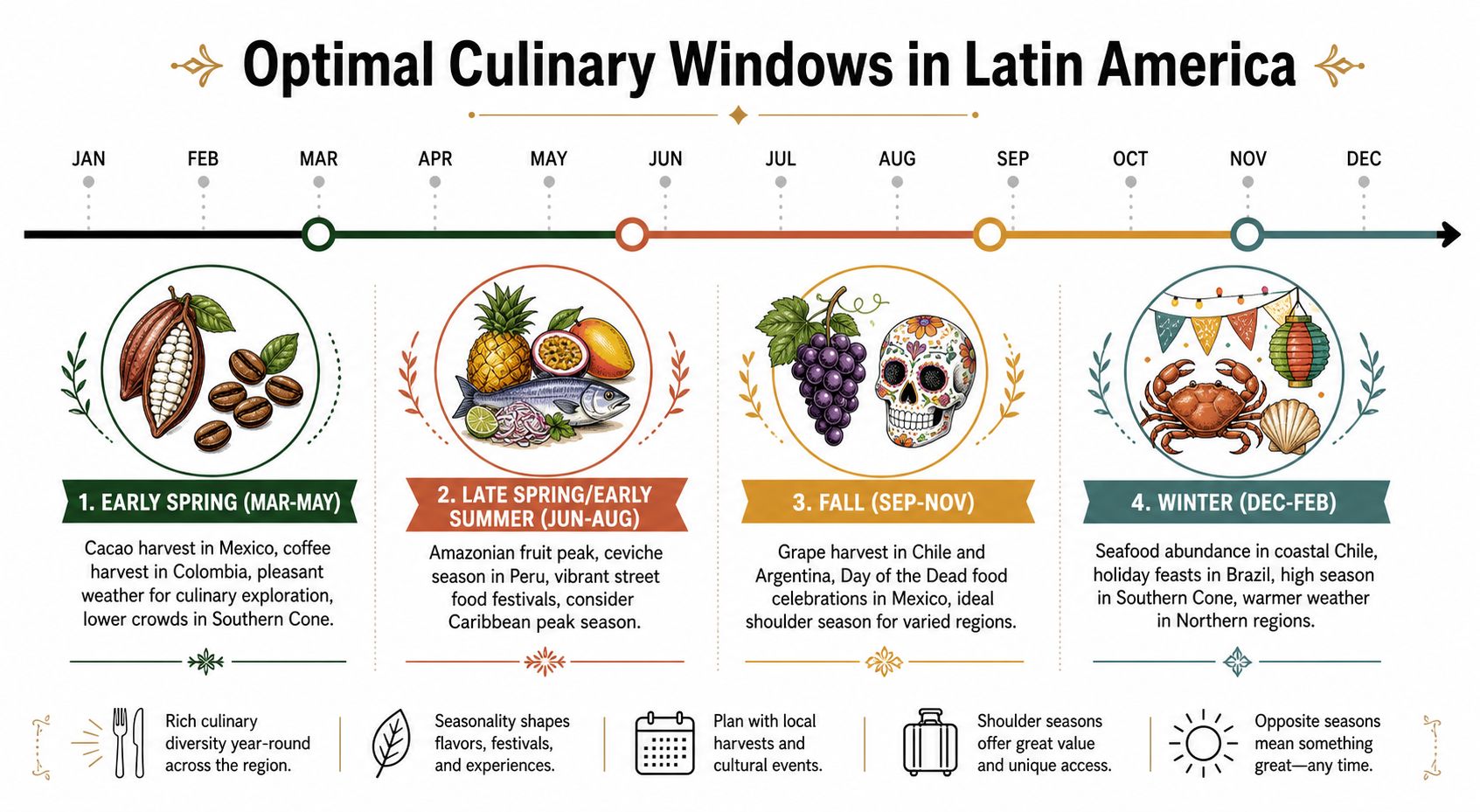
The clearest culinary windows sit around harvests, shoulder seasons, and the weather pattern of each market. In the Southern Cone, fall brings grape harvest energy in Chile and Argentina, which makes wine-led dining especially compelling. In Mexico, spring and autumn are the more forgiving windows for tasting-driven travel, while the busiest holiday periods can make private access harder to secure. The earlier historical section matters here because the region's cuisine is tied to local ingredients and seasonal rhythms, not just restaurant reputation.
The best booking strategy is simple. Go when the produce is strongest and the crowds are lighter. That usually means planning around harvest and avoiding the moments when every premium table is under pressure.
Overtourism changes the luxury equation
Some of the most famous food capitals are also the most fragile. A city can have excellent restaurants and still be a poor choice for a private culinary trip if reservations are thin, staffing is stretched, or the best kitchens are operating at maximum load. In those cases, secondary markets often deliver a better experience because they feel more relaxed and easier to stage.
Book for access, not for bragging rights.
That's especially true when you're balancing multiple stops. A well-timed trip to Lima, Buenos Aires, or Mexico City can work beautifully if the pacing is tight and the reservations are locked. But if you're trying to combine too many high-demand cities in one high-season window, the experience gets noisy fast.
For travelers comparing timing in Brazil specifically, the most useful planning reference is the best time to go to Brazil for luxury travel. It's the kind of destination that rewards precise timing more than people expect.
The right answer is not “go in high season.” The right answer is go when the kitchen is most expressive and the room is least stressed.
Bespoke Itineraries for the Way You Travel
A good itinerary starts with the kind of traveler you are. Romantic couples, multigenerational families, and collectors who want a sampler route all need different structures, and only one of those options is efficient.
The romantic route
For couples, the strongest pattern is a focused two-country trip with one culinary anchor and one secondary contrast. Peru works well because Lima gives you fine dining with real depth, and the Sacred Valley adds a cultural counterpoint. Pair that with a private wine estate in Mendoza if you want a second stop that slows the pace and shifts the texture of the journey.
That combination works because it gives you two distinct forms of luxury. One is chef-driven and modern. The other is nature-inspired and quiet. If you want romance, don't overpack the route. Give the trip room to breathe.
The family route
Families do best with properties that handle logistics gracefully and can support market tours, cooking classes, and private meals without making the day feel theatrical. The right hotel base matters more than people think, because the culinary experience is only as good as the transfer, timing, and private-space management around it. If the property can't support that rhythm, the food trip turns into a sequence of stressful pickups.
For a family-focused journey, look for a single-country design with one primary city and one nearby cultural area. That keeps energy high and avoids the fatigue that comes from too many airport transitions.
The sampler route, honestly
A multi-destination sampler sounds intriguing and usually isn't. You lose time in transit, you dilute the regional identity, and you force comparisons that shouldn't exist. If a traveler insists on variety, I'd rather design a two-country route with a clean thematic distinction than a four-country rush that tries to do everything.
If you're planning to travel with hot dishes or tasting components between transfers, a practical reference like travel food warming gear can be useful. In reality, though, the better solution is to stop overengineering the transfer plan and let the destination kitchens do the work.
For a more intimate format, this private chef dinners and bespoke dining guide shows the level of personalization that belongs in a trip like this. Use that standard, not a generic restaurant list, as your benchmark.
Private Access and the Real Luxury Differentiator
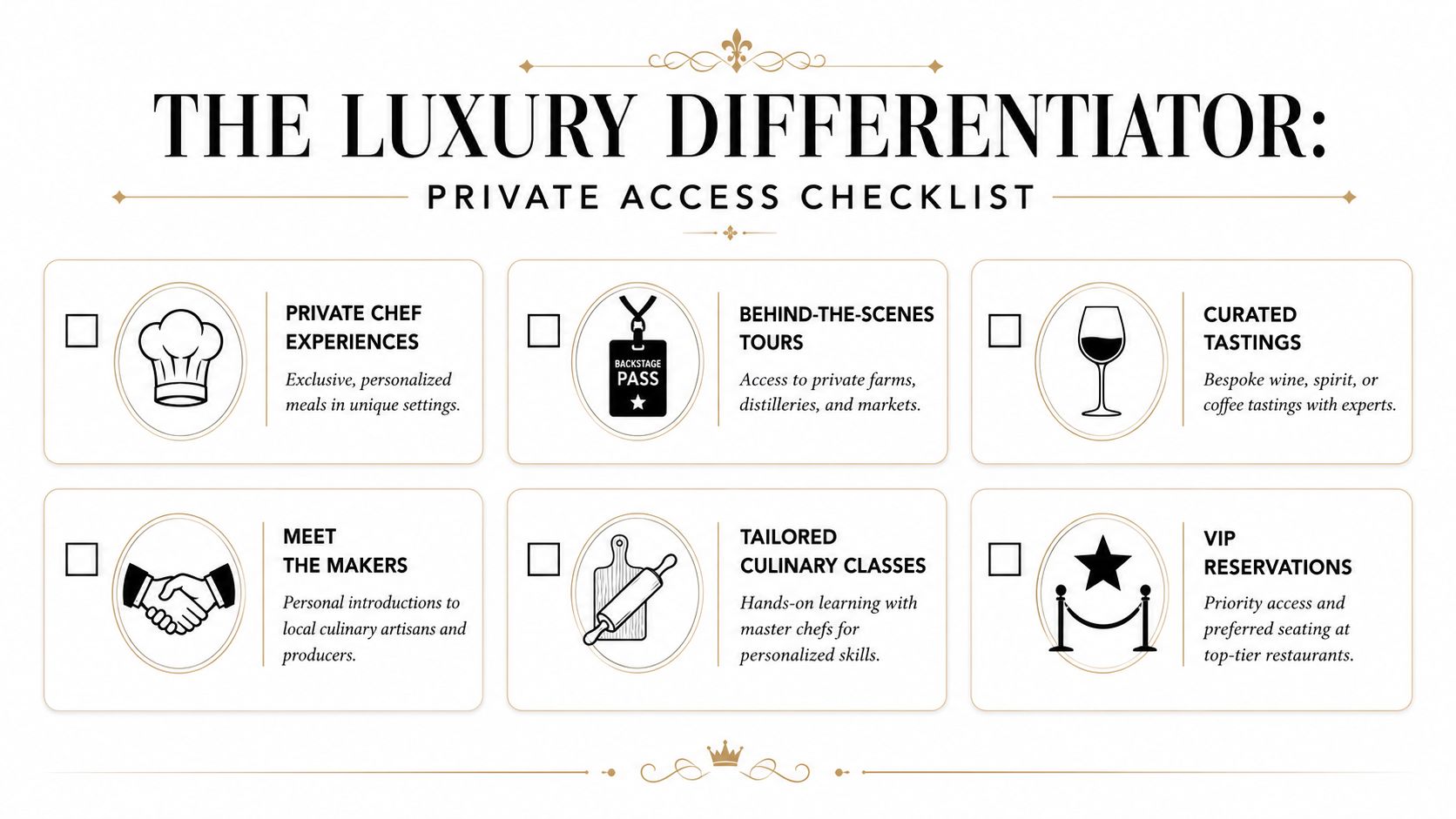
At this tier, the difference between expensive and exceptional is private access. A tasting menu is easy to book. A closed-door experience with the chef, the producer, or the distiller is the thing that changes the trip.
What access should look like
Private chef tables, after-hours market visits, harvest participation, and closed-door spirit tastings are the experiences worth paying for. So are producer introductions that let you meet the people behind the ingredients instead of just reading a menu about them. If a property or advisor can't arrange those moments, you're not getting a luxury culinary journey, just a premium reservation.
The best relationships matter because they open the room before the room is publicly sold out. That's where preferred-partner status, local producer ties, and a real advisor network become more than marketing language.
Why the advisor matters
A Virtuoso-affiliated agency with strong property relationships can change the shape of the trip. Better rooms, smoother arrivals, and more flexible access are not small details when you're trying to stage a food-focused journey across multiple cities. They're the difference between a trip that feels stitched together and one that feels perfectly integrated.
The highest-value culinary experiences are usually the ones that never make it onto a public booking engine.
That's the standard to use. If you're comparing options, ask what can be arranged privately, what can be done before opening hours, and what can be customized at the producer level. Those answers tell you more than a restaurant ranking ever will.
VIP Booking Tips and What to Watch For
Start with one question. Which culinary identity do you want to spend time with? If the answer is Mexico, Peru, or the Southern Cone, build around that and stop chasing a continent-wide checklist.
Next, book earlier than you think you need to. The best private dinners, chef tables, and producer visits disappear first, especially in the most famous cities. Ask your advisor what's private, what's preferred, and what's only publicly available, because those are three different experiences.
Watch out for three mistakes. Over-itinerarying kills the trip. Ignoring seasonality makes the menus weaker. Chasing famous restaurant names instead of chef relationships leaves you with a polished but generic experience.
The right trip should include one strong culinary identity, one or two private-access moments, and a pace that leaves room for spontaneous discoveries. Anything more complicated usually dilutes the value.
Haute Black designs these trips for travelers who want the authentic version of Latin America, not the watered-down one. If you want chef-led access, the right properties, and a route built around your palate instead of a listicle, visit Haute Black and start planning it properly.
Explore Our Guides


Signature Experiences


