Haute Black Journal
Private Jet Charter Cost Explained and What Drives It

Marlene Azeez
Director, HauteBlack
View all articles →
Most private jets cost about $2,300 to $17,000 per billable flight hour, while VIP airliners can reach $18,000 to $23,000 per hour. Your final private jet charter cost is mission-based, however, so the aircraft, route, positioning, airport, timing, and operational fees matter as much as the hourly rate.
You may be looking at a quote right now that seems surprisingly high, or comparing two aircraft for the same journey and wondering why the difference is so wide. A short regional flight in a turboprop can sit near the lower end of the market, while a long international trip in a large-cabin aircraft can move into a completely different pricing category.
The easiest way to understand charter pricing is to stop treating the hourly figure as the final price. Think of it as the rate for using the aircraft during the flight itself. Your actual itinerary is a complete mission, and that mission may include repositioning, airport handling, crew expenses, taxes, permits, and weather-related services.
Introduction to Private Jet Charter Cost Today
A first-time client might request a light jet for a short domestic journey, then receive a quote that looks reasonable until another operator presents a much higher figure for what appears to be the same flight. Both operators may be acting logically. One aircraft could already be positioned near the departure airport, while the other must fly empty to collect the passengers. One quote might include taxes and handling, while the other shows only the base charter charge.
That difference explains why private jet charter cost rarely fits into a single universal price. The aircraft category sets the starting point, but the route and operating conditions determine how the quote develops. A useful market benchmark places hourly rates broadly between $3,500 and $18,000 or more, with turboprops and light jets at the lower end and VIP airliners at the top, according to this private plane rates overview.
The shift from sticker price to mission price
Commercial aviation usually presents a fare for a seat on a scheduled flight. Charter pricing works more like commissioning a customized service. You aren't buying a standard product. You're asking an operator to make a specific aircraft, crew, airport plan, and schedule work for your journey.
That mission may require a larger jet if the route can't be completed without a fuel stop. It may require a different departure airport if the preferred field has limited slots. A winter trip could need de-icing, while an international itinerary may involve customs coordination and permits.
The difference between the advertised hourly number and the completed invoice can be substantial. One industry estimate notes that ancillary operational fees may raise total trip cost by 20% to 40% beyond the quoted hourly rate in some situations, as described in this charter cost breakdown.
What this guide helps you judge
You'll learn how operators build a quote, why aircraft class changes the economics, and which fees deserve a direct question before you approve an itinerary. You'll also see route examples that translate abstract hourly rates into practical one-way mission costs.
HauteBlack's editorial coverage is designed for travelers who want luxury without guesswork. A clear quote should explain what you're paying for, what could change, and which choices can protect both comfort and budget.
How Private Jet Charter Pricing Really Works
The base calculation is straightforward. An operator considers the aircraft's billable flight time, applies the aircraft's hourly rate, and then adds the operational items required to complete your itinerary. The complexity begins because billable flight time isn't the same thing as the aircraft's total mission cost.
Consider reserving a private villa. The nightly rate tells you the cost of occupying the property, but it may not include staffing, transfers, special meals, event setup, or additional services. A charter quote follows a similar pattern. The aircraft rate is the accommodation, while the rest of the itinerary determines the complete experience.
The basic pricing sequence
1. Select a capable aircraft. The operator matches passenger needs, luggage, range, runway requirements, and comfort expectations to an available aircraft category.
2. Estimate billable flight time. This reflects the planned airborne mission and can differ according to routing, aircraft performance, weather, and operational planning.
3. Check aircraft positioning. If the aircraft isn't based near your departure airport, the operator may need to fly it empty into position and later return or reposition it.
4. Add trip-specific charges. Landing and handling fees, crew accommodation, de-icing, taxes, permits, and other services depend on the airports, dates, and route.
5. Present the complete quote. A transparent proposal should distinguish the base aircraft charge from the items that are fixed, estimated, or subject to change.
The quoted rate therefore answers only one question, what does it cost to use this aircraft for the flight? It doesn't automatically answer what the whole mission will cost.
Why the same aircraft can produce different quotes
An aircraft might be economical for one route and inefficient for another. A smaller jet can be an excellent choice for a regional flight, yet become a false economy if it needs a fuel stop or can't carry the required passengers and luggage nonstop. A larger aircraft may have a higher hourly rate but complete the mission more efficiently.
Date matters as well. Aircraft availability, holiday demand, major events, airport congestion, and crew scheduling can all influence the quote. The aircraft itself hasn't changed, but the operator's cost and scheduling risk have.
The practical question isn't “What is the cheapest hourly rate?” It's “Which aircraft can complete this mission cleanly, with the fewest avoidable complications?”
The following video offers a visual introduction to the private aviation experience and the decisions that shape a charter.
Aircraft Type and Hourly Rates That Shape Your Quote
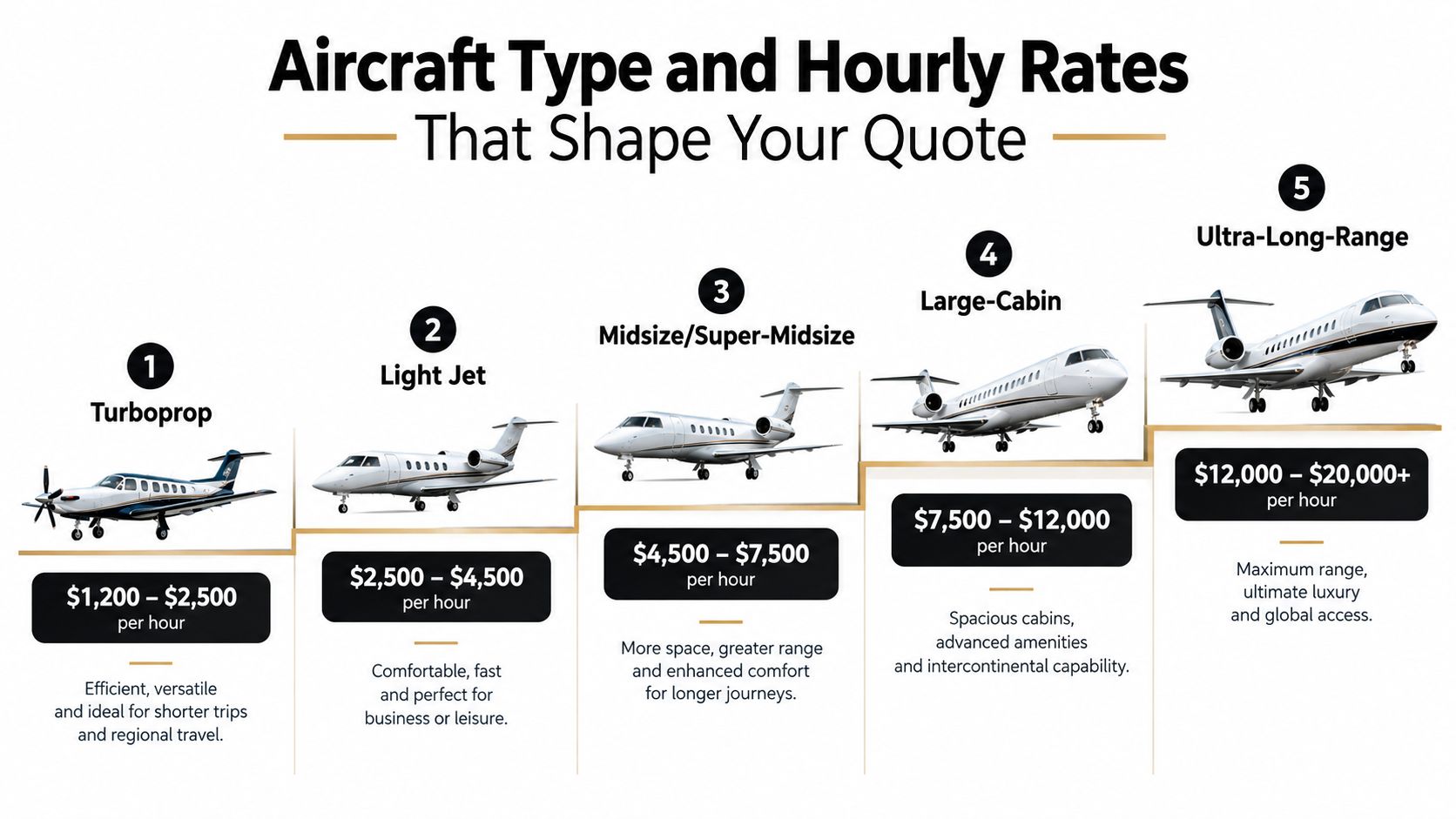
Aircraft class is usually the largest technical driver of the hourly rate. A light jet and an ultra-long-range jet aren't simply different versions of the same product. They have different fuel requirements, crew needs, maintenance profiles, insurance exposure, cabin systems, and capital costs.
Published benchmarks place light jets around $2,900 to $3,500 per flight hour, while ultra-long-range jets often sit around $10,000 to $14,000 per hour, according to this private jet pricing guide. The increase isn't linear because range and cabin category require more than additional seats.
Starting with the smallest capable aircraft
Turboprops generally occupy the lower end of the market and can make sense for short routes where speed and cabin size aren't the main priorities. Light jets add a faster, more familiar private aviation experience for smaller groups, but they still have practical range limits.
Midsize and super-midsize aircraft offer a useful balance for longer domestic missions. They provide more cabin space and range, but their higher fuel burn and operating requirements also raise the hourly quote. Large-cabin jets bring greater comfort and range, while ultra-long-range aircraft are designed for demanding international missions where nonstop performance matters.
A useful sizing rule is simple:
Choose the smallest aircraft that can complete the mission comfortably and safely without a forced technical stop.
That doesn't mean choosing the smallest cabin available. Passenger count, luggage, runway conditions, weather, and fuel reserves all affect the actual aircraft requirement.
Why range can change the entire budget
Suppose a light jet appears to fit your passenger count. If the route, headwinds, baggage load, or reserve requirements make a fuel stop necessary, the itinerary may take longer and become less convenient. You may also find that a midsize or super-midsize aircraft is the more sensible choice because it can complete the journey nonstop.
An operator may therefore recommend a more expensive category not to upsell the trip, but to avoid a poor mission fit. The right comparison is the total itinerary, not the hourly rate in isolation.
For a closer look at how range varies by aircraft category and model, see this guide to private jet range.
The cost logic behind larger cabins
Larger aircraft consume more fuel and often require more complex crew, maintenance, and ground support. They also carry greater insurance and depreciation burdens. Those costs appear in the hourly rate, which is why moving from a light jet to an ultra-long-range aircraft can create a sharp jump rather than a modest upgrade.
Cabin preferences matter too. A traveler might value a stand-up cabin, a separate sleeping area, a larger galley, or more room for a group. Those features can justify the higher class when the journey is long enough to use them.
The strongest procurement decision is usually a mission match. Specify the route, passenger group, luggage, nonstop preference, and desired cabin experience first. Then compare aircraft that meet those requirements.
Hidden Fees That Change Your Final Invoice
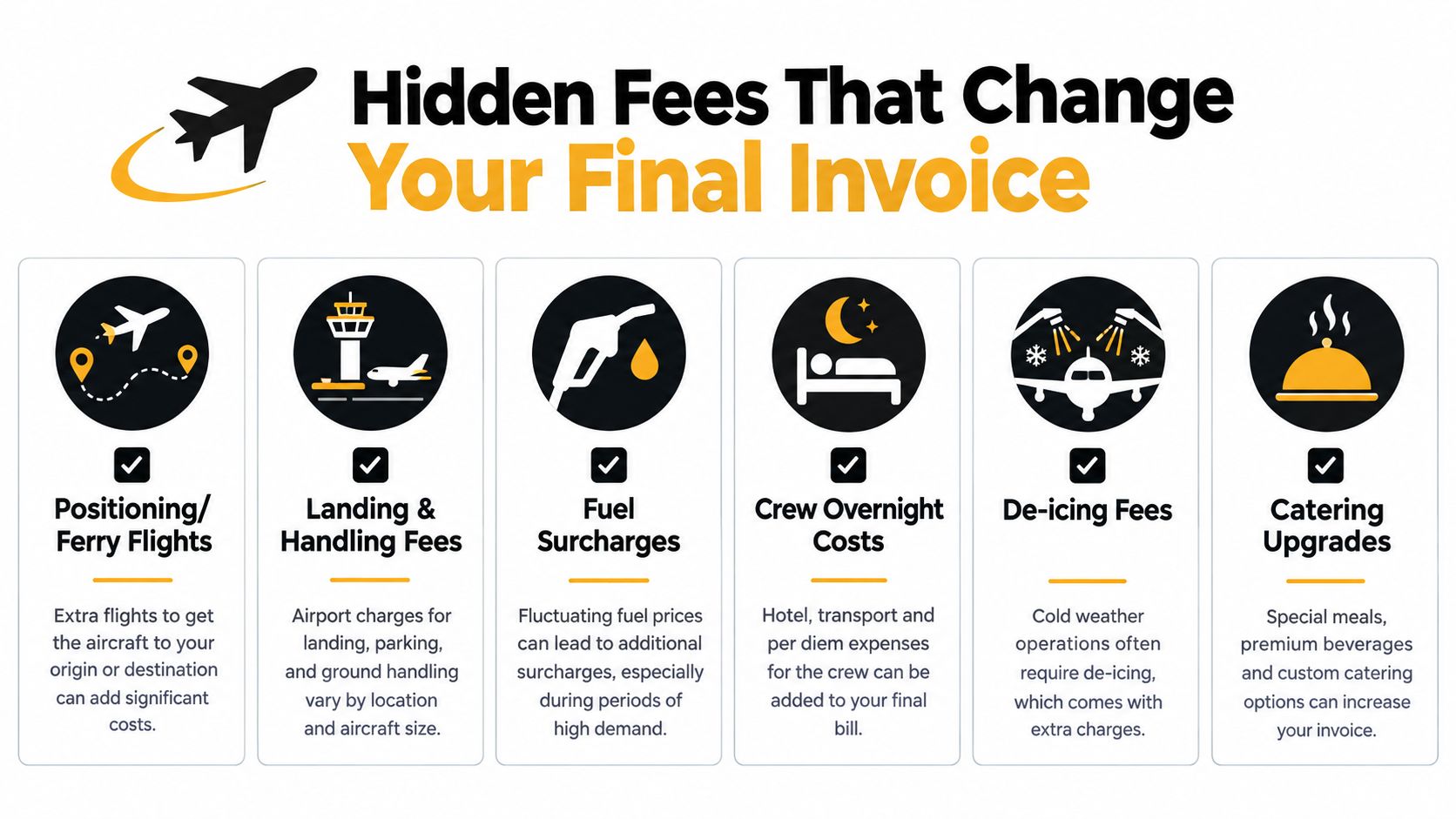
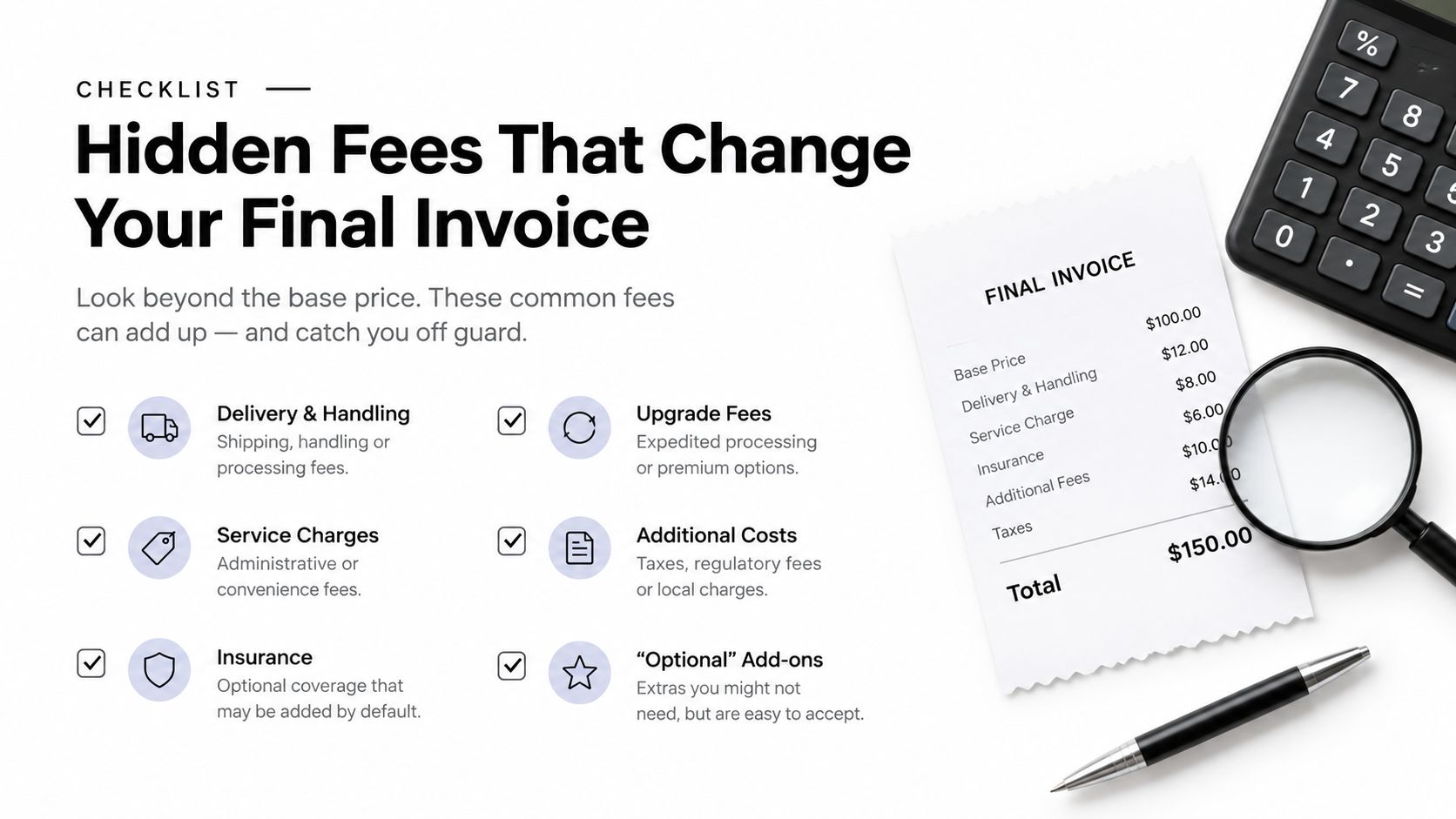
A base quote is only the first layer of the invoice. The final private jet charter cost can rise because the operator must move the aircraft, secure airport services, schedule the crew, manage weather conditions, and comply with domestic or international requirements.
Positioning and airport charges
Repositioning is one of the most misunderstood charges. If your selected aircraft is based elsewhere, it may need to fly empty to your departure airport. The operator still incurs fuel, crew duty time, maintenance exposure, and scheduling disruption even though no passenger is onboard.
Airport charges vary according to aircraft weight, congestion, slot availability, and service level. Premium FBO handling, landing fees, overnight parking, and international departure costs may all appear separately. A popular airport at a busy time can be much more expensive than a nearby alternative.
Crew and weather-related services
A crew may need overnight accommodation if the itinerary doesn't allow them to return immediately. Delays can create additional duty-time or standby requirements. International journeys may also require customs processing, permits, and other administrative arrangements.
Winter introduces another variable. De-icing may be required before departure, and the cost depends on the aircraft and airport conditions. Peak dates and short-notice bookings can also produce surcharges because the operator has fewer scheduling options and must manage intense demand.
In the United States, domestic charter typically carries a 7.5% Federal Excise Tax, making tax treatment a meaningful part of the budget rather than a minor adjustment, as explained in this charter pricing guide.
Why timing changes the quote
Private aviation pricing is event-sensitive. The same route and aircraft category may carry a different price during a holiday, a major event, winter weather, or a period of limited aircraft availability. The aircraft category stays the same, but the operator's ability to schedule it efficiently changes.
That is why a quote can rise sharply even when nothing about the cabin has changed. A last-minute request may require an aircraft to be repositioned urgently, while a peak-date itinerary may force the operator to accept an inefficient schedule.
Levers that reduce avoidable charges
You can often improve the economics without sacrificing the private experience.
- Offer a flexible departure window: A modest change in timing may help the operator avoid a costly aircraft move or crew complication.
- Compare nearby airports: An alternate airport may have less congestion, fewer slot restrictions, or lower handling premiums.
- Request an itemized quote: Ask which charges are included, which are estimates, and which may change with weather or airport decisions.
- Clarify taxes and international fees: Domestic and international missions have different obligations, so the proposal should state the treatment clearly.
- Ask about peak-date exposure: Confirm whether holiday, event, standby, de-icing, or overnight charges could apply.
A detailed quote isn't bureaucratic overhead. It gives you control over the choices that shape the final invoice. For context on the broader economics behind operating a private aircraft, review this guide to private jet maintenance costs.
Real World Price Examples by Route and Aircraft
Route examples make the mission-based model easier to see. A short turboprop journey may cost thousands rather than tens of thousands, while a transcontinental or intercontinental charter reflects aircraft class, range, crew planning, and repositioning on a much larger scale.
A published domestic example places a short turboprop hop at about $6,700 one way, while a transcontinental large-cabin flight can reach $50,000 or more. International missions generally range from $75,000 to more than $120,000 for transatlantic and intercontinental charters, according to this private jet charter pricing guide.
| Mission Type | Typical Aircraft | Illustrative One Way Cost |
|---|---|---|
| Short domestic hop | Turboprop | About $6,700 |
| Transcontinental journey | Large-cabin jet | $50,000 or more |
| Transatlantic or intercontinental mission | Long-range or ultra-long-range jet | $75,000 to more than $120,000 |
Short turboprop hop
The turboprop example shows why an hourly rate alone can mislead. The flight may be short, but the total quote still reflects aircraft availability, airport services, crew planning, and taxes where applicable. Turboprops can offer an efficient solution when the route is regional and passengers don't require the speed or cabin volume of a jet.
Transcontinental large-cabin mission
A large-cabin aircraft becomes more logical when the route is long, the passenger group is larger, or nonstop performance matters. The higher figure reflects the aircraft's fuel burn, range capability, cabin systems, crew requirements, and potentially more expensive airport handling.
Two city pairs with similar mileage can still produce different quotes. Wind, route restrictions, aircraft positioning, airport congestion, and date demand all affect the mission plan.
International charter
Long-haul international travel shifts the pricing mindset further away from a simple hourly calculation. The aircraft must support the range, while the operator manages permits, customs, crew duty requirements, international handling, and other route-specific obligations.
The most useful question isn't “What does this jet cost per hour?” It's “What will this complete itinerary cost, with every operational requirement included?”
Smart Ways to Lower Your Private Jet Charter Cost
Cost control doesn't require turning a luxury trip into a compromise. It requires choosing which elements are flexible and which are essential. A traveler who needs a fixed departure time and nonstop flight has different options from someone planning a relaxed getaway.
Start with aircraft discipline
Ask the advisor to compare the smallest aircraft that meets the mission with the next larger category. If the smaller aircraft requires a fuel stop, compare the time and inconvenience against the larger aircraft's complete quote. The cheapest hourly rate isn't always the lowest total cost.
For a short route, a turboprop or light jet may be sensible. For a longer domestic mission, a midsize or super-midsize aircraft may offer the cleaner balance. Ultra-long-range aircraft should be reserved for missions that need their range or cabin capabilities.
Use flexibility strategically
Empty-leg flights can offer attractive pricing when an aircraft already needs to move between destinations. The trade-off is schedule control. Departure times, routing, and even availability may be limited, so empty legs suit flexible leisure plans better than time-critical business travel.
Airport flexibility can also reduce positioning and handling costs. Ask your advisor to compare the preferred airport with practical nearby alternatives, then weigh the ground-transfer difference against the aviation savings.
Match the program to your travel pattern
Memberships and jet card programs may appeal to frequent travelers who value predictable access, service consistency, or simplified booking. They can be less suitable if you fly irregularly or need a narrow set of routes, so examine commitment terms, availability rules, cancellation conditions, and the way fees are calculated.
Shared charters can spread the cost across travelers, but they reduce control over the guest list, timing, and routing. They're best when the group already aligns on the itinerary.
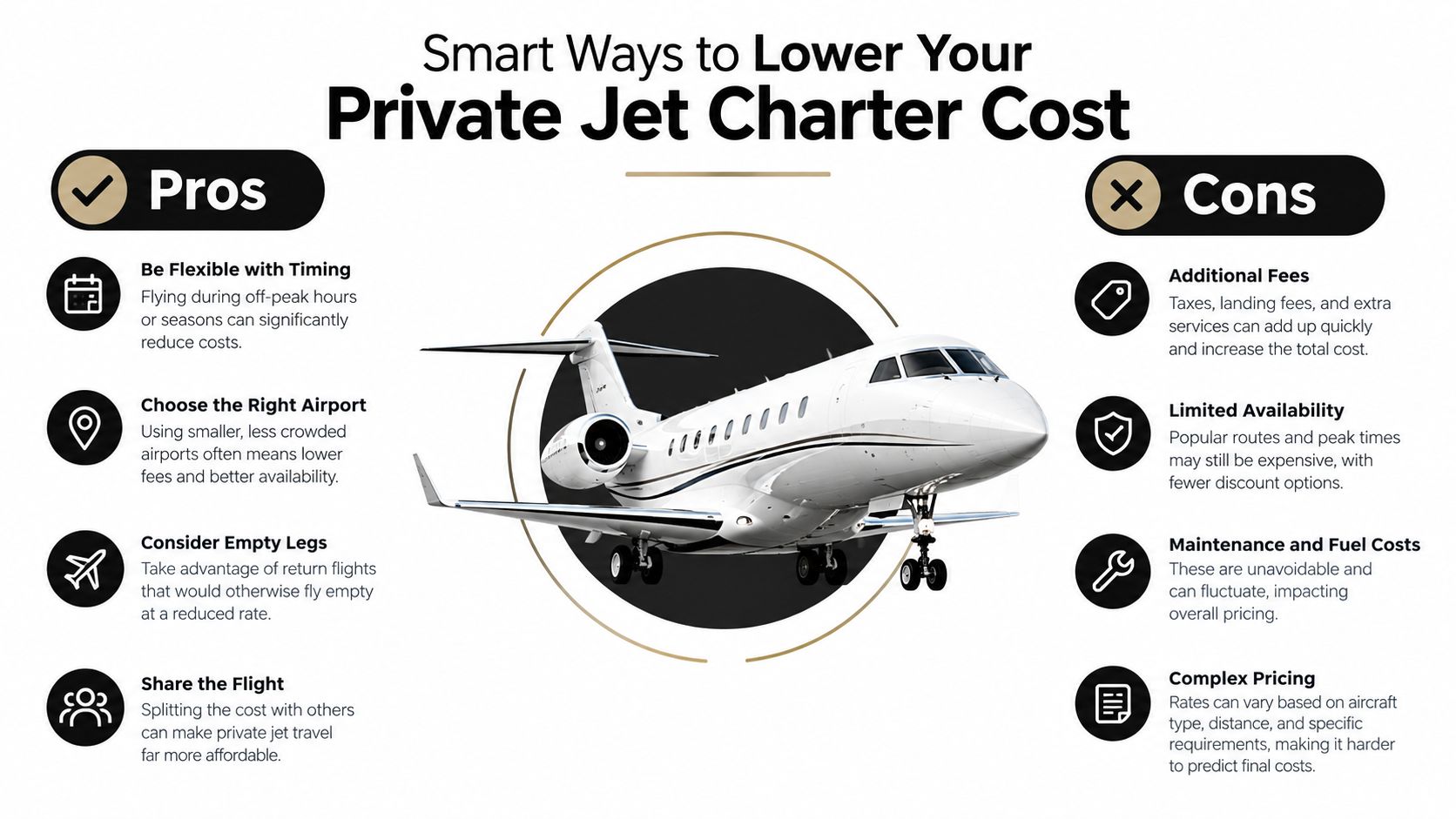
A sensible decision framework is:
- Prioritize mission essentials: Protect nonstop capability, arrival airport, or departure time if those features matter most.
- Trade comfort carefully: Consider a smaller aircraft only when the range and passenger requirements remain appropriate.
- Price the complete itinerary: Compare all-in quotes instead of hourly figures.
- Use flexibility where it has value: Shift timing or airport choice before compromising safety, suitability, or a smooth arrival.
Booking With Confidence and Next Steps
A confident charter decision starts with a clear mission brief. State the route, travel date, passenger count, luggage needs, nonstop preference, cabin expectations, and acceptable airport alternatives before comparing aircraft.
Then ask for an itemized proposal that identifies the aircraft category, billable time, positioning, landing and handling charges, crew expenses, taxes, permits, de-icing exposure, and any peak-date surcharge. The operator should also explain which elements are fixed and which could change before departure.
The most important principle is simple: match the aircraft to the mission, then evaluate the complete trip price. A lower hourly rate can lose its advantage if the aircraft needs a fuel stop or expensive repositioning. A higher rate may deliver better value when it completes the route nonstop and avoids operational complications.
For a practical planning reference, consult this executive guide to private jet flight booking. HauteBlack can also connect luxury travelers with advisor-led planning, Virtuoso benefits, Haute Jets aviation services, private transfers, villas, and itineraries.
HauteBlack helps travelers coordinate bespoke journeys that combine private aviation, VIP hotel benefits, private villas, transfers, dining, and destination planning. Visit HauteBlack to discuss your route, compare aircraft and mission costs, and build a seamless itinerary around the experience you want.
Explore Our Guides


Signature Experiences