Haute Black Journal
Private Island Vacation Rentals: The Ultimate Luxury Guide

Marlene Azeez
Director, HauteBlack
View all articles →
Private island vacation rentals aren't rare anymore. They're a measurable luxury category, with a global market estimated at USD 5.2 billion in 2024 and projected to reach about USD 10.5 billion by 2033 at a 7.9% CAGR (Dataintelo). That growth tells you something important, the game has shifted from fantasy marketing to operational reality, and the islands that win now are the ones that can run cleanly.
The old mistake is still common. Buyers and assistants fall for aerial shots, white sand, and a glossy villa tour, then discover that power is fragile, water is expensive, transport is awkward, and the staff can't support the guest count. The best private island vacations are not about how remote a place looks, they're about whether the island can deliver comfort, privacy, and control without collapsing under its own logistics.
The Rise of Private Island Vacation Rentals
Private island rentals have moved from insider gossip to a serious luxury booking category. The market now spans everything from lower-friction entry points to full buyouts, and that range is why discerning travelers treat it as a planning decision, not a novelty. By 2021, one major island-rental agency was advertising 500 islands for sale and 250 for rent, with rentals starting as low as $2,000 per week (Dataintelo).
What changed for buyers and assistants
Demand opened the door, but better operations kept the category in play. UHNW travelers expect the same discipline they would demand from a city penthouse or flagship resort, only now the setting is remote and the margin for error is smaller. They want a full-property buyout, staff who understand the household rhythm, and infrastructure that holds up when children, grandparents, security, and rigid schedules all arrive at once.
Reliability now matters more than romance. Analysts at Dataintelo note that North America and Europe account for the largest shares of global revenue in the market report, which matches where demand is strongest, in the Caribbean, Mediterranean, and North America. Those regions already speak the language of high service standards, so the better properties there are judged on execution, not just scenery.
Practical rule: if the pitch focuses only on seclusion, you are looking at marketing, not a buyout-ready property.
What you should expect from a serious property
A real private island rental should feel commercially managed, even when the experience is intimate. Transfers should be planned, guest handling should be clear, dining rules should be spelled out, and weather contingencies should already be in place. The island should behave like a temporary private hotel, because that is how you keep a large group comfortable without chaos.
The operational side is what separates a pleasant stay from a disastrous one. Power backup, water supply, waste handling, transport coordination, and staff capacity all need to work before anyone steps on the boat or plane. A beautiful island with weak infrastructure becomes a problem the moment the guest list gets complicated.
That is the shift in the category. The islands that matter now are the ones that can deliver privacy, comfort, and control while the logistics stay invisible to the guest.
Understanding the True Cost of Private Island Stays
Headline rates only tell you what the island costs to hold. Private island vacation rentals live in a different cost structure from villas because inventory is scarce, staffing is heavier, and weak infrastructure can drain margin fast. One industry source says nightly rates in the Bahamas can run from about $5,000 to $75,000, while full-service estates with staff and water toys can exceed $50,000 per night (Izlandz). That is the visible bill. The expense sits underneath it.
Base rate is only the starting point
A serious budget has to include the services that make an island usable. Staff, boat movements, power, water, and waste handling are integral to the operating core. The same industry source estimates occupancy at only 15% to 25%, which is why the economics depend on high rates rather than hotel-style turnover, and why a $5,000-per-night island at 20% occupancy can still generate about $365,000 in annual gross revenue. That math only works if operating costs are tightly controlled.
| Cost Category | Entry-Level ($10K-$30K/night) | Mid-Tier ($30K-$75K/night) | Ultra-Luxury ($75K-$150K+/night) |
|---|---|---|---|
| Base rental | Smaller island, simpler villa setup, fewer staff layers | Larger footprint, more suites, stronger service team | Fully staffed compound, privacy-first estate model |
| Staffing | Lean team, likely chef and housekeeping | Expanded house staff, boat support, security | Dedicated household-style crew, specialist service roles |
| Transport | Boat transfer or scheduled aircraft coordination | Private boat, seaplane, or helicopter options | Complex multi-leg transfers, multiple arrival windows |
| Utilities | Basic generator or utility-backed service | Higher fuel and water usage exposure | Heavy infrastructure demands, backup systems expected |
| Hidden operating costs | More visible on the final invoice | Often bundled, but not always transparently | Material, especially for power, water, and logistics |
Budget rule: if the quote doesn't itemize transport, utilities, and staffing, assume the final invoice will be meaningfully higher than the headline rate.
Why hidden infrastructure costs matter
Remote islands can carry a heavy infrastructure bill. In diesel-heavy systems, electricity can be priced around $0.45 per kWh, with excess usage bills often running $100 to $200 for smaller villas and exceeding $1,000 for larger estates (Visit Turks and Caicos). That makes air-conditioning, water systems, and generator discipline a real operating lever, not background noise.
The smart move is to ask what is included before you ask how pretty the villa is. A clean cost model should cover staffing, power, water, waste removal, transfers, and any jurisdiction-specific fees. If you are planning for a principal, send the property manager a line-item request and assume nothing is bundled unless it is written down.
Booking Logistics and Operational Essentials
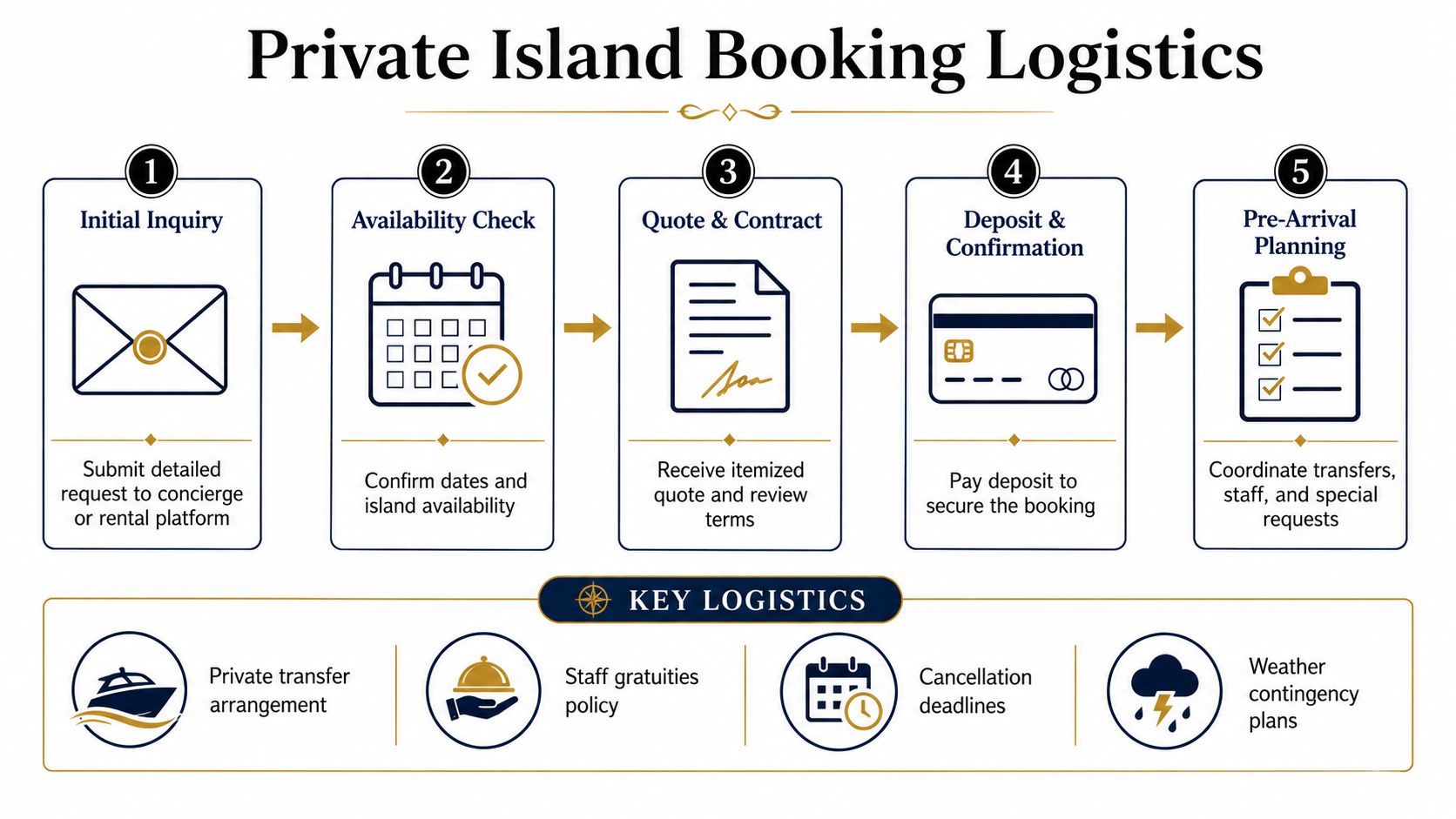
Private island buyouts reward early planning and punish casual booking behavior. Some luxury-travel coverage says about 75% of luxury travelers are booking five to eleven months in advance to secure preferred properties and vessels (Island Travels). That timing matters even more for islands, because transport slots, staff availability, and weather windows can become the main constraint, not the villa itself.
Treat the booking like a transport operation
The first question is access. Verify whether the island is reached by scheduled ferry, private boat, helicopter, or seaplane, because the arrival mode changes the entire plan. You also need to confirm transport rights, docking or landing infrastructure, and whether customs and immigration pre-clearance is needed for your route.
Many beautiful listings fall apart here. A photo of a dock is not proof of usable access. Ask for the actual transfer sequence, the backup option if weather changes, and the cutoff times for arrivals. Then compare that with the guest list, luggage load, and any medical or mobility needs.
Make security and redundancy part of the contract
A serious island should have practical emergency systems, not aspirational language. That means communication redundancy, medical evacuation planning, and clear protocols for power loss or weather disruption. For teams that already manage secure stays in hotels, a useful reference point is creating a secure hotel environment, because the same logic applies here, just with more fragile infrastructure and slower response times.
When you're vetting the property, ask for proof of staffing structure, cancellation terms, and any force majeure language tied to remote access. If a property manager can't explain how transfers, backup power, and emergency contact chains work, move on.
The same discipline applies to due diligence on trusted partners. If you're comparing island inventory against broader luxury homes, you can also browse Airbnb Homesbydestination listings to understand how location, access, and service standards vary before narrowing your shortlist.
A useful extra filter is whether the island is marketed through a polished consumer site or through a more curated luxury platform. HauteBlack, for example, positions private-island-style inventory and fully staffed estates within its travel portfolio, which signals how the category now sits inside mainstream high-end trip planning rather than at the edge of it. That doesn't replace diligence, but it does tell you the market is being treated as a real product, not a one-off indulgence.
Top Regions and Sample Properties for Every Traveler
The right region depends on what you value most. The Caribbean wins on proximity and familiar luxury service. The Mediterranean brings culture and easier seasonal layering with mainland travel. Southeast Asia and the broader island belt of the Indian Ocean lean harder into seclusion, ecological beauty, and a more pronounced sense of escape. The market data already shows why North America and Europe hold the biggest revenue shares, because those regions and their feeder markets understand premium service and can support repeat demand (Dataintelo).
Match the region to the brief
For a family buyout, the Caribbean is often the practical answer. It's where people want beach time, private staff, and a lower-friction arrival. For couples, Southeast Asia and the Maldives-style island experience can deliver stronger romance and a more pronounced sense of being cut off from the world.
The property mix matters too. The HauteBlack internal guide on Maldives private island escapes is a useful signal that the Maldives remains a benchmark for overwater, wellness-forward island stays. Meanwhile, HauteBlack's news page repeatedly frames “Private Villa Rentals, Fully staffed estates & private islands” across multiple editorial pieces, including Caribbean, Florida, spring break, and five-star property roundups, which tells you the category is being presented as a versatile luxury solution rather than a single-destination splurge.
| Region | Best For | Peak Season | Avg. Nightly Rate | Flight Accessibility |
|---|---|---|---|---|
| Caribbean | Family buyouts, short-haul luxury, boating | Seasonal demand is strongest in the dry months | Wide spread across entry, mid, and ultra-luxury tiers | Strong from North America, often easiest for direct routing |
| Mediterranean | Heritage travel, yacht pairing, discreet romance | Best in the warm travel season | Typically high, with premium coastal positioning | Strong access via major European gateways |
| Southeast Asia | Seclusion, reef access, wellness retreats | Varies by destination and monsoon cycle | Often premium, especially on fully serviced islands | More complex, usually via long-haul plus regional transfer |
| Indian Ocean | Honeymoons, full privacy, resort-style buyouts | Climate-sensitive and highly seasonal | Can sit at the upper end for fully staffed islands | Requires more planning, usually multiple segments |
Sample positioning that actually matters
Some islands are built for couples who want no interruptions. Others are built for families who need staff, water toys, and enough room to spread out without feeling exposed. A property like Ambergris Cay, which HauteBlack highlights in its Caribbean escape coverage as part of a “Private Villa Rentals, Fully staffed estates & private islands” offer, fits the type of traveler who wants an organized, service-heavy island rather than a raw retreat.
For the assistant managing the trip, the question is simple. Do you need effortless proximity, or do you need maximum separation from the rest of the world? Choose the region based on that answer, not on the prettiest photos.
Sustainability and Management Due Diligence
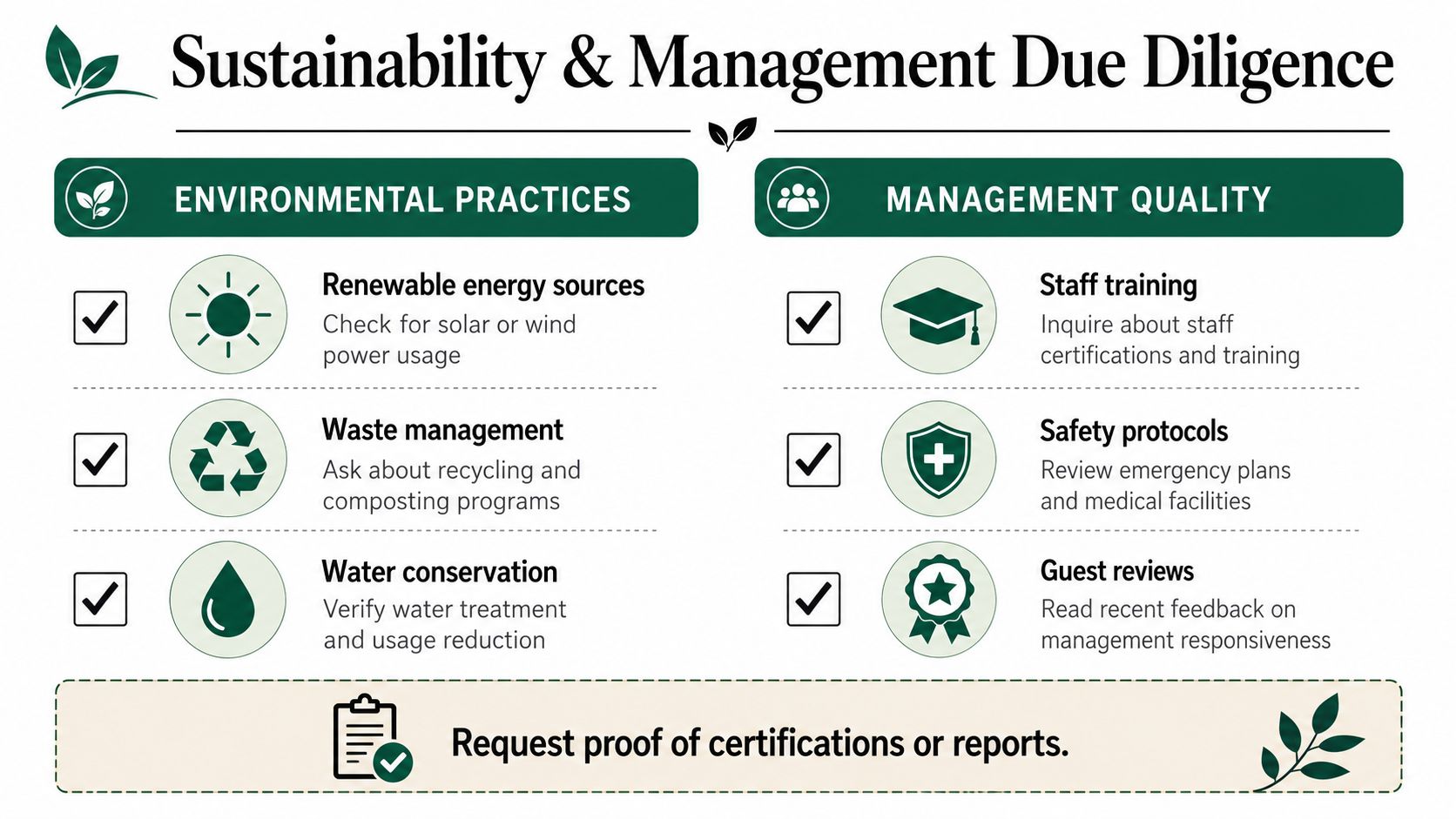
Luxury does not guarantee good stewardship. Some private islands are run with clear environmental discipline, while others look refined on the surface and struggle badly behind the scenes. Independent research on small-island tourism describes Cempedak Private Island as applying ecotourism principles through strong governance and community involvement, while Funtasy Island is cited for mismanagement, regulatory problems, and ecological degradation (IJASTE). That split is the issue. Pretty design can hide weak systems for only so long.
Ask for systems, not slogans
The islands worth your money can explain how they generate power, source water, handle waste, and protect the shoreline or reef. The same research points to Nikoi and Cempedak as operations aligned with sustainable tourism practices linked to blue-accounting projects and UN SDG 14. That is the operational grounding you want.
If the manager cannot answer basic questions about water capacity, waste handling, or backup power, the island is not ready for discerning guests.
Ask direct questions. How is electricity generated? How much potable water is available relative to guest capacity? What happens when the generator fails? Who handles waste removal? Are staff trained for emergencies, and how often are those procedures tested?
A good benchmark is reliability in bad conditions, not just photogenic weather. If the answers stay vague, treat that as a red flag. The most polished photos in the world will not matter if the guest experience breaks because the water system cannot keep up.
Read the management quality, not just the décor
Private-island operators that invest in sustainability usually show it through consistency. Staff turnover tends to be lower, service feels tighter, and operations are less likely to lurch when occupancy rises. The property knows how to protect the guest experience and the destination at the same time.
HauteBlack's news coverage of Jicaro Island Lodge in Nicaragua is a useful reference point because it sits inside the same conversation about high-end island hospitality with a sustainability lens. That is the standard to demand, not just beautiful marketing and a long amenity list.
Bespoke Experiences and Add-Ons That Elevate Your Stay
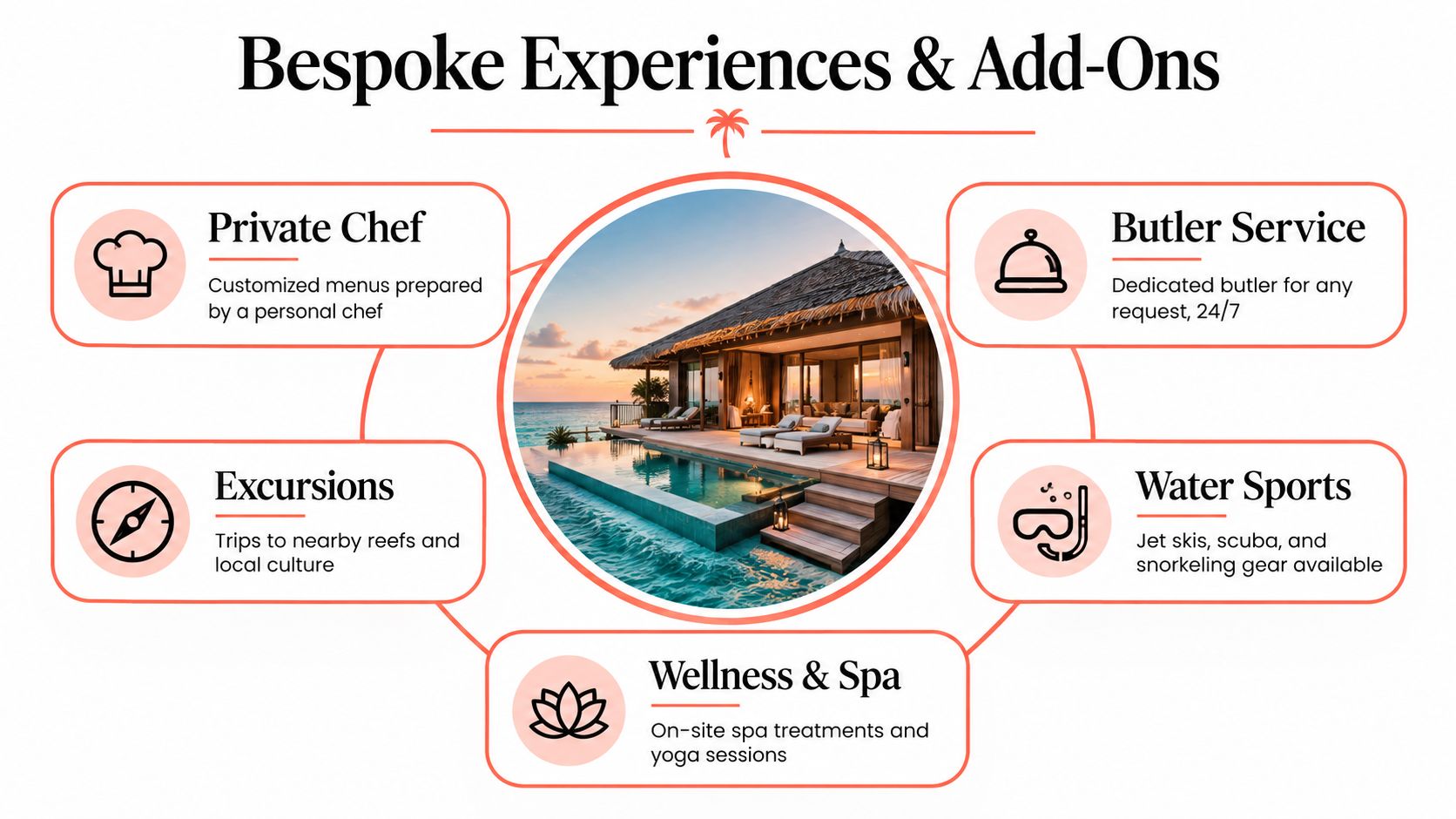
A private island stays special when the extras feel built into the rhythm of the trip, not piled on top of it. A good chef, a proper boat program, and a thoughtful wellness setup can turn a property into a private compound that works for your group. A bad add-on list does the opposite, it stresses the staff and makes the island feel crowded.
Build the program around the island, not around Instagram
Start with food and movement. Private chefs, butler service, and custom dining schedules matter more than most guests expect because island days are long and transfers can be draining. Then layer in water sports, diving, or a yacht charter only if the island's access points and staffing can support it.
The same is true for more ambitious add-ons. Helicopter arrivals make sense only if the landing plan is clean and the weather window is realistic. Private concerts, photography sessions, or wellness practitioners can be excellent, but only if they don't crowd the villa or overload the guest calendar.
Keep the island's capacity in mind
Extra experiences should feel natural and effortless, not improvised. If you're bringing in a chef team, ask who owns ingredient sourcing and storage. If you're bringing in security or personal staff, clarify access rules and living arrangements before arrival. If you're organizing children's activities, make sure the island can handle supervision without turning the trip into a logistics exercise.
A useful way to think about it is this. The more customized the trip becomes, the more the island behaves like a temporary private estate. That's a good thing, if the operator is strong. It's a disaster if the operator is weak.
For high-touch trip planning, HauteBlack's private-boat coverage in its luxury insiders guide fits naturally with island transfers and island-hopping add-ons, because the transport layer is often what determines whether the experience feels polished or fragmented.
Your Private Island Planning Checklist and FAQs
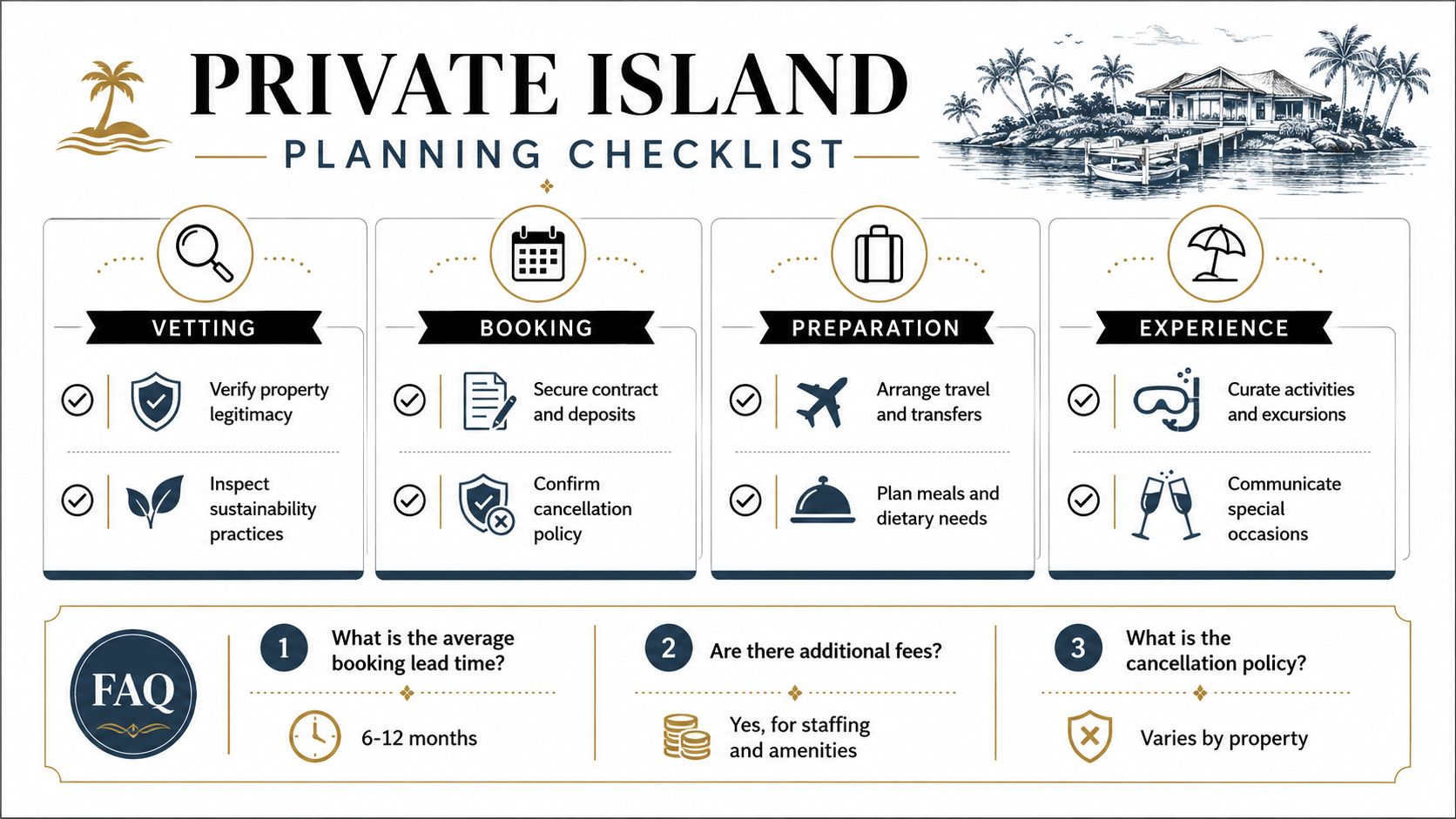
Start with ownership, access, and insurance. Then verify power, water, internet, medical evacuation access, staffing structure, and cancellation terms. If the island can't document those basics clearly, it's not ready for a serious booking.
Checklist
- Vetting: Verify ownership, confirm the operator's right to rent, and ask for recent proof of sustainability and safety practices.
- Booking: Secure a written quote, review cancellation language, and confirm whether the island requires a minimum stay or full buyout.
- Preparation: Lock in transfer timings, guest names, meal needs, staff preferences, and any security or medical requirements.
- Experience: Decide in advance which extras matter most, then keep the itinerary simple enough for the island to support without strain.
FAQs
What if weather changes? Reconfirm the backup transfer plan before you pay the deposit. Remote islands are only as good as their contingency planning.
Can I bring personal staff or security? Usually yes, but only after you confirm access rules, sleeping arrangements, and insurance coverage in writing.
Are there special rules for pets or drones? Often, yes. Ask before booking, because islands with sensitive ecosystems or close-quarters staff operations tend to be strict.
What's the smartest booking move? Book early, ask for itemized operating costs, and insist on a pre-arrival verification call or walkthrough. That single step prevents most expensive surprises.
HauteBlack handles private-island-style travel, fully staffed estates, and luxury itineraries for travelers who want the logistics managed without friction. If you're planning a buyout, a family retreat, or a remote celebration, visit HauteBlack and build the trip around the island's real operating strengths, not just its photos.
Explore Our Guides


Signature Experiences