Haute Black Journal
Luxury Japan Honeymoon Packages: Bespoke Journeys

Marlene Azeez
Director, HauteBlack
View all articles →
# Luxury Japan Honeymoon Packages: Bespoke Journeys
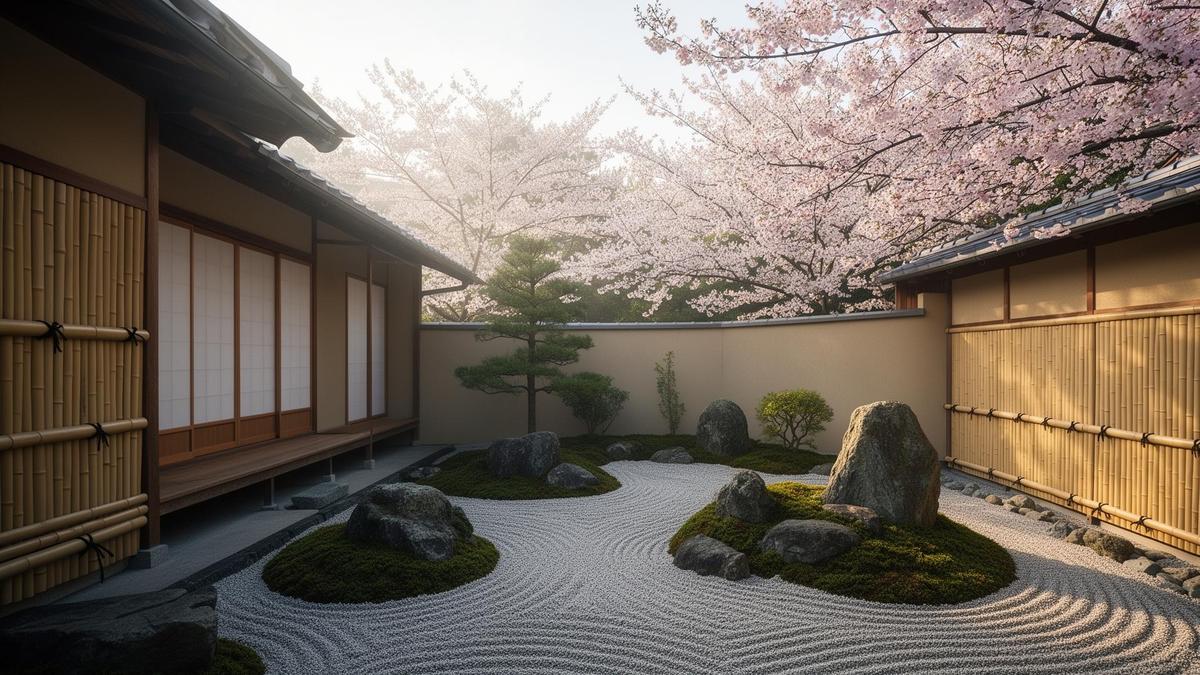
The doors had closed to the public, and the garden was silent except for water moving over stone. The couple sat alone after dinner, still in kimono, with a private host pouring one final cup of tea while Kyoto settled into night.
That's the difference between a standard trip and a proper honeymoon in Japan. One is a reservation set. The other is a carefully sequenced experience where privacy, timing, access, and emotion are designed on purpose.
Beyond the Brochure A New Vision for Your Japan Honeymoon
Most japan honeymoon packages are built like efficient shopping lists. Tokyo. Kyoto. A ryokan. Maybe Hakone. Maybe Osaka. A few transfers, a few tours, a few hotel nights, and a neat PDF that looks polished until you're living inside it and realize it has no soul.
A honeymoon should feel authored. Japan rewards that approach more than almost any destination I book.
The country can deliver astonishing contrast in a single journey. A skyline suite in Tokyo. A candlelit kaiseki dinner in a mountain inn. A private tea ceremony in Kyoto. A final stretch by the sea in Okinawa, where the pace softens and the marriage begins to feel real rather than ceremonial. Those moments don't happen because a package exists. They happen because someone has arranged the rhythm correctly.
Why generic luxury still misses the point
Luxury on paper is easy. Anyone can reserve a five star hotel and call it bespoke. What matters is whether the trip fits you.
Some couples want Japan to feel cinematic and urban. Others want stillness, craft, and ritual. Some want the best suite in Tokyo followed by a quintessential ryokan. Others want to minimize transitions and sink into fewer places with more depth. The right answer isn't a template. It's curation.
A honeymoon in Japan should not feel busy. It should feel inevitable, as if each moment naturally leads to the next.
That's also why I'm opinionated about pacing. If you cram Japan with too many stops, you spend your honeymoon managing logistics instead of inhabiting the destination. The most memorable journeys are edited, not expanded.
What I recommend instead
Start with the feeling you want, not the map. Then build the route around it.
A strong Japan honeymoon usually includes:
- One electric city chapter for energy, dining, and design
- One cultural chapter for ceremony, architecture, and slower mornings
- One restorative chapter for onsen, nature, or coastline
- Private transitions that protect the mood instead of breaking it
That is the core evolution beyond the brochure. Not more inclusions. Better judgment.
The Art of a Bespoke Japan Honeymoon Journey
The phrase japan honeymoon packages is useful for search. It's not useful for standards. At the upper end of the market, “package” suggests something prebuilt. Japan demands something more exact.
The ultra luxury segment remains underserved. Mainstream guidance still leans heavily toward mid-range, self-guided trips, while affluent travelers helped drive a ¥2.5 trillion inbound luxury tourism market in 2025 according to this analysis of the gap in Japan luxury travel coverage. The problem isn't lack of hotels. It's lack of orchestration.
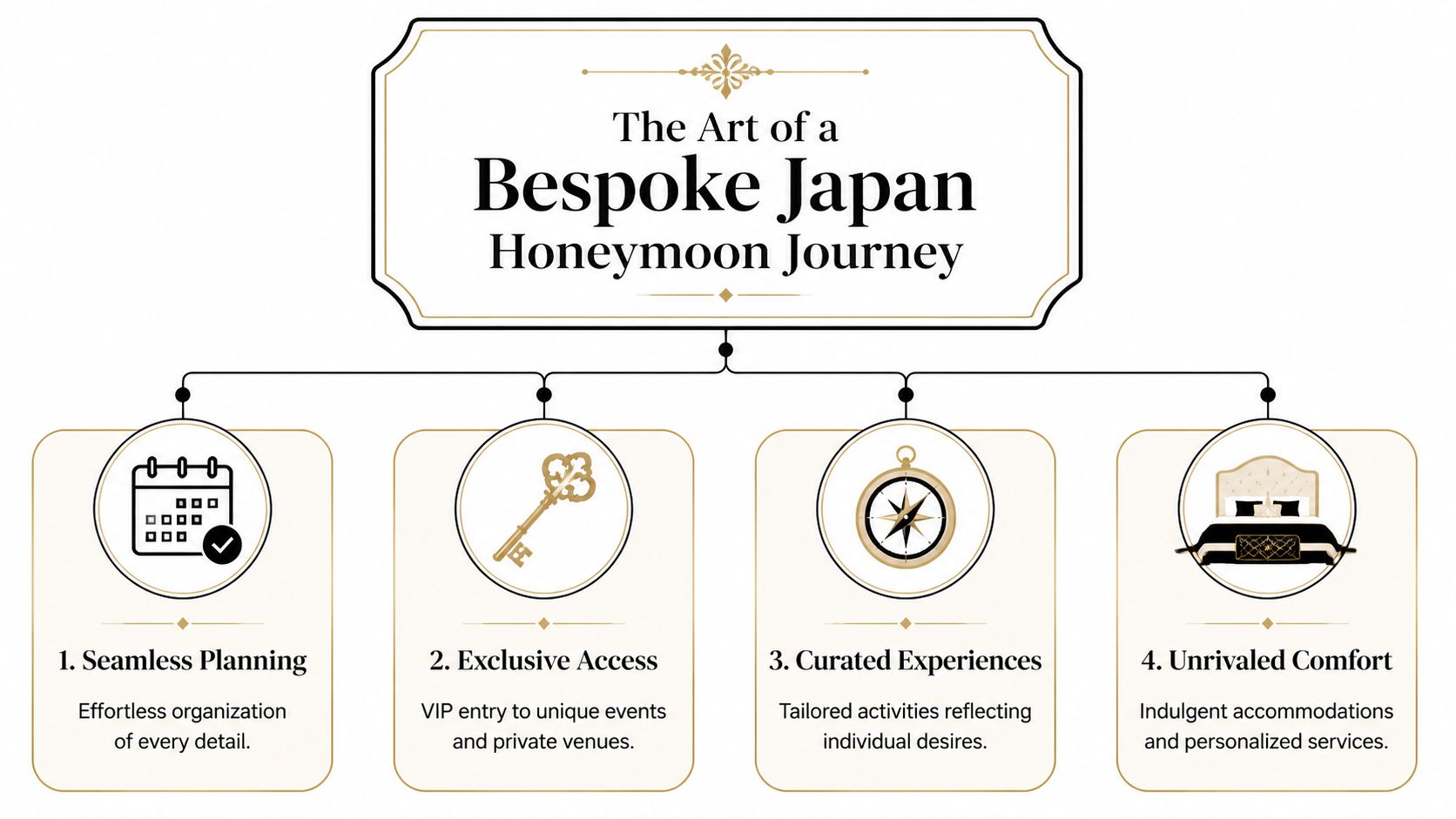
Seamless planning
The first luxury decision is whether you want to spend your honeymoon making decisions. You shouldn't.
Japan is polished, but it's layered. The best restaurants book early. The right ryokan rooms aren't interchangeable. Transfer timing matters. Arrival experience matters. Even the order of neighborhoods in Tokyo matters if you want the city to feel seductive rather than exhausting.
That's why I prefer a custom-built framework over a fixed itinerary. A good planner doesn't just reserve components. They sequence energy, privacy, and recovery. If you want an example of how personalized journeys should be approached, this perspective on customized package tours gets the philosophy right.
Exclusive access
Real luxury starts where public availability ends.
That can mean a private guide who understands art, architecture, and etiquette rather than delivering canned commentary. It can mean securing the room category that has the view and privacy worth paying for. It can mean designing evenings around after-hours calm instead of daytime congestion.
Money helps. Relationships help more.
Practical rule: If an experience can be booked by anyone in three clicks, it probably isn't the most memorable version of that experience.
Unparalleled accommodations
A great honeymoon hotel isn't just beautiful. It supports the mood of the trip.
In Japan, that often means combining contrasts rather than repeating the same luxury formula. I like a contemporary tower in Tokyo, an atmospheric ryokan in or near a hot spring region, then a refined retreat that lets you exhale. Aman and Four Seasons remain especially compelling because the service culture aligns with honeymoon travel. Precision, privacy, and a sense of calm matter more than flashy excess.
The room itself also changes the trip. Entry-level rooms rarely deliver the emotional payoff couples imagine. Book the category with space, view, and the right bathing setup. This is not where to compromise.
Deeply personalized service
The final pillar is the one most travelers underestimate. A dedicated advisor protects the trip from friction before you ever see it.
Here's what that looks like in practice:
- Arrival management: Airport greeting, clean handoff, no wasted movement
- On-trip judgment: Quick pivots when weather, crowds, or energy levels shift
- Preference memory: The right table, the right pillows, the right tempo
- Taste curation: Experiences matched to your style, not someone else's top-ten list
That's the difference between consuming Japan and being hosted through it.
Curating Your Journey Signature Honeymoon Experiences
The strongest Japan honeymoons don't chase variety for its own sake. They move through distinct emotional worlds. Tokyo gives you glamour and appetite. Kyoto gives you texture and lineage. A ryokan gives you intimacy. Hokkaido or Okinawa gives you room to breathe.
That combination is especially compelling because domestic luxury rose in importance during the pandemic, even as 76% of Japanese couples said they would have wanted an overseas honeymoon absent the pandemic in Expedia Japan's 2021 survey, as reported by Travel Voice. For international couples, that creates a smart blueprint. Pair Japan's cultural heartland with domestic resort destinations like Hokkaido or Okinawa instead of choosing one mood and staying trapped in it.
Tokyo after dark and above the city
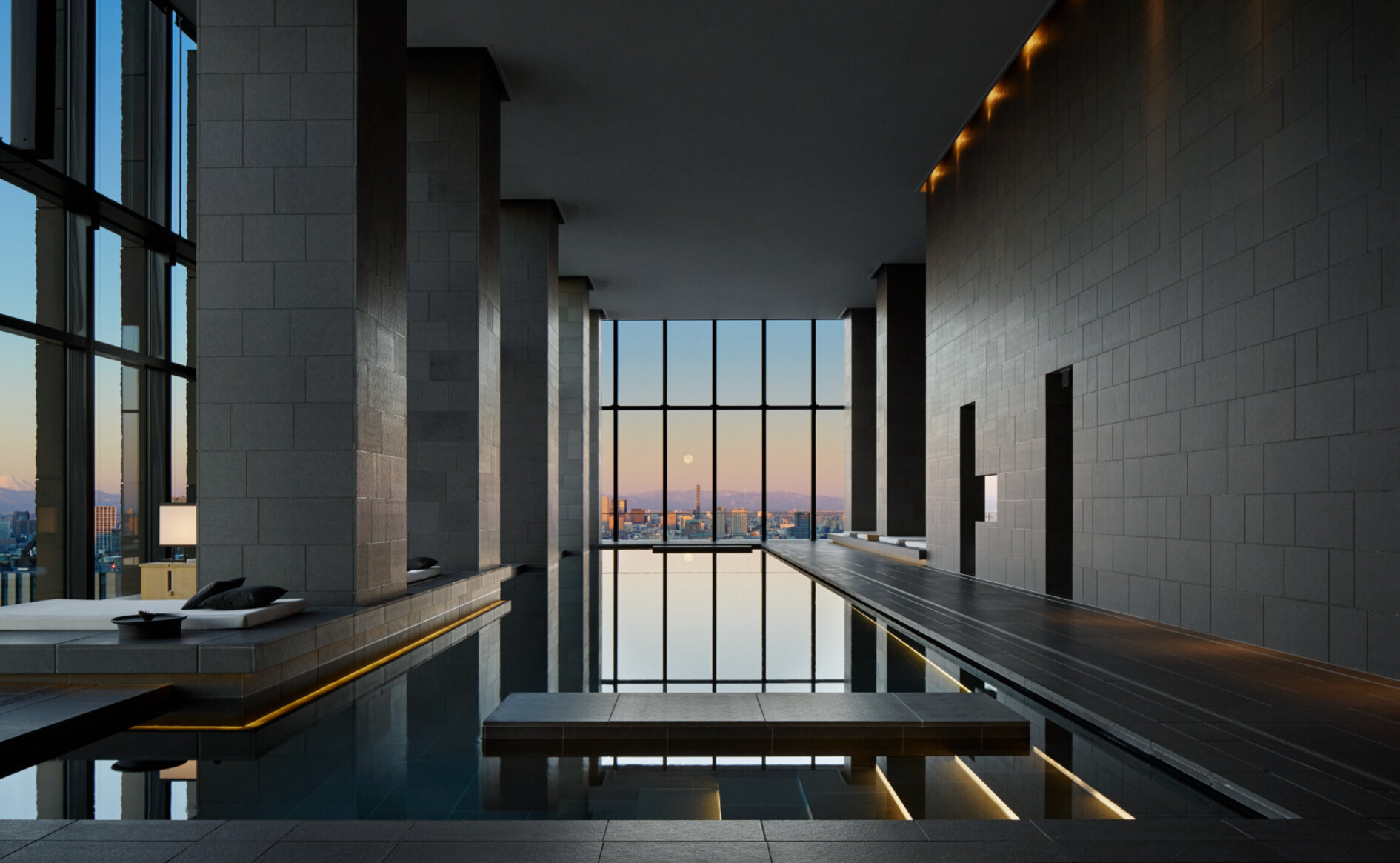
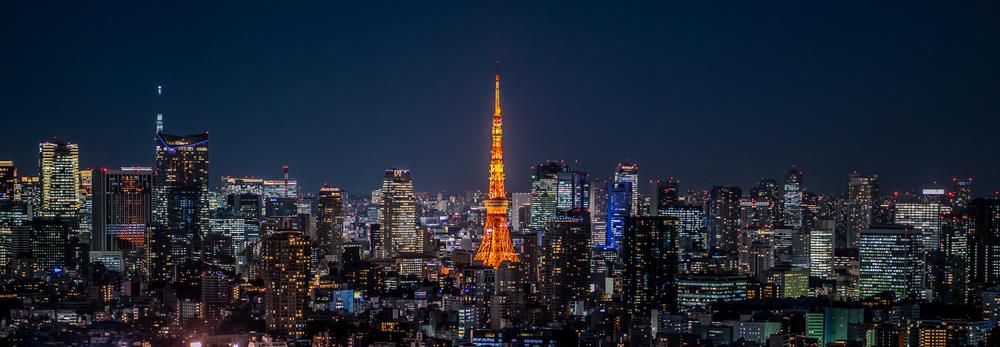
Tokyo should begin with altitude. Not because the view is impressive, though it is. Because elevation creates distance from the noise and lets the city feel cinematic before it feels complicated.
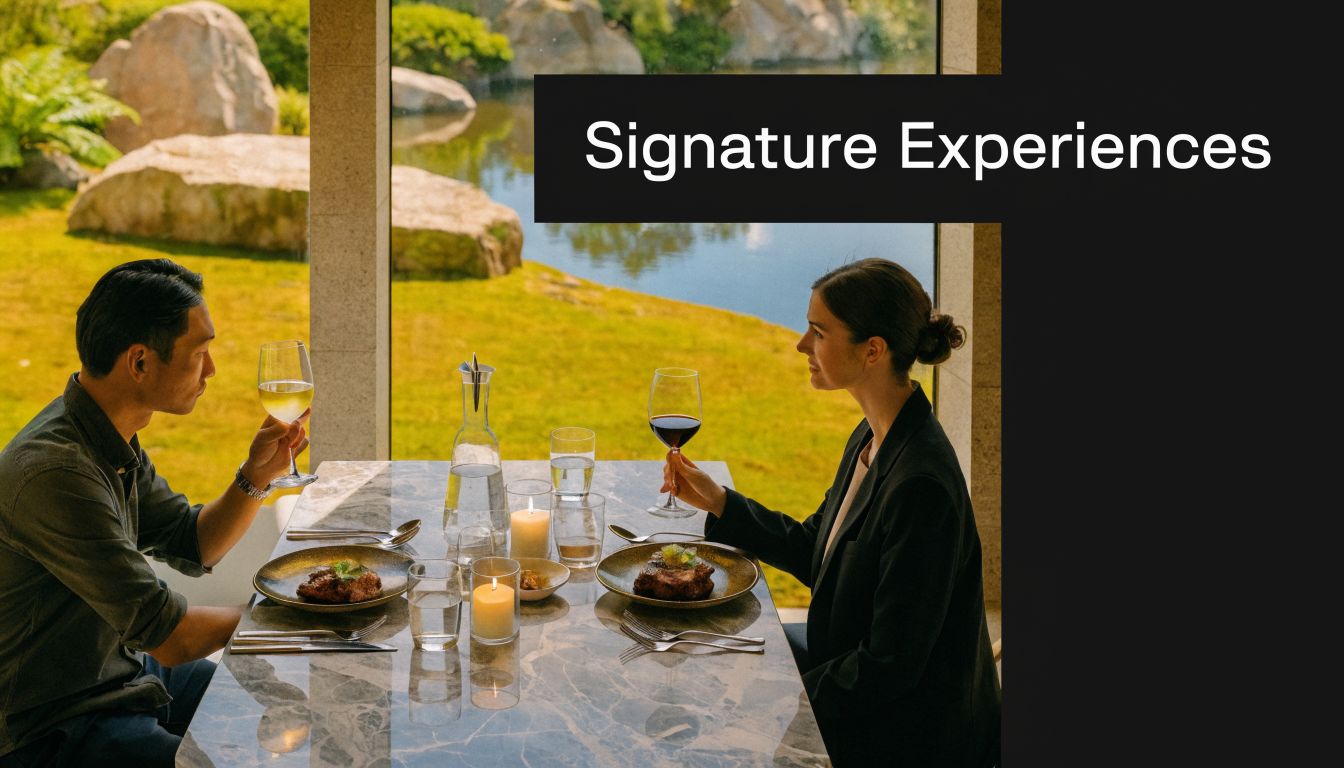
I like couples to start in a suite where the skyline does some of the work for them. Dinner comes late. Cocktails are unhurried. The first full day isn't over-programmed. You might have a private culinary progression, or a guide who threads together design, fashion, and food in a way that feels contemporary rather than touristic.
Tokyo is also where cultural detail matters. If you're exchanging gifts with hosts, arranging a private introduction, or want to handle etiquette beautifully, a quick read on understanding Japanese gift culture is useful. Small gestures land differently in Japan. They're noticed.
Kyoto with privacy, not performance
Kyoto gets ruined by bad timing faster than almost anywhere.
Handled poorly, it becomes crowds, queues, and fatigue dressed up as culture. Handled properly, it's one of the most romantic cities in the world. You go early, late, or privately. You stay somewhere with atmosphere. You choose fewer temples and better context.
I prefer Kyoto as a sequence of quiet experiences. A tea ceremony that feels personal rather than demonstrative. A walk through preserved streets when the light has softened. A dinner where the room itself has gravitas. The city rewards restraint.
For couples who want that depth, a strong place to start is a more thoughtful lens on Japan cultural immersion experiences. The point isn't volume. It's meaning.
Kyoto is best experienced when someone else has already handled the timing.
The ryokan chapter
Every proper Japan honeymoon needs one chapter that slows the pulse.
A ryokan is not merely an obligation or a token one-night stay for a photo; it creates privacy, ceremony, and softness all at once. You arrive. Shoes come off. Voices drop. Time changes shape.
What matters here is selectivity. Not every ryokan marketed to international travelers feels refined. The right one has a room worth lingering in, a bath setup that feels sheltered, and service that's intuitive rather than intrusive. Dinner should be a progression. Breakfast should be part of the pleasure, not something to rush through.
Hokkaido or Okinawa for contrast
I almost always advise couples to finish with contrast.
If you love winter and mountain seclusion, Hokkaido offers a sharper, cleaner register. Snow, stillness, and chalet-style privacy can be spectacular after the density of Tokyo and Kyoto. If you want warmth, salt air, and a gentler finale, Okinawa is the better answer.
Here's the comparison I use when helping couples choose:
| Destination | Best for | Honeymoon mood |
|---|---|---|
| Hokkaido | Snow season, alpine scenery, deep winter coziness | Intimate, cocooned, dramatic |
| Okinawa | Coastal villas, beach time, soft landing after culture-heavy days | Light, restorative, sensual |
Neither is automatically superior. The right choice depends on whether you want your honeymoon to end wrapped in cashmere or sun.
The Connoisseur's Calendar Best Times to Visit Japan
Many ask for cherry blossom season first. I understand why. I rarely think it's the most original answer.
Japan is one of the few destinations where seasonality changes not just the scenery but the emotional register of the trip. Spring is celebratory. Summer is kinetic. Autumn is elegant. Winter can be astonishingly intimate if you choose the right regions.
Spring and the crowd problem
Spring in Japan is beautiful, but beauty is not the same as ease.
The challenge isn't the blossoms. It's everything that comes with them. Demand rises, the obvious hotels fill first, and the most photographed areas become harder to enjoy on your own terms. If you insist on spring, the strategy must be sharper. Fewer headline sites, better timing, stronger room categories, and alternatives that preserve atmosphere.
Autumn is the connoisseur's season
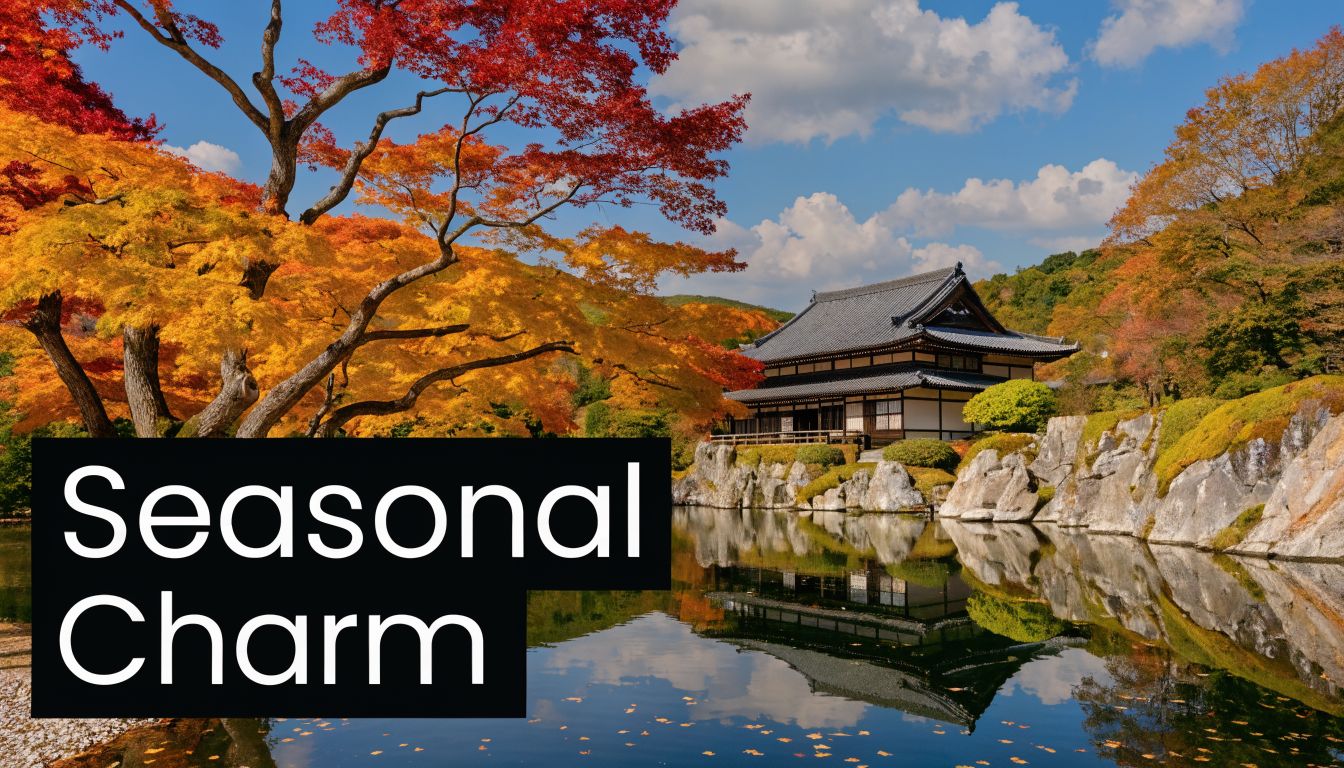
Autumn is often the better honeymoon answer. The foliage is dramatic, the light is flattering, and the pace feels more composed.
I like autumn for couples who want Japan to feel refined rather than frantic. Kyoto glows. Mountain retreats become richer. Tokyo feels fashionable again after summer. You can dine longer, walk farther, and maintain the sense that the trip belongs to you.
Winter and summer for couples who want distinction
Winter is superb if you build around seclusion, onsen, and mountain scenery. It's especially strong for couples who don't care about following the obvious seasonal script.
Summer works for travelers who enjoy festivals, late evenings, and coastal extensions. It's not the easiest season, but it can feel vibrant and alive when designed properly.
A simple decision guide helps:
- Choose spring if blossoms matter more than serenity
- Choose autumn if you want the best balance of beauty and composure
- Choose winter if privacy, hot springs, and alpine atmosphere are your priority
- Choose summer if you want energy, coastal contrast, and don't mind heat
Timing now requires strategy
Seasonality isn't just aesthetic anymore. It's logistical.
Kyoto has implemented overnight tax hikes, and Hakone is limiting onsen capacity as part of overtourism controls in the 2025 to 2026 period, which makes timing and routing more important, as noted by this Japan honeymoon planning reference. That's exactly why I often redirect couples toward less pressured alternatives, including the Izu Peninsula, when peak periods begin to distort the experience.
The best time to visit Japan isn't the most famous week. It's the week when your version of Japan is still available.
Sample Itineraries Glimpses of the Extraordinary
A strong honeymoon itinerary should feel composed, not busy. Every move needs a reason. Every upgrade needs to matter. Every transfer should protect the mood rather than puncture it.
That's why I'm generally skeptical of mass-market japan honeymoon packages that promise “luxury” but merely string together hotel nights and rail segments. Japan's package market has evolved toward dynamic packaging, and luxury itineraries in the $6,804 to over $7,448 per person range are becoming more common, while Japan also recorded 3.47 million inbound visitors in February 2026 according to tourism data and package-travel analysis. In plain terms, the country is busy enough that premium access has to be earned, not assumed.

The 14 day classic and contemporary journey
This is the itinerary I recommend most often for first-time luxury clients who want range without chaos.
You begin in Tokyo for a polished city chapter. The right hotel gives you immediate psychological relief after a long-haul flight. Your first day stays light. A private guide takes you through Tokyo selectively, not exhaustively. The point is to develop your own relationship with the city, not to conquer it.
Then you move into a ryokan segment. This transition matters. It interrupts the urban rhythm and introduces intimacy at exactly the right point in the trip. Instead of being one more hotel, the ryokan becomes the emotional hinge of the honeymoon.
Kyoto follows naturally. By then, your pace has slowed enough to receive the city properly. At this point, private guiding, cultural access, and after-hours timing become essential. You're not trying to “see Kyoto.” You're trying to experience it with elegance.
The trip ends with a softer finale, often by the coast or in a restorative retreat where the final days are intentionally underprogrammed.
What makes this itinerary work:
- Tokyo first: You use your highest energy on the most stimulating part of the trip
- Ryokan in the middle: You create intimacy before cultural depth
- Kyoto after reset: The city feels profound instead of demanding
- Restorative ending: You leave the honeymoon feeling replenished, not wrung out
For couples considering a refined multi-stop route, this take on a luxury trip to Japan reflects the right overall philosophy.
The 10 day cultural immersion and coastal retreat
Not every couple wants the classic arc. Some want less movement and more atmosphere.
This itinerary favors depth. Start in Kyoto or another culturally rich base and stay long enough for the city to unfold. You don't race. You return to favored streets. You allow one excellent guide to shape several days instead of meeting a new handler every morning. That continuity matters.
After that, move to a coastal or wellness-driven retreat. Here, the honeymoon shifts from admiration to rest. Sea air, spa rituals, private dining, and slower mornings become the point.
This version suits couples who value emotional coherence over city-hopping. It's especially effective after a large wedding, when overstimulation is already high and the honeymoon should act as a decompression chamber.
A few design principles make it sing:
1. Stay longer in fewer places. Japan rewards repetition.
2. Choose experiences with texture. Tea, craft, cuisine, bathing rituals.
3. Protect unscheduled time. Romance doesn't need a timetable.
4. Finish where nature is visible. Water or mountains change the mood instantly.
Here's a quick way to compare the first two models:
| Itinerary style | Best for | Tradeoff |
|---|---|---|
| Classic and contemporary | First-time visitors who want range and contrast | More moving parts |
| Cultural immersion and coastal retreat | Couples who want calm, depth, and fewer transitions | Less geographic variety |
A visual sense of pacing helps here:
The winter grand tour for mountain-minded couples
This is the contrarian choice, and for the right pair, it's magnificent.
Begin in Tokyo for urban glamour, then head north or into a mountain setting where snow and hot springs become part of the romance. Finish with a final city or heritage stop depending on how much contrast you want. This honeymoon feels cinematic in a different register. Less blossom, more atmosphere. Less sightseeing, more cocooning.
The secret is restraint. Don't overload the middle with activities. Let the scenery carry part of the trip.
If your honeymoon leaves no room for lingering in a robe by the window after breakfast, the itinerary is too full.
Investment and Planning Your Bespoke Journey
A Japan honeymoon at this level is not a casual purchase. It's an investment in comfort, timing, access, and memory. Treat it that way.
A two-week luxury Japan honeymoon can exceed $10,000, with top suites often in the $400 to $800 per night range, according to this Japan honeymoon cost breakdown. Those numbers are useful only as a floor for serious planning. What shapes the investment is your room category, the degree of privacy built into the trip, and whether you want standard touring or properly curated access.
What drives the investment level
The biggest cost variable is almost never the destination itself. It's the standard you expect once you arrive.
A honeymoon with entry-level luxury rooms, rail transfers, and public experiences will price differently from one with top suites, private airport handling, curated guides, and hard-to-secure reservations. That's obvious. What many couples miss is that the more important distinction is value, not spend.
A useful point to consider is:
- Accommodation quality: Base room versus a suite that changes how the stay feels
- Transfer style: Efficient transport versus private, mood-preserving movement
- Experience design: Bookable excursions versus insider-led access
- Partner benefits: Upgrades and resort credits that improve the trip without adding clutter
Why planning early matters
Japan is one of the least forgiving destinations for last-minute luxury planning if you care about precision.
The best room categories disappear first. Strong private guides are not interchangeable. The most atmospheric ryokan often have very limited inventory, and not every room is worth taking. If the honeymoon sits around a wedding date, your flexibility is already reduced, so lead time matters even more.
I generally advise couples to begin well in advance, especially if the trip will include peak seasonal windows or specific flagship properties. The earlier you decide, the more elegant the options remain.
Start planning while the wedding still feels distant. Waiting until the event is near usually means choosing among what's left, not what's best.
If the honeymoon is tied closely to the ceremony itself, a solid primer on planning your destination wedding can help couples think through timeline, guest logistics, and how the honeymoon should connect to the larger celebration.
Where the real return appears
The strongest return on investment comes from removing friction and elevating the stay at the same time.
That can mean preferred partner amenities at the right hotel. It can mean a better arrival experience after a long-haul flight. It can mean not having to troubleshoot dinner, transport, or cultural etiquette when you should be enjoying the beginning of your marriage.
A honeymoon is not the trip to economize into adequacy. It's the trip to design properly once.
The Haute Black Advantage Seamless Execution and VIP Access
At this level, the destination is only half the story. Execution decides whether the honeymoon feels graceful or fragmented.
Japan gives you an excellent foundation. The Shinkansen network is exceptional. Luggage forwarding is efficient. Multi-city travel can work beautifully. As noted in The Knot's Japan honeymoon guide, that logistical strength is exactly what makes a polished multi-stop journey possible when it's handled intelligently.
Why logistics are part of the romance
Many travelers treat logistics as an administrative layer. That's a mistake.
The handoff from airport to hotel sets the emotional tone of arrival. The transition from Tokyo to a ryokan determines whether the trip deepens or merely relocates. The timing of luggage, vehicles, station support, and check-in all shape how cared for you feel.
When those pieces are managed correctly, you don't notice them. You notice the absence of friction. That silence is luxury.
What high-touch execution actually changes
A well-run honeymoon protects your attention.
Instead of thinking about train timing, bag movement, local navigation, and whether your dinner reservation still makes sense after a delayed arrival, you stay inside the trip. Time remains yours. Energy remains yours. That matters more on a honeymoon than on almost any other journey.
The difference shows up in practical ways:
- Smoother arrivals: Less waiting, less confusion, cleaner transitions
- Better mid-trip movement: Bags and people don't have to travel with the same stress
- Stronger hotel recognition: Preferred guests are often handled differently from the first greeting
- Quieter problem-solving: Adjustments happen without disrupting the mood
Why the advisor matters more than the itinerary PDF
Anyone can send a beautiful document. That's not the challenge.
The challenge is judgment. Knowing which ryokan room is worth the premium. Knowing when Kyoto should be repositioned in the itinerary. Knowing when Hakone should be replaced with another retreat because the destination is too pressured at your travel dates. Knowing how to preserve romance when reality starts pushing back.
That is why the advisor matters more than the brochure. The itinerary is static. The honeymoon is alive.
A flawless Japan honeymoon isn't defined by how many places you visit. It's defined by how smoothly the entire journey unfolds, how privately the right doors open, and how completely the trip allows you to disappear into each other rather than into logistics.
If you want a Japan honeymoon that goes far beyond standard packages, Haute Black can help craft a truly personalized journey with the right hotels, preferred partner perks, private access, and smooth execution from the first conversation to the final transfer.
Explore Our Guides
Signature Experiences