Haute Black Journal
Europe Temperatures in April: A Luxury Travel Guide

Marlene Azeez
Director, HauteBlack
View all articles →

# Europe Temperatures in April: A Luxury Travel Guide
July 7, 2026
You're probably looking at April because you want Europe at its most civilized. Terraces reopening, hotel rates often more rational than summer, museum cities without peak-season crush, and coastal destinations that still feel calm. That instinct is right.
What most travelers get wrong is assuming April behaves like one season across one continent. It doesn't. Europe in April is a split-screen experience. You can have lunch in shirtsleeves in the south and still face a biting, wet arrival or even mountain disruption elsewhere on the same itinerary. For anyone booking private transfers, charter legs, villa stays, and tightly timed dining or cultural access, that difference matters more than the average temperature headline.
If you're planning around comfort, polished logistics, and no avoidable friction, generic spring weather advice won't help. Europe temperatures in April only become useful when you read them region by region, city by city, and route by route.
Planning Your Perfect European Spring Itinerary
April still sells a beautiful fantasy. Paris café tables fill. Roman gardens wake up. The Aegean starts to look tempting again. But spring in Europe rewards clients who plan with precision, not optimism.
The first move is simple. Stop treating Europe as one weather zone. In Copernicus' April 2026 temperature summary, the European-average surface air temperature was 8.88°C, which was 0.50°C above the 1991–2020 baseline average. That points to a clear warming trend. It also hides the detail that impacts a high-end trip: southwestern Europe was significantly warmer, while eastern Europe remained colder than average.
That's why I don't plan April itineraries by country alone. I plan them by exposure, altitude, transfer complexity, and how much weather sensitivity each day carries.
Start with the trip you actually want
Ask yourself three questions before choosing dates and destinations:
1. Do you want outdoor living or indoor culture?
If your trip depends on terraces, pool decks, vineyard lunches, and coastal boating, southern Europe is the safer April play.
2. How much movement is built in?
A single-city stay can absorb a cool or rainy afternoon. A multi-stop itinerary with rail, helicopter, or mountain-road transfers needs tighter climate judgment.
3. What level of predictability do you expect?
If you want every dinner outdoors and every transfer frictionless, April requires more selectivity than many travelers assume.
Practical rule: In April, book for the temperature experience you want, not the postcard you've saved.
For clients considering a later spring departure, the contrast is useful. This May guide for luxury travelers is often the better fit if you want more dependable alfresco dining and fewer wardrobe compromises.
Build around comfort first
My recommendation is direct. Put the climate-sensitive portion of the trip first. If you want southern Spain, the Algarve, Sicily, or the Greek islands, let those destinations anchor the itinerary. Add cooler capitals or scenic northern stops only if you're comfortable trading warmth for atmosphere.
April can be superb. It just isn't forgiving of lazy planning.
The Three Climates of April in Europe
You don't need a country-by-country lecture to understand April. You need a working framework that helps you match mood, wardrobe, and logistics to the right part of the continent.
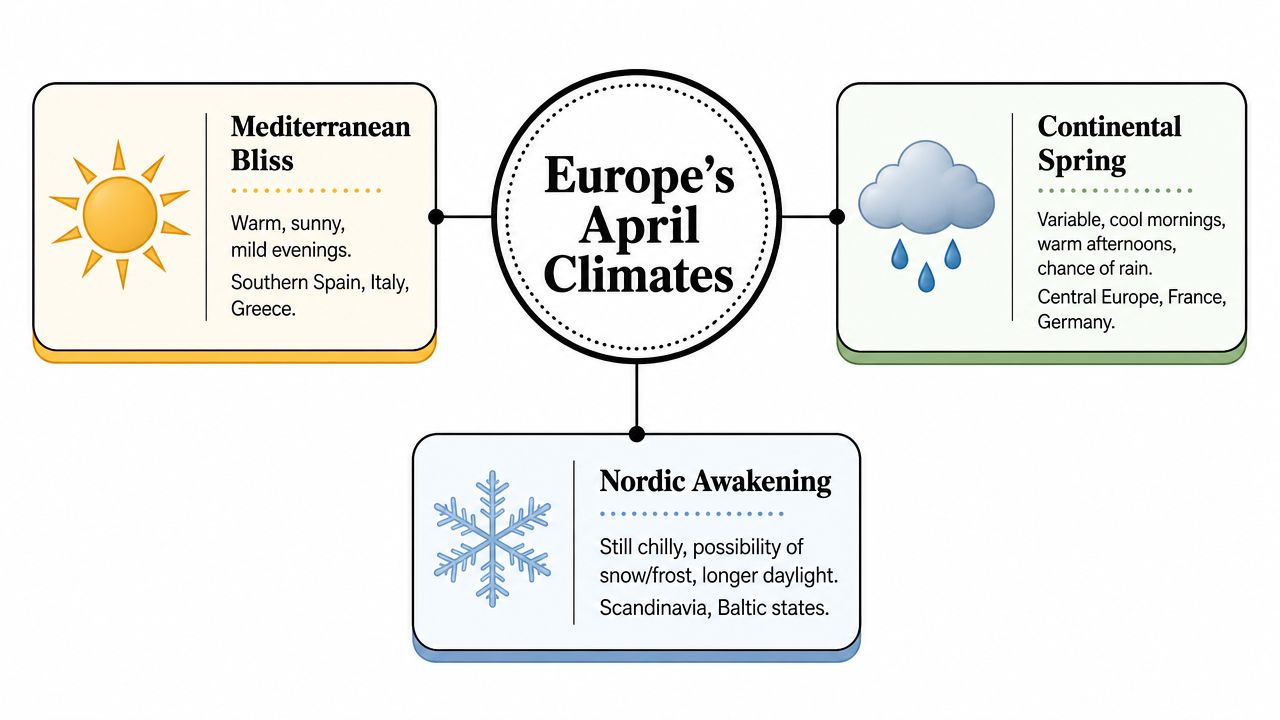
Mediterranean Bliss
April starts to feel like a reward in Southern Spain, southern Italy, Greece, Cyprus, Malta, and parts of Portugal, which generally deliver the version of spring most luxury travelers think they're booking.
The appeal is obvious. You can schedule late lunches outside, sea-view suites begin to make sense again, and daytime sightseeing doesn't come with summer's punishing heat. Sources focused on warm April escapes consistently place southern Europe at the front of the pack, with places such as Seville and Málaga averaging 22°C to 24°C, and the Algarve and Malta often sitting around 18°C to 20°C with sunshine and relatively low rainfall in April, according to Jetpac Global's warm-in-April overview.
If your brief is romance, coastal ease, or a polished Easter escape, this is the category that gives you the fewest wardrobe and planning headaches.
Continental Spring
This zone includes France, Germany, Austria, Switzerland, northern Italy's inland cities, Belgium, and much of Central Europe. It's the most misread April climate in Europe because it can look mild on paper and still feel changeable in practice.
This is excellent territory for architecture, museums, shopping, and food-led itineraries. It's less ideal if you insist on a fully outdoor schedule. Mornings can start cool, afternoons can soften beautifully, and rain can interrupt with little ceremony. That doesn't make the experience worse. It just means your trip should be built around flexibility.
A city like Paris or Vienna works well here because luxury in April often means choosing the right pace. Long lunches, a well-located hotel, car service on standby, and restaurants with sheltered terraces matter more than chasing maximal sun.
Atlantic and Nordic Cool
The UK, Ireland, Scandinavia, the Baltic region, and parts of northern Europe sit in a different register. April here is crisp, green, atmospheric, and often dramatic. It is not reliably warm.
This category suits travelers who value mood over heat. Think country-house stays, whisky tastings, private estate access, design-led city hotels, or dramatic coastal drives where a shifting sky is part of the pleasure. If that sounds appealing, the cool is not a drawback. It's part of the point.
For clients tempted by the far north, planning benefits from destination-specific advice such as this luxury travel to Iceland guide, because northern spring rewards realism.
April in northern Europe can be stunning. It just won't behave like the Mediterranean, and you shouldn't expect it to.
City Spotlights and Temperature Benchmarks for 2026
Your driver leaves a sunlit hotel terrace in Rome, then reaches a hilltop estate outside the city where the air turns noticeably cooler before lunch. That is April in Europe. City averages help, but a key insight is understanding how quickly conditions shift between airport, historic center, waterfront, and countryside, because that change affects what you wear, how you move, and which properties feel comfortable on arrival.
For April 2026 planning, use city temperatures as a starting point, then build your logistics around local variation. The same trip can call for an open-air lunch reservation at midday and a closed-car transfer by evening.
Quick benchmark table
| City | Average High | Average Low | What it feels like for luxury travel |
|---|---|---|---|
| Athens | 19°C | 11°C | Reliable for terrace lunches, Acropolis visits, and late-afternoon walks with minimal weather friction |
| Rome | 20°C | 9°C | Excellent for art, shopping, and long days on foot, with cooler starts and evenings than many clients expect |
| Berlin | 13°C | 4°C | Best for museum-led itineraries, gallery appointments, and a hotel with strong indoor amenities |
| Copenhagen | 10°C | 2°C | Beautiful for design-focused city breaks, but cold enough to make wind exposure and transfer timing matter |
How to use these benchmarks properly
Athens gives you one of the cleaner April propositions. The city usually supports outdoor dining and private guided touring without the summer crush, but exposed coastal tables and rooftop settings can still cool off quickly after sunset. Book the terrace. Also secure an indoor fallback that feels equally polished.
Rome is the most forgiving of this group, and also the easiest to misread. The headline temperature looks warm, yet shaded streets, early museum starts, and hillside villa stays outside the center can feel far cooler than clients expect. If you are splitting time between central Rome and a country property, arrange transfers with flexibility and pack for a genuine day-to-night swing.
Berlin rewards clients who care more about access than atmosphere. April here favors private museum viewings, strong restaurant reservations, and a hotel in the right neighborhood so you are not wasting time in cold, grey weather between appointments. This is a city where location does more for comfort than a few degrees on a forecast.
Copenhagen demands discipline. A harborfront suite can feel exhilarating in clear light and distinctly chilly once wind picks up, especially if your plans involve boat transfers or long walking routes between design shops, galleries, and restaurants. I only recommend it in April for travelers who actively want that brisk Nordic mood.
Match the city to the way you travel
Choose Athens or Rome if outdoor living is part of the brief. Choose Berlin or Copenhagen if you want culture, design, and hotel-led comfort with less dependence on warm weather.
Paris remains one of the strongest all-around April choices because a well-positioned hotel, smart restaurant spacing, and protected indoor culture keep the trip polished even when temperatures shift during the day. For that style of itinerary, a luminous Paris escape is a useful model.
Bern deserves more attention from clients who want a quieter rhythm and easier pacing in spring. If you are considering Switzerland without committing to a full mountain itinerary, this guide to exploring Bern's Old Town offers a good read on whether its arcades, historic core, and measured scale suit your trip.
Choose the city that still works beautifully when April changes its mind by mid-afternoon.
Weather Risks and Navigating Microclimate Volatility
You land to a mild forecast, then lose an hour to a wind hold on a lake crossing, another to a revised mountain transfer, and the terrace lunch everyone promised is abandoned for an indoor backup. That is April in Europe at the luxury end of the market. Average temperatures help with wardrobe planning. They do very little for access, timing, and property choice.
The issue is microclimate volatility. Conditions can shift materially within a short drive. A sunlit city center can sit an hour from cold rain, swollen rivers, fog around a regional airfield, or gusts that make a marina departure feel clumsy rather than polished. That matters if your trip includes an alpine estate, a coastal villa, a vineyard lunch, or any hotel that sells privacy partly through difficult geography.
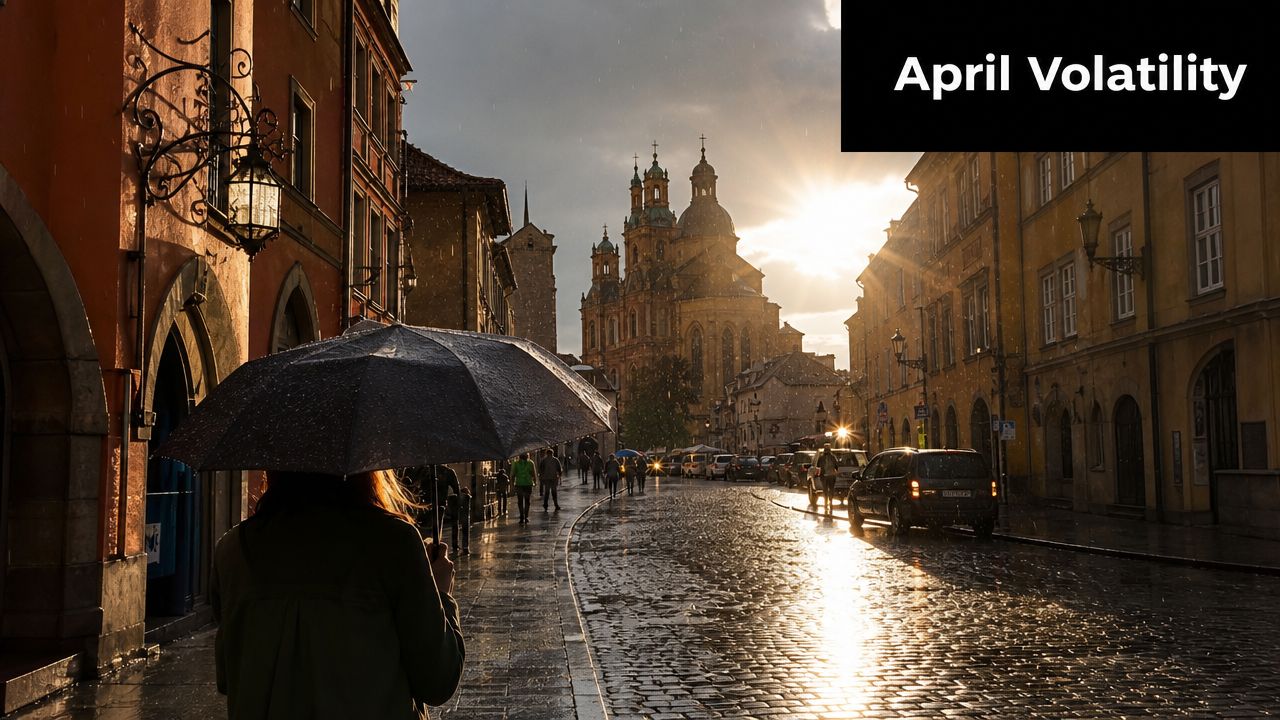
The Alpine lesson
A credible April plan accounts for disruption after it happens elsewhere, not just before it happens to you. In its coverage of the severe Alpine flooding and avalanche conditions linked to Storm Hans, Reuters reported transport disruption, evacuations, and blocked routes across parts of Switzerland and neighboring mountain areas. That is the kind of event that turns a beautiful mountain sequence into a logistical liability.
My advice is simple. Treat April mountain transfers as an operational decision, not a scenic flourish. If your itinerary depends on exact arrival windows, remote chalet access, heli coordination, or signature drives through high terrain, build margin into every segment or choose a lower-risk base.
Where luxury itineraries start to fray
The problem rarely begins with the thermometer. It starts with secondary effects that erode comfort and timing.
- Road access shifts first: Your hotel may be fully open while the preferred route becomes slower, less comfortable, or unavailable.
- Private aviation gets tighter: Visibility, wind, and local field conditions can force timing changes and disrupt onward car or helicopter sequencing.
- Water access becomes unreliable: Tender rides, marina departures, and island lunches lose their appeal quickly once chop and rain enter the equation.
- Outdoor privileges narrow: Garden tours, vineyard appointments, panoramic rail journeys, and terrace dining all rely on a smaller weather window than brochures suggest.
Despite their funding, trips can still go wrong. Money can buy a faster car or a better suite. It cannot force a mountain road, calm a harbor, or clear a low cloud ceiling over a regional airport.
What smart April planning looks like
I recommend three protections.
First, separate fragile logistics. Do not schedule a mountain arrival, a fixed private tasting, and a long onward road connection back to back. April rewards spacing.
Second, choose properties with real indoor value. A hotel with an exceptional spa, serious dining room, proper lounge, and views that still impress in rain protects the trip. A villa selected mainly for its outdoor table and pool deck does not.
Third, approve backup experiences before departure. The best April itineraries switch from boats to cellars, from gardens to curator-led visits, or from exposed coastal lunches to landmark dining rooms without losing tone or momentum.
If a spring itinerary only feels luxurious in perfect weather, it was poorly built.
Packing for a Discerning European Spring Journey
Packing for Europe in April isn't about stuffing a suitcase with “layers.” It's about editing for range. The right wardrobe lets you step from a cool morning transfer to a warm terrace lunch without looking like you packed defensively.
One broad benchmark is useful here. According to Expat Explore's April Europe weather guide, most of Europe experiences daytime highs of approximately 19°C and evening lows of around 4°C in April, which is why mixed fabrics and adaptable outerwear matter.

For cultural city exploration
If you're doing Paris, Vienna, Milan, or Berlin, build around polish and mobility.
- A refined trench: Burberry Kensington or another structured waterproof trench works because it holds shape over daywear and evening clothes.
- Light knitwear: Fine-gauge cashmere from Loro Piana or Brunello Cucinelli handles cool mornings without visual bulk.
- Smart walking shoes: Think leather-soled loafers with grip added, or sleek waterproof options from Tod's or Prada if your days are museum-heavy.
- A compact umbrella: Choose one you won't resent carrying into a restaurant.
For coastal retreats
If your itinerary leans Algarve, Malta, southern Spain, or the Greek islands, don't overpack heavy springwear. That's the classic mistake.
Use breathable resort pieces that still tolerate an evening breeze.
1. Linen that drapes well
Lightweight shirts, relaxed tailoring, and elegant day dresses work better than stiff “vacation clothes.”
2. A layer for the sea air
A pashmina, silk-cashmere wrap, or soft unstructured blazer earns its place every evening.
3. Proper sun accessories
Sunglasses with real coverage, not just fashion appeal. A hat that travels well. Good skin prep.
For mountain or countryside detours
This calls for discipline. Don't pretend a scenic lodge or wine-region estate will feel like the coast.
Bring a packable vest, weather-resistant boots with a clean silhouette, and base layers that disappear under smart clothing. Technical doesn't have to look technical. Zegna, Moncler, and Arc'teryx Veilance all do this well in different ways.
Pack for the coldest transfer and the smartest dinner. Everything else can sit in the middle.
Ideal April Destinations for Your Bespoke Itinerary
You land in southern Europe to clear skies, then lose half a day because the villa driveway is slick after a local shower, the sea transfer is delayed by wind, and your dinner reservation suddenly needs a car instead of a walk. April rewards precision. The right destination is the one whose temperature pattern supports the way you intend to travel, from airport arrival to final dinner.
That matters more at the luxury end, where comfort depends on details. A city with stable afternoons and compact geography can outperform a nominally warmer island if your plans include terrace lunches, gallery appointments, private guides, and property check-ins on a tight schedule.
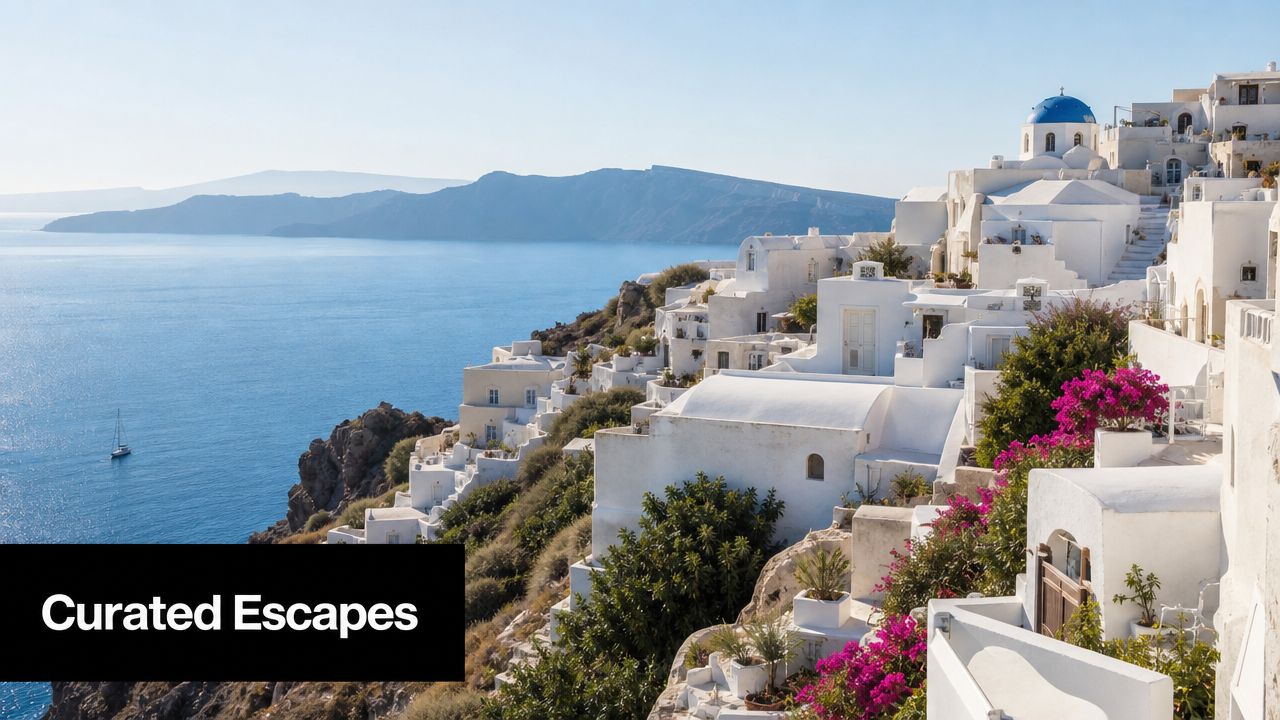
For sun-drenched romance
Cyprus is the cleanest April choice if you want warmth with the fewest logistical compromises. Map & Family's April hot-weather roundup places Cyprus at the top of Europe's April heat rankings and also highlights the Canary Islands for reliably sunny days. For a couples itinerary, that translates into more usable pool time, fewer weather-related adjustments, and less need to build backup plans around every outdoor reservation.
Seville remains one of the smartest spring picks in Spain, as noted earlier. The appeal is not just the warmth. It is the consistency of the experience. Courtyard hotels, shaded terraces, and late dining all make sense here in April, and the city is easy to handle with chauffeured transfers because distances are short and the rhythm stays civilized.
If you are considering a longer Andalusian stay, villa selection matters as much as the city itself. A practical read on Spain vacation homes comparison can help you assess privacy, access, staffing expectations, and whether a countryside address will complicate daily plans.
For cultured cities without summer excess
Rome is one of my strongest recommendations for April because it tolerates weather variation well. If a bright morning turns cool by late afternoon, the day still holds together. Private palace visits, museum time, long lunches, shopping appointments, and a proper hotel bar all sit within a compact framework. You are not relying on a single beach or boat plan to justify the trip.
Athens works in a similar way, with more edge and more volatility between neighborhoods and coast. Choose it for light, energy, and smart city days, then add an island extension only if you are comfortable with shoulder-season marine conditions. In April, mainland Athens often gives you the stronger overall return on time than splitting too early for the islands.
Here's a visual mood reference worth watching before you decide between island glamour and mainland culture:
For atmospheric scenic retreats
Some April itineraries are better built around privacy, scenery, and indoor atmosphere than temperature.
The Scottish Highlands are excellent for clients who value estate stays, dramatic drives, and a sense of removal. April conditions can change quickly by valley, loch, and elevation. That affects helicopter planning, road timing, and even whether a lodge feels romantic or merely remote. Go only if the property is strong enough to carry the day when weather closes in.
The Douro Valley is a more forgiving scenic option. You get vineyard views, river light, and serious hotels, but road transfers and property access still need attention because exposed hillsides and cooler evenings can shift the tone of the trip fast. Keep the schedule light and the hotel standard high.
My direct recommendation
For the safest April result, book southern Europe and keep transfers simple. Cyprus, Seville, Rome, Athens, Malta, and the Canary Islands are the most dependable choices if you want comfort without constant weather workarounds.
For culture with polish, choose Rome first and Athens second.
For scenery, book the Highlands or the Douro only if you want the setting enough to accept April on its own terms. The reward is privacy, mood, and extraordinary properties. The trade-off is that micro-regional shifts in temperature and wind will shape your transport plan, your outdoor time, and sometimes your access.
If you want April done properly, let Haute Black build it around the climate pattern, not just the postcard. Their team arranges the right hotels and villas, private transport timed to local conditions, and preferred access that protects the trip from avoidable friction. Speak with Haute Black to design a European spring itinerary that feels polished from arrival to departure.
Explore Our Guides
Signature Experiences


