Haute Black Journal
Luxury Travel to Iceland: The Definitive 2026 Guide

Marlene Azeez
Director, HauteBlack
View all articles →

# Luxury Travel to Iceland: The Definitive 2026 Guide
June 24, 2026
Iceland has become one of the clearest tests of what luxury travel means. Anyone can spend heavily here. Very few travelers secure the version of Iceland that feels protected, private, and expertly controlled from touchdown to departure.
That distinction matters. The public version of Iceland is easy to buy. Premium rooms, chauffeured transfers, and geothermal bookings are widely available. Real luxury starts where public inventory ends, with private aviation planning, closed-door spa access, exclusive-use stays, and a schedule built around your priorities rather than standard operating hours.
Expense alone proves nothing in Iceland. A high nightly rate does not spare you from exposed arrivals, crowded bathing rituals, or long overland transfers that waste the best part of the day. The right trip is defined by control. You arrive on your terms, move efficiently, and spend your time in places that still feel quiet.
Iceland's appeal remains dramatic, but the old fire-and-ice framing misses the point at this level. What separates a strong trip from an exceptional one is access. Can your advisor secure a geothermal property outside public hours? Can your route shift fast when weather changes? Can your lodge, guide team, aircraft, and ground handling operate as one plan rather than a string of disconnected bookings?
That is the standard discerning clients should use. Haute Black, headquartered in Miami, arranges high-touch Iceland journeys with the right local relationships, which is how private travelers get beyond the visible layer of the destination. Practical details matter too. Iceland rewards proper packing, and luxury cruelty-free winter outerwear is a smarter choice than bulky fashion pieces that look good in a lobby and fail in the field.
For clients who care about privacy, speed, and access, Iceland is not a sightseeing trip. It is an operational exercise in getting the right doors opened, then enjoying a country that still knows how to keep its distance.
An Unforgettable Introduction to Icelandic Luxury
Iceland rewards one thing above all: control. The best version of this country is not bought with a high room rate or a dramatic itinerary headline. It is secured through private access, protected time, and the right people handling the details before you land.
That distinction matters here more than in almost any other luxury destination. Iceland is raw, exposed, and operationally unforgiving. Weather shifts. Distances stretch. Popular sites fill fast. If your trip is built like a standard premium holiday, you will feel every weak point.
Access matters more than amenities
A handsome suite and a polished tasting menu do not define luxury in Iceland. Access does. Can you reach a geothermal experience in privacy rather than arriving with the public? Are you staying in a property designed for true seclusion, or in a well-marketed hotel that still feels busy at breakfast? Is your day built around your preferences, or around whatever the operator could book?
Ask better questions from the start:
- Who controls the schedule: Can your route change quickly when conditions shift, or are you fixed to a rigid plan?
- How protected is your privacy: Are arrivals, spa time, transfers, and excursions handled discreetly, or exposed to other guests?
- What are you paying for: Better linens, or access to remote terrain, private guides, secured reservations, and easy movement across the country?
Iceland is at its best when it feels closed to everyone else.
That is why experienced travelers come here after the obvious circuit. They do not need another branded suite or another property that confuses price with rarity. They want a country that still offers silence, distance, and the feeling that someone with real local reach has opened the right doors. That is the difference a well-connected advisor such as Haute Black brings to Iceland. The public version of the destination is attractive. The private version is the one worth flying for.
There is also a practical dress code, and it has nothing to do with flashy cold-weather fashion. Iceland punishes clothing that looks impressive and performs poorly. For winter departures, review luxury cruelty-free winter outerwear before you finalize packing. In this country, polish only counts if it works in the wind, on the landing zone, and at the lodge.
Luxury travel to Iceland is not about seeing the same landmarks with better luggage. It is about gaining a quieter, more protected, more intelligently arranged version of the country. That is the standard.
The Art of Timing Your Icelandic Journey
Choosing when to go to Iceland isn't a weather question. It's a narrative decision. You're not selecting a month. You're selecting the version of the country you want to inhabit.
Summer for reach and motion
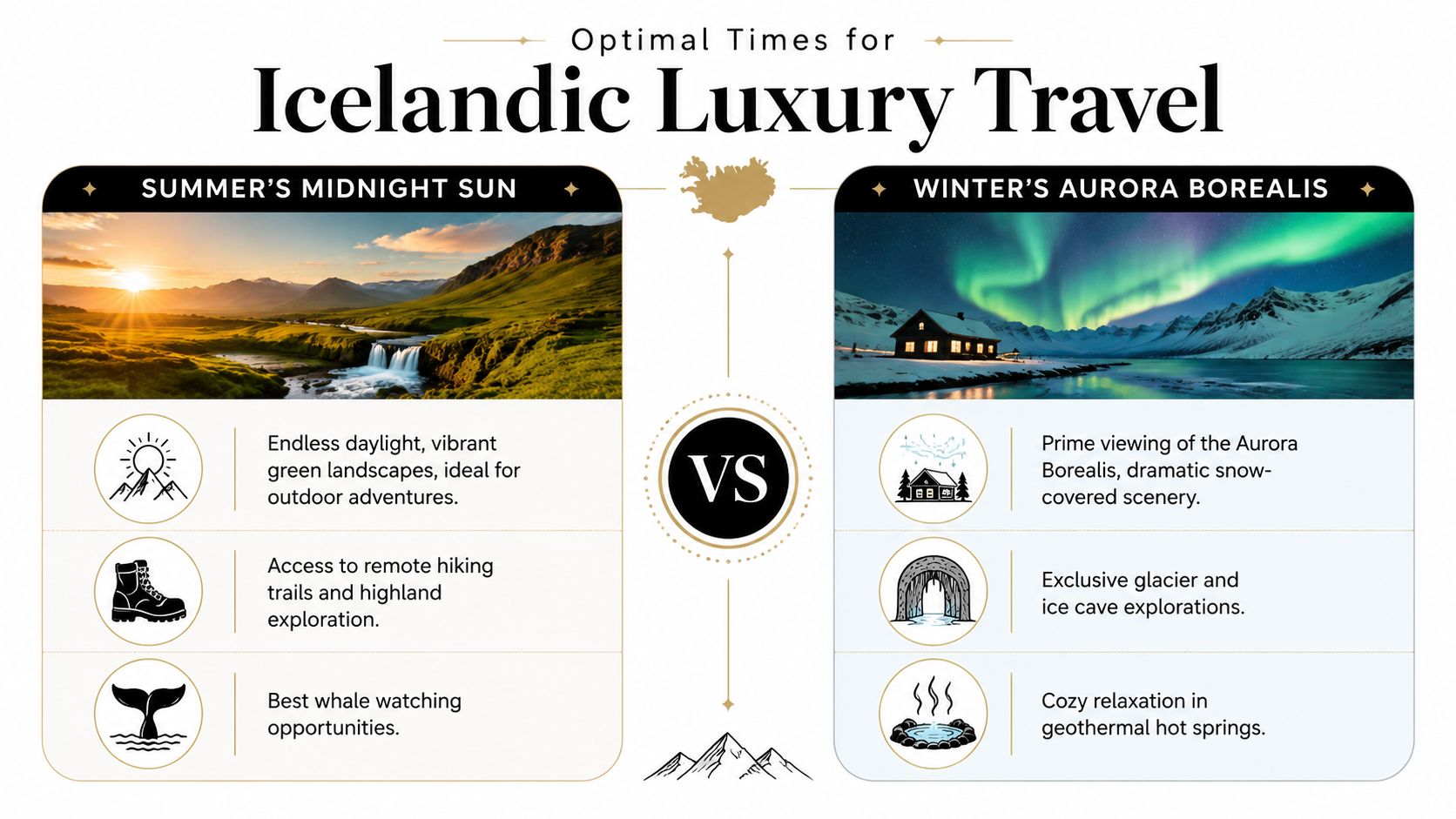
Summer is the season for travelers who want range. Long daylight hours change the rhythm of the trip completely. Helicopter routing becomes more flexible, highland exploration opens up, and ambitious multi-stop days feel expansive rather than rushed.
This is the Iceland for clients who prefer movement over hibernation. Think volcanic overflights, private hiking access, coastal drives that feel cinematic, and dining late without losing daylight. If your priority is covering terrain elegantly, summer is the clean choice.
Winter for atmosphere and enclosure
Winter does the opposite. It narrows the palette and intensifies it. The roads, the sky, the light, the pacing, all of it becomes more selective. That's why winter works so well for clients who don't want to “see everything.” They want to feel inside the place.
The best winter itineraries lean into containment. Fewer bases. Better lodges. More disciplined routing. More private aurora watching, geothermal soaking, glacier environments, and long, controlled evenings.
Practical rule: If you want your trip defined by aerial access and broad geographic sweep, choose summer. If you want it defined by mood, seclusion, and dramatic contrast, choose winter.
A simple way to decide
Here's the version I use with clients who don't need a lecture.
| Season | Best for | What it delivers |
|---|---|---|
| Summer's Midnight Sun | Travelers who want action, scale, and long operating days | Highland access, strong helicopter days, expansive exploration |
| Winter's Aurora Borealis | Travelers who want privacy, atmosphere, and contained luxury | Northern Lights viewing, ice-focused landscapes, lodge-centric rhythm |
What not to do
The mistake is trying to force one season to behave like the other. Don't book winter and expect the trip to feel broad, loose, and endlessly mobile. Don't book summer and expect every moment to feel hushed and inward. Iceland punishes mismatched expectations.
For luxury travel to Iceland, timing should follow temperament. If you're the kind of traveler who wants to wake late, fly far, and still have dinner in daylight, summer is your season. If you want private darkness, geothermal heat, and a stronger sense of retreat, winter wins.
Seamless Arrival and Private Icelandic Transport
Luxury in Iceland starts at the airport, not at the hotel. If your first hour involves lines, luggage confusion, and a generic transfer desk, the tone is already wrong. Iceland works best when the transition from runway to road feels invisible.
Start with controlled arrival
At Keflavík, the right arrival process is simple. Meet on the tarmac or immediately on entry, move through the terminal with assistance, and go directly to a waiting vehicle or onward air transfer. That eliminates the one thing premium travelers shouldn't tolerate in Iceland. Public friction at the exact moment they're most exposed and least patient.
I also advise against improvising ground arrangements after landing. Iceland's appeal is remote terrain. Remote terrain punishes casual logistics.
Choose the transport based on terrain
Most clients need one of two transport models. The first is a privately guided luxury vehicle, often a high-spec Super Jeep or comparable all-terrain setup for routes where road quality, weather, and access conditions matter. The second is rotary-wing movement for travelers who value time compression and direct scenic transfer over road travel entirely.
Both work. They just solve different problems.
1. Private luxury vehicle with guide
Ideal for travelers who want context, flexibility, and control over pacing. This is the right choice for the South Coast, Golden Circle variations, or broader overland journeys where stopping well matters as much as arriving.
2. Helicopter transfer strategy
Better for clients with limited time, stronger privacy requirements, or no interest in long drives. It turns distance into spectacle and avoids the fatigue that can flatten even beautiful itineraries.
3. Hybrid routing
Often the smartest option. Ground where the road itself is part of the experience. Air where overland time adds no value.
The right transport prevents predictable mistakes
Poor Iceland planning usually shows up in three forms:
- Overdriving: Too many hours on the road with not enough payoff.
- Underestimating conditions: Weather and terrain force a last-minute compromise.
- Confusing luxury with upholstery: A premium SUV without a capable routing plan isn't a solution.
For clients who want coordinated in-country vehicle support, private driver standards, and more customized movement planning, ground transportation arrangements can be structured around the itinerary rather than bolted onto it.
Good transport in Iceland does more than move you. It protects the trip from avoidable mediocrity.
Private aviation changes the shape of the trip
For some clients, the answer isn't a transfer. It's an aviation framework. Iceland becomes far more compelling when you can treat it as a sequence of controlled arrivals instead of one long linear route. That matters for executives protecting time, families minimizing fatigue, and public figures who value low-visibility movement.
Private aviation also solves a subtler problem. It allows you to preserve energy for the country itself. Iceland isn't difficult because it lacks beauty. It's difficult because the distances, weather, and operating windows can dilute the experience if they aren't managed with discipline.
The clients who enjoy Iceland most aren't always the ones who spend the most. They're the ones who understand that transport is not back-end admin. It's the architecture of the journey.
Iceland's Sanctuaries of Seclusion and Design
Where you stay in Iceland determines whether the country feels refined or merely rugged. The strongest properties don't fight the scenery. They frame it. They also understand something many luxury hotels elsewhere miss. In Iceland, privacy has to be built into the experience, not added as a VIP note.
Three accommodation types that matter
The top end of Iceland falls into three distinct categories, and each serves a different kind of traveler.
Flagship luxury hotels
These are the properties clients know by reputation. They usually offer polished spa infrastructure, strong dining, and easy positioning near major routes or iconic settings. They work well as bookends for a trip or for travelers who want predictability and service density.
The upside is convenience and consistency. The downside is that even the best-known hotels can still feel observed if they're heavily trafficked.
Exclusive-use lodges
Iceland emerges as a compelling destination for serious privacy. Exclusive-use lodges offer control over your environment, your schedule, and often your activity flow. They're ideal for families, close friend groups, and clients who don't want the social randomness of a hotel lobby.
This category also aligns with what defines real luxury in the country. As LandLopers notes in its Iceland luxury overview, personalized activities such as private Northern Lights viewing tours from secluded geothermal facilities remove logistical friction and create a more exclusive, tailor-made journey. That same logic applies to where you sleep.
Private villas and architect-designed retreats
For some travelers, even a lodge is too structured. They want a residence. Not a rental with premium marketing language, but a property with design integrity, isolation, staffing potential, and enough setting to feel like a destination in itself.
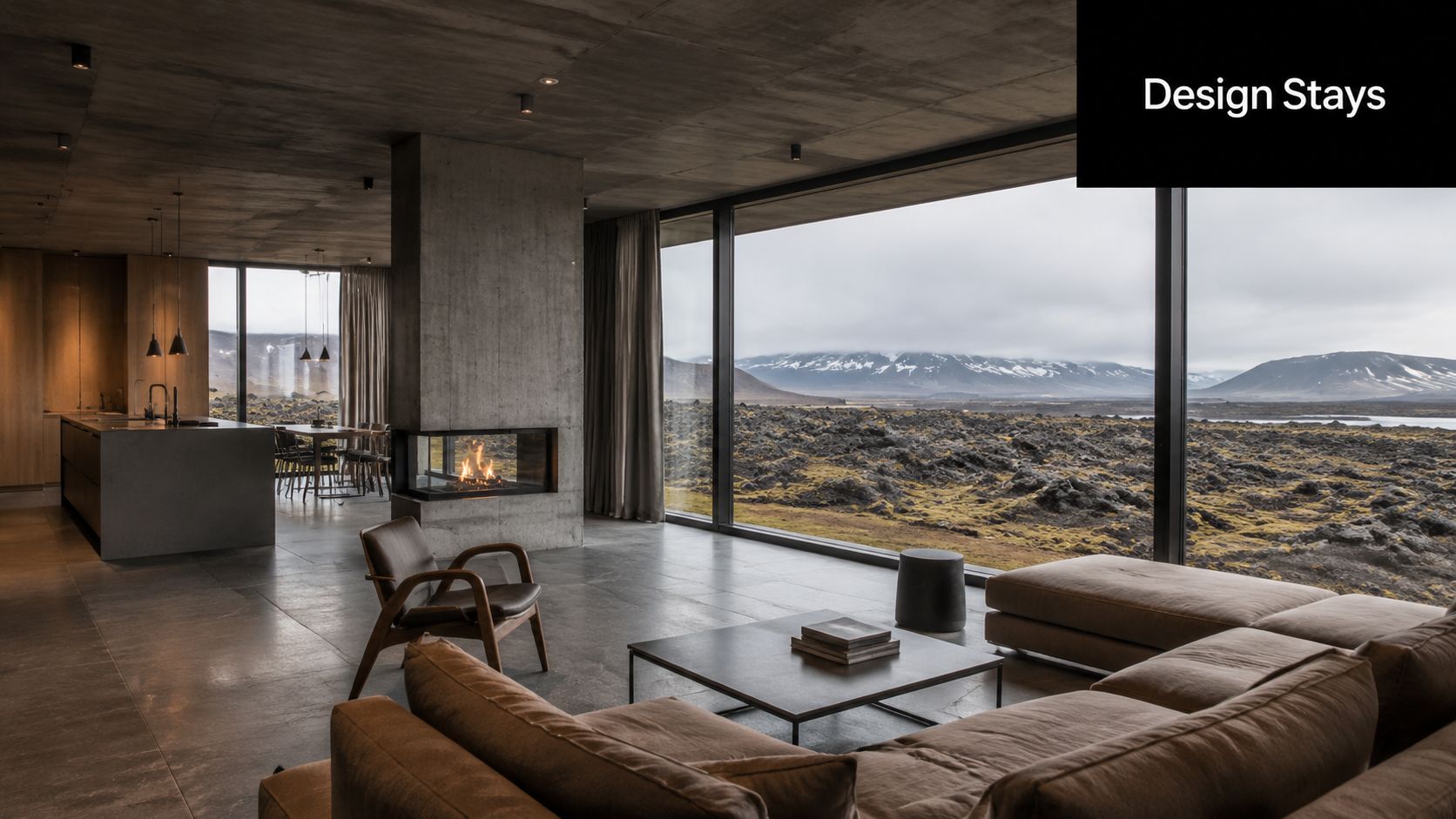
That's especially relevant in Iceland, where visual noise is low and the environment does much of the work. The best private stays understand restraint. Clean architecture, controlled materials, warm interiors, and uninterrupted views beat decorative excess every time.
A focused portfolio of private villas and estates is often the right route for clients who need discretion, family space, or room for security and staff considerations.
What makes a sanctuary feel expensive in the right way
A property in Iceland earns its rate when it delivers the following:
- Distance from public traffic: Seclusion isn't theoretical. You should feel it in the drive-in, the sightlines, and the silence.
- Design that respects the natural setting: Minimalism works here because the environment is already dramatic.
- Operational competence: Staff who understand weather shifts, excursion timing, and guest privacy are worth far more than decorative luxury cues.
- Wellness without performance: Geothermal soaking, private spa time, and low-friction transitions matter more than elaborate spa menus.
Here's a look at the mood the best properties aim for.
My recommendation
For most high-end Iceland itineraries, I don't recommend staying in one accommodation type throughout. Pair a design-led hotel with an exclusive-use retreat. Or begin with a private villa near a key region, then end in a spa-forward property where recovery is built into the final days.
The most expensive room in Iceland isn't automatically the most luxurious one. The winning property is the one that reduces exposure, simplifies movement, and makes the landscape feel private.
Curated Experiences Beyond the Crowds
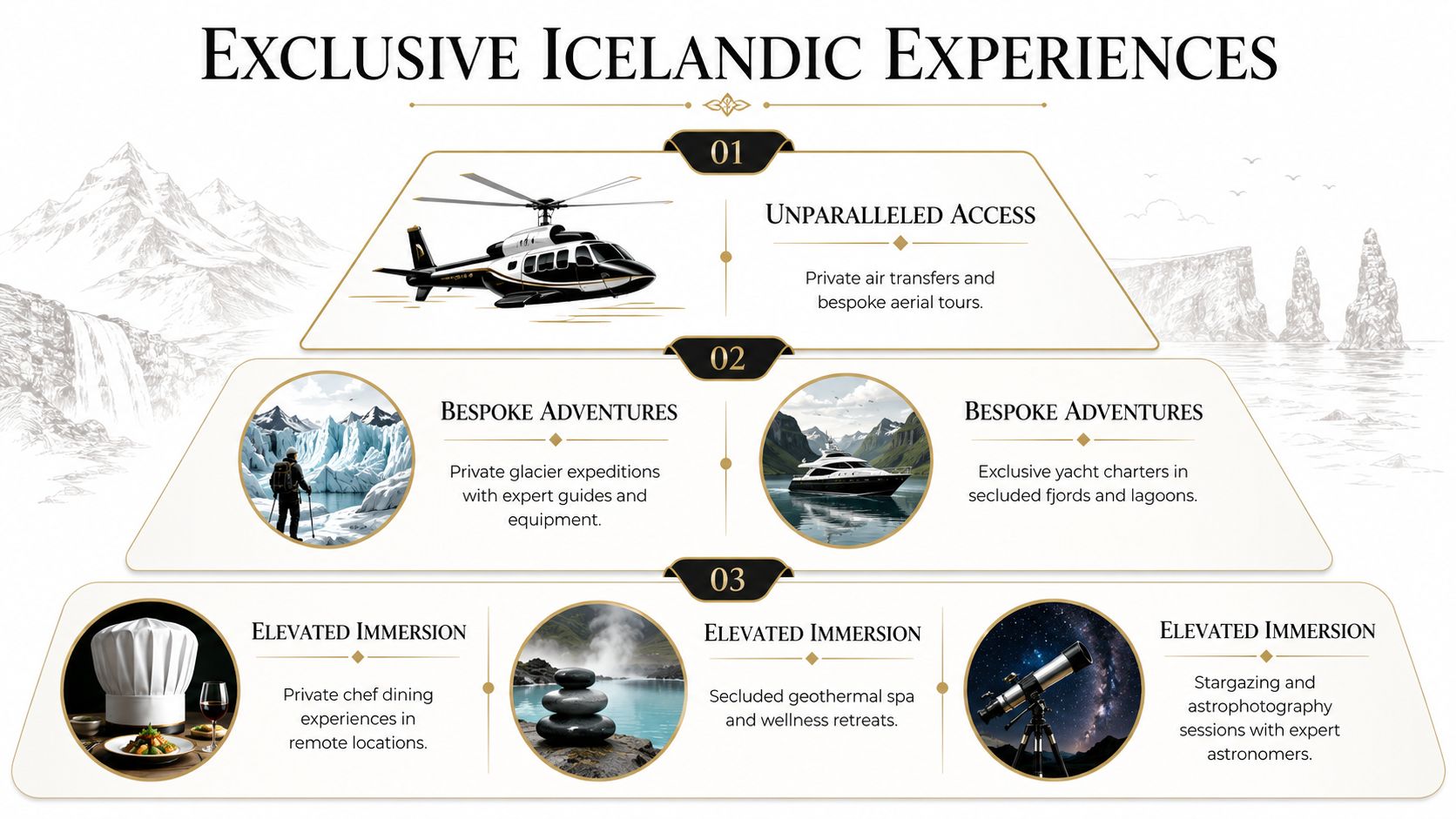
The difference between premium tourism and luxury travel to Iceland comes down to one word. Curated. Not “private” in the loose marketing sense. Actually curated. That means timing, access, routing, guide quality, and setting have all been shaped around the traveler rather than around a public template.
The top tier is access by air
If you want a clean benchmark for Icelandic luxury, use helicopter flightseeing. It changes everything. Scenic scale improves, travel time drops, and areas that feel remote by road become operationally elegant.
That's also where the market draws a visible line. According to Black Tomato's Iceland destination page, week-long luxury trips cost upwards of $11,500 USD per person when they include high-end elements such as helicopter flightseeing, private guides, premium accommodation, and access to areas like the Vatnajökull ice cap.
That number matters less as a budget headline than as a signal. Iceland's upper tier is built around difficult logistics and specialist access. That's what you're buying.
Bespoke adventures that justify the country
Below air access sits the second tier. Most memorable Iceland itineraries are made here.
- Private glacier operations: Snowmobiling, glacier approaches, or guided ice environments work best when the pace is controlled and the launch timing avoids public clustering.
- Remote water access: Private Zodiac or boat-based exploration feels completely different when it's handled as a closed experience rather than an add-on excursion.
- Backcountry Super Jeep days: Worth doing when the guide, route, and weather judgment are strong. Not worth doing as a generic “adventure day.”
The key is that each experience should solve for exclusivity and calm, not just adrenaline.
Elevated immersion is where taste shows
This is the layer many itineraries neglect. They spend heavily on movement and scenery, then become strangely ordinary when the day winds down. A well-built Iceland journey needs immersive softness too.
That can mean:
| Experience type | What separates it from the standard version |
|---|---|
| Private dining | Chef-led meals in settings that feel geographically tied to the day's route |
| Geothermal wellness | Secluded soaks arranged for privacy rather than public spa traffic |
| Night-sky programming | Aurora or stargazing built around conditions, comfort, and expert interpretation |
For travelers prioritizing winter atmosphere, a bespoke Northern Lights experience in Iceland can fit naturally into a broader itinerary built around lodge privacy and flexible evening timing.
You're not trying to collect Icelandic activities. You're trying to remove the public version of them.
My view on what to skip
Skip anything that relies on volume, fixed departure times, or “VIP” labels without actual operational difference. If the experience begins in a crowded staging area and follows a rigid public cadence, it may still be good, but it isn't luxury.
The strongest Iceland programs have fewer activities than most travelers expect. They just execute each one better. One private helicopter landing with the right guide is worth more than a full day of rushed touring. One geothermal session with true seclusion beats a famous spa at peak traffic. One properly staged glacier encounter is better than three forgettable boxes checked in succession.
That's the framework. Access first. Bespoke adventure second. Refined immersion third. Everything else is brochure filler.
Sample Bespoke Itineraries for Discerning Travelers
It helps to think in storylines, not nights and transfers. Iceland isn't a destination where you should start with a checklist. Start with the kind of trip you want the country to become, then shape the route around that.
A useful pricing reference sits in the private-guide market. A 9-day private-guide itinerary for two costs approximately $19,700 USD, covering exclusive accommodations, a dedicated guide, and private transport throughout, according to A Luxury Travel Blog's Iceland cost breakdown. That's not the ceiling. It's a realistic benchmark for a high-touch journey where logistics are handled properly.
The ultimate romantic escape
This is the Iceland I'd build for a couple who wants privacy, contrast, and memorable pacing rather than nonstop motion.
Begin in Reykjavík only briefly. Long enough to recover, have a strong dinner, and avoid wasting emotional energy on urban filler. Then move quickly into a more secluded base where spa access, volcanic views, and quiet evenings take over. A helicopter day belongs early in the journey, while energy is high and the scenery still feels like a revelation.
The middle of the itinerary should narrow rather than expand. One extraordinary lodge beats multiple hotel changes. Add a private geothermal soak, one chef-led dinner, and one carefully timed night for aurora viewing or late-summer golden light, depending on season.
What makes it work
- Fewer bases: Less repacking, more atmosphere.
- One signature aerial experience: It gives the trip its defining memory.
- Intentional evenings: Iceland is at its most romantic when the day doesn't end in transit.
The adventurous family expedition
For affluent families, Iceland works when the days feel active but not punishing. The mistake is building an adult adventure trip and expecting children or teens to adapt. They won't. Good family Iceland itineraries are engineered around momentum, recovery, and variety.
Open with animal or coastline interest if season allows, then layer in softer entry points to the natural surroundings. Gentle glacier walks, dramatic but manageable black-sand scenery, farm visits, and structured Super Jeep touring tend to land well. Families also benefit from accommodations that allow everyone to decompress separately. That usually means suites, cottages, or lodge-style layouts instead of standard connecting-room compromises.
A family version of luxury travel to Iceland should also protect decision fatigue. Don't make every meal an event. Don't overschedule mornings after long route days. Give children one or two experiences they can own rather than dragging them through an adult fantasy with branded snacks.
Families remember rhythm more than luxury labels. If the trip flows, the destination feels magical. If it drags, no suite can save it.
The multi-generational retreat
This is the format Iceland's mainstream luxury content still underserves. Multi-generational travel here should revolve around one strong residence or exclusive-use lodge, not constant movement. Grandparents, adult children, younger children, and staff all need different things. A single-property strategy solves more than it sacrifices.
Use the accommodation as a private club. Bring in activities selectively. Some guests may do a more adventurous outing while others stay back for spa time, a scenic drive, or a slower cultural day. Then regroup for dinner and evening viewing. Iceland supports that model well because the natural environment itself carries the emotional weight. You don't need everyone doing the same thing every hour.
The strength of this trip lies in controlled flexibility.
1. A shared base keeps the group together without forcing constant compromise.
2. Split programming allows mobility, energy, and confidence levels to coexist.
3. Private dining and evening wellness create the shared moments that matter.
How I'd think about investment
The benchmark above tells you what competent private touring costs before you even reach the highest layer of access. Add helicopters, more exclusive accommodation, stronger privacy requirements, or broader staffing needs, and the structure becomes more specialized.
That's why I advise clients to budget around priorities rather than around arbitrary nightly targets. In Iceland, spending should go first toward routing, privacy, and guide quality. That's what changes the trip. Decorative upgrades come later.
The Haute Black Advantage Orchestrating the Extraordinary
Iceland exposes weak planning faster than almost any luxury destination. The weather shifts. Distances look manageable until they aren't. Public inventory creates the illusion of access right up until you realize the best rooms, the right guides, and the most discreet arrangements were never sitting online in the first place.
Why advisory matters more in Iceland
A destination like Paris can absorb mediocre planning. Iceland can't. If your advisor doesn't understand sequencing, privacy, or recovery time between remote experiences, the itinerary becomes expensive and clumsy very quickly.
That's where a structured luxury platform has practical value. Haute Black's news and editorial hub is where this kind of travel thinking belongs, because the audience for Iceland at this level isn't looking for another generic destination roundup. They need coordination across aviation, accommodations, ground handling, and access.
What changes when the trip is properly orchestrated
The value isn't just in reservations. It's in alignment.
- Property alignment: Matching the right accommodation type to the traveler, not just the destination.
- Operational alignment: Building around weather windows, geography, and realistic energy levels.
- Access alignment: Knowing when a private vehicle is enough and when aviation or full buyout privacy is the smarter call.
A strong advisor also protects clients from false luxury. Iceland is full of experiences that are expensive, scenic, and badly paced. The difference between a polished itinerary and a forgettable one often comes down to what gets edited out.
My position
If you want a trip assembled from public booking engines and disconnected premium add-ons, you don't need much help. If you want Iceland to feel closed to the outside world, you do. That means someone has to manage the sequence, the backup options, the privacy requirements, and the relationships with the people on the ground who can make the plan hold.
The highest form of luxury in Iceland isn't indulgence. It's control without visible effort.
That's the standard worth paying for. Not more activity. Not more labels. Better orchestration.
If you want Iceland handled at that level, speak with Haute Black about a bespoke itinerary built around privacy, access, and clean execution from arrival to departure.