Haute Black Journal
Best Places to Visit in Middle East 2026: Luxury Travel

Marlene Azeez
Director, HauteBlack
View all articles →
# Best Places to Visit in Middle East 2026: Luxury Travel
July 15, 2026
Saudi Arabia's tourism rise is forcing a reappraisal of the region. In 2024, the Kingdom drew a record 29.69 million international visitors, up 9% from 27.42 million in 2023, while tourism revenue reached SR153.61 billion ($40.95 billion), a 13.82% annual increase, according to Travel And Tour World's Middle East tourism report. That matters because it confirms what discerning travelers already know. The Middle East isn't a fringe luxury play anymore. It's one of the world's most consequential high-end travel arenas.
Beyond the brochure, this region rewards people who travel with precision. One itinerary can move from a private mosque visit in Abu Dhabi to a curator-led museum morning in Doha, then on to a desert camp in Jordan or a riad buyout in Marrakech. The mistake most travelers make is treating the Middle East as one monolithic destination. It isn't. It's a mosaic of different tempos, standards, access rules, and levels of privacy.
That's exactly why the best places to visit in Middle East conversations need to mature. A serious traveler doesn't just ask where to go. They ask which arrival is discreet, which property protects privacy, which museum can be experienced before public hours, which transfer avoids friction, and which destination pairs well with a family office calendar or a founder's compressed schedule.
The region also demands nuance on security and logistics. Advisory conditions remain fragmented, with some countries and subregions carrying the highest warning tiers while established luxury hubs such as Dubai, Riyadh, and Doha continue to attract global travelers, as outlined in The Traveler's analysis of the Middle East's return to global travel. For clients who value flawless execution, that fragmentation isn't background noise. It's itinerary design.
A high-touch advisor makes all the difference to the entire experience. The right team handles private aviation, helicopter lifts, protected ground movements, villa staffing, hard-to-get dining, and the kind of quiet upgrades that never appear on a booking engine. These are the places to visit in the Middle East if you want access, polish, and control.
1. Dubai, United Arab Emirates
Dubai remains the cleanest entry point into Middle Eastern luxury. It's fast, polished, and built for travelers who expect every moving part to work on the first attempt. You come here for altitude, water, design, and service that understands urgency.
The city also sits inside a market with real depth. The Middle East luxury travel market reached USD 56.46 billion in 2023 and is projected to grow to USD 86.02 billion by 2032, with a 6.2% CAGR, according to Archive Market Research's Middle East luxury travel outlook. Dubai is one of the clearest expressions of that demand. The appetite is for high-design stays, customized access, and itineraries built around experiences rather than passive sightseeing.
Where Dubai performs best
Stay where the city softens. Four Seasons Hotel Dubai at Jumeirah Beach works for travelers who want private beach access without the theatricality of some headline addresses. Burj Al Arab Jumeirah still delivers spectacle, especially for lunch or dinner built around views and arrival choreography, while Atlantis The Palm suits families who want maximal convenience with recognizable brand standards.
A strong Dubai program balances flash with old-city texture. Pair the Burj Khalifa and Dubai Mall with an early private walk through Al Fahidi Historical District and a cultural session at the Sheikh Mohammed Centre. Then pivot to a late-afternoon yacht departure off the marina or a desert setup timed for sunset.
Practical rule: In Dubai, sequence matters more than distance. Build cultural visits in the morning, save beach or retail for midday, and reserve aerial arrivals, yacht charters, and desert dining for late afternoon into evening.
For couples, it's still one of the strongest cities in the region for polished romance. If you want softer planning inspiration for downtime around a business-heavy itinerary, this roundup of top 10 romantic places in Dubai is useful.
How to do it properly
- Best season: October through April gives you the easiest outdoor rhythm for beach clubs, desert drives, and terrace dining.
- Best arrival: Use Haute Jets or helicopter coordination when the calendar is compressed and you want to cut the usual city-friction moments.
- Best stay style: Emirates Hills private estates work well for multigenerational groups who need staff, security, and room to entertain.
For a more detailed city strategy, use Haute Black's Dubai luxury guide.
2. Petra, Jordan
Petra isn't a box to tick. It's one of the rare places where scale, silence, and historical weight still overpower the camera roll. Even seasoned travelers who've seen the obvious icons tend to underestimate how emotional the first approach through the Siq can feel when the site is quiet.
Lead with exclusivity here, not volume.
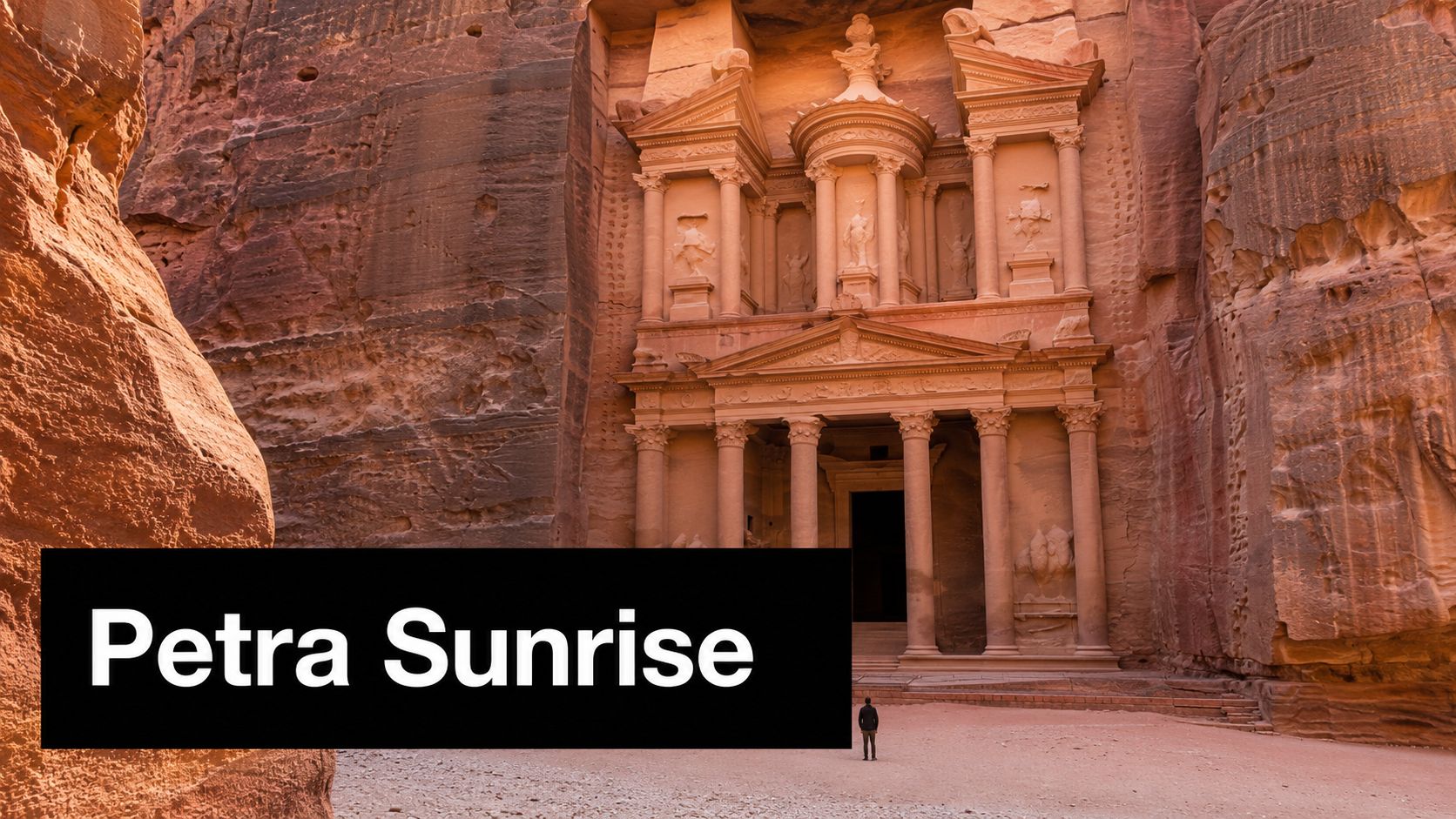
The standard visit is crowded, linear, and often rushed. The luxury version is the opposite. It starts with private timing, a guide who can move beyond memorized script, and a full-day pace that includes pauses, secondary viewpoints, and a proper endgame at a premium Bedouin-style camp rather than a same-day retreat.
The right Petra rhythm
Arrive early from Amman, ideally with private transfer or helicopter coordination if time is your tightest constraint. Move first through the Siq to Al-Khazneh while the site still feels cinematic rather than congested. Then continue beyond the Treasury, because many casual visitors never commit to the longer arc of Petra and miss the point entirely.
The Monastery rewards stamina, and the High Place of Sacrifice gives the surroundings more context. If you travel with a private Bedouin guide, the storytelling improves dramatically. So does the route intelligence. The best guides know when to push, when to stop, and where the site opens visually.
Petra works best as a controlled, extended experience. Rushing in and out from Amman is possible. It's not how a connoisseur should do it.
What to pair with it
Petra is strongest when folded into a Jordan program rather than treated as an isolated excursion.
- Best pairing: Combine it with the Dead Sea for recovery and contrast.
- Best overnight extension: Add a premium desert camp experience with proper bedding, strong food, and night-sky programming.
- Best traveler profile: Culturally motivated couples, families with older children, and executives who want substance instead of resort repetition.
A short visual primer helps set expectations before arrival.
Among the best places to visit in Middle East itineraries, Petra stands apart because it resists superficial luxury. You enhance it through access, timing, and interpretation, not through excess.
3. Abu Dhabi, United Arab Emirates
Abu Dhabi is where discerning travelers go when they want the Gulf without constant performance. It's statelier than Dubai, more measured, and often better suited to people who want cultural seriousness with their resort life.
Sheikh Zayed Grand Mosque remains one of the most compelling architectural experiences in the region. Done correctly, it doesn't feel like a tourist stop. It feels ceremonial. Golden hour is the right window, especially if the visit is built around private transport and enough unhurried time to appreciate the detailing rather than rush for photographs.
Why Abu Dhabi works for discreet luxury
The city has range. Emirates Palace still matters for travelers who want scale, private gardens, and a recognizable sense of occasion. Saadiyat Island appeals to clients who prefer cleaner lines, beach time, and museum adjacency. Louvre Abu Dhabi gives the city intellectual weight, especially when access is handled privately and the visit is shaped around specific collections rather than a generic audio-guide sweep.
This is also one of the easiest places in the region to design a split itinerary. You can move from formal cultural programming to yacht time along the Corniche, then to a private dinner in a polished hotel setting without losing momentum.
Best use of your time
- For culture: Prioritize the mosque and Louvre Abu Dhabi.
- For privacy: Stay on Saadiyat or in a secluded villa setup rather than in the busiest business corridors.
- For effortless movement: Use helicopter transfers when linking Abu Dhabi and Dubai on the same journey.
Abu Dhabi shines with travelers who are no longer chasing novelty for its own sake. It gives you refinement, controlled pacing, and enough gravitas to justify a dedicated stay instead of a day trip.
4. Istanbul, Turkey
Istanbul is one of the few cities that can satisfy a collector of antiquity, a design obsessive, and a serious food traveler in the same day. It doesn't need explanation. It needs editing. There's too much here, and most itineraries collapse under their own ambition.
The answer is to organize the city around private access and water.
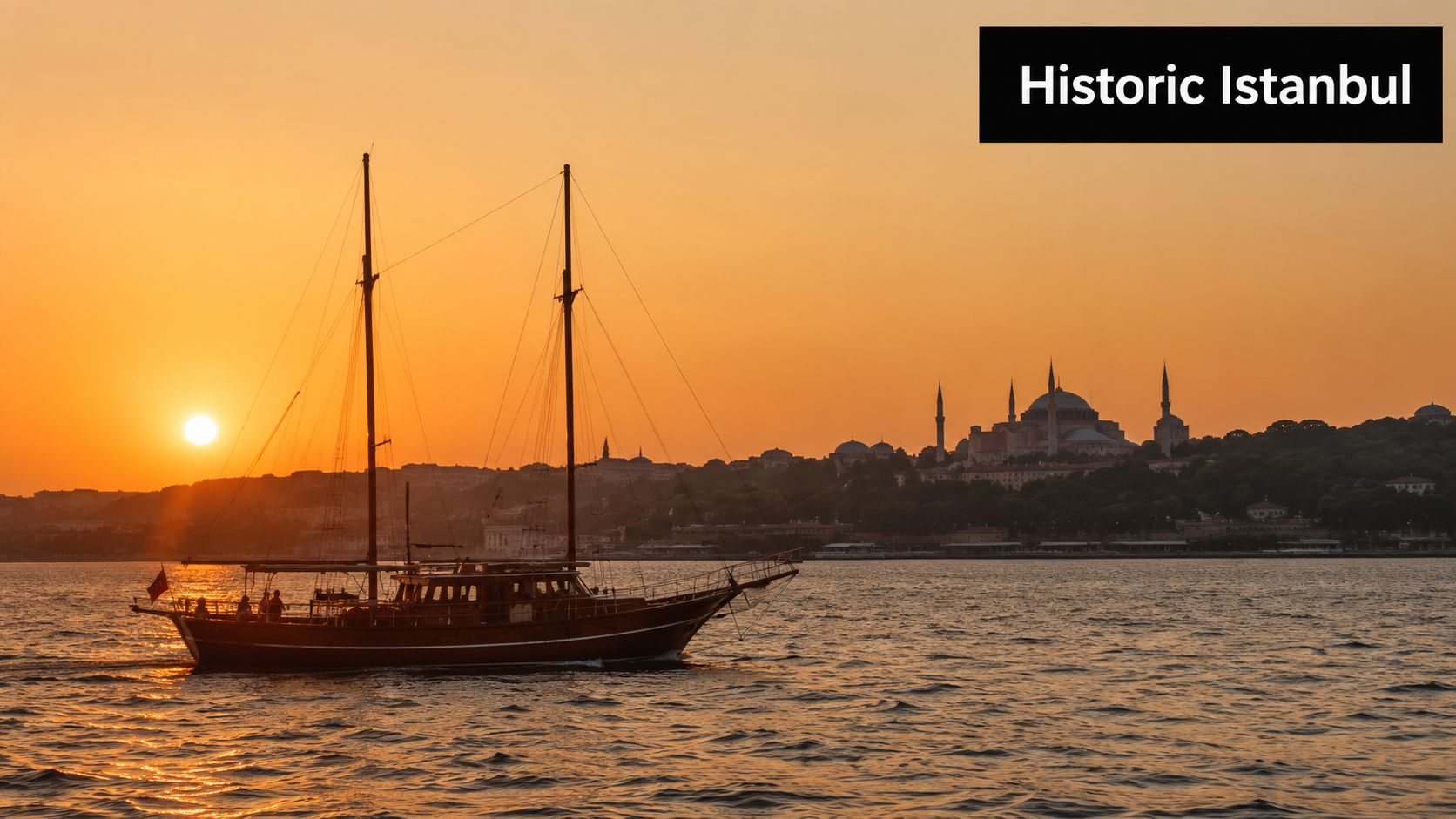
Base yourself where history feels immediate. Four Seasons Hotel Sultanahmet is compelling for travelers who want to wake up with old-city atmosphere rather than commute into it. Then reserve the city's busiest icons for the earliest possible windows. Hagia Sophia, the Blue Mosque, and Topkapi Palace all reward expert-led interpretation, especially when your guide can move comfortably between art history, religion, imperial politics, and urban context.
How to keep Istanbul elegant
A private Bosphorus charter changes the entire trip. The city makes more sense from the water. Palaces align, neighborhoods reveal their hierarchy, and dinner onboard can become the social centerpiece of the stay if you're traveling as a couple or with a small private group.
The second move is to avoid over-programming. One palace, one mosque, one market, one wellness stop. That's enough for a strong day. Add a luxury hammam in the late afternoon and the city begins to feel restorative rather than exhaustive.
Advisor's note: Istanbul punishes dense scheduling. Traffic is real, distances expand quickly, and the best version of the city comes from strategic selectivity.
Extend it the right way
The strongest add-on is Cappadocia. If you want one of the region's most polished dual-destination combinations, use Haute Black's Istanbul, Cappadocia, and Turquoise Coast journey. It works especially well for couples, celebratory travel, and clients who want a cultural opening before shifting into lighter, more scenic days.
Among the best places to visit in the Middle East, Istanbul offers the broadest emotional range. It can be imperial, intimate, frenetic, sacred, and sensual, often before lunch.
5. Dead Sea, Jordan & Palestine
The Dead Sea is where you go to recalibrate. It isn't about urban energy or monument-driven touring. It's about recovery, stillness, and the kind of low-exertion luxury that works after Petra, Amman, or a heavier regional schedule.
Its appeal is also fundamentally physical. The water, the mud, the desert light, the sense of being removed from ordinary pace. This is a destination that should be handled as a wellness interlude, not as a quick novelty stop for the predictable floating photograph.
Why it earns a place on a serious itinerary
The Dead Sea is widely known as Earth's lowest point, and the surrounding resort environment lends itself to spa programming, private beach time, and slow mornings. The right hotel matters more here than in many destination categories, because the property carries much of the experience. You want strong wellness facilities, protected privacy, and enough room design to make staying in feel intentional.
A proper stay includes mud treatments, water access timed around comfort, and enough recovery time afterward. Rushing from arrival to spa to departure strips the destination of its value.
Best approach
- Stay length: Give it at least a full night, ideally more if Petra comes before it.
- Use case: Excellent for couples, founders between meetings, and families needing one low-friction reset point.
- Logistics: Helicopter or private road transfer from Amman keeps the transition clean.
The Dead Sea belongs on any essential list of places to visit in Middle East travel because it introduces a different register. Not spectacle. Restoration.
6. Marrakech, Morocco
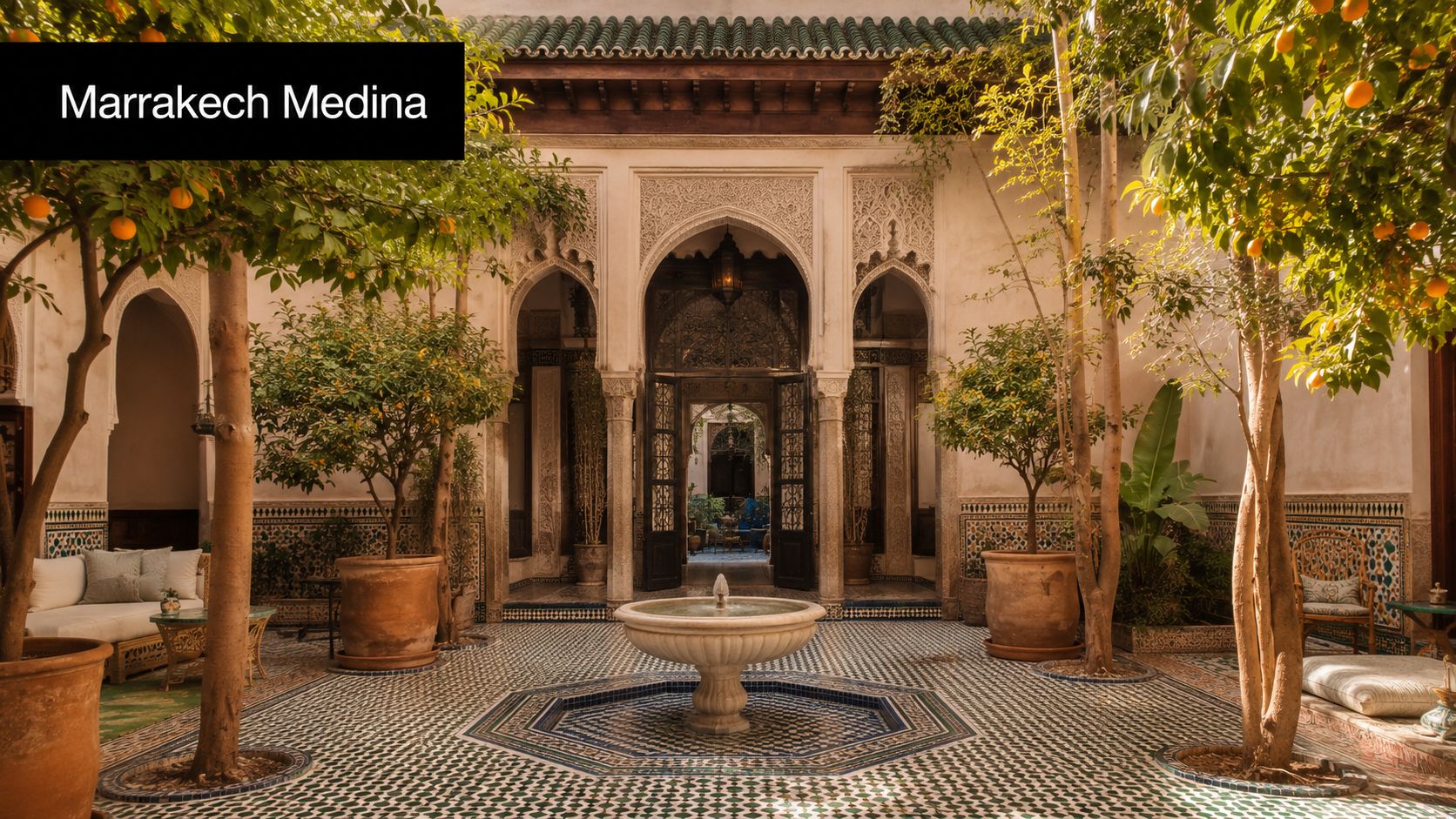
Marrakech deals in atmosphere. It seduces through enclosure, texture, and ritual. The medina compresses sound and color, while the best riads open inward and restore silence the second the door shuts behind you.
For luxury travelers, the city's key decision is whether to live inside the medina or retreat just outside it. I favor a serious riad buyout for travelers who value intimacy, private staff, and architectural soul. Large palace hotels have their place, but they can flatten what makes Marrakech interesting.
The right Marrakech formula
Begin early. The medina is best before it fully wakes. Private walks through the souks and historic quarters in the morning feel informed and elegant; the same streets at peak intensity can feel like work if the trip isn't carefully choreographed. Bahia Palace also benefits from early timing, especially with a guide who can talk craft, court life, and spatial logic rather than just chronology.
Then slow the city down. Book a long lunch in a garden setting, arrange a private cooking session in your riad, or dedicate an afternoon to hammam and in-house spa rituals. Marrakech rewards sequencing that alternates sensory density with retreat.
What sophisticated travelers do differently
- For shopping: Use a connected local fixer or personal shopper. Quality varies sharply, and time disappears fast without one.
- For extension: Pair Marrakech with the Atlas Mountains, Essaouira, or a premium Sahara camp depending on whether you want altitude, coast, or desert.
- For families: A staffed riad with a chef and dedicated host can outperform a hotel suite setup by a wide margin.
Marrakech remains one of the best places to visit in the Middle East for travelers who value design, hospitality theater, and residential-style privacy over overt flash.
7. Doha, Qatar
Doha is for travelers who appreciate clean infrastructure, polished service, and a city that understands both executive movement and cultural programming. It works especially well for people whose schedules mix meetings, events, and leisure windows too short for an operationally messy destination.
This is also a city shaped by intentional state-backed tourism development. Strategy& described a government playbook that includes identifying target tourist segments and preparing destinations with appropriate accommodation and transport infrastructure in order to attract specific socioeconomic profiles, as detailed in Strategy&’s report on launching a thriving tourism sector in the Middle East. In practice, that means travelers in Doha often feel the pipeline from policy to experience. Better arrivals, better cultural assets, and better hospitality alignment.
Where Doha excels
Museum of Islamic Art is the city's intellectual anchor and deserves private handling if possible. The Pearl-Qatar works when you want contemporary waterfront living and easy dining access. Four Seasons Hotel Doha and Ritz-Carlton Doha both fit travelers who expect international standards and concierge competence from the first touchpoint.
Doha also punches above its size for event-led travel. Sporting occasions, private business hosting, and short-notice executive gatherings are easier to organize here than in many legacy capitals because the city's operational logic is newer and more coherent.
Doha doesn't ask you to tolerate friction in exchange for culture. It gives you both.
Best uses for Doha
- Business-meets-leisure: Excellent for summit travel, investor meetings, and board-level gatherings with a polished leisure overlay.
- Cultural stopover: Strong as a short, elegant stay between Europe, the Gulf, and East Africa.
- Private access: Curator-led museum visits and secured dining remain the highest-value upgrades.
For travelers assembling a Gulf circuit, Doha is one of the smartest stops because it combines discretion, efficiency, and contemporary luxury without trying too hard to prove itself.
8. Luxor & the Nile River, Egypt
Egypt is one of the few destinations where excess is justified. The scale of the monuments can absorb it. Luxor in particular needs time, expert interpretation, and a vessel that turns transit into pleasure rather than dead space.
If Cairo gives you density, Luxor gives you revelation. Karnak Temple, Luxor Temple, and the Valley of the Kings are not sites to skim. They're environments. The right Egyptologist changes everything, because this is a destination where context doesn't merely enrich the visit. It makes the visit legible.
Why the Nile is the luxury move
A well-run Nile cruise remains one of the most civilized ways to travel in the region. You unpack once, move through history without logistical fatigue, and wake into changing scenery that keeps the journey from becoming museum-saturated. The vessel should feel residential, not merely premium. Good suites, strong cuisine, shaded deck life, and staff who can manage private touring cadence all matter.
The strongest itineraries start or end in Luxor, where temple access can be shaped around early mornings and strategic sequencing. Restrict the number of heavy archaeological visits in a single day. Egypt rewards absorption, not accumulation.
What to prioritize
- Guide quality: Use an Egyptologist with scholarly depth and polished bedside manner.
- Cruise style: Choose a high-touch river vessel over a large-format operation.
- Access strategy: Build private or low-traffic timing into the Valley of the Kings and major temples whenever possible.
For a more focused planning framework, see Haute Black's ultimate guide to luxury Nile River cruises.
Among the best places to visit in Middle East travel, Luxor and the Nile stand out because they deliver one of luxury travel's rarest combinations. Intellectual seriousness and deep ease.
9. Oman: Muscat & Coastal Regions
Oman is the antidote to overdeveloped luxury. It offers elegance without aggressive branding and scenery that still feels unedited. Muscat, the mountains, and the coast give you a more restrained Arabia. That's exactly the appeal.
Start in Muscat. The Sultan Qaboos Grand Mosque, the corniche, the old forts, and the city's low-slung visual identity make an immediate impression. Unlike flashier Gulf capitals, Muscat never overwhelms. It invites you in gently.
Why Oman works so well for private travel
The country lends itself to multi-texture itineraries. One day can hold a cultural morning in Muscat, an afternoon transfer into the mountains, and a dinner with altitude and silence. Another can move toward the sea for dhow sailing, diving, or a beach retreat that feels removed.
Properties such as Alila Jabal Akhdar and Six Senses Zighy Bay fit different moods but the same traveler. One leans into mountain drama and cooler air. The other offers coastal seclusion with strong villa logic and controlled privacy.
Best structure for an Oman stay
- For couples: Combine mountain seclusion with coast, not city alone.
- For families: Add wadi excursions and soft-adventure days with expert guides.
- For executives: Oman works beautifully as a decompression destination after busier Gulf cities.
The luxury here is space, quiet competence, and the absence of unnecessary theater. In a region known for grandeur, Oman proves restraint can be just as compelling.
10. Bahrain: Modern Oasis & Cultural Heritage
Bahrain is underestimated, and that's part of its charm. It doesn't dominate luxury conversations, but for the right traveler it performs well as a compact Gulf base with business utility, good hospitality, and enough culture to warrant more than a transactional stop.
Manama is easy to get around, which makes it useful for executive travel and short regional hops. You can handle meetings, fit in a museum visit, secure a polished dinner, and still keep the pace comfortable. That matters when the trip has practical obligations alongside leisure.
Where Bahrain fits best
Bahrain National Museum gives the destination grounding. Al-Fateh Grand Mosque and heritage-driven experiences around pearl-diving history help distinguish the island from its larger neighbors. Bahrain Bay and leading beachfront properties suit travelers who want a familiar luxury framework with less noise than Dubai or Doha.
The broader luxury travel market context also supports Bahrain's role. In the wider Middle East and Africa region, the luxury travel segment accounted for USD 0.37 billion in 2025, representing 13.49% of global luxury travel revenue, with an estimated rise to USD 0.4 billion in 2026, according to Fortune Business Insights' luxury travel market data. For Bahrain, that translates less into mass scale and more into viable premium positioning through branded hotels, high-touch concierge services, and efficient VIP handling.
Who should choose Bahrain
- Regional business travelers: Excellent as a practical Gulf meetings hub.
- Repeat Middle East visitors: A smart addition for those who've already done the headline capitals.
- Social travelers: Useful for private entertaining, yacht time, and member-style club access.
Bahrain isn't the loudest answer to the question of places to visit in Middle East travel. It's the insider answer.
Top 10 Middle East Destinations Comparison
| Destination | Logistics / Complexity 🔄 | Cost & Resources ⚡ | Expected Outcomes ⭐📊 | Ideal Use Cases 💡 | Key Advantages |
|---|---|---|---|---|---|
| Dubai, United Arab Emirates | Low, world-class transport, easy hub access | High, premium hotels, private transfers, concierge | ⭐⭐⭐⭐ Luxury, VIP access, strong visual/brand impact (📊) | Luxury shopping, VIP meetings, exclusive leisure | Iconic skyline, tax-free shopping, extensive luxury partnerships |
| Petra, Jordan | High, remote site, hiking and specialized logistics | Moderate‑High, private guides, transfers, after‑hours access | ⭐⭐⭐⭐ Once‑in‑a‑lifetime archaeological experience; photo‑heavy (📊) | Archaeology, adventure, exclusive cultural tours | UNESCO heritage, dramatic rock architecture, private after‑hours tours |
| Abu Dhabi, United Arab Emirates | Low‑Moderate, good infrastructure, fewer direct flights than Dubai | High, luxury resorts, private museum/dining access | ⭐⭐⭐ Refined cultural luxury with privacy (📊 cultural depth) | Art collectors, privacy‑seeking executives, cultural experiences | Sheikh Zayed Mosque, Louvre Abu Dhabi, intimate ultra‑luxury properties |
| Istanbul, Turkey | Moderate, major hub but city traffic and operational variability | Moderate, strong value; private guides/yacht increase cost | ⭐⭐⭐⭐ Deep historical and cultural richness; high experiential ROI (📊) | History enthusiasts, cultural explorers, romantic getaways | East‑meets‑West heritage, palaces, Bosphorus private experiences |
| Dead Sea, Jordan & Palestine | Low‑Moderate, accessible resorts; some geopolitical sensitivity | Moderate, spa/wellness packages, specialist treatments | ⭐⭐⭐ Therapeutic wellness and relaxation; health impact (📊) | Wellness retreats, medical tourism, spa seekers | Unique hypersaline waters, mineral mud therapies, serene landscapes |
| Marrakech, Morocco | Moderate, compact but crowded medina; mixed infrastructure | Moderate, riads offer value; bespoke services raise cost | ⭐⭐⭐ Authentic sensory cultural immersion; culinary impact (📊) | Cultural explorers, culinary enthusiasts, honeymooners | Historic medina, riads, gardens, gateway to Sahara experiences |
| Doha, Qatar | Low, modern infrastructure, excellent connectivity | High, premium events, luxury hotels, VIP access | ⭐⭐⭐ Modern luxury and major‑event experiences (📊 sports/culture) | Business executives, sports fans, modern luxury seekers | State‑of‑the‑art venues, Museum of Islamic Art, Pearl‑Qatar |
| Luxor & the Nile River, Egypt | Moderate‑High, river logistics, site timings, some infrastructure limits | High, private cruises, Egyptologist guides, restricted‑site access | ⭐⭐⭐⭐ Deep archaeological immersion with curated luxury (📊 very high) | Archaeology lovers, luxury cruise travelers, cultural expeditions | Valley of the Kings, private Nile cruises, expert guide access |
| Oman: Muscat & Coastal Regions | Moderate, fewer flights, varied terrain logistics | Moderate‑High, remote resorts, yacht/diving operations | ⭐⭐⭐ Authentic nature and adventure luxury; high scenic value (📊) | Adventure seekers, nature enthusiasts, private retreats | Pristine coastlines, wadis/mountains, authentic less‑commercialized culture |
| Bahrain: Modern Oasis & Cultural Heritage | Low, compact island, easy intra‑island logistics | Moderate, business‑oriented luxury, private club access | ⭐⭐ Business and cultural experiences; good networking impact (📊) | Business executives, networking travelers, yacht enthusiasts | Compact business hub, cultural museums, private beach/club offerings |
Orchestrating Your Middle Eastern Journey
The key difference between a good Middle East trip and an exceptional one is orchestration. The region rewards travelers who understand sequence, access, and operational detail. It punishes people who assume every destination works the same way. Dubai can absorb a fast pace. Petra can't. The Dead Sea needs space around it. Istanbul needs editing. Oman needs contrast between mountain and coast. Doha performs best when the trip blends business, culture, and controlled downtime.
That's why destination choice alone is only half the equation. The better question is how these places should be connected. A private cultural morning in Abu Dhabi can lead into a short-hop transfer and a few days in Doha for museum access and executive hosting. Petra and the Dead Sea belong together because one is physically demanding and the other restores balance. Luxor and the Nile deserve a slower cadence, where archaeology and comfort support each other instead of competing. Marrakech works best when paired with a mountain or desert extension that lets the city's sensory intensity breathe.
The same principle applies to safety and movement. The Middle East requires discernment. Some zones remain unsuitable for luxury travel, while established hubs continue to draw discerning global visitors. For ultra-high-net-worth travelers, this isn't a theoretical concern. It shapes every decision, from aircraft routing and border handling to the choice of guide, driver, and arrival point. A top-tier advisor doesn't just recommend hotels. They build a route that respects current realities while preserving ease.
Government-backed tourism development has also changed the equation. New luxury inventory, stronger transport ecosystems, and more deliberate destination planning have made parts of the region significantly more compelling than they were even a few years ago. That shift is one reason the best places to visit in Middle East travel now include both obvious icons and burgeoning hubs. The opportunity isn't limited to visiting. It's to access the region at the moment when world-class infrastructure and still-fresh exclusivity overlap.
For discerning travelers, the mechanics matter as much as the romance. Private aviation can compress what would otherwise be an exhausting multi-stop schedule. Helicopter transfers can turn a difficult overland connection into a smooth visual arrival. The right villa or palace suite can give a family privacy, security, and staff continuity that no standard hotel layout can match. Ground transportation matters, too. In a region where timing, protocol, and local fluency all affect the feel of a trip, dependable logistics are essential. That's why many travelers also prioritize reliable global ground transportation as part of the planning stack.
Haute Black's value in this domain is simple. It collapses complexity. Instead of separately sourcing hotels, aircraft, on-the-ground fixers, dining, museum access, event entry, and security-aware routing, clients get one coherent strategy. Every transfer is considered. Every arrival is softened. Every property choice reflects the traveler's actual priorities, whether that means anonymity, family utility, celebration, or speed.
The Middle East remains one of the few regions where travel can still feel both opulent and revelatory. You can have futuristic skylines, Nabataean stone cities, Ottoman palaces, sacred architecture, desert stillness, and river journeys shaped by civilizational scale, all within one broad geography. If you want those experiences delivered with discretion and precision, the right doors will not open by accident. They open because someone credible arranged them.
Haute Black turns ambitious Middle East travel into a smooth private experience. Whether you want a Gulf circuit with helicopter transfers, a private Petra and Dead Sea pairing, a curator-led Doha stay, or a fully bespoke Nile journey, work with Haute Black to secure VIP recognition, preferred partner benefits, and the kind of insider access that changes the trip.
Explore Our Guides


Signature Experiences