Haute Black Journal
Best Food Croatia: 10 Must-Try Croatian Dishes

Marlene Azeez
Director, HauteBlack
View all articles →
Croatia doesn't have one national cuisine, and that's exactly why it rewards food travelers. The Adriatic, the Dinaric interior, and the Pannonian northeast cook differently, season differently, and drink differently. Order seafood on a limestone island and cured meat or paprika stew inland, and you're eating two countries in one trip.
The numbers back that priority. Approximately 63% of tourists consume local food products during their stay, and food and drink were a motive for arrival for 29.0% of visitors nationally in 2017, according to Central Dalmatia's candidacy bid book on regional gastronomy and tourism demand. Treat the best food in Croatia as a route, not a checklist. This guide gets straight to the dishes, where to eat them, when they taste best, what to pour beside them, and what you must book ahead.
1. Peka (Under-the-Bell Slow-Roasted Meats and Vegetables)
Peka isn't a single recipe. It's a method. Lamb, veal, octopus, or suckling pig goes into a shallow pan with potatoes and vegetables, a heavy iron or clay bell covers it, and glowing embers heat it from above and below. The sealed dome traps moisture, so everything braises slowly in its own juices.
Order octopus peka in coastal konobas around Split and Hvar. Choose lamb peka in Dalmatian inland villages, where family gatherings still center on the courtyard fire. You'll also find peka at the heart of Croatian culinary tours and food festivals because it shows the region's logic in one dish, fire, local produce, patience, and a table built for sharing.
How to order it well
- Book at least 24 hours ahead: Most kitchens require a pre-order because peka takes one to three hours to cook.
- Go private for the best version: Ask your concierge for a villa or estate peka cooked on site, where you control the protein and timing.
- Pair deliberately: Pour Plavac Mali with lamb or veal and Pošip with octopus.
Use this dish to anchor your first Dalmatian evening, then build the rest of your route with a practical guide to planning a trip to Croatia in 2026. Watch the bell lifted before you book.
2. Crni Rižot (Cuttlefish Ink Risotto)
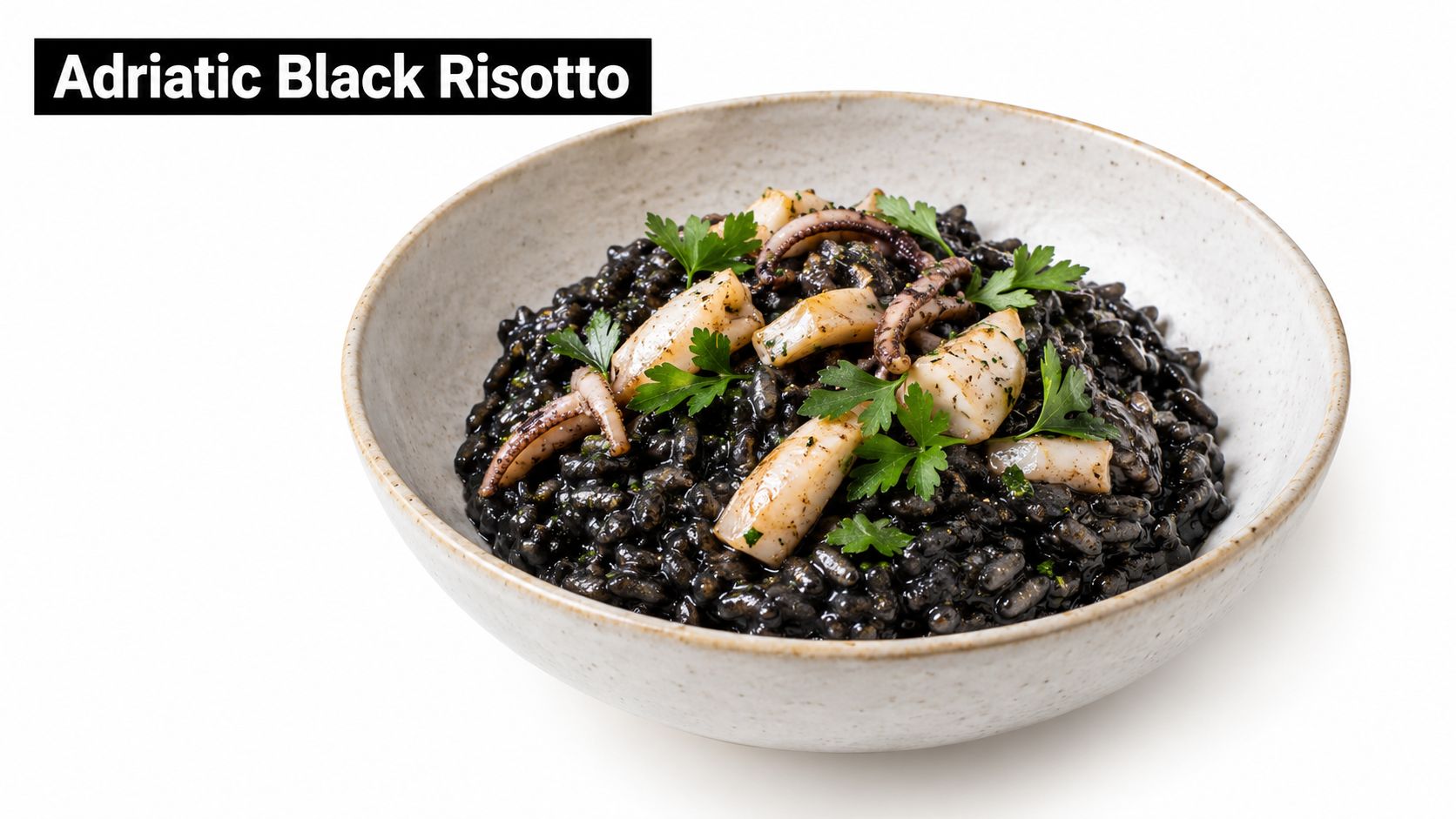
Jet black, briny, and glossy, crni rižot announces the Adriatic before you taste it. Cooks stir Arborio or Carnaroli rice with cleaned cuttlefish or squid, garlic, white wine, and fish stock, then color the whole pan with ink and finish it with parsley. It should taste of the sea, not of fish sauce or heavy cheese.
Eat it where boats dictate the menu. Waterfront restaurants in Dubrovnik, Split, and Zadar serve strong versions, and coastal seafood festivals put it front and center when cuttlefish is running. HauteBlack flags a useful caution for island itineraries, since coastal menus on the Dalmatian islands can lean heavily toward seafood, so share preferences early if you're arranging villa or yacht meals.
Pairing and setting
Pour chilled Malvazija from Istria for lift, or Pošip from Korčula for a rounder Dalmatian match. Skip indoor hotel dining for this one. A harbor table, a private chef, or a sommelier-led pairing dinner gives the ink, acid, and saline finish the setting they deserve. Don't wear white.
3. Pašticada (Slow-Braised Beef in Sweet Wine Sauce)
Pašticada is Dalmatia's celebration beef, and it doesn't rush. Cooks marinate the meat overnight in vinegar, garlic, and spices, then braise it for hours in red wine with prunes, carrots, and sometimes cinnamon or cloves. The sauce turns sweet, dark, and concentrated, built for handmade njoki to drag through it.
You'll find it at family celebrations and holiday meals across Dalmatia. Traditional konobas on Korčula and in Dubrovnik serve it with gnocchi, and the best versions taste like a recipe somebody's grandmother still supervises, even in a polished dining room. It's widely treated as Croatia's most prestigious meat dish, so treat it as a planned event, not a backup order.
Booking rule: Ask which day the kitchen makes pašticada before you reserve. Many places prepare it only on certain days, and the good pans sell out.
Request it family style if you're traveling as a group, with the beef sliced at the table and extra sauce on the side. Pair it with a Plavac Mali, whose dark fruit and tannin stand up to prune and wine without flattening the spice. Finish with nothing heavier than fruit or custard.
4. Štrukli (Baked Cheese Pastry)
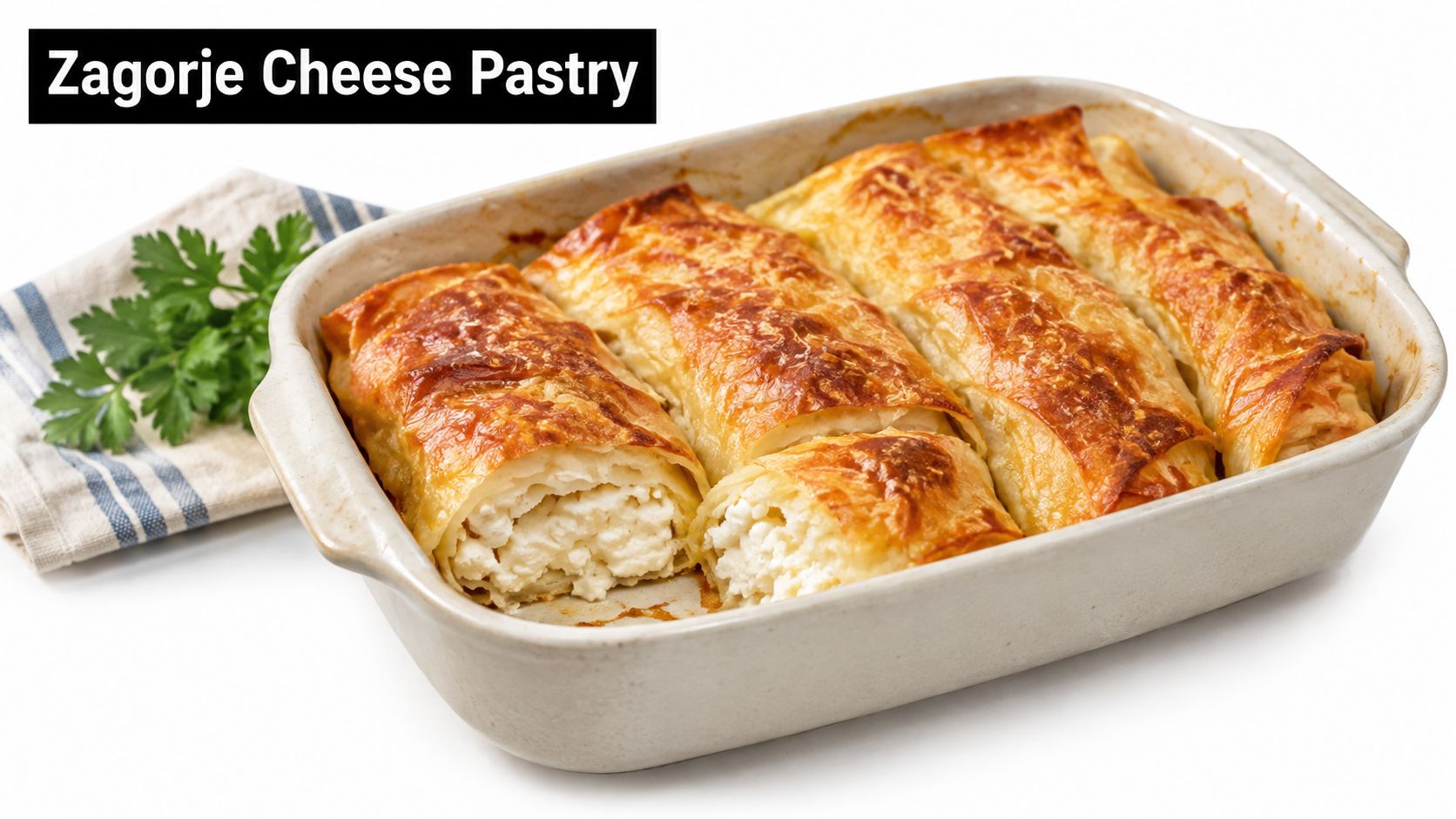
Go north and Croatia changes completely. Štrukli come from Zagreb and Hrvatsko Zagorje, where cooks stretch dough paper thin, roll it around fresh cottage cheese and cream, then boil it or bake it under more cream until the top turns golden. Savory versions work as a starter or main, and sweet versions close a meal.
Zagorje gives you the benchmark. Traditional restaurants near Zagreb and around Krapina-Zagorje serve baked štrukli in earthenware dishes, still bubbling at the edges. Zagreb food events and culinary tours feature them often, but a small producer or family kitchen inland usually beats a city center shortcut. This is comfort food with regional pride attached.
Make it an experience
- Head to Zagorje: Eat štrukli where the cheese and cream come from nearby farms.
- Pour Graševina: Its light, fresh white profile cuts the baked cream.
- Learn the roll: Book a private cooking class with a local family and stretch the dough yourself.
One dish teaches you why inland Croatia matters. Don't leave evaluation to a single café sample.
5. Fuži with Truffles (Istrian Handmade Pasta)
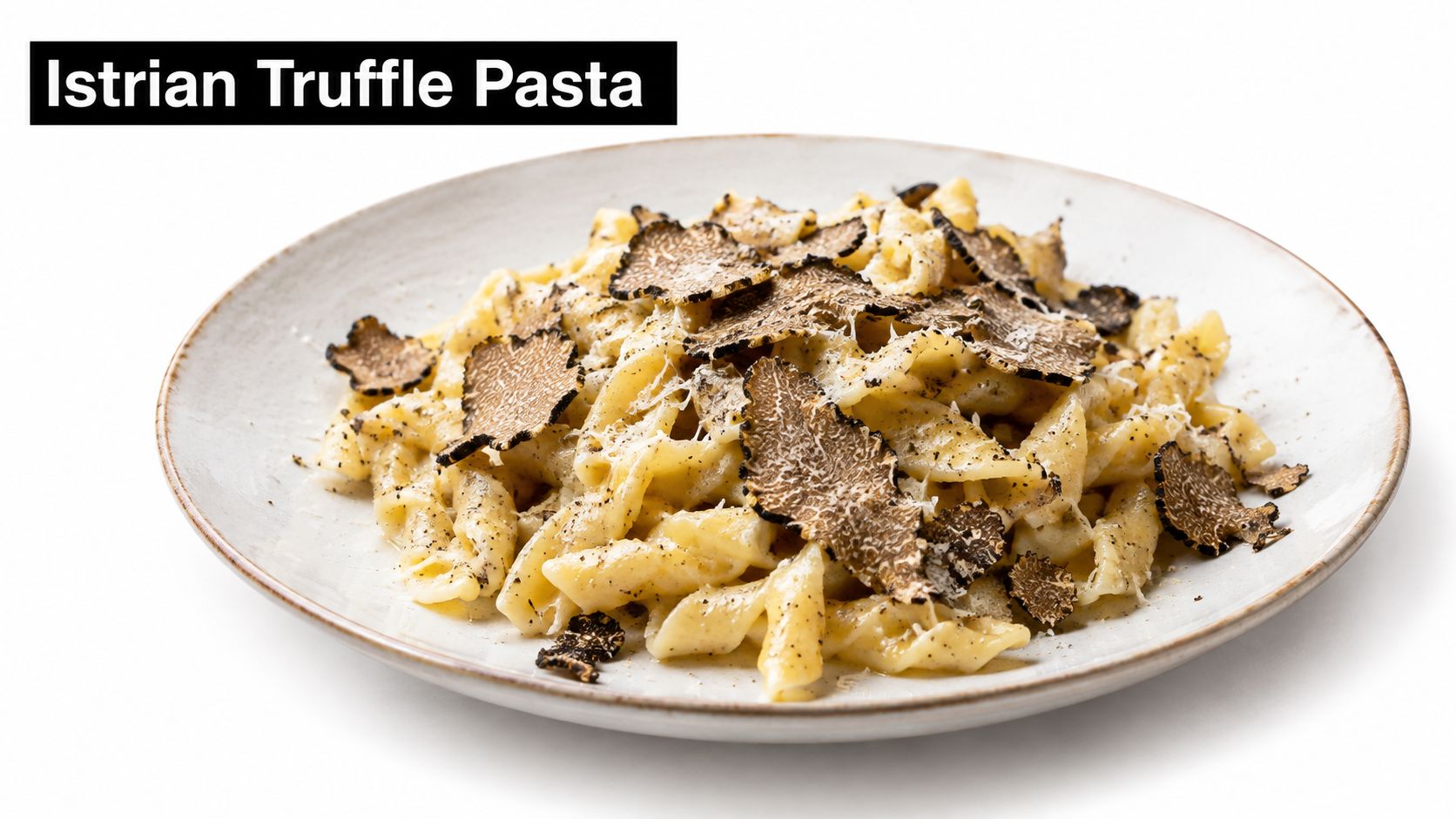
Istria cooks with an Italian accent, and fuži prove it. These small handmade pasta tubes, rolled from flour, water, and sometimes egg, catch sauce in every fold. Tossed with butter and shaved truffle, they become the peninsula's signature luxury, earthy, simple, and difficult to improve.
Order fuži in Motovun, Grožnjan, and Tar-Vabriga, where restaurants build menus around the forests nearby. Better still, join a truffle hunt with local dogs in the morning and eat your find at lunch. That sequence, forest, dog, kitchen, table, explains Istrian food faster than any tasting menu speech.
Season and quality checks
Come in autumn and winter for fresh white truffles, the premium season. Ask directly whether the kitchen is shaving fresh truffle or using oil, cream, or paste. Don't pay fresh prices for flavored oil.
Fresh truffle should perfume the plate before it reaches you. If you can't smell it at arm's length, ask questions.
Arrange a private hunt and lunch through your HauteBlack advisor, then pair the pasta with Istrian olive oil tastings and a winery stop on the same day.
6. Brodet (Dalmatian Fish Stew)
Brodet, also spelled brudet, is what Dalmatian fishermen built from the day's mixed catch. Several types of fish and shellfish simmer slowly in tomato, wine, garlic, onion, and paprika until the broth turns rich enough to coat soft polenta. The polenta isn't garnish. It's how you finish every spoonful.
Split's konobas and harbor restaurants serve dependable versions, while island kitchens on Hvar and Brač adjust the pot to whatever came off the boats. HauteBlack describes onboard culinary programs featuring local Dalmatian ingredients on multi-day private yacht itineraries, and brodet suits that format perfectly, cooked after a swim stop and eaten at anchor.
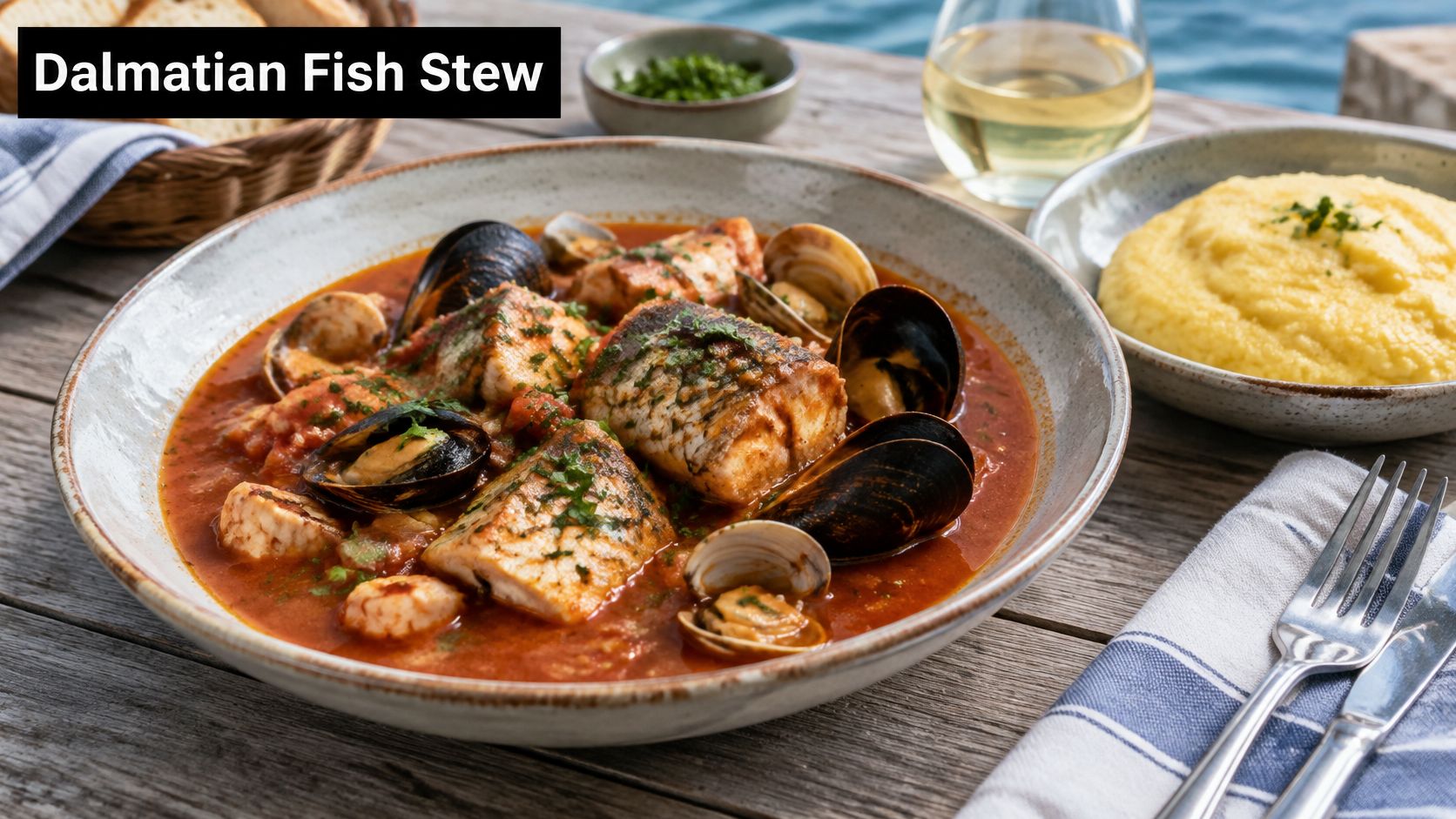
Order brodet only on the coast or islands, and ask which fish are in the pot that day. Pair it with crisp Pošip or Vugava, both firm enough for tomato and shellfish. For the full coastal arc, fold a brodet lunch into a Dubrovnik and Dalmatian Coast experience rather than squeezing it between transfers.
7. Dalmatian and Istrian Pršut (Dry-Cured Ham)
Start almost any serious Croatian meal with pršut, and you'll taste wind before meat. Producers salt and press pork legs, then hang them for many months in Adriatic bora and sea air. The result slices thin, smells deep and clean, and needs only cheese, olives, bread, and wine beside it.
Drniš pršut from Dalmatia is especially prized and carries Protected Geographical Indication status in the EU. That protection sits in a wider pattern, since 31 Croatian foodstuffs carried European geographical-indication status by 2022, as documented in research on gastronomy tourism and Croatian destination branding. Istrian pršut shows up at agriturismi and wine estates, usually with local cheese and olive oil.
How to buy and serve it
- Check the PGI label: Confirm authentic Drniš origin before you pay a premium.
- Pair by region: Pour Istrian Teran for bite or Malvazija for a cleaner finish.
- Serve it privately: Request a tasting platter at a villa dinner so you can compare Dalmatian and Istrian cuts side by side.
If cured meat timing matters at home too, consult this Recipe One ham cooking chart before you cook.
8. Soparnik (Dalmatian Chard Pie)
Soparnik looks humble and eats with real precision. Cooks in the Poljica region near Split roll dough very thin, fill it with chard, garlic, olive oil, and salt, seal it, and bake it under a peka dome until the surface turns crisp and golden. A brush of olive oil and garlic after baking sharpens the whole pie.
Eat it in Poljica village restaurants or at local festivals, where families still treat it as identity, not novelty. Split-area food tours and culinary experiences feature soparnik because it travels well from demonstration to table, and because one slice explains Dalmatia's older, plant-based kitchen better than another grilled fish plate. Its roots stretch back centuries, and locals protect the method accordingly.
Getting the authentic slice
Go to Poljica rather than settling for a reheated market wedge in a tourist center. Ask for a private cooking demonstration with a local family if you can, since the dough handling is the lesson. You'll watch how little filling a master needs when the chard is seasoned correctly.
Pair soparnik with chilled Pošip and serve it warm, cut into diamonds, as a starter before peka or brodet. It's also your smartest picnic food for a drive inland from Split.
9. Ćevapi (Grilled Minced Meat Sausages)
Every culinary route needs one fast, smoky, essential stop, and in Croatia that's Ćevapi. Grill cooks shape minced beef, lamb, and pork with garlic, paprika, and salt into small finger sausages, char them quickly, and tuck them into somun or lepinja with chopped onion, kajmak, and ajvar.
Zagreb's traditional grill houses and bistros do them well, as do casual lunch spots across Slavonia and around Zagreb's markets. Roots run across the wider Balkan region, but Croatian cities have made ćevapi their own street food ritual. Judge a place by turnover, smoke, and whether locals are ordering without looking at the menu.
- Choose busy grills: High turnover means fresher meat and a hotter, cleaner char.
- Keep the drink simple: Cold local beer or a light red wine beats a heavy pairing.
- Walk with a guide: Ask your advisor to build ćevapi into a guided food walk instead of gambling on the first grill you pass.
Balance a market morning and ćevapi lunch with ideas from this luxury guide to cool things to do in Croatia in 2026, then save fine dining for evening.
10. Rožata (Dalmatian Caramel Custard)
End a Dalmatian meal the Dalmatian way, with rožata. This chilled caramel custard, close to crème caramel, combines milk, eggs, and sugar with lemon zest or cinnamon in some kitchens. Cooks bake it gently in a water bath over caramel, chill it, then invert it so the sauce runs down the sides.
Konobas and restaurants in Dubrovnik and Split serve rožata after seafood and slow meat dishes, and families bring it out at celebrations. Venetian influence shows in the technique, but the restraint is local. Good rožata wobbles, tastes clean, and never hides under whipped cream or elaborate garnish.
Start your plan in September if you can. HauteBlack notes that the Croatian Adriatic retains sea temperatures of approximately 75 to 80°F in September while August crowds recede, a sweet window for late dining in Dubrovnik's Old Town and private villa cooking classes.
The right finish
Order rožata as the closing course at a traditional Dalmatian restaurant, not as an afternoon café dessert. Pair it with Dalmatian Prošek dessert wine for caramel depth without heaviness. At a villa, ask a local chef to prepare it that morning so it sets properly before dinner.
Top 10 Croatian Foods: Side-by-Side Comparison
| Dish | 🔄 Implementation complexity | ⚡ Key resources | 📊 Expected outcome | ⭐ Ideal use and advantage | 💡 Tip |
|---|---|---|---|---|---|
| Peka (Dalmatian ember-roasted meat and vegetables) | High; slow-cooks for 1–3 hours | Meat or octopus, vegetables, domed lid, hot embers | Tender meat and vegetables infused with their cooking juices | Communal meals; dramatic presentation and rich, traditional flavor | Pre-order, often at least 24 hours ahead |
| Crni rižot (Cuttlefish ink risotto) | Moderate; requires attentive, gradual cooking | Cuttlefish or squid, ink, risotto rice, stock, wine | Creamy, savory risotto with a deep briny flavor and black color | Seafood dining; highlights fresh Adriatic catch | Choose a coastal restaurant known for fresh seafood |
| Pašticada (Slow-braised beef) | High; overnight marinade and hours of braising | Beef, red wine, vinegar, prunes, spices, gnocchi | Rich, tender beef in a glossy sweet-sour sauce | Celebrations and family meals; distinctive heritage dish | Ask traditional konobas in advance |
| Štrukli (Baked cheese pastry) | Moderate to high; handmade dough takes skill | Thin pastry dough, fresh cottage cheese, cream | Soft, rich cheese-filled pastry; can be baked or boiled | Starter, main, or dessert; versatile northern Croatian specialty | Seek handmade versions in Zagorje |
| Fuži with truffles (Istrian handmade pasta) | Moderate; pasta-making and careful preparation | Fuži pasta, fresh truffles, butter or olive oil | Earthy, aromatic pasta with a luxurious finish | Special dinners; showcases Istrian truffles | Check whether fresh truffles are used |
| Brodet (Dalmatian fish stew) | Moderate; seafood is simmered in stages | Several types of fresh fish or shellfish, tomato, wine, polenta | Hearty seafood stew with a savory broth | Coastal lunches; features a variety of Adriatic seafood | Order where the catch is fresh |
| Pršut (Dalmatian and Istrian dry-cured ham) | Low to serve; curing takes many months | Cured pork, regional air and wind, thin slicing | Intensely savory, salty ham served cold | Appetizers and tasting platters; easy to pair with wine and cheese | Look for Drniš pršut's EU PGI label |
| Soparnik (Dalmatian chard pie) | Moderate to high; thin dough is labor-intensive | Dough, chard, garlic, olive oil; traditionally a peka | Crisp, thin pie with a mild, savory filling | Snack or appetizer; a simple, locally rooted specialty | Visit Poljica for an authentic version |
| Ćevapi (Grilled minced-meat sausages) | Low; quick grilling and assembly | Minced meat, flatbread, onion, kajmak, ajvar | Smoky, savory sausages served as a filling sandwich | Casual meals and street food; affordable and widely available | Choose busy grill houses for fresher food |
| Rožata (Dalmatian caramel custard) | Moderate; slow water-bath cooking and chilling | Milk, eggs, sugar, caramel; optional lemon or cinnamon | Silky chilled custard with caramel sauce | Dessert after a traditional meal; classic and approachable | Pair with Dalmatian dessert wine such as Prošek |
Build Croatia Around the Table
Croatia rewards travelers who plan meals by region first and restaurants second. Eat truffles, fuži, oysters, and olive oil in Istria, seafood and lamb in Dalmatia, štrukli and turkey with mlinci around Zagreb and Zagorje, and kulen, paprika-rich stews, and freshwater fish in Slavonia, a regional map set out in Eupedia's overview of Croatian cuisine by region. That structure stops you repeating the same grilled fish dinner for a week. It also tells you where to slow down, since a dish worth crossing the country for usually comes with a producer, market, winery, or family kitchen worth visiting too.
Quality control matters because execution varies by county. Satisfaction with gastronomic offerings outside accommodation was rated high only in Primorje-Gorski Kotar, Zadar, and Šibenik-Knin, according to a Croatian study on gastronomic tourism and coastal destination competitiveness. Route seafood and island cooking through Zadar or Šibenik-Knin when you can, and vet suppliers carefully elsewhere. Don't rely on generic hotel dining when a chef-led konoba lunch or producer visit sits twenty minutes away.
Use Michelin as a benchmark, not a script
Croatia's premium dining now gives you a reliable top tier. The 2025 Michelin selection listed 99 recommended restaurants, including one two-star venue and 12 one-star restaurants, per the Michelin Guide Croatia 2025 announcement. Pair one destination-defining starred dinner in Istria, Dubrovnik, Zagreb, or on the islands with Bib Gourmand rooms and beloved local konobas on other nights. That mix delivers technique and place in equal measure, and it keeps your itinerary from feeling like a sequence of identical tasting menus.
Book limited-capacity restaurants early, pre-order peka and pašticada, and tell every private chef your seafood limits before menus are set. Leave open afternoons for markets, harbor lunches, vineyard tastings, and the family-run place your driver mentions without prompting. If you want more regional cooking once you're home, browse these Balkan recipes for home cooks and start with ajvar, brodet, or štrukli rather than attempting peka without embers.
HauteBlack can arrange the moving parts around that table, private dining, culinary tours, transfers, yacht and villa chefs, and VIP restaurant access built around your route and season. Plan at least one defining meal per region, protect it with reservations, and let the rest of Croatia arrange itself between breakfast and dinner. That's how the best food in Croatia becomes the trip itself.
Tell HauteBlack which regions and dishes top your list, and its advisors will build a bespoke Croatia itinerary around private peka dinners, Istrian truffle hunts, Dalmatian yacht lunches, and hard-to-book Michelin tables. Start planning your culinary journey with HauteBlack and travel Croatia one essential meal at a time.
Explore Our Guides


Signature Experiences