Haute Black Journal
Africa Safari Honeymoon: A Bespoke Luxury Planning Guide

Marlene Azeez
Director, HauteBlack
View all articles →
You've signed the wedding venue, paid the first deposit, and opened a safari tab to compare Kenya, Tanzania, South Africa, Botswana, Namibia, and Rwanda. A few hours later, you're looking at private villas, tented camps, bush flights, Zanzibar extensions, and lodge rates that seem to belong to entirely different holidays.
That confusion is justified. An Africa safari honeymoon isn't one destination or one hotel category. It's a calibrated itinerary, shaped by season, wildlife priorities, camp style, private-vehicle use, internal flights, and the amount of recovery time you want after the wedding. Get those decisions right and the trip feels effortless. Get them wrong and even a beautiful lodge can become an expensive detour.
Why an Africa Safari Honeymoon Is the 2026 Power Move
The appeal starts with contrast. You can spend the morning tracking wildlife with a specialist guide, return to a private suite for a quiet afternoon, then drink champagne beside a fire while the surroundings disappear into darkness. No beach resort or city break combines that level of anticipation, intimacy, and stillness in quite the same way.
Safari travel also carries genuine historical depth. African safari tourism grew from late nineteenth- and early twentieth-century journeys connected to colonial expansion, then developed into organized wildlife travel and later photographic and luxury leisure tourism. By 1933, the British-backed Convention for the Protection of the Flora and Fauna of Africa had called for national parks, an early conservation milestone that helped shape the protected areas couples visit today. Academic research on safari tourism's historical development places the modern honeymoon experience within that longer evolution.
My view: The strongest safari honeymoon isn't a checklist of famous parks. It's a carefully paced beginning to married life, with enough wilderness to feel transformative and enough privacy to feel personal.
Demand is tightening the most desirable inventory. South Africa's honeymoon tourism market generated USD 2,093.4 million in 2024 and is projected to reach USD 3,069.6 million by 2030, with a projected 6.7% CAGR from 2025 to 2030. The same market source reported that South Africa represented 1.6% of the global honeymoon tourism market in 2024. Market context for South Africa honeymoon tourism
That demand shows up in practical ways. Private-use villas, specialist guides, private vehicles, bush dinners, and light-aircraft transfers are increasingly central to the luxury product, not decorative extras. Established safari regions such as Kenya, Tanzania, and South Africa now sit alongside more secluded propositions in Botswana, Namibia, and Rwanda.
For destination inspiration, HauteBlack's Africa travel guide collection is a useful starting point, but don't begin by choosing a lodge. Begin with the experience you want, then select the ecosystem and route that can deliver it.
What an Africa Safari Honeymoon Actually Looks Like
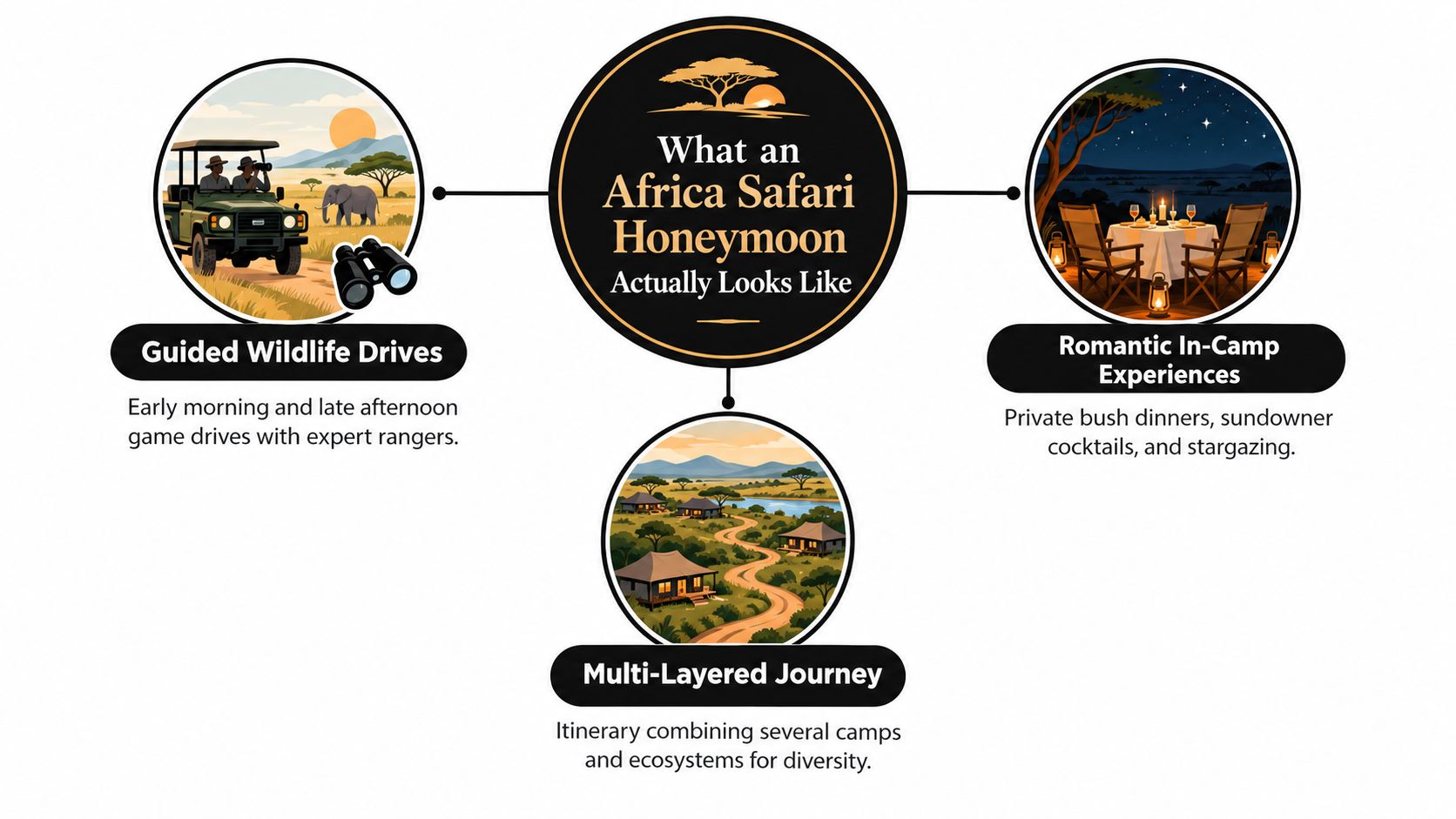
A modern safari honeymoon has three layers. The first is guided wildlife viewing, usually through early-morning and late-afternoon drives when temperatures and light are favorable. The second is the camp itself, where private pools, candlelit dinners, spa treatments, sundowners, and stargazing turn time between drives into part of the romance. The third is a contrasting coastal stay, often in Zanzibar, the Seychelles, or Mozambique, where the schedule slows down completely.
Start with the ecosystem
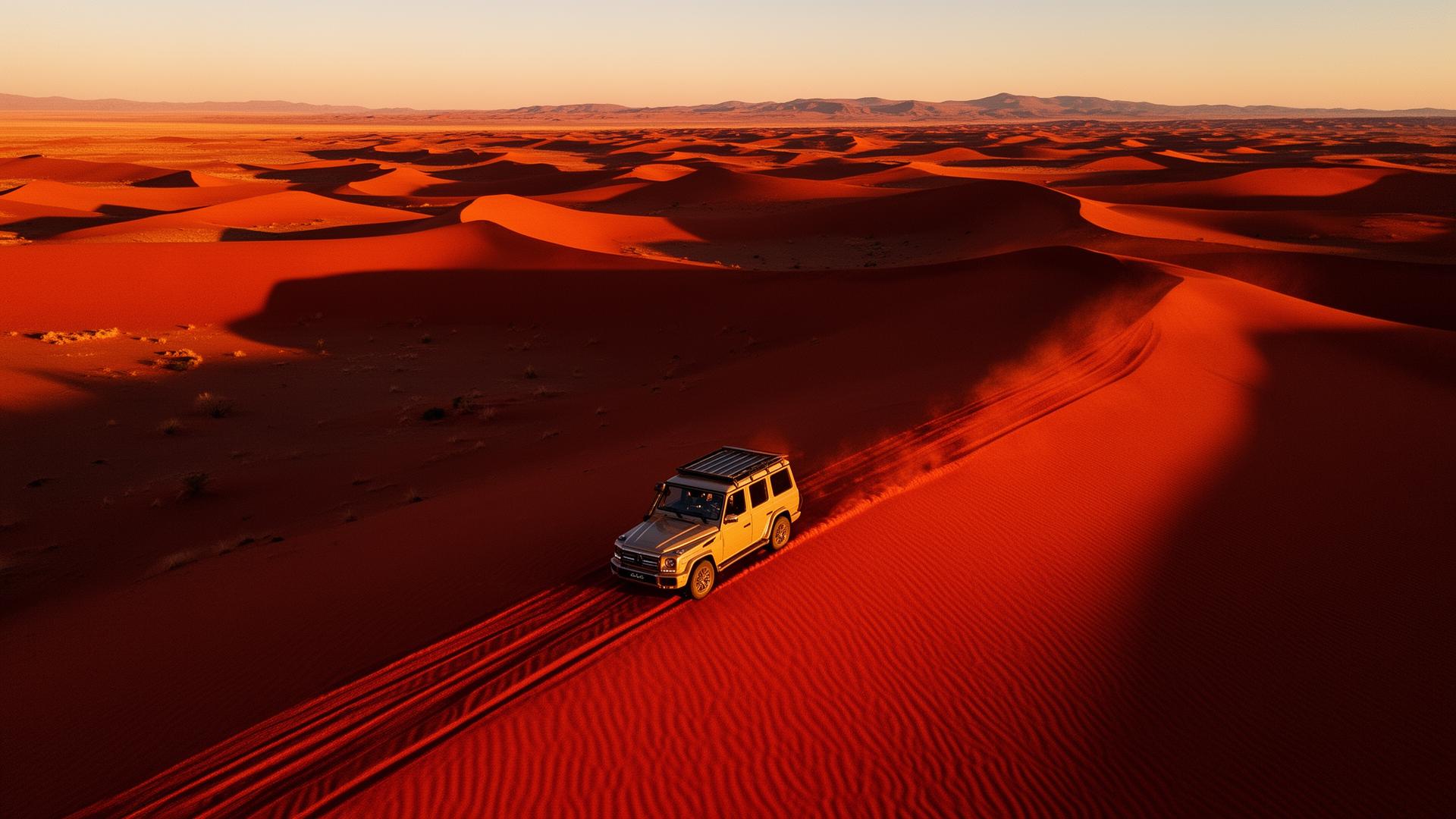
The Serengeti and Maasai Mara offer open savannah, long sightlines, and classic big-game drama. The Okavango Delta changes the mood entirely, replacing dusty tracks with waterways, mokoro excursions, and boat-based wildlife viewing. Namibia's Sossusvlei and Damaraland are built around sculptural desert scenery rather than constant big-cat sightings. Rwanda's Volcanoes National Park adds primate trekking and forest habitats to the itinerary.
That distinction matters more than a lodge's photography. A tented camp in the Serengeti offers a different emotional experience from a permanent lodge in the Sabi Sand, even when both sit in the luxury category.
Learn the accommodation language
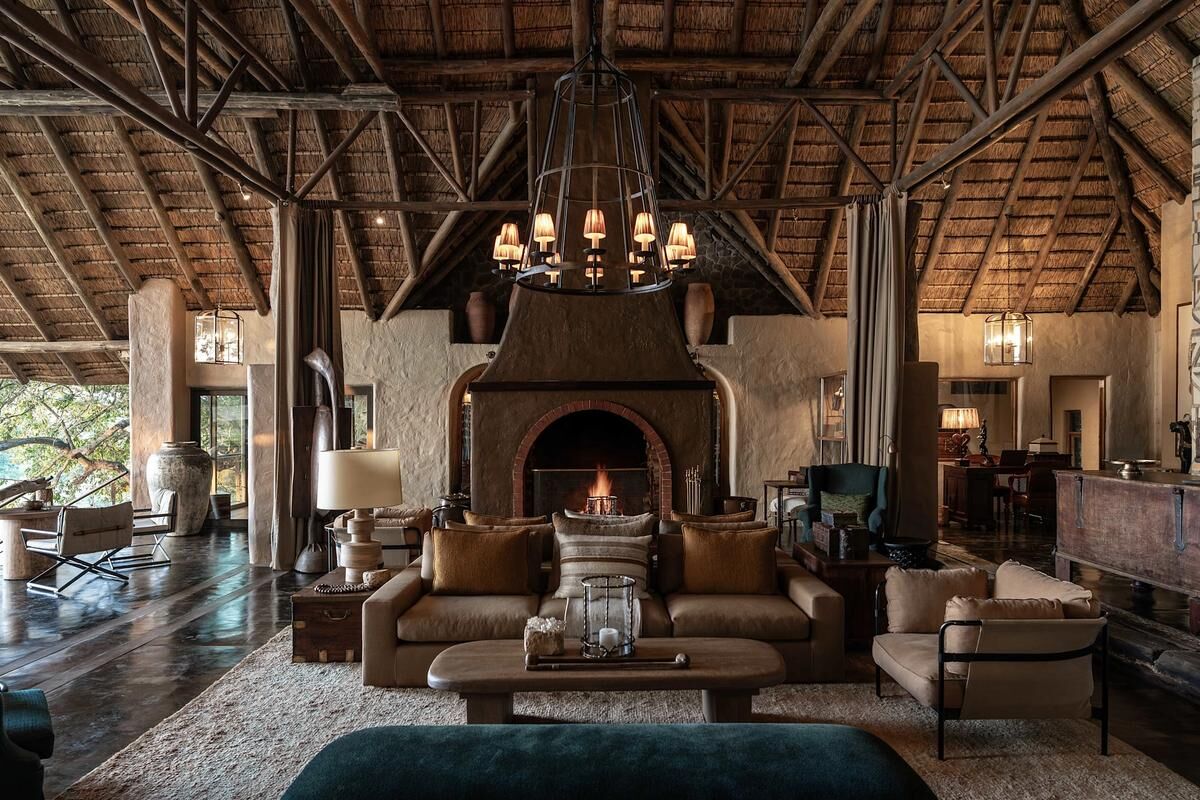
A lodge usually consists of permanent guest rooms or standalone bungalows arranged around shared dining and lounge areas. A tented camp may use canvas suites with proper beds, bathrooms, decks, and carefully designed interiors. “Tented” doesn't mean basic. In the right camp, it means a more immediate relationship with the surroundings.
You'll also need to decide between a shared safari vehicle and a private one. Shared vehicles create a social experience and can be perfectly comfortable, but your departure time and time at sightings may involve other guests. A private vehicle gives you control over the day, which is especially valuable on a honeymoon when one of you wants to linger at a leopard sighting or leave early for a private breakfast.
Bush flights aren't a logistical nuisance to be hidden from the itinerary. They connect distinct ecosystems without forcing long overland transfers, and the low-altitude views often become memorable parts of the journey. The right route uses flights sparingly, usually to preserve variety without turning the honeymoon into a sequence of departures.
Choosing the Right Country for Your Honeymoon
Don't choose a country because its lodge photographs look the most romantic. Choose it because its wildlife pattern, privacy model, and travel season match the way you want the honeymoon to feel.
| Country | Romance Factor | Wildlife Highlight | Exclusivity | Best Season | Price Tier |
|---|---|---|---|---|---|
| Kenya | Warm, classic, and varied | Maasai Mara and Laikipia wildlife | Strong in private conservancies | Dry-season travel, especially for the Mara | Upper-mid to luxury |
| Tanzania | Grand, cinematic, and expansive | Serengeti, Ngorongoro, and Migration spectacle | Strong at remote camps, less consistent at busy sightings | Dry season, with Migration focus in the northern Serengeti | Upper-mid to ultra-luxury |
| South Africa | Polished and flexible | Sabi Sand, Cape Town, and the Cape | High at private reserves | Dry season for the best game viewing | Mid-luxury to ultra-luxury |
| Botswana | Quiet, remote, and deeply private | Okavango and Linyanti waterways and wildlife | Exceptional, with premium pricing | Dry season for concentrated water-based viewing | Luxury to ultra-luxury |
| Namibia | Minimalist, architectural, and visually dramatic | Sossusvlei and Damaraland landscapes | High because of spacious, remote settings | Dry-season desert travel | Mid-luxury to luxury |
| Rwanda | Intimate, forested, and purpose-driven | Volcanoes National Park and primate trekking | Very high, with premium per-night rates | Drier trekking periods | Luxury to ultra-luxury |
Match the country to your priorities
Kenya is my first recommendation for couples who want a shorter, varied safari with polished service. The Mara delivers classic savannah, while Laikipia can add a more private conservancy feel.
Tanzania wins for scale and the emotional force of the Serengeti. It also pairs naturally with Zanzibar, but Migration areas can bring higher vehicle density during the most sought-after periods.
South Africa is the easiest choice for couples who want a refined route with strong logistics, excellent food, the Cape, and a safari in the Sabi Sand. It's less remote than Botswana, but that accessibility is a feature for couples arriving tired from a wedding.
Botswana is the privacy play. The Okavango and Linyanti deliver seclusion and water-based experiences, but that exclusivity comes at premium pricing. Namibia trades big-cat intensity for extraordinary desert scenery, so choose it for visual romance and space, not for a conventional predator-focused safari.
Rwanda commands the highest per-night rates among these options, but it offers a distinctive forest experience and primate trekking that no savannah itinerary can replicate. Don't add it casually. Build the entire route around what you want to feel and see.
Timing, Seasons, and How Far Ahead to Book
Map the calendar before you map the route. The most technically favorable safari window is generally the dry season, roughly May to October, because shrinking water sources and sparser vegetation can concentrate wildlife around remaining waterholes. In East Africa, that period also overlaps with the strongest likelihood of Great Migration river crossings, especially July to October. Month-by-month safari honeymoon planning guidance
The trade-off is straightforward. Dry-season visibility and Migration timing attract the greatest demand, while green-season travel offers denser vegetation, occasional rain, more privacy, and better value. The choice isn't “good season versus bad season.” It's predictable wildlife viewing versus a quieter, more atmospheric version of safari.
| Travel Window | Recommended Lead Time | Peak Demand | Rate Level |
|---|---|---|---|
| July to October | 12 to 18 months | Very high | Highest |
| December to March | 3 to 6 months can work | Moderate to high | Often lower |
| Green season | 3 to 6 months can work | Lower | More package value |
| Exclusive-use villas and private camps | 12 to 24 months | Very high | Premium |
The booking clock matters most when your preferred camp has limited inventory. Expert booking guidance places peak-season honeymoons at 12 to 18 months ahead, while green-season trips can sometimes be arranged 3 to 6 months out. Exclusive-use villas and private camps may require 12 to 24 months because couples reserve them earlier than standard rooms. Safari honeymoon booking timeline
Start with the wedding-to-departure buffer. If you're getting married during a busy period, don't assume you can leave immediately and still secure the camp you want. For a Tanzania-specific planning perspective, this guide to the best time for a Tanzania safari can help you test the route against seasonal priorities.
Budget Brackets and What Each One Actually Buys You
Set the budget by deciding which lever matters most: season, lead time, lodge tier, private-vehicle use, or the beach extension. Independent 2026 guidance places safari-only honeymoons in Kenya or Tanzania at about $4,500 per person for five to seven nights, while ultra-luxury private itineraries can exceed $12,000 per person. Luxury safari-and-beach trips often fall around $6,500 to $8,000 per person, or $8,000 to $18,000 per couple, depending on lodge level and routing. 2026 Africa safari honeymoon cost guidance
For a longer 10 to 14 day land-only honeymoon, use these brackets as a practical planning guide:
| Bracket per couple | What's Included | Lodge Tier | Biggest Cost Lever |
|---|---|---|---|
| $18,000 to $28,000 | Shared-vehicle camps in two ecosystems, scheduled light-aircraft transfers, and a three to four night beach extension | Four-star and selected luxury camps | Season and room category |
| $32,000 to $55,000 | Private vehicle use, a top-tier tented suite or bush villa, one signature add-on, and direct camp-to-camp flights | High luxury | Private vehicle allocation |
| Above $60,000 | Two contrasting countries, exclusive-use villas, private chef and guide, and optional gorilla trekking | Ultra-luxury | Villa exclusivity and multi-country routing |
These brackets are not interchangeable. A shared-vehicle itinerary with selected luxury camps can sit more than $20,000 per couple below a private-villa route with fly-in logistics. Use the total to test the design, not to compare headline room rates.
The levers that move the total
Season is the first lever. Green-season travel can reduce costs by 20% to 40%, depending on the itinerary and operator, while retaining much of the same camp structure. Green-season honeymoon value and pricing context
Private vehicles are the next major decision. A shared vehicle lowers the starting price. A private vehicle gives you control over the pace, photography stops, and timing of meals away from camp. For a honeymoon, that privacy usually matters more than adding another lodge.
Review flights line by line. Some packages include domestic bush flights, while others price them separately. Request the complete transport schedule before comparing itineraries with similar lodge rates, because camp-to-camp flying can materially change the total.
Treat the beach extension as part of the itinerary design. Zanzibar, the Seychelles, or Mozambique can provide a quieter finish after early safari starts. The added nights, flights, and resort tier must support the core safari, not reduce the wildlife portion to an ineffective stopover. A lower lodge tier paired with a private vehicle often creates a better honeymoon than spending the same budget on a shorter, more expensive beach stay.
A Sample 12-Day Honeymoon Itinerary
A successful 12-day route has a clear emotional rhythm. It doesn't try to prove how many places you can visit. It gives each area enough time to become familiar, then changes the scenery before the experience becomes repetitive.
Days 1 through 3
Arrive through OR Tambo or Kilimanjaro, depending on the route, and transfer to the first camp. The first evening should be simple: dinner under the stars, an early night, and no pressure to stage a major surprise before you've recovered from the wedding and flights.
Days two and three introduce the safari properly. Take relaxed morning drives, add a guided bush walk where the reserve permits it, and arrange your first private sundowner on a kopje, with champagne waiting at the viewpoint. The point isn't to fill every hour. It's to establish the pace you'll keep for the rest of the trip.
Days 4 through 7
On day four, move by light aircraft to a second ecosystem. A new camp can open the afternoon with an entirely different drive, which is more effective than spending hours on a road to cross a map.
Day five works well as a surprise. Leave before dawn for a bush breakfast prepared by the guide, then return to camp for an optional spa treatment and an unstructured afternoon. On day six, shift to a water-based camp in the Okavango or a private conservancy where mokoro or boat experiences replace the standard drive pattern.
Day seven should end away from the main lodge. A table on a sandbar, lanterns, a waiter, and the chef create a private dinner that feels connected to the setting rather than staged inside the dining room.
Days 8 through 12
Fly to Zanzibar or Mauritius for four nights of beach recovery. Let the safari finish with a change in tempo, not another ambitious excursion schedule. Hold two buffer days for weather-related rescheduling, and pre-arrange one romantic upgrade for arrival night so the honeymoon begins with intention rather than an envelope appearing halfway through the trip.
For another South Africa route perspective, see HauteBlack's luxury South Africa honeymoon itineraries.
Romantic Add-Ons That Define the Trip
A honeymoon-grade safari isn't created by adding rose petals to a standard booking. The meaningful upgrades change your privacy, control, or connection to the surroundings.
A private vehicle and dedicated guide should be the first serious consideration. At properties such as Singita Sasakwa or Mombo, the product is already built around a high level of exclusivity, but the precise vehicle arrangement still needs to be confirmed in the proposal. Ask whether you'll have control over departure times and whether the camp can prioritize private viewing at significant sightings.
A bush dinner at Segera Retreat has a different character from a private meal on a lodge terrace. At &Beyond's Xudum, an in-suite spa treatment can create the kind of quiet recovery that a crowded activity schedule can't provide. Hot-air balloon flights over the Serengeti or Mara deliver a spectacular change of perspective, but they should be scheduled with enough flexibility to accommodate weather.
Professional fly-camp framing is another worthwhile upgrade for couples who care about photographs. The value lies in the setting, the light, and the privacy of the arrangement, not in a generic “romantic setup” added to an invoice.
| Add-On | Top Lodge / Camp | Best Country |
|---|---|---|
| Private vehicle and guide | Singita Sasakwa or Mombo | Tanzania or Botswana |
| Surprise bush dinner | Segera Retreat | Kenya |
| In-suite spa treatment | &Beyond's Xudum | Botswana |
| Hot-air balloon flight | Serengeti or Mara camp | Tanzania or Kenya |
| Professional fly-camp setup | Specialist mobile safari team | Kenya or Tanzania |
Booking instruction: Put every important romantic detail into the original request. Peak-season inventory for private experiences can close about a year ahead, and “we'll arrange it later” is how the best options disappear.
If your idea of romance includes a second destination built around food and dramatic scenery, a resource on gourmet dining desert safari can help you compare how curated desert experiences differ from a conventional safari dinner. It isn't a substitute for the African route, but it's useful context when you're deciding whether your preferred add-on is culinary, photographic, or wilderness-led.
Why Book Through HauteBlack and What to Do Next
A complex safari itinerary creates friction that direct booking tends to distribute across the traveler. You may be paying deposits in multiple currencies, coordinating bush flights with international arrivals, checking whether conservation fees are included, and asking whether a private vehicle or single-supplement waiver is available.
A Virtuoso-affiliated advisor can also work with preferred-partner benefits at participating properties. Depending on the hotel or camp, that may include early access to villa inventory, upgrades when available, daily breakfast for two, resort credits of $100 to $200, and complimentary private transfers. These benefits aren't universal, so they should appear as confirmed inclusions in the proposal rather than assumed perks.
The advisor's practical value often appears in the routing. First-time safari travelers frequently compare room categories while overlooking the private-flight option between camps, even though that decision can protect valuable time and make a multi-ecosystem honeymoon feel cohesive. An experienced planner can also identify where a private vehicle is worth the premium and where a shared arrangement won't compromise the experience.
HauteBlack publishes Africa-focused luxury travel content through its news page, including guides on South Africa, the Namib Sand Dunes, and Morocco. For a honeymoon, the useful next step is a focused brief, not an open-ended request for “the best Africa itinerary.”
Send your preferred wedding date, departure window, desired safari intensity, beach preference, and an honest budget range. Then request a 30-minute consultation and a curated shortlist of three lodge combinations within ten business days. That process gives you something concrete to compare: route logic, camp personality, season fit, flight structure, and the exact upgrade that changes the trip.
HauteBlack arranges bespoke Africa safari honeymoons with lodge combinations, VIP planning, private transfers, and carefully paced beach extensions. Visit HauteBlack to request a consultation and turn your preferred season, privacy level, and budget into a precise honeymoon itinerary.
Explore Our Guides
Signature Experiences