Haute Black Journal
What Is VIP Access in Luxury Travel

Marlene Azeez
Director, HauteBlack
View all articles →

HauteBlack Access is presented at $299 per year, while the invitation-only Black Card costs $10,000 per year plus a $2,500 initiation fee and is limited to 500 members globally. VIP access, however, isn't a universal guarantee. It's a relationship-driven entitlement system whose real value depends on who secured the booking, which property is participating, and what inventory remains available at arrival.
The most popular advice about luxury travel is also the least reliable: collect enough points, hold an impressive card, and the hotel will take care of the rest. That may produce a pleasant stay. It won't necessarily produce recognition, flexibility, or a room that was held for you without anyone mentioning it.
What is VIP access in practice? It's controlled priority. A hotel, club, event organizer, or private network gives selected guests access to benefits, inventory, information, or experiences that ordinary customers may not receive. The entitlement might appear as a room upgrade, breakfast, an invitation, an earlier check-in, or a direct line to someone who can solve a problem. The label matters less than the mechanism behind it.
A real VIP arrival is secured before the guest reaches the lobby. The advisor has established the relationship, the property has noted the preferences, and the hotel team knows which benefits it can honor without compromising operations. That's the difference between a marketing promise and an arrival where the right doors open naturally.
The Reality of VIP Recognition
Premium loyalty status can support a stay, but it does not turn an ordinary reservation into privileged treatment. A digital tier may flag your profile, calculate a benefit, or place you in an upgrade queue. It cannot give the front desk authority to create a suite when the hotel is full, release a room before housekeeping clears it, or override the property's participation rules.
Recognition depends on relationships, communication, and live inventory. The hotel considers the booking source, its confidence in that source, and what the team can deliver when you arrive. A reservation from a well-connected luxury advisor carries context an anonymous direct booking may lack. The property receives more than a room night. It receives the guest's preferences, occasion, and expectations in a form staff can act on before arrival.
The difference between status and advocacy
Status lives in a database. Advocacy lives in a conversation between the advisor and the property. A loyalty program can identify an elite member, while an advisor can explain that a stay marks a honeymoon, request a quiet high floor instead of a larger room, and ask the hotel to review its best available option.
That conversation gives the property useful judgment before the guest reaches the desk. It also clarifies priorities. If no suite is available, the hotel may still identify the strongest alternative because the request has been presented to the people responsible for the arrival.
Arrival timing shows why this matters. Early check-in and late check-out require coordination among departing guests, housekeeping, and incoming demand. A connected advisor cannot suspend those constraints, but can put the request before the team managing them and ensure the preference is not buried in an automated queue.
Practical rule: Treat every VIP benefit as a negotiated entitlement subject to inventory, not as a guaranteed product feature.
What asterisks reveal
Expedia's VIP Access program makes the boundary clear. Participating properties may offer higher-tier guests room upgrades, early check-in, and late check-out, yet those benefits remain subject to availability. An upgrade may mean a better view, a higher floor, or the next room category rather than an automatic suite. Expedia's VIP Access terms state that operational condition directly.
That limitation reflects how hospitality works. Luxury hotels manage finite rooms and competing requests, so every benefit must fit the property's actual capacity. The advisor's value is securing the strongest feasible outcome, identifying which preference matters most, and communicating the result accurately. VIP recognition becomes meaningful when the hotel knows the guest, the request, and the person accountable for making the arrival work.
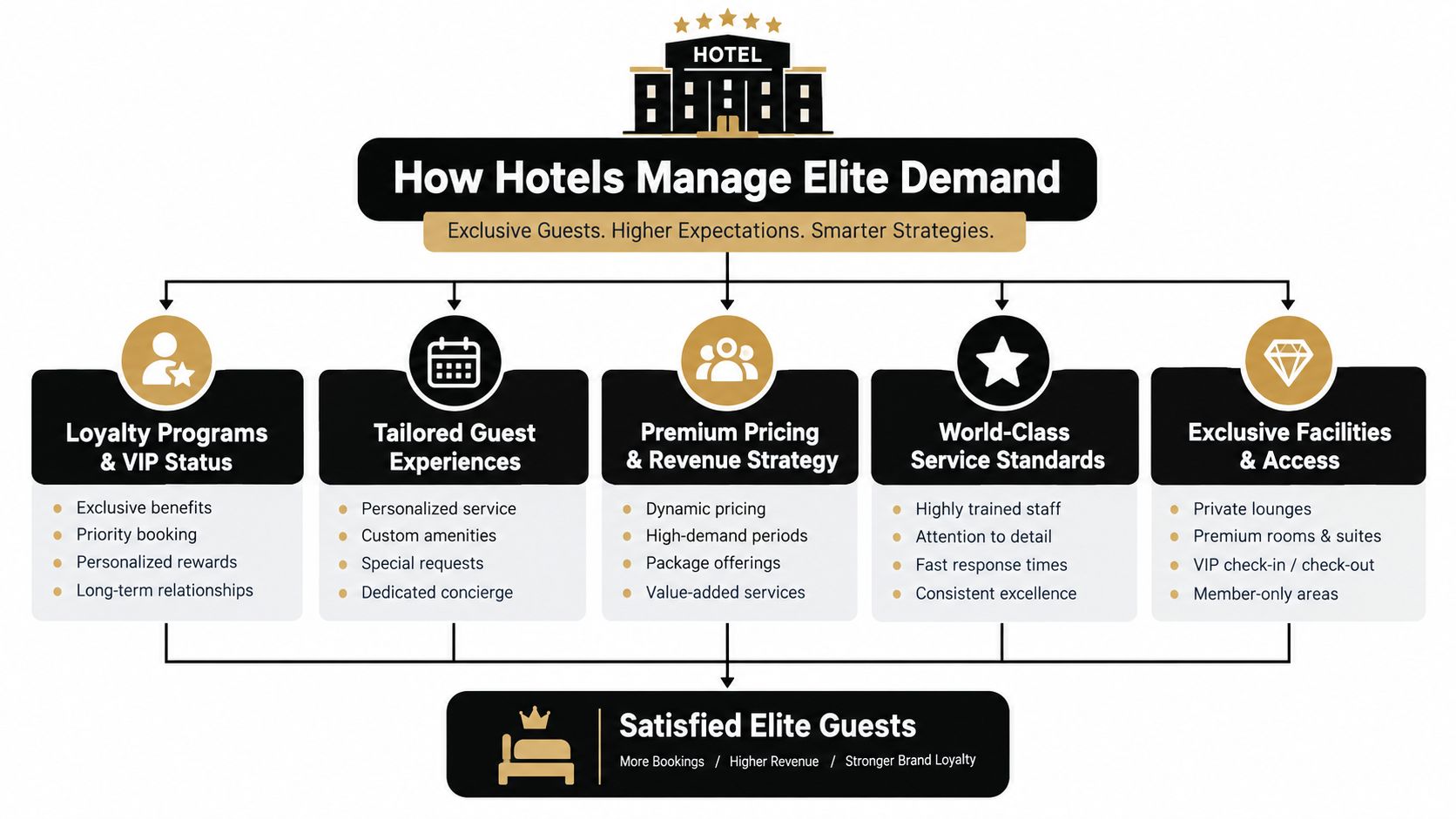
How Hotels Manage Elite Demand
Hotels manage VIP demand through controlled inventory, operational planning, and selective distribution. A VIP label has value only when the property can protect the rooms, staffing, and service capacity needed to honor it. Expedia's VIP Access program illustrates the platform side of this arrangement: participating hotels receive visibility among frequent travelers, while guests receive access to defined property benefits.
Inventory decides what can be delivered
A hotel's room inventory is more complicated than the categories shown online. Housekeeping schedules, maintenance holds, group bookings, connecting-room needs, and occupancy rules all affect what the front desk can release. A requested suite may exist in the system but remain unavailable because it is reserved for a later arrival, awaiting inspection, or needed to protect the day's operating plan.
Arrival timing matters for the same reason. Early check-in depends on departing guests, room turnover, and housekeeping completion. Late departure depends on the next day's occupancy and the property's ability to keep a room out of circulation. A relationship can move a request to the right decision-maker, but it cannot create clean inventory or bypass safety and staffing limits.
The hotel also decides how it interprets a benefit. An upgrade may involve a higher floor or better view, while a preferred room category may be unavailable. A property that controls its inventory carefully will confirm what it can provide, record the request, and adjust the plan as conditions change.
Distribution becomes operational coordination
A platform can direct valuable demand to a participating property. An experienced advisor adds context by sending preferences early, identifying the request that matters most, and following up with the team responsible for the arrival. That work turns a general entitlement into a specific operational request.
For property-level context, the BB Social Dining Rosewood Abu Dhabi guide shows how dining details can shape the wider hotel experience. Advisors should study those details before recommending a stay. Travelers can also review hotel upgrade strategies for luxury travel before assuming a loyalty label determines the outcome.
Standard Loyalty Tiers Versus Private Networks
Standard loyalty programs scale; private networks concentrate. The difference appears when a guest needs more than a status label. Program membership records eligibility and applies published rules. A private network adds trusted relationships, property knowledge, and an advisor who can present the request to the right person.
These models serve different travel patterns. Loyalty works well for repeat stays within one hotel group, where points and defined benefits remain predictable. Private access matters more when a trip involves multiple properties, complex arrangements, or preferences that require active coordination.
Access models compared
| Feature | Standard Loyalty Program | Private Luxury Network |
|---|---|---|
| How recognition begins | Account status and booking eligibility | Verified membership, advisor relationship, and booking channel |
| Upgrade mechanism | Algorithmic or front-desk review, subject to availability | Advisor advocacy and preferred-partner request, subject to availability |
| Arrival flexibility | Program rules and property capacity | Direct communication with the property and advance planning |
| Added value | Points, credits, or published tier benefits | Property amenities, customized benefits, and coordinated preferences |
| Event access | Usually separate from hotel status | May include invitations or priority access tied to membership |
| Problem solving | App, call center, or front desk | Dedicated advisor with context about the entire journey |
| Best use | Frequent stays within one program | Bespoke travel, complex itineraries, and high-touch service |
A private network still operates within hotel policy. Its value lies in improving the request before it reaches the property. An advisor can identify the preferred room category, explain the purpose of the visit, flag the priority preference, and coordinate the booking channel with the hotel team. The property decides what it can confirm, while the advisor keeps the request clear and active.
Where the private model earns its keep
Preferred-partner programs may provide priority room upgrades on arrival, complimentary daily breakfast for two, exclusive property amenities valued at $100 USD or more, and early check-in or late check-out, as described by HauteBlack's luxury travel concierge guide. The practical advantage is the operational follow-through. Benefits attached to a reservation are more useful when someone has confirmed the terms, recorded the preferences, and communicated the priorities before arrival.
Private access is not a replacement for loyalty membership. It is a different control system, built around relationships and limited hotel inventory. Choose standard loyalty for points and consistent program mechanics. Choose a private network when the stay depends on timing, coordination, recognition, or a carefully managed request.
The Tangible Benefits of True Arrival Status
True VIP arrival is already organized before the guest reaches the entrance. The hotel has the relevant context, the advisor has stated the priorities clearly, and the property knows what it can act on. The guest should not need to announce importance, repeat the occasion, or negotiate each detail at the desk.
At the highest level, luxury is frictionless arrival. No negotiation, no repetition, no explanation needed at the desk. The car is ready, a representative knows the guest's name, and luggage moves through the property without confusion. The room assignment reflects the options available, while the team understands whether breakfast, a welcome amenity, or a departure request carries the greatest weight.

What preferred-partner benefits look like
The benefit list matters less than its execution. A reservation can include preferred-partner terms, yet still disappoint if nobody verifies the inclusions, records the guest's priorities, or monitors the request before arrival.
A credible advisor confirms what the booking carries, identifies what remains subject to hotel capacity, and keeps responsibility for communication. That preparation becomes especially valuable when arrival timing changes, the preferred room category is unavailable, or the guest's plans require a decision from the property team.
Benefits also need clear ownership. The hotel controls its inventory and determines what it can honor. The advisor controls the quality of the request, communicates the context, and follows up when the reservation needs attention. This arrangement prevents a guest from treating a loyalty dashboard or automated confirmation as proof that every preference has been secured.
The arrival is only the first test
Recognition must continue after check-in. A room problem, missed transfer, or difficult restaurant request quickly shows whether the booking has real support behind it. A strong advisor knows the circumstances, understands the guest's priorities, and has a direct route back to the hotel team. The guest should not be pushed into a generic service channel to explain everything again.
The Four Seasons preferred partner benefits provide a useful reference for examining how hotel partnerships shape the stay. Read the terms closely. Confirm which benefits attach to the reservation, who arranges them, and how the hotel handles changes. The label matters less than the operational support behind it.
Beyond the Hotel Lobby
VIP access now includes digital privilege, where restricted information can influence a real booking decision. The useful advantage is earlier visibility into demand, travel volumes, and changing market conditions, rather than another label attached to a membership account.
The U.S. Travel Association's member research products illustrate the point. Its Insights Dashboard is described as a centralized source of high-frequency intelligence on the U.S. travel industry and broader economy, supported by about 20 data partners. It tracks industry performance, travel volumes, and predictive indicators, with historical series extending across 10 to 40 years. The U.S. Travel Association's Travel Recovery Insights Dashboard includes international trade statistics beginning in 2000, international visitation data beginning in 2015, travel inflation data beginning in 1985, and the Travel Trends Index going back to 2000.
A traveler using that dashboard can compare a recent rise in destination demand with its longer historical pattern before committing to a peak-period booking. That context may support booking earlier, choosing a nearby alternative, or protecting a preferred room category before public demand tightens. A traveler without the member view is making the same decision with less context.
Information is an access advantage
Historical context makes current signals more useful. A single increase in travel volume may look temporary, while the same movement against years of comparable data can justify acting sooner. The practical value comes from combining timely indicators with information ordinary users may not receive.
Google's Travel Analytics Center provides another example of restricted visibility. It is available only to partners in the travel and accommodation industry and uses processed, anonymized data from Google.com searches, Google Flights, Hotel Ads, and Things-to-Do. Google's Travel Analytics Center documentation describes a partner-only environment that surfaces travel flows and destination demand signals from search and booking behavior.
The same operational logic applies to elite hospitality. Better information lets approved users set timing, destination choices, and booking priorities before wider demand changes availability. The advantage isn't the label. It's acting on better information before the market reacts.
Luxury networks combine access types
A private travel network can connect a preferred hotel reservation with restricted events, useful introductions, and timely information. Those benefits may reinforce one another, but each still depends on defined access and available inventory.
Evaluate the mechanism behind the promise. Ask what information is restricted, who receives it, how quickly it arrives, and which decisions it can support. A points multiplier offers limited operational value. Verified relationships, clear entitlements, and informed coordination create access that can affect the itinerary before public demand catches up.
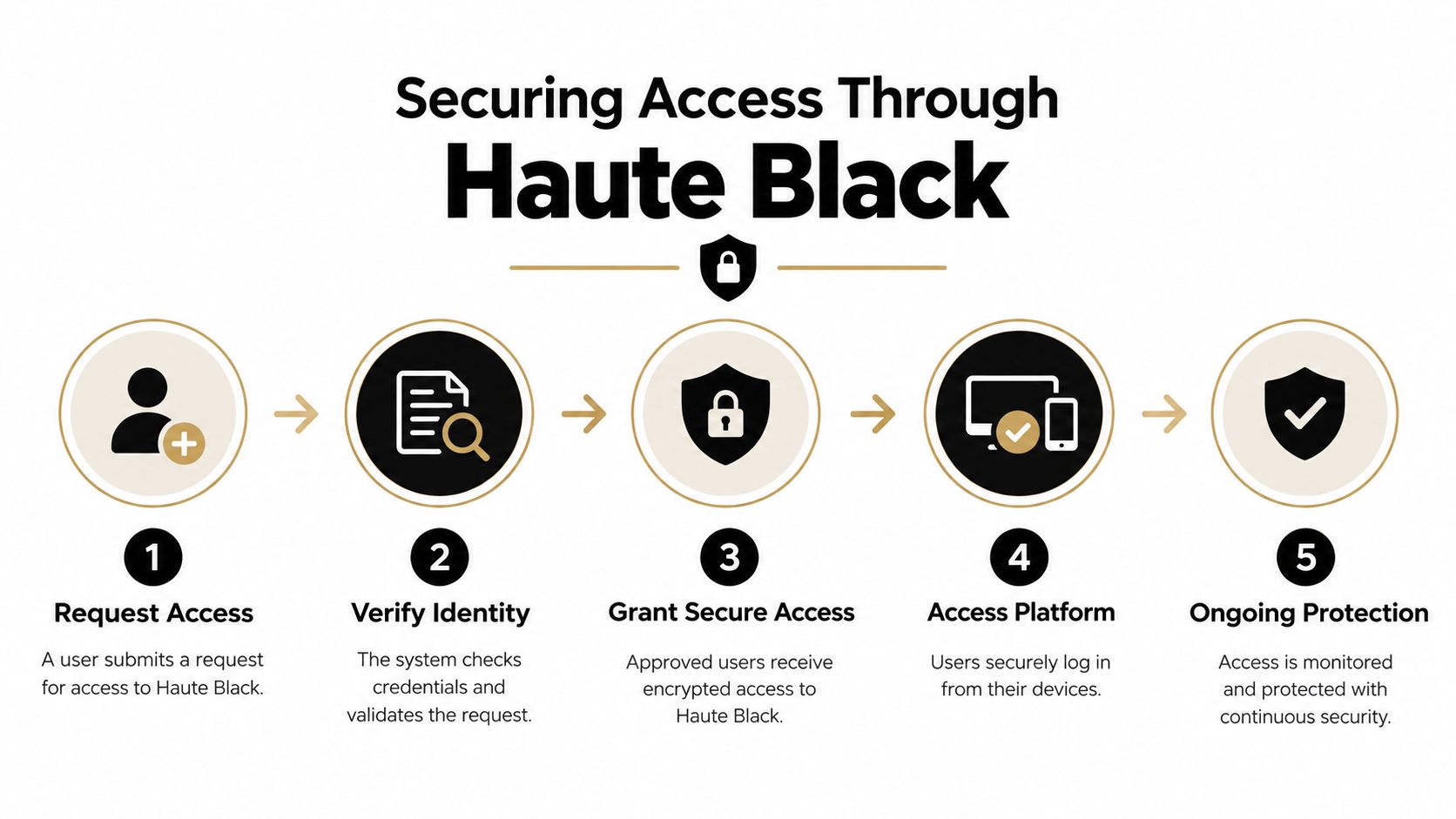
Securing Access Through HauteBlack
Genuine VIP treatment starts with booking architecture, not a status label. HauteBlack describes a private membership service by Haute Living, with bespoke itineraries, VIP recognition, and insider access across 120+ countries. Its travel operation combines a Virtuoso-affiliated agency with preferred-partner relationships at over 500 properties, including Four Seasons, Aman, Rosewood, Belmond, and Ritz-Carlton.
That structure differs from a platform-based loyalty program. A platform displays eligibility and standard benefits. An advisor-mediated booking connects the guest's priorities to a property, an available benefit, and the people responsible for delivering it. Evaluate the mechanism before joining. Ask what the membership includes, which benefits apply to qualifying stays, who controls the reservation, and how the service handles requests tied to live inventory.
Match membership to the booking
HauteBlack Access is presented as a membership tier at $299 per year. Its invitation-only Black Card is limited to 500 members globally, priced at $10,000 per year plus a $2,500 initiation fee. The distinction is operational, not cosmetic. The Black Card includes priority event access, priority seating at private dinners, a dedicated Haute Jets specialist, private roundtable rooms, and full member-directory connectivity, according to HauteBlack's membership overview.
Use this evaluation process before committing:
1. Match the membership to your travel behavior. Frequent luxury stays, complex itineraries, or regular interest in private events may justify a different structure from occasional hotel bookings.
2. Confirm the property relationship. Check whether the hotel participates in the relevant preferred-partner program and which amenities apply to your dates.
3. Give the advisor usable context. Share the occasion, room priorities, dietary needs, arrival timing, and family logistics. Those details determine what the property can prepare.
4. Separate confirmed benefits from requests. Daily breakfast may be confirmed, while a suite upgrade remains subject to availability. Your advisor should state that distinction plainly.
5. Use the wider network selectively. HauteBlack presents private chef dinners, member events, Haute Jets private aviation, first-class and helicopter transfers, villas, estates, dining, and transport coordination within its broader service offering.
The right objective is a well-matched journey, with experienced people handling details that automated status cannot authorize.
The Ultimate Luxury is the Network
A room is a commodity. A journey shaped by relationship is the exception.
Even an excellent hotel can deliver an ordinary stay when the reservation carries no context, the arrival is poorly timed, and each request starts from zero. A connected network changes that sequence. An advisor selects the right property, confirms applicable benefits, communicates the guest's priorities, and coordinates the surrounding experience so the hotel is not working in isolation.
The coordination may include a first-class transfer, helicopter connection, private villa, difficult restaurant reservation, or intimate cultural evening. Its value lies in continuity. One person or team understands the full journey and manages each arrangement as part of it, rather than treating every booking as a separate transaction.
Access is built on verified trust
Private networks depend on reliable introductions. Guests who value discretion do not need a public marketplace for every dinner, event, or professional connection. They need a controlled environment where participants have been appropriately verified and everyone understands the purpose of the introduction.
The same standard applies beyond travel. Leaders seeking useful, trusted relationships may benefit from curated peer groups for real estate leaders, where the quality of the network matters more than the size of the directory.
HauteBlack describes an AI-powered network connecting verified founders, executives, investors, athletes, and creators for meaningful introductions and private roundtables. Its events include private chef dinners with Nobu, Daniel Boulud, and Thomas Keller, as well as celebrity and cultural evenings. Membership can also provide priority invitations and ticket access connected to those events.
Choose orchestration over theatre
Ask who can make the journey work when conditions change, not how to appear like a VIP.
That distinction separates a published perk from a functioning relationship. An upgrade is useful, but the greater benefit is having someone who understands your priorities, knows which requests are realistic, and can act before a minor complication becomes an expensive disruption. HauteBlack's guide to luxury travel networks provides useful context for assessing this model.
True luxury is the quiet opening of doors through verified, high-touch relationships. Choose a network that can secure the right room, protect the details, and remain involved from the first transfer through the final departure.
HauteBlack offers bespoke travel planning, VIP recognition, preferred-partner hotel benefits, private events, aviation support, and a member network focused on meaningful access. Visit HauteBlack to explore how a private advisor can turn a reservation into a properly orchestrated arrival.
Explore Our Guides


Signature Experiences


