Haute Black Journal
Rainy Season in Peru: Guide for Luxury Travel 2026

Marlene Azeez
Director, HauteBlack
View all articles →

# Rainy Season in Peru: Guide for Luxury Travel 2026
July 19, 2026
Most advice about the rainy season in Peru is too blunt to be useful. It treats the country as a single weather system and assumes the smart move is to avoid it altogether.
That's lazy planning. Peru rewards nuance.
The rainy season in Peru is less a national shutdown than a regional puzzle. The Andes and Amazon turn dramatic, green, and operationally more complex. Meanwhile, the coast can stay strikingly dry. For travelers who value privacy, atmosphere, and access shaped around real conditions rather than generic peak-season templates, this is often the moment when Peru feels most exclusive.
Embracing Peru's Exclusive Green Season
Most mass-market guides frame Peru's wet months as a compromise. For the right traveler, they're an upgrade.
The usual mistake is assuming rain falls everywhere in the same way. It doesn't. As this Peru regional rainy season overview notes, existing coverage often treats Peru's rainy season as a uniform risk, yet the coastal region, including Lima, Paracas, and Ica, experiences almost no rain during the Andean and Amazon wet season. That single distinction changes how an intelligent itinerary should be built.
Why green season suits luxury travel
The best luxury travel isn't about forcing the same itinerary everyone else buys in July. It's about using timing to your advantage. In Peru, that means recognizing when scenery is at its most photogenic, when iconic places feel less overrun, and when a flexible schedule creates better access to private experiences.
The green season delivers a version of Peru that feels more cinematic. Valleys look alive. Mountain scenery gains depth. Cloud, mist, and changing light soften the edges of heavily photographed sites and give them character that dry-season perfection often lacks.
Practical rule: Don't ask whether Peru is "good" or "bad" in the rainy season. Ask which parts of Peru you want, and in what order.
The trade-off worth making
There is a trade-off. You gain atmosphere and often a calmer travel rhythm, but you also need sharper logistics. This isn't the season for rigid connections, self-driving experiments in mountain regions, or an itinerary that collapses if one transfer runs late.
What works is a curated route with weather-smart sequencing, strong on-the-ground support, and hotels that feel rewarding even when the sky closes in for an afternoon. What doesn't work is trying to out-budget the season.
A discerning traveler rarely needs Peru to be uniformly dry. They need it to be beautiful, manageable, and well-orchestrated. That's exactly where the green season excels.
Decoding Peru's Three Climates During the Rains
Peru doesn't have one rainy season experience. It has three.
In the broadest terms, the Andes and Amazon rainy season officially runs from November to April, with peak rainfall in January and February, especially in highland areas such as Cusco, while the coast, including Lima, remains largely dry and sunny during that period, according to this Peru rainy season climate guide. If you understand that split, you stop planning vaguely and start planning well.
The coast stays useful
The coast is the cleanest strategic advantage in the rainy season in Peru. Lima works beautifully as an arrival city during these months because weather is rarely the story. Paracas and Ica also fit well when you want light, space, and low-friction movement before heading inland.
This matters for luxury travel because the coast absorbs jet lag well. It gives travelers time to settle into Peru without immediately layering altitude, mountain weather, and tight archaeological scheduling on day one.
The Andes become vivid and operationally sensitive
The Andes are where travelers need the most realism. This is the season of green terraces, moody skies, mist on stone, and occasionally disrupted road movement. It's also the season when poor itinerary design becomes obvious very quickly.
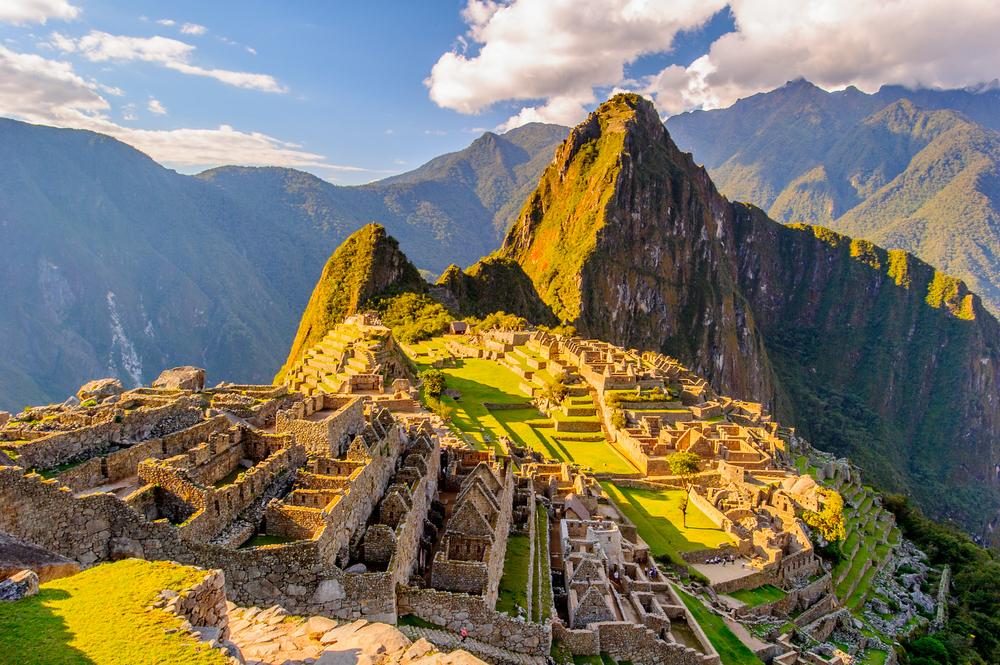
Cusco, the Sacred Valley, and Machu Picchu can still be very rewarding. But the style of travel should change. Early starts matter more. Overland timing must be conservative. Properties with strong service, fireplaces, spas, and comfortable suites become part of the weather strategy, not just aesthetic preference.
A rainy-season Andean itinerary succeeds when the hotel is part of the experience, not merely the place you sleep.
The Amazon gets fuller, richer, and more fluid
The Amazon in wet months isn't "ruined by rain." It behaves differently. River access becomes central. Excursions shift toward water-based exploration. The forest feels denser, louder, and more immersive.
A 2024 climatology study summarized in this discussion of Peruvian rainy season variability notes that the Southern Peruvian Amazon, particularly the Madre de Dios basin, showed statistically significant earlier onset and increased duration of the rainy season from 1981–2019. The same source notes that annual rainfall in the eastern Amazonian forests averages 2,500 mm, can reach 3,500 mm in high-variance years, while the coastal desert receives less than 25 mm annually. For itinerary design, the lesson is straightforward. The Amazon and the coast are not weather cousins. They are opposites.
Peru rainy season regional overview Nov - Apr
| Region | Typical Weather | Landscape & Atmosphere | Luxury Travel Impact |
|---|---|---|---|
| Coast | Predominantly dry and sunny | Clean light, desert coastlines, calm urban and seaside stays | Strong arrival zone, excellent for smooth starts and low-risk transitions |
| Andes | Frequent rain, especially in peak wet months | Lush valleys, mist, saturated colors, dramatic mountain views | Best for slower pacing, premium rail, buffered transfers, and high-comfort hotels |
| Amazon | Regular rainfall and higher water levels | Dense greenery, flooded forest corridors, immersive jungle atmosphere | Ideal for lodge and river-based exploration with flexible daily programming |
How to read the map correctly
Don't plan by month alone. Plan by region, sequence, and tolerance for movement risk.
A traveler who wants architecture, gastronomy, and sea air can enjoy the coast with little weather friction. A traveler who wants the Sacred Valley in its most vibrant visual state can absolutely go during the rainy season, but should accept that timing needs slack. A traveler drawn to the Amazon should lean into the season rather than resist it, choosing the right style of lodge or river journey instead of expecting dry-season trail conditions.
What doesn't work is treating all three as interchangeable.
Crafting Your Luxury Itinerary for the Rainy Season
The strongest rainy-season itineraries in Peru are sequenced, not stacked. You don't just collect destinations. You arrange them so the weather serves the trip.
Start with the coast, then move with intention
For most high-end travelers, the best opening move is simple. Begin on the coast.
Lima gives you a polished entry point. Paracas or Ica can add a sunlit interlude before altitude enters the conversation. After that, transition into the Sacred Valley rather than rushing straight into a tightly timed Cusco and Machu Picchu sequence. This creates a gentler rhythm and leaves room for weather-responsive adjustments.
If Machu Picchu is essential, premium rail and carefully chosen overnight positioning beat overly ambitious same-day maneuvers. Travelers considering the citadel as part of a broader bespoke journey should also review this guide to luxury travel to Machu Picchu.
Build the day around mountain weather
In the Andes, mornings are prime real estate. Reserve archaeological visits, private guiding, and scenic train segments for the first half of the day whenever possible. Let afternoons absorb the softer side of the itinerary.
That might mean:
- A private textile workshop: Better placed after lunch than before sunrise.
- A suite lunch with valley views: Ideal when weather is moving through.
- Spa or hydrotherapy time: Smart after a damp morning out rather than as a generic hotel add-on.
- Chef-led dining or tasting menus: Particularly useful on evenings when guests prefer not to move again.
The best rainy-season days in Peru have a clear outdoor priority for the morning and a luxurious indoor fallback by design, not by accident.
Choose alternatives that still feel elevated
Some travelers arrive with dry-season assumptions that don't translate well. A rigid trekking-first mindset often underperforms in the wet months. Scenic rail, private cultural access, shorter guided walks, and high-comfort valley stays usually outperform brute-force adventure.
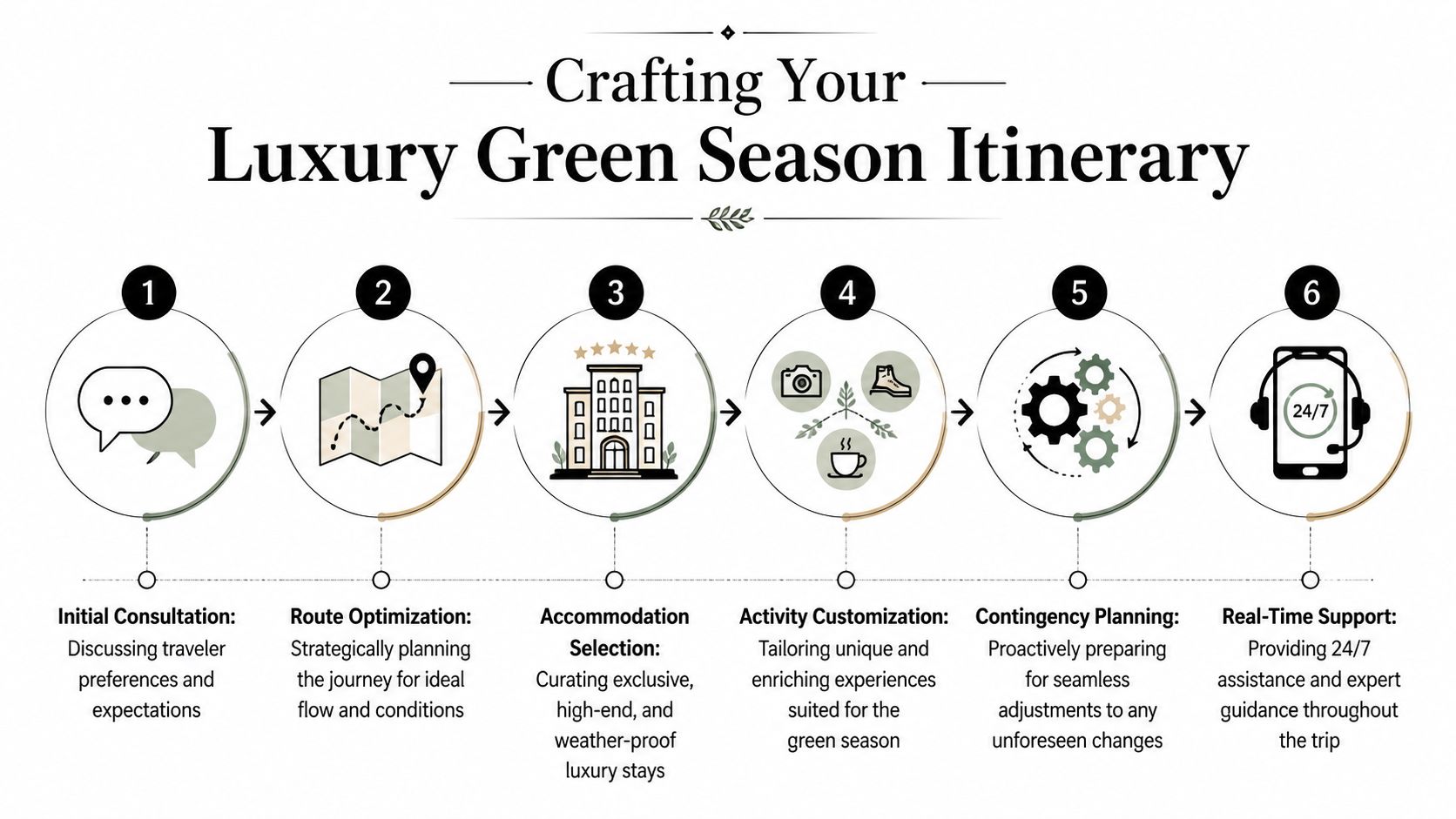
A polished green-season itinerary often follows a structure like this:
1. Coastal arrival and reset in Lima.
2. Optional coast extension for desert light and space.
3. Sacred Valley stay with time to acclimatize and adapt.
4. Machu Picchu positioned carefully with buffers around transit.
5. Cusco finale or Amazon continuation depending on the traveler's appetite for altitude versus immersion.
That's the difference between merely traveling during the rainy season in Peru and using it well.
VIP Logistics and Seamless Contingency Planning
Luxury travel in the wet season isn't defined by whether disruption is possible. It's defined by whether the disruption ever reaches the guest experience.
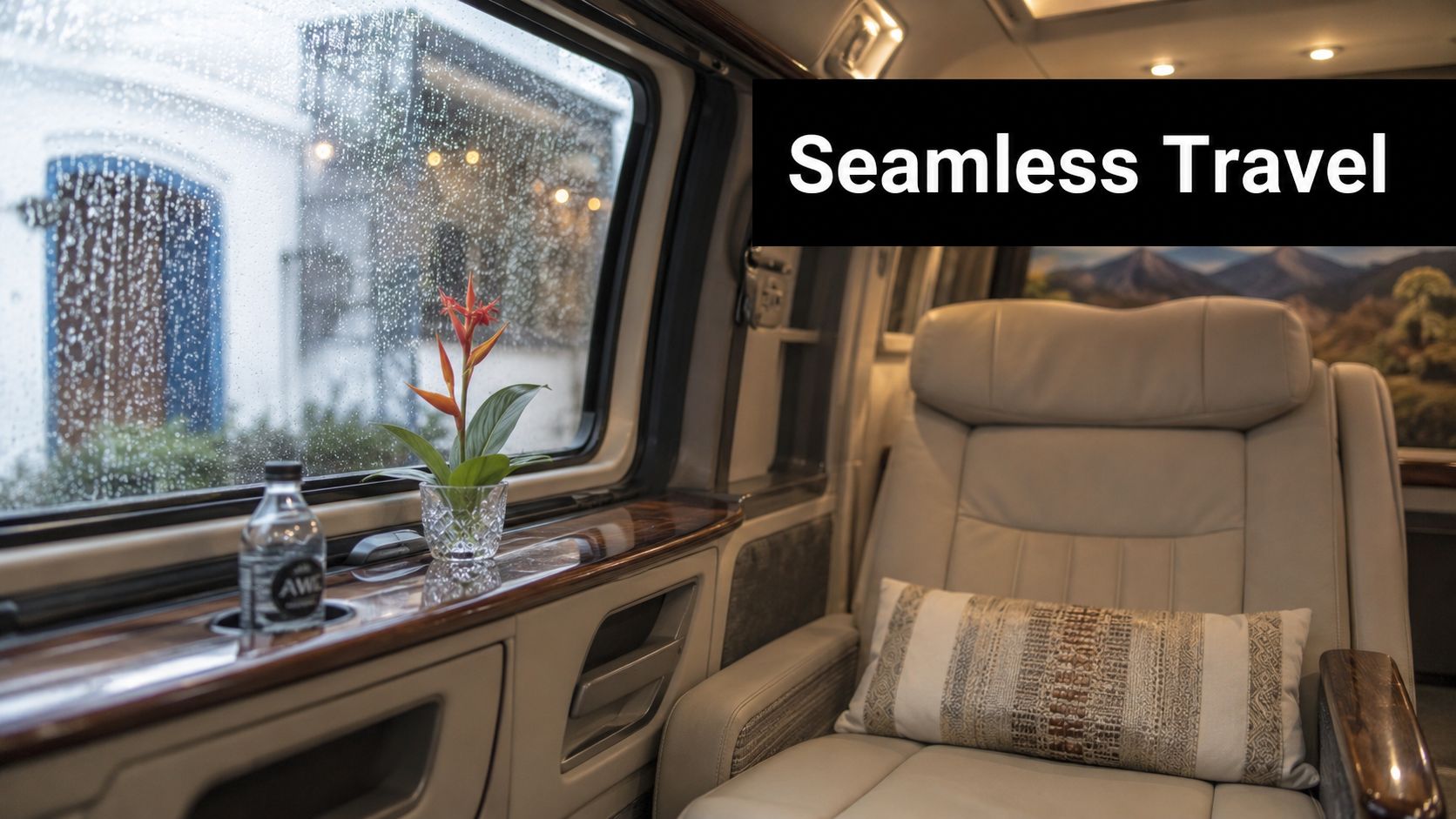
A primary risk point is usually surface movement in the Andes. As this Peru seasonal travel advisory explains, during the rainy season from November to March, roads in the Andes become muddy and are often partly impassable due to increased rainfall, which can lead to travel disruptions and road closures, especially from December to February. That doesn't mean high-end travel stops. It means logistics have to be professional.
What works and what fails
What works is layered transport planning. That means shorter road days, protected transfer windows, vetted drivers, and realistic turn times between movements. It also means choosing properties and routing that can tolerate a schedule change without downgrading the trip.
What fails is the classic overland chain. Long drives, late arrivals, next-morning departures, and nonrefundable timed experiences create fragility. In the dry season, travelers sometimes get away with that. In the green season, they usually don't.
The quiet luxury of redundancy
A well-built itinerary includes backup pathways before anyone needs them. Private transfers should be planned for comfort, yes, but also for responsiveness. The same goes for premium rail seats, alternate routing between valley bases, and hotel teams that can pivot dining, guiding, and wellness plans on short notice.
Airport transitions are another pressure point. During a season where every connection deserves breathing room, a well-managed arrival and departure flow matters more than ever. This broader look at seamless VIP airport transfers is useful context for travelers who expect the ground experience to feel as considered as the suite.
Operational insight: Rain rarely ruins a luxury trip. Overconfidence in transit timing does.
How experienced planners protect the experience
Experienced advisors protect three things above all:
- Margin: Every key movement gets time around it.
- Priority: The most important experience is positioned where weather has the least power over it.
- Comfort: If conditions shift, the fallback still feels desirable.
That last point matters. A rainy afternoon in a weak hotel feels like a problem. A rainy afternoon in a refined mountain property with a strong restaurant, a proper spa, and a beautiful suite feels like part of the trip.
This is why the right rainy-season strategy isn't to gamble on perfection. It's to make sure every version of the day is worth having.
Essential Packing and Wellness for a Peru Journey
Packing for the rainy season in Peru should feel edited, not excessive. Most travelers either underpack for moisture or overpack as if they're heading into an expedition scenario. Neither is elegant.
Pack for movement, not just weather
In the Andes, the smartest wardrobe is layered and technical, with a polished silhouette. A lightweight waterproof shell from Arc'teryx or Moncler Grenoble works better than a bulky rain jacket you'll resent carrying. Footwear should handle slick stone and hotel dining with equal ease. Loro Piana loafers are not mountain shoes, and a heavy trekking boot is too much for most curated itineraries. A refined waterproof walking shoe or sleek hiking sneaker is usually the better answer.
A compact packing list should include:
- Waterproof outer layer: A shell with clean lines and dependable weather protection.
- Mid-layer warmth: Fine merino, cashmere blend, or technical fleece for altitude shifts.
- Dual-purpose footwear: One pair for outdoor use, one for city and evening settings.
- Structured day bag: Water-resistant and large enough for layers, camera, and essentials.
- Travel umbrella: Useful in cities and hotel transitions, less useful on trails.
Wellness matters more than people expect
Altitude, humidity changes, and travel pace can all feel sharper when weather is variable. Hydration becomes more important. So does recovery.
The most successful travelers use the season to soften the itinerary. A massage after a damp morning in the Sacred Valley makes sense. So does a long lunch, steam room, or a quiet hour by a fire with a pisco sour when afternoon rain settles in. These aren't filler activities. They're part of how the trip stays pleasurable rather than performative.
Bring a wardrobe that can handle rain gracefully, then give yourself permission to enjoy the pauses the season creates.
A few items people forget
Travelers often remember jackets and forget smaller pieces that improve the entire experience.
Consider adding:
- Moisture-wicking socks: Essential if you'll be in and out of damp conditions.
- Portable power bank: Useful during long transfer days and photography-heavy outings.
- Medication kit: Especially for stomach sensitivity, headaches, and standard travel discomforts.
- Skin barrier products: Lip balm, hand cream, and facial moisturizer matter in altitude and shifting humidity.
- Waterproof pouch: For phone, passport copy, and chargers during transfers.
The goal isn't to pack more. It's to remove friction.
Exclusive Experiences That Thrive in the Rain
Some experiences in Peru don't merely survive the green season. They become more evocative because of it.
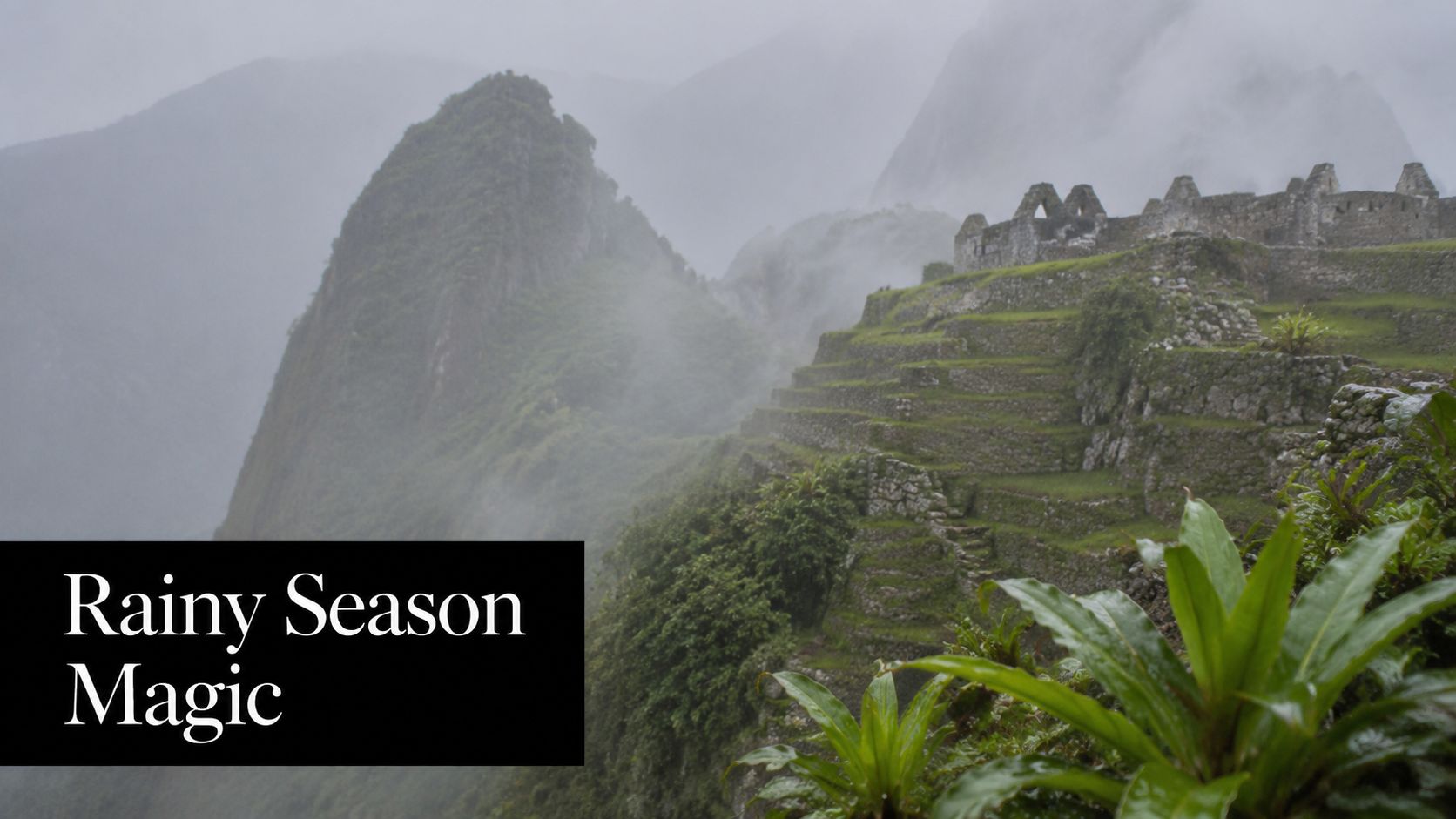
Machu Picchu in mist has a different temperament from Machu Picchu under a hard blue sky. The stone feels older. The site reveals itself in layers. The surrounding peaks appear and disappear. For many travelers, that shifting atmosphere is more memorable than postcard clarity.
Where the season adds value
The green season also improves experiences that rely on mood rather than certainty. Cusco's streets take on a richer sheen after rain. Valley scenery looks fuller. Waterfalls and river systems carry more visual drama. In the Amazon, a wetter environment can make the journey feel more immersive and more cinematic, especially for guests drawn to water-based exploration. Travelers considering a forest extension can explore ideas through these luxury Amazon river tours for 2026.
According to this rainy-season Peru travel perspective, luxury-focused coverage often overlooks how premium operators use the season for green season perks, including resort credits and private villa availability at top properties, and notes that showers often last only a few hours, which suits curated, weather-resilient itineraries. That's exactly why savvy travelers don't dismiss the season. They deploy it.
The emotional difference
Dry season Peru often feels efficient. Rainy season Peru can feel intimate.
That distinction matters for honeymooners, repeat visitors, and travelers who've already done the obvious version of the country. If you want the cleanest weather possible, choose another month. If you want Peru with more texture, more atmosphere, and a better chance of feeling that the country belongs to you for a moment, the green season has real appeal.
Some of Peru's finest travel memories arrive between showers, not in spite of them.
The rainy season in Peru isn't for careless planning. It is, however, exceptionally good for intentional travel.
Haute Black crafts Peru journeys that treat seasonality as an advantage, not a liability. If you want a bespoke itinerary with private access, preferred hotel benefits, and contingency planning that keeps every detail perfectly coordinated, explore Haute Black.