Haute Black Journal
Peru Private Tour: A Guide to Luxury and Seamless Travel

Marlene Azeez
Director, HauteBlack
View all articles →

You're probably weighing two versions of the same trip.
In one, Peru looks magnificent on paper but feels effortful in real life. You land, wait for transfers, adjust to altitude while keeping pace with a fixed group schedule, and discover that the most famous places in the country run on timed entry, permit limits, and crowded transport windows. In the other, the same journey feels calm. A guide meets you when you arrive. Your days are shaped around your energy, not someone else's checklist. The luxury isn't only the suite. It's the absence of friction.
That's what a Peru private tour really changes. In Peru, privacy is less about isolation and more about orchestration. It buys back hours, reduces handoffs, and protects access in a country where the finest experiences often depend on timing.
Introduction to the Peru Private Tour Experience
A well-run arrival in Peru tells you almost everything about the trip to come. You step into Cusco or the Sacred Valley and there's no guessing where to go next, no waiting for a coach to fill, no debate over whether to push on or rest. Someone has already thought through altitude, drive times, meal pacing, and the hour you'll want to see a place rather than tick it off.
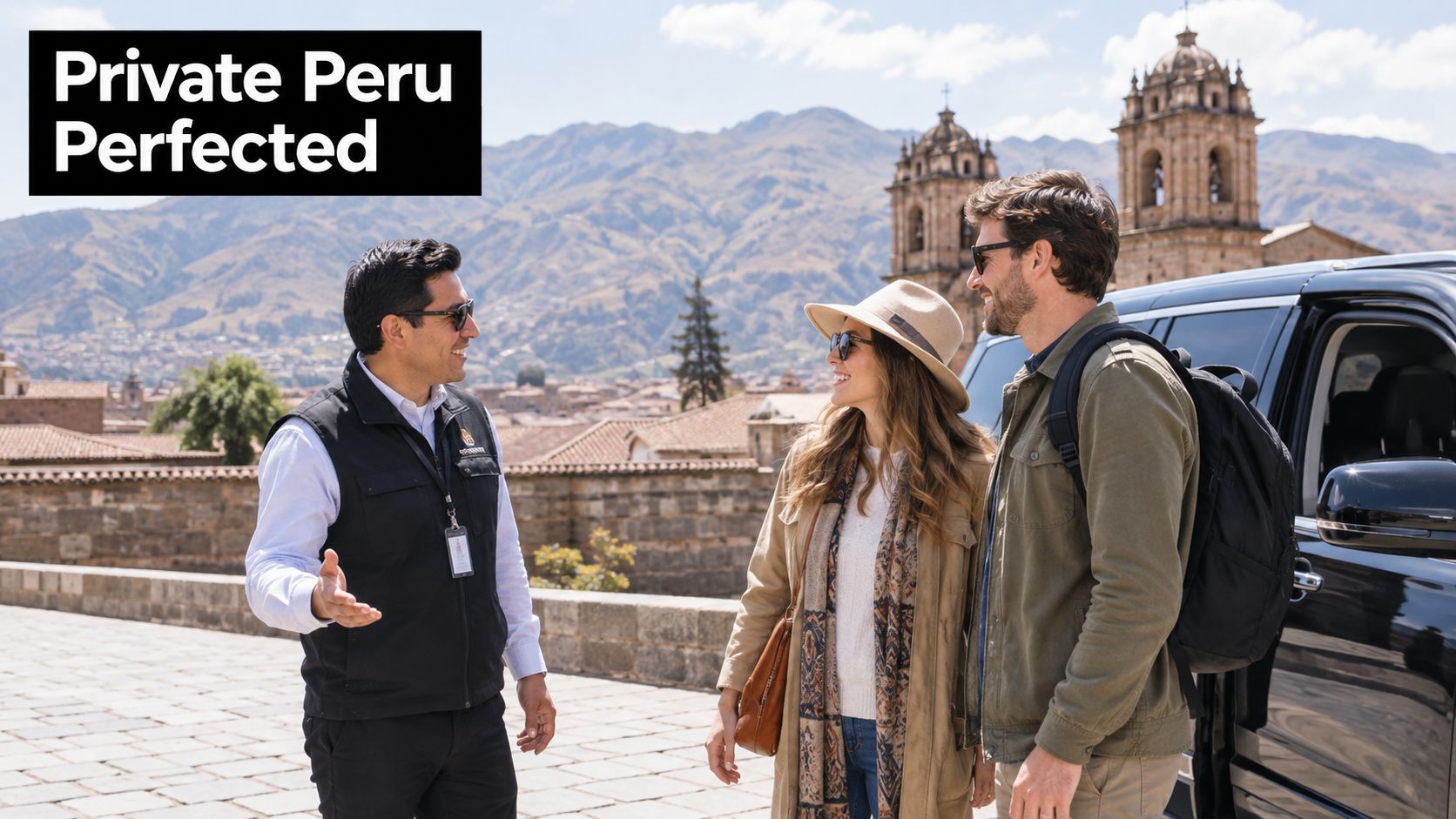
That's why Peru rewards custom planning more than many destinations. The iconic stops are spread across very different environments. Lima is coastal and urban. Cusco sits at altitude. The Sacred Valley often suits travelers better as a soft landing. Machu Picchu works on scheduled entry and transport rhythms. The Amazon asks for a different packing list, pace, and body clock altogether.
For many travelers, the shift happens when they stop asking, “Which hotel should I book?” and start asking, “How do I move through Peru with the least wasted energy?” That question usually leads to a stronger itinerary.
What private means on the ground
A private journey in Peru usually includes three invisible advantages:
- Time protection: Fewer dead hours lost to shared pickups, rigid departures, and mismatched pacing.
- Access planning: Better handling of timed entries, rail schedules, and guide sequencing.
- Personal rhythm: Room for a late lunch, a slower morning, or a detour that would never work in a group format.
A private tour works best when it feels unhurried without ever feeling idle.
Some travelers want archaeology without athletic strain. Others want rail, trekking, fine dining, and artisan visits woven into one coherent route. A bespoke itinerary like Lords of the Inca reflects that difference well because Peru isn't a place where one standard luxury template fits every traveler.
Why this matters more in Peru
Peru's classic circuit is famous for a reason, but fame creates pressure. The more sought-after the site, the more valuable thoughtful timing becomes. In Peru, luxury often means reducing transitions, smoothing access, and making sure each place is experienced at the right moment of day, with the right amount of energy left for it.
What a Luxury Peru Private Tour Really Includes
A couple lands in Cusco after an overnight flight, checks into a beautiful suite, and still loses half a day to poor sequencing, mistimed entries, and long waits between handoffs. Another couple arrives on a private Peru journey and reaches the Sacred Valley first, rests at a lower altitude, meets their guide already aligned with their pace, and steps into Machu Picchu with energy to spare. The difference is not décor. It is time bought back.
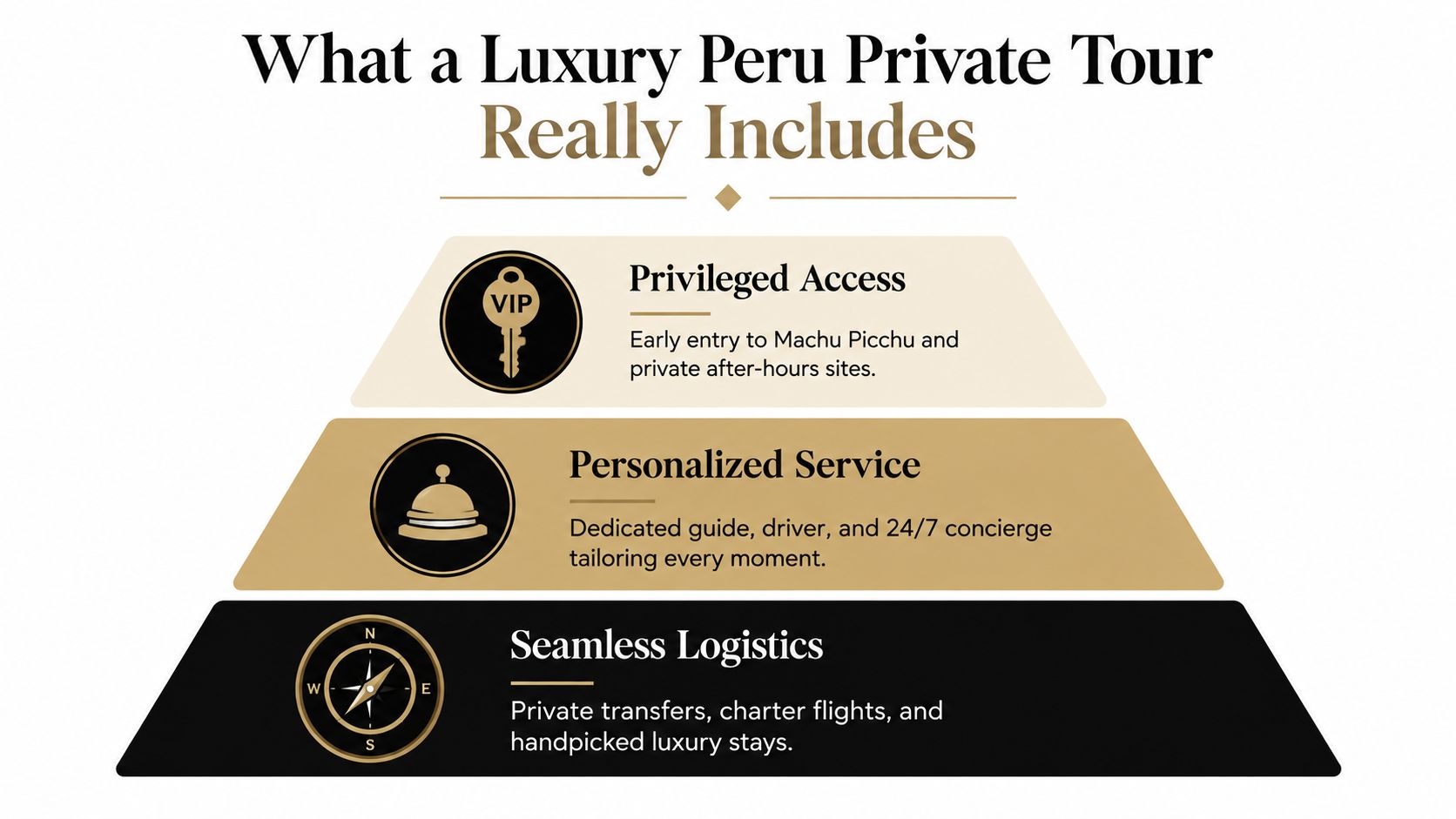
In Peru, high-end travel works like a well-run backstage production. What the traveler notices is ease. What makes that ease possible is careful control of entry times, transport links, guide pacing, and the small private moments that public itineraries cannot hold.
Access that protects the day
The strongest private tours are built around capacity limits. Machu Picchu entries are timed. Trains run on fixed schedules. Seasonal weather can compress the best sightseeing windows into a few valuable hours. A luxury private tour treats those limits as design parameters, not annoyances.
That is why access matters more than a longer amenity list. A well-built trip may include a later museum, an earlier train, a helicopter transfer on the right route, or a private artisan visit timed when a workshop is quiet and conversation comes naturally. Each choice protects attention and energy.
Private cultural access matters here too. In the Sacred Valley, a thoughtful visit with a textile family or ceramic artisan often leaves a deeper impression than adding another crowded stop. The setting feels personal because it is personal.
Service that adjusts in real time
The next layer is the human one. A dedicated guide does more than explain history. The guide reads the room, notices fatigue early, shortens what is dragging, and gives more depth where curiosity is strongest.
That flexibility is hard to overstate.
A family with teenagers may need shorter interpretation and stronger pacing between sites. A couple focused on archaeology may want the opposite, with slower movement and more context at fewer places. On a private tour, the day can bend without falling apart. That is one of the clearest ways luxury buys time. You spend less of it recovering from an itinerary that was built for someone else.
Logistics that remove friction
Hotels are the visible part. Logistics carry the weight.
In Peru, transport decisions shape the entire feel of the journey. The right rail class, the right valley-to-Cusco sequencing, the right airport assistance, and the right transfer length can turn a tiring circuit into one that feels measured and easy. Even premium pricing in Peru often reflects these hidden choices more than room category alone, as noted earlier in the article.
A simple test helps:
| Layer | What to ask |
|---|---|
| Access | Are major sites and private visits scheduled at the right hour, with capacity and season in mind? |
| Service | Will the guide adjust the day around our interests, stamina, and pace? |
| Logistics | Do flights, rail, road transfers, and rest periods protect energy instead of draining it? |
Practical rule: If an itinerary spends heavily on hotels but leaves entries, transport flow, and pacing loosely stitched together, it is paying for comfort without fully buying back time.
That is what a luxury Peru private tour really includes. Better rooms may be part of it. The greater value is frictionless access to places with limited capacity, handled in a way that keeps the traveler present for the moments that matter most.
Bespoke Itinerary Ideas From Machu Picchu to the Amazon
You land in Peru with eight or nine usable days. One version of the trip spends them in transit, in lines, and adjusting to altitude at the wrong moment. The better version protects those same days and turns them into private access, well-timed entries, and room to linger where Peru feels most alive. That is what a bespoke private tour is buying.
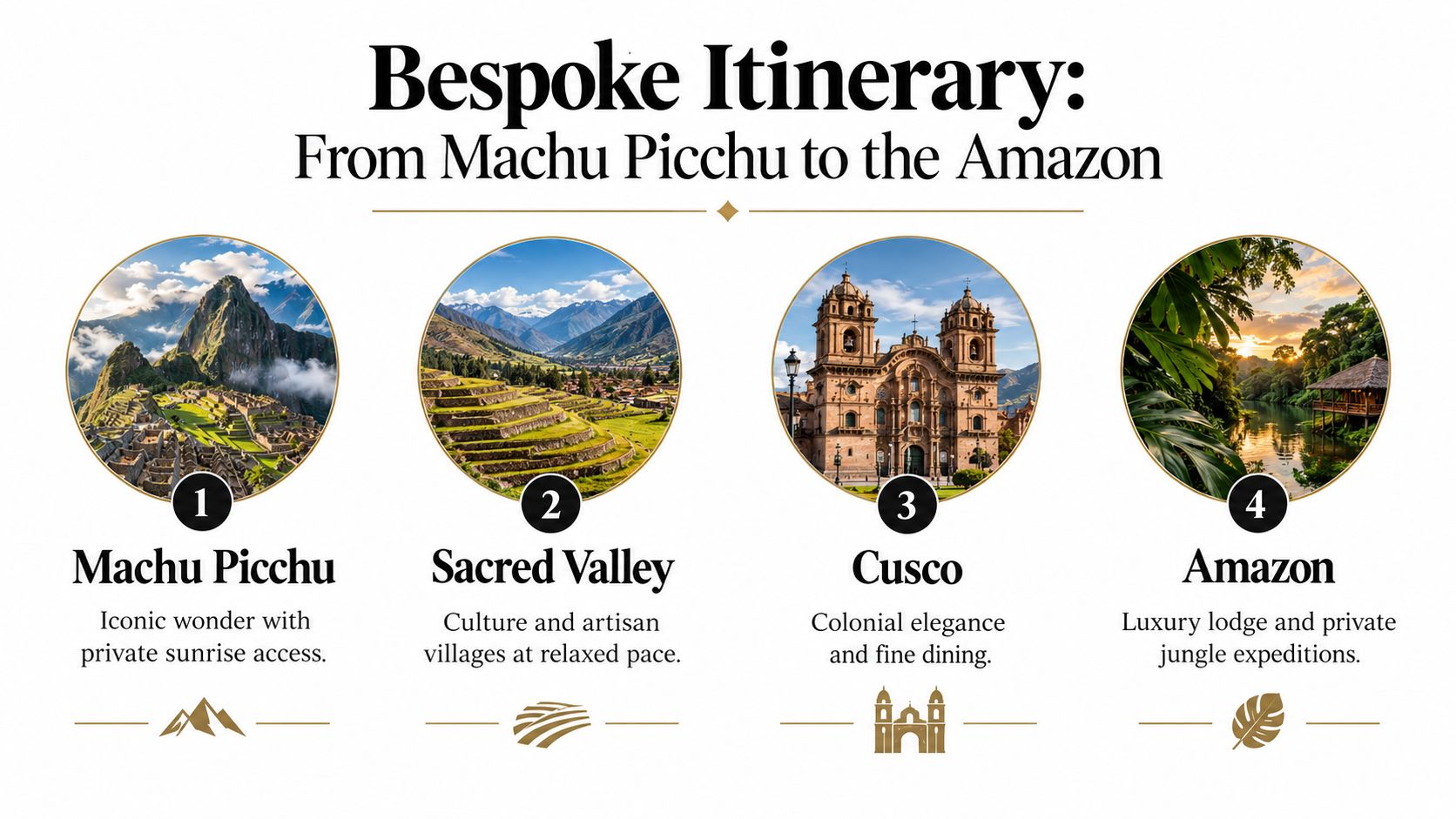
Most high-end Peru journeys are built around four hubs: Lima, Cusco and the Sacred Valley, Machu Picchu, and the Amazon. The art is not squeezing in every stop at full volume. It is deciding which places deserve your energy, where private access will matter most, and which transfers should be shortened with the right train, charter, or helicopter connection when time is tight.
How the four hubs feel different
Lima works best as a soft landing and a polished finish. After a long-haul flight, one night here can absorb jet lag, anchor the trip with excellent dining, and keep you from starting at altitude before your body is ready.
The Sacred Valley is usually where private touring proves its value first. The altitude is gentler than Cusco, the setting is calmer, and the experiences can be shaped with much more nuance. A closed-door visit with a textile family, a private ceramics workshop, or lunch on an estate outside the usual circuits often gives travelers something standard touring rarely can: cultural access without the feeling of being moved through a schedule.
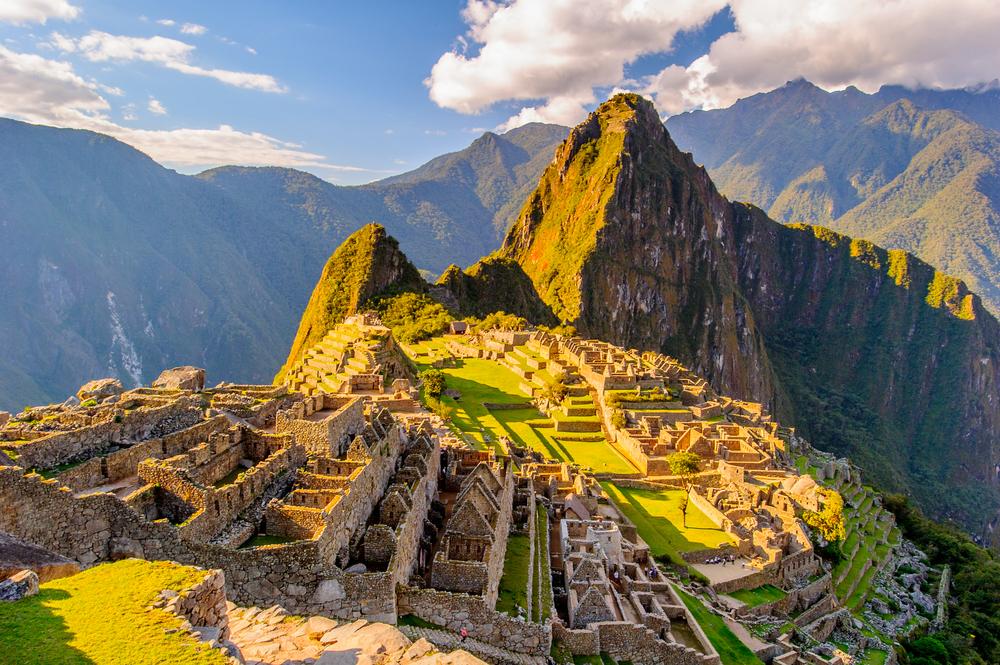
Machu Picchu is the fixed point. Timed entry, train inventory, and guide coordination matter here more than hotel category alone. A well-built itinerary treats the citadel like a performance with a curtain time. If you arrive tired, rushed, or on the wrong circuit, the day can feel compressed. If the surrounding nights and transfers are placed carefully, the visit feels spacious even within a tightly managed system. For ideas focused specifically on access and pacing there, the Machu Picchu luxury travel article is a useful companion read.
Cusco reintroduces urban energy. Some travelers want galleries, churches, and serious dining. Others do better with one or two well-chosen nights because altitude, walking surfaces, and social pace can catch up with you quickly. The right answer depends less on ambition and more on how you want to feel by day six.
The Amazon changes the rhythm completely. Stone, altitude, and archaeology give way to water, sound, humidity, and stillness. That contrast can be wonderful at the end of the trip, especially if you want nature to widen the lens after the Andes. If that extension includes plant medicine or retreat time, take care to find a reputable Iquitos retreat or lodge framework that matches your standards and intentions.
A quick visual helps when you're deciding what deserves more nights.
Choosing by travel style
| Traveler type | Best emphasis | Why it works |
|---|---|---|
| Honeymooners | Sacred Valley, Machu Picchu, Lima | Privacy, slower mornings, and intimate cultural access keep the trip romantic rather than overplanned |
| Families | Sacred Valley, lighter Cusco, selective Machu Picchu, optional Amazon | Different ages can move at different speeds without losing the shared experience |
| Executives | Lima, Sacred Valley, Machu Picchu | Fewer handoffs, cleaner routing, and stronger use of limited time |
Sample ways to shape the trip
For couples, a smart pattern is Lima, then the Sacred Valley, then Machu Picchu, with Cusco after if desired. That order works like acclimatization by design. You build toward the most tightly controlled visit instead of spending energy too early.
For multigenerational families, the Sacred Valley often deserves three or four nights as the anchor. It is easier to stage private excursions from one base than to keep repacking everyone through short hotel stays. If a grandparent prefers a slower morning while children head out with a guide, the day can still come back together over a late lunch.
For time-sensitive travelers, Peru can be shaped around access rather than mileage. A helicopter transfer in the Sacred Valley, private station assistance, or a carefully timed rail departure may sound like indulgences, but in practice they buy back hours and protect the parts of the trip that have fixed capacity. That is often the clearest difference between an expensive itinerary and a wise one.
For travelers who want nature after culture, end in the Amazon. The Andes ask for attention. The rainforest lets it soften.
The strongest itineraries do not try to make every stop equally important. They place intensity where Peru has capacity limits, place breathing room where private encounters add meaning, and use higher-touch transport only where it saves real time. That is how a private Peru journey begins to feel less like a list of destinations and more like controlled, graceful access to a country with many moving parts.
When to Go and How Logistics Shape Your Journey
A Peru trip can look perfect on paper and still feel rushed in real life. The difference usually comes down to timing. The right week, the right train, and the right entry hour often matter more than one more hotel upgrade, because Peru rewards travelers who buy access and protect time.
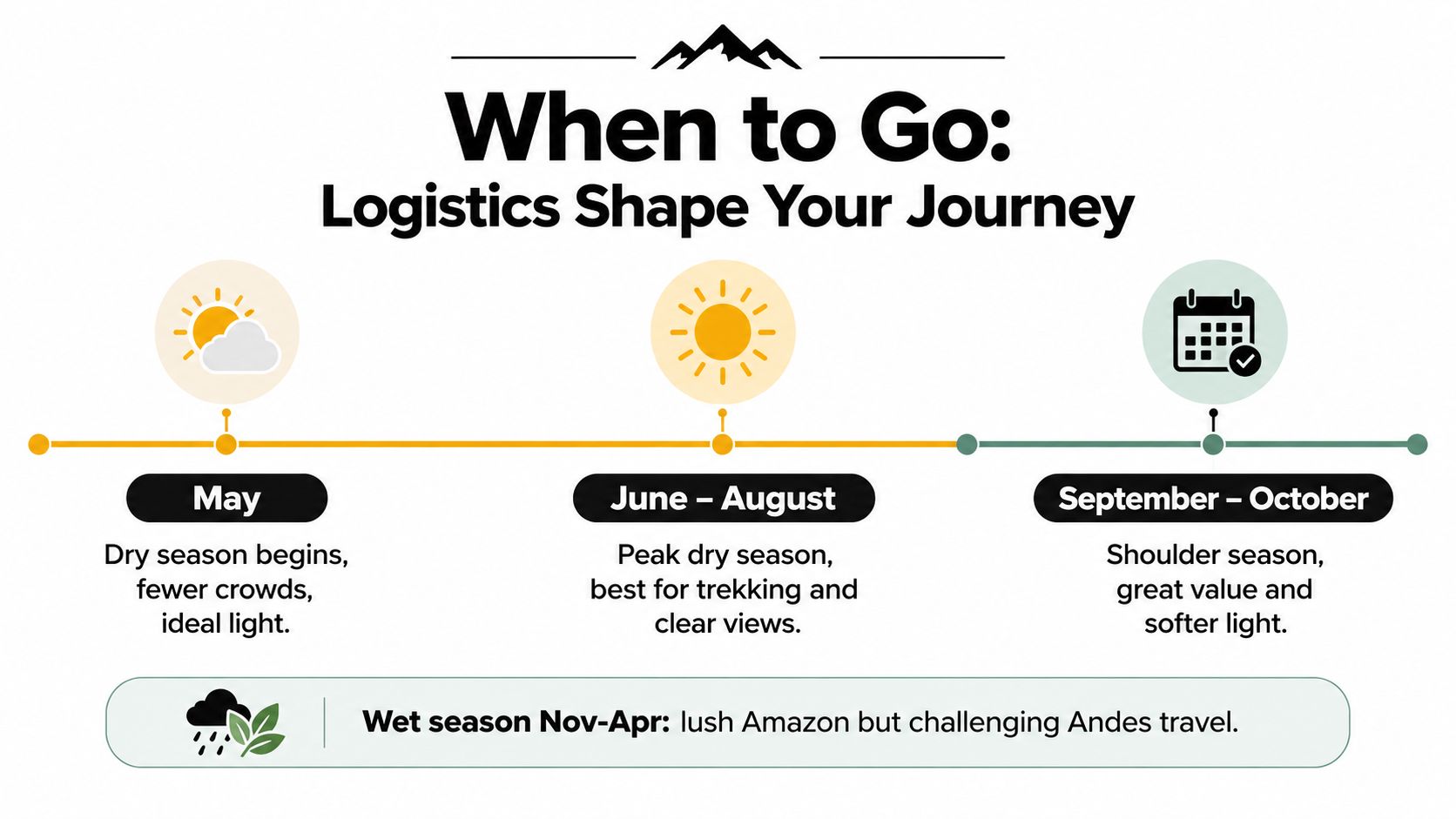
Why season matters more than many travelers expect
For many private travelers, May through October is the cleanest fit. Skies are usually clearer, rail and road plans are easier to keep on schedule, and the Andes tend to feel more cooperative. That same window also brings more competition for the pieces of the trip that cannot be improvised well, especially Machu Picchu entry times, preferred trains, and top guides.
Machu Picchu is the clearest example. Peru's Ministry of Foreign Trade and Tourism reported 644,844 visitors to the Historic Sanctuary from January to May 2026, equal to 89.5% of the benchmark level from the same period in 2019, and 82.1% of those visitors were foreign tourists. Peru's Ministry of Culture also set a 2026 high-demand daily ceiling of 5,600 visitors on peak dates and a regular limit of 4,500 (Andina coverage of Peru tourism and Machu Picchu access).
Those numbers shape the feel of a day. If your preferred entry hour is gone, the entire route around it may need to shift. A private tour earns its value here by protecting the scarce parts first, then building the trip around them with less friction.
How logistics change the quality of the trip
Peru works a bit like a theater performance with fixed curtain times. You can always get a seat somewhere in the house, but the best experience depends on what is still available when you book and how calmly you arrive.
Three choices usually have the biggest effect:
- Season and booking pace: In high-demand months, waiting can mean settling for less favorable train times or splitting nights in awkward ways to match permit availability.
- Transit design: A helicopter transfer or carefully timed private ground support is not about spectacle. It can recover half a day and keep a tightly held site visit from being squeezed.
- Entry timing: Early or well-placed entries often preserve energy, reduce idle waiting, and leave space for a private cultural visit elsewhere in the day.
This is the practical side of luxury in Peru. You are often buying back hours, reducing handoffs, and avoiding the small logistical frictions that wear travelers down.
Rainy season does not mean poor timing
The wetter months can still work beautifully if the itinerary is built with realistic expectations. Green surroundings, fewer crowds in some areas, and a softer pace can suit travelers who care more about atmosphere than perfect blue-sky photography. The tradeoff is that transport and timing need more margin.
If you are considering that window, HauteBlack's guide to Peru in the rainy season gives a useful Peru-specific view of how conditions shift and which styles of trip still work well.
Booking windows that actually matter
Some parts of Peru can be arranged with flexibility. Others cannot. Machu Picchu timing, premium rail inventory, and any route that depends on very specific connections should be treated as finite inventory from the start.
That is why a well-planned private journey in Peru feels easy. Someone has already aligned the fixed-capacity pieces, protected the hours between them, and removed the avoidable pressure points before you ever land.
VIP Transport Stays and Insider Access That Define Luxury
The difference between a good Peru trip and an exceptional one is often measured in transitions.
A private driver in the Sacred Valley sounds simple, but it changes the shape of the day. So does first-class rail when it eliminates stressful station logistics. So does a helicopter transfer when the goal isn't theatrics but recovering hours and avoiding a draining overland sequence. By the time travelers reach Machu Picchu, these choices have either preserved their energy or spent it.
Which upgrades are usually worth it
Not every premium line item deserves the same enthusiasm. I'd generally separate them this way:
- High value for most travelers: Private airport handling, dedicated guide and driver, well-timed rail, and a Valley-first routing that softens altitude.
- High value for time-poor travelers: Helicopter transfers over the Andes or private aviation support when the trip is short and every half day matters.
- High value for memory, not efficiency: Chef-led dining, private tastings, and artisan visits that deepen your understanding of place.
For packing, practical elegance goes a long way in Peru because you're often moving between climates and transport modes. If you want a useful style benchmark before departure, this guide to men's leather travel bags is a sensible reference for choosing pieces that work in airports, rail stations, and polished hotel arrivals.
What insider access actually feels like
Insider access in Peru shouldn't feel flashy. It should feel well placed.
That might mean a private conversation with a textile master in the Sacred Valley, where the visit is arranged at a time when you can engage rather than rush through. It might mean a chef-led meal in Lima that gives context to ingredients you've been seeing throughout the journey. It might mean staying within a preferred partner ecosystem where arrivals, upgrades when available, and property recognition smooth the stay in ways guests notice only because everything feels easy.
Some travelers also fold in private aviation through options such as Haute Jets when the trip spans multiple regions and commercial schedules start to erode the experience. That kind of choice isn't necessary for every itinerary. It's most useful when speed, privacy, and control matter more than broad schedule flexibility.
Permits Health and Practicalities for a Smooth Private Tour
The most polished Peru journey still depends on a few essential elements. Private planning becomes risk management.
The access checks to confirm early
Machu Picchu operates with meaningful capacity controls. The site has a base daily cap of 4,500 visitors, with some high-season dates expanded to 5,600. The classic 4-day Inca Trail is limited to 500 people per day including guides and porters, leaving roughly 200 trekker slots (How to Peru access overview).
If your trip includes the trail, premium rail combinations, or a preferred site hour, secure those elements months ahead. In Peru, the permit is not a small detail. It can determine the shape of the entire itinerary.
Health and comfort planning
Altitude usually causes more trouble than travelers expect because enthusiasm can outrun adaptation. A calmer first base, lighter first-day activity, and realistic pacing tend to do more than bravado.
For the Amazon, think in layers: insect protection, hydration, sun, and any destination-specific medical guidance your clinician recommends. If you're comparing pre-trip vaccine budgeting, a general traveller vaccination price guide can help you frame the conversation before you book an appointment locally.
Pack for movement, not only for photographs. Peru often asks you to dress for changing altitude, light, and terrain in the same journey.
Small details that save the trip
- Connectivity: Download key documents and messaging tools before moving into weaker-signal areas.
- Footwear: Bring one pair for polished city use and one for uneven paths.
- Day bag discipline: Keep medication, documents, layers, and valuables with you during all transfers.
Travelers often focus on the spectacular parts of Peru. The smoother journeys respect the practical parts just as much.
Planning Your Peru Private Tour With HauteBlack
You land in Lima on time, but your preferred Machu Picchu entry hour has only narrow availability, the Sacred Valley hotel you want works best with a different rail schedule, and Cusco is not the right first night for everyone. At that point, luxury is not a suite category. It is time protected, decisions made in the right order, and fewer weak links between one beautiful place and the next.
That is the value of an advisor in Peru. A strong private tour is built like a well-cut garment. The fit comes from small adjustments most travelers do not see at first, such as where to place recovery time, which transfers remove friction, and when paying more for a private car or helicopter saves a day rather than adding cost.
Where the value shows up
HauteBlack is a Virtuoso-affiliated agency with preferred partner status at over 500 properties, including Four Seasons, Aman, Rosewood, Belmond, and Ritz-Carlton, according to the company profile provided for this article. In Peru, that network can improve a trip in practical ways: recognition on arrival, flexible benefits, resort credits, and upgrades when available.
Budget matters, but structure matters more. As noted earlier, Peru private tours can range widely depending on the balance of private guiding, premium transport, and hotel level. The more useful question is what each upgrade buys. A better room is pleasant. A well-timed routing plan, a preferred site entry, or a private artisan visit arranged around crowd patterns can give back hours you would otherwise lose to waiting, backtracking, or capacity limits.
That distinction becomes even sharper in high season and shoulder months. Peru has bottlenecks. Trains fill, site timings narrow, and weather can force smart rerouting. An experienced advisor handles those pressure points before they become your problem.
Why the editorial side still matters
For readers gathering ideas before they book, the Peru articles appear on the HauteBlack news page. The same page states that every destination, property, and experience referenced in the Journal is available to arrange through HauteBlack's concierge team, which connects inspiration with actual trip planning.
That matters because good editorial content can help you recognize your travel style. Some travelers want maximum interpretation at each stop. Others want privacy, lighter structure, and just a few moments of high-touch access that change the feel of the whole journey. Once those preferences are clear, the itinerary becomes easier to shape with precision.
A Peru private tour works best when it answers a few practical questions early. How much moving feels pleasant instead of tiring? Where does private transport save real time? Which access points are worth securing first because capacity, weather, or season can reshape the rest of the route?
If you want Peru to feel fluid rather than tightly managed, HauteBlack can arrange the pieces that matter most, from bespoke routing and preferred hotel benefits to private transport and concierge-level access. Explore HauteBlack to start shaping a Peru journey around time, pacing, and the quiet precision that makes it feel easy.