Haute Black Journal
Luxury Travel Guide for Rainy Season in Peru 2026

Marlene Azeez
Director, HauteBlack
View all articles →

# Luxury Travel Guide for Rainy Season in Peru 2026
July 11, 2026
Most advice about the rainy season in Peru is too blunt. It treats an entire country as if one weather pattern applies everywhere, then concludes the smart move is to wait for the dry season.
That's fine for travelers who want the simplest version of Peru. It's not the most interesting version.
Peru during the wetter months rewards people who value access over convention. Ancient sites feel more atmospheric. The mountains turn sharply green. The coast offers a dry counterbalance. And in the Amazon, high water opens routes that don't exist in drier months. The trade-off is obvious. You need better timing, tighter logistics, and a willingness to plan around conditions instead of pretending conditions won't matter.
That's exactly where the season becomes compelling.
Embracing Peru's Verdant Season
The common warning goes like this: avoid Peru from late in the year through early spring because rain will ruin the trip. That advice misses the point. For the right traveler, this is Peru at its most cinematic.
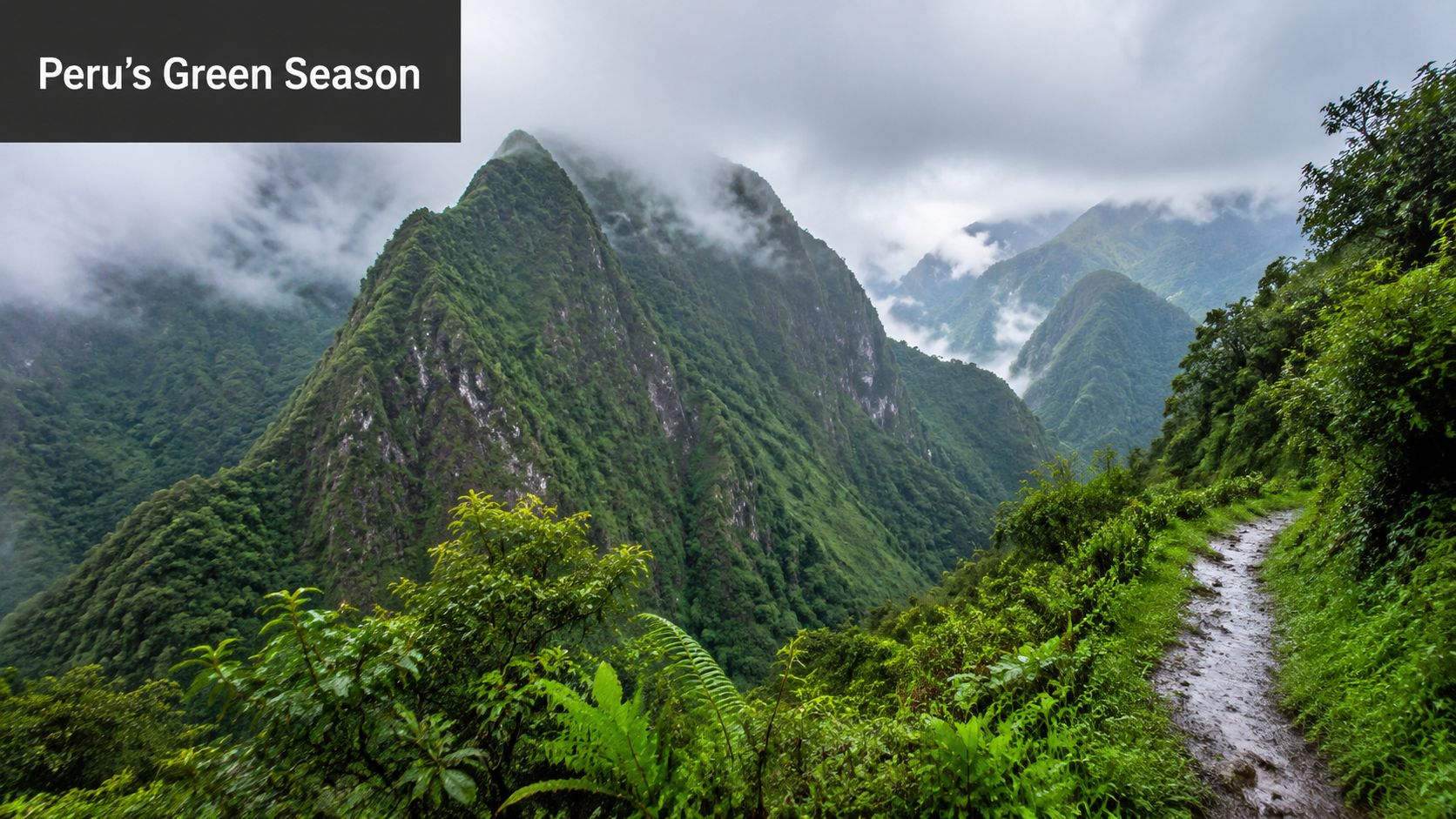
Mist changes the mood of the Andes completely. Stone terraces look richer against deep green hillsides. Colonial streets in Cusco feel quieter. Sacred Valley estates feel more secluded when weather keeps day-trippers moving quickly and keeps casual visitors away. If your version of luxury is privacy, atmosphere, and a destination that doesn't feel overexposed, the wet months can deliver more than the classic blue-sky season.
Why the season works for some travelers
The biggest mistake is planning a rainy-season trip as if it were a dry-season trip with umbrellas. It isn't. The pacing should change. The routing should change. Sometimes even the definition of "best experience" should change.
A strong itinerary in this season favors:
- Fewer hotel changes: Constant movement creates friction when roads, rail timing, or local conditions shift.
- Shorter overland commitments: Long mountain transfers look elegant on paper and become irritating when weather turns.
- Properties with real indoor appeal: A serious spa, a strong bar program, refined dining, and suites you want to spend time in matter more now.
- Experience design over checklist travel: The season rewards travelers who care about feel, not just volume.
Practical rule: If a destination is worth doing in the rainy season, it's worth giving extra time.
What luxury looks like in wetter months
This isn't a hardship season unless you plan badly. It's a season that punishes rigid itineraries and rewards intelligent ones. Private drivers need backup timing. Mountain stays need realistic transfer windows. Jungle programs need the right lodge and the right access model.
What doesn't work is trying to stack too many fixed moments into too little time. A rushed train connection after a mountain stay. A same-day weather-sensitive transfer before a major site visit. A long trek itinerary in a month when slopes are unstable. Those are design errors, not seasonal flaws.
The better approach is selective. Choose the experiences that become more beautiful, more private, or more unusual in the rain. Skip the ones that become fragile.
That's the distinction. The rainy season in Peru isn't worse. It's more edited.
A Tale of Three Regions The Andes Amazon and Coast
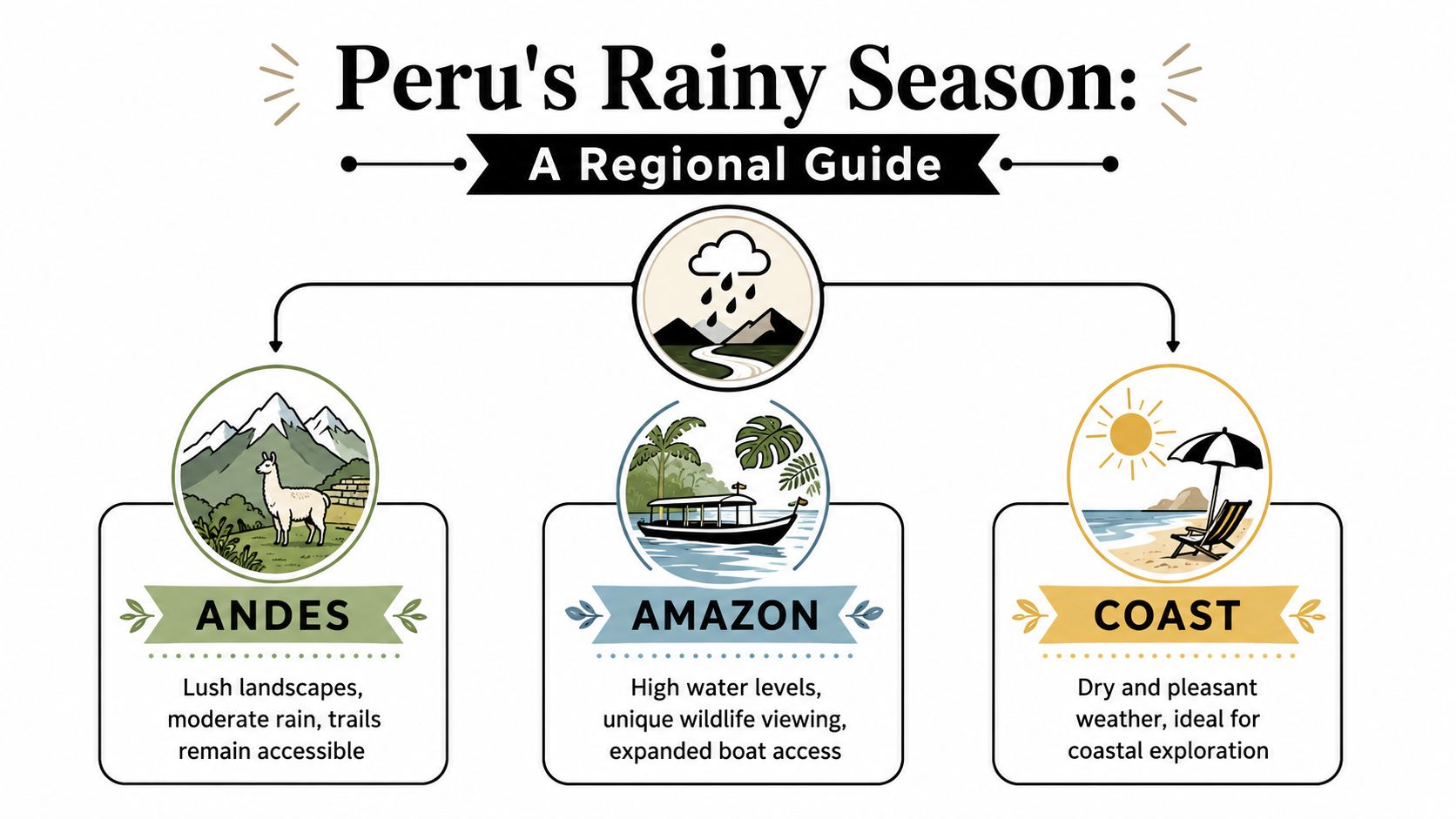
Peru doesn't have one rainy season experience. It has three very different ones. That distinction matters more than almost anything else when you're building a high-end itinerary.
The core pattern is clear. Peru's Andes and Amazon officially run through a rainy season from November to April, with peak rainfall in January at about 150mm and February at about 200mm, especially in Cusco and Machu Picchu where monthly totals can reach roughly 200mm. During that stretch, daytime temperatures average around 21°C (69°F) and nights fall to roughly 6°C (43°F), while the Pacific coast including Lima remains largely dry and sunny year-round according to this regional Peru climate overview.
The Andes
In the Andes, the issue usually isn't nonstop rain. It's variability. A day can begin with clarity, then turn clouded and wet later. That matters because mountain travel runs on windows. Scenic drives, archaeological visits, train timing, and light for photography all depend on using those windows well.
Cusco, the Sacred Valley, and Machu Picchu often look their best in this period. The surroundings are greener, the air feels softer, and the dramatic mix of low cloud and stone can be extraordinary. But this is also where travelers need the most discipline. You don't build a mountain itinerary on tight connections and optimism.
The Amazon
In the Amazon, "rainy season" often means high water. That changes the geography of the trip. Rivers rise, channels widen, and parts of the forest become navigable by boat that aren't accessible in lower-water periods.
That can be a major advantage if your goal is water-based exploration, photography, and wildlife viewing from private skiffs rather than long walks on muddy trails. It can be a poor fit if you want a heavily land-based jungle program with constant hiking. The season doesn't reduce the Amazon. It changes the mode of access.
Most travelers hear "wet season" and imagine limitation. In Peru's Amazon, high water can mean expansion.
The Coast
The coast is the quiet luxury move that many travelers overlook. While the Andes and Amazon are managing rain cycles, Lima and much of the Pacific coast stay dry and bright during the same period. That makes the coast an ideal anchor for the opening or closing chapter of a trip.
A few practical uses for the coast during this season:
- Reset after long-haul arrival: Lima gives travelers a polished entry point with excellent dining and easy pacing.
- Weather hedge: If the mountains require flexibility, coastal days can absorb schedule shifts elegantly.
- Contrast in mood: Desert light, oceanfront hotels, and dry conditions create a useful balance after humid jungle or misty highlands.
The planning lens that matters
A smart Peru itinerary in the wet months doesn't ask, "Should I go?" It asks, "Which Peru do I want, and in what order?"
That's the difference between a compromised trip and a memorable one. Treat the country as a set of complementary climate zones, not a single forecast, and the season starts working for you.
Navigating the Andes The Sacred Valley and Machu Picchu
This is the part of Peru that makes people nervous in the rainy season, and for good reason. The Andes are where weather affects movement most directly. But that doesn't mean the region is off-limits. It means you need to choose the right format.
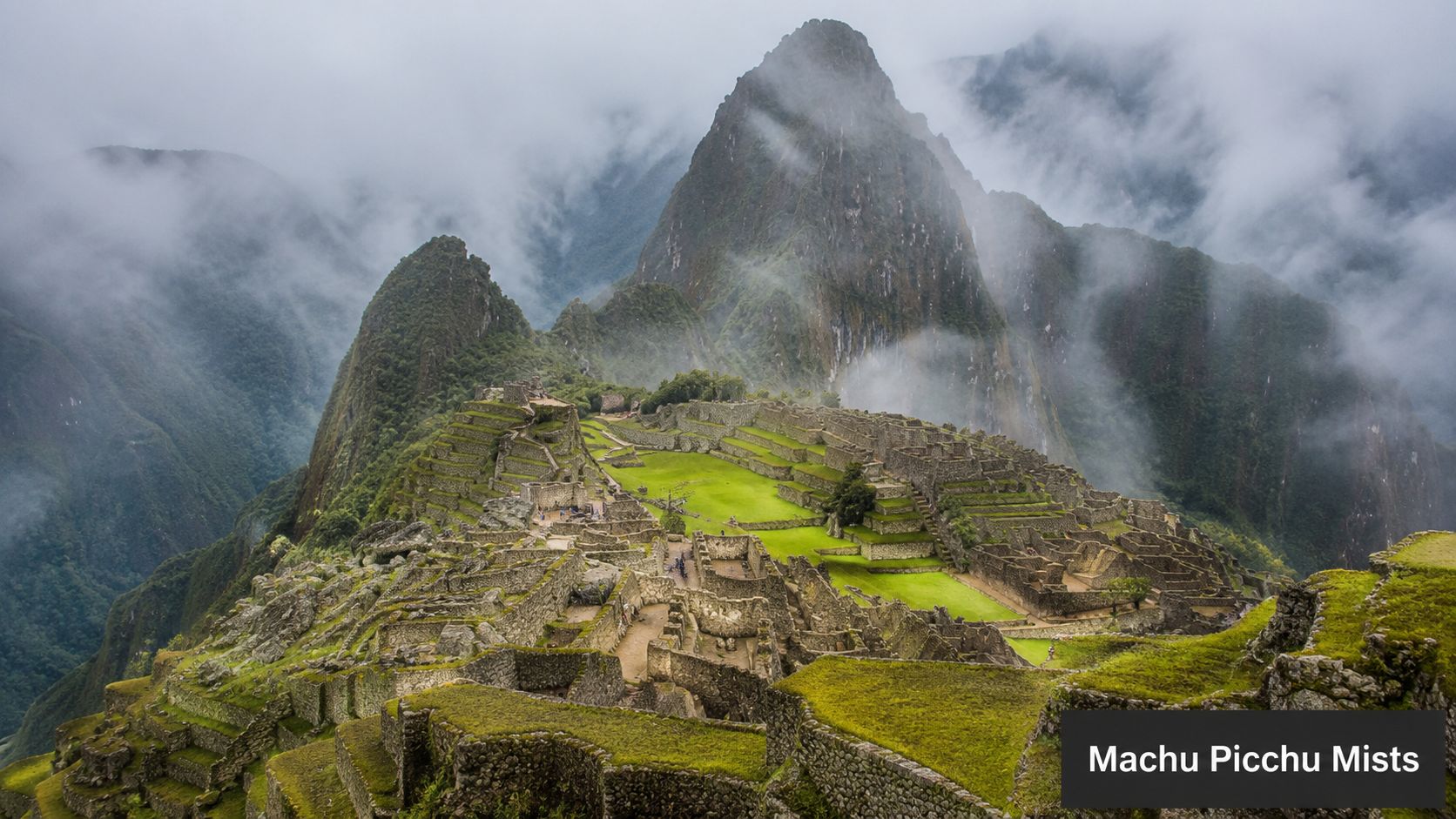
The strongest rainy-season Andes trips don't depend on exposed trekking. They lean into comfort, timing, and direct access. That often means longer stays in the Sacred Valley instead of bouncing between properties, rail-first access to Machu Picchu instead of trail-heavy plans, and selective use of private guides who know how to pivot within a day when conditions change.
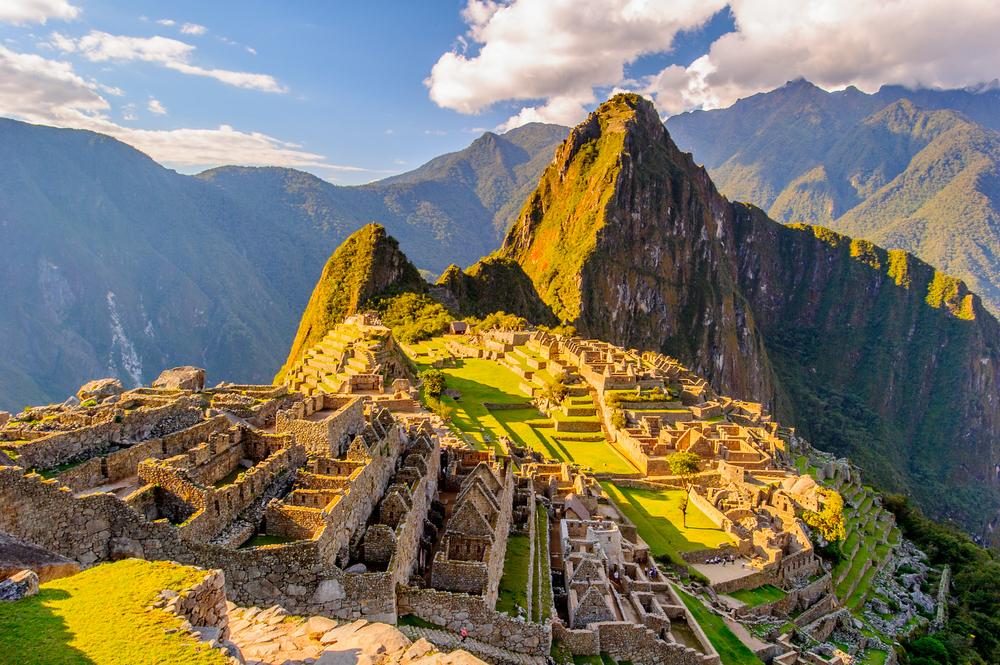
If Machu Picchu is central to the trip, arrive with margin. Build around the site rather than squeezing it into a narrow transfer chain. For deeper route planning, this Machu Picchu luxury guide is a useful companion.
What works in the wet months
The visual payoff is real. Ruins framed by mist look very different from ruins under hard dry-season sun. Terraces read greener. Mountain walls feel more dramatic because they appear and disappear. For travelers who care about atmosphere and photography, this version of Machu Picchu is often more evocative.
What tends to work best:
- Train-based arrivals: They reduce exposure to muddy multi-day routes and preserve comfort.
- Premium positioning near the site: Staying close limits friction on the day that matters most.
- Flexible guiding: A good guide can reorder site flow around weather and crowd movement.
- Edited mountain activity: Short, beautiful walks beat ambitious routes in unstable conditions.
What requires caution
The hard limit is terrain instability. In Peru's southern tropical Andes and Altiplano, including Cusco and Lake Titicaca, the rainy season technically runs from November to March. January is the peak, and extreme events can bring precipitation more than 10 times the normal monthly average, saturating soils and triggering landslides on routes such as the lower Salkantay Trail and Choquequirao. The same climate pattern is why January and February itineraries at altitude should include landslide mitigation and a reserved 24-hour helicopter evacuation window as noted by NOAA Climate.gov's reporting on Peru's heavy summer rains.
That sounds dramatic because it is. Serious travelers should treat those months seriously.
The luxury trade-off
February often changes the conversation because the classic Inca Trail closes for maintenance. That isn't a loss for every traveler. In fact, it can sharpen the itinerary. Without the pressure to force a marquee trek into the wrong season, travelers can shift into a more elegant Andes program centered on private guiding, exceptional lodging, restorative pacing, and a more atmospheric visit to the citadel itself.
If your priority is bragging rights, wait for peak trekking season. If your priority is mood, privacy, and visual drama, the rainy months in the Andes can outperform expectation.
The Andes in this season are best understood as a place for refined access, not maximal exertion.
The Amazon's Secret Season Flooded Forests and Wildlife
The Amazon is where the standard warning about the rainy season in Peru breaks down most clearly. In luxury travel, people often assume high water means compromised access. In the right part of the Peruvian Amazon, it can mean privileged access.
Most luxury coverage treats December through March as a period to avoid, yet the season creates exclusive experiences that only exist when water levels rise, especially flooded-forest navigation and wildlife viewing from the water that dry months can't replicate according to this analysis of Peru travel in the rainy season.
That changes the value equation completely.
Why high water can be the premium choice
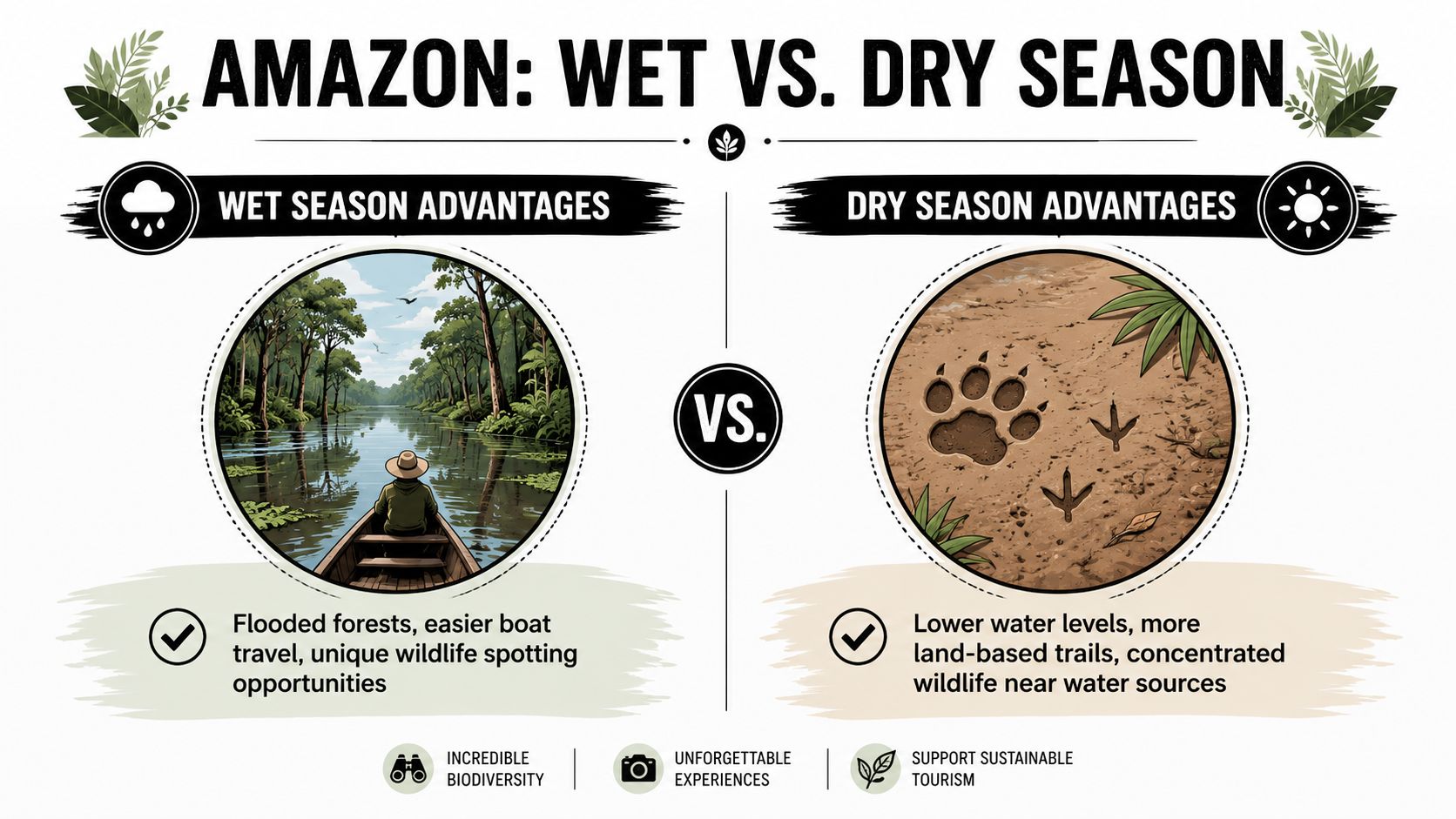
When rivers swell, boats move deeper into the forest. Channels that disappear in drier periods become usable. The forest doesn't only get wetter. It becomes more navigable in a different way.
For travelers who prefer private skiff excursions, close-range observation, and the feeling of gliding through a half-submerged world, this is the season with the stronger experiential edge. You're not limited to the obvious waterways. You gain access to a layered aquatic environment that feels more elusive and more intimate.
Wet season versus dry season by travel style
| Travel priority | Wet season fit | Dry season fit |
|---|---|---|
| Private boat exploration | Excellent | More limited |
| Flooded forest access | Best | Not available in the same way |
| Long land hikes | Less ideal | Better |
| Water-level wildlife viewing | Strong | Different viewing style |
The dry season still has its place. If you want more exposed trails and a more land-based rhythm, it may suit you better. But many high-end travelers don't come to the Amazon to log miles on foot. They come for immersion, stillness, and rare vantage points. High water is often better for that.
Choosing the right jungle setup
Curation is essential. Not every lodge handles wet-season operations with the same consistency. Some properties feel cut off in the wrong way. Others are designed for the season and use it well.
The better approach usually includes:
- Boat-forward programming: Private skiffs, expert naturalist guiding, and route flexibility matter more than a crowded menu of fixed excursions.
- Thoughtful lodge access: The arrival and departure chain should be simple and dependable, not dependent on fragile overland links.
- Strong room design: In humid weather, air flow, covered walkways, and well-designed common spaces matter more than marketing copy.
- Low-friction wildlife viewing: The best itineraries let the natural surroundings do the work instead of forcing guests into strenuous schedules.
A useful place to continue planning is this feature on luxury Amazon river tours in Peru.
The Amazon in high water suits travelers who want access that feels hidden, not merely adventurous.
That's the secret season in a sentence. The forest becomes less pedestrian and more fluid. If you choose the right river system and the right operating style, the rain doesn't diminish the jungle. It enhances it.
Curating Your Itinerary A Bespoke Approach
The smartest rainy-season trips in Peru are built like portfolios. You balance certainty with atmosphere, and comfort with adventure. Instead of asking one region to do everything, you let each region solve a different part of the journey.
A polished itinerary often starts on the coast, where conditions are easier and the transition into Peru feels smooth. Lima works especially well for this. It gives travelers a dry, upscale base for recovery after a long flight, plus world-class dining and cultural programming without the weather sensitivity of the mountains.
Then the itinerary narrows. Not into a rush, but into focus.
A strong sequence for the season
One structure works especially well in the wetter months:
1. Coastal arrival in Lima
Begin with rest, private dining, and unhurried city time. This gives the trip a graceful start and protects the schedule if international travel runs long.
2. Sacred Valley before Cusco overload
Rather than pushing straight into a dense high-altitude plan, settle into the valley first. The pace is calmer, the setting is more restorative, and the transition to elevation is gentler.
3. A tightly timed Machu Picchu visit
Keep this segment focused. Go in with margin, use premium transport, and avoid stacking major transfers around it.
4. Amazon finale or middle chapter
For travelers interested in flooded-forest access, the jungle works well as the immersive counterpoint to the Andes.
A good benchmark for inspiration is the Peru Lords of the Inca journey, which reflects the value of layering regions instead of forcing a single-note trip.
Build flexibility into the luxury, not around it
Rainy-season planning improves when flexibility is designed as a feature. That means using properties where an unexpected storm doesn't feel like dead time. A great suite, a proper spa, a cooking class, a private tasting, or a covered terrace with a serious view can turn a weather shift into one of the most memorable parts of the trip.
Many itineraries fail by leaving no room for the destination to breathe.
The better model looks like this:
- Anchor nights at standout properties: Fewer moves, better recovery, and less exposure to disruption.
- Soft hold activities: Keep a few experiences movable rather than fixed to a single narrow slot.
- Protected transfer days: Don't pair weather-sensitive logistics with celebratory moments like milestone dinners or site-entry days.
- Regional contrast: Match misty mountain days with dry coastal time or water-based jungle exploration.
What to avoid
The rainy season exposes weak itinerary design quickly. Three patterns usually underperform:
- Overpacked mountain circuits: Too many short stays, not enough margin.
- Heroic trekking ambitions in unstable months: The season isn't the place to prove endurance.
- Same-day dependency chains: Flight to road transfer to train to site entry is risky even in good weather.
The clients who enjoy Peru most in this season aren't the ones who demand the most movement. They're the ones who let the itinerary become more selective, more elegant, and more responsive to the country's real rhythm.
Essential Packing and VIP Logistics
Packing well for Peru in the wet months is less about quantity and more about performance. Clothes that feel acceptable in a city become miserable in cloud forest humidity or on slick stone steps. The answer isn't to bring more. It's to bring better.
Peru's regional spread is huge. Annual rainfall ranges from under 20mm on the arid coast to more than 8,000mm in the Amazon Basin. Iquitos averages 2,800mm a year, about four times the rainfall of Cusco. The Andes' main rainy period runs from October to April, while recent climate variability has pushed rain into November and May in some years according to this Peru weather analysis. That range is why generic packing advice fails.
Pack for surface conditions, not just temperature
The most useful rainy-season packing kit usually includes a few proven categories:
- Outer layer that breathes: Arc'teryx Beta, Patagonia Torrentshell, or another serious waterproof shell works better than a fashionable trench.
- Footwear with grip: Salomon, Lowa, or comparable waterproof hiking shoes handle muddy paths and slick stones far better than leather city boots.
- Technical day layers: Lightweight merino and fast-dry fabrics outperform cotton almost everywhere outside the coast.
- Structured luggage strategy: A main suitcase for intercity travel, plus a compact waterproof day bag for active days, keeps transitions cleaner.
The non-negotiable logistics
In this season, VIP logistics aren't a flourish. They're operational protection.
Bring the gear, but plan for the transfer chain. That's where most rainy-season stress begins.
Three pieces matter most:
- Extensive travel insurance: It should cover delays, interruptions, and medical contingencies appropriate to remote travel.
- A live operations contact: Someone needs to be reachable when a train shifts, a road slows, or an airport handoff changes.
- Backup transport thinking: In mountain regions, private vehicle timing and, in select cases, helicopter support can matter when roads are compromised.
What experienced travelers do differently
They don't pack around the fantasy version of the trip. They pack around what the day requires at each stage. Dry coastal clothing for Lima. Technical layers for the Andes. Humidity-ready fabrics for the Amazon. One elegant dinner wardrobe that can move across properties. One pair of shoes that can survive wet stone without looking too expedition-heavy.
That mix creates confidence. You're not overpacked, underprepared, or dependent on luck.
The Verdict Is Peru's Rainy Season Worth It?
Yes, if you want Peru to feel more textured, more private, and more surprising than it does in peak season.
It isn't the easiest time to travel. That's exactly why it can be the better one for a certain kind of traveler. Simpler doesn't always mean superior. The dry season is more straightforward, especially for classic trekking agendas and travelers who want minimal weather variables. But straightforward travel often comes with more people, flatter atmosphere, and a more familiar version of the country.
The rainy months offer something else. They give the Andes a richer visual mood. They give the coast a useful role as a sunlit counterpoint. They give the Amazon a waterborne dimension that many travelers never experience at all. Those are not consolation prizes. They are the reason to go.
Who should travel in this season
This timing tends to suit travelers who value:
- Privacy over peak-season energy
- Atmosphere over predictability
- Curated access over maximal box-checking
- Flexible, high-touch logistics over self-guided spontaneity
There's also a middle path if you want some of the seasonal upside with less operational risk. Machu Picchu's wet season runs from November to March, with January the wettest month on average, while April and May offer strong shoulder-season balance with reduced rainfall and fewer crowds than the busiest dry months according to this guide to visiting Machu Picchu in the wet season.
Final judgment
Peru's rainy season is worth it when the trip is designed for the season that exists, not the one travelers wish existed. The failures are predictable. Too much movement. Poor sequencing. Fragile logistics. Unrealistic mountain plans.
The successes are just as predictable. Better pacing. Smarter regional pairing. Exceptional properties. The right access model in the Amazon. Enough flexibility to let weather become part of the story rather than the thing that derails it.
That's the difference between enduring the rainy season in Peru and using it well.
Haute Black designs Peru journeys for travelers who want more than a standard luxury itinerary. If you want misty Sacred Valley mornings, polished access to Machu Picchu, high-water Amazon exploration, or a coast-and-jungle combination built around privacy and smooth logistics, explore Haute Black for bespoke planning, VIP recognition, and insider access.