Haute Black Journal
Luxury Japan Tours: Curated 2026 Experiences

Marlene Azeez
Director, HauteBlack
View all articles →
# Luxury Japan Tours: Curated 2026 Experiences
June 9, 2026
Luxury Japan travel is won or lost long before check-in.
The deciding factor is control over the day. In a country where demand is high and logistics are unforgiving, a premium room means very little if your best hours disappear into transfer delays, late starts, and public sightlines. Recent visitor growth has only sharpened that reality, with crowding making timing, routing, and access strategy far more important than hotel category alone, as noted by Enchanting Travels on Japan.
I advise clients to stop treating luxury Japan tours as a hotel-buying exercise. Treat them as an orchestration problem. The key advantages come from how the trip is built: which city you enter first, when you see major sites, how many hotel changes you can justify, and where private guiding genuinely changes the experience instead of merely adding cost.
A high budget can still produce a crowded, inefficient trip. The standard formula does it all the time: Tokyo, Kyoto, Osaka, peak dates, late-morning sightseeing, and a famous suite used as compensation for a weak schedule.
The market is shifting toward private, customized travel, and that change reflects a smarter definition of luxury. Clients want control, context, privacy, and ease. They want Japan to feel calm, not overmanaged. That requires good judgment on timing and routing first, then the right hotels, guides, and access layered on top.
Beyond the Golden Route Redefining Luxury in Japan
The biggest mistake I see is assuming that luxury in Japan means doing the classic route with better hotels. It doesn't. In the current environment, that approach often produces a polished version of the same crowded trip everyone else is taking.
Why the old definition no longer works
Kyoto is the clearest example. It's still magnificent, but magnificence alone doesn't guarantee a premium experience. If your temple visits happen late morning, your transfers cut through congested corridors, and your dinner sits awkwardly after an exhausting transit day, then the trip feels managed by the crowd, not by you.
A strong itinerary in Japan starts with three decisions:
- Choose rhythm before destinations. Decide whether you want cultural density, restorative pacing, or a split between city energy and rural calm.
- Protect arrival energy. Don't land in Tokyo and immediately start proving how much you can fit in.
- Use iconic places selectively. You don't need to avoid famous places. You need to approach them at the right time and in the right order.
Practical rule: In Japan, privacy is often created by schedule design, not by spending more on the room.
What high-end travelers should prioritize instead
The better frame is this. Ask where exclusivity can still be felt, not merely photographed. That usually leads to earlier starts, fewer hotel changes, stronger use of private guiding, and a willingness to trade one famous stop for a calmer one that delivers more pleasure.
I'd also challenge the obsession with "seeing Japan" in one trip. Japan rewards depth. One district in Tokyo with the right dining, architecture, and shopping is more memorable than racing through half the city. One properly chosen ryokan stay can do more for your understanding of Japanese hospitality than a stack of interchangeable urban nights.
True premium is friction removed.
A discerning client should expect an itinerary that reduces decisions on the ground, limits unnecessary station changes, and creates emotional contrast between city and countryside. That's what separates polished travel from expensive travel.
My baseline advice
If you want luxury Japan tours that feel private, follow this framework:
| Priority | Smart choice | Poor choice |
|---|---|---|
| Timing | Early access patterns and off-peak routing | Midday arrivals at headline sites |
| Pacing | Fewer bases, longer stays | Constant city-hopping |
| Transport | Private transfers where they matter most | Treating every leg as a public transit challenge |
| Experience design | Cultural access with context | Generic sightseeing with upgrades |
Japan can absolutely deliver rarity, serenity, and precision. But none of that happens by accident.
The Signature Experiences That Define Japanese Luxury
The best luxury Japan tours are defined by access, timing, and context. Price matters far less than whether an experience is arranged well enough to feel private, calm, and culturally literate.

Start with ritual that sharpens your eye
I like to place a private tea experience early in the trip. It changes how you see everything that follows. You stop chasing visual stimulation and start noticing precision, stillness, and intention, which is exactly the mindset that makes Japan rewarding at the high end.
Tea also works because it introduces luxury in Japanese terms. The point is not spectacle. The point is disciplined beauty, exact gesture, and a host who has anticipated your comfort before you ask.
If you want stronger context before you sit down on the tatami, the Jeeves & Jericho matcha guide is a smart primer. For travelers who want a trip shaped around traditional arts, interpretation, and meaningful access, I'd also consider HauteBlack's Japan cultural immersion experience.
What deserves your budget
Some experiences in Japan justify a premium because they change the feel of the whole journey. Others are expensive decoration. I'd spend on the former.
- A properly chosen ryokan with private or well-managed onsen access
A great ryokan stay gives you architecture, service, bathing ritual, and kaiseki in one controlled setting. Beyond that, it resets your pace. One night can be memorable. Two nights usually delivers the full effect.
- An intimate geiko or geisha evening arranged through the right relationships
This requires discernment. In the right room, with proper introductions and a host who explains what you are seeing, it feels rare and human. In a poorly arranged setting, it turns into cultural theater for outsiders.
- Private access to artisans and cultural practitioners
Meet the ceramicist, lacquer master, incense expert, or tea teacher in a place where they work. That is money well spent. You are paying for interpretation, conversation, and the chance to understand process, not just collect another appointment.
- Selective use of helicopters or water transfers
I do not recommend these as flashy add-ons. I recommend them when they solve a routing problem, cut a tedious surface transfer, or create a clean transition between regions. In Japan, movement shapes mood. Handle it well and the whole itinerary feels more polished.
Japanese luxury also depends on service culture that is quiet, exact, and unfailingly attentive. As noted earlier, that standard runs across city hotels, countryside inns, and private cultural settings. The result is a style of luxury that feels composed rather than showy.
A short visual overview helps clarify the texture of these experiences.
What I would skip
Skip the experiences built for photography first and substance second. That includes rushed tea ceremonies, generic "exclusive" cultural shows, and any premium package that gives you a better seat but no better understanding.
My rule is simple. If the experience could be sold to a bus group with minor cosmetic changes, it does not belong in a serious luxury itinerary.
The right signature experience in Japan leaves you more attentive, more informed, and noticeably more at ease.
Choosing Your Destinations From Urban Heights to Rural Retreats
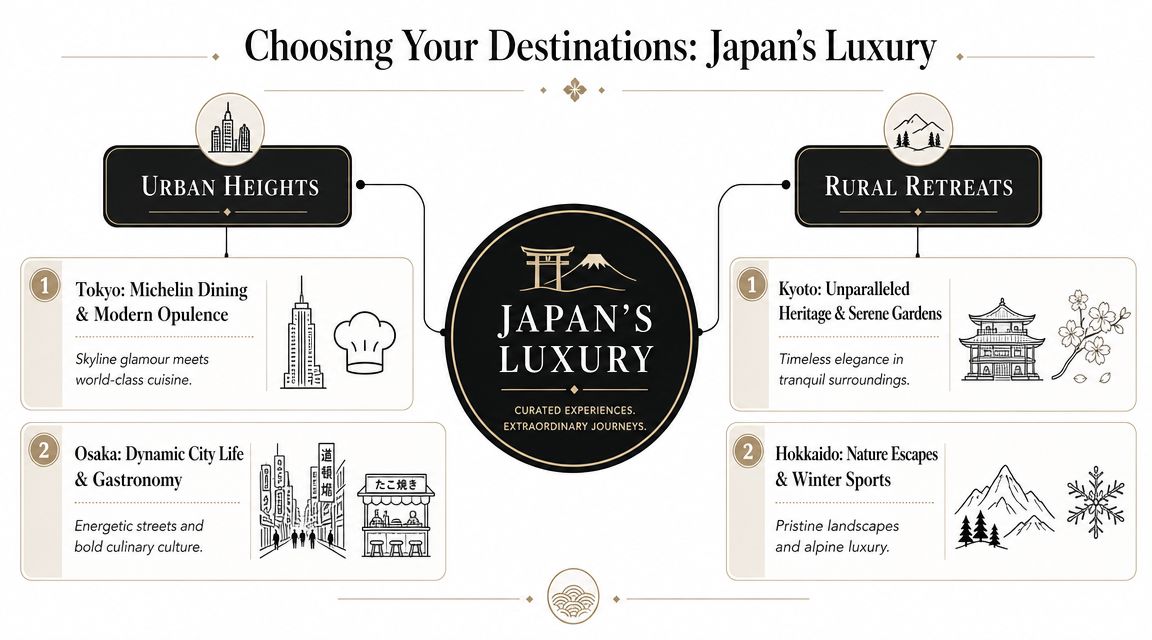
Choose Japan by tempo, not by checklist. The smartest luxury itineraries are built around friction control. You pair intensity with release, shorten weak transitions, and reserve your time for places that still reward private access.
Urban destinations for stimulation and polish
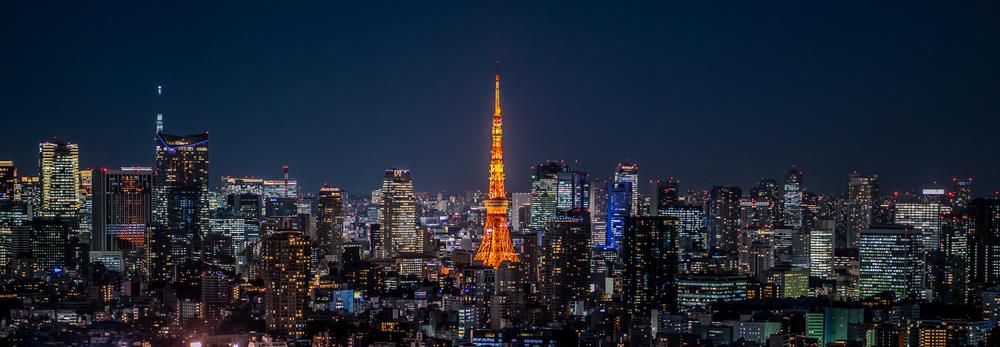
Tokyo deserves its place, but only if you use it well. I recommend it for clients who want design, serious dining, fashion, contemporary art, and hotels that handle complex requests discreetly and accurately. The mistake is overprogramming it. Tokyo performs best in focused districts with deliberate downtime between reservations. If you need a starting point for neighborhoods, hotels, and pacing, this Tokyo luxury travel guide is useful.
Osaka is different. It brings appetite, informality, and late-night energy. I use it as a tactical addition, not the emotional core of the trip. One or two nights can sharpen the itinerary, especially for clients who care more about food culture than temple culture.
Heritage regions for depth and atmosphere
Kyoto still delivers what many travelers come to Japan seeking. It has the strongest concentration of temple gardens, traditional arts, and refined ryokan stays. It also demands discipline. Stay in the right area, start early, protect the middle of the day, and avoid trying to conquer the city in one sweep. Kyoto rewards restraint.
Kanazawa is the answer I give when a client wants cultural depth without Kyoto's pressure. It is compact, elegant, and far easier to enjoy at a civilized pace. Craft, architecture, and private culinary experiences land better here because the city does not exhaust you between appointments.
That is the larger point. Japan gives you a high service standard across very different regions, so destination choice should be driven by mood, tolerance for movement, and the kind of privacy you want, not by a generic ranking of famous stops.
Where I'd send different clients
| Travel priority | Destination fit | Why it works |
|---|---|---|
| Modern city luxury | Tokyo | Design, dining, retail, and polished urban service |
| Classical culture | Kyoto | Ryokan, kaiseki, gardens, and historic atmosphere |
| Refined heritage | Kanazawa | Strong craft and cultural access with less crowd pressure |
| Outdoor privacy | Hokkaido | Space, nature, and privately guided active programs |
| Marine escape | Ryukyu Islands | Resort-led relaxation, beach time, and diving |
The underrated choice is often the smarter one
Hokkaido is where I send clients who need visual space and cleaner pacing. It works especially well after Tokyo, or as the anchor for winter travel with private guiding, strong lodge-style stays, and fewer daily compromises.
The Ryukyu Islands serve another purpose entirely. They are not a default beach add-on. They are the right finishing move for travelers who want the trip to soften at the end, with marine leisure, resort privacy, and enough stillness to recover from the cities.
My recommendation is simple. Build around one primary city and one restorative counterweight. That formula usually beats the classic multi-city sprint because it cuts wasted transit, reduces decision fatigue, and gives each destination room to matter.
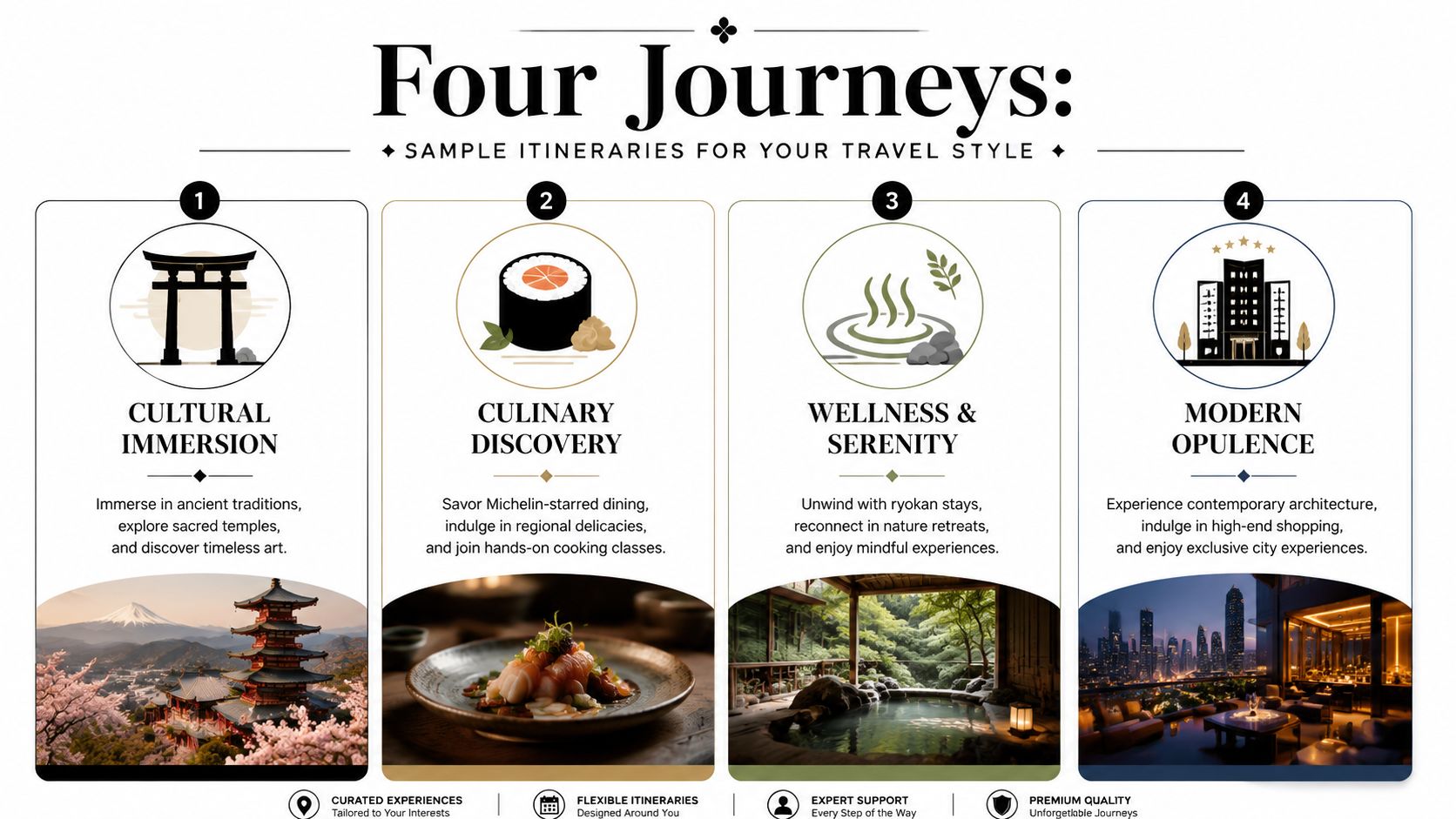
Four Journeys Sample Itineraries for Your Travel Style
A good itinerary reflects personality more than geography. That's why I don't start with a map. I start with travel behavior. Do you want privacy, stimulation, healing, or momentum?
The honeymoon that doesn't feel scripted
This journey is for couples who want romance without cliché. Start in Tokyo with a calm, design-forward hotel and keep the first day light. Add one exceptional dinner, one private cultural experience, and plenty of unclaimed time. Then move to Kyoto or a ryokan region where the pace drops and privacy rises.
The key is contrast. A honeymoon shouldn't feel like an achievement test. It should alternate between urban glamour and complete withdrawal.
The multigenerational escape that removes stress
Many affluent families need what I'd call low-friction luxury. That means accessibility, downtime, easy transfers, and space for different energy levels. This is still underserved. Many itineraries marketed as premium remain too dependent on train changes, walking-heavy sightseeing, and relentless city-hopping, as reflected in this travel accessibility and pacing discussion.
For these families, I'd build around:
- Private guiding on key days to reduce navigation stress
- Chauffeured transfers for the most complex intercity legs
- Resort or ryokan stays that naturally create rest windows
- Flexible activity design so grandparents, children, and parents don't all need the same pace
Advisor's view: If grandparents are coming, the itinerary should feel easier than a normal trip, not merely more expensive.
The culture and culinary immersion
This traveler wants meaning, not just comfort. I'd combine Tokyo with Kyoto or Kanazawa, then structure the trip around private interpretation. That can mean tea, ceramics, architecture, seasonal dining, and specialist guiding that explains why a detail matters.
The strongest version of this trip uses fewer headline attractions and more depth. One extraordinary meal with context does more than a string of restaurant bookings. One artisan meeting can become the anchor memory of the entire journey.
The active luxury adventure
This is for the client who wants movement but won't tolerate logistical chaos. Hokkaido is the cleanest fit for winter sports and guided outdoor programming. In greener seasons, rural regions and mountainous scenery can create a very different style of Japan that still feels polished.
The trick is not to overload it. Active travelers still need recovery. Build in restorative nights, proper spa or onsen time, and one or two highly curated experiences that aren't physical.
How I'd match the traveler to the trip
| Travel style | Best structure | Key planning principle |
|---|---|---|
| Honeymoon | Tokyo plus ryokan retreat | Protect privacy and romance |
| Multigenerational | Fewer bases, more driving support | Reduce complexity at every step |
| Culture and culinary | Specialist-led city and heritage pairing | Prioritize interpretation |
| Active luxury | Nature region with strong lodge or resort base | Balance exertion with recovery |
The point isn't to copy one of these itineraries. It's to recognize yourself in one of them, then build from there.
Navigating the Logistics of a High-End Japan Tour
Logistics decide whether Japan feels elegant or exhausting. Many expensive trips fall short precisely because of these details.
Timing matters more than most people think
My advice is blunt. Don't choose your travel dates based only on what looks beautiful in photographs. Choose dates based on how you want the trip to feel. Japan rewards thoughtful timing because density changes the emotional quality of everything, from shrine visits to station transfers.
Shoulder periods often create a better luxury experience than obvious peak windows. You still get atmosphere. You just avoid giving half your day away to crowd pressure and operational friction.
Choose transport by route, not by ideology
Some clients become attached to the idea that all premium Japan travel should rely on the Shinkansen. That's too simplistic. The train can be elegant, efficient, and enjoyable. It can also be the wrong tool if the day involves luggage complexity, family needs, mobility concerns, or a rural handoff.
Use this rule set instead:
- Take premium rail when the route is direct, station handling is simple, and the train itself adds pleasure.
- Use a private car when hotel-to-hotel ease matters more than transit romance.
- Add aviation support selectively when long-haul comfort, schedule control, or remote access justify it. For flight support and premium air coordination, HauteBlack's air travel services are one option.
Know what drives the budget
A realistic benchmark is that a 10 to 14 day luxury Japan itinerary typically starts at around USD 12,000 per person, with the main cost drivers being accommodation tier, private guides, and exclusive tailor-made experiences, according to Black Tomato's Japan pricing overview.
That figure is useful for one reason. It reminds clients that Japan's premium value sits in service intensity, not just hardware.
Here's where the money usually goes:
| Cost driver | Why it matters |
|---|---|
| Accommodation tier | Top ryokan and hotel inventory changes the feel of the trip immediately |
| Private guides | In Japan, they're often essential for context and smooth navigation |
| Exclusive access | Tailor-made cultural and culinary moments command a premium |
| Domestic transport upgrades | The less friction you want, the more planning and customization the route requires |
Don't ignore etiquette
Japan is forgiving of respectful visitors, but smooth travel improves when clients understand basic norms. Be punctual. Be quiet in intimate settings. Follow bathing instructions carefully at onsen. Let the guide handle nuanced interactions when needed.
In Japan, courtesy isn't performance. It's infrastructure.
That's why logistics and etiquette belong in the same conversation. The trip works better when movement, timing, and behavior all align.
The HauteBlack Advantage Orchestrating the Impossible
Luxury Japan fails fast when nobody controls the details.
Why advisor-led travel matters more in Japan
Japan is efficient. A high-end itinerary in Japan is not. That distinction matters.
The friction rarely shows up in glossy hotel photos. It shows up in the gap between train platforms and private arrivals, in ryokan inventory that disappears months ahead, and in restaurant or cultural access that depends on timing, introductions, and local judgment. Money helps. It does not solve sequence, pacing, or access on its own.
As noted earlier, demand is moving toward private, customized travel. That shift makes good advisory work more valuable, not less. In Japan, exclusivity is usually built through better decisions before departure, not bigger spending after arrival.
What an advisor should actually do for you
I'm strict about this. A luxury advisor should edit aggressively.
You do not need a long list of attractive options. You need someone to decide which version of the trip will work best, and why. In Japan, that means controlling the route, protecting energy, and arranging the order of experiences so the trip gets better as it goes.
A capable advisor should:
- Cut unnecessary stops so the itinerary feels calm, not overpacked
- Match each stay to its job whether that means a city hotel with strong concierge support or a ryokan chosen for privacy, bathing, and dinner quality
- Handle complex sequencing across regional transfers, luggage forwarding, restaurant reservations, and specialist guides
- Protect the trip in real time with fast adjustments when weather, operating schedules, or fatigue change the day
HauteBlack is one option for this style of planning. It arranges bespoke itineraries, VIP travel support, and preferred partner hotel benefits. That matters in Japan, where many top-tier arrangements depend on relationships, precise timing, and careful service coordination.
The strongest advantage is invisible
The best advisory work rarely announces itself. You feel it in a Tokyo stay set in the right district for your priorities. You notice it in the transfer scheduled an hour later so arrival feels civilized instead of rushed. You benefit from it when Kyoto is split with a countryside pause, because someone understood that two cultural heavyweights back-to-back can flatten the trip.
Luxury in Japan comes from control, access, and timing handled properly before you ever land.
That is the standard I would use. Choose the advisor who can explain the logic behind every stop, every transfer, and every reservation. In Japan, that logic is what turns an expensive trip into a polished one.
Frequently Asked Questions About Luxury Japan Tours
How far in advance should I book?
Planning should begin earlier than often anticipated. Japan's most desirable ryokans, suites, and private guides don't reward last-minute spontaneity. If your trip includes peak seasonal interest, a specific property, or specialist cultural access, start planning as soon as your travel window is serious. The more personalized the trip, the more lead time matters.
Is Japan suitable for travelers with mobility concerns?
Yes, if the itinerary is designed correctly. No, if someone adds luxury hotels to a standard sightseeing route. Japan can involve station stairs, long platforms, uneven paths, and walking-heavy neighborhoods. The fix is straightforward. Use private transfers where they remove strain, reduce hotel changes, build in rest, and choose properties that match the traveler's physical needs.
Can Japan work for multigenerational families without becoming chaotic?
Absolutely. In fact, Japan can be superb for family groups when the trip is built around ease rather than volume. Keep the number of bases low. Balance urban experiences with resort or ryokan downtime. Let private guiding absorb the complexity, especially on arrival days and cultural touring days.
What if I have dietary restrictions?
Japan handles serious dining very well when the planning is done in advance. The mistake is assuming every restriction can be improvised on the day. Fine dining, ryokan meals, and specialist experiences need notice. With proper communication, many travelers with vegetarian, allergy-related, or other dietary requirements can travel comfortably.
Should I stay in both hotels and ryokans?
Yes. I almost always recommend both because they serve different purposes. A luxury hotel gives you urban efficiency, concierge support, and recovery after long travel days. A ryokan gives you immersion, ritual, and a slower form of hospitality that no city property can replicate.
Is a private guide really necessary?
Often, yes. In premium Japan travel, a guide isn't just a lecturer. They reduce friction, interpret nuance, help with pacing, and make transitions smoother. That matters even more than usual in a destination where language, etiquette, and transport details can shape the entire day.
If you want a Japan itinerary built around privacy, timing, and access rather than generic luxury, HauteBlack can help shape a trip that fits how you travel. The right journey isn't the one with the most stops. It's the one that feels effortless from the moment you land.
Explore Our Guides
Signature Experiences