Haute Black Journal
Luxury Honeymoon South Africa: Your 2026 Dream Trip

Marlene Azeez
Director, HauteBlack
View all articles →

# Luxury Honeymoon South Africa: Your 2026 Dream Trip
At sunrise, a guide pours coffee beside an open vehicle while elephants move through the brush a few yards away. That same evening, the couple is dressed for dinner in Cape Town, watching the light fade over the Atlantic with a bottle from the Winelands already waiting at the table.
That contrast is why honeymoon south africa works so well for couples who want more than one mood, one setting, or one version of luxury.
An Unforgettable Overture to Your New Life
South Africa gives a honeymoon narrative arc that few destinations can match. It begins in stillness, often in the bush, where mornings feel stripped back to what matters. Then it expands into city energy, design, galleries, ocean air, and long lunches. It ends, if planned properly, with privacy again. Not the same privacy as safari, but the polished kind found in a secluded vineyard suite or a cliffside villa with no agenda beyond each other.
That range is one reason the category is growing. The South Africa honeymoon tourism market generated USD 2,093.4 million in 2024 and is projected to reach USD 3,069.6 million by 2030 according to Grand View Research's South Africa honeymoon tourism outlook. For a luxury advisor, that matters because market growth usually follows what clients are already discovering firsthand. South Africa has moved from a niche idea to a considered choice for couples who expect the trip to feel distinctive.

Why the destination lands so well
Most honeymoons lean heavily in one direction. They are either restorative or adventurous. Urban or remote. Beach-led or wildlife-led. South Africa lets you hold multiple identities in one trip without making the itinerary feel fragmented.
A strong honeymoon south africa itinerary can include:
- Wildlife with intimacy: Private reserve game drives feel cinematic, but their value lies in the time. No crowds, no noisy transit days inside the trip, no feeling of rushing through a checklist.
- A city worth dressing for: Cape Town adds style, architecture, food, and social energy. That shift in tone is healthy on a honeymoon. It keeps the journey from becoming visually repetitive.
- Wine country that feels grown-up: The Winelands are not filler between stops. They are where many couples finally exhale.
- Coast and marine drama: For some couples, that means beach time. For others, it's cliffs, whales, sea air, and private villas with a more dramatic edge.
South Africa is not one honeymoon. It's several distinct honeymoon moods threaded into one coherent journey.
What clients remember years later
They remember contrasts. Coffee in the cold before a dawn drive. The smell of fynbos after afternoon sun. The switch from safari neutrals to Cape Town tailoring. A private tasting that turns into lunch. Staff who know which suite to hold because sunset hits that terrace better.
The destination rewards discernment. Couples don't need more places. They need the right sequence, the right pace, and enough privacy for the trip to feel like a beginning instead of a production.
Strategic Timing for the Perfect Honeymoon
A couple lands in Johannesburg after a long-haul flight, sleeps badly, then boards a domestic hop at dawn because the lodge had one open suite and the city hotel had only two nights available. On paper, the trip still includes safari, Cape Town, wine country, and the coast. In practice, the honeymoon starts with logistics dictating the mood.
Good timing prevents that.
South Africa rewards couples who choose a lead experience first, then place every other stop around weather, flight flow, and energy. The calendar should protect the trip's high points, not just fit them in. That is why I plan timing by asking a simple question first: what would feel like the most significant loss if conditions were off, the safari, the ocean, or long afternoons in the Winelands?
If safari sets the tone
The dry months usually produce the strongest safari conditions. Visibility improves as vegetation thins, days are cooler, and game drives feel more comfortable at both ends of the day.
That does not mean every honeymoon should default to peak bush season. It means safari should be given the clearest weather advantage if wildlife is the emotional center of the trip.
What tends to work well:
- Start with the reserve after one clean overnight if needed: Couples arrive more rested and enjoy the first drive instead of enduring it.
- Keep safari to three or four nights: That is usually enough time for depth, repetition, and a sense of intimacy without flattening the rest of the journey.
- Move into Cape Town or the Winelands after the bush: The shift in pace feels rewarding when the sequence is right.
What I would avoid:
- Forcing a same-day long-haul to safari connection: It saves a hotel night and often costs the first 24 hours of the trip.
- Booking safari too long for a first South Africa honeymoon: Five or six nights can be excellent for serious wildlife travellers, but many couples are better served by preserving contrast.
If the Winelands and Cape living matter more
Couples who care more about food, design, private tastings, and unhurried estate time often travel better in cooler periods. The days are more comfortable for lunch terraces, cellar visits, and wandering between properties without the trip turning into heat management.
Cape Town complicates the picture, because it has its own rhythm. Summer brings energy, beach weather, and longer evenings. Shoulder periods often suit honeymooners better. You still get beauty and atmosphere, but with less pressure on reservations, drivers, guides, and top suite categories.
For many couples, a well-paced Cape Town, Winelands, and safari honeymoon route works best when the city and wine portions are timed for ease rather than peak crowd levels.
| Priority | Best timing mindset | Why it works |
|---|---|---|
| Safari | Give the bush the driest, coolest conditions available | Better viewing and more comfortable drives |
| Winelands | Favour cooler months or shoulder periods | Long lunches, tastings, and estate stays feel relaxed |
| Cape Town | Avoid choosing dates on weather alone | Dining access, road pacing, and hotel availability matter just as much |
| Coast | Add it only if it fits the season and your pace | A coastal stop should add release, not extra transfers |
Shoulder season often produces the best trip
Ultra-peak dates can make a honeymoon feel managed instead of fluid. The right room category goes first. Signature guides and dining tables tighten. Backup options become less attractive, which matters more on a honeymoon than on a general luxury holiday.
Shoulder season usually offers the best trade-off. Conditions remain strong, but the trip has more breathing room.
I use one planning rule consistently: choose the month around the experience that matters most, then make the rest of the itinerary support it. Couples get into trouble when they try to give every region its ideal season in one trip. South Africa is versatile, but it is still a country of different microclimates and different travel tempos.
Timing mistakes I see repeatedly
The mistakes are rarely dramatic. They are small planning decisions that drain momentum.
- Trying to do every classic stop in one set of dates: A better honeymoon leaves something out than rushes everything in.
- Treating Cape Town as weather-dependent only: The city is also about bookings, traffic patterns, and private access.
- Adding beach time by default: Some couples want sea air. Others want another estate night, a spa afternoon, or one more private game drive.
- Ignoring arrival fatigue: The best itinerary on paper can feel clumsy if the first two days are all movement.
The strongest honeymoon timing is felt more than noticed. You wake at the right lodge on the right morning, with enough time, the right light, and no sense that the trip is pushing you along.
Bespoke Itinerary Blueprints for Your Journey
The best South African honeymoons do not feel like a string of bookings. They feel composed.
A couple lands after a long-haul flight, spends three nights in a private reserve where the rhythm is simple and restorative, then shifts to Cape Town at exactly the point when they are ready for energy, design, and a late dinner with a view. They finish among the vines, where the pace drops again and the trip has room to breathe. The destinations are familiar. The order, pacing, and room choices are what make the journey memorable.
South Africa suits a honeymoon because it can hold several distinct moods in one trip without forcing constant transit. That only works if each stop has a job. Safari should do more than deliver wildlife. Cape Town should do more than tick off table bookings. The Winelands or coast should change the tempo, not merely fill spare nights.
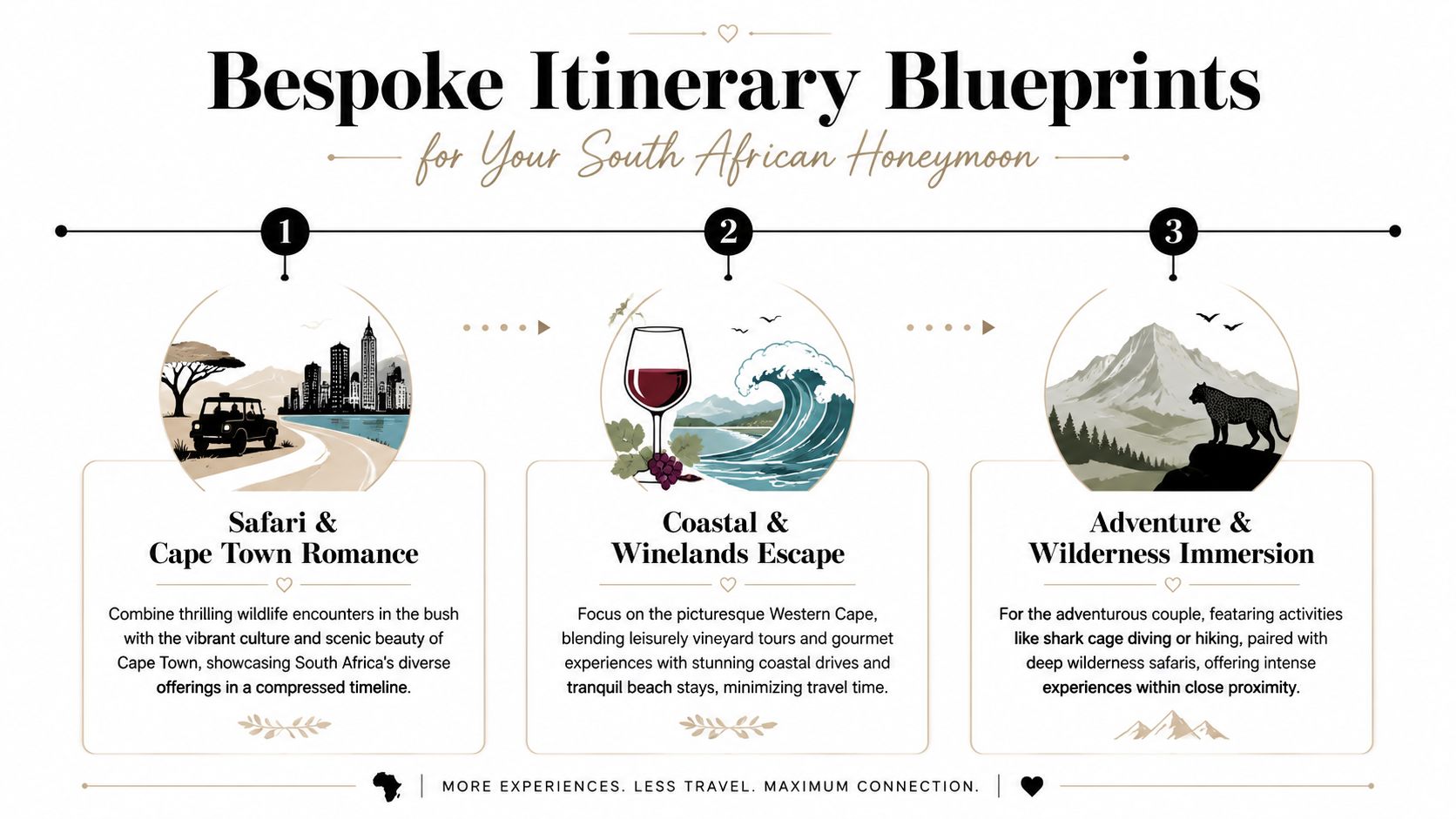
The Signature
This is the strongest first-time blueprint for many couples because it builds in contrast without wasting energy.
Begin with safari. For honeymooners, that opening often works better than a city arrival because the bush absorbs jet lag well. Days are structured for you, screens disappear, and the trip resets your pace quickly. Move to Cape Town next, when you are ready to engage with the city properly. Finish in Franschhoek or Stellenbosch, where private tastings, slower mornings, and a final excellent suite give the trip a graceful landing.
The flow is simple:
1. Private reserve safari
2. Cape Town for culture, dining, and scenery
3. Franschhoek or Stellenbosch for a softer finish
What makes this sequence effective is emotional progression. Safari is immersive and intimate. Cape Town brings stimulation and variety. The Winelands give you privacy again, but in a more polished, indulgent form.
For couples weighing how those pieces fit together, this Cape Town, Winelands, and safari journey shows the logic of a well-shaped route.
The Coastal Connoisseur
Some couples do not want dawn game drives to define the honeymoon. They want marine air, architecture, wine, and hotels where the mood is quietly glamorous.
In that case, keep the trip centered on the Western Cape. Start in Cape Town for private city access, strong dining, and the peninsula. Continue into the Winelands for intimacy and recovery. End on the coast, where the final days can be spent above the ocean, on a quiet beach, or near one of the marine reserves, depending on how active the couple wants to be.
A strong version usually includes:
- Cape Town as the cultural base: Private guides, art collections, yacht time, and serious restaurants.
- The Winelands as the romantic center: Estate suites, cellar experiences, and afternoons with no agenda.
- A coastal close: Hermanus, De Hoop, or another discreet retreat selected for privacy, views, and service style.
This blueprint suits couples who value aesthetics, food, and calm over a wildlife-first trip. It also works well after a large wedding, especially when the priority is to recover beautifully rather than keep moving.
Ultimate Wilderness and Seclusion
Some honeymoons should feel almost hidden.
For privacy-first clients, I usually reduce the number of transitions and put more weight on access. That can mean a deeper safari stay in a private concession, a villa-style suite with its own vehicle and guide, or an itinerary that avoids social properties in favor of places where service stays quiet and out of the way. If the broader trip extends beyond South Africa, a chartered island finish can work well. Within South Africa, the principle is the same. Fewer stops, more space, better control.
A useful planning filter is this:
| Travel style | Best fit | Watch-out |
|---|---|---|
| Deep safari focus | Couples who want immersion and quiet | Too much time in one tone can make the trip feel flat |
| Secluded coast or island add-on | Couples extending beyond South Africa | Charter timing and weather windows need careful handling |
| Minimal city exposure | Privacy-first travelers | A poor fit if food, fashion, or culture matter strongly |
Privacy alone is not enough. Even the most secluded honeymoon benefits from one change in texture, whether that is bush to coast, safari to wine country, or lodge to private villa.
What works and what does not
The strongest itineraries have a clear point of view. Every stop earns its place by changing the mood, improving the pacing, or giving the couple access they cannot get elsewhere.
Weak itineraries usually fail in predictable ways. They add a destination because it is famous. They force too many one-night moves. They treat helicopters, charters, and premium room categories as symbols of luxury rather than tools that make the trip smoother and more private.
South Africa rewards discipline. A well-built honeymoon here is not about covering the map. It is about combining safari, city, wine, and coast in a way that feels deliberate, easy to inhabit, and personal.
Legendary Lodges and Private Sanctuaries
The right property changes the entire honeymoon. In South Africa, the lodge or hotel is not just where you sleep. It controls your pace, your privacy, the quality of your guiding, and whether the trip feels intimate or merely expensive.
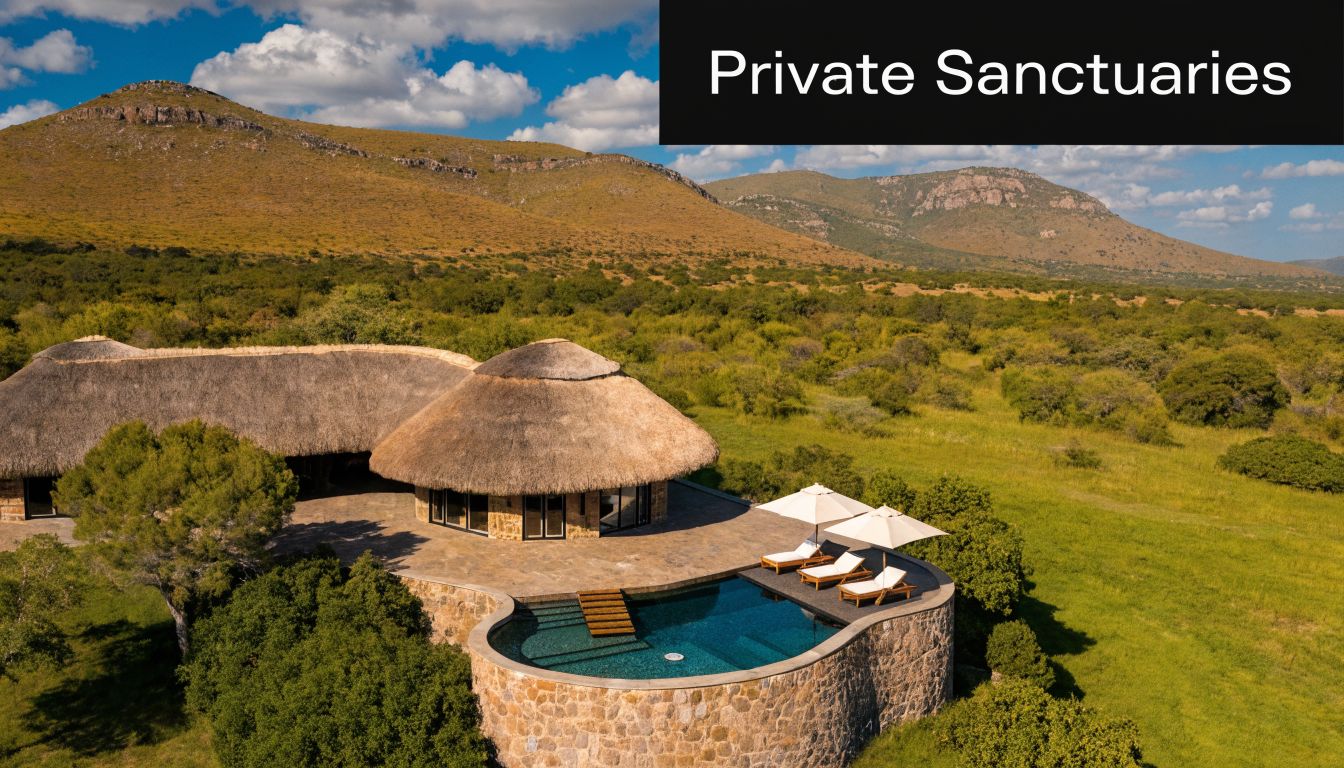
Safari properties worth prioritizing
At the top end, names such as Singita Boulders, Royal Malewane, and Lion Sands remain relevant because they understand what high-value privacy looks like. It's not just about square footage or plunge pools. It's about how the room sits in the natural surroundings, how flexible the schedule is, and whether your guide can read what kind of couple you are.
Some couples want a tracker who goes deep on spoor and behavior. Others want softer interpretation and more time stopped for coffee, photographs, and quiet. The lodge has to match that preference.
A few practical distinctions matter:
- Suites with outdoor living space: Better for couples who want downtime between drives, not just a dramatic bedroom.
- Private vehicle availability: Worth considering if one partner photographs seriously or if you don't want to negotiate sightings with other guests.
- Reserve personality: Some feel social and convivial. Others feel cocooned.
City and Winelands sanctuaries
In Cape Town, Ellerman House stands apart for couples who care about art, privacy, and a residential feel over a high-traffic hotel scene. It works especially well when the honeymoon needs a city base that still feels protected.
In the Winelands, I prefer properties where the room itself supports lingering. The right suite should encourage a slow morning, a late lunch, and one canceled plan that nobody regrets. Honeymooners don't need an agenda-packed wine stay. They need one estate or one village that lets the trip breathe.
Book the room for the hour after the excursion, not just for the photos on arrival.
That principle saves clients from flashy choices that underperform once the novelty fades.
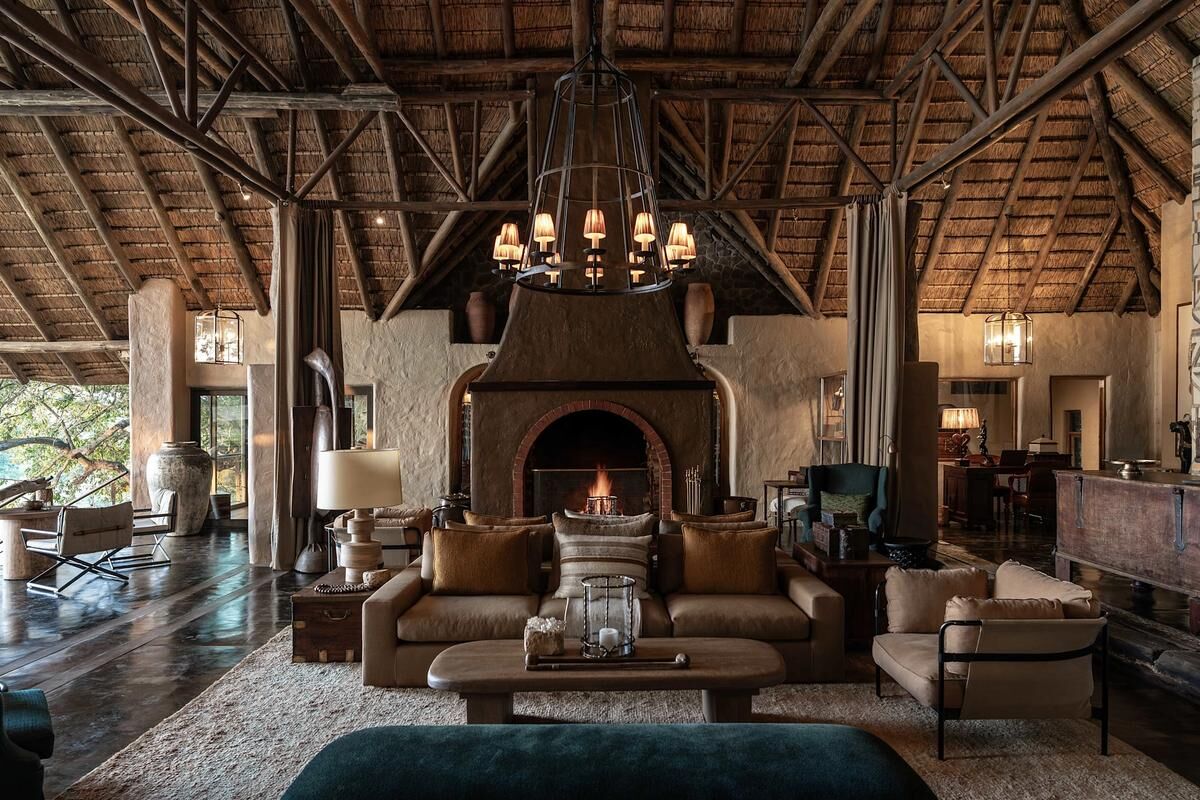
A visual sense of lodge atmosphere helps when narrowing style and setting:
The sustainability question now matters
For many ultra-high-net-worth travelers, conservation and sustainability are no longer secondary considerations. According to The Knot's South Africa honeymoon weather and travel guide, carbon-neutral lodges like Kwandwe Private Game Reserve have seen a 28% booking surge in the last year, reflecting stronger demand for low-impact luxury. Kwandwe is especially useful for couples who want a conservation-led stay without giving up polish, strong guiding, or suite-level privacy.
That trade-off used to be real. Years ago, “eco” often meant compromise. In the current top tier of South African hospitality, it doesn't have to.
A shortlist beats a long list
I don't believe in sending honeymooners a directory. Too many options flatten decision-making and make every property sound interchangeable. A better approach is to narrow the field quickly.
If a couple wants:
- Iconic safari prestige, I'd start with one or two flagship reserve options.
- Quiet conservation luxury, I'd include Kwandwe in the discussion.
- An art-led Cape Town base, I'd look at Ellerman House before defaulting to larger hotels.
- Romantic wine country seclusion, I'd prioritize room quality and estate atmosphere over brand recognition.
In South Africa, a great honeymoon isn't built by sampling everything. It's built by choosing a few sanctuaries that know how to hold the trip properly.
Crafting Your Unforgettable Moments
The honeymoon becomes memorable in the spaces between the headline stops. Safari, Cape Town, and the Winelands provide the framework. The private moments make it personal.
Experiences that change the trip
A game drive is excellent. A privately held sundowner setup in a location chosen for light, silence, and zero interruption is different. A wine tasting is pleasant. A cellar visit arranged around the couple's taste, followed by lunch that isn't rushed by the next seating, lands differently.
That's the distinction I care about. Not activity count. Context.

What I'd build into a top-tier honeymoon
Some of the strongest moments are simple on paper and difficult to execute well:
- Private helicopter access: Useful for scenic transfers or a landing picnic in a location that would feel inaccessible by road.
- Curated city access: Cape Town works beautifully with after-hours gallery or design experiences, especially for couples who value culture as much as scenery.
- A focused Winelands day: One serious tasting, one long lunch, one estate worth staying on. Not six stops and a blur of pours.
- Night-sky programming in remote regions: In the right setting, astronomy and stargazing become unexpectedly romantic because the environment supports stillness.
A honeymoon memory usually comes from one uninterrupted hour, not from the most expensive excursion on the itinerary.
The best moments fit the couple, not the algorithm
Adventure couples often ask for every dramatic experience at once. Shark cage diving, hiking, marine excursions, wine tram, helicopter, private chef, spa, gallery. It sounds exciting until the trip starts to resemble a campaign.
Romantic pacing requires subtraction. For one couple, the right splurge is a private Blyde River Canyon flight paired with a single extraordinary lunch. For another, it's a fireside dinner after an evening drive and nowhere else to be. For another, it's taking over a small villa in the Winelands and letting the day unfold with no formal schedule.
A practical way to choose
I usually frame honeymoon experiences through three filters:
| Question | Why it matters |
|---|---|
| Will this deepen the mood of the trip? | Some experiences are impressive but tonally wrong |
| Does it require privacy to feel special? | If yes, generic booking won't do |
| Will you remember the setting or just the logistics? | Strong memories feel effortless in hindsight |
South Africa is excellent for couples because it supports both grandeur and restraint. You can stage a dramatic reveal. You can also let the natural splendor do the work. The right plan uses both.
The Art of Seamless Travel The Haute Black Advantage
The honeymoon can lose its shape in small, expensive ways. I have seen couples land in Cape Town after an overnight flight, wait on bags, miss a driver, arrive late to lunch, and spend their first afternoon recovering from a transfer chain that looked perfectly reasonable on paper. South Africa rewards range, but only when the sequence is built with intent.
A great itinerary is not just a collection of star properties. It is a controlled rhythm across very different settings. Safari runs on light and wildlife movement. Cape Town runs on traffic, table availability, and weather windows. The Winelands reward unhurried afternoons. The coast changes with tides, wind, and marine conditions. Put those pieces together carelessly and the trip feels fragmented.
Where multi-stop honeymoons break down
The weak points are usually predictable:
- Flight timing that wastes premium nights: Late arrivals can erase the value of an exceptional lodge stay.
- Transfer logic that looks efficient but feels draining: A cheaper routing often costs more in energy, privacy, and mood.
- Unclear ownership between suppliers: Airport staff, drivers, camps, and hotels each handle their piece, but no one protects the full journey.
- No fallback plan: Weather shifts, bush flight delays, and restaurant changes are common enough to plan for in advance.
For UHNW couples, logistics are part of the luxury layer. Privacy matters. So does pace. If a marine extension is under consideration, it helps to compare cruise ships against the rest of the honeymoon before adding another operating style to the trip.
What high-touch planning should actually include
A properly built South African honeymoon should cover more than bookings. It should account for airport fast-track assistance, aircraft and road transfer standards, realistic check-in and dining timing, luggage handling across internal moves, and the privacy profile of each property. The right planner also knows where to place recovery time so the trip never feels like a relay.
Haute Black honeymoon planning reflects that service model. The focus is itinerary design, partner coordination, and on-the-ground execution across air, road, accommodations, and private experiences.
Effortless travel is the result of good control.
The standard I expect
For a South African honeymoon, I would want five things in place:
1. One decision-maker across the full itinerary so accountability stays clear.
2. Private or premium arrival handling on every major transition.
3. Drivers and guides chosen for judgment and discretion as much as local knowledge.
4. Privacy requests logged in advance with hotels, lodges, and dining teams.
5. Backup options already approved for timing, weather, and experience changes.
What clients remember is consistency. The care should feel the same on a bush airstrip, at a private cellar door, and in a Cape Town hotel arrival. Luxury in isolated moments is easy to buy. Cohesion across the entire journey takes planning.
Essential Preparations Budgeting and Packing
A luxury honeymoon south africa budget is set by the structure of the trip, not just the room rate. The biggest variables are lodge and hotel tier, suite category, internal flights, the level of privacy you want, and whether transfers and experiences are shared or private.
Budgeting for the experience you actually want
I advise couples to start with the moments that will define the trip. For one pair, that is a top safari concession with a guide who can read a sighting before the radio traffic builds. For another, it is a private villa in the Winelands and a final night in Cape Town that feels like a proper finish. The best itineraries rarely spread spending evenly. They place it where privacy, access, and timing matter most.
A useful way to budget:
- Spend decisively on the emotional high point: Usually safari, a standout suite, or the closing stay.
- Keep transit nights efficient: An arrival hotel should be polished, well-located, and easy to move through.
- Protect the transfer budget: A poor air or road connection can flatten the mood of an otherwise exceptional trip.
- Leave room for private experiences: A cellar visit before opening hours or a boat charter at the right time of day often matters more than a minor room upgrade.
For couples new to safari planning, this African safari guide for first timers is a practical starting point before choosing reserves, room types, and pacing.
Packing for multiple environments
South Africa rewards disciplined packing. A single trip can include cold bush mornings, warm afternoons by the coast, and dinners in Cape Town where casual safari wear feels out of place.
Pack for range, not volume.
- Safari layers: Neutral, breathable clothing, a light jacket, and comfortable closed shoes for game drives, bush walks where allowed, and early starts.
- City clothing: Cape Town suits sharper evening dressing. Bring one or two looks that travel well and do not need special care.
- Wine country wardrobe: Linen, light knitwear, soft tailoring, and shoes that handle gravel paths without looking overly practical.
- Practical gear: Sunglasses, sun protection, compact binoculars if wildlife detail matters to you, and luggage that works within weight limits on smaller regional aircraft.
Documents and local polish
Keep passports, travel confirmations, and arrival paperwork in printed and digital form. Use cards that work cleanly abroad, and keep a modest amount of local currency for tips and incidental spending.
For couples blending honeymoon travel with wedding logistics or local events, practical planning tools can help. If part of your journey includes celebrations in the city, these resources for engaged couples in Cape Town offer a useful local checklist perspective.
Packing rule: Every item should work in at least two settings. If it only serves one moment, it usually does not deserve the space.
The strongest South African honeymoons are built with intention. Safari, city, wine country, and coast can sit together beautifully, but only if the pacing is right and each move supports the next. If you want that trip designed with privacy, access, and polished logistics in mind, start with Haute Black.
Explore Our Guides

Signature Experiences