Haute Black Journal
Luxury Cruises to Argentina 2026: Plan Your Dream Voyage

Marlene Azeez
Director, HauteBlack
View all articles →

# Luxury Cruises to Argentina 2026: Plan Your Dream Voyage
Published August 10, 2026 by Marlene Azeez
You're already at the fun part. The dates are circling, the wishlist is longer than the calendar, and the question isn't whether to cruise to Argentina, it's how to do it with enough style that the trip feels curated from the first airport transfer to the last glass of wine on deck.
The best cruises to Argentina reward travelers who treat the country as more than a port stop. Buenos Aires gives you urban polish, Ushuaia opens the door to the far south, and Patagonia turns the voyage into a moving panorama of wilderness, weather, and light. Choose well, and the itinerary stops feeling like a package and starts behaving like a private journey.
Introduction to Luxury Cruises to Argentina
A couple arrives in Buenos Aires after an overnight flight, luggage sent ahead, check-in handled before they've even had time to ask for coffee. By the time they step onto the ship, they've already had a private lunch, a quick city drive, and the first hint of what makes cruises to Argentina worth doing properly, the transition feels smooth, not chaotic.
That's the standard worth aiming for here. Argentina is not a one-note cruise market, it's a place where city glamour, southern-ocean drama, and expedition energy all collide, often in a single itinerary. The country's geography is unusually varied for routing and shore time, with scenery that moves from urban Buenos Aires to the Patagonian plains, Andean backdrops, biodiverse wildlife areas, and the Antarctic fringe. World of Cruising's Argentina overview captures that range clearly.
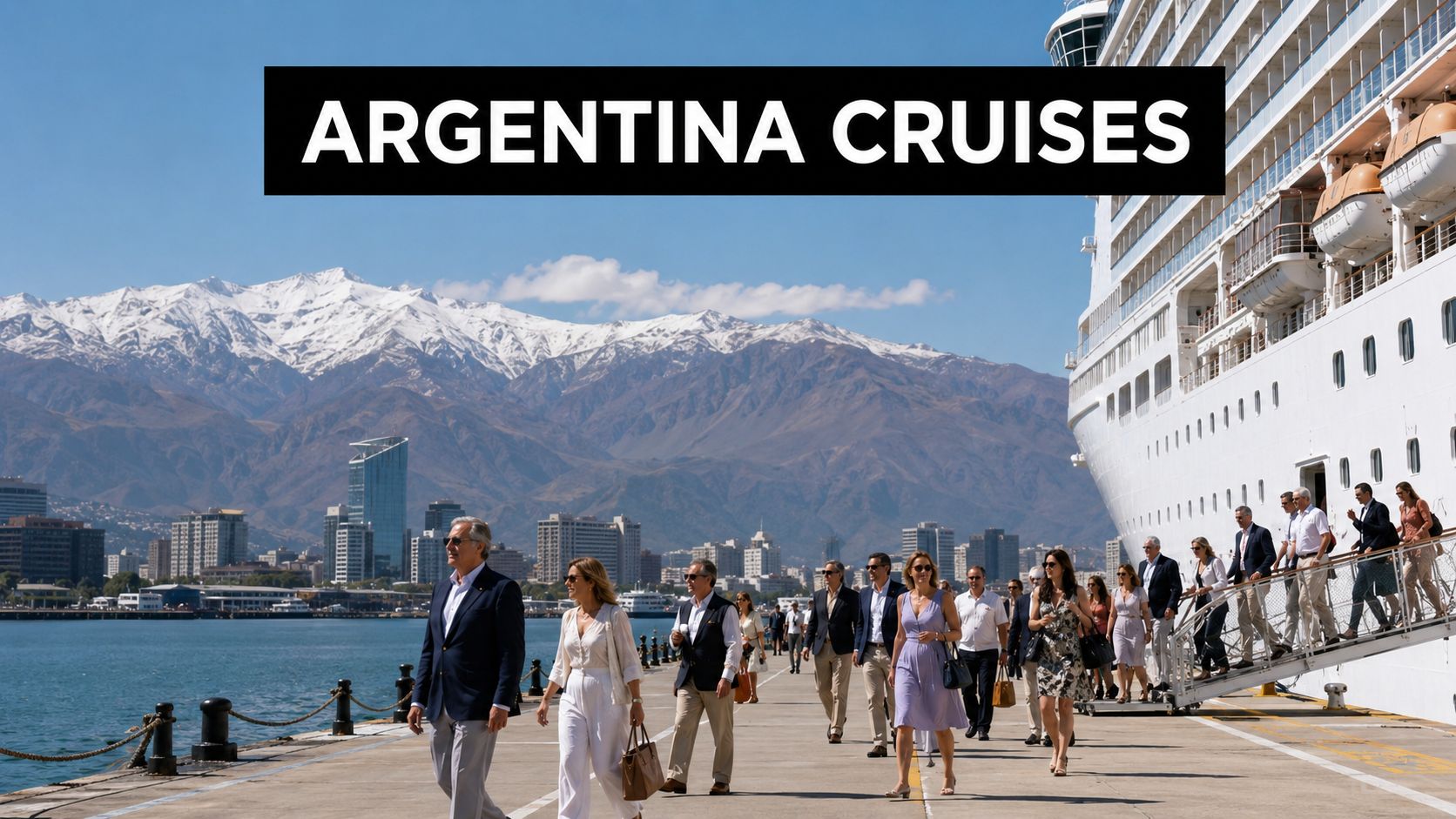
What makes Argentina different
The smartest way to approach this destination is to stop thinking in terms of a single “best cruise” and start thinking in terms of purpose-built travel. A honeymooner wants city warmth and elegant evenings. A family wants a route that doesn't punish them with too many long transfers. An expedition guest wants to be in Ushuaia when the southern window makes sense, not when the weather is working against the itinerary.
Practical rule: In Argentina, the land program matters almost as much as the ship. If the transfers, hotel nights, and embarkation timing feel sloppy, the whole experience loses its polish.
A well-designed voyage can combine a refined Buenos Aires arrival, a Patagonian stretch, and a one-way Antarctic departure without feeling stitched together. That's the difference between booking a cruise and designing a journey.
Timing and Planning Cruises to Argentina
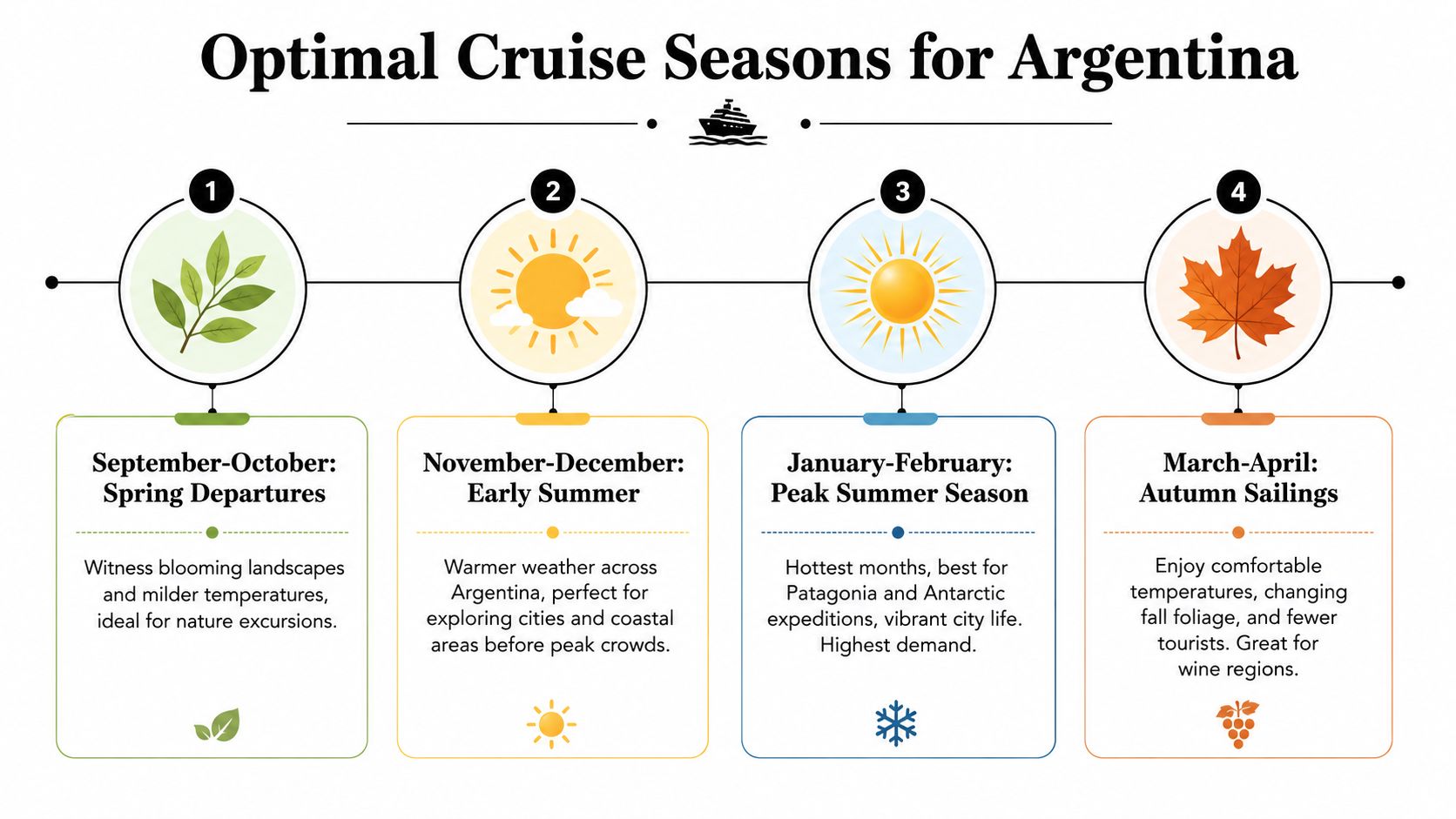
The cruise calendar here is tight, and that is exactly why timing matters. Argentina's national 2024/2025 season ran from September to April, peaked in January–February, and recorded 719,700 cruise passengers and 735 port calls. It also showed 61.7% non-resident travelers, which makes the pattern clear, international demand drives the season more than local embarkation traffic. Argentina's 2024/2025 cruise season data
Match the month to the traveler
For honeymooners, the shoulder side of the season is the smarter choice. Buenos Aires is more comfortable before the deep summer heat settles in, and the city feels better for long dinners, theater, and late strolls when temperatures are less aggressive. If the trip includes elegant hotel time before boarding, avoid the hottest weeks unless atmosphere matters more than comfort. For a broader Argentina city-and-coast strategy, anchor the trip around the southern window and build Buenos Aires around that. This Patagonia timing guide is the right starting point if Patagonia belongs in the plan.
For families, early season or late season is the better call. You get fewer crowd frictions, a calmer pace in port, and more flexibility if you want to extend the trip with city nights instead of packing everything into the ship calendar. The season's concentration into a short window also means the best sailings disappear quickly, especially when you want better cabins and suites.
For expedition enthusiasts, January and February deserve the closest attention, because that is when the southern itinerary rhythm is at its strongest. If Antarctica is the priority, build the rest of the trip around that departure window. Southern itineraries are constrained by geography and seasonal logistics, and the best voyage is the one that respects that reality instead of fighting it.
How to think about the shoulder months
March and April matter because they give you breathing room. The season is still active, but the pressure eases, which often makes the trip feel more composed. If your priority is fewer crowds and a more measured pace, these months deserve serious consideration.
Buenos Aires and southern Argentina do not reward lazy planning. Heat, wildlife access, and sailing windows pull in different directions, so the right month depends on which version of Argentina you want.
The pricing picture also reinforces why timing matters. One destination guide lists a cheapest cruise month of September, an average price per night of £135, and monthly averages ranging from £100 per person in October to £3,189 per person in January. That spread is exactly why luxury travelers should book with intent, not impulse. World of Cruising's Argentina pricing guide shows how wide the seasonal swing can be.
Video insight:
Ports and Vessel Options for Argentina Cruises
Buenos Aires is the port that gives an Argentina cruise its shape. The city serves as the country's cruise gateway, and the port authority says it receives more than 400,000 passengers and more than 100 cruise ships each season. That scale matters because it supports the kind of pre-cruise stay luxury travelers expect, strong hotels, serious dining, and the kind of embarkation process that feels managed rather than improvised. Buenos Aires cruise port details
Buenos Aires also suits travelers who want to arrive early, settle in, and let the city set the tone before they board. For a bespoke trip, I would treat it as more than a departure point. Use it for a proper overnight, a private transfer, and a final dinner that feels like part of the voyage rather than a logistical afterthought.
Choose the ship to match the coastline
For five-star liners, Buenos Aires is the natural fit. These ships are built for comfort, dining, and a refined social rhythm, and they work best when your route emphasizes city time, elegant onboard living, and straightforward access to major ports. They suit travelers who want the cruise to feel like a floating resort with polished service, not a platform for hard-edged exploration.
For expedition ships, Ushuaia is the stronger choice. Ushuaia is the southernmost city in the world, and it serves as a gateway to Antarctica. That alone explains why expedition sailings cluster there. The atmosphere is more functional, more focused, and more about what happens outside the ship than what happens in the atrium. Cruise1st's Ushuaia destination guide is worth reading if you want a clear sense of why this port carries so much weight.
The latest season data makes the split obvious. Buenos Aires/CABA handled 509,200 passengers, Ushuaia 157,100, and Puerto Madryn ranked third. That is the practical map of Argentina cruising, a gateway city, a polar launch point, and a wildlife-oriented stop. Argentina's 2024/2025 cruise season data
| Port | Best for | Travel mood |
|---|---|---|
| Buenos Aires/CABA | Embarkation, city stays, polished pre-cruise time | Urban, elegant, logistical hub |
| Ushuaia | Antarctica departures, remote southern itineraries | Expedition, purposeful, adventurous |
| Puerto Madryn | Wildlife and scenic calls | Nature-led, quieter, more observational |
What vessel style actually buys you
A luxury liner gives you the best chance of ballroom-style evenings, wider cabin choice, and a more relaxed onboard rhythm. An expedition vessel gives you a different kind of privilege, direct access. You trade size and polish for proximity to remote places, zodiac operations, and serious natural history.
For honeymooners and travelers who want atmosphere first, the luxury liner is the better move. It gives you the right setting for Buenos Aires, Patagonia, and elegant days at sea. For families, a larger ship usually works better because the onboard flow is easier to manage and the public spaces give everyone room to breathe. For expedition enthusiasts, the priority is the itinerary and the operational strength of the ship, not the frills.
If your dream includes a private Patagonia extension before departure, pair the ship with a land experience that feels suited to the route, such as a curated Patagonia wilderness escape. That is the right way to make the cruise feel designed, not assembled.
My view: If Buenos Aires and polished onboard living are the goal, choose the luxury liner. If Antarctica is the reason for the trip, choose the expedition ship first and the cabin category second.
Bespoke Itineraries with Land Add-Ons and Excursions
The strongest Argentina journeys don't start on the ship. They start in a hotel suite, on a terrace, or in a private vehicle heading to the terminal after a day that already feels like part of the holiday. That's especially true in a market where major itineraries commonly run 9, 12, 14, or 16 nights, with both one-way and round-trip options from Buenos Aires that often include Chile, the Falklands, or Uruguay. Celebrity's Argentina cruise itineraries
The right sequence for each traveler
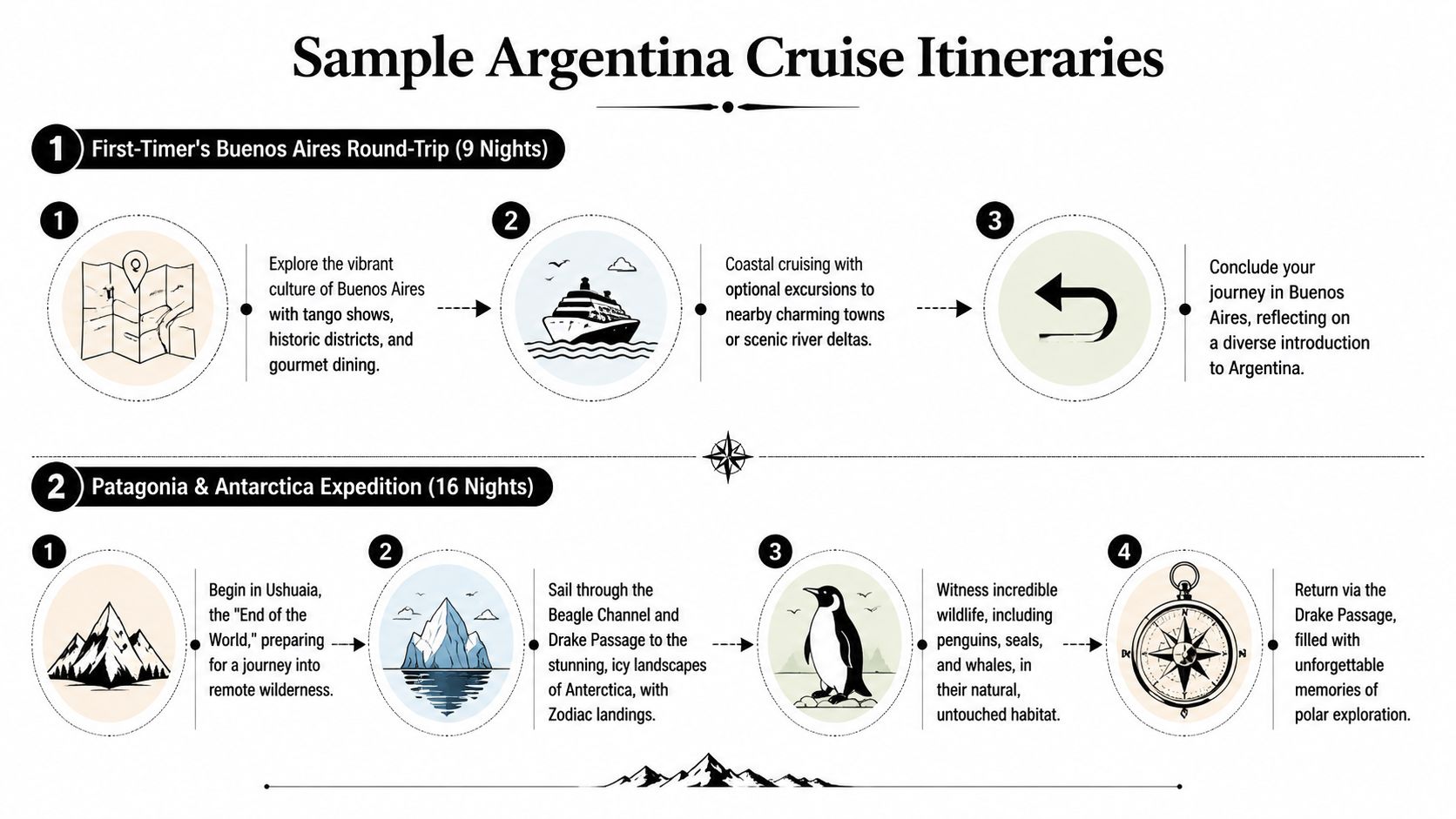
For first-timers, a 9-night Buenos Aires round-trip works when you want a clean introduction. Spend the first night or two in the city, take in Recoleta or La Boca if that suits your taste, then board without overcomplicating the week. The point isn't to see everything, it's to arrive relaxed enough that the cruise feels like a reward instead of a transfer marathon.
For families, I prefer a 12-night itinerary with a deliberate land add-on. That gives you room for a city night before departure and a little post-cruise decompression after disembarkation. Families travel better when the trip has natural pauses, and Buenos Aires is one of the best places in South America to build them in.
For expedition aficionados, a 16-night one-way Patagonia and Antarctica voyage is the serious answer. Begin in Ushuaia, add time in the far south, and keep the ship movement focused on the waters that matter. If your goal is scale and remoteness, don't dilute the route with too many unrelated diversions.
A good expedition pairing also works with a land stay in Patagonia. If you want a deeper wilderness frame before the ship, this Patagonia wilderness experience guide fits naturally into the planning process.
Sample trip structures that actually work
- Buenos Aires first, then sail: This is the smoothest format for travelers who care about dining, shopping, and culture before boarding.
- Southern land stay, then Ushuaia embarkation: Best for guests who want their first glacier and wildlife impressions on land, not only from the deck.
- One-way cruise with a city finish: Smart for anyone who wants to end in a place with real hotel and restaurant depth.
If you're combining cruise and land, add something with a strong point of view rather than generic filler. A private winery dinner, a gaucho estancia visit, or a wildlife-focused day in the south adds texture. Do not overload the pre-cruise block with too many moving parts. Luxury travel gets better when the itinerary breathes.
VIP Services and Transfer Logistics
Buenos Aires can be polished, but only if the logistics are handled properly. For turnarounds, ships and port operations need to account for 220V A.C. compatibility, and some operators route guests through Costa Salguero Convention Center before shuttling them to the Benito Quinquela Martín Cruise Terminal for immigration and boarding. That tells you everything you need to know about Argentina cruise logistics, berth access is only one part of the equation. Ritz-like turnaround logistics for Buenos Aires
What to arrange before you arrive
Start with the transfer chain, not the cabin. If your hotel, airport transfer, and terminal handoff aren't aligned, the rest of the experience can feel fragmented. Buenos Aires is a city where timing matters, and a smooth cruise day depends on whether your luggage, immigration, and vehicle schedule are already coordinated.
The smartest setup is simple:
- Private airport transfer: Get from the airport to the hotel or pre-boarding facility without standing in a public queue.
- Port-validated handoff: Make sure your cruise line or advisor confirms the exact embarkation location before departure day.
- Buffer time in the city: Don't schedule a frantic same-day arrival if you can avoid it. Buenos Aires deserves a night.
The goal is not just speed. It's calm. A luxury cruise start feels expensive when nobody is guessing where the luggage is.
Why port-side compatibility matters
The 220V A.C. detail is small, but it's exactly the kind of thing that separates polished operations from sloppy ones. If you're using onboard devices or specialized travel gear, compatibility affects the first hours of the voyage, and that's when guests notice friction most.
For readers who want a ground-transport framework, this private transfer services guide is worth using as a planning reference. It fits this itinerary type because Argentina rewards travelers who think in systems, not just destinations.
Packing Health and Visa Essentials
Argentina cruises call for a suitcase with range. You need formalwear for elegant evenings, layers for southern winds, and practical pieces that won't feel out of place if the day moves from a ship lounge to a muddy viewing platform. The safest packing formula is simple, black-tie polish, merino layers, waterproof outerwear, and expedition boots.
Pack for the ship, the city, and the south
Bring at least one outfit that can handle a smart dining room without looking overdone. Then build around layers. Patagonia and expedition segments can turn quickly, and decks are no place for underprepared footwear or flimsy fabric. If your itinerary includes wildlife or remote landings, pack with the assumption that surfaces may be wet, windy, or uneven.
Health coverage matters more on this route than on many classic Mediterranean sailings. If Antarctica is in the plan, make sure your insurance is explicitly built for evacuation coverage. That's not an optional luxury. It's part of responsible expedition travel.
If you're traveling with medication, it's worth checking a reliable guide on managing prescriptions during travel before you leave. That kind of preparation is especially useful when your trip includes multiple airports, ship boarding, and long days away from your home pharmacy.
Keep the paperwork tidy
Visa rules vary by nationality, so don't assume the same entry process applies to everyone in your party. Handle electronic forms early if they're required, confirm any reciprocal fees well before departure, and don't leave document review for the night before your flight.
A few practical items belong in every Argentina cruise folder:
- Passport validity: Check it early, not at the airport.
- Travel insurance documents: Keep digital and printed copies.
- Medication list: Bring names, doses, and copies of prescriptions.
- Layered clothing plan: Separate city wear from expedition wear so packing stays clean.
If you're moving between Buenos Aires and the far south, the difference in conditions can be dramatic. Pack for transition, not just destination.
Booking with a Luxury Advisor
Argentina rewards travelers who use a specialist, because the trip has too many moving parts for a generic online booking flow. The route, the season, the ship type, the hotel nights, and the terminal logistics all have to work together. If they don't, you end up paying luxury prices for amateur execution.
The best advisors don't just reserve a cabin. They shape the sequence. That means choosing the right departure window, lining up the hotel, confirming the embarkation path, and making sure the land portion feels like a deliberate extension of the voyage rather than a random add-on. For this destination, that level of control is the whole point.
What to ask for
Ask for a full routing review, not just fare comparisons. A good advisor should tell you whether your priorities favor Buenos Aires, Patagonia, or Antarctica first, then build the itinerary around that answer. If you care about suite category, special dining, or private transfers, mention those before anything else so the trip can be designed in the right order.
A serious luxury planning process should also account for pre- and post-cruise nights, especially in Buenos Aires, where a little extra time can make the whole experience feel more refined. The smartest travelers use their advisor to reduce friction, secure the right hotel, and protect the flow of the trip.
If you want a trip that feels composed from the first transfer to the final day, work with Haute Black. Their advisors can help turn cruises to Argentina into something cleaner, calmer, and more personal, with the kind of bespoke planning that makes Buenos Aires, Patagonia, and Antarctica fit together properly.
Explore Our Guides

Signature Experiences


