Haute Black Journal
Italian Rentals Tuscany: Your 2026 Luxury Guide

Marlene Azeez
Director, HauteBlack
View all articles →
# Italian Rentals Tuscany: Your 2026 Luxury Guide
July 23, 2026
You've just landed in Tuscany, the car door opens, and the courtyard is already warm. A villa host is waiting with the keys, the shutters are half open, and the only real decision is whether to drink coffee on the terrace before lunch or head straight to the pool. That's the level of ease discerning travelers want from Italian rentals Tuscany, and it's exactly why this market demands a sharper plan than a simple vacation booking.
Tuscany isn't just another pretty corner of Italy. It's one of the country's deepest rental markets, with 80,354 registered vacation-rental properties in 2024, which helps explain why choice is broad but quality varies sharply by location and property type (bnbkit.it). If you want the right villa, the right season, and the right arrival experience, you need to think like a serious buyer, not a casual browser. For listings research, a useful starting point is RealtyAPI.io for Immobiliare listings, especially if you're comparing homes across prime submarkets before you commit.
Introduction to Italian Villa Rentals in Tuscany
Tuscany rewards travelers who know what they're looking for. A stone farmhouse outside Siena feels completely different from a polished estate in the Florence countryside, and the difference isn't just aesthetic, it shapes your whole stay, from dining access to transfer logistics. That's why Italian rentals Tuscany works best when you begin with region, then move to property style, then lock in the concierge details that make the trip effortless.
The market's scale matters because it gives you options, but it also creates noise. Tuscany sits inside a national short-term rental economy that generated an estimated €66 billion in total economic impact in 2024, including €13 billion from direct bookings, €52 billion from secondary tourism spending, and €1 billion from renovations (bnbkit.it). In practical terms, that means top villas get pulled quickly and the weak ones remain online because they're mispositioned, overpriced, or badly managed.
The smart move is to pair local market reading with concierge support. In Tuscany, many of the best homes are still handled through specialist channels rather than self-serve checkout, so a good advisor saves time and filters out friction (Tuscany Now & More). If you want a smooth process from shortlist to arrival, insist on that level of service from the start.
Understanding Luxury Villa Rentals in Tuscany
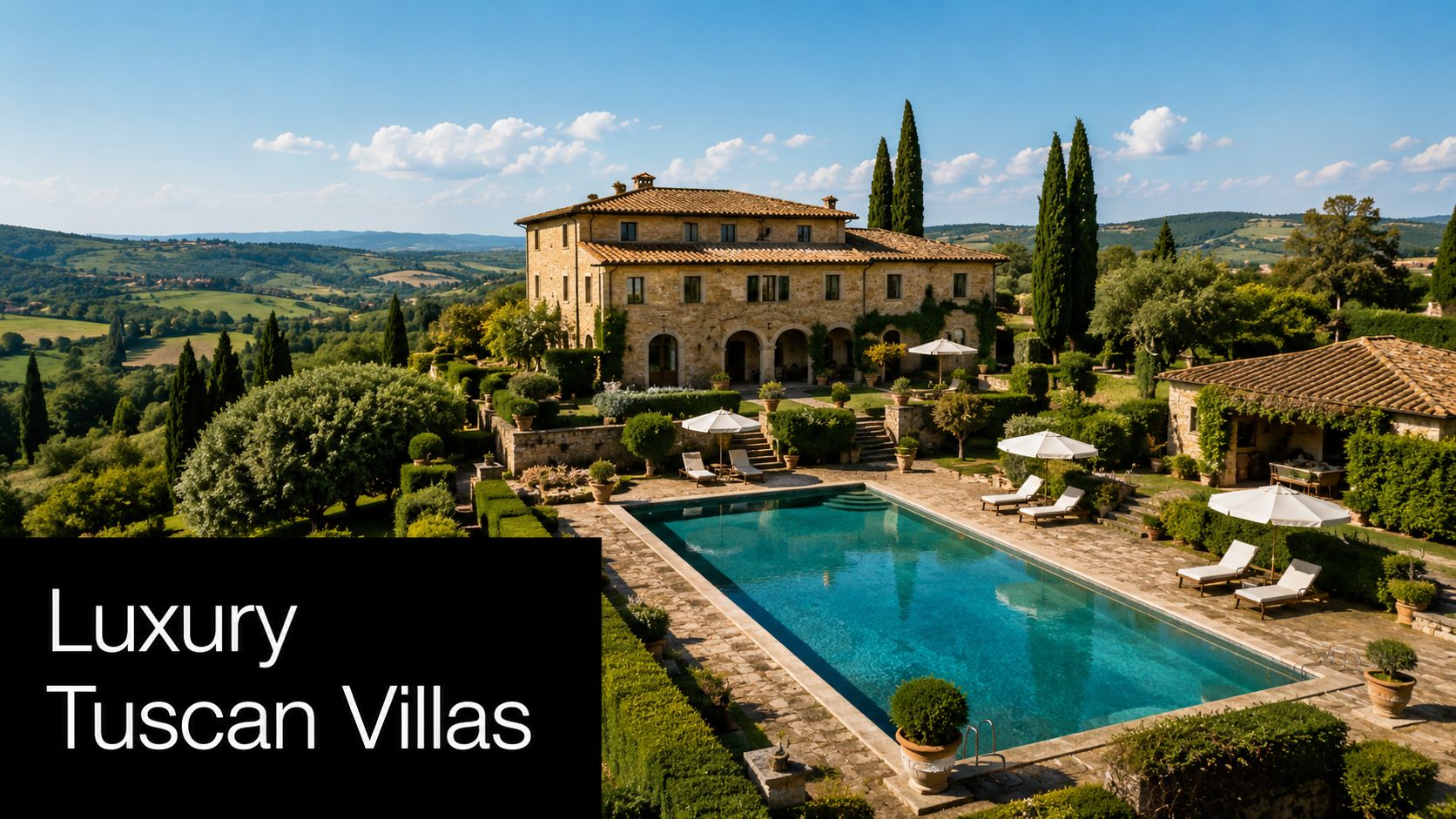
Luxury in Tuscany is not just about a big house with a view. It's about privacy, history, scale, and service, which is why the best properties usually combine architecture with operational finesse. A proper villa rental might include a private pool, a formal garden, a restored farmhouse shell, a staffed kitchen, and enough land that the setting feels removed from the tourist churn.
What actually separates luxury from ordinary
A luxury rental should solve problems before you notice them. The beds are properly made, the arrival is coordinated, the kitchen works for private dining, and the house has enough spatial generosity that families or groups can split up without feeling crowded. In some properties, the appeal is a historic villa with frescoed rooms and old-world proportions. In others, it's a newly built designer home where the entire experience is cleaner, sharper, and easier to live in.
The guest experience also matters. In the better villas, the welcome is never generic. You're more likely to get a curated arrival, pre-stocked pantry, a private chef on request, or in-house wellness support than any sort of standard hotel routine. That's why the market tends to split into two clear camps, heritage-driven estates and modern luxury builds, and both can be excellent if the execution is tight.
A Tuscany villa-rental specialist notes that bookings are typically arranged through dedicated concierge channels, phone, email, or specialist enquiry, rather than generic self-serve platforms, which reflects the bespoke nature of the category (Tuscany Now & More). For a deeper editorial overview, see Haute Black's luxury villa rentals in Italy guide.
Practical rule: If a villa can't explain staffing, arrival flow, and backup support in plain language, it isn't luxury, it's just expensive lodging.
The smartest luxury renters choose the property based on how they'll live there. A couple wants intimacy and atmosphere. A multigenerational family wants separation, easy transfers, and dependable staff. A friend group wants pool life, dining space, and a layout that doesn't collapse when everyone gets back from an excursion at the same time.
Premier Tuscan Regions and Seasonal Pricing Trends
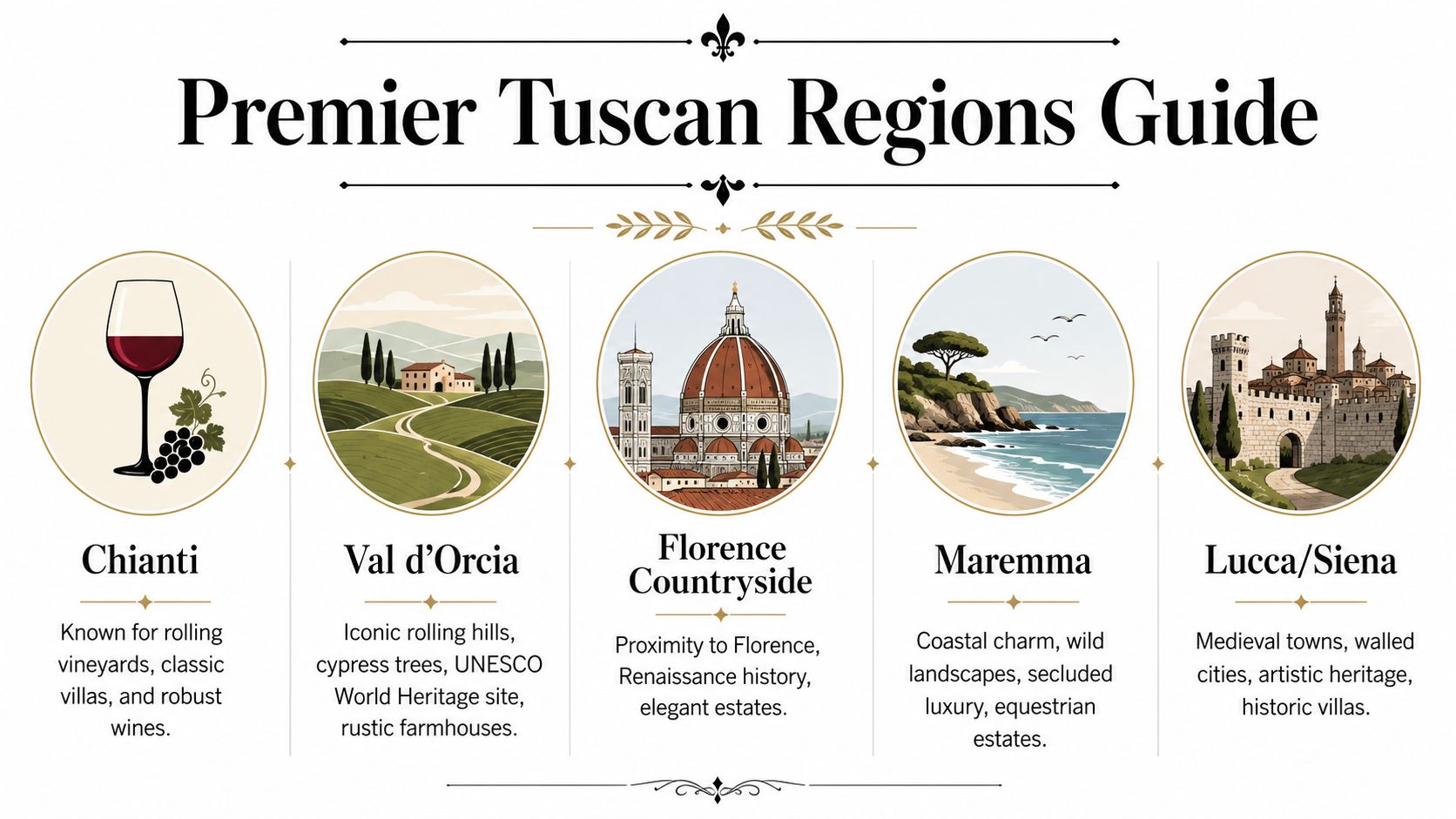
Tuscany's rental map is best read region by region, because the atmosphere changes fast. Chianti is for vineyard living and classic estates. Val d'Orcia is for cinematic countryside and slower days. Florence countryside suits travelers who want culture with breathing room. Maremma leans more rugged and coastal. Lucca and Siena appeal to guests who want historic towns and elegant access without the full crush of central-city tourism.
Where each region wins
Chianti is the default for wine-first travelers. It gives you rolling vines, polished farmhouses, and the kind of scenery that justifies long lunches and late arrivals. Choose it if your priority is classic Tuscany with easy access to tastings and scenic drives.
Val d'Orcia is more romantic and more photographic. It's where the hills, cypress lines, and open skies shape the stay as much as the house itself. This is the region to pick if you want the most iconic countryside mood and don't mind slower logistics.
Florence countryside makes the most sense for travelers who want art, shopping, and city dining without sleeping in the city center. The homes tend to feel more formal, and the market suits guests who want strong access to Florence with a softer landing zone at night.
Maremma is the smart choice for people who prefer space and privacy over status signaling. It's looser, wilder, and more adaptable for guests who want coastal charm, horse properties, or a quieter luxury profile. Lucca and Siena are different again. They're the best fit for guests who value medieval town access, architecture, and a polished base with better day-trip reach.
The market depth backs up this regional diversity. Tuscany had 80,354 registered properties in 2024, making it one of Italy's highest-concentration regions for private stays (bnbkit.it). Independent inventory data also shows 169,039 vacation rentals listed from 2,110 providers, with average prices of $266 for apartment rentals and $360 for house rentals, which confirms how broad the market really is (HomeToGo).
How to think about season and value
For value, choose shoulder periods over headline travel windows. For atmosphere, choose the weeks when you can enjoy the roads, restaurants, and countryside without fighting for everything at once. If you want the most balanced experience, don't chase the most famous dates. Chase the version of Tuscany that matches your pace.
The right region usually solves three problems at once, scenery, access, and daily rhythm. The wrong region forces you to keep compensating.
If you're still comparing submarkets, the published rental-yield range of 7% to 8% gross in early 2026, with a broader realistic band of 5.5% to 9%, is a useful reminder that Tuscany attracts both lifestyle buyers and serious investors (Investropa). That doesn't tell you where to sleep, but it does tell you the market is strong enough to support real demand across multiple property types.
Itinerary Planning and Concierge Services
A Tuscan villa stay becomes memorable when the days are choreographed properly. Don't start with random restaurant reservations and then hope the week works out. Start with your anchors, vineyard tastings, one private lunch, one culture-heavy day, one completely slow day, then build the rest around transfer times and the home's location.
Build the week around fixed experiences
Your first move should be vineyard selection. Pick wineries that fit the mood of the trip, not just the labels. If the group wants polished tastings, go for appointments that feel refined and structured. If the group wants something more rustic, book countryside stops where lunch and conversation matter as much as the pour.
Next, lock in food. Private chefs are worth it in Tuscany because they turn the villa into the main event. The best chefs shop the market in the morning, cook to the mood of the day, and pace the meal so the table becomes the center of the stay.
Here's the standard I'd use:
- Anchor the trip first: Set the villa nights, then layer experiences around them.
- Limit daily movement: Too many transfers kill the mood fast.
- Protect one free afternoon: Tuscany needs room to breathe.
- Use local expertise for dining: Don't guess which restaurant matters, ask who are the regular patrons there.
- Keep backup options ready: Weather, traffic, and tired travelers all change the plan.
A serious operator earns its keep by ensuring concierge-led travel feels invisible when it's working, and decisive when something changes. That's the difference between a beautiful itinerary and a stressful one.
Arrival Logistics and VIP Transfers
Arrival sets the tone, and in Tuscany, a clumsy first mile ruins the mood fast. If your villa is in the countryside, the smartest plan is to treat the arrival like a sequence, air, ground, then doorstep. That keeps energy high and avoids the dead time that makes a luxury trip feel oddly ordinary.
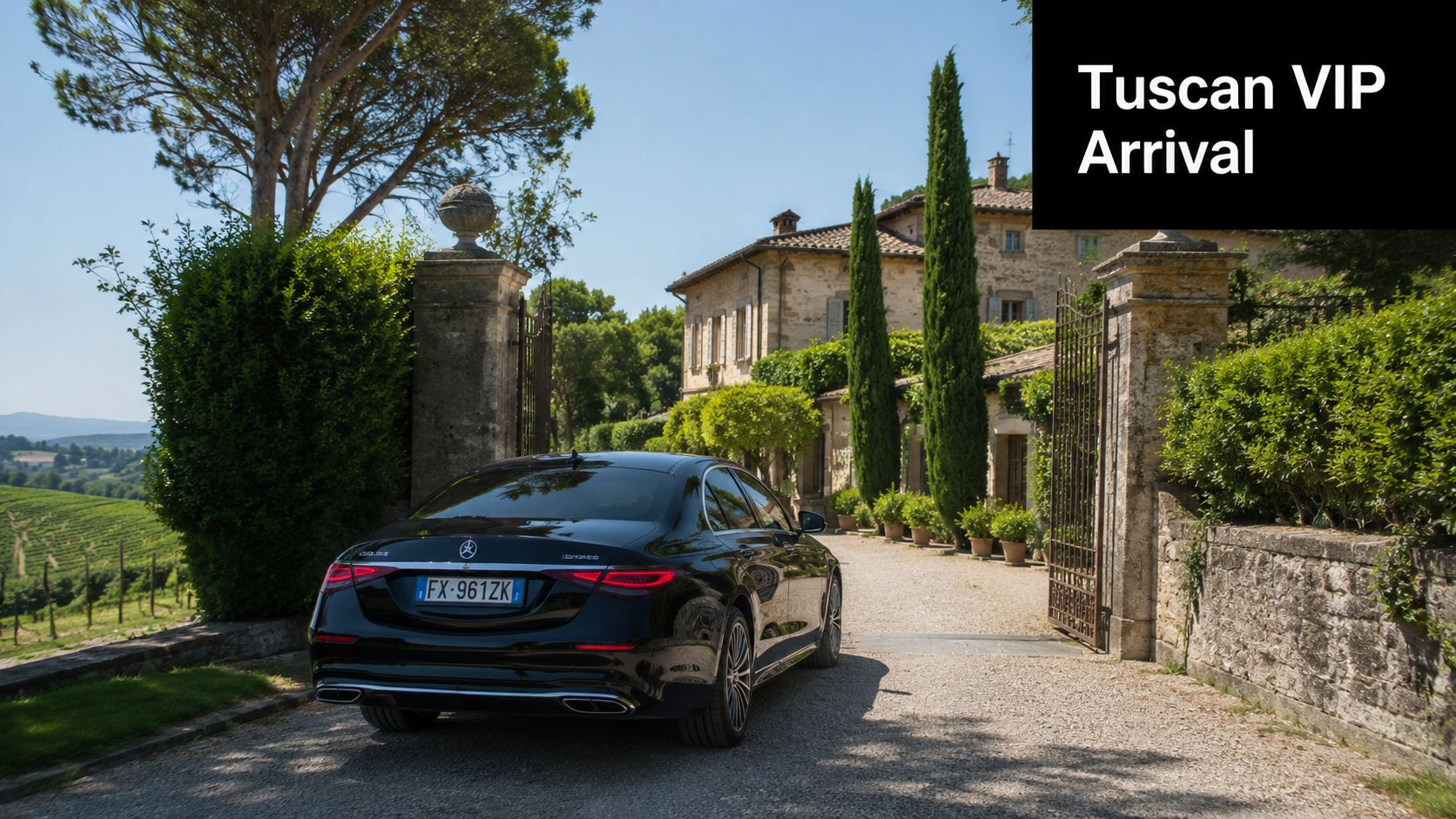
Match the transport to the villa
Private aviation makes the most sense when you want control and privacy. Florence and Pisa are the obvious arrival points, and they work especially well if your villa sits inland or you're connecting onward to another part of Italy. Helicopter transfers add another layer of speed and spectacle when the property has the right landing access, but they should be used for convenience, not theatrics.
Luxury sedans remain the most practical choice for multi-leg itineraries. They're quieter, easier for luggage, and less disruptive after a long flight. If the trip involves city pickups, airport transfers, and a countryside drive in one day, a sedan is usually the cleanest answer.
The point isn't to choose the fanciest option. It's to cut the transition time between landing and settling in. A smooth transfer lets you arrive composed, not depleted.
Practical rule: The most elegant arrival is the one nobody has to think about after it's over.
A specialist in smooth ground support can also coordinate with airport timing, luggage handling, and the villa's check-in window. That matters because the property itself won't feel special if you show up tense, late, or overscheduled.
Keep the first hour simple
Don't pack the first day with activities. Let the vehicle drop you at the villa, then handle bags, a welcome drink, a quick property walkthrough, and dinner. That's enough. Anything more and the arrival stops feeling like a privilege and starts feeling like a checklist.
If you want a more detailed transfer strategy, Haute Black's premium airport transfer guide is worth using as a planning reference before you lock the last mile. The best arrival is calm, private, and slightly unhurried. Tuscany deserves that tempo.
Booking Best Practices and Legal Considerations
Book Tuscany like you're protecting a serious asset, because you are. The wrong contract, the wrong listing, or the wrong compliance check can turn a beautiful villa into an administrative mess. If you want a clean booking, start with the paperwork and force the property to prove it's ready.
What to verify before you send a deposit
In Tuscany, the compliance standards for holiday rentals changed materially on 1 January 2025. Every holiday let must display both the national CIN and the regional CIR code, and both must appear in every listing. Missing or inconsistent codes can trigger fines of up to €8,000 (andrejavi-realestate.com).
That's not a bureaucratic footnote. It's the first sign of whether the operator understands the current market. The same source points out that the bottleneck is often the required safety certification and data consistency checks before filing, not the code itself (andrejavi-realestate.com). If a host can't explain those basics, move on.
You should also ask for the contract terms in writing before paying. The best rentals spell out deposit timing, cancellation flexibility, liability, and what happens if the villa is unavailable or materially misrepresented. Insurance coverage should be addressed explicitly, especially for high-value contents and group stays.
Use a disciplined booking process
I'd use this sequence every time:
1. Confirm the legal identifiers. The listing should show the required rental codes clearly.
2. Ask for the contract before the deposit. Don't agree to vague payment language.
3. Clarify occupancy and staffing. Know what's included and what costs extra.
4. Check transferability and cancellation. Luxury plans change, and the terms should reflect that.
5. Document communication. Save the listing, emails, and invoice trail.
Virtuoso-style benefits can be valuable if you're booking through an advisor with access to preferred partner programs, but only if the property and trip qualify. Use those benefits to improve the stay, not to justify a weak villa choice. The right advisor will tell you when a house is worth pushing for and when it isn't.
The market is strong enough that you don't need to accept sloppy terms. In Tuscany, serious homes get serious interest. Your advantage comes from being prepared, not from bargaining after the fact.
Enhancing Your Stay with Haute Black VIP Services
A Tuscan villa trip gets better when the advisor handles the invisible work. That means the itinerary isn't stitched together by the guest, the transfer doesn't need constant follow-up, and the dining plan doesn't depend on luck. Haute Black fits this kind of trip because it combines villa sourcing, VIP recognition, and private travel support with a broader concierge network across destinations.
What the service layer should actually do
For villa travel, the useful services are practical. A dedicated advisor can manage the property search, coordinate arrival timing, arrange private aviation through Haute Jets, and line up first-class or helicopter transfers when the trip calls for it. That same advisor can also integrate dining and event access when the stay needs a stronger social or culinary layer.
Haute Black's wider membership model also matters for travelers who like friction removed before they ask. The platform's preferred partner relationships, waived planning fees for members, and access to upgrades when available are the kind of behind-the-scenes advantages that make a trip feel handled rather than assembled. If you want to pair a villa stay with a Michelin-level meal, a private chef dinner, or a cultural evening, that network becomes useful fast.
For travelers focused on food and table settings, a smart addition is the right beverage and pantry setup from the start. A practical planning resource for gourmet beverages for Italian cuisine can help you think through how the villa should be stocked before arrival, especially if you're hosting family or a small group.
Why this matters for a villa stay
The best villas don't feel like isolated rental units. They feel like private homes with a professional operating system behind them. That's where a travel platform with a real advisor base makes sense. Haute Black also curates private events, culinary experiences, and AI-powered networking roundtables, which can be useful if your Tuscan trip is part leisure, part connection-building, or part celebration.
You don't need all of those layers for every booking. You do need the ability to call on them when the trip changes. That's the value. If a villa stay is going to feel personalized, someone has to manage the details at a higher standard than the guest can reasonably do alone.
Making Your Tuscan Villa Dreams a Reality
The winning formula is simple. Choose the right region, price the stay realistically, verify the legal codes, and insist on transport and concierge support that removes friction. Tuscany gives you the scenery, but the quality of the trip comes from the decisions made before you arrive.
If you want the experience to feel polished from the first transfer to the last dinner, book with a team that can handle both the villa and the moving parts around it. That's the difference between renting a house and living well in Tuscany. Contact a villa specialist, secure the dates you want, and build the itinerary around the way you like to travel, not around what's left on the calendar.
A CTA for Haute Black.
Explore Our Guides


Signature Experiences