Haute Black Journal
Exclusive Luxury African Safari Tours

Marlene Azeez
Director, HauteBlack
View all articles →
# Exclusive Luxury African Safari Tours
May 11, 2026
You're likely not looking for another glossy safari roundup. You already know Africa has extraordinary lodges, iconic wildlife, and dramatic stunning scenery. The essential question is whether the trip will unfold with the kind of precision that suits your life, your standards, and your privacy.
That's the dividing line in luxury african safari tours. The wildlife is only part of the product. Luxury lies in what happens around it. The aircraft that lands close to camp instead of routing you through avoidable connections. The guide who already knows you prefer longer leopard sightings and shorter sundowners. The team that gets your family from different continents into one remote conservancy without anyone feeling the strain of the journey.
A standard safari can still be beautiful. It can also be dusty, over-scheduled, and oddly public. A proper high-end safari feels quiet, frictionless, and private, even when it involves multiple countries, airstrips, and conservation areas.
The New Era of African Exploration
At the best moment on safari, there's no sense of effort. You're looking at a lioness moving through long grass at first light. The vehicle is positioned perfectly. No other convoy is edging in. Your coffee arrived hot. Your camera bag was already set where you wanted it. Nobody is checking watches because the day has been built around the sighting, not the other way around.
That level of calm isn't accidental. It's designed.
The market has moved sharply in that direction. Average luxury booking values approached $25,000 per trip, and some travelers have been planning up to three years in advance for the most exclusive lodges, according to Go2Africa's Annual State of Safari Travel Report for 2023. That tells you two things. First, demand is serious. Second, the best inventory is no longer something you browse casually a few months before departure.
What discerning travelers are buying now
They're buying more than game drives. They're buying:
- Protected time: Fewer transitions, fewer unnecessary touchpoints, fewer compromises.
- Controlled access: The right reserve, the right guide, the right vehicle policy.
- Operational confidence: Internal flights that connect properly, dietary notes that are remembered, baggage that reaches the right camp.
- Emotional ease: A trip that feels personal from arrival to departure.
That's why the conversation has shifted from where to go to how you experience it.
For some travelers, East Africa still defines the cinematic version of safari. For others, southern Africa offers the stronger fit because of lower-density concessions and more flexible camp combinations. The answer isn't universal. It depends on whether you want migration drama, water-based wildlife viewing, family pacing, or complete seclusion.
The best safari itineraries don't feel busy. They feel inevitable, as though every detail simply fell into place.
If you're narrowing the broader continent before deciding on camps and routing, this guide to places to visit in Africa is a useful starting point. It helps separate iconic names from destinations that suit the kind of trip you want to take.
What no longer works
Some safari planning habits belong to an earlier market.
A rigid lodge-first approach often produces awkward sequencing. Chasing a famous property without considering flight pattern, reserve rules, and seasonality can leave you with a beautiful room and a messy trip. The same is true of “best of Africa” itineraries that try to force too many regions into too few days.
In this bracket, luxury isn't excess. It's precision.
What Defines a True Luxury Safari
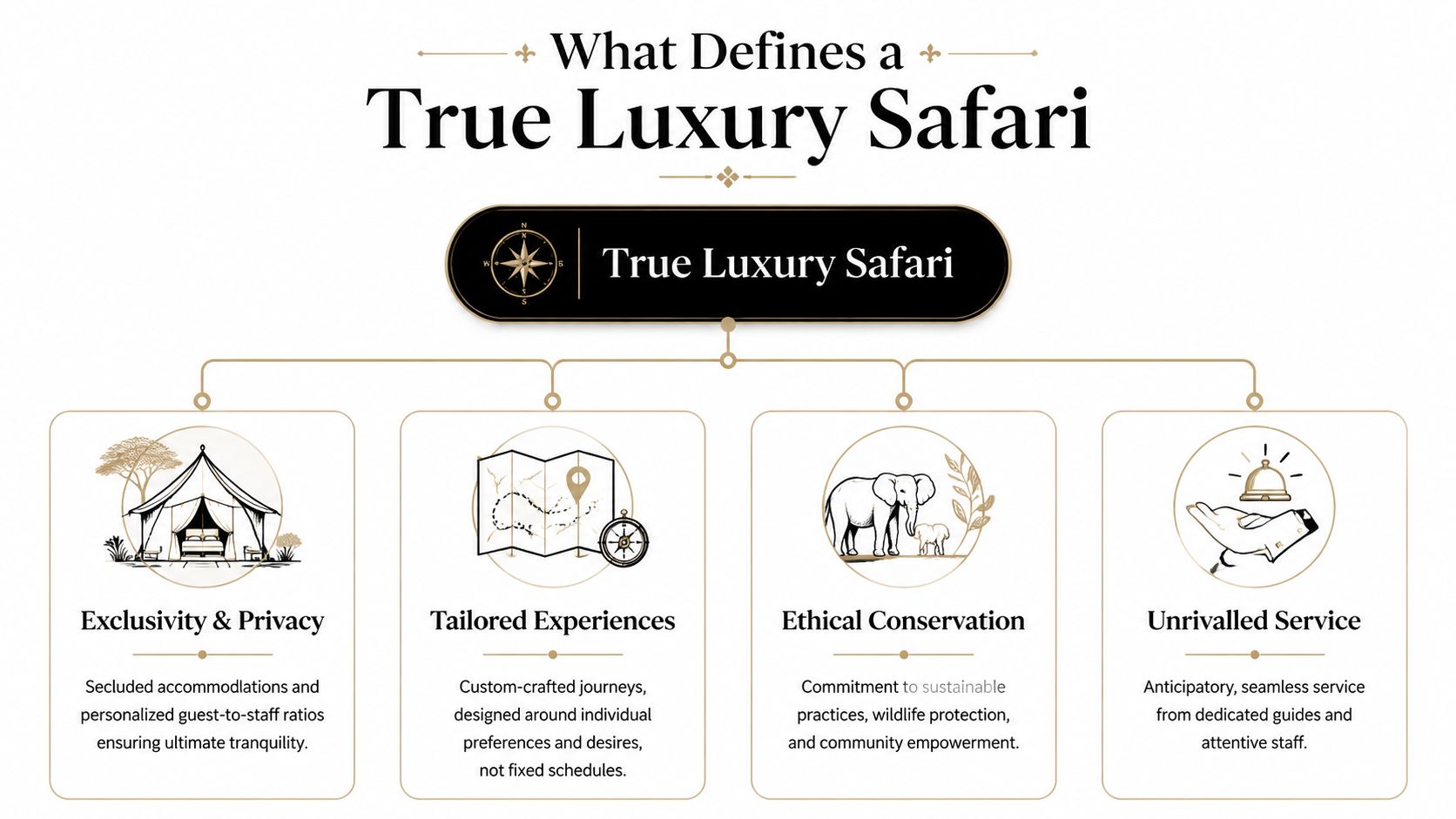
A true luxury safari is not determined by thread count, plunge pools, or an attractive bar setup. Those matter, but they're secondary. The first test is whether the experience gives you space, silence, and control over your time.
The first pillar is private access
The biggest difference between premium and ultra-premium safari is often the land itself. Luxury operators have exclusive access to private concessions, enabling them to limit vehicle density to 3-5 vehicles per 100 sq km, compared to 15-20+ in public parks. This protocol ensures guests experience 60-70% higher predator interaction rates and uninterrupted sightings, as outlined by Asanja Africa.
That one operating reality changes almost everything on the ground. It affects how long you can stay at a sighting, whether off-road driving is permitted, how quickly your guide can react, and whether your photographs include wildlife or a queue of vehicles.
If privacy matters, don't ask only whether a camp is luxurious. Ask where it sits and what rights come with that location.
Practical rule: If your safari shares the same animal sighting with a crowd, you're paying for comfort, not exclusivity.
The second pillar is guide quality
A polished suite can't rescue mediocre guiding. Great safari guides read terrain, light, wind, spoor, and animal behavior in real time. They also know when not to speak. That matters more than many travelers realize.
The best guides shape pace. They don't rush because breakfast is waiting, and they don't linger at a sighting that isn't delivering just because the checklist says it should. In elite camps, the guide often becomes the central figure in the trip, because your memory of safari is built minute by minute through their judgment.
The third pillar is flexibility
True luxury african safari tours are bespoke in the field, not just on paper.
A printed itinerary may say morning drive, brunch, siesta, evening drive. A strong operation treats that as a framework, not a rulebook. If wild dogs are active, you stay longer. If a child in a family group needs downtime, the camp adjusts. If you want to swap a standard drive for a private photographic session or walking safari, the system should support that without friction.
Three signs that flexibility is real:
- Your preferences are known before arrival
- The camp can adapt meal times and activity flow
- You're not forced into communal pacing unless you want it
The fourth pillar is service without performance
The finest safari service is discreet. You notice the effect, not the machinery.
That means your boots are cleaned without being asked. Your preferred drink appears after the drive. Laundry returns quickly in a place where dust is constant. Staff know when to engage and when to disappear. At this level, service isn't theatrical. It's calm, observant, and exact.
A lot of properties market luxury. Far fewer deliver the combination that matters: private land, exceptional guiding, real flexibility, and understated service. That combination is what turns a safari from expensive to rare.
Africa's Premier Safari Regions and Properties
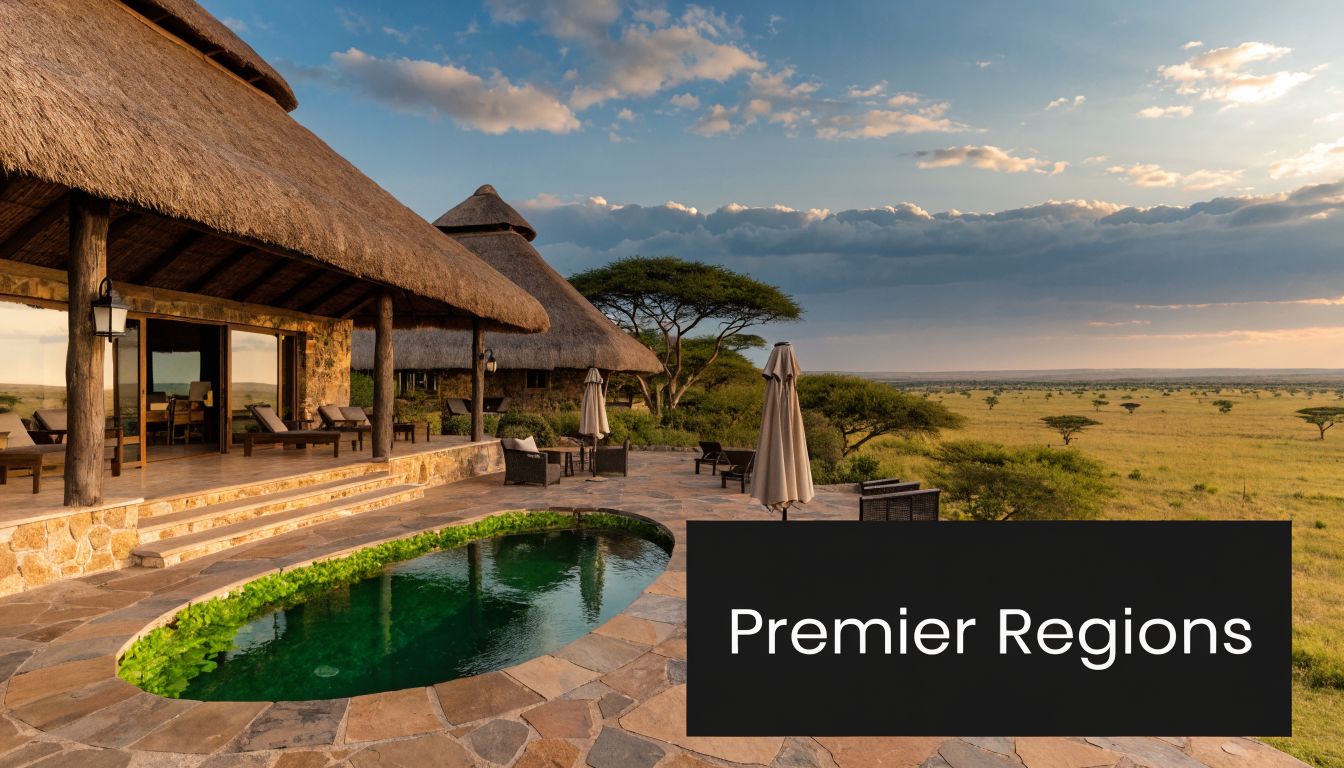
Africa doesn't offer one luxury safari. It offers several distinct archetypes. Choosing well means matching the region to the experience you want, rather than following the loudest name in the market.
East Africa for drama and scale
Kenya and Tanzania remain the emotional reference point for many travelers because the scenery feels archetypal. Wide plains. Big sky. Herd movement. The sense that the story is always in motion.
This is the region for travelers who want the Great Migration atmosphere, strong guiding, and camps that balance old-school safari romance with modern comfort. Flagship names such as &Beyond and carefully placed luxury mobile or permanent camps continue to stand out because they understand that location inside a season matters as much as the property itself.
For Kenya, the Mara still delivers for first-time and repeat safari travelers alike, but camp selection is decisive. Some zones feel over-trafficked. Private conservancies feel entirely different. If Kenya is on your shortlist, this guide to the best luxury safari camps in Kenya is a useful place to refine options.
Botswana for water and privacy
Botswana is often the stronger answer for travelers who care less about spectacle and more about quiet access. The Okavango Delta offers a different rhythm from East Africa. The experience is layered. Game drives, mokoro excursions, helicopter perspectives, and floodplain wildlife all create a safari that feels more textural and more private.
Operators such as Wilderness Safaris excel here because the logistics are complex and the product depends on getting every handoff right. Flights into camp, weight restrictions, water levels, and camp pairings all matter. Botswana rewards careful itinerary design more than almost anywhere else.
Botswana suits travelers who want fewer people, more silence, and a stronger sense of isolation without sacrificing comfort.
Namibia for design and atmosphere
Namibia is for clients who don't need a dense game-viewing schedule to feel rewarded. It's one of the most visually distinct safari destinations in Africa. Desert-adapted wildlife, monumental natural vistas, and architecture that leans into the terrain give it a different character from the bush-focused circuits farther east and south.
I often direct travelers who value photography, design, and a more contemplative pace toward this option. It pairs especially well with those who want a safari experience but do not want every day to revolve around chasing sightings.
What world-class properties have in common
The best lodges aren't just beautiful. They're technically and operationally strong. According to Explorest's overview of top luxury African safari tours, top-tier safari lodges include 1,500+ sq ft suites, private butler service ratios of 1 staff per 1-2 guests, solar power with redundant backups, and on-site Michelin-trained chefs, supporting nightly rates of $1,200-$2,500+ per person.
That matters because remote luxury fails quickly without infrastructure. Guests notice when power systems are unstable, when service staffing is stretched, or when kitchen execution can't match the setting. The best properties solve those issues behind the scenes.
A simple comparison helps:
| Region | Best for | Typical strength | Watch-out |
|---|---|---|---|
| East Africa | Migration and classic safari imagery | Strong wildlife drama and heritage camps | Some high-profile areas can feel busy |
| Botswana | Privacy and varied safari modes | Water-based experiences and low-density feel | More complex internal flight planning |
| Namibia | Landscape and design-led travel | Atmosphere, photography, and space | Not ideal if your only goal is nonstop game density |
One practical note. Even clients traveling with dedicated trip management still appreciate a backup connection option for transit days across multiple countries. A reliable eSIM can be useful for executive assistants, family groups, or anyone coordinating in motion, and affordable roaming across Middle East and Africa is a sensible resource to keep on hand.
Signature Experiences Beyond the Game Drive
The finest safari itineraries aren't built around a checklist of animals. They're built around a sequence of moments that would be difficult to access without the right relationships, timing, and on-the-ground support.
The moments clients remember most
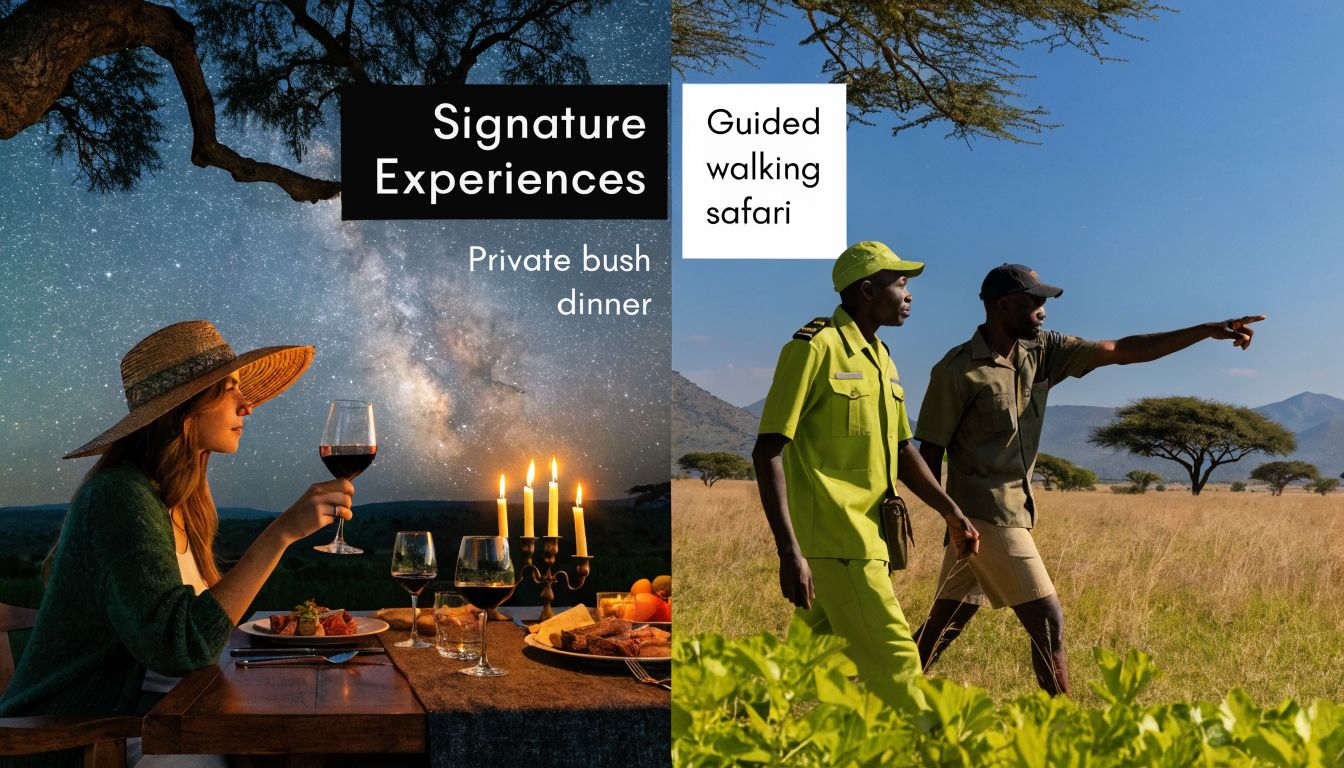
A private bush dinner works when it feels intimate, not staged. The table placement matters. So does the approach. You don't want a dinner that feels like an event assembled for social media. You want one that feels like the wilderness has opened just for you.
The same principle applies to a sunrise balloon over the Maasai Mara or Serengeti. On paper, it's an activity. In practice, it becomes a memory about silence, light, and scale. Done well, the landing breakfast is as polished as a city restaurant, but the emotional center is the view from above.
Other standout experiences often include:
- Helicopter scenic flights: Best used to reveal terrain, not merely to add expense.
- Private conservation access: Time with researchers or anti-poaching teams can change the tone of a trip completely.
- Walking safaris: Ideal for travelers who want immersion and detail rather than only vehicle-based viewing.
- Sleep-outs and star beds: Powerful when privacy and weather align. Not every client enjoys the romance once insects, wind, and exposure are factored in.
What works and what doesn't
Not every “signature” experience is worth adding.
A common planning mistake is overfilling the safari with premium extras that interrupt the natural rhythm of the bush. One helicopter transfer is thrilling. Too many and the trip starts to feel fragmented. One private dinner under the stars is memorable. Repeating the same gesture in every camp weakens it.
The best special experiences are sparing. They punctuate a safari. They shouldn't smother it.
For travelers considering a more cinematic sense of place, this footage offers a strong visual mood reference before planning begins:
Conservation can be the most meaningful luxury
Some of the most affecting safari experiences involve access to the people protecting the terrain. Meeting conservation staff, joining a behind-the-scenes briefing, or understanding how a reserve manages wildlife pressure can add depth that a standard game drive can't provide.
That kind of access changes the emotional value of the trip. It shifts safari from observation to participation. For many seasoned travelers, that's the difference between a beautiful holiday and a journey with weight.
A well-built itinerary usually combines both. The grandeur clients expect and the substance they didn't realize they wanted.
Crafting Your Bespoke Itinerary
The right safari looks different depending on who is traveling and why. A honeymoon, a board-level reset, and a three-generation family journey should not share the same pacing, accommodation logic, or activity mix.
The executive retreat
The executive version of safari is usually shorter than people expect and more focused than most operators propose. It isn't about cramming in every famous park. It's about creating distance from noise, routine, and public access.
That often means one or two camps at most, with easy aircraft links and a strong sole-use or highly private accommodation setup. The best versions include deep privacy, flexible game drives, quiet spaces for reading or thinking, and enough connectivity control to let the traveler choose when to engage and when to disappear. Some clients want a total digital detox. Others want discreet capability without visible intrusion.
A rushed multi-country circuit doesn't work for this traveler. One exceptional concession usually does.
The legacy family journey
Family safari planning is where many luxury providers underperform. They know how to sell romance and spectacle. They're less adept at balancing grandparents, teenagers, younger children, dietary needs, medical considerations, and different energy levels in one coherent itinerary.
That's why the gap matters. A 2025 Virtuoso report notes that 68% of UHNW families seek intergenerational trips, yet very few operators offer bespoke family itineraries, as discussed in Safari Frank's analysis of high-end safari tours in Africa.
For a family safari to work at this level, several things need to happen at once:
- Camp choice must be age-appropriate: Not every camp welcomes children, and not every luxury camp is structurally safe or flexible for them.
- The guiding style must adapt: Children need engagement. Grandparents may need pacing. Parents need confidence.
- Private use often makes sense: Exclusive-use villas or family units reduce stress and allow meals and activities to move on your schedule.
A strong family itinerary usually includes a private concession, short transfer patterns, educational conservation elements, and downtime that isn't treated as failure. Children don't need nonstop programming. They need the right programming.
A family safari succeeds when every generation feels considered, not merely accommodated.
The ultimate romantic escape
Romantic safaris aren't only for honeymooners. They work equally well for anniversaries, vow renewals, or couples who want something less obvious than a beach stay or European grand hotel.
The strongest romantic itineraries focus on privacy and emotional pacing. That might mean a dramatic East African camp followed by a quieter southern African property, or a safari-and-coast pairing that shifts the energy after several early mornings in the bush. The point is contrast.
What tends to work best for couples:
1. A room with genuine seclusion, not just attractive decor.
2. Private dining used selectively, so it still feels special.
3. One defining shared moment, such as a star bed, helicopter scenic flight, or private sundowner in a remote setting.
What rarely works is overprogramming. Romance on safari comes from time, stillness, and surprise. If every hour is scheduled, the trip loses its intimacy.
The itinerary should feel as though it was built around the relationship, not around an operator's inventory.
The Art of Flawless VIP Logistics
A guest lands in Johannesburg after an overnight long-haul. Within minutes, bags are met, immigration is handled with minimal exposure, the onward charter is held if the inbound flight runs late, and the camp is already aware of the revised arrival time. That is what luxury safari logistics look like at the top end. The safari itself may last a week. The operational work behind it starts much earlier.
Most safari marketing sells the visible pleasures. The lodge, the sightings, the table set under lantern light. For high-profile travelers, the trip is judged just as much by what never goes wrong.
A safari can look perfect on paper and still disappoint if the logistics are poorly run. Missed airstrip coordination, public airport bottlenecks, weak handoffs between ground teams, and transfer times built by someone who has never tested the route all drain the experience. In this category, every point of friction is felt.
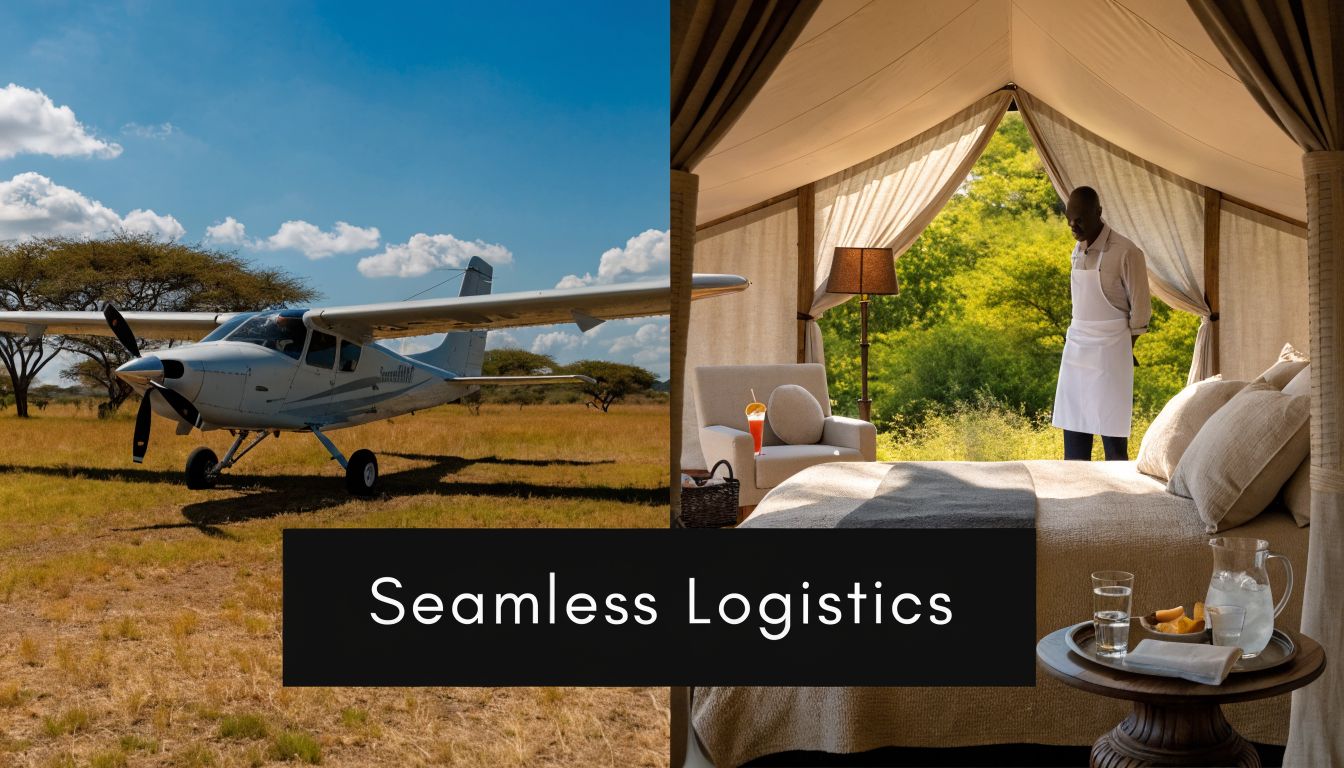
Why the journey matters as much as the destination
The best logistics plans handle four things at once. They reduce complexity without oversimplifying it. They protect privacy at airports, lodges, and in transit. They guard time by building realistic connections rather than optimistic ones. And they keep the service standard intact from the international gateway to the final bush airstrip.
That last point is where many itineraries fall apart. A beautiful camp does not compensate for an exhausting transit day.
For many travelers, the right structure pairs long-haul premium cabins with regional charters or private aviation. Light aircraft are often the best choice for camp-to-camp movement because they cut down road time and preserve the rhythm of the trip. They also come with trade-offs. Soft-sided baggage may be required, payloads shift with weather and altitude, and even excellent operators need contingency plans for late arrivals, runway conditions, or aircraft swaps.
If private aviation is part of the brief, the standard to look for is clear coordination across aircraft, ground handling, customs, and last-mile transfers. Haute Black's private and executive air travel services reflect the level of control serious travelers should expect.
Privacy now shapes the operating model
Privacy is no longer a preference box. For many executives, public figures, and family offices, it is a planning requirement.
That affects how names are shared, who receives manifests, which apps are avoided, and how arrival documents are distributed. A well-run itinerary limits unnecessary exposure points and keeps the operating circle tight. The guest notices very little. That is the mark of good execution.
Security follows the same principle. Some travelers need visible protection. Others need discreet airport escorts, trusted local drivers, controlled transfer windows, and properties that understand confidentiality without turning the trip into a security exercise. The right approach depends on profile, geography, and timing.
Small details decide whether the trip feels effortless
Remote travel magnifies minor errors. A bag packed for a grand hotel may not work on a bush plane. Fragrance, toiletries, and cabin essentials also need a little more thought because of aircraft restrictions and dry air on long-haul sectors. For travelers refining what to carry, Essentia Perfume's fragrance travel guide is a useful reference.
The best logistics never call attention to themselves. Flights depart when they should, backup plans are already in place, and every handoff feels calm because someone competent checked the details before you ever left home. That is the difference between booking a safari and executing one properly.
Planning Your Journey with Haute Black
The planning window for a high-end safari depends on region, season, and how specific you are about camps. If you want the strongest inventory in a prime period, start early. The top properties aren't interchangeable, and the best suites or villas are usually the first to go.
Timing and budget expectations
For ultra-premium safari, budget transparency matters. According to African Safari Mag's overview of the segment, the ultra-luxury African safari segment is defined by nightly rates from US$1,800 to US$5,000+ per person, and the market is projected to reach US$25.7 billion by 2032. That bracket helps frame expectations correctly.
A practical way to think about planning is this:
| Planning stage | What should happen |
|---|---|
| Early inquiry | Define the purpose of the trip, ideal season, and tolerance for movement |
| Shortlist phase | Match regions and camps to privacy, family, romance, or conservation priorities |
| Confirmation stage | Lock in flights, camp inventory, and any specialist access |
| Pre-departure | Finalize visas, health guidance, luggage strategy, and arrival protocols |
The mistake I see most often is treating safari like a normal hotel vacation. It isn't. It's a chain of interdependent moving parts. Camp availability affects flights. Flights affect routing. Routing affects how rested you feel on arrival. Small errors multiply fast.
What sophisticated travelers should prepare early
Before confirming, get clear on these points:
- Your pace preference: Some travelers want one region done thoroughly. Others want contrast.
- Your priorities: Privacy, family suitability, walking access, photography support, or beach extension.
- Your tolerance for light aircraft: Some love them. Some prefer fewer segments, even if it means a different routing logic.
- Your administrative lead time: Passports, visas, health protocols, and specialist permits shouldn't be left late.
If you're comparing air options before the safari itself, even a broader resource like this guide to cheaper business class travel can be useful for understanding where premium air strategy makes sense and where it doesn't. Not every leg needs the same solution.
Why who books it matters
At this level, the advisor matters as much as the property list. The right partner doesn't just reserve camps. They shape the sequence, pressure-test transfer timings, know which rooms are worth the premium, and understand when a famous lodge is the wrong answer for a specific client.
For travelers working through Haute Black, that matters because the platform sits inside a luxury ecosystem built for high-touch execution. As a Virtuoso-affiliated agency with preferred partner relationships at leading properties, the value isn't only upgrades or credits when available. It's access, influence, and recognition. Members also benefit from dedicated advisor support and waived planning fees, which is significant on more complex itineraries.
The advantage is continuity. One team can coordinate the safari, the private air, the city stay before departure, the final beach extension, and the dining or ground arrangements around it. That's what turns a complicated trip into one that feels simple.
A safari of this caliber shouldn't be assembled casually. The destination is extraordinary. The planning should be equal to it.
If you're ready to plan luxury african safari tours with the level of privacy, access, and operational precision they deserve, Haute Black can curate the journey end to end, from camp strategy and preferred partner benefits to private air, VIP arrivals, and every discreet detail in between.
Explore Our Guides

Signature Experiences


