Haute Black Journal
Discover Luxury South American Cuisines

Marlene Azeez
Director, HauteBlack
View all articles →
# Discover Luxury South American Cuisines
May 23, 2026
South America is the most exciting table in luxury travel, not because it is fashionable, but because it is foundational. Potatoes were first domesticated in the Andes of Peru and Bolivia, while corn, chile peppers, tomatoes, beans, squash, avocados, and cacao originated in the broader Americas before reshaping global agriculture, as noted in this overview of South American cuisine's historical roots. If you care about culinary prestige, that should change your frame immediately. You are not arriving at the edge of gastronomy. You are returning to one of its original centers.
That's why the usual “best dishes to try” approach is far too small for serious travelers. South American cuisines reward context, access, and discrimination. The difference between a good trip and an exceptional one is knowing when to pursue a market breakfast, when to insist on a private tasting menu, and when a celebrated dining room is less interesting than an invitation into a chef's sourcing philosophy.
For ultra-high-net-worth travelers, the primary opportunity is not volume. It is precision. You want the right coast, the right altitude, the right season, and the right table.
An Invitation to the World's Most Dynamic Table
Europe still dominates the traditional luxury dining circuit. That's fine for familiarity. It's a mistake if you want novelty with depth.
South American cuisines offer something the old circuit often doesn't. They combine ancient ingredient systems, migration-driven complexity, and a current fine-dining culture obsessed with origin. That mix creates a rarer kind of culinary journey. One meal can be rooted in pre-Hispanic crops, shaped by Iberian technique, sharpened by Japanese precision, and plated with modern restraint. Few regions can do that without feeling contrived.
Why the continent matters now
The serious traveler should stop thinking about South America as a rustic counterpoint to Europe. It is a first-order culinary destination in its own right. Peru, Brazil, Argentina, Colombia, Chile, Ecuador, and others don't share a single food identity. They share a continent, a crop base, and a layered history. Everything else fractures beautifully by region, class, climate, and migration.
That's exactly what makes the continent so rewarding. You can spend one journey pursuing seafood and acid on the Pacific, open-fire ritual in the Southern Cone, and biodiversity-driven tasting menus in the Amazonian sphere, without repeating yourself.
South America doesn't need to imitate European fine dining. Its best chefs already have something more valuable, a pantry with civilizational depth.
What sophisticated travelers should seek
Skip the checklist mentality. Don't chase dishes in isolation. Chase expressions of place.
That means prioritizing experiences like these:
- Private market access: Walk with a chef or specialist who can explain why a single pepper, tuber, or cacao variety matters.
- Closed-door dining: Seek intimate formats where conversation with the host is part of the evening.
- Micro-regional itineraries: Build around coast, highlands, river, or vineyard, not just capitals.
- Fire and ritual: If you want to understand Southern Cone hospitality, you should explore the art of Asado before you book a parrilla-heavy itinerary.
A luxury culinary journey through South America should feel edited, not busy. Fewer stops. Better access. Stronger point of view.
The Three Pillars of South American Flavor
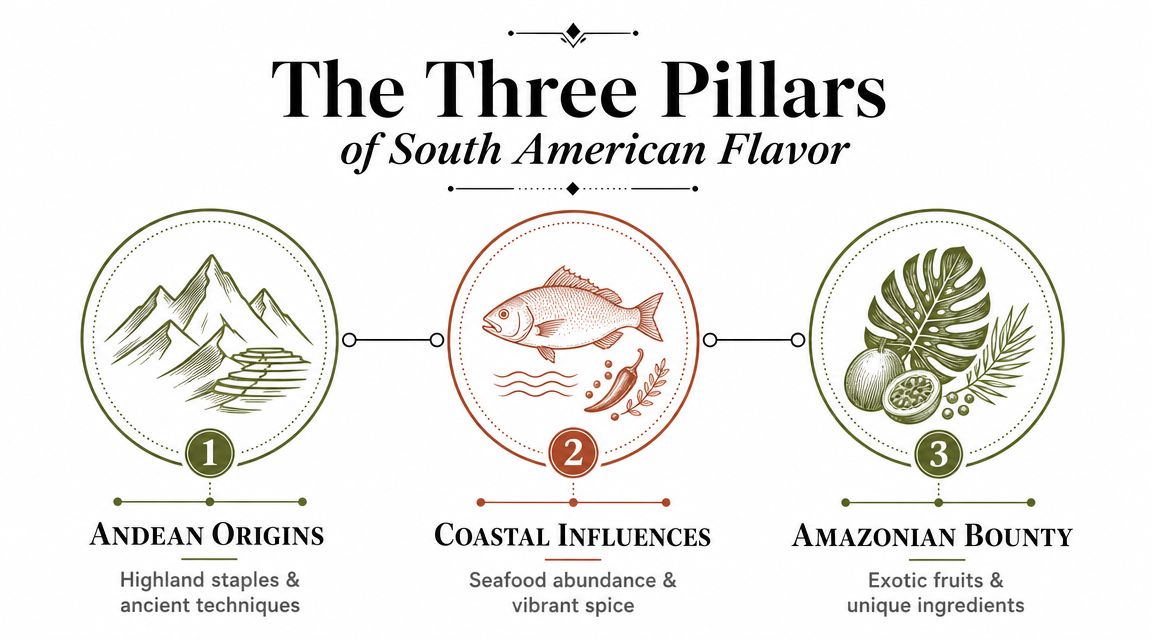
South American cuisines reveal themselves through terrain first. Borders matter less than altitude, coastline, and river basin. If you want to book this continent well, use three pillars as your filter. Andean origins. Coastal influences. Amazonian bounty.
Andean origins
The Andes are the continent's culinary foundation. Altitude, scarcity, preservation, and ritual shaped a food system with extraordinary range and discipline.
Potatoes, corn, native peppers, beans, and cacao all trace deep histories through the Andean world, and the broader record of pre-Columbian foodways remains central to understanding the region's table, as outlined by the Smithsonian's overview of indigenous American food traditions. The point for a serious traveler is clear. Highland cooking is not rustic filler between headline meals. It is the underlying grammar of the continent.
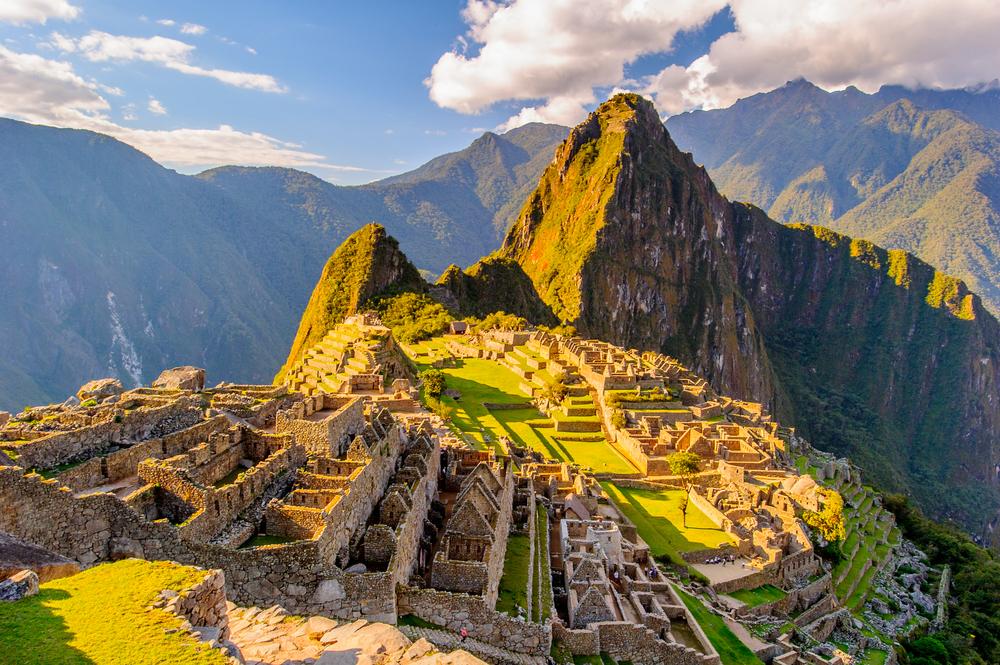
That matters when you book. The strongest Andean experiences are not always the most theatrical. They are the ones that show control over tubers, grains, fermentation, drying, and heat management. If Peru is on your route, pair Lima with the Sacred Valley and a luxury journey to Machu Picchu so the cooking reads in cultural context, not as an isolated tasting menu.
What deserves your attention at the top end: chefs who treat native potatoes, quinoa, giant corn, and ají varieties with precision and restraint.
Coastal influences
The coast changes the rules. Service speeds up. Acidity sharpens. Freshness becomes the measure of competence.
Along the Pacific and Atlantic edges, seafood and rice move to the center of the plate, while citrus, herbs, and chile are used to frame marine sweetness rather than disguise it. The best coastal kitchens understand timing better than spectacle. A fish that came in hours ago requires confidence, cold control, and exact seasoning. It does not need heavy-handed technique.
Book coastal meals with a curator's discipline. Reserve counters or chef-facing tables where you can watch how quickly product moves from delivery to plate. Ask where the catch landed. Choose restaurants that change menus with the market, not places built around permanent signatures for tourists.
Practical rule: On the coast, judge luxury by editing. The fewer unnecessary flourishes on the plate, the stronger the kitchen usually is.
Amazonian bounty
Amazonian cuisine offers the rarest prize in modern luxury travel. Genuine discovery.
Its ingredients still feel unfamiliar even to well-traveled diners. River fish, cassava in multiple forms, forest fruits, aromatic leaves, native peppers, and little-exported botanicals create a pantry that few chefs outside the region can interpret with authority. The World Wildlife Fund's profile of Amazon biodiversity helps explain why the region's food culture carries such unusual variety.
Access matters most. Do not approach the Amazon as an add-on excursion with one themed dinner. Build at least part of the itinerary around guided sourcing, a chef residency, or a lodge with a serious culinary program. Without expert interpretation, many travelers miss the point and reduce the experience to novelty.
Here is the clearest way to read the three pillars:
| Pillar | Core identity | Best traveler mindset |
|---|---|---|
| Andean | Altitude, tubers, corn, preservation | Seek depth, heritage, and technical control |
| Coastal | Seafood, acidity, immediacy | Prioritize timing, product quality, and restraint |
| Amazonian | Biodiversity, river culture, rare produce | Secure access, context, and expert guidance |
Use this framework and the continent becomes legible. More importantly, your itinerary becomes sharper. You stop collecting famous names and start securing the right experiences in the right places.
Signature Dishes Reimagined for the Modern Palate
The classics still matter. What matters more is who is cooking them, where, and with what point of view.
Peru is synonymous with ceviche, Colombia with bandeja paisa, and Brazil with feijoada. Chile's food culture is so bread-centered that people consume about 220 pounds per person per year, according to the Culinary Institute of America's survey of great Latin American food facts. Read that not as trivia, but as evidence. Everyday staples still carry immense cultural weight in South America. That's why even humble formats can become serious fine-dining material.
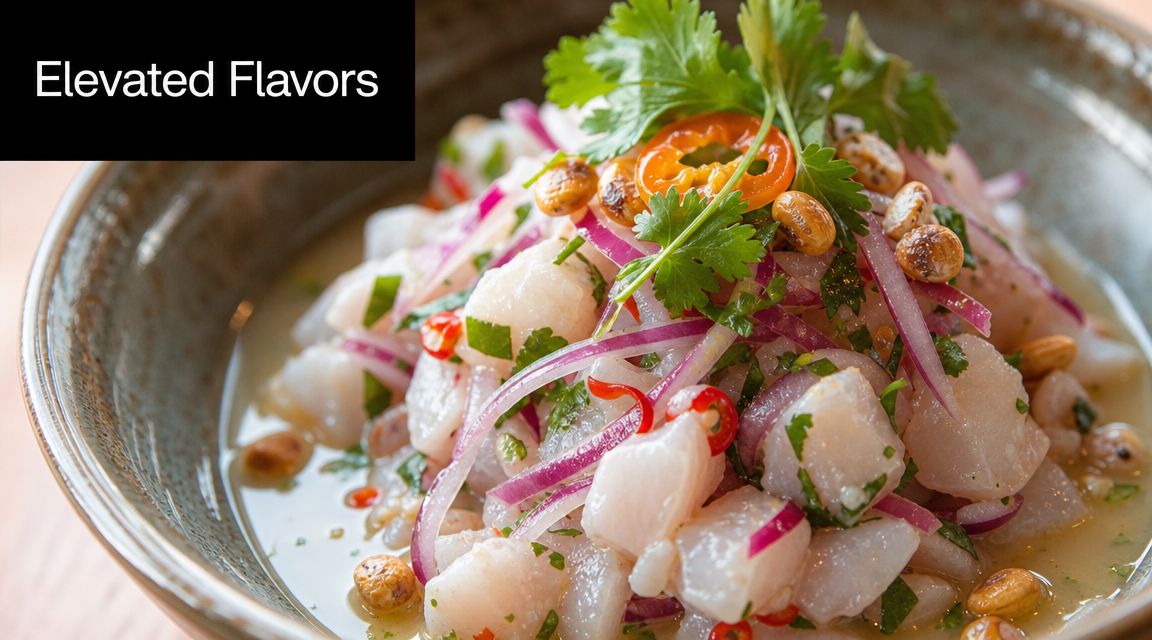
Ceviche as precision
At the low end, ceviche is freshness and acidity. At the high end, it becomes a discipline.
The difference lies in timing, cut, temperature, and the intelligence of the leche de tigre. Great chefs do not merely marinate fish. They calibrate texture. They decide whether the citrus should dominate, whisper, or sit behind aromatics and chile. They think about what the corn contributes. They care whether onion adds lift or intrusion.
If Peru is on your itinerary, pair Lima dining with a broader cultural arc. A traveler combining gastronomy with the Andes should consider luxury travel to Machu Picchu so the culinary story doesn't float free of the civilization that shaped the broader region.
Asado as choreography
Outsiders reduce asado to grilled meat. That misses the point.
At its best, asado is an orchestrated progression. Fire management matters. Sequencing matters. Conversation matters. The asador is not just cooking protein. He is controlling pace and social temperature. In elite contexts, that ritual gets sharpened rather than diluted. Better sourcing, more refined wine pairings, cleaner service, stronger ingredient provenance.
The best modern parrilla experiences preserve the ceremony while removing the heaviness that can make traditional formats feel repetitive. Look for houses that know when to stop. Abundance is not excellence.
Empanadas and feijoada in elevated form
Empanadas become compelling again when chefs stop treating them as nostalgia objects and start using them as vehicles for regional identity. Dough texture, crimping style, filling moisture, and temperature control all matter. A brilliant empanada should never feel like filler before the “real” courses.
Feijoada rewards the same lens. In ordinary hands it can feel dense. In refined kitchens, it becomes layered, balanced, and intentional. The cassava element, the citrus relief, the supporting greens, the depth of the broth. Those details separate comfort from craft.
Use this standard when judging reimagined classics:
- Integrity first: The dish should still be recognizable to the culture that produced it.
- Technique second: Refinement should clarify the dish, not sterilize it.
- Context always: A luxury version should deepen meaning, not just shrink the portion.
That's the right lens for South American cuisines. Respect the original. Reward the chef who makes it sharper.
Navigating the Continent's Top Culinary Regions
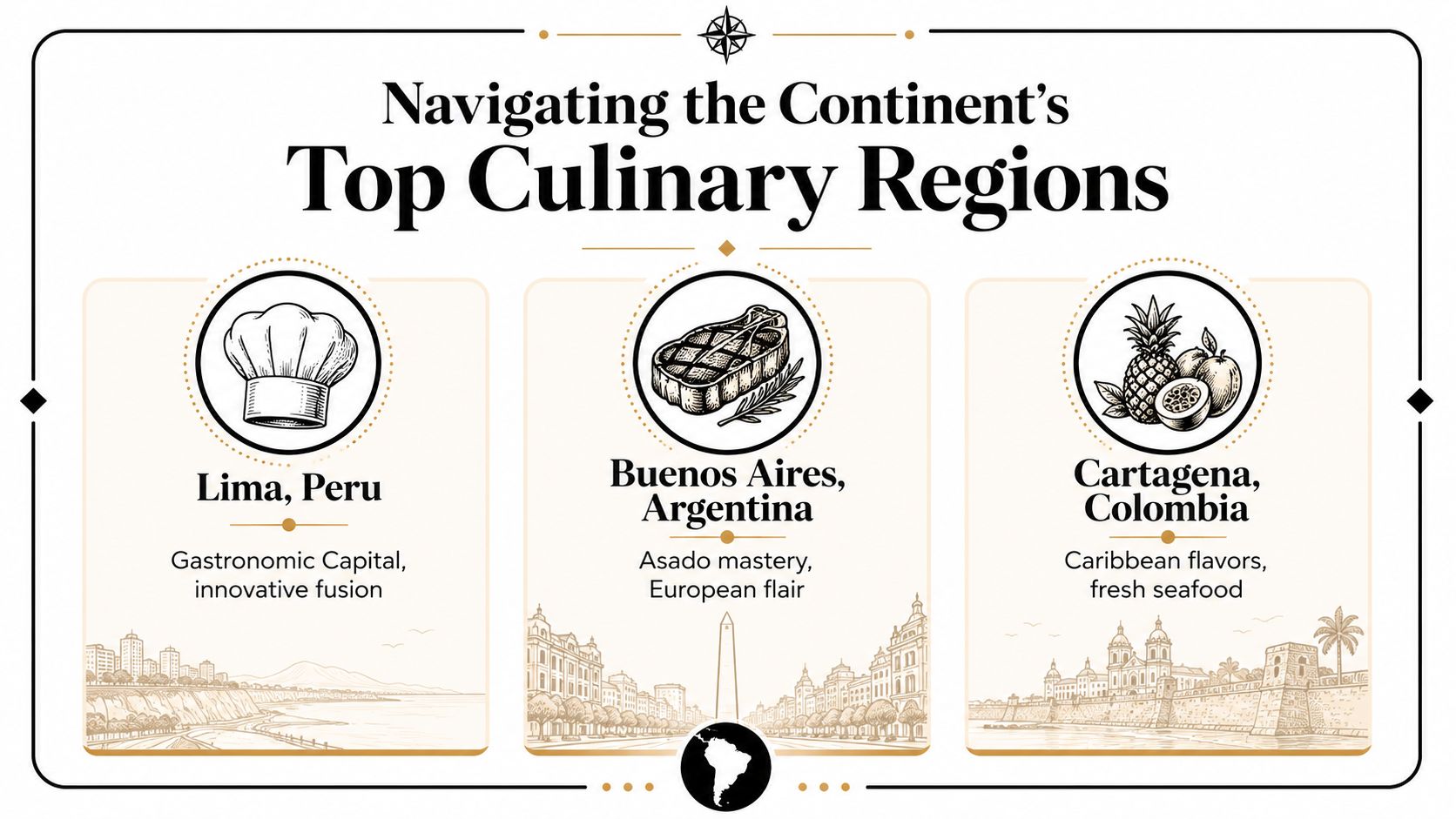
South America rewards precision, not coverage. Build your trip around regions with distinct culinary authority, then buy access properly. Country-hopping for bragging rights produces a thinner experience than committing to a few cities and securing the right tables, private kitchens, and local hosts.
Lima
Start with Lima if your priority is culinary intelligence. No other city on the continent gives you this combination of biodiversity, technical confidence, and global relevance with the same consistency.
What matters here is curation. Pair one headline reservation with one private experience and one market-facing meal that shows how ingredients enter the system. The strongest Lima itineraries move between coastal precision, Nikkei fluency, and contemporary Peruvian tasting menus without feeling scattered. Stay in a district that keeps top dining rooms, serious bars, and discreet driver access within easy reach. Traffic wastes prime dining energy.
If Peru is on the shortlist, a Peru journey that matches cultural depth with culinary ambition gives useful context for building the trip well.
Buenos Aires
Buenos Aires suits travelers who want appetite with polish. It remains one of the best cities in the world for long lunches, late dinners, and wine service that feels lived-in rather than theatrical.
Do not reduce it to steak. The sharper strategy is to divide your bookings between an old-guard parrilla, a modern Argentine kitchen, and a private dining format that opens doors standard reservations never will. The city excels at tempo. You can spend an afternoon in a cellar, reset, then arrive for dinner when the room is finally at its best. For high-demand rooms, plan early and use tools that help you find restaurants that need reservations before your dates tighten.
Cartagena and the wider Colombian coastal pull
Cartagena earns its place for atmosphere, but atmosphere alone is not enough. Use it as a gateway to Colombia's Caribbean-facing culinary culture, not as a standalone trophy stop.
The city works best for travelers who want seafood, tropical acidity, Afro-Caribbean influence, and a looser, warmer style of hospitality than Lima or Buenos Aires. Keep your restaurant list selective. Then add private coastal dining, rum or aguardiente context where appropriate, and access to cooks who understand local product beyond the polished old-city circuit. That is where Cartagena becomes memorable.
Choose the city that matches your standards for access, pacing, and point of view. Reputation matters less than fit.
How to choose among them
Use this table as a decision tool.
| City | Book if you want | Avoid if you want |
|---|---|---|
| Lima | Chef-driven innovation, ingredient depth, and globally relevant tasting menus | A trip built only around tradition and nostalgia |
| Buenos Aires | Fire, cellar culture, elegant ritual, and late-night dining | Tight schedules and quick restaurant turnover |
| Cartagena | Caribbean coastal flavor, private villa dining, and social warmth | Dense tasting-menu circuits and rigid formality |
Beyond the Reservation The Ultimate Culinary Itinerary
South America's finest meals are rarely secured by booking platforms alone. The true prize is access: the private kitchen door, the producer introduction, the after-hours tasting, the river expedition that puts ingredients in their native setting before they ever reach a plate.
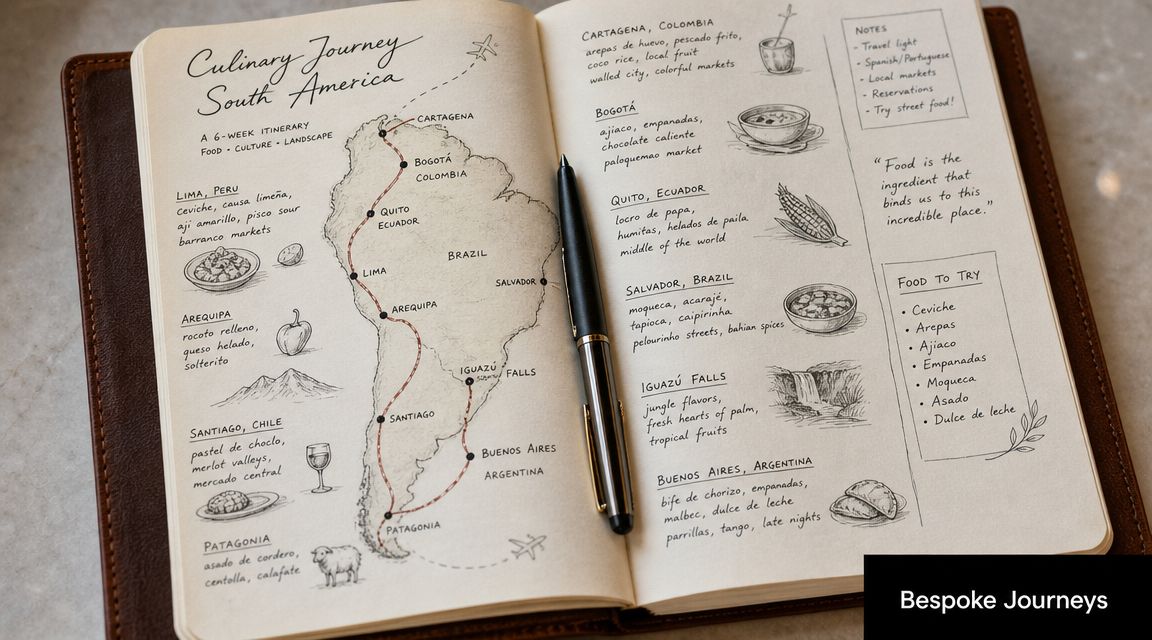
Treat this continent as a collection of culinary jurisdictions, each with its own gatekeepers, rhythms, and forms of prestige. Public dining rooms matter, but they are only one layer. The sharper approach is to pair marquee reservations with experiences money alone does not arrange well without the right fixer: chef residencies, producer visits, private tastings, and remote stays built around ingredient access rather than scenery.
What an exceptional itinerary looks like
Begin in Lima, but use the city with discipline. One major tasting menu is enough if it is world-class. Use the rest of your time for access that changes your understanding of Peruvian cooking: a chef-led market session before service, a private lunch focused on one culinary lineage, or a research-driven tasting built around coastal product, Amazonian ingredients, or Nikkei technique.
Then shift to Argentina and change the tempo. Fire is not the point. Mastery is. The right day combines a serious cellar, time with a producer or asador who can explain wood, cut selection, and timing, and a meal in a setting where hospitality feels cultivated rather than staged.
Reserve your final stretch for the Amazonian sphere. There, the continent's culinary authority becomes unmistakable. A remote program should center local ingredients, local knowledge, and cooks who do not dilute the experience for foreign comfort. Travelers planning far ahead should examine luxury Amazon River tours for a 2026 journey if they want serious access rather than a generic river cruise with better linens.
Reservation strategy for top tables
Top restaurants still matter. They set the benchmark, attract talent, and often provide the cleanest snapshot of a city's current culinary ambition. Book them early, reconfirm them properly, and use a practical tool to find restaurants that need reservations before your dates become rigid.
Then make a tougher decision. Skip any booking that is famous but misaligned with the trip. A closed-door supper with a chef in residence, a private counter with direct interaction, or an invitation-only table in wine country will often deliver more substance than the hardest reservation in town.
The itinerary components worth paying for
Spend on access to people who shape the meal.
- Private chef sessions: Choose these when you want sourcing context, technique, and a menu built around your interests rather than a standardized service.
- Producer and winemaker appointments: Prioritize them in vineyard regions and coastal areas where product quality depends on site, season, and handling.
- Closed-door dining: Best for travelers who value candor, flexibility, and the kind of hospitality that disappears in a crowded room.
- Remote culinary stays: Worth the cost when the property is tied to local ecosystems and local cooks, not when it merely imports luxury signals into isolation.
Pay for judgment, access, and interpretation. Decor is forgettable. A well-arranged meal can define the entire journey.
Essential Dining Etiquette and Customs
Good taste includes behavior. South America rewards diners who understand tempo, social cues, and local generosity.
Reservations and timing
Book coveted restaurants early and reconfirm. Dining culture in many major cities starts later than in the United States, especially for dinner. If you insist on an early table everywhere, you may get convenience but not atmosphere.
Don't rush the table. In many settings, lingering is part of the experience. That lingering has social value. It signals pleasure, not inefficiency.
Service and table conduct
Tipping norms vary by country and venue, so ask your hotel concierge or local fixer for current custom rather than assuming a North American standard. What reads as polished in New York can read as abrupt elsewhere.
Order with curiosity but not performance. If you don't know an ingredient, ask directly. South American fine-dining rooms are often more generous with explanation than their European peers.
For wine service, details matter more than many travelers realize. Glass shape changes aroma release and texture perception, which is why this concise guide on why wine glass size matters is worth reading before a cellar-driven itinerary.
The social ritual that matters most
The key custom is sobremesa, the practice of staying at the table after the meal. In luxury settings, this may happen over coffee, a digestif, or conversation.
That final stretch often reveals more than the meal itself. Hosts relax. Stories emerge. Recommendations become more candid. If you leave the instant dessert ends, you miss part of the culture.
Your Next Great Culinary Adventure Awaits
South American cuisines belong on the short list for anyone who has already done the obvious dining capitals and wants something richer than repetition. The continent offers origin stories, ingredient depth, and modern chef culture in the same frame. That combination is rare.
The smartest approach is selective. Choose regions, not just countries. Choose access, not just reservations. Choose interpreters, not just restaurants. That is how South America shifts from a good food trip to a defining one.
The old luxury map still has its place. But if you want culinary travel with surprise, scholarship, sensuality, and genuine distinction, South America is where the conversation gets interesting again.
The right journey won't look like a list of famous dishes. It will feel like a sequence of private revelations. A market before sunrise. A tasting menu that finally explains its surroundings. A fire-cooked lunch that lasts half the day. A river journey that changes how you think about abundance.
If you want that level of precision, Haute Black can design a tailor-made South American culinary journey with the access, pacing, and insider coordination that these experiences demand. Think private tables, chef introductions, top-suite stays, and effortless logistics built around your palate rather than a template itinerary.
Explore Our Guides


Signature Experiences