Haute Black Journal
Best Time to Visit Mediterranean for Luxury

Marlene Azeez
Director, HauteBlack
View all articles →

The popular answer, “visit between May and October,” is too blunt for a luxury Mediterranean journey. It treats sunshine as the only variable, while affluent travelers are usually buying something more demanding: privacy, reliable operations, comfortable conditions, open inventory, and access that doesn't depend on luck.
The better question is not when the weather is pleasant. It's when your chosen coast, villa, yacht, restaurant, cultural site, and transfer network can perform without excessive heat, congestion, smoke exposure, or seasonal closures. For most high-end itineraries, my answer is clear: late May through June and September through early October offer the strongest balance. September is often the single most versatile month, particularly when warm water matters.
Redefining the Mediterranean Travel Calendar
The Mediterranean calendar is shaped by demand as much as by weather. A 2021 European Commission tourism report identifies July and August as peak months, January and February as the quietest, and reports that roughly 80% of incoming tourists are concentrated in spring and summer (European Commission tourism data and regional analysis). For luxury travelers, that concentration affects premium suites, yacht berths, restaurant tables, airport transfers, and the staff responsible for discreet service.
July and August remain the right choice for specific priorities. They offer the most dependable high-summer atmosphere, the longest daylight, and exceptionally warm water. Across major island destinations including Crete, the Balearic Islands, the Ionian Islands, and the southern Aegean, temperatures are around 30°C, or 86°F. A classic beach-and-yacht itinerary can work well in these months, particularly when school calendars or major events dictate fixed dates.
The trade-off is access. During the concentrated summer rush, preferred rooms disappear earlier, quiet anchorages become harder to secure, and restaurant or cultural access requires more advance planning. High demand also leaves less room to recover when a supplier changes plans or an itinerary needs to move indoors.
For an ultra-luxury itinerary, shoulder season is the stronger operating window. Late spring and early autumn typically give your advisor more room to secure a preferred suite, a calm anchorage, a private guide with genuine local relationships, or a table at the hour you want. Properties and operators also have greater flexibility before or after peak demand.
The best time to visit the Mediterranean for luxury travel is therefore a risk-management decision. Choose the period that protects usable time outdoors, privacy, and supplier responsiveness rather than maximizing heat. The right date reduces forced compromises across the entire itinerary.
HauteBlack's Summer 2026 Ultra-Luxury Destinations AI Visibility Index reports that 76% of advisors say clients are actively seeking shoulder-season travel to avoid crowds (HauteBlack's luxury travel insights). The implication is practical. Travelers are selecting periods when destinations can deliver discretion, space, and attentive service without competing with the full volume of summer demand.
Decoding Regional Climates and Micro-Seasons
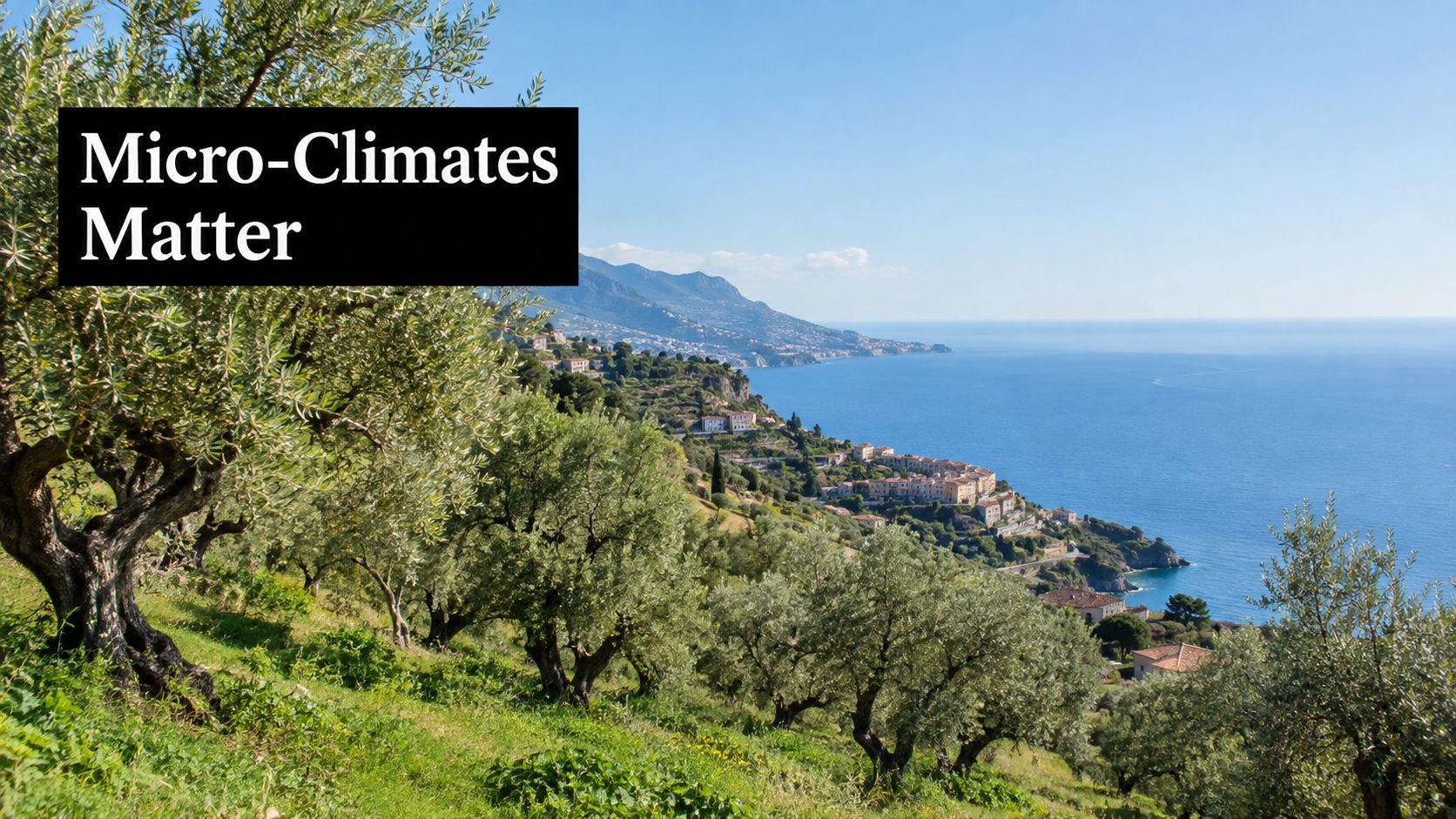
The Mediterranean isn't one climate, and a single calendar recommendation will always miss important distinctions. The Balearic Islands, French Riviera, Amalfi Coast, Greek Isles, southern Türkiye, and Levantine coast each produce different combinations of heat, wind, sea temperature, rainfall, and seasonal infrastructure.
Western Mediterranean timing
The western basin is exceptionally appealing from late spring through early autumn. The Balearic Islands suit travelers who want polished beach clubs, villa privacy, and easy access to stylish ports. The French Riviera works particularly well in late spring and early fall, when outdoor dining and coastal touring are more comfortable than during the height of summer.
Amalfi, Capri, Sicily, Provence, and the Spanish coast each reward different timing. If you're prioritizing long lunches, hillside drives, and walking through historic centers, late May, June, and September are more forgiving than the hottest part of July and August. Coastal breezes can moderate conditions, but inland excursions and exposed archaeological sites may still feel demanding in midsummer.
For broader seasonal planning, the HauteBlack guide to European weather in March is useful when considering an itinerary outside the core coastal season. March is a different proposition from summer, but it can suit travelers whose priorities are cultural access, private touring, and quiet rather than swimming.
Eastern waters in the fall
The eastern Mediterranean often holds its warmth later. The Greek Isles, southern Aegean, Crete, Cyprus, and the Levantine coast can remain compelling into early autumn, and regional coverage indicates that eastern waters may stay warm later than western hotspots (regional Mediterranean timing guide). That distinction matters for yacht clients who want to swim every day rather than enjoy scenic cruising.
September is especially strong because the sea remains inviting while land conditions become easier to manage. One travel source places September coastal temperatures around 75 to 85°F, or 24 to 29°C, with 12 to 13 hours of daylight, sea temperatures around 74 to 78°F, or 23 to 26°C, and Mediterranean summer sea-surface temperatures reaching 29°C in the Levantine Sea (Mediterranean travel timing and sea-temperature guide).
Match the month to the experience, not the country. Choose June for a western itinerary built around active coastal touring and reliable beach conditions. Choose September for eastern island-hopping, warmer water, and a quieter rhythm. Choose early October only when your advisor has confirmed that the exact properties, ports, restaurants, and marine services you need are still operating.
Peak Season Versus Shoulder Season Trade-Offs
Peak season offers the Mediterranean at its most energetic. The water is at its warmest, beach clubs are fully active, and the calendar is packed with social activity. It also creates the greatest pressure on premium inventory and the service ecosystem around it.
The shoulder season is more strategic. In much of the region, more than 80% of annual rainfall falls between September and April, while summer is typically hot, dry, and comparatively calm (Mediterranean climate research). Late spring and early fall therefore combine warm coastal conditions with a lower rain risk than winter, without requiring every daytime activity to take place in peak heat.
Luxury Travel Window Comparison
| Feature | Peak Season, July-August | Shoulder Season, May-June, September-October |
|---|---|---|
| Crowding | Highest demand, particularly in major ports, islands, beaches, and cultural sites | Lower congestion and a calmer pace, though popular dates and destinations still require advance planning |
| Sea temperature | Warmest water and longest high-summer swimming conditions | Warm coastal water, with September especially strong for bathing comfort |
| Daylight | Maximum daylight for beach, yacht, and nightlife schedules | Long, usable days, especially in late spring and early fall |
| Land comfort | Greater heat stress, particularly inland and in exposed historic areas | Better conditions for walking tours, villa living, outdoor dining, and cultural touring |
| Luxury inventory | The most competitive period for suites, villas, berths, and preferred dining | More flexibility for room categories, routing, and bespoke requests |
| Service pressure | Staff, ports, roads, and restaurants operate under their greatest seasonal load | Suppliers generally have more breathing room for customized arrangements |
| Operational risk | Greater exposure to extreme heat and wildfire disruption in vulnerable areas | Lower heat burden, but October may bring reduced seasonal services in some locations |
My preference is late May through June for travelers who want fresh scenery, active touring, and a fully functioning summer infrastructure before the heaviest demand arrives. I favor September for couples, yacht clients, and families who care most about warm water and a relaxed atmosphere. Early October can be excellent for culture, food, and privacy, but I won't recommend it blindly for a marine itinerary.
Practical rule: Select the region first, then the month. A perfect September itinerary in the eastern Mediterranean may be a better fit than a generic August itinerary across the western basin.
Navigating Summer Heat and Climate Risks
For a luxury traveler, heat is an operational risk, not merely an uncomfortable forecast. It can reshape an entire day: a private guide may move a ruins visit to early morning, a vineyard lunch may lose its appeal, and helicopter transfers may require closer attention to local conditions. Wildfire smoke can also make a spectacular coastal view unusable.
As noted earlier, the 2025 summer reporting on Mediterranean wildfires recorded repeated heat alerts, severe temperatures, and evacuations across popular destinations. Those events will not disrupt every August itinerary, but they make August a poor default for plans that depend on outdoor continuity. Treat the month as a routing decision, not an automatic luxury season.
Build for resilience
Assess climate resilience at both the property and destination level. A villa with shaded outdoor areas, effective air conditioning, a pool, and indoor dining gives you more options than a dramatic but exposed residence with few alternatives. Hotels deserve the same scrutiny. Reliable climate control, discreet service corridors, shaded terraces, and indoor wellness facilities help preserve privacy and comfort when outdoor plans change.
Ask your advisor to confirm backup arrangements before arrival. A property should be able to shift dining indoors, replace an exposed excursion, and maintain discreet service without making the change feel improvised.
Daily scheduling matters just as much. Put strenuous walking, archaeological touring, and inland drives in the coolest part of the day. Reserve the afternoon for the sea, a shaded spa treatment, an indoor private lunch, or time at the villa. Keep one meaningful alternative ready for every high-exposure activity.
Decide when not to go
I advise clients to avoid vulnerable southern European destinations during the height of August when their plans rely on uninterrupted outdoor activity. September often preserves warm bathing and sailing conditions with a more manageable climate on land. May and June can suit travelers who prioritize touring before the most intense summer heat.
Climate risk should shape the route as well as the calendar. Avoid a multi-coast itinerary with no flexibility between regions. Leave room to change the sequence, shift a shore day, or substitute a property if smoke, road closures, or heat alerts affect the original plan.
That flexibility protects a significant investment in time, privacy, and comfort. For high-value travel, the shoulder season is often the stronger risk-management choice because it gives your team more room to preserve the experience when conditions change.
Strategic Timing for Yachts and Private Islands
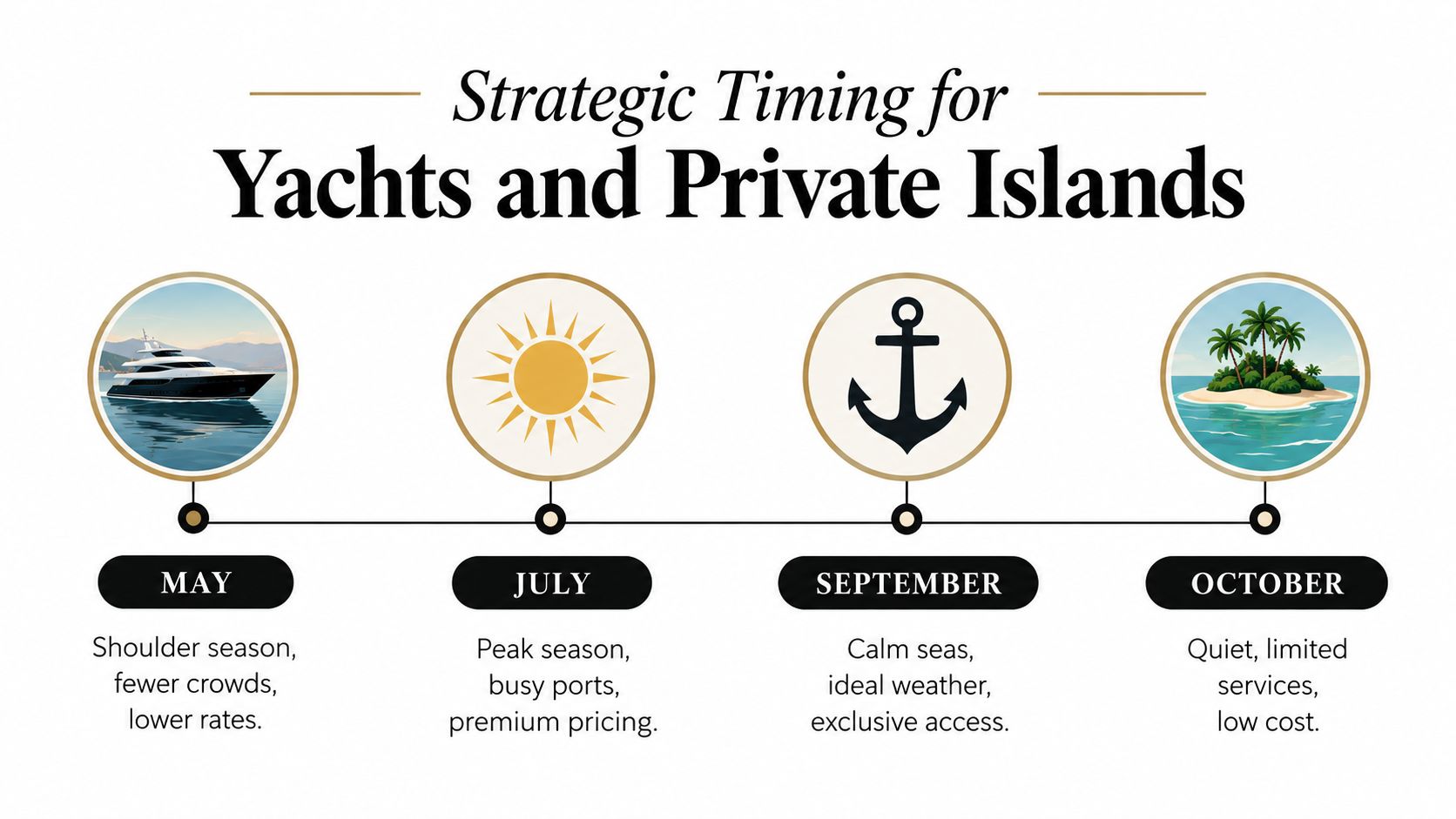
A yacht charter magnifies seasonal differences. In July and August, the Mediterranean delivers warm water and a full social calendar, but popular marinas and anchorages operate under intense demand. A shoulder-season charter can offer more serenity, easier maneuvering through the itinerary, and greater scope for the captain and crew to respond to your preferences.
Plan the charter around the water
Start with your preferred swimming conditions, then match the route. September is my strongest recommendation for a yacht journey when warm seas, comfortable shore excursions, and privacy all matter. The eastern Mediterranean is particularly attractive at this point, with Greek islands, Crete, southern Türkiye, and the Levantine coast offering a strong late-season proposition.
Late May and June suit clients who want a more active itinerary. The weather generally supports long coastal days, while the season allows a captain to design a route that feels less dominated by the most crowded ports. It's also a good window for combining a yacht with private mainland touring, villa stays, and restaurant reservations that would be harder to coordinate during the height of summer.
Protect the marine logistics
Your advisor should confirm more than the vessel. Review marina availability, provisioning, fuel arrangements, tender access, shore transport, water toys, dive support, and the operating dates of the restaurants and beach clubs you care about. A late-season island can be beautifully quiet but offer limited services. That trade-off works for an experienced crew with strong provisioning plans, not for a traveler expecting every venue to be open.
Use the HauteBlack guide to private island vacation rentals when deciding whether a private island stay should anchor the itinerary or serve as a finale. A yacht can provide mobility, but a private island or estate provides control over the environment. Combining both requires careful transfer planning and an honest view of seasonal availability.
Choose the vessel according to the itinerary. A larger yacht can offer more space and onboard amenities for a multi-generational group, while a smaller yacht may access tighter anchorages and feel more discreet. Either way, send your priorities to the captain early: swimming, water sports, photography, restaurants, historic sites, or uninterrupted time at anchor. The best charter is the one that makes those priorities easy to execute.
Bespoke Events and Cultural Access
The Mediterranean's highest-value experiences rarely follow the standard tourist calendar. A private harvest dinner at a Tuscan estate, an intimate tasting with a producer, a closed-door museum visit, or an art preview may depend on a narrow window unrelated to beach weather.

Consider a September journey through Tuscany, Provence, and the Greek Isles. The itinerary might begin with a private estate lunch, continue through early autumn food and wine programming, then move to the coast for warm-water sailing. A generic “summer Mediterranean” brief creates avoidable risk. It can miss experiences that require precise coordination with estates, chefs, galleries, and cultural institutions.
Let the private calendar lead
Start by identifying the access that matters most. Is it a chef's availability, a seasonal ingredient, a private museum appointment, a major cultural event, or a discreet social gathering? Once that priority is fixed, the travel dates become easier to set.
Major events can change a destination's availability across every category. The HauteBlack Monaco Grand Prix guide shows why event-led travel requires an access strategy, not a simple hotel search. During globally watched events, the right room, transfer, viewing position, and dining reservation depend on relationships and early timing.
The same rule governs culinary travel. A private chef's truffle hunt, a vineyard dinner, or an estate visit may carry more meaning than another highly photographed restaurant. These moments require the advisor to work around the host's calendar, rather than forcing the host into a standard travel window.
The video below offers additional visual context for the atmosphere and lifestyle many travelers seek from a Mediterranean journey.
The most exclusive itinerary is often built backward from the one invitation you can't replace.
Book that anchor experience first. Then arrange the hotels, transfers, yacht movements, and dining around it. This sequence protects access and gives the journey a genuine narrative, rather than a collection of prestigious addresses.
Executing Your HauteBlack Mediterranean Journey
A successful Mediterranean itinerary begins with a decision framework, not a destination list. Define your tolerance for heat, your need for warm water, your preferred level of social energy, and the experiences that must happen on exact dates. Then select the region and season that support those priorities.
For most clients, I'd structure the planning process around four safeguards:
1. Choose the primary window. Use late May through June for active touring and early summer energy. Choose September when swimming, yachting, and privacy matter most. Consider early October for cultural and culinary travel only after confirming seasonal operations.
2. Reserve first. Secure the villa, yacht, private aviation, helicopter movements, major event access, and signature dining before filling the itinerary with flexible activities.
3. Build an operational buffer. Allow room for weather changes, altered sailing conditions, delayed transfers, and smoke or heat disruption. A resilient plan should have credible alternatives, not vague promises to “see what happens.”
4. Use preferred relationships intelligently. A Virtuoso-affiliated advisor with preferred partner access at properties such as Four Seasons and Aman may be able to request upgrades, resort credits, flexible benefits, and VIP recognition when available. Those benefits don't replace good timing, but they can reduce friction when demand is high.
HauteBlack offers bespoke itineraries, VIP recognition, private villas and estates, Haute Jets private aviation, first-class and helicopter transfers, and concierge dining and transport. Its advisors can coordinate multi-destination journeys for couples, families, executives, and private members who need one accountable point of contact across land and sea.
Even when July or August is unavoidable, expert planning can improve the outcome. Early departures, shaded touring, carefully selected properties, private transfers, and flexible routing all protect the experience. The advisor's value lies in making those decisions before the pressure appears, then having the relationships to adjust the plan if conditions change.
The Mediterranean doesn't need to be visited at its busiest to be enjoyed at its finest. For clients who value calm seas, open doors, personal space, and dependable execution, September is the strongest default, with late spring and early summer close behind.
HauteBlack designs bespoke Mediterranean journeys around your preferred access, comfort level, yacht plans, private aviation needs, and cultural priorities. Visit HauteBlack to begin a date-led itinerary built for privacy, operational resilience, and the experiences you won't find through a standard booking channel.
Explore Our Guides


Signature Experiences


