Haute Black Journal
All Inclusive African Safari: Bespoke 2026 Luxury Guides

Marlene Azeez
Director, HauteBlack
View all articles →
# All Inclusive African Safari: Bespoke 2026 Luxury Guides
May 10, 2026
You're likely at the point where a standard safari itinerary feels too blunt an instrument. You don't want a fixed sequence of camps, meals, and game drives because that's how the package was designed. You want the opposite. You want the trip to feel effortless on your side and highly choreographed behind the scenes.
That's where the phrase all inclusive african safari tends to create confusion. In the mass-market sense, it can suggest a rigid product. In the luxury tier, it should mean something else entirely. It should mean that the operational essentials are handled so cleanly that your advisor and on-site team can focus on what matters: timing, privacy, access, pace, and the quality of each moment.
The difference between a good safari and an extraordinary one usually isn't whether the wildlife appeared. It's whether the journey felt intuitive. Whether your guide knew when to linger and when to move on. Whether the camp matched your temperament. Whether a sundowner stop felt staged or inevitable, as if the surroundings had arranged themselves for you.
Beyond the Brochure An Introduction to the Luxury Safari
You wake before dawn, coffee arrives without asking, and the morning drive leaves exactly when the bush is starting to stir. By sunset, dinner appears in a place that felt impossible an hour earlier. From the guest side, it feels effortless. On the operating side, it is precise work.
That difference is the point. A luxury safari is not defined by a dramatic sighting alone or by how photogenic the camp looks in low light. It is defined by how well the trip holds together. Flights connect cleanly. Guides are chosen for fit, not availability. The room you return to after a long drive feels right for your pace, your privacy expectations, and the kind of trip you want.
Why all inclusive means something different at the top end
At this level, all-inclusive is not shorthand for a preset holiday. It is the operating framework that makes customization possible. Once accommodation, guiding, meals, transfers, and reserve logistics are already handled inside one coordinated structure, the trip can flex around the guest instead of forcing the guest to fit the itinerary.
That is where first-rate safari design separates itself from brochure luxury. A private vehicle can stay out longer because the morning has real momentum. Lunch can be held back after a big sighting. A walking safari can be added because the guide knows the conditions are right and the guests will appreciate the shift in pace. The more competently the basics are covered, the more freedom there is at the top.
All-inclusive works best when it removes friction and creates room for judgment.
What discerning travelers are actually buying
The primary purchase is not a package. It is alignment.
Safari is one of the few travel experiences where small operational choices shape the entire result. The timing of an air transfer affects your first game drive. The guiding style affects how you experience every sighting. The character of the camp matters as much as its design. A beautiful property with mediocre guiding can disappoint quickly. A simpler camp in the right concession, with the right guide and the right pacing, can feel extraordinary.
For travelers still clarifying their preferences, Haute Black's guide for first-time safari travelers is a useful starting point before comparing camps and regions.
Brochures sell atmosphere. The best safari operators sell control, access, and judgment. That is what turns an all inclusive african safari from a convenient booking model into the foundation for something highly personal.
Defining Luxury All Inclusive What Is Truly Covered
Most safari properties describe themselves as all-inclusive. That label is too broad to be useful unless you ask what is included in the price.
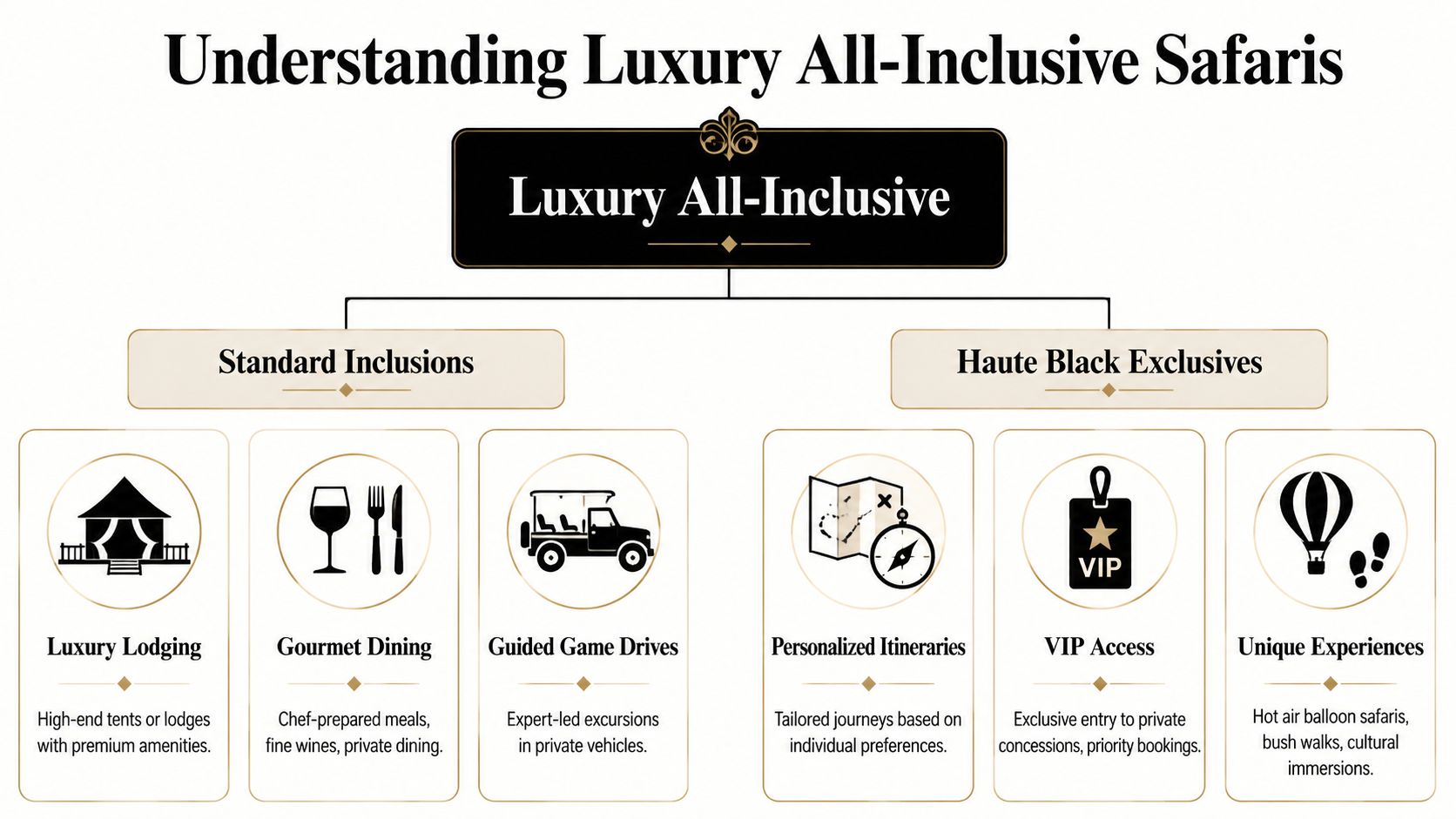
At the premium end, a proper all-inclusive safari usually wraps the core safari experience into one rate: lodging, meals, local beverages, guiding, shared or scheduled activities, park or conservation charges, and transfers from nearby airstrips or airports. The point isn't abundance for its own sake. The point is that once you arrive, the trip should run without a constant drip of small decisions and surprise charges.
The baseline inclusion model
Premium all-inclusive African safari packages typically structure daily rates between $4,950–$7,200 for 7–10 day experiences, bundling activities, guides, meals, fees, and transfers to reduce hidden costs and transaction friction, as detailed in African Safari Mag's guide to all-inclusive safari pricing and inclusions.
That bundled model generally includes:
- Accommodation in a lodge, tented camp, or villa-style suite
- Chef-prepared meals across the day
- Safari activities, often including game drives and sometimes walking or water-based experiences
- Guiding staff, which may include a guide and tracker pairing
- Park entrance fees and conservation levies
- Local transfers tied to the itinerary
Where luxury draws the line
An experienced traveler should still assume there may be exclusions. Premium alcoholic labels, helicopter excursions, private vehicles, exclusive-use dining setups, spa treatments, and specialist experiences often sit outside the standard rate. That isn't a flaw. It's usually a sign that the operator hasn't blurred essential inclusions with elective upgrades.
Practical rule: Ask for two lists, not one. "Included" and "possible additions" should both be explicit before you book.
That clarity matters because many guests don't object to spending more. They object to spending blindly.
What separates standard all-inclusive from luxury inclusive
The distinction isn't just the thread count or wine list. It's how the inclusion framework supports comfort and control.
| Layer | Standard all-inclusive | Luxury inclusive |
|---|---|---|
| Guiding | Shared schedule | Guide match, pace sensitivity, stronger briefing |
| Dining | Set meal service | Flexible timing, tailored preferences, private setups |
| Activities | Fixed menu | Space for private arrangements and experience shaping |
| Logistics | Included transfers | Better coordination across camps, airstrips, and arrivals |
| Budgeting | Fewer on-trip costs | Transparent planning with cleaner upgrade decisions |
What works and what doesn't
What works is a camp or operator that includes the safari essentials generously, then identifies optional extras clearly. What doesn't work is an itinerary that looks all-encompassing but forces a guest into repeated decisions on the ground about vehicle privacy, premium beverages, or whether a key experience is suddenly "supplementary."
A well-built all-inclusive African safari should feel settled from the first briefing onward. You should know what's covered. You should know what's flexible. And you should never feel you're discovering the actual trip one invoice at a time.
Choosing Your Landscape The Premier Safari Destinations
A couple lands in Africa expecting an "all-inclusive safari" to funnel them into a standard circuit. Instead, the right country choice determines whether breakfast follows a gorilla trek in misty bamboo, a silent mokoro drift through the Delta, or a private sundowner with the Mara spread out below. At this level, the destination is not a preset package. It is the framework that lets the trip become personal.
Botswana for privacy and stillness
Botswana suits travelers who want fewer vehicles, more space, and a quieter style of luxury. The Okavango Delta changes the rhythm of safari. Water shapes the day, from mokoro outings to boat safaris and game drives that feel measured rather than performative.
This is a strong fit for clients who do not need a checklist of sightings to feel satisfied. Botswana rewards patience, discretion, and good camp selection. The trade-off is simple. It is rarely the place for the broadest mix of activities or the easiest price point, but it can deliver rare calm and serious privacy.
Kenya for romance and spectacle
Kenya has polish, visual drama, and a social ease that works well for couples and first-time safari travelers who still want a refined experience. The Masai Mara delivers classic East Africa at full scale, especially when paired with a well-run private conservancy where the guiding is sharper and the pace is more controlled.
Kenya is often my recommendation for travelers who want an iconic safari without feeling processed through an iconic itinerary. It also gives operators room to personalize well within an all-inclusive structure, whether that means private bush breakfasts, photographic focus, or a gentler pace between drives.
For broader inspiration beyond the safari circuit, Haute Black's guide to places to visit in Africa is a useful starting point.
Tanzania for scale and depth
Tanzania feels expansive from the start. The Serengeti has a sense of distance that changes how the safari unfolds, and the Ngorongoro area adds a completely different mood. If a client wants one journey to hold several distinct settings, Tanzania usually does that better than anywhere else.
It also rewards time. A rushed Tanzania itinerary can feel like too much ground and not enough immersion. A well-built one gives you migration energy, strong resident game, and then a quieter southern or western component for contrast.
South Africa for polish and variety
South Africa works well for travelers who want safari to sit inside a broader luxury trip rather than stand alone. You can combine Cape Town, the Winelands, and a private reserve near Kruger without the journey feeling disjointed.
That flexibility matters. For some guests, the best safari is not the most remote one. It is the one that balances game viewing with design, dining, spa time, and straightforward logistics. South Africa is often the smartest choice for clients who want a high-comfort introduction to safari or a multi-generational trip where everyone needs something slightly different.
Rwanda for one singular encounter
Rwanda is about concentration, not variety. Gorilla trekking is the center of gravity, and it should be treated that way. The experience is physical, emotional, and unusually intimate.
This choice suits travelers who value one profound wildlife encounter over a long list of sightings. The surrounding experience matters too. After a demanding trek, the quality of lodge service, recovery time, and onward planning makes a noticeable difference. In the best hands, an all-inclusive structure supports that beautifully because the trip can be built around one extraordinary priority instead of forcing equal weight on every day.
Choose the country that fits your pace, privacy preferences, and appetite for variety. That is how an all-inclusive safari starts to feel bespoke.
A simple matching guide
- Choose Botswana if privacy, stillness, and water-based safari matter most.
- Choose Kenya if you want romance, visual drama, and classic East African rhythm.
- Choose Tanzania if you prefer scale, longer itineraries, and a stronger sense of progression.
- Choose South Africa if you want safari combined with cities, wine, and easy logistics.
- Choose Rwanda if one unforgettable encounter matters more than breadth.
The best choice is the one that supports the style of trip you want. Once that foundation is right, all-inclusive stops feeling restrictive and starts giving you room to customize the experience with precision.
The Haute Black Signature Custom Itineraries and VIP Access
The weakness in many all-inclusive safari offerings is easy to spot once you've traveled at a high level elsewhere. The framework is comfortable, but the edges are stiff. Meals happen when the lodge says they happen. Drives leave when the camp says they leave. Additions exist, but they feel bolted on rather than designed into the trip.
That's precisely the gap at the top of the market. A documented weakness in standard safari content is the lack of meaningful personalization inside all-inclusive structures. The opportunity is clear: travelers at this level want spontaneity, privacy, and control without sacrificing the clarity of a bundled journey. The source material around this gap specifically notes demand for flexible itineraries with private aviation, bespoke dining, and tiered service levels in response to that rigidity, as discussed in this analysis of all-inclusive safari flexibility gaps.
What customization should actually look like
Real customization on safari isn't a longer questionnaire before departure. It shows up in the field.
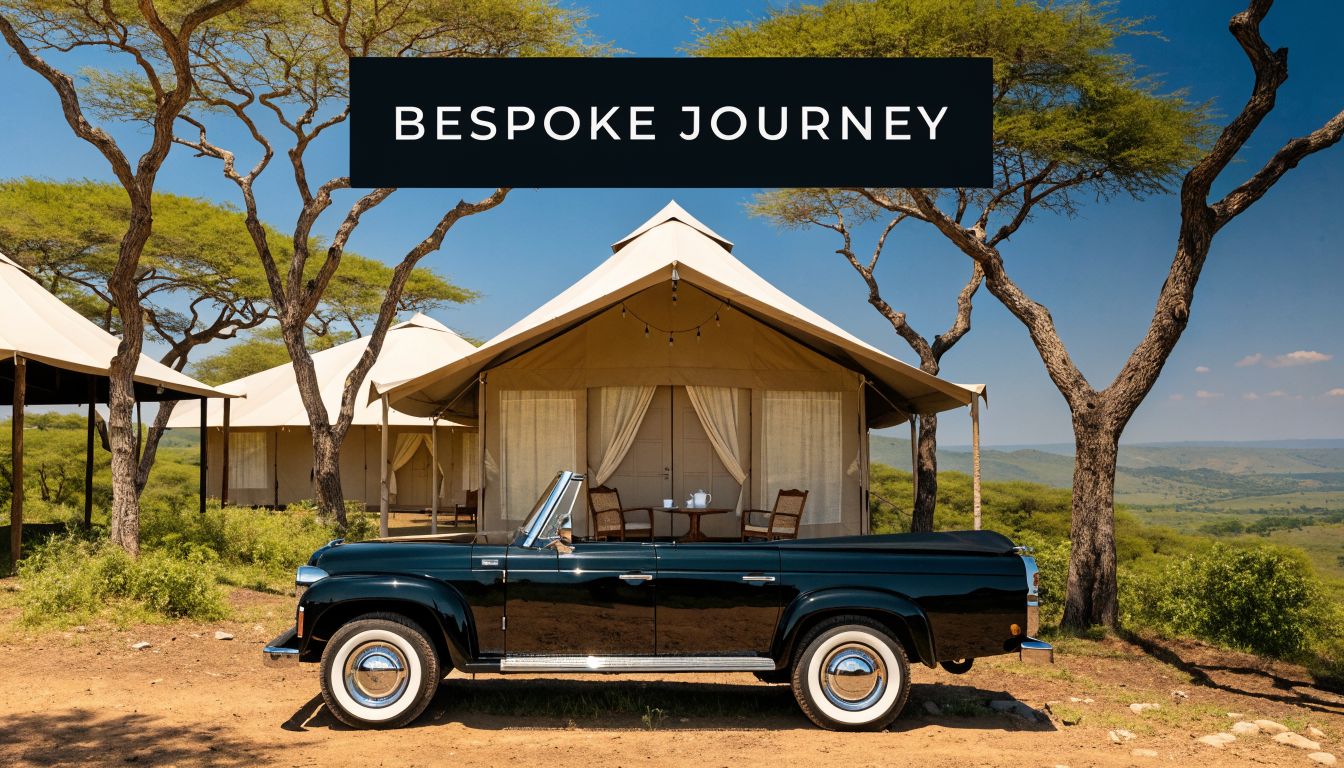
A strong luxury operator builds an itinerary with enough structure to run cleanly and enough flexibility to adapt in real time. That can mean shifting from a shared schedule to a private guide arrangement because a guest wants to photograph at length. It can mean arranging a private bush dinner that reflects a guest's food preferences rather than reproducing a stock romantic setup. It can mean using air transfers intelligently so the traveler doesn't lose a day to road time that never needed to exist.
The difference between extras and design
Many safari companies advertise bespoke options, but the trip still behaves like a standard package with supplements attached. That approach usually breaks down for discerning travelers because the luxury isn't the extra itself. It's the way the itinerary absorbs the extra without friction.
What works:
- Private aviation used selectively when it protects time or privacy
- Private dining with intent, not just for show
- Tiered guiding, where guests can move from shared to private arrangements based on their priorities
- Daily pace control, especially for travelers who don't want to be trapped by camp routines
What rarely works:
- Too many camp moves, which make the trip feel operational rather than immersive
- Over-designed surprise moments, which can feel theatrical
- Rigid meal and drive timings, particularly on milestone journeys
- One-style-fits-all guiding, where the birder, photographer, and first-time safari guest get the same treatment
A luxury safari should feel responsive. If your preferences have to fight the itinerary, the itinerary is wrong.
Where VIP access matters
At the highest level, access isn't only about a famous lodge name. It's about what happens around the booking. Preferred relationships can improve room positioning, arrival handling, and the ability to request exceptions that standard channels often can't secure. That's especially valuable on safari, where a better-located suite, stronger guide pairing, or cleaner transfer sequence can materially improve the trip.
The all-inclusive model becomes useful rather than limiting in this context. Once the essentials are tightly bundled, the advisor can devote attention to the elements that distinguish the experience: where privacy increases, where service style fits, and where the itinerary should bend because the client's interests are more important than the template.
Tailoring the Journey For Honeymoons and Families
A couple on their honeymoon and a family traveling with grandparents may both ask for an all inclusive african safari. They are asking for two completely different kinds of freedom.
For couples, freedom usually means privacy, flexible timing, and space to let the trip breathe. For families, it means structure without rigidity. The best all-inclusive safaris handle both because the foundation is already in place. Flights, transfers, meals, guiding, and lodge logistics are covered, so the essential planning can focus on pace, room configuration, guide style, and how each day should feel for the people taking the trip.
That is the difference between a packaged safari and a properly customized one.
Honeymoons need privacy, rhythm, and discretion
A strong honeymoon safari is rarely the most elaborate itinerary. It is the one with the fewest interruptions. I usually look for camps where the suite is entirely private, the staff can adjust dining times without fuss, and the property has enough range to shift from high-energy game viewing to a quieter afternoon without making the couple feel stranded.
The strongest honeymoon itineraries tend to include:
- A suite or villa with real privacy, including outdoor space and little visual exposure to neighboring rooms
- Flexible dining, so dinner can happen on the couple's schedule rather than the camp's default rhythm
- A measured pace, with enough safari intensity to feel thrilling and enough downtime to feel indulgent
- Selective romance, such as one private bush dinner or a beautifully handled sundowner, instead of a string of staged gestures
For couples planning a wider romantic itinerary, Haute Black's luxury honeymoon safari collection gives a clearer sense of how those journeys can be shaped around privacy and personal taste.
One trade-off matters here. Deep seclusion can sometimes come with less atmosphere, especially in very small camps. Some couples want that. Others prefer a property with more social energy at the bar or fire pit, then return to a private suite afterward. Getting that balance right matters more than any "romantic" label in the brochure.
Families need flexibility built into the operating plan
Family safaris succeed when nobody is forced into the same day from dawn to dusk. Younger children may need shorter drives and earlier meals. Teenagers may want tracking, photography, or more time out on game drive. Grandparents often care less about ticking off every sighting and more about comfort, shade, and manageable distances.
That mix cannot be fixed with a larger suite alone.
The strongest family itineraries create overlap where it counts, then allow separation where it helps. A good camp can arrange different wake-up times, split vehicles when needed, adapt meals without turning every request into a production, and pair the family with a guide who reads the room well. That is where all-inclusive becomes useful rather than restrictive. The core logistics are already settled, so the trip can bend around the family instead of the family bending around camp routine.
The planning questions that actually shape the trip
For family safaris, these factors usually matter more than design details:
| Planning issue | Why it matters |
|---|---|
| Mobility range | Drive lengths, vehicle access, and walking requirements need to suit the least mobile guest without limiting everyone else |
| Privacy threshold | Families want time together, but separate suites or villas often improve the trip dramatically |
| Activity split | Different ages and interests should be accommodated at the same time, not in rotation all day |
| Dining flexibility | Meal timing affects energy, mood, and how comfortably multiple generations travel together |
| Guide fit | A guide who can switch between children, serious wildlife enthusiasts, and older travelers holds the trip together |
Families do best with one shared base plan and enough flexibility for different days to unfold in different ways.
The same principle applies to honeymoons. All-inclusive should cover the operational layer so the personal layer can be shaped with precision. At the top end of the market, that is what clients are really buying. Not a fixed package, but the freedom to make the trip feel as if it was built around them alone.
Understanding the Investment in an Extraordinary Safari
A guest books what looks like an expensive week in the bush, then wonders why one itinerary costs far more than another when both include game drives, meals, and a beautiful tented suite. The answer usually sits behind the scenes. In safari, price tracks access, flexibility, and how many compromises have been designed out of the trip before you arrive.
That matters because all-inclusive at the top end is not a fixed package. It is the operating structure that allows everything personal to be handled well. Once aircraft, transfers, park fees, guiding, meals, drinks, and camp logistics are already integrated, the trip can be adjusted with precision. Private vehicles, preferred guides, altered dining times, a last-minute helicopter transfer, or a quieter camp better suited to a particular traveler all become much easier to arrange cleanly.
What actually moves the price
A strong safari usually costs more for practical reasons, not decorative ones.
- Privacy of the wildlife experience. A private concession, a villa buyout, or a guaranteed private vehicle changes the trip more than upgraded linens ever will.
- Quality of guiding. A seasoned guide with sharp tracking instincts, social intelligence, and the confidence to adapt the day in real time is one of the clearest markers of value.
- Flight design. Well-planned regional air connections save hours, protect energy, and reduce the wear that comes from unnecessary road transfers or awkward overnights.
- Camp position and scarcity. The best-located camps in prime wildlife areas have limited inventory and book accordingly.
- Operational flexibility. The ability to shift meal times, accommodate preferences without fuss, and respond calmly when plans change is expensive to deliver and easy to feel.
Private guiding is a good example. On paper, it can look like an optional supplement. In practice, it often determines whether the safari runs on camp schedule or on your schedule.
Where the money is well spent
The smartest safari budgets protect the parts of the trip that cannot be improvised later. Guiding. Camp fit. Air routing. Time in the right place.
Suite category matters less than many travelers assume if the camp is wrong for them. A large room does not compensate for heavy vehicle traffic, weak guiding, or a property that cannot flex around how the guest likes to travel. I have seen clients spend generously and still miss the mark because too much of the budget went into visible luxury and not enough into privacy, pace, and access.
This is also why a top-tier all-inclusive model works so well for UHNW travelers. It removes the friction of constant add-ons and decision points, then leaves room for selective upgrades where they count. The result feels more bespoke, not less, because the foundational elements are already handled at a high standard.
A better question than "What does it cost?" is "What is buying freedom on this itinerary, and what is merely cosmetic?" That is usually where the difference between a good safari and an extraordinary one becomes obvious.
Your Essential Safari Field Guide
Once the itinerary is right, preparation should be clean and minimal. Safari is one of the few luxury journeys where overpacking and overplanning can diminish the experience.
Booking decisions that matter early
The most important booking choice is the sequence of the trip. Camp order affects energy levels, not just logistics. A spectacular property placed at the wrong moment can feel wasted if the traveler arrives tired or leaves too quickly.
A few rules hold up well:
- Secure the best-fit camps first rather than building around airfare.
- Decide early on privacy level for vehicles, guiding, and transfers.
- Keep the number of moves disciplined so the trip doesn't become a relay race.
- Tell your advisor what you dislike, not only what you want. That often sharpens the itinerary faster.
The most expensive safari mistake isn't overspending. It's spending well on the wrong shape of trip.
Packing with restraint
Safari style rewards discipline. Neutral layers, excellent sunglasses, a light jacket for early drives, and proper footwear matter more than volume. Soft-sided luggage is often the practical choice on regional aircraft and lodge transfers. Bring equipment you'll use, not a fantasy version of yourself as a field photographer.
Health and comfort
Health preparation should be handled privately and well before departure with your medical professionals and travel specialists. Requirements vary by routing and country, and serious travelers don't leave that to the last minute.
Comfort matters just as much. Good sun protection, hydration habits, and realistic pacing improve the trip more than another outfit ever will. If you have sleep sensitivities, dietary preferences, mobility considerations, or a low tolerance for long drives, say so in advance. Safari rewards candor.
The finest trips feel effortless because someone respected the details before you arrived.
If you're considering an all inclusive african safari and want it shaped around privacy, access, and personal rhythm rather than a standard template, Haute Black can help design the journey with the discretion and high-touch precision that exceptional safari travel demands.
Explore Our Guides

Signature Experiences


