Haute Black Journal
8 Famous Food in Cambodia for Luxury Travelers in 2026

Marlene Azeez
Director, HauteBlack
View all articles →
# 8 Famous Food in Cambodia for Luxury Travelers in 2026
July 20, 2026
You've landed in Cambodia with a polished itinerary, a beautiful suite, and a dining budget that can take you anywhere. The mistake most travelers make is assuming the best meal will come from the most decorated room. In Cambodia, that's not how it works. The country's most memorable dishes sit at the intersection of heritage, restraint, and technique, and the smartest luxury travelers know when to ask for the refined restaurant version and when to step into a market with a guide who knows exactly which stall is worth your time.
A Gourmet Journey Through Cambodian Classics begins the moment your private transfer doors open and the air turns warm with charcoal smoke, lemongrass, and coconut. Cambodia's food is grounded in rice culture, freshwater fish, aromatic pastes, and a culinary style that favors balance over heat. That's one reason the cuisine feels so elegant. It doesn't bludgeon the palate. It layers herbs, sweetness, salinity, and fragrance with quiet confidence.
The practical upside is just as compelling. Cambodia remains remarkably accessible for food lovers. In 2026, a typical street food meal costs between $1.50 and $3.00, while a mid-range restaurant dinner averages $10 to $15 per person, and most snacks and quick meals stay under $4.00 according to Together Women Rise's overview of Cambodian customs and cuisine. Even if you're staying at the top end of the market, that affordability gives you room to taste broadly and intelligently.
If you're searching for famous food in Cambodia, start with these eight dishes. They're the ones worth planning around.
1. Amok Trey (Fish Amok)
If you order only one canonical Khmer dish, order amok trey first. Fish Amok is Cambodia's definitive national dish and the country's best-known culinary signature, served at celebrations, family meals, and restaurants across the nation according to Rainforest Cruises' guide to Cambodian food. It matters because it tells you, in one bite, what Khmer cooking does better than almost anyone else in the region. It prioritizes fragrance, texture, and restraint.
This isn't a fiery curry. It's a mellow, custard-like preparation made with freshwater fish, coconut milk, and kroeung, then traditionally steamed in banana leaves until it takes on a mousse-like texture that almost melts on the palate. The result is soft, aromatic, and elegant. If a restaurant sends out something loose and soupy, pass judgment accordingly. Proper amok should feel set, delicate, and composed.
What to Order and Where to Elevate It
For a high-end version, ask your hotel concierge for a heritage Khmer restaurant in Phnom Penh or Siem Reap that still steams amok in banana-leaf cups rather than plating it as a generic curry. At luxury properties, request a private chef preparation in advance so the kitchen treats it as a signature course rather than a menu afterthought. It's an ideal dish for a villa dinner because the presentation carries ceremony without heaviness.
Practical rule: Ask whether the amok is steamed in banana leaf and whether the kitchen makes its own kroeung. If the answer is vague, order something else.
The core paste matters. Kroeung is foundational in Cambodian cooking and explicitly required for Fish Amok, built from fresh aromatics such as lemongrass, garlic, and turmeric according to Gastro Travelogue's Cambodian food guide. That's the flavor backbone you're paying for.
For a deeper regional journey, pair this dish with a broader Cambodia and Vietnam luxury itinerary so you can taste how Khmer balance differs from neighboring cuisines. Cambodia's version is softer, more aromatic, and notably less heat-driven. Chili often belongs on the side, not inside the dish.
2. Nom Banh Chok
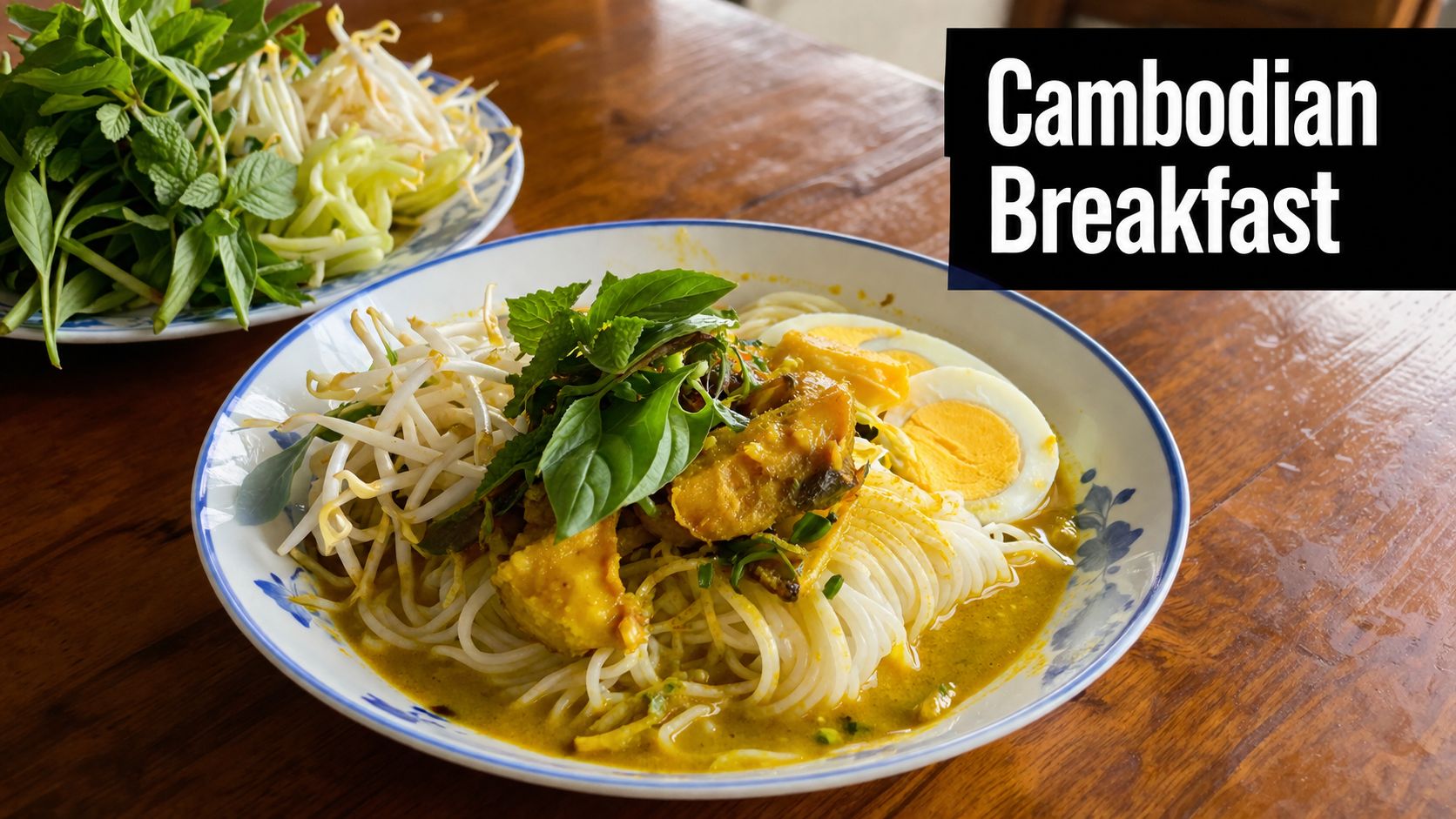
Nom banh chok is breakfast, but don't mistake breakfast for simplicity. This is one of the most revealing bowls in Khmer cuisine. Thin rice noodles sit beneath a fish-based curry sauce, then get lifted by herbs and fresh vegetables. Eaten in the morning, it feels light enough to start the day and nuanced enough to justify a special detour.
For luxury travelers, the true value lies in a private early market visit. You want to see how the dish lives in the city before polished dining rooms wake up. In Phnom Penh and Siem Reap, the best versions still feel rooted in daily rhythm rather than performance.
How to Experience It Properly
Nom banh chok belongs in the morning. Book a guide who can get you to the market early, then return to your hotel for a second, more refined version if you want to compare technique and presentation. That contrast is useful. It shows you what luxury interpretation adds and what it strips away.
A smart tasting sequence looks like this:
- Start at dawn: Go early, when noodle dishes are freshest and the local breakfast crowd sets the tone.
- Compare two versions: Try one from a market stall and one from a luxury hotel kitchen that respects Khmer seasoning.
- Pair it: Cambodian coffee or a French-leaning café au lait works better than an elaborate beverage pairing.
The dish also makes sense within Cambodia's broader food economy. Rice is the country's main staple, with fragrant and sticky varieties cultivated domestically, and sticky rice often appears with fruit as dessert according to Together Women Rise's cuisine profile. Nom banh chok sits inside that rice-centered tradition, but presents it with finesse.
If you're serious about famous food in Cambodia, don't confine yourself to dinner reservations. Breakfast tells you more, faster.
3. Samlor Machu Trey (Sour Fish Soup)
Samlor machu trey is the dish to order when Cambodia's heat starts pressing down and you want something cleansing, bright, and sharply balanced. It's a sour fish soup, usually built around river fish and enlivened with acidic notes that keep the broth focused rather than rich. In a cuisine known for poise, this is one of the clearest expressions of it.
The luxury move here is to order it late in the day, when your palate needs reset. Too many travelers stack creamy curries, grilled meats, and sweet cocktails into one evening and wonder why nothing feels distinct by course three. This soup restores precision.
Why It Matters Culturally
Khmer cuisine is often misunderstood by visitors who can recognize Fish Amok but can't always distinguish an authentically Khmer flavor profile from something Thai-leaning and adapted for tourists. That gap matters. Existing travel guidance often fails to explain the ingredient balance that defines true Khmer identity, especially for travelers who want cultural immersion rather than a softened, pan-regional menu, as noted by OneVasco's discussion of famous food in Cambodia.
That's exactly why samlor machu trey is worth ordering. It's less likely to be flattened into a generic crowd-pleaser. A good version tastes pointed, fresh, and composed.
Ask the server how the kitchen balances the broth. If the explanation centers on sweetness or generic “Asian spices,” you're probably not in the right restaurant.
This is also an excellent dish to fold into a wider program of elite cultural travel experiences worldwide, especially if you value food as a route into local identity rather than simple indulgence. Pair it with a quiet lunch or a chef-led tasting menu where the kitchen can explain the herbs and fish selection in detail.
For beverage pairing, keep it crisp and mineral. Heavy reds bury the dish. A restrained white lets the broth do its work.
4. Lok Lak (Stir-Fried Beef)
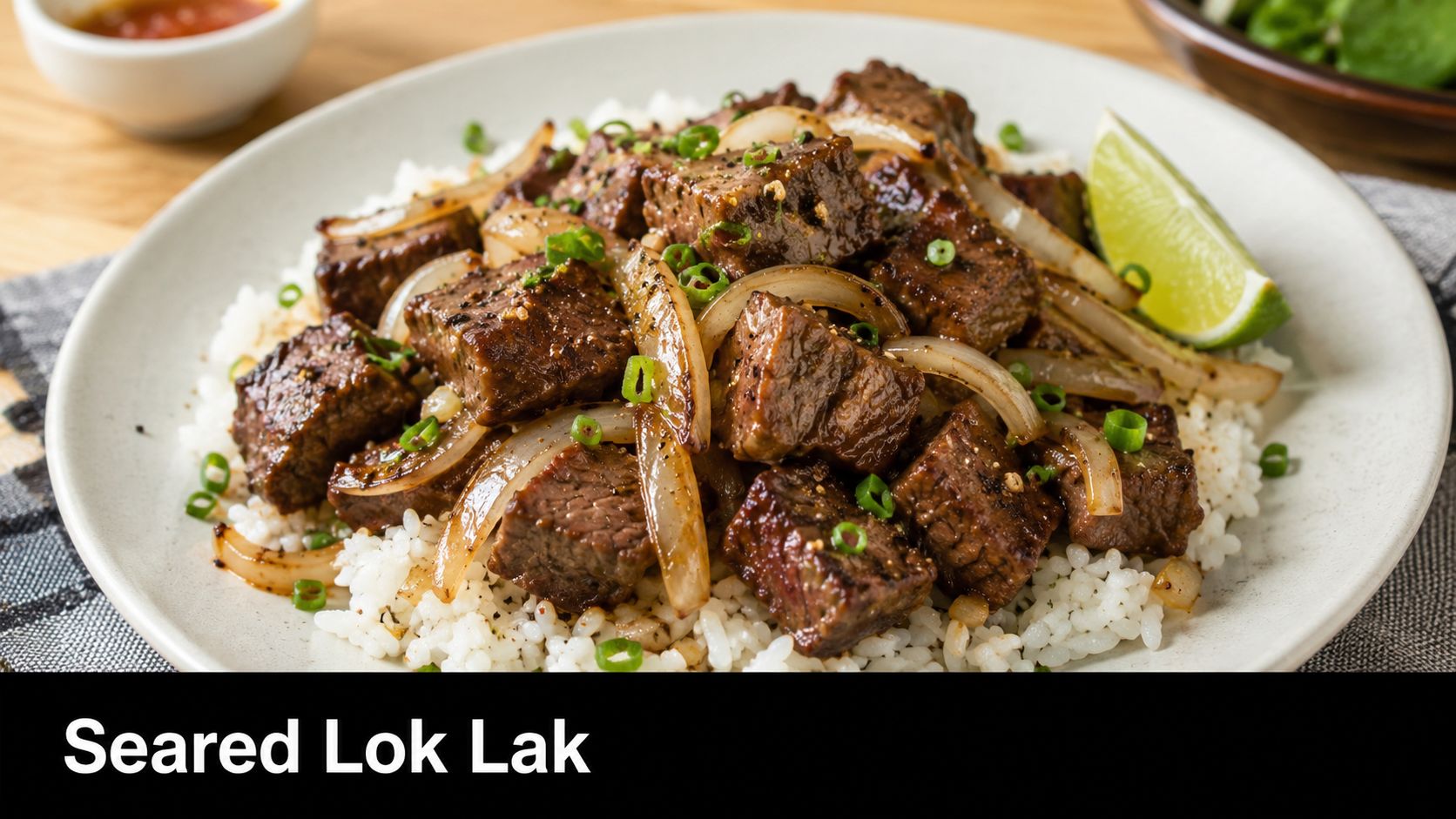
Lok lak is Cambodia's crowd-winner. Tender beef, hot pan sear, savory glaze, lime on the side. It's straightforward in structure and refined in execution, which is exactly why it travels so well from home kitchens to polished dining rooms. If amok is the soft-spoken diplomat, lok lak is the closer.
The dish usually arrives as seared beef with onions and a peppery, citrus-driven finish. What separates a forgettable version from a great one is the quality of the meat and the confidence of the sear. In luxury settings, ask for premium beef and insist that the kitchen keeps the Khmer profile intact rather than turning it into a generic steak entrée.
How to Upgrade It Without Losing the Dish
Lok lak can handle a refined setting. It doesn't need reinvention. It needs discipline.
- Choose the right room: Order it at a chef's table or polished Khmer restaurant where the kitchen respects classic flavors.
- Ask for premium beef: Grass-fed or luxury imported cuts work, as long as the dish still reads as lok lak.
- Use the dip: The lime-pepper element isn't garnish. It's part of the identity.
For travelers who want a broader dining strategy in Cambodia, Haute Black's luxury dining services are the right way to secure a table that understands the difference between theatrical plating and actual culinary integrity. Lok lak rewards kitchens that know restraint.
There's also value in comparing it to interpretations beyond Cambodia. For a different beef stir-fry lens, Smokey Rebel's Revolution Beef Stir Fry offers a useful point of reference on how high-heat beef dishes can shift across styles. Khmer lok lak should still taste cleaner, brighter, and less heavy-handed than many international versions.
Order lok lak on a night when you want certainty. It rarely disappoints when the kitchen is competent.
5. Nom Banh Sach Chrouk (Pork and Rice Noodles in Broth)
Nom banh sach chrouk is a quieter dish than Cambodia's showpieces, but it belongs on any serious culinary itinerary because it demonstrates refinement through restraint. Thin rice noodles, savory broth, tender pork, fresh herbs. That combination sounds simple because it is simple. The point is how well Cambodia handles simplicity.
This is the bowl to order when you've had a late night, a long transfer, or one too many tasting courses the evening before. It restores rather than overwhelms. At breakfast or lunch, it gives you a clean read on ingredients and stock quality.
Best Way to Taste It
Don't chase theatrics here. Chase clarity. A strong version should have a broth that tastes patient, not muddy, and pork that feels integrated rather than dropped in as an afterthought. In a luxury context, ask your hotel concierge to point you toward a respected local noodle specialist, then compare it with the hotel's own breakfast interpretation.
That side-by-side tasting reveals a lot:
- Street or local specialist: Better for atmosphere and direct contact with daily Cambodian eating habits.
- Luxury hotel kitchen: Better for comfort, service, and a polished presentation of the same core idea.
- Private chef setup: Best when you want the stock and garnishes explained course by course.
If you're traveling with family or a mixed group of eaters, this is one of the safest recommendations in the famous food in Cambodia category. It appeals to cautious diners without feeling watered down for them. You still get Khmer identity, just in a more restrained form.
The insider move is to schedule this after a market walk. Once you've seen herbs, noodles, and pork sold in the morning trade, the bowl makes more sense. It stops being “just soup” and starts reading as a distilled expression of everyday Cambodian appetite.
6. Kroalan (Stuffed Squid)
Kroalan is the kind of dish affluent travelers often miss because they focus too heavily on the obvious classics. That's a mistake. Stuffed squid has the structure and elegance to hold its own in a serious seafood tasting menu, and in the right hands it becomes one of the most impressive savory courses you'll eat in Cambodia.
The appeal is textural. Squid must stay tender, the filling must remain seasoned and cohesive, and the final dish has to feel marine rather than meaty. When all three align, kroalan reads as technical, precise, and highly satisfying.
When to Order It
Order kroalan in a dining room that already handles seafood confidently. This isn't the dish to test a weak kitchen. It works best as part of a chef-led sequence or a focused dinner near the water, where the menu leans into freshness and careful preparation.
Here's how I'd approach it:
- Make it a second course: It shines before heavier mains.
- Request chef explanation: The stuffing technique is worth hearing about if the kitchen is proud of it.
- Pair with a crisp white: Keep the wine bright and structured so the squid remains the focus.
Cambodia's culinary story has long been shaped by freshwater fish, fermentation, and practical preservation, but seafood dishes like this show another side of Khmer dining. They reveal finesse. They also fit beautifully into private villa dinners or resort tasting menus, where a chef can prepare and plate them with more care than a high-volume restaurant service usually allows.
The right stuffed squid course feels composed, not rustic. If it's rubbery, overfilled, or aggressively seasoned, send your attention elsewhere.
For honeymooners or couples, kroalan is also one of the smartest dishes to place in a bespoke candlelit dinner. It feels special without being predictable.
7. Samlor Korko (Vegetable and Coconut Soup)
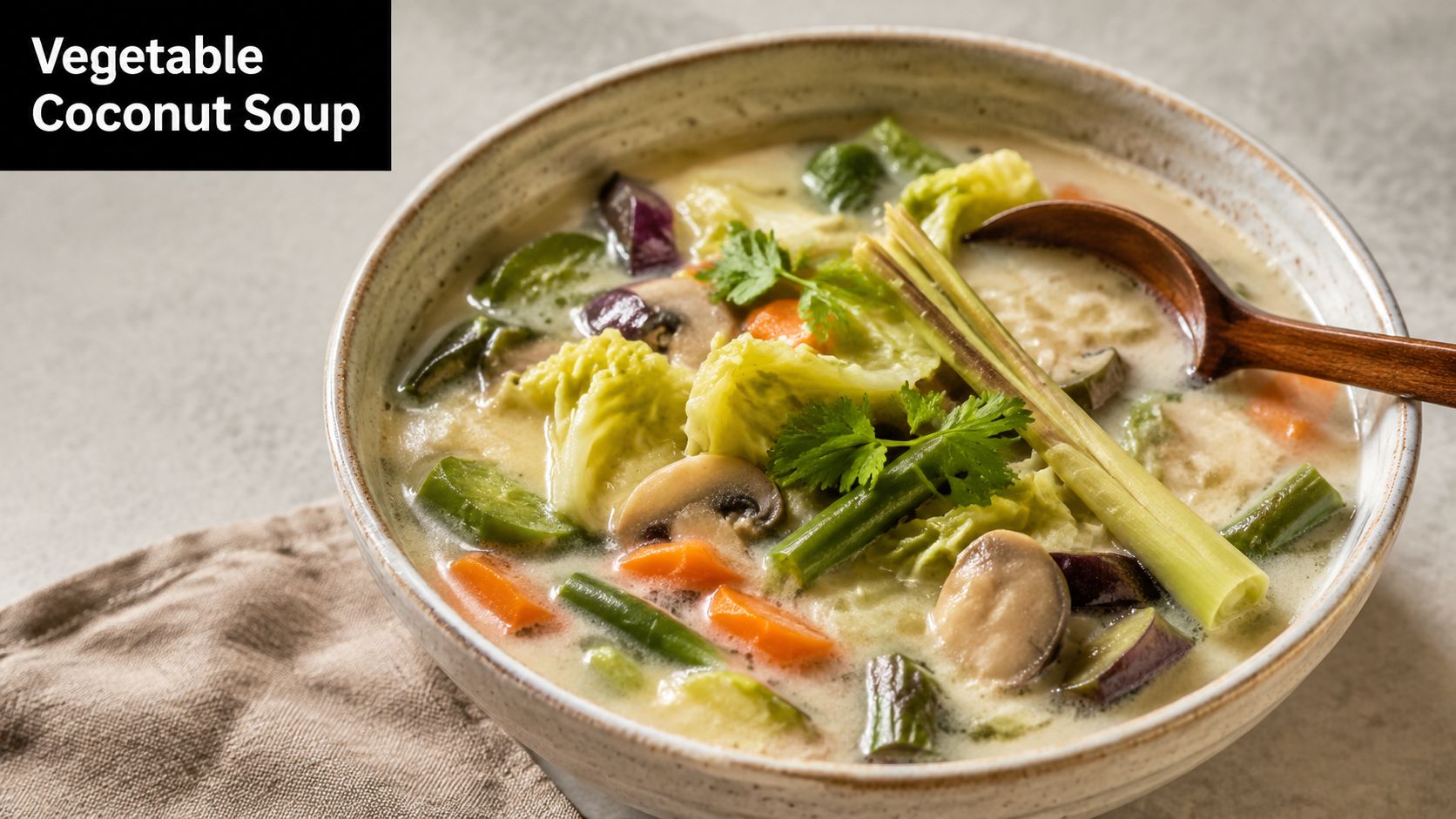
Samlor korko is one of the most culturally important dishes to seek out if you want famous food in Cambodia that goes beyond the tourist shortlist. This is foundational Khmer cooking. It's a local soup that often carries vegetables, herbs, and a savory depth tied to prahok, the fermented fish paste that underpins so much of Cambodian flavor.
Prahok matters here because it isn't a novelty ingredient. It's foundational to Khmer cuisine, used across dozens of dishes and present in households and restaurants throughout the country, with night markets in Phnom Penh and Siem Reap serving as major hubs for prahok-based foods according to Adventure World's guide to what to eat in Cambodia. If you skip dishes shaped by prahok, you miss Cambodia's culinary center of gravity.
Why Luxury Travelers Should Care
Samlor korko suits travelers who want depth without excess. It can be plant-forward, restorative, and still unmistakably Khmer. In resort settings, it works beautifully for wellness-focused lunches, especially when the kitchen sources local vegetables and keeps the seasoning precise.
A strong strategy is to build a half-day around it:
- Visit an organic or local farm: See the produce before it hits the kitchen.
- Book a cooking session: Samlor korko rewards explanation because its complexity hides inside an apparently humble bowl.
- Taste a home-style version too: Refined dining is useful, but this dish also deserves a more domestic expression.
A seasoned advisor proves invaluable. The best version may not come from the grandest dining room. It may come from a chef who still cooks with memory rather than trend.
8. Ang Dtray Meuk (Grilled Fish with Kampot Pepper)
End with a grilled fish course. Cambodia handles fish beautifully, and a whole grilled preparation with pepper and herbs delivers one of the clearest, most luxurious expressions of ingredient-led Khmer cooking. Ang dtray meuk has presence. It arrives with aroma, visual drama, and no need for culinary over-explanation.
A proper version depends on freshness, charcoal, and seasoning confidence. The fish should be intact, the skin should carry real grill character, and the pepper should sharpen rather than dominate.
How to Turn It Into an Event
This is the dish to reserve for a beach villa dinner, riverside table, or open-kitchen setting where you can see the final grilling. It's especially effective in the evening, when service can slow down and the meal can breathe.
Cambodia's current travel guidance acknowledges dishes like grilled fish as local staples, but it often stops short of telling luxury travelers how to access them in a way that meets high expectations for privacy, safety, and comfort. That gap is real, and it's noted in Unrush Travel's 2026 guide to Cambodian food and street eating. The right answer is a curated setup with a trusted chef or vetted vendor collaboration, not guesswork at the curb.
One ingredient note matters here. Market data from January 2022 shows snakehead fish averaged 9,651 Riels per kilogram, equivalent to $2.38 per kilogram, with a year-on-year increase of +10.1% and a month-on-month dip of -1.3%, according to Open Development Cambodia market data. That's useful context because it underscores continued demand for the freshwater fish so central to Khmer cooking.
Choose the fish yourself when possible. The best luxury experiences in Cambodia still improve when you stay close to the ingredient.
Comparison of 8 Iconic Cambodian Dishes
| Dish | 🔄 Complexity | Resources | ⚡ Speed/Efficiency | 📊 Expected Outcomes & Key Advantages | 💡 Use Cases / Tips |
|---|---|---|---|---|---|
| Amok Trey (Fish Amok) | High 🔄🔄🔄, labor‑intensive steam technique | Fresh Mekong fish, coconut milk, Kampot pepper, banana leaves, skilled chef | Slow ⚡, long prep and gentle steaming | 📊 Silky, aromatic curry; premium presentation; standout luxury dish ⭐⭐⭐⭐⭐ | 💡 Best for fine‑dining/private events; request Kampot pepper and schedule 24+ hrs |
| Nom Banh Chok | Medium 🔄🔄, broth and fresh toppings | Fresh fish broth ingredients, rice noodles, herbs, morning market sourcing | Moderate ⚡⚡, quick assembly but daily prep needed | 📊 Bright, layered breakfast flavors; culturally authentic; accessible luxury ⭐⭐⭐⭐ | 💡 Ideal for early‑morning food tours and hotel breakfast offerings; book 6–9 AM |
| Samlor Machu Trey (Sour Fish Soup) | Medium 🔄🔄, acid balance is key | Fresh fish, tamarind, lime, lemongrass, galangal | Moderate ⚡⚡, relatively quick simmer with fresh finish | 📊 Light, refreshing, healthful; elegant balance of sour/savory ⭐⭐⭐⭐ | 💡 Suited to wellness menus; request tableside lime for customization |
| Lok Lak (Stir‑Fried Beef) | Medium 🔄🔄, high‑heat searing skill | Premium beef (tenderloin/Wagyu), pepper, wok, skilled cook | Fast ⚡⚡⚡, rapid stir‑fry cook time | 📊 Bold, savory, crowd‑pleasing; excellent wine pairing; versatile ⭐⭐⭐⭐ | 💡 Great for interactive demos and meat‑focused menus; ask for premium beef |
| Nom Banh Sach Chrouk | Medium 🔄🔄, broth and texture work | Pork shoulder, clear pork broth, crispy pork skin, fresh herbs | Moderate ⚡⚡, broth prep then quick assembly | 📊 Comforting, delicate noodle soup with textural contrast; breakfast favorite ⭐⭐⭐⭐ | 💡 Morning tastings at hotels or market tours; request heritage/sustainable pork |
| Kroalan (Stuffed Squid) | High 🔄🔄🔄, intricate stuffing and cook control | Ultra‑fresh squid, minced filling (squid/pork), precise steaming/frying | Moderate ⚡⚡, prep‑intensive but short cook | 📊 Visually impressive seafood course; refined technique, unique offering ⭐⭐⭐⭐ | 💡 Best as special‑occasion or chef's‑table dish; ensure sustainable sourcing |
| Samlor Korko (Vegetable & Coconut Soup) | Medium 🔄🔄, balancing coconut and vegetables | Seasonal vegetables, coconut milk, lemongrass, optional proteins | Moderate ⚡⚡, steady simmer and assembly | 📊 Plant‑forward, nourishing and versatile; appeals to wellness/veg guests ⭐⭐⭐⭐ | 💡 Ideal for wellness retreats and vegetarian fine‑dining; request heirloom produce |
| Ang Dtray Meuk (Grilled Fish w/ Kampot Pepper) | High 🔄🔄🔄, whole‑fish grilling skill | Whole Mekong fish, Kampot pepper, charcoal grill, skilled griller | Moderate ⚡⚡, grilling time plus prep | 📊 Dramatic tableside presentation; pure ingredient focus; high guest impact ⭐⭐⭐⭐⭐ | 💡 Perfect for private dinners and theatrical service; request sustainable whole fish and tableside grilling |
Elevating Your Cambodian Culinary Adventure
These eight dishes give you a serious foundation, but the significant advantage comes from sequencing them well. Don't book random restaurant reservations and hope the cuisine reveals itself. Build your trip around the rhythms of the food. Breakfast dishes belong in markets or with a trusted guide before the city fully wakes. Richer classics like amok and lok lak work best for lunch or dinner in heritage restaurants and polished hotel dining rooms that still respect Khmer fundamentals. Soups such as samlor machu trey and samlor korko are ideal reset points between more indulgent meals.
Cambodia rewards travelers who understand contrast. You should taste one dish in a refined dining room and another in a setting that keeps you close to the source, whether that's a morning market, a riverside grill, or a chef-led prep session at your villa. That's how famous food in Cambodia stops being a checklist and starts becoming a lens on the country itself. You notice that Khmer cuisine privileges aroma over aggression, softness over showmanship, and balance over blunt force.
There's also a practical reason to travel this way. Cambodia remains one of the easiest places in the region to eat broadly without wasteful overspending, which means even travelers at the very top end can allocate budget toward access rather than volume. Spend on the right guide, the right chef, the right table, and the right timing. Don't spend on generic tasting menus that flatten local identity into international luxury clichés.
The most rewarding itineraries also account for what affluent travelers often want but standard travel content rarely solves. You may want authentic street-level flavor without sacrificing hygiene standards, privacy, or comfort. You may want a non-touristed breakfast circuit, but with a trusted fixer who knows which vendors are consistent and which neighborhoods fit your day. You may want a villa dinner where the chef shops the market first, then explains every herb and paste over a slow meal. That's the sweet spot.
Partnering with an advisor is what turns those preferences into a coherent plan. The right curator can line up private chef demonstrations, market access that feels local rather than staged, refined Khmer tasting menus, and resort experiences that don't drift into generic Southeast Asian fusion. That's how you turn a good Cambodia trip into a culinary journey with memory, context, and precision.
If Cambodia is on your calendar, treat the food as a central pillar of the trip. It deserves that status. Few cuisines deliver this much cultural depth with such quiet confidence.
Haute Black designs Cambodia journeys that go far beyond restaurant bookings. Work with Haute Black to arrange private chef experiences, customized market tours, villa dining, preferred hotel benefits, and the kind of insider culinary access that turns a luxury holiday into a personal food journey.
Explore Our Guides


Signature Experiences