Haute Black Journal
7 Best Ski Resorts in Argentina for Luxury Trips

Marlene Azeez
Director, HauteBlack
View all articles →

Argentina isn't one ski destination. It's a choice between a large, connected mountain beside a lively Patagonia hub, a forested resort paired with a boutique lakeside town, an expert-focused Andean valley, and a far-southern base where skiing can become part of a wider wilderness itinerary. The best ski resorts in Argentina demand a decision based on terrain ambition, snow timing, family needs, hotel style, town atmosphere, and tolerance for complex transfers.
This guide evaluates the leading resorts as a luxury trip planner would. HauteBlack can shape tailor-made journeys with preferred-property benefits, private aviation, helicopter or first-class transfers, and concierge coordination for lodging, equipment, guides, dining, and surrounding experiences.
The best resort is the one that fits the entire itinerary, not merely the steepest mountain.
1. Catedral Alta Patagonia in Bariloche
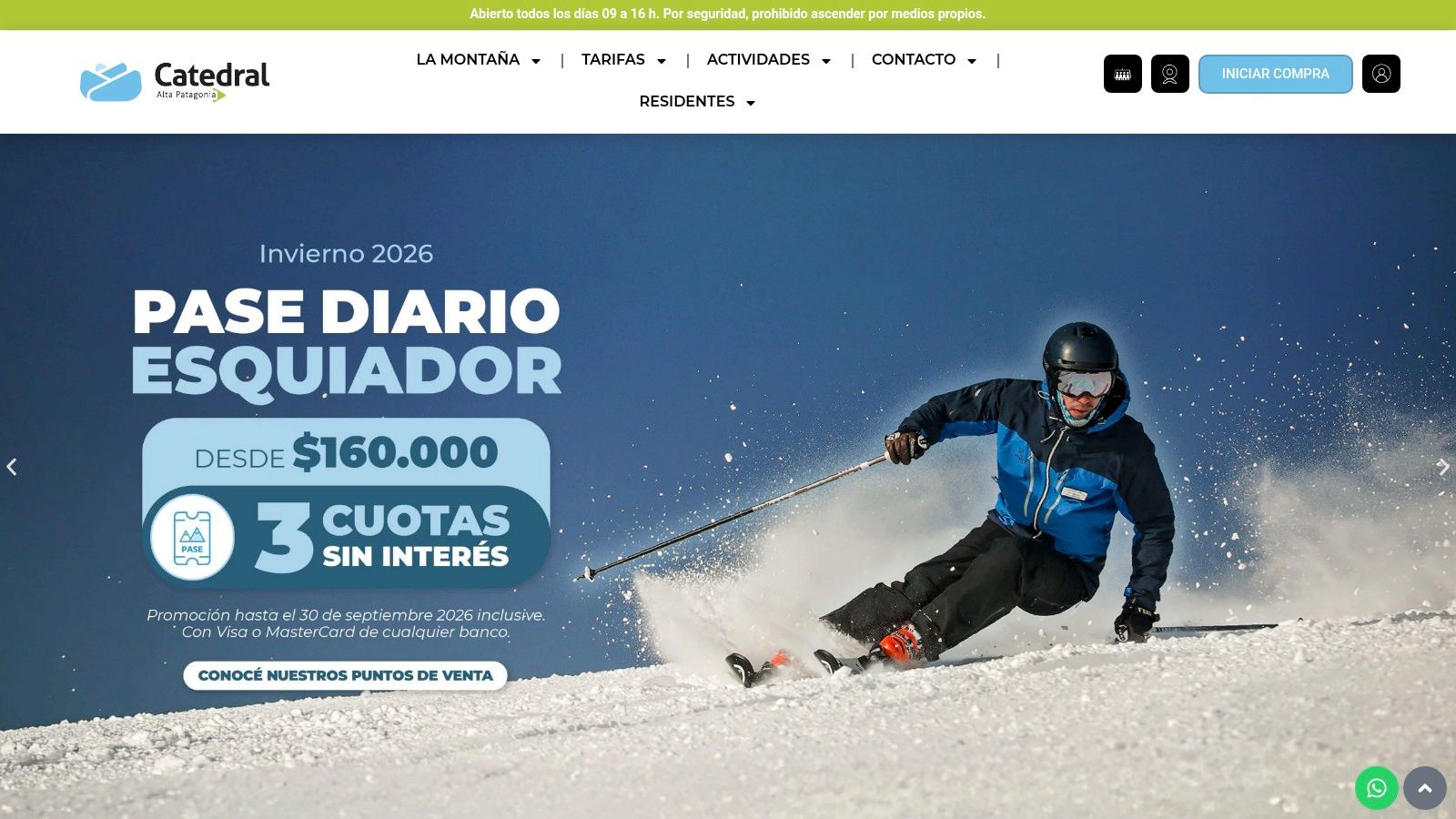
Catedral is the clear choice for travelers who want the broadest resort experience in Argentina. One major resort listing reports 58 trails, 24 lifts, 599 hectares of skiable terrain, a summit of 3,773 feet, and a vertical drop of 3,379 feet at Cerro Catedral Alta Patagonia. Another listing describes roughly 1,693 acres of skiable footprint and 59 trails, reinforcing its position as the country's largest and most developed resort destination.
Its proximity to Bariloche is a major luxury advantage. The mountain sits about 20 kilometers from the city, giving couples and families access to a deeper selection of hotels, restaurants, guides, wellness services, and evening activities than they'll find at smaller bases. The resort combines groomed terrain for developing skiers with sidecountry opportunities, on-mountain dining, specialty freestyle zones, and an active events calendar.
Why it works for luxury travelers
Stay in Bariloche for the strongest hotel and dining choice, or choose a property near the base when maximizing slope time matters more than nightlife. Private transfers are especially useful during busy holiday periods, when road congestion can turn a simple mountain day into a frustrating commute.
Catedral's scale also suits multi-generational groups. One family member can take lessons, another can ski advanced terrain, and non-skiers can enjoy Bariloche's restaurants, chocolate culture, and Patagonia excursions. The trade-off is atmosphere. The resort can feel crowded during Argentine school holidays, and upper-mountain operations may be affected by weather.
For a broader regional itinerary, pair the mountain with HauteBlack's guide to things to do in Patagonia. Buy lift access in advance where possible, coordinate equipment collection before arrival, and have a concierge monitor upper-lift status when conditions are unsettled.
2. Cerro Chapelco in San Martín de los Andes
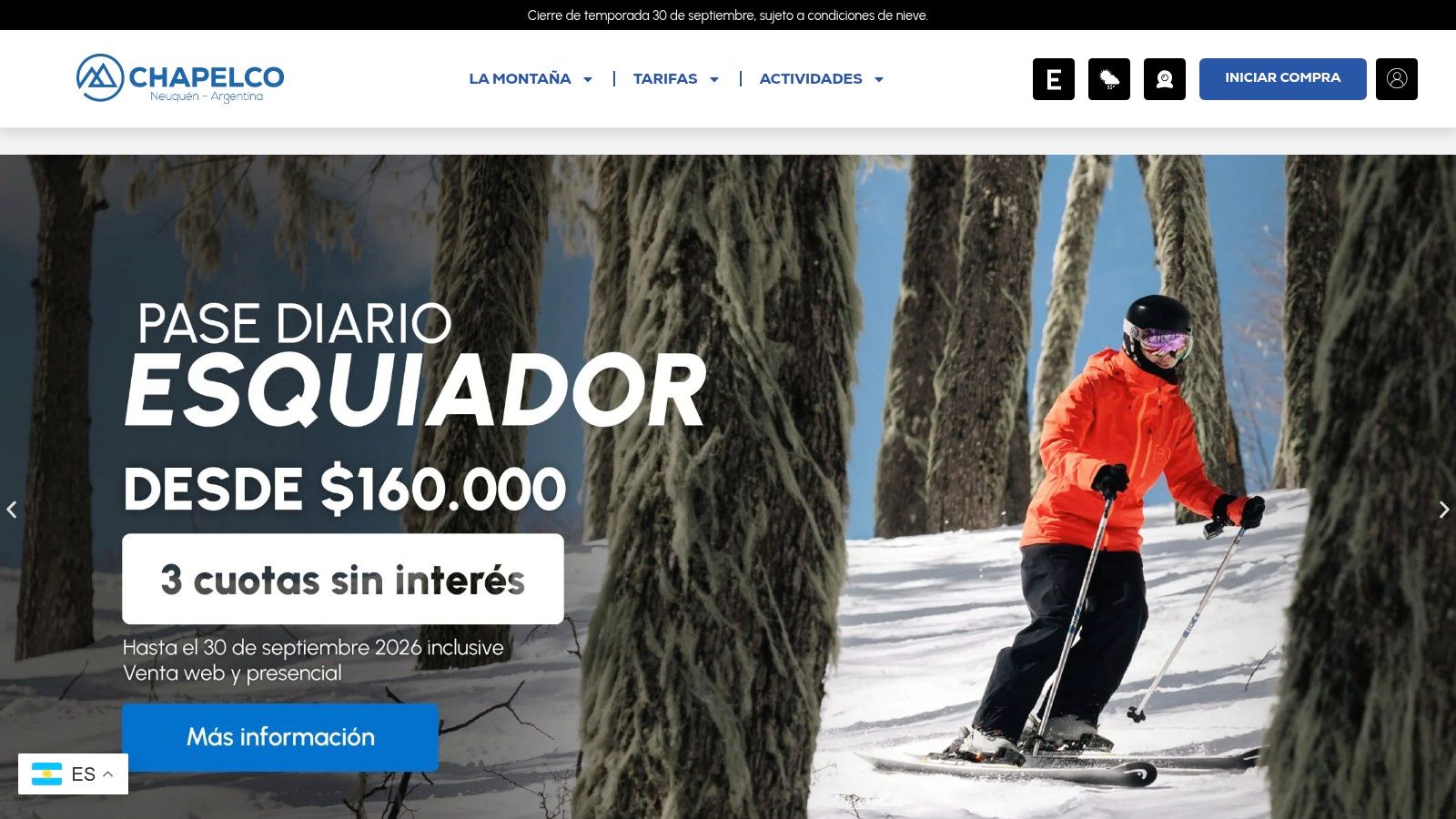
Cerro Chapelco is the polished scenic choice for families, intermediates, and couples who care as much about the setting as the skiing. The resort sits among lenga forests with views toward Lanín volcano and Lake Lácar, while San Martín de los Andes provides a more intimate base than Bariloche.
The mountain's forested terrain gives skiers shelter on windy days, and its grooming and ski-school infrastructure make it particularly easy to organize for mixed-ability groups. Beginners can progress without feeling overwhelmed, while intermediates get the most natural mileage from the resort's open pistes and wooded runs.
A refined base for organized trips
San Martín de los Andes has the right scale for a romantic or family escape. Boutique hotels, upscale dining, and a walkable town atmosphere create a more cohesive holiday than a purely purpose-built ski village. That makes Chapelco a strong option when the itinerary includes non-ski days, scenic drives, or a slower rhythm.
The resort offers Flexi pass products and communicates operational details for advance planning through Cerro Chapelco's official website. Its projected 2026 opening date is July 8, 2026, according to the resort's published planning information. The date is a projection, so travelers should verify conditions and operating status before booking nonrefundable arrangements.
Choose Chapelco when the group needs reliable organization, attractive scenery, and a town that feels like part of the holiday.
Peak holiday demand can raise pressure on premium inventory and lesson availability. Reserve private instruction, transfers, and preferred dining before arrival. For broader seasonal planning, consult HauteBlack's guide to the best time to visit Patagonia for luxury travelers.
3. Cerro Bayo Ski Boutique in Villa La Angostura
Cerro Bayo is the right recommendation for travelers who want a quieter, more intimate alternative to Catedral. Its defining asset is not scale. It's the combination of lake views, a lower-key mountain atmosphere, and easy pairing with high-end lodging in Villa La Angostura.
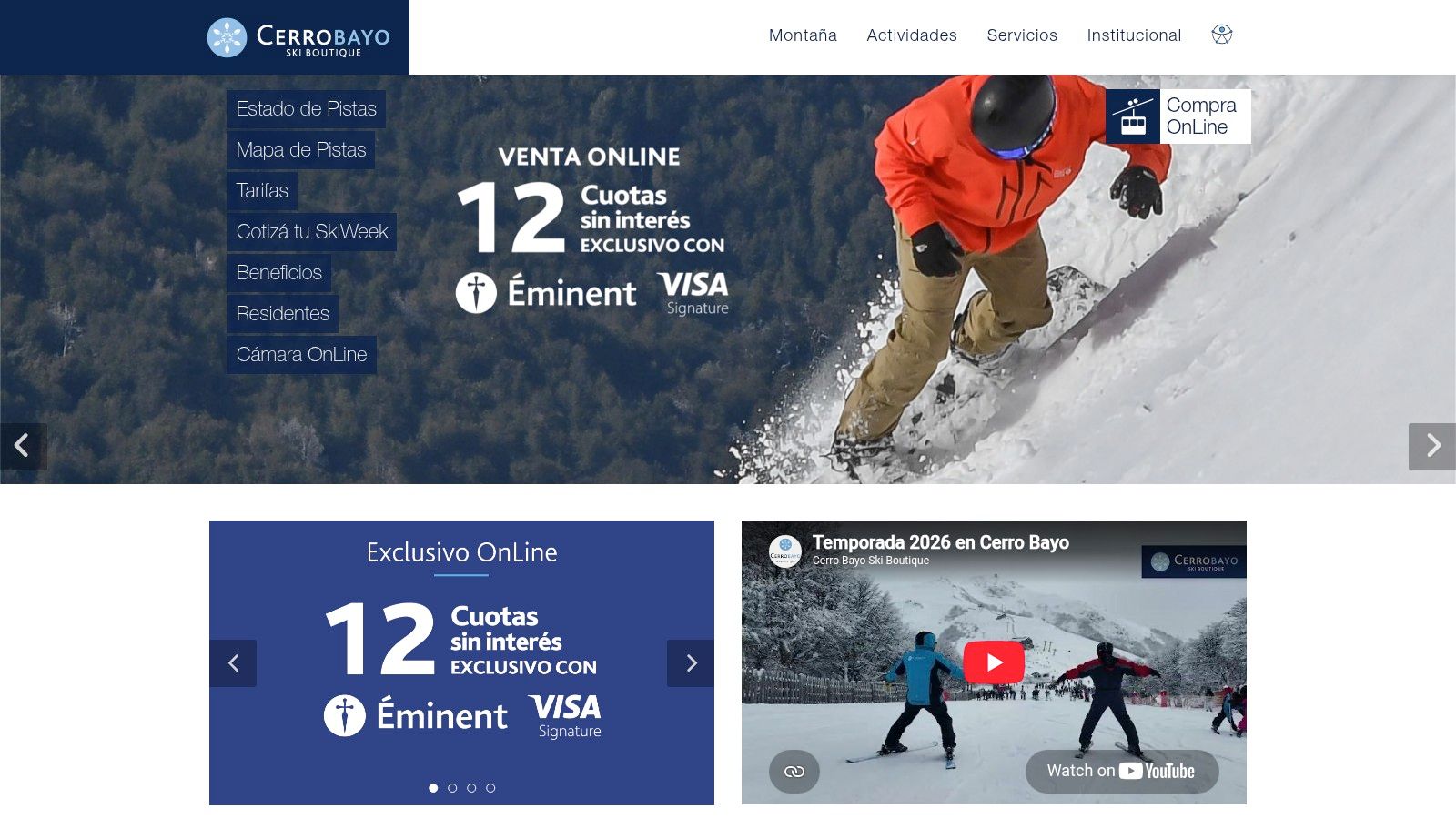
The resort offers 11 lifts and more than 20 runs, along with off-piste itineraries and scenic approaches overlooking Nahuel Huapi, as detailed by Cerro Bayo Ski Boutique. Its SkiPack products combine passes, lessons, and rentals, which simplifies planning for families and newer skiers who would rather arrange the essentials together.
The boutique advantage
Villa La Angostura gives the trip a residential, lakeside character. Guests can stay in an upscale lodge, arrange private dining, and return to a calmer town after skiing. That atmosphere suits couples, honeymooners, and families who value privacy over nightlife.
Bayo's smaller domain is also its main limitation. Strong skiers may want to combine it with days at Catedral or use Bayo as part of a wider Lakes District itinerary rather than make it the sole focus of a long ski holiday. The resort has less après-ski energy and fewer resort-town amenities than Bariloche or San Martín de los Andes.
A private vehicle is valuable here because it preserves flexibility between the lodge, mountain, and nearby experiences. Use the resort's e-commerce platform to arrange bundled products ahead of time, then let a concierge coordinate equipment, lessons, and dining around the group's preferred pace.
4. Las Leñas in Malargüe
Las Leñas is the expert skier's mountain, and the recommendation is direct. Choose it for steep terrain, serious off-piste ambition, and a purpose-built slope-side stay, not for a broad beginner program or a lively town experience.
Independent resort data lists a 3,430-meter summit, a 2,240-meter base, a 1,190-meter vertical drop, 39 slopes, and 11 lifts at Las Leñas. Another terrain breakdown cites roughly 17,401 hectares of skiable terrain, about 27 runs, 15 lifts, and a steep 1,230-meter vertical drop, with 44% advanced and 4% expert terrain, according to the Los Angeles Times' Argentina ski coverage.
Book around the mountain, not beside it
Las Leñas works best when the itinerary gives conditions room to develop. Its strongest terrain depends on upper-mountain access and weather, while high winds can close the Marte chair and restrict the lines that make the resort famous. The mountain's average summit snow depth is reported at 96 centimeters versus 44 centimeters at the base, making timing and elevation relevant to the trip design.
Slope-side hotels simplify the daily routine. Guests can move from room to lifts quickly, store equipment conveniently, and avoid adding long road transfers to an already remote destination. Private guiding is a sensible investment for advanced skiers who want to understand access, exposure, and current snow conditions rather than explore blindly.
Las Leñas has a reputation for variability, but its expert profile remains commercially and experientially distinctive. Its best conditions are usually reported in August, while the season generally extends from mid-June into late September or October. HauteBlack's coverage of luxury winter travel destinations for 2026 provides useful context for travelers comparing high-end cold-weather itineraries.
5. Cerro Castor in Ushuaia
Cerro Castor is the strongest choice for a southern Patagonia journey built around snow certainty, cold conditions, and experiences beyond downhill skiing. The resort's latitude supports one of Argentina's longest operating windows, with tariff pages indicating operations from June through October on Cerro Castor's official site.
The mountain offers more than groomed ski days. Guests can add Nordic trails, snowshoeing, ice-skating, snowmobile outings, and on-mountain dining, then continue into Ushuaia for nautical and wildlife experiences. That makes Castor particularly effective for couples or families who don't want every day to revolve around lifts.
Make Ushuaia part of the value
The main drawback is access. Ushuaia is a longer journey from North America than Argentina's northern Patagonia resorts, and weather can affect flights into USH. A private aviation or first-class transfer strategy can reduce friction, but the itinerary still needs buffer time and active monitoring.
Cerro Castor's modern lift infrastructure and varied aspects support both progressing skiers and stronger guests looking for a wider southern mountain experience. Its cold climate can also mean better snow quality and fewer rain events than some northern alternatives, though no resort should be treated as immune to operational disruption.
Book the ski component alongside the wider Ushuaia program. A luxury planner can coordinate airport handling, hotel transfers, equipment, guides, and water-based excursions so the resort isn't isolated from the rest of the destination.
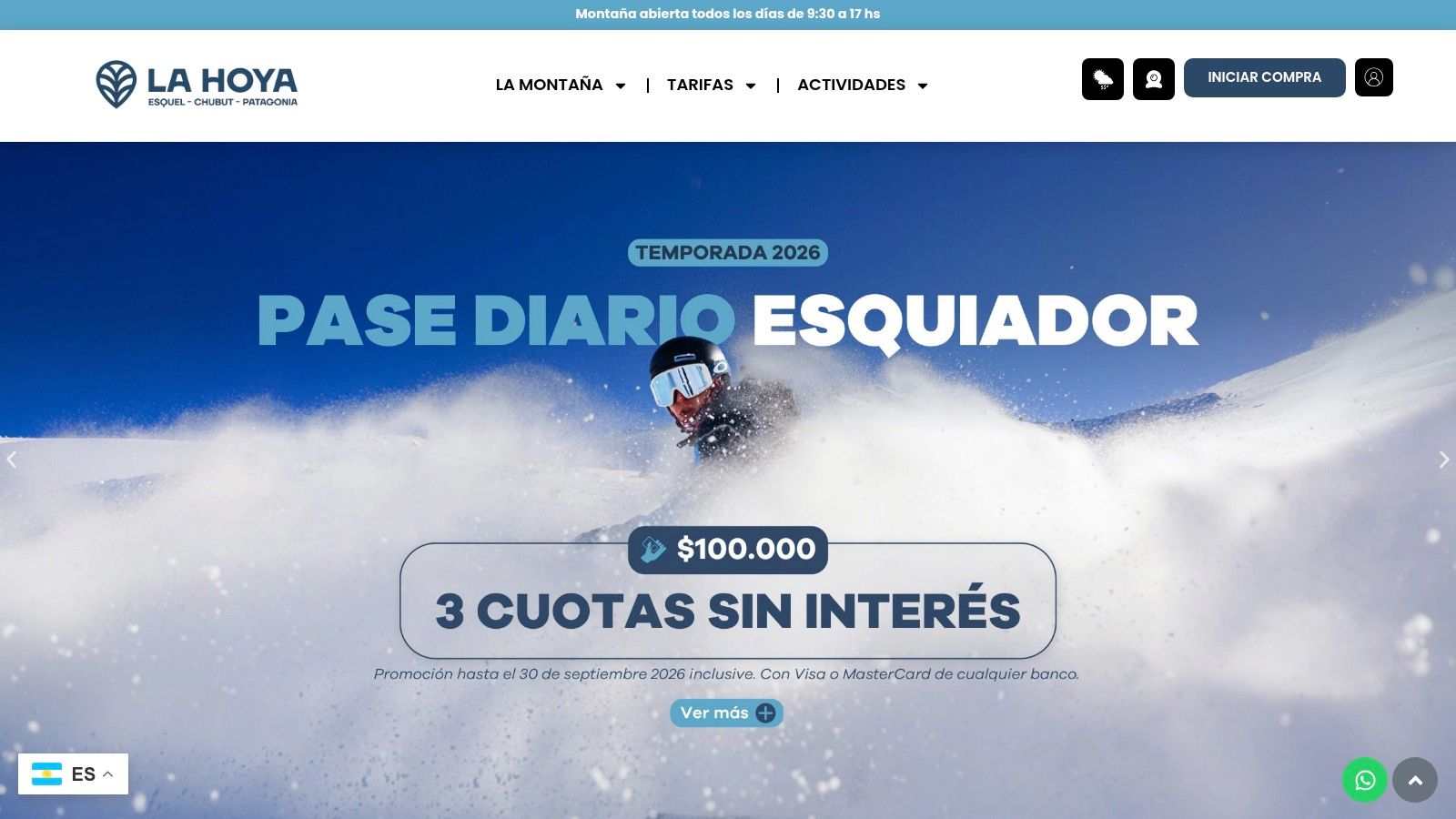
6. La Hoya in Esquel
La Hoya is the late-season specialist. Its south-facing amphitheater holds snow well, and the resort's projected operations into early October in 2026 make it a practical option for travelers whose dates fall after the core winter window, as reported in Argentina's resort season information.
The resort sits close to Esquel, with the mountain roughly 12 to 13 kilometers from town, according to La Hoya's official resort information. That short transfer keeps the base simple. Guests can stay in Esquel, use a private vehicle, and reach the slopes without the extended daily logistics associated with more remote valleys.
A quieter trip with strong spring logic
La Hoya suits improving intermediates, families, and experienced skiers who prefer less crowded pistes to a highly commercial resort environment. The compact layout helps groups regroup, while the relaxed atmosphere makes it easier to build a trip around unhurried days and late-season turns.
The compromise is clear. La Hoya has a smaller area, a simpler lift network, and fewer on-mountain amenities and lodging choices than Catedral, Chapelco, Las Leñas, or Castor. It shouldn't be selected for nightlife or extensive resort infrastructure.
Luxury here comes through privacy and smooth execution rather than grand hotel density. Arrange a private transfer from Esquel, pre-book equipment and instruction, and pair the ski days with regional nature experiences. For travelers comparing value, snow retention, and crowd levels, La Hoya is the disciplined choice when the calendar matters more than resort scale.
7. Caviahue in Caviahue and Copahue
Caviahue is Argentina's best relaxed family-and-wellness combination. The resort is set among araucaria forests at the base of the Copahue volcano, and the surrounding thermal experiences give the destination a purpose beyond skiing.
The mountain offers 13 lifts and approximately 22 marked runs across more than 300 skiable hectares, based on official and tourism figures presented through Caviahue's official website. Its online shop and bundled products can combine passes, lessons, rentals, and lodging, which is useful for families who want one coordinated booking path.
Ski slowly, recover well
Caviahue is suited to first-timers, children, and relaxed intermediates. The domain is smaller and less technical than Argentina's headline expert resorts, but that restraint helps families keep the day manageable. Snowmobiling, snowshoeing, and nearby thermal baths create easy alternatives when someone needs a rest day.
The town has a limited après-ski scene compared with Bariloche or San Martín de los Andes. That's a feature for travelers seeking quiet, but a drawback for guests who want restaurants, bars, and shopping after every ski day.
Build the itinerary around the thermal component rather than treating it as an optional add-on. A private transfer can connect the airport, lodging, mountain, and spa experiences while keeping young travelers comfortable. Caviahue is the confident pick for families who prioritize calm service, learning conditions, and recovery over vertical ambition.
Comparison of Argentinas Top 7 Ski Resorts
| Resort | Access & Logistics 🔄 | Time & Budget ⚡ | Expected Experience ⭐📊 | Ideal Uses 💡 | Key Advantages & Considerations ⭐🔄 |
|---|---|---|---|---|---|
| Catedral Alta Patagonia, Bariloche (Río Negro) | Easy access from Bariloche, multiple base areas, modern RFID skipass; can be busy at peak | Higher budget for luxury lodging, wide dining/nightlife options | ⭐⭐⭐⭐, Large, varied terrain with groomers, sidecountry and nightlife 📊 | Families, couples, groups seeking scale + après | Extensive lift network and services; may feel crowded during holidays; upper‑mountain weather risk |
| Cerro Chapelco, San Martín de los Andes (Neuquén) | Scenic mountain near walkable town; well‑organized operations and clear communications | Premium pricing vs regional peers; good pre‑sale Flexi options | ⭐⭐⭐, Polished grooming, scenic forested runs 📊 | Romantic escapes, families wanting quality ski school | Strong ski school and intermediate terrain; high demand in peak periods |
| Cerro Bayo Ski Boutique, Villa La Angostura (Neuquén) | Calmer access near Villa La Angostura; boutique, low‑crowd feel | Mid‑to‑high depending on bundled SkiPacks; strong e‑commerce bundles ⚡ | ⭐⭐⭐, Luxurious lakeside views, intimate slopes 📊 | Couples, luxury lodge stays, smaller groups | Fewer crowds and bundled services; smaller skiable domain and limited nightlife |
| Las Leñas, Malargüe (Mendoza) | Purpose‑built base with slope‑side hotels; remote mountain valley, weather‑sensitive | Travel and adventure costs can be higher; lift‑ticket tariffs published | ⭐⭐⭐⭐, Benchmark big‑mountain and expert terrain 📊 | Advanced/expert skiers and big‑mountain enthusiasts | Exceptional expert lines and ski‑in/ski‑out lodging; upper lifts can close in high winds; snow variable |
| Cerro Castor, Ushuaia (Tierra del Fuego) | Longest travel time from many origins; reliable operations and long season | Higher travel cost due to remote location; good season value for snow reliability | ⭐⭐⭐⭐, Consistent snow, long operating window, varied runs 📊 | Ski + Patagonia excursions, travelers seeking reliable snow | Long season and strong snow quality; flights/air schedules can be weather‑affected |
| La Hoya, Esquel (Chubut) | Short drive from Esquel; compact, south‑facing amphitheater | Very good value pricing; late‑season performance often strong ⚡ | ⭐⭐⭐, Quality late‑season powder and relaxed vibe 📊 | Value‑minded families, late‑season seekers | Excellent spring/late snow retention and calm atmosphere; smaller lift network and amenities |
| Caviahue, Caviahue / Copahue (Neuquén) | Scenic, lower‑key access near araucaria forests and Copahue baths | Value to mid pricing with bundled packages; spa pairings add appeal | ⭐⭐⭐, Relaxed, family‑friendly skiing and activities 📊 | Beginners, families, travelers combining spa/activities | Quiet ambience, learn‑to‑ski programs and thermal baths; smaller and less technical terrain |
Build the Right Argentine Ski Escape
The right choice depends on what the trip needs to deliver after the ski day ends. Catedral is the strongest all-round recommendation for maximum terrain variety, broad ability coverage, dining, nightlife, and access to Bariloche's luxury hotel inventory. It's the easiest resort to recommend for multi-generational groups, especially when different travelers want different versions of Patagonia.
Choose Chapelco for polished scenery, strong ski-school organization, and the boutique town atmosphere of San Martín de los Andes. Choose Cerro Bayo when the priority is a quieter mountain paired with a refined lakeside lodge in Villa La Angostura. Both work especially well for couples and families who value atmosphere as much as piste mileage.
Las Leñas belongs to advanced skiers who want steep terrain and off-piste potential. Book slope-side lodging, hire appropriate guiding, and allow flexibility for upper-lift closures. It's the most demanding resort in this roundup, and it rewards a trip designed around conditions rather than a rigid sightseeing schedule.
Choose Cerro Castor for the southern season, cold snow, and a wider Ushuaia itinerary that includes wildlife, nautical experiences, and snow activities. Choose La Hoya for value, late turns, a relaxed base, and strong spring-snow logic. Choose Caviahue for families who want learn-to-ski convenience and thermal experiences in the same journey.
Argentina's season generally runs from mid-June through early October, with July and August as the peak snow and demand period. September can bring lower prices and thinner lift lines while retaining decent conditions, according to reported Argentine ski-season guidance. Resort calendars vary, however. Some 2026 schedules run into October, while Chapelco and Las Leñas are projected to close earlier in September, so exact dates matter more than a single national ranking.
Before departure, verify operating dates, lift status, snow conditions, hotel inventory, and transfer timing. Review cold-weather resort packing tips, then have HauteBlack coordinate flights, lodging, private transfers, guides, equipment, dining, and surrounding experiences through its news and travel coverage.
HauteBlack can design a bespoke Argentine ski journey around your ability level, preferred resort atmosphere, hotel style, and travel dates. Visit HauteBlack to arrange lodging, flights, private or helicopter transfers, ski logistics, and the Patagonia experiences that turn a resort stay into a complete itinerary.
Explore Our Guides

Signature Experiences