Haute Black Journal
10 Must See in Morocco: A Luxury Travel Guide for 2026

Marlene Azeez
Director, HauteBlack
View all articles →
# 10 Must See in Morocco: A Luxury Travel Guide for 2026
June 9, 2026
Morocco earned its place as Africa's most-visited destination when it welcomed 17.4 million international tourists in 2024, a 20% increase from 2023, according to OAG's look at Morocco tourism growth trends. That scale changes how you should plan a high-end trip. The best riads, desert camps, mountain lodges, guides, and restaurant tables don't wait for last-minute decisions.
That's why a serious must see in Morocco guide can't just be a list of landmarks. Morocco rewards precision. The right hour in Marrakech, the right approach to Fès, the right camp in the Sahara, and the right number of nights between regions will decide whether your trip feels effortless or overbuilt.
Morocco also isn't a country to over-tour. Its headline destinations are spread across cities, mountains, desert, and coast, and many generic itineraries ignore the transfer time that separates them, as noted in Lonely Planet's overview of Morocco's best places to visit. If you want the country's icons without spending half your holiday in transit, you need curation.
For travelers who like to preview scenery before they commit, these natural wonders virtual tours are a useful way to start thinking visually about scale, terrain, and atmosphere. Then book the actual experience properly.
1. Marrakech Medina & Jemaa el-Fnaa Square
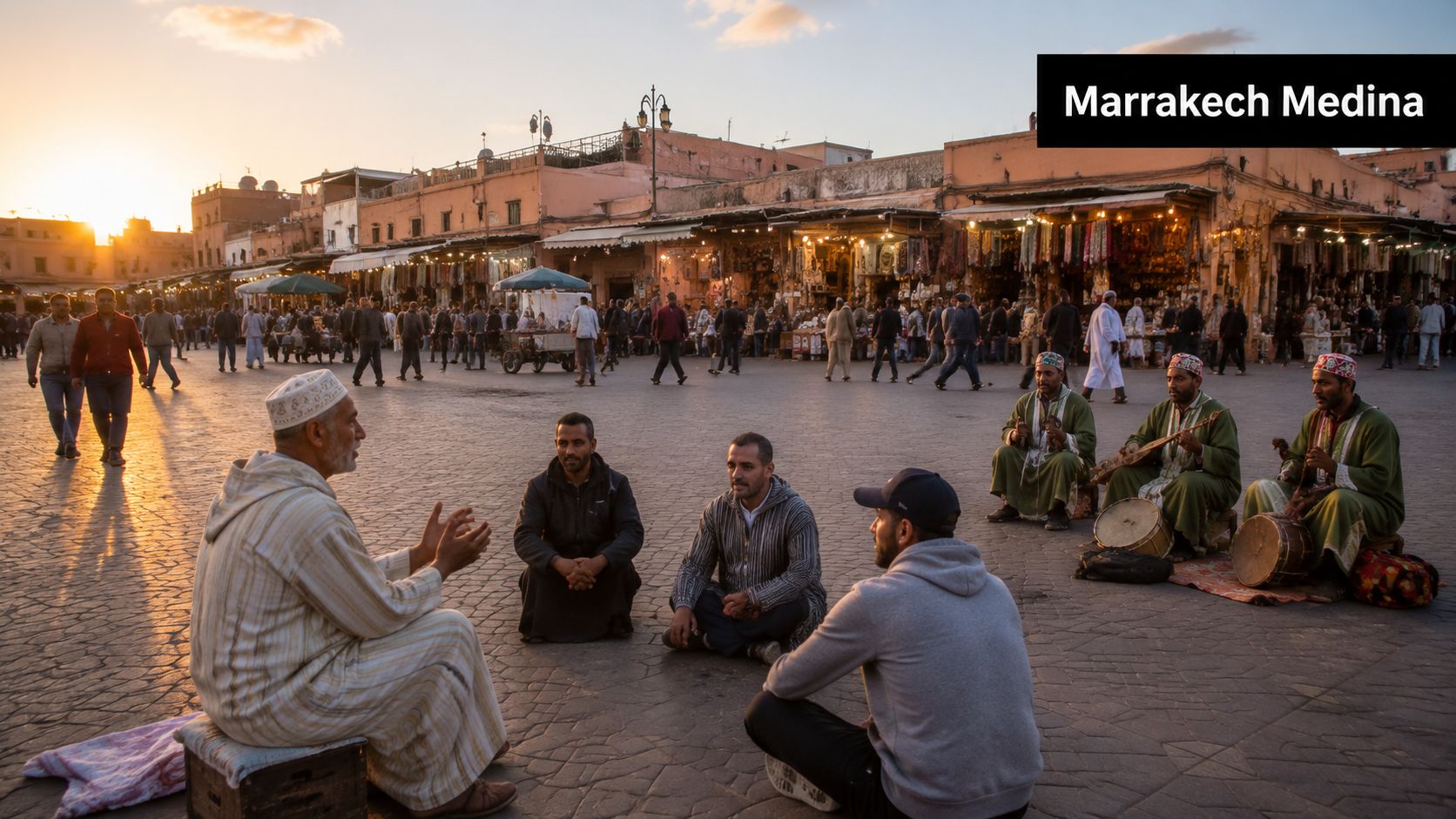
If you only have one city stop, make it Marrakech. It's the most electric expression of Morocco. The medina delivers the sensory rush people come for, but luxury travelers shouldn't experience it as a chaotic free-for-all. They should experience it with control.
Jemaa el-Fnaa is best handled in layers. Go early, before the square becomes performance and spectacle. Then return at sunset from above, with a reserved rooftop table and enough distance to absorb the scene without being swallowed by it.
How to do Marrakech properly
Start with a private guide you trust. Not a guide who waits in the square and improvises, but someone who can move you through hidden courtyards, vetted antique dealers, serious textile merchants, and quieter architectural stops. That's where bespoke luxury Morocco tours for 2026 become useful. The value is in access and pacing.
Use this structure:
- Early access: Enter the medina in the morning for quieter lanes, cleaner light, and fewer distractions.
- Selective shopping: Buy carpets, leather, ceramics, and lighting only through merchants with a reputation worth protecting.
- Sunset positioning: End at a rooftop overlooking Jemaa el-Fnaa, where the square shifts from market to theater.
Practical rule: Never make Marrakech your marathon shopping day without a guide. The city rewards discernment, not stamina.
A strong Marrakech day also includes one private add-on. A sunrise hot air balloon departure outside the city works well if you want contrast after the density of the medina. So does a private architectural walk through historic palaces and garden spaces. Marrakech is a must see in Morocco, but only if you experience both its intensity and its refinement.
2. Fès Medina - World's Oldest University City
Fès is where Morocco becomes intellectually serious. Marrakech seduces. Fès instructs. Its medina feels less staged, more intricate, and far more rewarding for travelers who care about craft, religion, scholarship, and old urban life.
You don't come to Fès for polished ease. You come for depth. The right approach is to stay in a refined riad just beyond the medina's most congested flow, enter early, and let an excellent guide handle the maze so you can focus on what matters.
Where luxury travelers get the most from Fès
The city reveals itself through workshops and thresholds. Metalworkers, tile artisans, leather craftsmen, restorers, and calligraphic details all tell you more than a checklist of monuments ever will. A private route should include the tanneries, but not as a rushed photo stop. It should also include artisan ateliers where the transaction is secondary to the conversation.
Fès works best for travelers who appreciate the following:
- Craft immersion: Commission leather goods, trays, or custom home pieces directly from established workshops.
- Architectural access: Prioritize riads and religiously significant spaces visible through a guide who understands etiquette and context.
- Measured shopping: Buy less, but buy better. Fès is where quality reveals itself slowly.
Fès is the city for people who'd rather return with one exceptional object than ten forgettable purchases.
I also recommend treating Fès as a two-speed destination. Spend one half-day in the dense core, then use the second day for a lighter rhythm, a long lunch in a riad courtyard, a curated shopping visit, and time for reflection rather than more walking. Among every must see in Morocco stop, Fès is the one that suffers most from over-scheduling.
3. Sahara Desert - Merzouga Dunes & Camel Expeditions
The Sahara is not a box to tick on a drive across the country. It is the trip's emotional center if you give it time. If you rush in for one night, you'll remember the transfer. If you stay long enough, you'll remember silence, scale, and light.
Luxury in the desert isn't excess. It's privacy, excellent bedding, proper guiding, thoughtful camp design, and enough time between arrival and departure to let the natural surroundings work on you. Morocco's tourism infrastructure has expanded significantly, and that broad demand has tightened premium inventory in places like Marrakech and the coastal circuits, which matters when you're building a desert extension from a high-end itinerary, as noted earlier in OAG's tourism analysis.
A visual preview helps set expectations for the scenery:
What to book and what to skip
Book a private camp with space between tents, a serious food program, and guides who understand discretion. Pair camel time with a 4x4 transfer strategy. Camel rides are atmospheric at sunrise or sunset. They are not the best use of your time as a long logistics solution.
For travelers who love big dune expanses elsewhere, this is also a useful comparison point with a luxury guide to the Namib sand dunes, especially if you're deciding which desert experience better suits your style.
My recommendations are simple:
- Stay longer: Give the Sahara at least enough room in the itinerary to settle in, dine under the stars, and wake to the dunes without rushing out.
- Use private vehicles strategically: Arrive by 4x4, then ride camels only for the most cinematic segments.
- Add one active layer: Sandboarding, a desert cooking session, or a guided stargazing evening all work better than overpacking the day.
The Sahara is one of the clearest answers to the question of what's a must see in Morocco. It just needs proper pacing.
4. Atlas Mountains - Trekking & Berber Village Experiences
The Atlas Mountains give Morocco shape. They also give your itinerary relief. After the density of the cities, the High Atlas and surrounding ranges restore proportion. Air, distance, stone villages, walnut groves, terraces, and long views do what no spa can.
Don't treat the mountains as a day-trip add-on unless time forces your hand. A luxury traveler should use them as a full design element in the journey, with a private lodge, a trusted mountain guide, and routes matched to fitness and interest rather than generic hiking templates.
The right mountain strategy
The most elegant itineraries use the mountains in one of two ways. They either place the Atlas directly after Marrakech to decompress, or they place it before the desert to create a dramatic natural progression.
What matters most:
- Private transport to trailheads: This cuts wasted time and keeps the day controlled.
- Guides with local ties: Village visits should feel respectful and informed, not performative.
- Comfort after exertion: Choose a mountain lodge where fireplaces, terraces, hammams, and polished service are part of the experience.
A mountain day can be demanding without becoming rough. One route might include a morning trek through Berber villages, a private lunch with valley views, and a hammam back at the lodge. Another might focus on gentle walking, photography, and tea in a family home arranged through local contacts. Both are valid. The mistake is assuming every Atlas experience has to feel expeditionary.
5. Essaouira - Coastal Elegance & Atlantic Beach Culture
Essaouira is where you go to exhale. It has enough visual beauty, food culture, and Atlantic atmosphere to feel distinctive, but it doesn't press itself on you the way Marrakech does. That's exactly why discerning travelers need it.
The city works beautifully as a palate cleanser between inland intensity and a broader Moroccan circuit. Sea air, whitewashed walls, ramparts, galleries, and excellent seafood create a lighter register. The luxury version isn't about formality. It's about rhythm.
Why Essaouira belongs on a refined itinerary
Book an ocean-facing room or suite, not just a medina stay with nice décor. In Essaouira, the sound and view of the Atlantic are part of the product. Then balance your time between the fortified old town and the waterfront.
Prioritize these experiences:
- Sunset sailing: A private boat outing gives the city a different profile and makes the coastline feel expansive.
- Gallery appointments: Essaouira's creative scene rewards introductions. Go beyond casual browsing.
- Seafood with intention: Visit the port in the morning, then take a private cooking class or a long lunch focused on local catch.
The city's breezy informality also makes it ideal for travelers who don't want every meal to feel ceremonial. Have one polished dinner, one casual seafood lunch, and one aperitif-driven sunset session on a terrace. That mix suits Essaouira better than over-dressing it.
6. Kasbah Ait Benhaddou - UNESCO Fortified Settlement
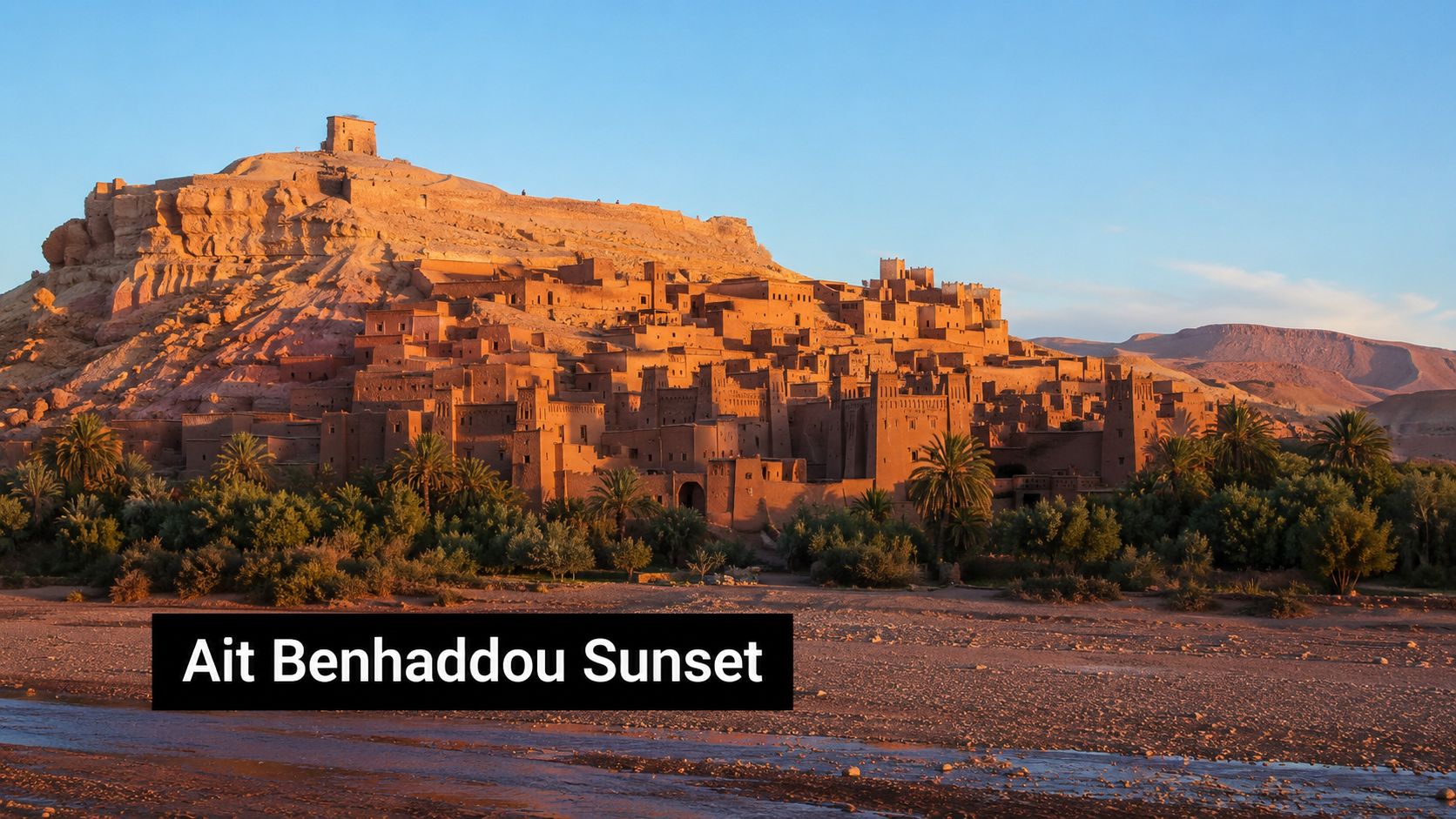
Ait Benhaddou is one of Morocco's most cinematic places. The earthen architecture, stacked forms, and desert light make it almost too perfect. That's why timing matters. In the wrong hour, it can feel like a stop on a crowded route. In the right hour, it feels timeless.
Don't arrive in the middle of the day expecting atmosphere. Arrive early or late, when the color shifts and the kasbah regains its drama. Then stay long enough to see it from multiple vantage points.
Best way to experience the kasbah
Cross the river, explore the settlement with a licensed guide, then pull back and study it from the opposite side. The second view is often the one people remember. It reveals the architecture in context rather than in fragments.
Handle the visit this way:
- Book a proper guide: The kasbah is visually powerful, but historical context makes it richer.
- Allow for photography: This is one of the few places where a private photographer can be worth the arrangement.
- Pair it intelligently: Ouarzazate and neighboring kasbahs make sense nearby. Don't force too many stops in one afternoon.
The best Ait Benhaddou visit feels unhurried. You're there for texture, light, and silence as much as architecture.
For luxury travelers, this stop works best within a broader overland route that includes a polished base in Ouarzazate or a refined countryside property nearby. It's a must see in Morocco because the image is iconic. It earns its place when the experience is paced with care.
7. Blue City of Chefchaouen - Mountain Medina & Photography
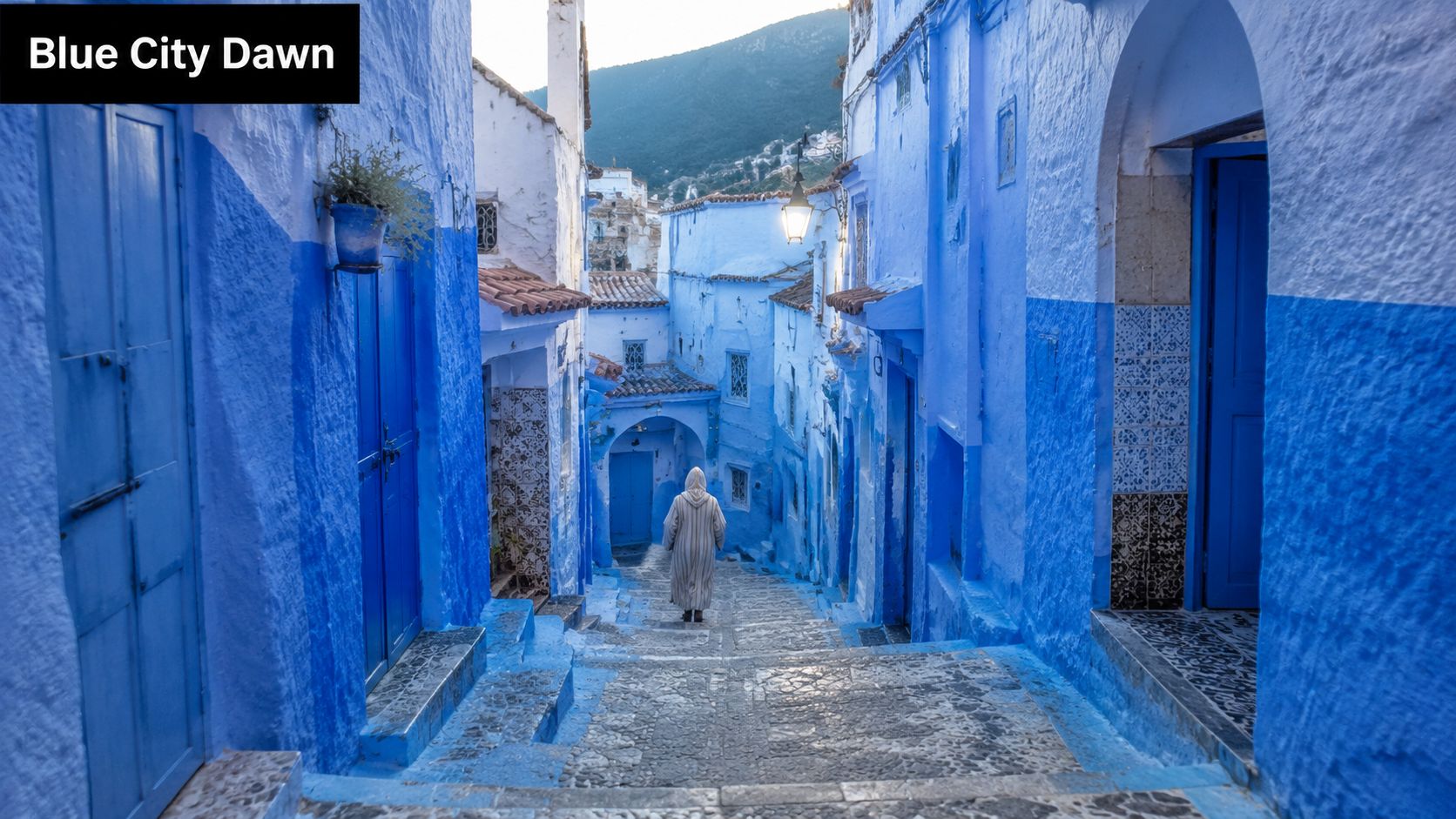
Chefchaouen is famous enough now that many travelers arrive expecting a photo set. That's the wrong mindset. The town is photogenic, yes, but its real luxury is intimacy. It's smaller, softer, and quieter than Morocco's heavyweights.
A good Chefchaouen stay gives you one of the rarest things in Moroccan travel: visual reward without relentless movement. You can walk slowly here. You can repeat a street at different hours. You can sit still and let the town come to you.
How to avoid the cliché version
Wake early. The best Chefchaouen happens before the day fully wakes up. Blue walls, empty lanes, doorways, staircases, cats, and mountain light all read better in the morning.
Build your stay around this pattern:
- Morning photography: Use the earliest light for your guided walk or private photo session.
- Midday retreat: Return to your riad terrace, have tea, and let the busier hours pass.
- Sunset hike or viewpoint: Finish with a private guided ascent to look back over the town.
Recent travel coverage and traveler discussions continue to focus on core icons like Marrakech, the Sahara, Todra Gorge, Dades Valley, Ouzoud, and Chefchaouen, but they also show that many travelers now want alternatives or timing strategies that preserve privacy and reduce the feeling of overexposure, as discussed in this travel video about Morocco's well-known and less conventional routes.
That's exactly the point here. Chefchaouen belongs on the list, but only if you treat it as a place to linger, not to collect shots and leave.
8. Casablanca's Hassan II Mosque & Modern City Culture
Casablanca earns its place on a luxury Morocco itinerary for one reason. It gives you access to the country's most cosmopolitan version of itself.
Come here for precision, not nostalgia. Hassan II Mosque delivers scale, craftsmanship, and a dramatic Atlantic setting that feels far more commanding in person than in photographs. The city around it adds something equally useful: polished hotels, serious restaurants, strong design sensibility, and the kind of urban comfort that suits an arrival night or a sharply edited final stop.
Where Casablanca works best
Keep Casablanca short and intentional. One or two nights is enough if the trip is built properly. Use it to recover from a long-haul flight, reset after the medinas and desert, or end with a refined city break that doesn't ask much of you logistically.
The smartest version of Casablanca is curated, not crowded. Book a private mosque visit as early as possible for better light, fewer distractions, and a more composed atmosphere. Pair it with a long lunch or a well-chosen dinner, then leave room for a gallery stop, an oceanfront promenade, or time to enjoy your hotel.
Your priorities should be:
- A private or priority-timed mosque visit: Go early and avoid the busiest public flow.
- A polished hotel in the right district: Use Haute Black's hotel booking support for luxury stays in Morocco to secure the address that matches your itinerary, whether that means Corniche views, Art Deco proximity, or a discreet business-luxury base.
- One standout meal: Casablanca rewards travelers who book the city's stronger contemporary tables instead of trying to cram in too much sightseeing.
This city suits travelers who value efficiency, privacy, and standards. It will not replace Marrakech for atmosphere or Fès for depth. It does something different, and on the right itinerary, better. Casablanca gives Morocco a refined modern edge, and that contrast improves the trip.
9. Draa Valley - Date Palms, Kasbahs & Desert Gateway
The Draa Valley is for travelers who understand that the road itself can be the experience. Long palm groves, kasbah silhouettes, ochre villages, and shifting desert edges make this one of Morocco's most satisfying overland sections.
This region doesn't shout. That's its advantage. While first-time visitors crowd the obvious icons, the Draa Valley gives you atmosphere, beauty, and cultural texture with a more private feel.
Why the Draa Valley deserves space in your itinerary
Treat it as a corridor of elegance rather than a transfer zone. A private 4x4 journey here should include carefully chosen stops, not a random chain of lookouts. You want one or two compelling kasbah visits, a scenic lunch, and enough time to watch the scenery change.
The sequence I like best includes:
- A slow drive, not a rushed crossing: Build in overnight stays in smaller towns with character.
- Curated kasbah visits: Focus on places with architectural integrity and meaningful local context.
- Late-day arrivals: This setting is at its best when the light softens and the valley glows.
If your Morocco route includes both mountains and desert, the Draa Valley is the elegant bridge between them.
This is also where a professional driver-guide earns their fee. Distances in Morocco can flatten an itinerary if nobody is actively shaping the route. In the Draa Valley, a skilled local team turns transit into narrative. That's the difference between seeing Morocco and understanding it.
10. Imlil Valley & High Atlas Trekking Base
If you want mountain authenticity without committing to a more remote expedition, Imlil is the answer. It sits close enough to Marrakech to be practical and far enough away to feel like a proper departure from city life.
Imlil is not about spectacle in the same way as the Sahara or Marrakech. It's about access. It gives you the High Atlas in a form that can be customized with precision, whether you want a gentle valley walk, a challenging trek, or a multi-day lodge-based mountain stay.
Who should choose Imlil
Choose Imlil if you want one of three things: a soft adventure after city time, a serious trekking base with comfort built in, or a shorter mountain segment that doesn't compromise standards. Morocco's broader market context supports continued investment and service upgrades, with the country home to 36.82 million people and the World Bank projecting 3.6% growth in 2025, according to the U.S. International Trade Administration's Morocco market overview. For travelers, that wider momentum shows up in better hospitality, transport, and service quality across major hubs and leisure regions.
Use Imlil well by focusing on:
- Custom pace: Don't book a generic trek if your goal is immersion rather than conquest.
- Layered comfort: Private porters, camp cooks, and polished lodge service are worth arranging.
- Smart pairing: Combine Imlil with Marrakech or nearby High Atlas properties for a balanced itinerary.
This is the mountain base I recommend most often to travelers who want substance without unnecessary complication. It rounds out a must see in Morocco itinerary with freshness, altitude, and a different kind of silence.
Must-See Morocco: Top 10 Comparison
| Destination | 🔄 Planning Complexity | ⚡ Resource & Access | ⭐ Experience Quality | 📊 Expected Outcomes | 💡 Ideal Use Cases |
|---|---|---|---|---|---|
| Marrakech Medina & Jemaa el-Fnaa Square | Moderate, crowded, navigation/guides recommended | High, central, many luxury riads nearby | Very high, iconic cultural immersion | Rich sensory experiences, photography, curated shopping | Luxury cultural immersion, rooftop dining, market tours |
| Fès Medina - World's Oldest University City | High, labyrinthine medina; guide essential | Moderate, fewer luxury options inside medina; allow extra time | Exceptional, deep historical authenticity | Scholarly/craft insights, bespoke artisan access | History-focused travelers, craft commissions, private guided tours |
| Sahara Desert - Merzouga Dunes & Camel Expeditions | High, remote logistics, physical demands | High resource/time, long transfers; luxury camps increase cost | Outstanding, transformative, immersive solitude | Stargazing, nomadic cultural connection, dramatic landscapes | Multi-day desert immersion, private 4x4 or camel treks |
| Atlas Mountains - Trekking & Berber Village Experiences | Moderate, route-dependent; altitude planning needed | Moderate, accessible from cities; variable amenities | High, scenic landscapes and authentic village life | Active immersion, photography, cultural exchange | Trekking itineraries, village stays, wellness & lodge packages |
| Essaouira - Coastal Elegance & Atlantic Beach Culture | Low, straightforward logistics, short transfers | Moderate, coastal access; seasonal wind affects activities | High, relaxed coastal and artistic character | Seafood dining, water-sports, art gallery experiences | Coastal retreats, seafood-focused dining, sailing or surfing |
| Kasbah Ait Benhaddou - UNESCO Fortified Settlement | Low–Moderate, short drive; limited onsite amenities | Moderate, accessible from Ouarzazate; day-trip friendly | Very high, visually spectacular and historic | Strong photography, film-location appeal, short cultural visits | Photography shoots, short cultural excursions, film-history tours |
| Blue City of Chefchaouen - Mountain Medina & Photography | Low, small, walkable; best early for photos | Moderate, northern access; compact accommodations | High, uniquely photogenic and tranquil | Iconic photography, boutique shopping, gentle hikes | Photography retreats, boutique stays, short mountain hikes |
| Casablanca's Hassan II Mosque & Modern City Culture | Low, urban, easy logistics and transport hub | Very high, international airport, luxury hotels | High, strong modern-architecture and urban culture | Architectural appreciation, convenient transit, dining | Arrival/departure city, architecture tours, business travel |
| Draa Valley - Date Palms, Kasbahs & Desert Gateway | Moderate, requires private transport and time | Moderate–Low, long drives, limited luxury options | High, scenic contrasts and authentic rural life | Dramatic driving vistas, cultural encounters, 4x4 exploration | Scenic road journeys, multi-day transitions to Sahara, private 4x4 tours |
| Imlil Valley & High Atlas Trekking Base | Low–Moderate, close to Marrakech; trekking logistics | High, short drive, established guide/lodge network | High, accessible mountain treks with comfort options | Mountain treks, acclimatization, village experiences | Short treks, family-friendly mountain stays, combine with Marrakech |
Orchestrating Your Moroccan Masterpiece
Morocco can feel world-class or badly diluted. The difference is rarely budget alone. It comes down to route design, timing, and who is arranging access before you land.
Demand is rising sharply, as noted earlier, and the best parts of Morocco are no longer forgiving of casual planning. The riad with the right courtyard suite gets taken. The desert camp with genuine spacing between tents sells out. The guide who can move you through Fès without wasting half a day on tourist-grade stops is already committed to other clients. If you want the country at its best, book early and book with intent.
Morocco's long tourism growth has improved roads, flight access, hospitality standards, and the quality of top-end properties. It has also created a more competitive market for standout rooms, specialist guides, and private drivers who understand discretion, pacing, and service. That is the primary planning challenge.
Build the trip around energy, not geography alone. Start with Marrakech if you want impact, shopping, design, and polished hotel service. Give Fès proper time if craftsmanship and intellectual history matter to you. Reserve the Sahara for the middle or later part of the trip, when you can slow down enough to enjoy it instead of treating it like a box to tick. Use the Atlas Mountains or Imlil to clear the visual and social noise of the cities. Place Essaouira where you want sea air, long lunches, and a softer finish. Add Chefchaouen only if you can reach it without forcing the entire itinerary off balance. Keep Casablanca practical. It works well for arrival, departure, and one sharp urban note, not for lingering without a reason.
Small decisions define the quality of this country. Book private airport assistance in Marrakech or Casablanca. Use a preferred-partner hotel program for upgrades, breakfast, and priority treatment that matters on high-occupancy dates. Ask for your medina guide by name, not just a generic half-day tour. Demand a desert camp with real privacy, proper bedding, and a dining setup away from the crowd. Put your longest drives between exceptional overnight stops so the transfer becomes part of the trip rather than dead time.
Packing matters here because Morocco asks more of a wardrobe than many travelers expect. You need polished city looks, practical layers for mountain mornings, and pieces that hold up in dust, wind, and dramatic temperature swings. This guide on how to unwind in style this summer is a smart companion for that side of the planning.
Haute Black is one option for travelers who want these details handled properly. The value is straightforward. Better hotel pairing, stronger local contacts, tighter ground handling, and contingency planning that protects the trip when weather, traffic, or operational issues interfere. In Morocco, that is what separates a costly itinerary from a refined one.
If you want a Morocco itinerary built around private riads, preferred-partner hotels, vetted guides, desert camps with real privacy, and efficient ground handling, speak with Haute Black. They can shape a trip around your pace, priorities, and access expectations without reducing Morocco to a rushed circuit.
Explore Our Guides


Signature Experiences


