Haute Black Journal
Bespoke Luxury Morocco Tours: The 2026 Ultimate Experience

Marlene Azeez
Director, HauteBlack
View all articles →
# Bespoke Luxury Morocco Tours: The 2026 Ultimate Experience
May 9, 2026
Morocco's most luxurious trips rarely look extravagant at first glance. They look effortless. That distinction matters.
The strongest signal is economic, not aesthetic. International luxury tourism in Morocco generated approximately USD 210 million in 2024, which confirms that the country's premium segment stands on its own rather than riding behind mass-market tourism, according to Statista's Morocco luxury tourism revenue data. Serious luxury markets develop systems of access: trusted hotel owners, discreet fixers, reliable drivers, table holds that never appear online, and the judgment to know when privacy is worth more than spectacle.
That's why the best luxury morocco tours aren't assembled from a list of famous hotels and photogenic stops. They're engineered around who opens doors, who smooths transitions, and who knows which experiences are worth the effort. A glamorous riad can disappoint if the arrival is chaotic, the hammam is performative, and dinner is set in the wrong room with the wrong noise level. A desert night can feel unforgettable or vaguely inconvenient based on transfer timing, luggage handling, tent placement, and whether the camp understands that a client may want silence more than entertainment.
Morocco rewards curation. It punishes lazy planning. The country can deliver palaces, mountain kasbahs, medina houses, Atlantic breezes, and Sahara stillness in one journey, but only if the choreography is precise. In a destination this layered, luxury is less about spending more and more about arranging the right sequence of privileges.
An Introduction to Moroccan Luxury
Moroccan luxury is defined by access. Anyone can reserve a beautiful suite. Very few can secure the right arrival, the right host, the right table, and the right level of privacy at every stage of the journey.
That distinction matters more in Morocco than in many luxury destinations because the country still runs on relationships. The best riads are often small, owner-led, and selective about who they prioritize. The best guides are not interchangeable. The strongest desert camps, private homes, ateliers, and dining rooms are rarely the options with the biggest public profile. They are the ones opened discreetly for the right client, on the right terms, with the right timing.
Luxury here depends on orchestration
A high-end trip in Morocco is built behind the scenes. It starts with knowing which riad owner will hold a favorite suite, which airport protocol team can shorten a difficult arrival, which road transfer should be replaced with a helicopter or private aircraft, and which chef will host a private meal rather than offer a standard tasting menu.
I have seen the difference repeatedly. Two travelers can stay in the same city, at the same nightly rate, and have completely different experiences based on guide quality, room allocation, dining access, and how well each transition is handled. In Morocco, those details shape the trip.
Practical rule: The reservation matters. The relationships around it matter more.
Generic luxury morocco tours usually stop at inventory. They can book a palace hotel, a photogenic camp, and a polished SUV. What they often miss is the ecosystem that makes the journey feel easy: direct communication with owners, trusted fixers inside the medina, discreet security when needed, advance handling of preferences, and the judgment to know when a public experience should become a private one.
Morocco rewards insiders
Morocco is an excellent luxury destination because it offers depth, not just glamour. A client can move from a fully privatized riad in Marrakech to a design-forward kasbah in the Atlas, then continue to the desert with proper comfort standards, polished service, and complete quiet. The challenge is not finding attractive places to stay. The challenge is linking them without friction, wasted time, or the small errors that break the mood of an otherwise expensive trip.
That is where expert curation shows its value. The best journeys are paced correctly. They avoid the medina entrance with poor access. They know which properties protect privacy and which market it. They arrange private shopping appointments with serious artisans, not retail theatre for visitors. They secure a dinner room that feels intimate, not merely fashionable.
For travelers who care about exclusivity, Morocco stands out because it can still feel personal. Done well, it is not a sequence of bookings. It is a controlled chain of introductions, privileges, and well-managed transitions that turns a beautiful trip into one that feels unusually well connected.
Why Choose Morocco for a Bespoke Journey
Some destinations excel at beach time. Others excel at culture. Morocco is unusual because it compresses several high-value travel moods into one country without forcing the experience to feel fragmented.
You can move from a polished urban arrival in Casablanca to a private riad in Marrakech, continue into the High Atlas for mountain air and slower lunches, then cross toward the Sahara for a radically different sense of silence. Few destinations let you change atmosphere this dramatically while keeping the trip coherent and luxurious.
Contrasts that reward good planning
A bespoke Morocco journey works because the contrasts are strong. The medinas sharpen the senses. The desert clears them. The mountains reset the body. The coast restores rhythm.
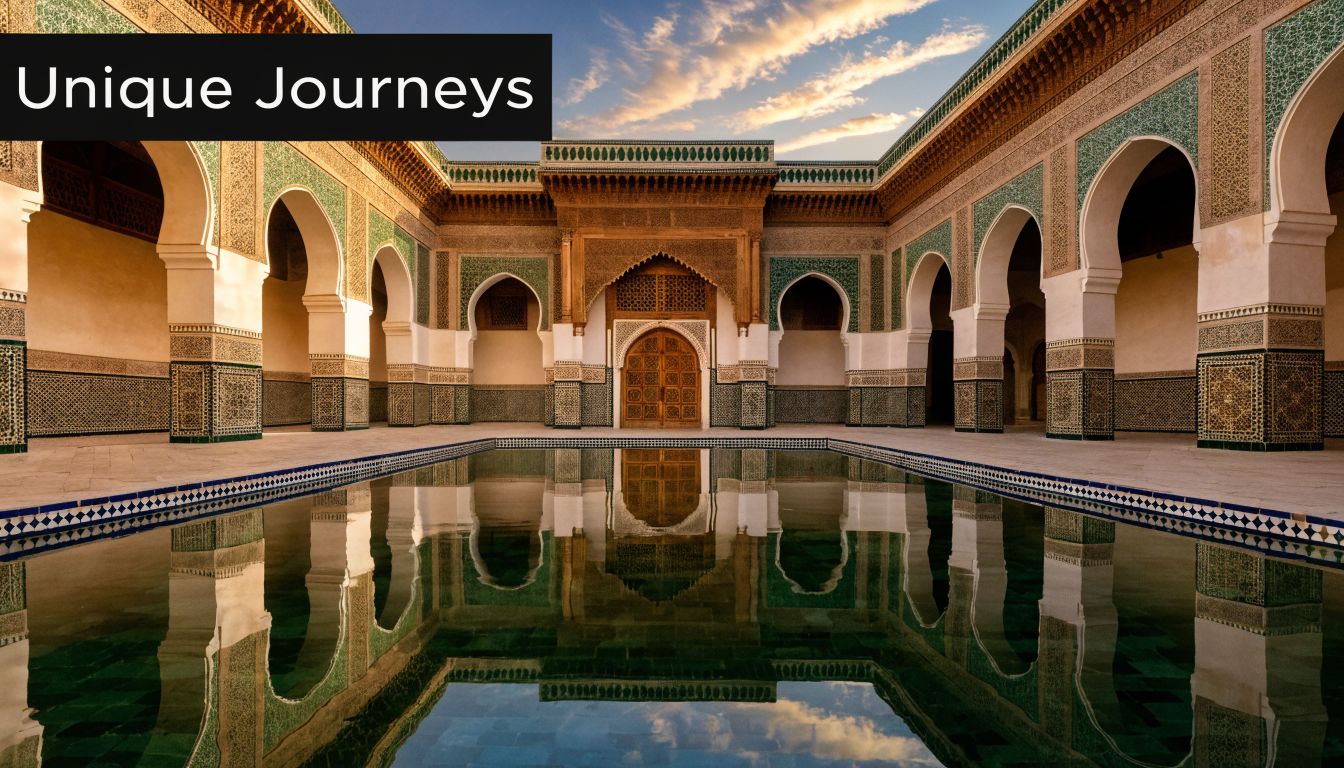
That range gives a travel advisor real material to work with. A honeymoon itinerary can lean into intimacy and beauty. A family trip can balance stimulation with downtime. A collector or design-minded traveler can move through architecture, craftsmanship, and private shopping appointments without the journey feeling academic.
Morocco also suits travelers who don't want luxury to feel sterile. Its best properties preserve soul. The finest riads still smell faintly of cedar, orange blossom, and polished plaster. The strongest grand hotels know how to deliver ceremony without stiffness. The best mountain retreats and desert camps create calm without flattening the setting into international sameness.
Hospitality with texture
Moroccan hospitality has another advantage. It accommodates both grandeur and intimacy well.
A client who wants formal service can have it. So can the client who wants breakfast served in a courtyard without interruptions, and an evening that unfolds around a private table rather than a social scene. That flexibility is one reason luxury morocco tours work so well for travelers with strong preferences. Morocco can absorb those preferences instead of resisting them.
Three things make the destination especially persuasive:
- Geographic drama: You can combine city, mountain, desert, and coast in one trip without sacrificing comfort.
- Cultural density: Arab, Berber, French, Andalusian, and African influences create a layered experience that feels more complex than a simple city break.
- Accommodation character: The country offers riads, palace hotels, kasbah lodges, and desert camps that feel distinct from one another rather than variations of the same template.
Morocco is one of the few places where a trip can feel both sensorially rich and deeply private, if the logistics are handled with discipline.
Why it suits discerning travelers
The ideal client for Morocco isn't only someone who likes beautiful hotels. It's someone who values context. Morocco gives luxury meaning because each setting asks for a different expression of it. In Marrakech, luxury may mean a hidden riad behind an unmarked door. In the Atlas, it may mean a terrace, a fire, and total quiet. In the Sahara, it means that remoteness doesn't cost you comfort.
That combination is difficult to copy. Many destinations can be exclusive. Fewer can be exclusive while also feeling culturally alive.
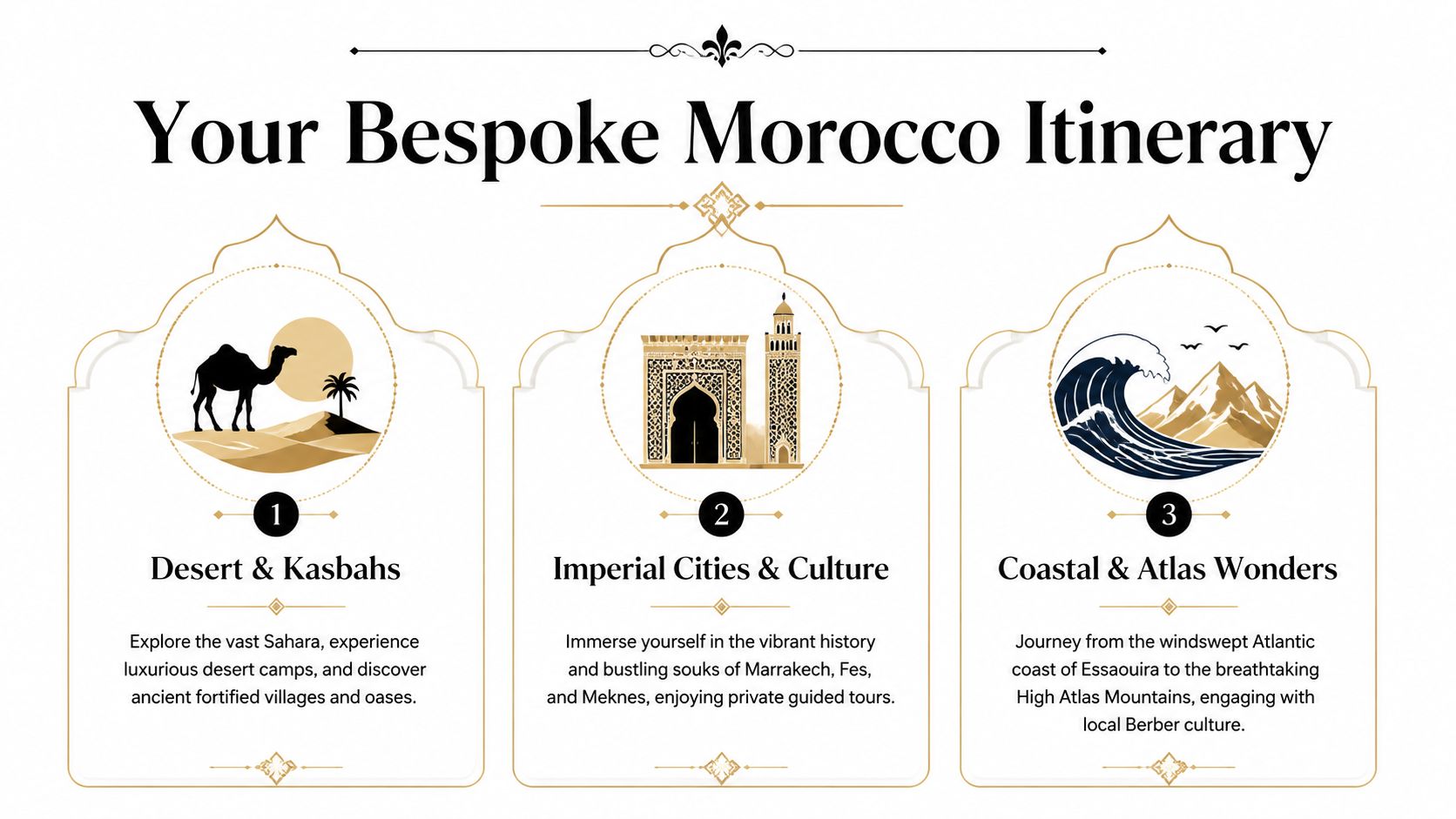
Imagining Your Bespoke Morocco Itinerary
The easiest way to understand luxury morocco tours is to look at how different travelers should move through the country. The same destination can support romance, family complexity, and serious cultural depth, but the route, tempo, and access points should change accordingly.
The romantic honeymoon
For a couple, the mistake is trying to cover too much ground. Romance in Morocco comes from atmosphere and transitions, not mileage.
Start in Marrakech with a riad that offers true seclusion rather than social theater. The right property will know when to keep service invisible. A honeymoon should include late breakfasts, a private hammam slot, a rooftop aperitif with no neighboring noise, and dinners designed around mood rather than trend. The medina can still be explored, but with a guide who understands that pace matters. A couple doesn't need a lecture at every doorway.
Then move into the desert. Many standard itineraries become generic at this stage. A luxury version gets the timing right, limits fatigue, and protects the arrival. Guests should reach camp before the day feels depleted, settle in properly, and experience dusk as an event rather than as the tail end of a transfer. The best camps create privacy around dinner and sleeping arrangements, so the night feels intimate rather than communal.
Finish on the coast or in the mountains depending on the couple. If they want windswept, artistic calm, the Atlantic suits them. If they want firelight and high-altitude stillness, the Atlas is stronger.
The multi-generational family journey
Families need something more technical. They don't need a prettier itinerary. They need one that respects different energy levels, dietary needs, bed configurations, and movement speeds.
Bespoke planning earns its fee here. Top-tier bespoke tours are increasingly designed for multi-generational groups, a segment representing 28% of HNW family travel, by incorporating features like wheelchair-friendly kasbah routes and nanny-led children's activities, according to Artisans of Leisure's Morocco luxury travel overview.
That fact reflects what works in practice. Grandparents may want architecture, gardens, and comfortable viewing points. Teenagers may want motion, food, and some freedom. Younger children need rhythm and familiar anchors. Parents need confidence that nobody's requirements are undermining the trip for everyone else.
A well-built family itinerary often includes:
- Private riad buyouts: Families do better when they can occupy a house fully and control noise, mealtimes, and circulation.
- Layered activity design: One branch of the family can take a deeper medina walk while another enjoys a shorter route and reconvenes for lunch.
- Mobility-aware sightseeing: Sites with uneven footing should be balanced with experiences that remain culturally rich without physical strain.
- Children's engagement: Craft sessions, garden lunches, cooking moments, and animal-free cultural experiences tend to outperform long historical explanations.
For travelers comparing options, customized package tours for private travel styles offer a useful way to think about how a single trip can be adapted around the people taking it, not an average guest profile.
The best family trips in Morocco don't force everyone into one speed. They create elegant points of overlap.
The cultural deep dive
For travelers who care about design, history, collecting, and craftsmanship, Morocco rewards depth. The wrong itinerary gives them a parade of monuments. The right one gives them access to process.
That might mean spending more time in Fes with a guide capable of discussing zellige, carved cedar, and restoration methods in a way that respects expertise. It might mean arranging private workshops with artisans whose work speaks to architecture, textiles, metal, or leather, rather than stopping at shops selected for convenience. It might also mean structuring Marrakech around private gardens, design-forward properties, and culinary experiences that connect region, technique, and presentation.
A cultural itinerary should also leave room for boredom in the best sense. Space to read in a courtyard. Time to revisit one quarter of the medina instead of trying to “complete” it. Lunches long enough to become part of the memory.
Three itineraries, three different truths
| Traveler type | Best focus | What matters most |
|---|---|---|
| Couple | Marrakech, desert, coast or Atlas | Privacy, pacing, atmospheric dining |
| Family | Marrakech, Atlas, selected desert or kasbah route | Flexibility, accessibility, room configuration |
| Cultural traveler | Fes, Marrakech, architectural and artisan access | Expert guiding, process, private visits |
Morocco can absorb all three beautifully. But only if the itinerary is built around the traveler first and the destination second.
The Hallmarks of Moroccan Accommodation
Accommodation defines the emotional tone of a Morocco trip. In few places does hotel choice affect the entire journey so strongly. In Morocco, where arrival sequences, medina geography, and service culture vary so much, a room is never just a room.
The best luxury morocco tours usually combine three accommodation types. A private riad for intimacy and location. A palatial hotel for scale and social ease. And an exclusive desert camp for controlled remoteness.
The private riad
A riad is often the most refined choice in the medina because it offers what large hotels can't. Silence behind a discreet door. Human scale. Control.
The difference between a good riad and a weak one comes down to management and layout. Some are beautiful but impractical, with too many stairs, poor acoustics, or courtyards that look refined in photographs yet feel dim at breakfast and noisy at night. Others understand flow: where to receive guests, where to serve dinner, which suite gets the best winter light, how to make a late arrival feel graceful.
For privacy-minded travelers, a fully staffed riad often outperforms a famous hotel. It allows for custom mealtimes, security awareness, and a stronger sense that the city belongs to you rather than that you are passing through it.
The palatial hotel
There are moments when only a grand hotel works. Larger spas. stronger gardens, more polished pool culture, easier entertaining, and the kind of arrival that suits clients who enjoy ceremony.
A palace hotel in Morocco should offer more than marble and reputation. It should give you room to breathe after the medina. It should have enough staffing depth to handle early departures, wardrobe requests, dietary complexity, and private tables without friction. It should also understand discretion. In luxury travel, visibility is not always a benefit.
Some travelers want both formats in one city. That can work well. Start with the medina in a riad, then move to a resort-style palace on the final nights for recovery, spa time, and a cleaner departure experience.
The desert camp
Standards matter most in this context. Too many travelers hear “luxury desert camp” and assume the phrase has a consistent meaning. It doesn't. Some camps are atmospheric but operationally rough. Others are engineered to deliver actual comfort.
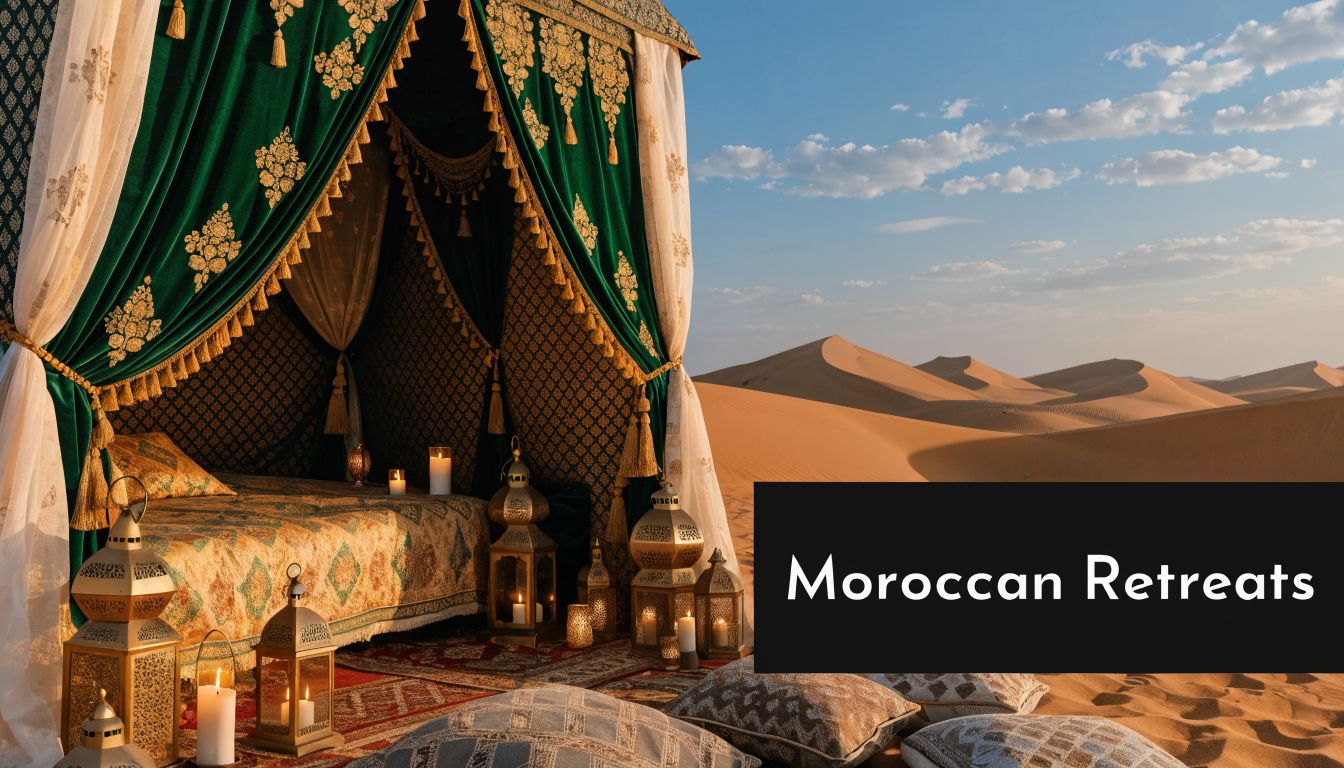
Top-tier Sahara desert camps replicate five-star hotel standards through technical engineering, featuring climate-controlled tents with solar-powered en-suite showers, Starlink satellite Wi-Fi, and private butlers, boosting guest immersion and comfort in extreme environments, as described in this review of luxury Morocco tour standards.
That sentence is useful because it shifts the conversation from romance to specification. In the desert, technical details are luxury. Temperature control, water reliability, dust management, private bathroom quality, and communication capacity determine whether the stay feels superior or like a compromise dressed in good styling.
For travelers reviewing luxury hotel and stay options, desert camp standards should be judged as rigorously as city hotels.
Don't ask whether a camp is “luxury.” Ask how it handles heat, water, sound, luggage, and private dining.
A practical comparison
| Accommodation type | Best for | Watch for |
|---|---|---|
| Private riad | Privacy, medina immersion, tailored service | Stair access, acoustics, light, staffing depth |
| Palatial hotel | Spa time, gardens, entertaining, formal arrivals | Scale that feels impersonal, room location, public traffic |
| Desert camp | One-of-a-kind setting, romance, remoteness | Transfer fatigue, technical comfort, communal feel |
What separates expensive from excellent
The expensive version of Moroccan accommodation focuses on décor. The excellent version focuses on orchestration.
That means pre-selecting suites rather than relying on category language. It means understanding whether a riad's rooftop catches wind at the right hour. It means knowing which palace wing offers garden quiet instead of driveway exposure. It means confirming whether the desert camp can serve dinner privately, wake guests gently before sunrise, and manage departure without chaos.
In Morocco, accommodation is not a background detail. It is the framework that makes the rest of the journey feel polished.
Curating Moments of Exclusive Access
Access in Morocco rarely announces itself loudly. It often appears as a smoother arrival, a closed door opened, a table held in the right room, or an introduction that changes the texture of an afternoon.
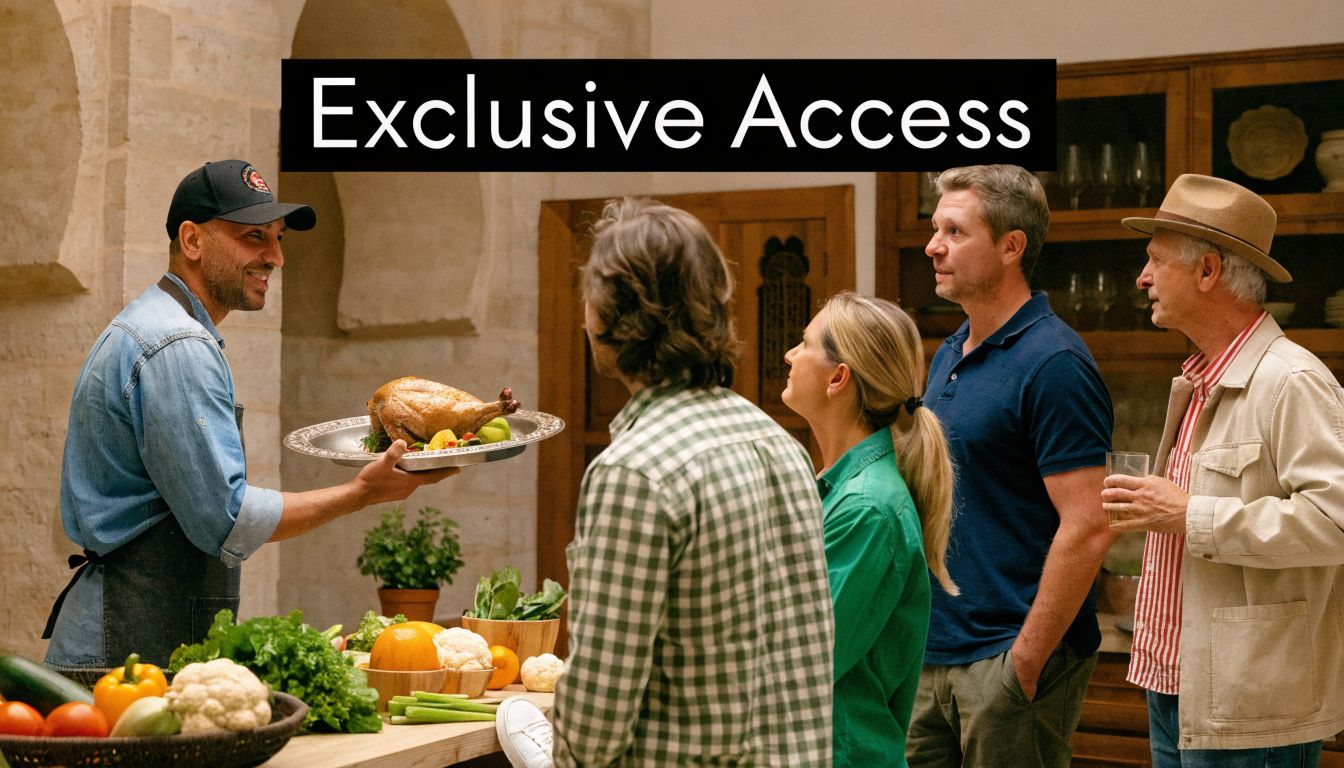
That's why the most memorable luxury morocco tours don't depend on public “VIP” experiences packaged for everyone. They depend on relationships. The owner who agrees to host dinner in a private salon. The curator who can welcome guests outside standard hours. The chef who is willing to cook for a small table because the request came through the right channel.
What access actually looks like
It might be a private dinner in a restored palace not marketed as a venue. The meal works because the room has been chosen for intimacy, the service team briefed in advance, and the menu adapted to the guests rather than pulled from a banquet template.
It might be a buying day in Fes with a specialist who knows which workshops still produce exceptional work, which antiques are decorative rather than important, and when to step in to protect a client from overpaying for provenance with no real foundation.
It might be a mountain lunch that feels spontaneous but was carefully staged. Helicopter or road transfer decisions made around weather, altitude comfort, and the client's tolerance for spectacle. Table placement set for privacy. Return timed to preserve energy for dinner.
The best access solves problems before it creates excitement
A common mistake in high-end travel is adding exclusivity without judgment. Not every private experience is worth having. Some are private because they are inefficient, awkward, or underwhelming.
The strongest advisors filter aggressively. They know when a public opening time is better than an after-hours visit. They know which chefs are brilliant in restaurants but weaker in residential settings. They know which medina experiences are best done with theater and which should be stripped back.
Three access moments that consistently matter:
- Private culinary hosting: Better than a difficult reservation when the setting and guest list are right.
- Expert-led shopping and sourcing: Essential for travelers interested in rugs, antiques, lighting, ceramics, or custom commissions.
- Controlled cultural access: Museum, garden, or architectural visits built around timing and interpretation rather than crowds.
A visual sense of the country's rhythm helps too.
The people behind the door
Morocco remains a relationship-driven destination. That benefits travelers when the right people are making introductions. It can also disappoint when a trip relies too heavily on generic concierge channels.
The rarest luxury in Morocco isn't simply access. It's access with taste.
A celebrated chef dinner means little if the room is too bright and the pacing feels staged. A private shopping session falls flat if the guide mistakes quantity for discernment. An exclusive transfer feels hollow if it interrupts the natural flow of the day.
The best moments are the ones that seem inevitable in hindsight. As if the city had always intended to welcome you that way.
The New Luxury Responsible and Sustainable Travel
Luxury in Morocco has changed. The best trips no longer rely on staged notions of authenticity. They are judged by discernment, by access handled with restraint, and by clear proof that every beautiful moment stands on sound local practice.
Morocco makes weak sustainability claims easy to spot. A photogenic village visit that leaves little value behind. A desert camp that mentions solar panels but cannot explain water sourcing, waste removal, or staff retention. An animal experience presented as heritage, with no serious answer on welfare standards. Affluent travelers notice those gaps quickly, and they should.
That scrutiny reflects a real shift in client priorities. 45% of luxury travelers prioritize sustainability, according to this analysis of overlooked angles in luxury Morocco travel. In practice, that means good planning now requires the same rigor for ethics that it already applies to villas, drivers, and dining rooms.
What sophisticated travelers should ask
The right questions are operational, not sentimental.
Who owns the camp or experience. Who is paid directly. Whether local partners set the terms or supply labor without setting terms. How water is managed in desert environments. Whether helicopter or high-speed routing is being used because it serves the journey, or because it sounds impressive on paper. If an experience involves horses or camels, what daily working conditions look like and what alternatives are available.
That level of detail is part of proper trip design. A serious luxury travel concierge service strategy should spell out the trade-offs before departure, not after a client starts asking uncomfortable questions on the ground.
A useful planning brief usually covers four points:
- Community benefit: who earns from the experience directly, and whether that structure is transparent
- Environmental management: how the property handles water, energy, and waste in fragile settings
- Animal welfare: what standards are followed, and whether the operator is willing to remove the activity if conditions fall short
- Cultural respect: whether the encounter is built around genuine exchange, privacy, and consent
Responsible travel, handled properly, often feels more luxurious
The strongest Morocco itineraries tend to be calmer and more precise. Fewer one-night stops. Less performative movement. Better meals because ingredients are sourced with intention and served in places that respect seasonality. Better pacing because the trip does not treat every region as a box to tick.
That is the trade-off many planners miss. Chasing maximum coverage often weakens both comfort and conscience. Staying longer in one riad, using the right overland transfer instead of a flashy air hop, or choosing a privately hosted meal with a chef who works closely with regional producers can improve the experience on every level.
Clients who care about standards often appreciate this approach once it is explained well. The goal is not austerity. It is refinement with judgment.
If an operator speaks beautifully about authenticity but cannot explain how a property hires, sources, conserves, and shares revenue, part of the luxury is missing.
Proof matters more than labels
Certifications help, but labels alone do not answer the questions that matter in Morocco. The stronger test is whether an operator can describe specific practices in plain language and connect them to the actual suppliers in your itinerary.
That includes knowing which riads invest in staff development, which camps can account for resource use without evasive marketing language, and which cultural encounters are structured by trusted local hosts rather than outside packaging. It also means having enough influence to ask difficult questions and enough judgment to walk away when the answers are weak. The MLR Worldwide Service concierge guide makes a useful broader case for that level of oversight.
Modern luxury travel in Morocco should feel polished, private, and well considered. It should also stand up to inspection. Proof, not performance, is the standard.
Booking Your Journey The Haute Black Advantage
A Morocco trip becomes exceptional when the operator controls quality at every pressure point: supplier selection, hotel influence, ground logistics, pace, access, and recovery when plans shift. That's why the booking channel matters far more here than in easier destinations.
The service model with the strongest practical edge is one built on vetted luxury networks and real local standards. Partnering with a Virtuoso-affiliated operator for a Morocco tour can enhance client satisfaction by 25-30%, as measured by NPS scores, due to enforced standards that guarantee exclusive perks like complimentary upgrades, resort credits, and access to vetted, multilingual driver-guides, according to this luxury Morocco operator benchmark.
Why affiliation changes the experience
That number matters because it reflects something clients feel immediately. Better pre-arrival handling. Better room prioritization. Better local partners. Better problem-solving when weather, traffic, or a schedule change threatens the tone of the trip.
In Morocco, those advantages are not cosmetic. They affect whether airport handling feels elegant or transactional. Whether a riad owner treats the reservation as standard or prioritized. Whether a guide can read a room and shift tone between a honeymooning couple, a CEO with limited patience, or a family managing three generations.
A good luxury operator should offer:
- Hotel influence: Strong relationships with brands and independent properties that translate into better suite allocation and recognition.
- Ground precision: Chauffeurs, hosts, and guides selected for discretion and judgment, not just language ability.
- Access management: The ability to secure experiences that require trust, timing, and reputation.
- Real contingency planning: Fast rerouting when a medina transfer, desert road segment, or weather-sensitive movement needs adjustment.
The difference between itinerary design and journey architecture
Many companies can draft a beautiful route. Fewer can architect the whole experience.
Journey architecture means connecting flights, private aviation options, road transfers, arrival windows, meal pacing, staffing, and room strategy into one coherent whole. It also means understanding the social dimension of luxury travel. Who prefers visible glamour. Who values invisibility. Who wants activity. Who wants friction removed so completely that the trip feels self-propelled.
For readers comparing models, this broader standard is discussed well in a luxury travel concierge services guide for high-touch planning. It aligns with a wider industry view that concierge value now comes from orchestration, not simple reservation-making. A useful outside perspective appears in the MLR Worldwide Service concierge guide, especially for travelers evaluating how deep a service team's involvement should go before, during, and after departure.
What a discerning client should expect
At the top end, travelers shouldn't settle for a company that merely responds quickly. They should expect one that anticipates.
That means understanding whether a client should enter Marrakech through a palace hotel first or retreat directly into the medina. Whether the desert should sit in the middle of the trip or near the end. Whether a family needs a private riad buyout instead of connecting suites. Whether a cultural traveler needs a scholar-guide, a design specialist, or only someone tactful enough to stay quiet at the right moments.
The right operator doesn't just make Morocco luxurious. It makes Morocco legible.
That is the advantage. Not more options. Better judgment.
If you want a Morocco journey built around privacy, access, and flawless execution rather than a generic list of hotels, Haute Black can design it with the level of precision discerning travelers expect.
Explore Our Guides


Signature Experiences


