Haute Black Journal
10 Interesting Facts About Zimbabwe for the Luxury Traveler

Marlene Azeez
Director, HauteBlack
View all articles →
# 10 Interesting Facts About Zimbabwe for the Luxury Traveler
Published July 25, 2026 by Marlene Azeez
Beyond the headlines, Zimbabwe is one of Africa's most rewarding places to travel well. The common advice stops at Victoria Falls and wildlife, but that's the shallow version. The true appeal is how history, scenery, culture, and lived economic reality all sit side by side, which is exactly why a discerning traveler can turn a good trip into something far more memorable. For context, the country's modern identity runs through independence in April 1980, a severe monetary collapse in the 2000s, and a rare official-language framework that now includes 16 official languages, facts that make it unusually layered for a destination that many still simplify. If you want the most polished version of the journey, use this as your starting point, then plan the rest with the same level of precision you'd expect from master game callers for hunting.
1. Victoria Falls Is the Signature Zimbabwe Experience, But the Luxury Is in How You See It
Victoria Falls earns its reputation, but the best experience has little to do with standing in the obvious crowd lines. The falls sit on the Zambezi River between Zimbabwe and Zambia, and the Zimbabwe side gives you some of the clearest access to the full drama of the water, spray, and gorge. The atmosphere changes completely when you approach it with a private guide, a helicopter transfer, or a lodge team that times your entry around light and traffic instead of convenience.
How to elevate the visit
Start early, stay private, and keep the experience layered. A sunrise helicopter is the most elegant way to understand the scale of the falls, while a bespoke ground visit lets your guide explain the geology, the river system, and the local setting without the rushed pace of a standard group tour.
Practical rule: Book Victoria Falls with a private guide and a slow, flexible schedule. The value is not just better photos, it's quieter access, better pacing, and room to pair the falls with nearby wildlife.
For a luxury traveler, the smartest itinerary pairs the falls with a more complete regional stay, rather than treating them as a one-night stop. That can mean a refined lodge base, a private sunset view, and a transfer onward to safari country instead of a generic one-size-fits-all package. A curated trip keeps the focus on exclusivity, not just sightseeing.
If you want to build the trip around the broader region, start with this guide to places to visit in Africa and use Victoria Falls as the anchor point, not the whole story.
2. Great Zimbabwe Gives the Trip Real Historical Weight
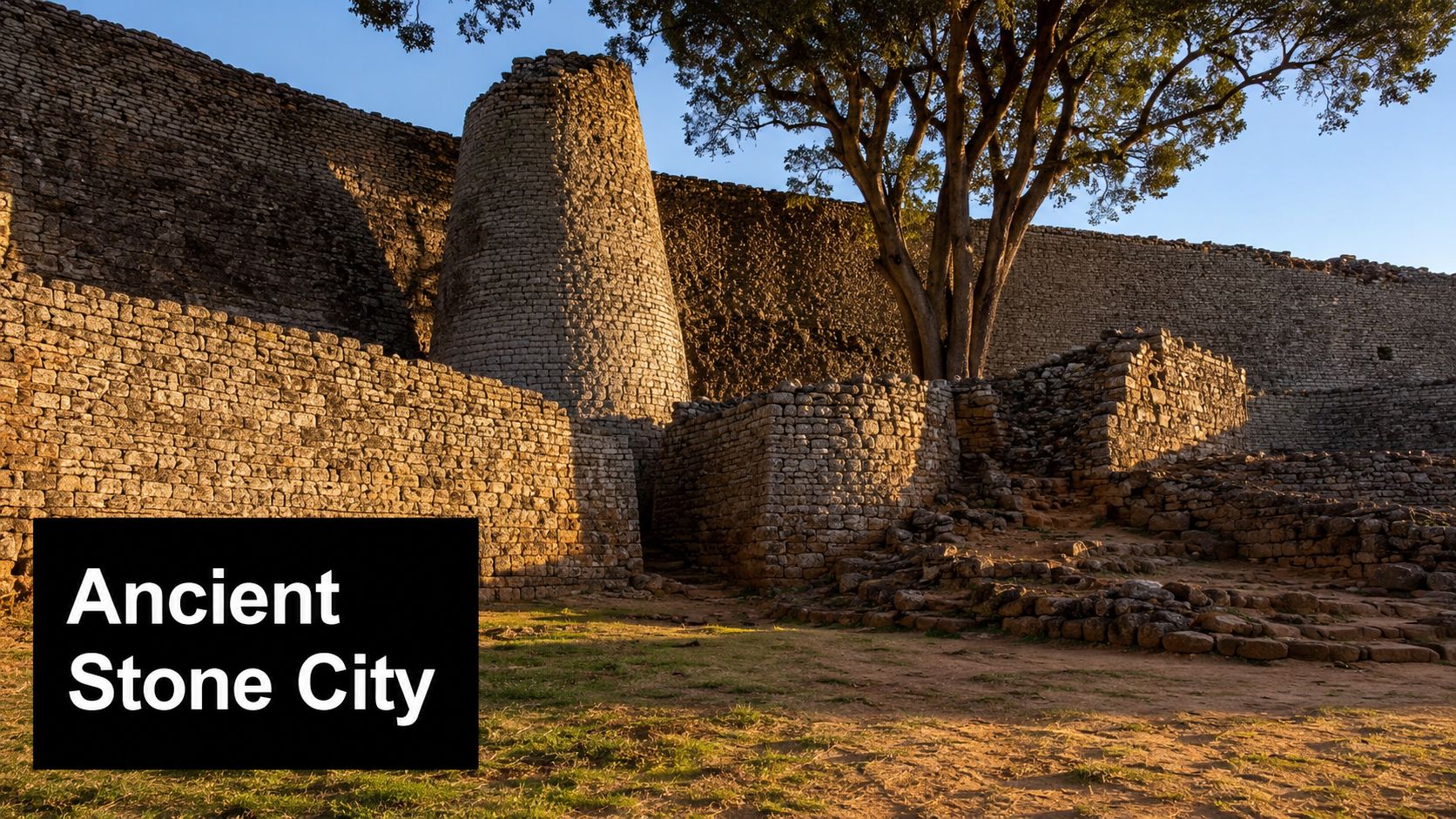
Great Zimbabwe changes the tone of any Zimbabwe journey. This is not decorative ruin-hopping, it is a serious archaeological site that gives the country depth far beyond safari scenery. The stone structures speak to the sophistication of the Shona civilization, and the experience becomes much richer when you visit with someone who can read the site as architecture, trade history, and cultural memory rather than just old walls.
What luxury travelers should do differently
Skip the rushed sightseeing model and treat Great Zimbabwe like a private cultural appointment. A strong advisor will arrange a specialist guide, often with historical or archaeological background, so you get more than surface commentary. That matters because the site's power comes from its scale, its dry-stone construction, and the feeling that you're standing inside a major chapter of southern African history.
The best approach is to pair the ruins with nearby cultural experiences, then stay in a comfortable base where the pacing stays relaxed. If your guide understands both the physical site and the living traditions around it, the visit feels intimate instead of academic. That's the difference between checking off a landmark and gaining a genuine understanding of it.
A private perspective also helps when you combine the ruins with local craft communities. That gives the journey a cleaner rhythm, architecture in the morning, artisan culture later, and no need to rush. The result is a more coherent and far more elegant travel day.
3. Hwange Is Where Zimbabwe's Safari Reputation Becomes Concrete
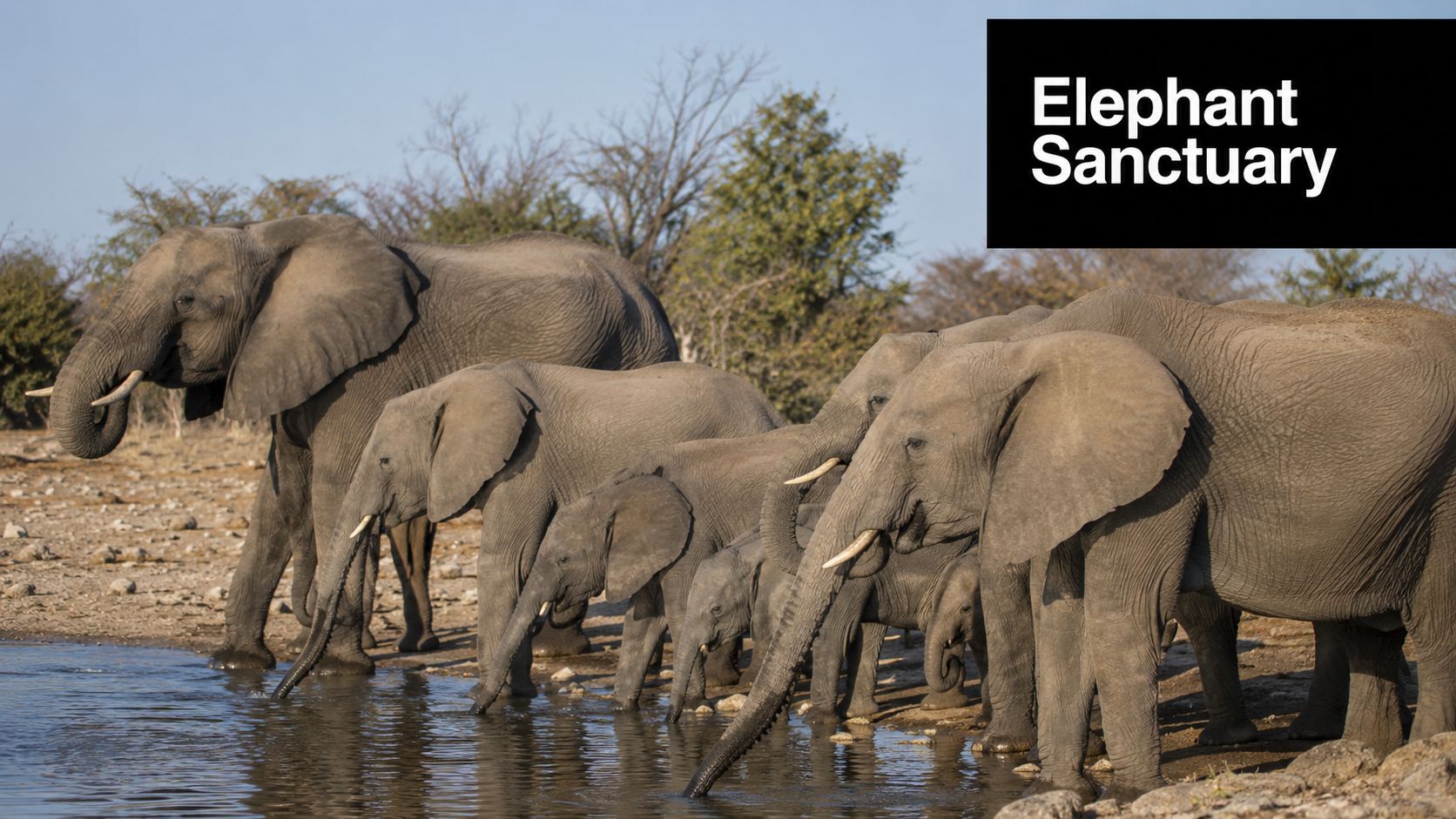
Hwange is Zimbabwe's heavyweight safari name for a reason. It is the country's largest game reserve, and it is especially prized for elephant viewing, with a concentration that makes the park feel alive even in the driest conditions. For luxury travelers, the value is not just the wildlife. It's the ability to see that wildlife from private concessions, with serious guiding and a slower, more exclusive operating style.
Why private access matters here
Hwange rewards patience and expert tracking. The park's water systems and seasonal conditions create excellent viewing, which is exactly why a good operator will structure game drives around the best light and animal movement rather than around a fixed timetable. Private guides also make a major difference if you want to understand elephant behavior, predator movement, and the subtler side of the ecosystem.
Practical rule: In Hwange, the guide matters as much as the lodge. Pay for expertise first, then for style.
A luxury safari here should feel designed, not assembled. That means private vehicles, thoughtful timing, and a camp or concession that prioritizes space and silence. It also means building in time for photography, since Hwange gives you some of the best chances in Zimbabwe to capture elephants in a clean, uncluttered setting.
For travelers who want a polished circuit, Hwange works beautifully with Victoria Falls. You get the spectacle of the falls, then the depth of a true safari reserve. If you want a refined southern African trip with real wilderness credibility, that pairing is hard to beat. Use this luxury safari guide to frame the experience properly, then tailor the rest to your pace.
4. The Great Zimbabwe Bird Is More Than a Symbol, It Is a Cultural Signature
The Great Zimbabwe Bird is one of those details that instantly separates a superficial trip from a meaningful one. It appears on Zimbabwe's national flag, but its importance is bigger than that. The sculpture connects archaeology, artistic identity, and national memory in a single object, which is exactly the kind of thing a culturally fluent traveler should know before arriving.
How to experience it properly
The cleanest way to engage with the bird is through the National Museum of Zimbabwe, where the presentation can give you context that a quick online search never will. Private museum access works particularly well here because it lets you slow down, study the carving, and ask questions about symbolism, craftsmanship, and the role of heritage objects in modern Zimbabwean identity.
A luxury traveler can deepen the visit by pairing the museum with a Great Zimbabwe site exploration and a conversation with contemporary artisans who still draw from traditional motifs. That creates continuity between past and present instead of treating the bird as a static relic.
Best practice: Treat heritage objects as living cultural reference points. The experience improves when you see the artifact, the ruins, and the contemporary interpretations together.
This is also a strong stop for collectors and design-minded travelers. Zimbabwe has a refined artistic language, and the bird is a clean example of how a national symbol can still feel elegant and resonant. If you want a trip that says something about taste as well as destination choice, include this.
5. Lake Kariba Turns Zimbabwe Into a Waterborne Safari Destination
Lake Kariba changes the entire feel of a Zimbabwe itinerary. It is one of the country's most distinctive natural experiences, part engineered reservoir, part safari corridor, part quiet luxury retreat. A houseboat on Kariba gives you a very different rhythm from a game drive, which is exactly why seasoned travelers use it to balance a land-based safari circuit.
Why it belongs on an upscale itinerary
The appeal here is composure. You can fish, watch birds, and drift through a broad water setting without the pressure of a constantly moving overland schedule. A private houseboat also gives you one of the most relaxed ways to travel in the region, with crewed service, customized meals, and enough space to make the experience feel properly exclusive.
For the right traveler, Kariba is where you slow the trip down without losing interest. It works especially well after a more active safari sequence because the atmosphere shifts from pursuit to ease. You're still immersed in wildlife and scenery, but the pace is more deliberate.
If you're building a polished itinerary, ask for a route that combines water time with a land-based extension nearby. That gives the trip shape. A sunset cruise with proper dining feels very different from a standard scenic boat ride, and that's the level of distinction worth insisting on.
The smartest luxury use of Kariba is not as an add-on. It is a stay in its own right.
6. Zimbabwe's Currency History Is a Serious Lesson in Resilience
Zimbabwe's monetary story is one of the most striking in modern African economics, and luxury travelers should understand it before arriving. The country's currency collapse in the 2000s remains one of the defining episodes in its recent history, and it still shapes how people think about value, payments, and planning. This is not just a banking footnote, it is part of the country's lived context.
Why this matters to a traveler
A well-run itinerary in Zimbabwe needs to account for practical realities with unusual care. That means confirming payment methods before travel, understanding how suppliers prefer to be paid, and keeping an eye on local currency conditions so the on-the-ground experience stays smooth. A private advisor earns their fee here by removing friction before it starts.
The most interesting aspect for visitors is that currency history can be experienced as culture. Museums, collections, and conversations with informed locals turn monetary history into something tangible. If you enjoy economic history, this is one of the rare destinations where the story is not abstract. It is visible, recent, and still relevant.
Strong advice: Treat local currency with precision, not casualness. In Zimbabwe, planning matters more than improvisation.
This is also where a luxury approach clearly outperforms a standard one. The more bespoke the travel, the more carefully the logistics can be managed. That means better supplier coordination, cleaner transfers, and fewer interruptions to the actual trip. For a country with such a complex monetary past, that kind of control is not a convenience, it's essential.
7. Mana Pools Is for Travelers Who Prefer Silence Over Spectacle
Mana Pools has a different kind of prestige. It is one of Zimbabwe's most refined wilderness experiences because it stays restrained, never overbuilt, never overexposed. That restraint is exactly the point. The park is best known for walking safaris, and that immediately separates it from a conventional drive-only safari. On foot, every sound, track, and pause becomes part of the experience, and the bush feels closer, sharper, and far more deliberate.
What makes it exceptional
The true luxury here is intimacy with the terrain. You move through the park with a guide who reads wildlife behavior, safety, and timing with precision. That creates a more visceral, more memorable connection to the bush, especially for travelers who have already done the classic vehicle safari elsewhere in Africa.
An exclusive camp in or near Mana Pools should feel understated rather than flashy. The setting is the point, not a long list of decorative features. For the right visitor, walking, canoeing, and photography combine into a highly individual wilderness itinerary because the experience is built around access and restraint, not noise.
Use this all-inclusive safari guide if you want a sharper framework for building a premium trip, then insist that your operator treats Mana Pools as a place for quiet, not spectacle. If you are still comparing routes across southern Africa, compare affordable safari countries to see where Mana Pools sits in your broader itinerary.
Practical rule: In Mana Pools, choose the guide before the camp. A brilliant guide changes everything.
If you want a safari that feels earned rather than packaged, Zimbabwe is the place to go.
8. Shona Culture Gives Zimbabwe Its Most Refined Human Texture
Shona culture is one of the clearest reasons Zimbabwe feels intellectually and artistically rich. The heritage includes sculpture, music, storytelling, and ceremonial traditions that still shape how the country expresses itself. For a luxury traveler, a trip here moves from observation to connection.
How to experience it in a way that feels authentic
Private studio visits with Shona sculptors are the strongest option. You see how the work is made, you hear the artist's process, and you can commission something directly if the relationship feels right. That is far better than buying from a passive retail setting, because the interaction becomes part of the experience rather than an afterthought.
Mbira performances are another essential layer. The instrument has a quiet power, and in the right setting it can make a cultural evening feel rooted rather than staged. Add a skilled cultural interpreter, and the evening becomes far more meaningful because you understand both the sound and the context.
Here's the most elegant way to structure it:
- Studio access first, so you understand the making process.
- Live performance second, so you connect the art to sound and ceremony.
- Gallery or collection visit last, so you see how contemporary work sits within a broader market.
This is the kind of experience that appeals to collectors, design lovers, and travelers who want more than scenic value. Zimbabwe has serious artistic depth, and Shona culture is one of the cleanest ways to encounter it. If you want to leave with something that carries memory and provenance, this is the route to take.
9. The Zambezi River Is the Thread That Holds the Experience Together
The Zambezi is the river that gives Zimbabwe its strongest sense of continuity. It shapes Victoria Falls, supports wildlife, opens the door to private cruising, and anchors some of the country's most polished water-based experiences. For a luxury traveler, that means the river should be treated as a design element in the itinerary, not just a scenic backdrop.
Why a river-centered plan works so well
A strong advisor uses the Zambezi to build variety without breaking the rhythm of the trip. One day can be a private cruise, another a guided wildlife viewing experience, and another a more active outing below the falls if you want a sharper edge to the journey. Sequencing matters, because the river changes with light, water levels, and location, and those shifts change the entire mood.
The river also gives Zimbabwe more range than many travelers expect. Open water, gorges, floodplains, and wildlife all sit within one connected corridor, and that makes the experience feel layered rather than repetitive. For travelers who care about detail, it is also the right place to consider interest points beyond scenery, including river ecology and even practical references such as identification and habitat for trout, which can inform planning for river-based activities.
If you want polished travel with movement, the Zambezi is the right organizing feature. A sunset cruise with proper service feels calm and private, while a more active water day gives the itinerary contrast. The result is a journey that moves cleanly between atmospheres instead of just moving between stops.
That flow is what separates a competent itinerary from one that feels carefully considered.
10. Zimbabwe's Landscapes Give You More Range Than Most Travelers Expect
Zimbabwe's diverse scenery is one of its most underused advantages. Granite kopjes, highland terrain, river valleys, and different vegetation zones create a visual range that lets you design a trip with real texture. That matters because luxury travel is strongest when the scenery changes in a deliberate, elegant way.
How to use the country's geography well
The Eastern Highlands offer a completely different mood from the Zambezi Valley, and the contrast is exactly what makes a bespoke itinerary feel rich. In one trip, you can move from rugged rock formations to cooler mountain air to river country, all without losing the country's identity. That kind of variation gives a journey momentum.
For photography-focused travelers, this is a gift. Scenic work becomes much stronger when the terrain itself is varied, and Zimbabwe gives you that variety in a compact, manageable way. A skilled guide can also help you read the land rather than just photograph it, which deepens the experience for anyone who cares about place.
Best approach: Build Zimbabwe as a sequence of landscapes, not a list of stops. The trip feels far more luxurious when every transfer changes the mood.
This is the point many travelers miss. Zimbabwe is not only about wildlife and heritage. It's also a country of strong visual contrasts, and those contrasts are what make a private itinerary feel custom-built.
10-Point Comparison: Interesting Facts About Zimbabwe
| Site | Complexity 🔄 (access & logistics) | Resource Needs ⚡ (time & cost) | Expected Outcomes ⭐📊 | Ideal Use Cases | Key Advantages 💡 |
|---|---|---|---|---|---|
| Victoria Falls | 🔄 Moderate, cross‑border travel; season affects visibility | ⚡ Medium, flights, transfers; luxury add‑ons raise cost | ⭐⭐⭐⭐⭐ 📊 Iconic vistas, dramatic mist, adventure activities | Luxury travelers, photographers, short adventure stays | 💡 Unparalleled spectacle; bespoke helicopter & premium viewing options |
| Great Zimbabwe Ruins | 🔄 Low–Moderate, multi‑hour travel; expert guide recommended | ⚡ Low–Medium, day trips; limited premium lodging nearby | ⭐⭐⭐⭐ 📊 Deep archaeological insight; architectural study | Cultural travelers, historians, academic tours | 💡 Unique pre‑colonial architecture; strong cultural narrative |
| Hwange National Park | 🔄 Moderate–High, remote; seasonal access; private concessions help | ⚡ High, safari lodges, vehicles, specialist guides | ⭐⭐⭐⭐⭐ 📊 Exceptional elephant viewing; high wildlife density; conservation programs | Luxury safaris, wildlife photographers, conservation tourism | 💡 World‑class elephant encounters; private concessions for exclusivity |
| The Great Zimbabwe Bird | 🔄 Low, museum/site access; originals are scarce | ⚡ Low, museum visits, guided interpretation | ⭐⭐⭐ 📊 Strong cultural symbolism; art‑historical insight | Art/history enthusiasts, museum visitors, cultural tours | 💡 Iconic national symbol; concentrated authentic artifacts |
| Lake Kariba | 🔄 Moderate, houseboat logistics; water level variability | ⚡ Medium–High, boat crews, guides, equipment | ⭐⭐⭐⭐ 📊 Waterborne safaris, trophy fishing, birding opportunities | Fishing enthusiasts, houseboat luxury travelers, birders | 💡 World's largest reservoir; unique lake‑based safari experiences |
| Zimbabwe Currency (decline & revival) | 🔄 Low, museum or economist‑led visits; sensitive topic | ⚡ Low–Medium, museum entry, expert consultations | ⭐⭐⭐ 📊 High educational/numismatic value; economic case study | Economists, collectors, educational tours | 💡 Powerful lesson in monetary policy and national resilience |
| Mana Pools National Park | 🔄 High, walking safaris require permits, fitness, season planning | ⚡ High, specialist walking guides, limited camps, logistics | ⭐⭐⭐⭐⭐ 📊 Intimate ground‑level wildlife encounters; uncrowded wilderness | Adventure luxury travelers, walking safari enthusiasts, photographers | 💡 Pioneer of walking safaris; exceptional intimate wildlife experiences |
| Shona Culture & Arts | 🔄 Low–Moderate, arrange studio visits, community access | ⚡ Low–Medium, translators, commissions, guided experiences | ⭐⭐⭐⭐ 📊 Deep cultural engagement; support for artisans; living traditions | Cultural travelers, collectors, patrons of contemporary African art | 💡 Living heritage with internationally recognized sculptors and music |
| Zambezi River | 🔄 Moderate, seasonal flows, safety protocols for river activities | ⚡ Medium, boats, certified guides, safety equipment | ⭐⭐⭐⭐ 📊 Diverse water‑based activities; links major sites (falls, parks) | River cruise guests, rafters, fishing and multi‑site itineraries | 💡 Versatile river activities; powers Victoria Falls and regional hydro projects |
| Zimbabwe's Geology & Landscapes | 🔄 Moderate, remote hikes, multi‑region travel, guide expertise | ⚡ Medium, guides, trekking gear, inter‑region transport | ⭐⭐⭐⭐ 📊 Exceptional landscape photography; varied ecosystems & microclimates | Hikers, geologists, landscape photographers | 💡 Dramatic granite kopjes, highland treks and diverse ecological zones |
Crafting Your Zimbabwean Journey
These facts are more than points of interest. They're the blueprint for a better trip. Zimbabwe rewards travelers who want context, privacy, and meaningful access, because the country's most compelling experiences sit at the intersection of history, terrain, and lived reality. A polished itinerary can move from Great Zimbabwe's stonework to the stillness of Mana Pools, then on to the water and wildlife of the Zambezi corridor without ever feeling rushed.
The strongest journeys also respect the country's complexity. Zimbabwe is not just a scenic safari destination, it is a place shaped by independence in 1980, a brutal monetary collapse in the 2000s, rapid population change, and a current operating environment that still demands careful planning. The luxury response is not to ignore that complexity. It is to use it as part of the story, then travel with a team that knows how to handle it gracefully.
That is where a high-end advisor earns real value. The right partner can secure private guides, time Victoria Falls for the best light, build a culturally serious visit around Great Zimbabwe and Shona art, and arrange wilderness stays that feel exclusive rather than crowded. The result is a trip with structure, discretion, and a sense of discovery that standard packages rarely deliver.
If you want Zimbabwe at its best, plan it as a bespoke sequence, not a checklist. Choose the moments that matter, insist on privacy where it counts, and let each stop complement the next. That is how an interesting destination becomes a memorable one.
A CTA for HauteBlack.
Explore Our Guides


Signature Experiences


