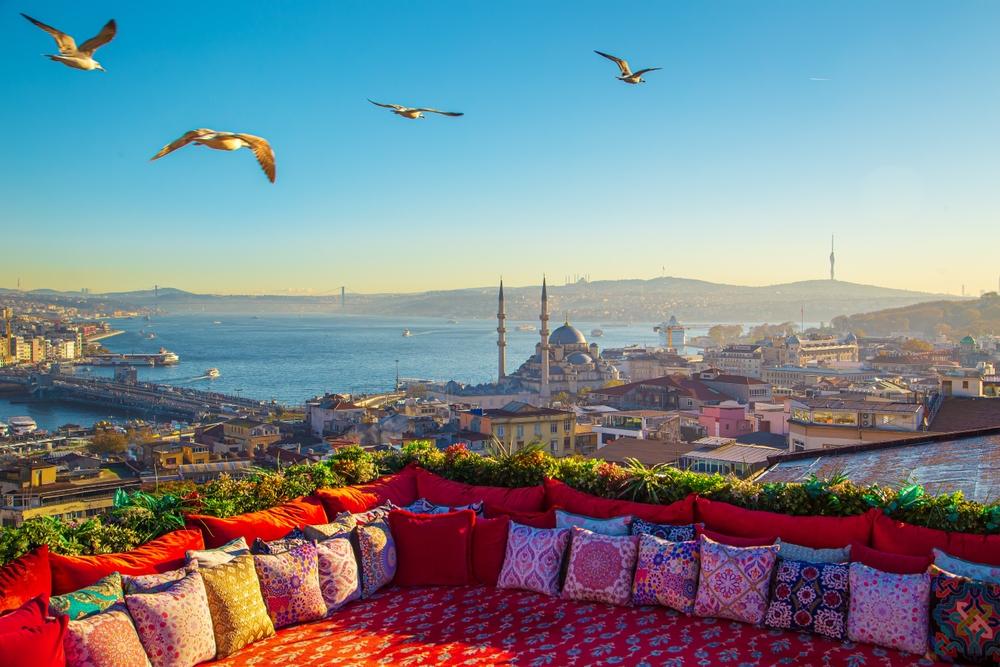
Marrakech, Fès, Meknès & Rabat, Morocco
Morocco Imperial Cities
A fully bespoke luxury journey, designed entirely around you.
DURATION
10–12 Nights
BEST TIME TO GO
March – May and September – November (best); December – February mild days, cool nights; June – August hot inland
IDEAL FOR
Discerning travelers seeking an extraordinary experience
A bespoke 10–12 nights journey through Marrakech, Fès, Meknès & Rabat, Morocco — designed entirely around your preferences, pace, and vision of extraordinary. Every detail is curated by advisors who know this destination from the inside.
Morocco Imperial Cities is North Africa at its most layered — the four royal capitals of Marrakech, Fès, Meknès, and Rabat, each with a walled medina, palace gardens, carved madrasas, and souks still organized by craft, plus the Roman ruins of Volubilis and the High Atlas on Marrakech's horizon.
HauteBlack designs this as an inquiry journey: Marrakech with a mountain day, three nights inside the medina of Fès, Meknès and Volubilis by private driver, and an unhurried Atlantic finish in Rabat. This is not a generic tour-bus circuit. It is one advisor shaping ten to twelve nights so drivers, licensed guides, riads, and artisan visits line up without guesswork.
Riads and hotels are confirmed for your dates through relationships. No hotel names appear here until verified for your party. For Africa's great wildlife journeys, see /experiences/kenya-migration-season, /experiences/botswana-okavango, and /experiences/cape-town-winelands-safari; for the Namib desert, see /experiences/namibia-desert-drive. Then tell us your dates and party size at /plan-my-journey (https://www.hauteblack.com/plan-my-journey).
What are the imperial cities of Morocco? Marrakech, Fès, Meknès, and Rabat — the four cities that have each served as a royal capital of Morocco, each with a historic center listed by UNESCO.
When is the best time to visit Morocco's imperial cities? Spring (March to May) and autumn (September to November) are best for walking the medinas; summer is very hot inland, and winter is mild by day with snow on the High Atlas.
How many nights do you need? Ten to twelve nights allows Marrakech and a High Atlas day, three nights in Fès, a Meknès and Volubilis day, and two nights in Rabat without rushing; add two to three nights for a Sahara camp.
Do I need a membership? No. Non-members are welcome. An advisor responds within 24 hours.
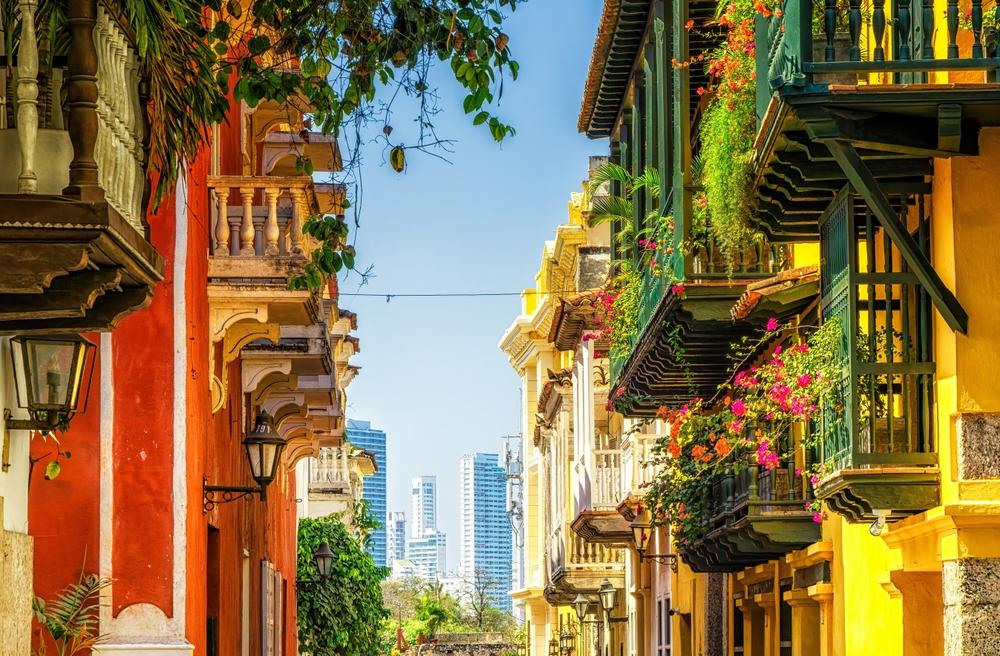
The Journey
Your Itinerary
Chapter 01
Chapter 01 — Why Morocco Imperial Cities
What are Morocco's imperial cities? Marrakech, Fès, Meknès, and Rabat — the four cities that have each served as the seat of a Moroccan dynasty. Together they hold most of the country's architectural memory: walled medinas, royal gates, Koranic schools carved in cedar and stucco, palace gardens, and souks still organized by craft. Each historic core is a UNESCO World Heritage Site. HauteBlack designs Morocco Imperial Cities as a ten-to-twelve-night inquiry journey: Marrakech and a High Atlas day, the medina of Fès with private guides, Meknès and the Roman ruins of Volubilis, and a calm Atlantic finish in Rabat, with one advisor accountable for every driver, guide, riad, and transfer. Riads and hotels are confirmed for your dates through relationships — never assumed from a listing.
Chapter 02
Chapter 02 — Arrival
Most journeys begin in Marrakech (RAK), with direct flights from Europe, or in Casablanca (CMN), Morocco's main long-haul gateway; inquire about Haute Jets for private arrivals into either. A private driver meets you planeside or at arrivals, and the first afternoon is kept deliberately light — a courtyard, a pot of mint tea, and an early dinner on a rooftop while the city settles into evening. Travelers arriving through Casablanca can see the Hassan II Mosque, one of the few mosques in Morocco open to non-Muslim visitors on guided tours, before continuing to Marrakech by car or train. Your advisor routes the first and last legs around your flights so you never backtrack.
Chapter 03
Chapter 03 — Marrakech
Marrakech is the most theatrical of the imperial cities: the Koutoubia minaret above the skyline, the square of Jemaa el-Fna filling with storytellers and food stalls at dusk, the painted cedar ceilings of the Bahia Palace, the Saadian Tombs, and the carved courtyard of the Ben Youssef Madrasa. A private licensed guide turns the souks from a maze into a sequence — leather, brass, textiles, spice — with introductions to artisans rather than commission-driven shops. Mornings at the Jardin Majorelle and the Musée Yves Saint Laurent come before the crowds; afternoons belong to the hammam and the pool. A day in the High Atlas — the Imlil valley beneath Jebel Toubkal, North Africa's highest peak, or a lunch in a Berber village — or a sunset on the stony Agafay plateau shows how close the mountains and the desert sit to the city.
Chapter 04
Chapter 04 — Fès Medina
Fès el-Bali, the old medina of Fès, is one of the largest car-free urban areas in the world and the spiritual and intellectual heart of Morocco. It is home to the al-Qarawiyyin, founded in 859 by Fatima al-Fihri and often cited as the oldest continuously operating university in the world, the Bou Inania and Al-Attarine madrasas, and the Chouara tannery, best seen from a terrace above the dye pits in the morning light. With roughly nine thousand lanes, a private guide is not a luxury here but the way the city opens: into a family workshop of zellige tilework, a weaver's loom, a copper-beater's alley, a courtyard lunch. Three nights in a restored riad inside the walls let Fès unfold slowly instead of in a single exhausting day.
Chapter 05
Chapter 05 — Meknès & Volubilis
An hour west of Fès, Meknès was the seventeenth-century capital of Sultan Moulay Ismail, whose monumental Bab Mansour gate, granaries, and stables show the scale of his ambition. Nearby, the Roman city of Volubilis — a UNESCO World Heritage Site — keeps its triumphal arch, basilica columns, and floor mosaics in an open landscape of olive groves and wheat fields, with the holy town of Moulay Idriss Zerhoun on the hillside above. Most travelers combine the two as a private-driver day on the road from Fès to Rabat, with an archaeologist-guide at Volubilis and lunch among the olive trees.
Chapter 06
Chapter 06 — Rabat & the Atlantic
Rabat, Morocco's capital, is the calm counterpoint to Marrakech and Fès: wide avenues, Atlantic light, and fewer crowds. The blue-and-white lanes of the Kasbah of the Udayas look over the mouth of the Bou Regreg river; the unfinished Hassan Tower and the Mausoleum of Mohammed V stand on the same esplanade; the Chellah necropolis layers Roman and Marinid ruins under fig trees and storks' nests. Two nights here make an unhurried ending, and Casablanca's international airport is roughly an hour away by car or by the high-speed rail link, so the final morning is calm rather than rushed.
Chapter 07
Chapter 07 — Atlas & Sahara Add-On
Can you add the Sahara to an imperial cities trip? Yes, but honestly: the dunes of Erg Chebbi near Merzouga sit roughly seven to ten hours by road from Fès or Marrakech, so a desert camp adds two to three nights rather than one. Your advisor will tell you whether it fits your dates and pace — or whether a High Atlas valley stay or a night on the Agafay plateau near Marrakech gives you mountains and open sky without the long drive. The route between Fès and Marrakech can also cross the Middle Atlas, through cedar forests and the alpine town of Ifrane, for travelers who prefer a scenic day on the road to a domestic flight.
Chapter 08
Chapter 08 — When to Go
When is the best time to visit Morocco's imperial cities? Spring, roughly March to May, and autumn, roughly September to November, bring warm days, comfortable evenings, and the best light for walking the medinas. Winter, December to February, is mild by day and cool at night, with snow on the High Atlas and quieter streets. Summer, June to August, is very hot inland in Marrakech and Fès, though Rabat and the Atlantic coast stay cooler. The dates of Ramadan move each year; daily rhythms, opening hours, and restaurant service shift during the holy month, and your advisor will flag it when planning. Festivals and holidays can fill the best riads early, so inquire as soon as your dates are known.
Chapter 09
Chapter 09 — How HauteBlack Designs It
HauteBlack is the private travel service of Haute Living: twenty years of relationships with the leadership of the world's finest houses, Virtuoso-affiliated preferred-partner benefits on qualifying stays, and a named advisor accountable before, during, and after. Private drivers, licensed guides, riads, artisan visits, and any desert camp are confirmed for your dates — never invented on a listing page. Pair Morocco with Africa's wild side at /experiences/kenya-migration-season, /experiences/botswana-okavango, /experiences/namibia-desert-drive, or the Cape and Sabi Sands at /experiences/cape-town-winelands-safari; then start at /plan-my-journey (https://www.hauteblack.com/plan-my-journey).
Make This Itinerary Yours
Every Haute Black journey is crafted around you — your passions, your pace, your vision of extraordinary. Tell us about yourself and we'll create something entirely yours.
Good to Know
Questions About This Journey.
Completely. Every HauteBlack journey is a starting point, not a fixed package. Your dedicated travel advisor will reshape every element — accommodations, pacing, dining, private guides, and experiences — entirely around your preferences, travel style, and what you want to remember. Nothing is off the shelf.
For peak-season travel and premium properties — particularly safari lodges like Singita Ebony Lodge or Delaire Graff Estate — we recommend booking 6 to 12 months in advance. For more flexible dates and destinations, 3 to 6 months is typically sufficient. Your advisor will always tell you honestly what's achievable in your timeframe and find alternatives if first-choice properties are unavailable.
No. All HauteBlack journeys are available without membership. You work with a dedicated travel advisor and receive Virtuoso preferred partner benefits — complimentary upgrades, resort credits, daily breakfast, and VIP arrival — on every qualifying stay, membership or not. Membership adds waived planning fees, a dedicated senior advisor, priority access to private events, and deeper concierge support.
A dedicated HauteBlack travel advisor contacts you within 24 hours — usually sooner. They'll start with a conversation, not a form. You'll discuss your vision, travel style, dates, and any preferences. From there, your advisor builds a fully bespoke itinerary proposal. There is no obligation and no planning fee for the initial consultation.
Before You Go
What to Expect
Marrakech Menara (RAK) and Casablanca Mohammed V (CMN) are the main gateways; Fès–Saïss (FEZ) serves Fès. Drives between the imperial cities run roughly one to seven hours, and a high-speed rail line links Casablanca and Rabat with Tangier. Most mosques in Morocco are closed to non-Muslim visitors; the Hassan II Mosque in Casablanca offers guided tours. Use licensed official guides in the medinas, dress modestly in religious and rural areas, and expect Ramadan dates to shift each year. A Sahara camp near Merzouga adds two to three nights. Your advisor shares current entry requirements. Share dates and party size at /plan-my-journey so we can say what is still realistic. Cross-link: /experiences/kenya-migration-season, /experiences/botswana-okavango, /experiences/namibia-desert-drive, /experiences/cape-town-winelands-safari.
Every HauteBlack itinerary is fully bespoke. While the journey outlined above represents our curated recommendation for Marrakech, Fès, Meknès & Rabat, Morocco, your dedicated travel advisor will tailor every element — from accommodations and dining to private guides and cultural immersions — to match your preferences, pace, and travel style.
Best experienced during March – May and September – November (best); December – February mild days, cool nights; June – August hot inland, this 10–12 Nights journey can be extended, shortened, or combined with neighboring destinations. Whether you're celebrating a milestone, traveling as a family, or seeking a private retreat, we adapt the experience to you.
Your Advisor Takes Care Of:
- ◆Private airport transfers and in-destination transportation
- ◆Hotel reservations and room upgrades
- ◆Restaurant access and private dining arrangements
- ◆Guided experiences and exclusive site access
- ◆24/7 support before and throughout your journey
Designed by Marlene Azeez, Director of Travel — with direct knowledge of this destination and long-standing relationships at every property.




Stay Inspired
Get Our Weekly Insider List
Curated destinations, exclusive offers, and travel intelligence — delivered every week to discerning travelers.
No spam, ever. Unsubscribe anytime.
BEGIN YOUR JOURNEY
Ready to Make This Journey Yours?
Every detail can be tailored to your vision. Our travel specialists handle everything from first inquiry to final farewell.
Non-members welcome. No membership required.