Haute Black Journal
Weather in Europe in September: Luxury Travel Guide

Marlene Azeez
Director, HauteBlack
View all articles →

# Weather in Europe in September: Luxury Travel Guide
August 4, 2026
September 2024 was Europe's second-warmest September on record, at 1.74°C above the 1991–2020 average. That means weather in Europe in September now behaves more like an extended summer in many places, not a gentle pause between seasons.
The usual advice, that September is mild and pleasant, misses the story. The month is split between lingering heat in the south, cooling cities in the north and west, and a weather pattern that rewards travelers who plan by region, not by calendar alone.
Why September Changes Everything
September used to be the month when Europe exhaled after summer. That's no longer the whole picture. Copernicus reports that September 2024 was Europe's second-warmest September on record, while 2023 was the hottest at 2.51°C above average Copernicus climate record for September in Europe. For travelers, that changes the logic of the trip.
A couple arriving in the Greek Isles can still expect late-summer warmth, while another pair checking into a Paris hotel may want a light jacket by evening. Same month, different climate logic. That's why the old habit of treating September as a generic shoulder season doesn't work anymore.
Practical rule: plan September travel around the destination, not the month. Europe is too large, and too climatically uneven, for one forecast to cover it well.
Southern Europe often still feels like summer, especially near the coast. Northern and western cities can already feel settled into early autumn, which is ideal for walking, dining, and museum days, but less ideal for beach-first itineraries. The smart move is to treat September as a month of overlapping windows, not a single season.
That's also why luxury travel works so well here. You can still get beach time in one region, city comfort in another, and harvest energy in a wine region without forcing one style of trip to do everything at once. September stops being a compromise and becomes a timing advantage.
Regional Weather Breakdown Across Europe
September weather in Europe changes fast from one region to the next, so the practical move is to plan by geography instead of by month. Athens, Barcelona, and Reykjavík can all sit in the same calendar window, yet each one asks for a different packing list and a different pace of travel.
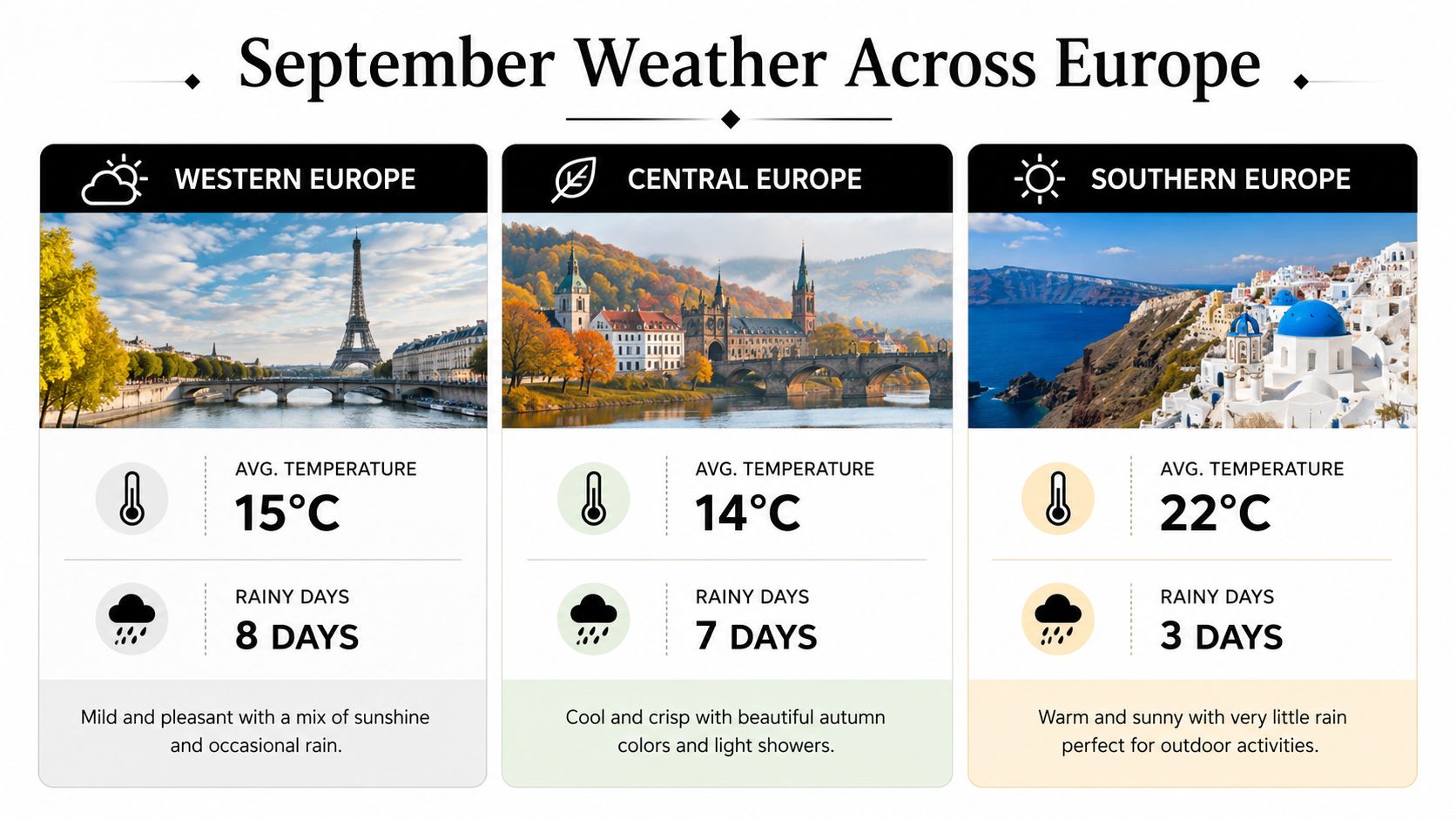
September Weather by European Region
| Region | Avg High (°C) | Avg Low (°C) | Key Characteristics |
|---|---|---|---|
| Southern Europe | 22 to 30 | Warmer evenings | Beach conditions often linger, late-summer feel |
| Western Europe | 15 to 25 | Cooler nights | Comfortable city travel, quicker rain shifts |
| Central Europe | 12 to 24 | Crisp evenings | Strong sightseeing weather, changing light |
| Northern Europe | 8 to 18 | Cool to cold nights | Autumn arrives earlier, layers matter |
| Eastern Europe | 15 to 28 | Mild to cool | Warm days, larger daily swings |
| Alpine regions | Variable | Variable | Fast afternoon changes, mountain weather shifts |
That spread is enough to change the entire shape of a trip. Southern Europe averages 22 to 30°C, while Northern Europe sits at 8 to 18°C, and Eastern Europe reaches 15 to 28°C TravelDojo's September Europe temperature ranges. The practical effect is simple, the same itinerary style does not fit every part of the continent.
For a luxury traveler, the question is not whether Europe is “nice” in September. It is which region gives the weather you want, and for how long. Beach time still belongs in the south, where late-season warmth can support slower coastal stays. City walking, terrace lunches, and gallery days fit the middle band better, where temperatures are easier to manage for long stretches outside. Alpine itineraries need flexibility, because mountain weather can turn quickly and afternoons are often less predictable than the morning forecast suggests.
The Riviera shows how useful that regional thinking can be, which is one reason Haute Black's guide to the French Riviera works best when you time it around the weather you want on the coast. Copernicus also notes that in September 2025, the strongest positive anomalies sat in Fennoscandia and eastern Europe, while cooler-than-average conditions were more limited in western Europe and were typically less than 1°C below normal Copernicus September temperature review for Europe. That keeps the same lesson in view. Europe's September weather moves on a regional rhythm, so the best trip plan is the one built around the specific zone, not the idea of Europe as a single climate.
Sea Temperatures and Coastal Conditions
For coastal travel, air temperature only tells part of the story. Sea temperature often decides whether a stay feels like a true swimming holiday or just a pretty resort with a cold shore. In September, the Mediterranean usually wins that contest because the water has spent all summer absorbing heat.
The Balearics, the Greek Isles, the Italian Riviera, and the French Riviera often hold onto swimming conditions well into the month. The sea can feel especially inviting after a warm day on the coast, which is why September is often stronger than June for travelers who care about actual water comfort rather than just beach scenery.
Where the water still works
A few coastlines remain useful far longer than others. The Mediterranean stays the most dependable, while the Baltic and North Sea have already cooled enough that swimming becomes a narrower, more weather-sensitive decision. That matters if your trip includes a yacht charter, a villa with direct sea access, or a split itinerary across multiple coasts.
| Destination | Sea Temp (°C) | Air High (°C) | Daylight Hours |
|---|---|---|---|
| Balearics | Warm into September | Mild to warm | Early-autumn daylight |
| Greek Isles | Warm into September | Warm | Early-autumn daylight |
| Italian coast | Warm into September | Warm to mild | Early-autumn daylight |
| French Riviera | Warm into September | Mild to warm | Early-autumn daylight |
The practical takeaway is simple. If swimming is a priority, stay south and stay coastal. If the trip leans toward culture, then a cooler coast can still work, but you shouldn't expect the same easy-in, easy-out water conditions you'd find in the Mediterranean. For a more Riviera-specific planning lens, Haute Black's guide to top places to visit on the French Riviera in 2026 fits neatly beside this kind of itinerary design.
The Luxury Traveler's September Advantage
September works for high-end travel because it often solves two problems at once. The weather is still good, but the pressure of peak summer begins to ease. That gives you more room to shape the trip around your own rhythm instead of fighting crowds and extreme heat.
Warm weather matters less than usable weather. A terrace dinner, a vineyard lunch, or a private boat day only feels premium when the conditions let you enjoy it comfortably.
The month also splits into two different travel windows. Early to mid-September still supports beach time with fewer people around, while late September turns much of Europe toward harvest season Jacada Travel's Europe timing guide. That gives affluent travelers a choice between sea-focused escapes and food-and-wine itineraries without leaving the month.
That distinction is why clothing and timing matter together. In a warm coastal week, a light linen wardrobe works well, but the evening can still cool down after sunset, especially if you move inland or between climates. A useful resource for building that kind of flexible wardrobe is California Cowboy's travel friendly clothing, especially when a single trip covers villas, city dinners, and transfer days.
September also changes how destinations feel. Rome, Paris, and Barcelona are still lively, but the tempo is less compressed than in August. That means better table availability, easier walking, and a calmer overall experience. For luxury travelers, that's often the upgrade, not just the temperature.
Destinations That Shine in September
September favors destinations that can absorb a little weather variation without losing their appeal. Mediterranean cities still hold warmth for rooftop dinners and long evenings outside, while northern cities and inland wine regions start to feel more seasonal and more layered. That shift matters because a luxury trip works best when the weather supports both the setting and the pace.
Athens still reads as a sun-forward city, and Barcelona, Rome, and Madrid often keep enough warmth for late walks and outdoor dining. Athens averages 28°C high and 20°C low, Rome 28°C to 14°C, Barcelona 26°C to 17°C, and Madrid 26°C to 15°C CurrentResults' September Europe city temperatures.
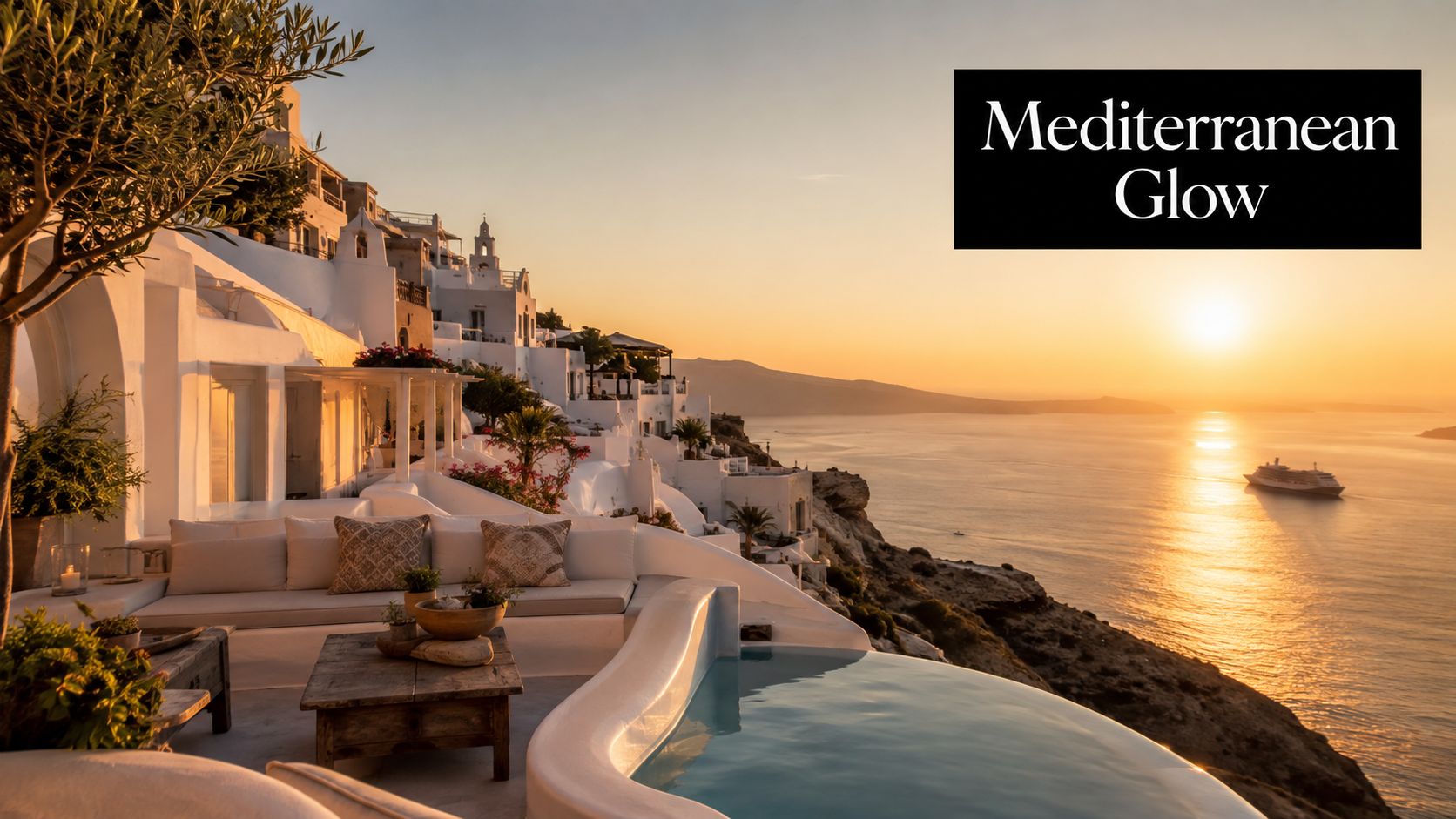
In the Mediterranean, September often gives coastal stays a better balance than midsummer. The light remains strong, but the air is usually easier to enjoy for boat days, cliffside lunches, and sunset dinners. For travelers who care about comfort as much as scenery, that makes a real difference.
Cities and wine regions
Inland destinations shift in a different way. The Douro Valley, Tuscany, and the Loire Valley move toward harvest season, so the itinerary changes from heat-driven sightseeing to slower meals, seasonal food, and vineyard views with more texture. That is often the better trade-off for travelers who want atmosphere rather than just temperature.
Northern cities need a different approach. London averages 20°C high and 11°C low, while Reykjavík drops to 10°C and 5°C, so a northbound itinerary asks for a lighter wardrobe and less time built around outdoor dining. For Britain, dress for Britain's fickle climate is a practical rule, not a stylistic one. September rewards travelers who choose destinations with the season in mind, including those browsing places to travel in September.
What to Pack for European September Travel
Packing for September in Europe starts with one assumption, the weather will change more than once during the trip. A Mediterranean island may feel warm all day, while a western European city can switch from pleasant lunch weather to cool evening air fast. That means a single outfit formula won't work.
Build around layers
Start with breathable pieces, then add flexibility. A light knit, an unstructured jacket, and comfortable shoes do more work than a suitcase full of single-use outfits. If the trip includes both a coastal stop and a city stay, the goal is to look polished in both settings without overpacking.
Practical rule: if one suitcase has to cover beaches, cobblestones, and dinner indoors, every item should work in at least two settings.
Rain matters too. Copernicus notes that northwestern and central Europe, including Ireland, western UK, Iceland, parts of Italy, coastal Croatia, and eastern Spain, often see wetter-than-average conditions in September Copernicus on September precipitation and humidity. So a compact umbrella or a light waterproof layer isn't optional if the route passes through those areas.
Pack by destination type
- Mediterranean coast: Bring swimwear, sandals, and one light layer for evenings. The sea may still be very usable, but nights can cool off after sunset.
- Western and central cities: Prioritize walking shoes, a jacket, and something that handles a damp afternoon without looking technical.
- Northern or alpine stops: Add warmer layers sooner than you think you'll need them. These areas transition faster than the coast.
- Mixed itineraries: Choose clothes that can move from villa breakfasts to restaurant dinners without a full change.
If your route runs through Britain, a practical reference is The Lavender Lobster's advice on how to dress for Britain's fickle climate. It matches the reality of September better than a generic packing list does.
Planning VIP Experiences Around September Weather
Luxury travel in September works best when the itinerary matches the weather window, not the other way around. A private yacht day, an outdoor tasting menu, or a golf round can all feel effortless in the right conditions and frustrating in the wrong ones. The difference often comes down to timing.
Early September in the south is the safest bet for outdoor-first plans. Beach clubs, waterfront lunches, and sailing days still have a strong chance of working well. By late September, especially farther north and west, the weather becomes more changeable, and outdoor bookings need more flexibility.
What to book with flexibility in mind
A strong advisor should build in backup options for weather-sensitive experiences. That might mean keeping an indoor dining reservation as a fallback, choosing a villa with covered entertaining space, or avoiding a schedule that depends on a single perfect afternoon. The same principle applies to harvest events, where the mood is excellent but the weather can still shift quickly.
September's volatility makes weekly planning more useful than broad monthly averages Holidify's September Europe weather guide. That's an advantage for high-end travel, because it lets you separate the weeks that still behave like summer from the weeks that already feel like autumn.
Haute Black's private travel model can support that kind of flexibility through bespoke itineraries, curated global experiences, and private jet charters. Used well, that means weather-sensitive plans can be adjusted without collapsing the trip.
Your September Europe Itinerary Blueprint
A good September itinerary starts with one question, what do you want the weather to do for you? If the answer is beach time, stay with the Mediterranean and target earlier weeks. If the answer is vineyard culture, shift toward harvest regions later in the month. If the answer is city comfort, western and central Europe usually give you the most balanced mix.
That decision tree works better than chasing an abstract “best place” to go. Europe in September rewards precision. A week in Tuscany, a coastal stay in the French Riviera, and a city break in London all deliver different versions of success, and each one depends on choosing the right slice of the month.
For a multi-country luxury trip, a route like Haute Black's Switzerland-Italy grand tour shows how a September itinerary can move from alpine scenery to warm southern conditions without feeling rushed. That kind of structure makes the most of the month's range.
The cleanest planning rule is this. Book early for the most weather-sensitive experiences, keep a backup for outdoor dining and transport changes, and use the month's regional variation instead of ignoring it. September isn't a second-choice summer. For travelers who understand timing, it's one of Europe's most versatile months.
If you want a September trip planned around weather windows, luxury transport, and destination-specific conditions, Haute Black can build it around the part of Europe you want to enjoy. Visit Haute Black to start designing a September itinerary that fits your pace, your preferences, and the right regional forecast.
Explore Our Guides
Signature Experiences


