Haute Black Journal
Ultimate Guide to Family Vacations in Greece

Marlene Azeez
Director, HauteBlack
View all articles →
# Ultimate Guide to Family Vacations in Greece
May 18, 2026
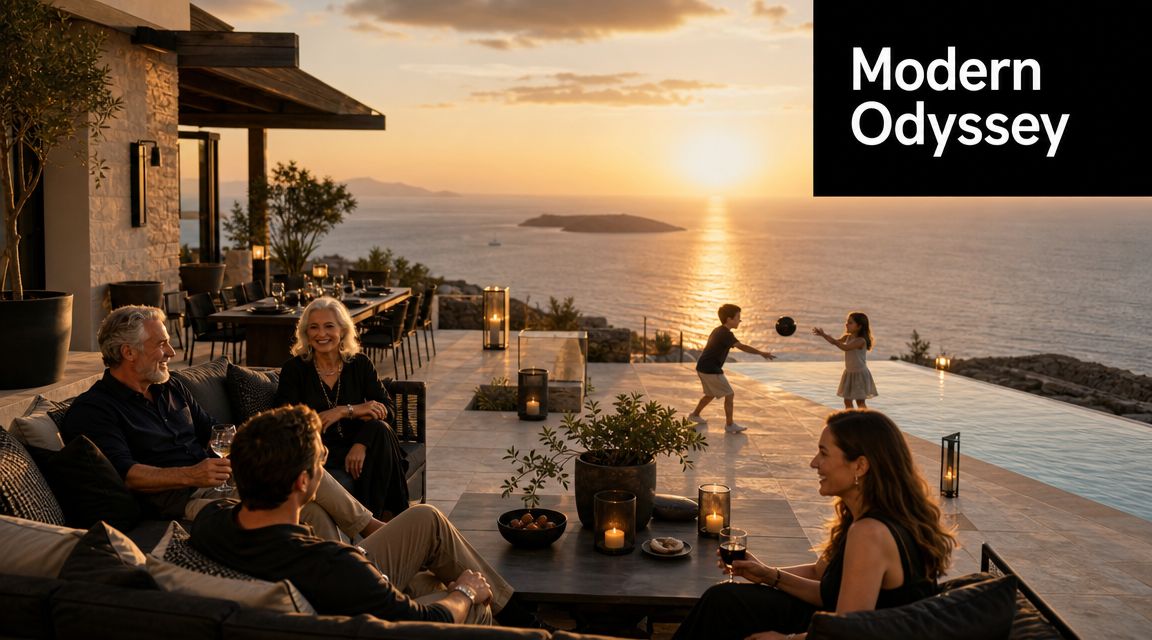
Breakfast arrives on a shaded terrace in Crete. One child is still barefoot, a teenager is already in the pool, and a grandparent is reading with the sea in view. That's the Greek family holiday worth buying.
Families often plan family vacations in Greece backwards. They start with the island everyone else posted, then force the family to fit the itinerary.
Designing the Modern Greek Odyssey
A strong Greek family holiday is decided before anyone debates Mykonos versus Paros. It is decided in the first planning call, when you establish how three generations will move, rest, eat, and separate without friction. That is the difference between an expensive trip and a well-run one.
Luxury means fewer moving parts
The usual advice on family vacations in Greece focuses on scenery, beach lists, and broad "kid-friendly" labels. That misses the actual point. Multi-generational travel succeeds when grandparents can get to dinner without a climb, younger children can reset without a public meltdown, teens have enough independence to disappear for an hour, and parents are not acting as dispatchers all day. Practical island features such as short transfers, manageable towns, and family-friendly beach setups are part of that equation, as noted in this family-friendly Greek islands guide.
Privacy matters. So does operational simplicity. A large suite arrangement may work for one family. Another needs a fully staffed residence with outdoor space, staff quarters, and room for everyone to be together without living on top of one another. In those cases, a portfolio of private luxury villas in Greece for families often solves more problems than a hotel ever will.
Use a stricter framework from the start:
- Start with physical tolerance. Measure the trip against stairs, walking distances, heat, sea conditions, and transfer times.
- Build around one primary base. Add movement only if it improves the trip for everyone, not because island hopping sounds glamorous.
- Design for togetherness and separation. Shared lunches and boat days are memorable. So are quiet hours apart.
- Protect the middle of the day. Greece rewards families who leave space for shade, naps, late lunches, and pool time.
One rule saves a surprising number of holidays. If a transfer looks irritating on paper, it will feel worse with children, luggage, and summer heat.
The best Greek trips are edited
Greece offers abundance. That is precisely why good planning requires restraint. Families with serious service expectations do better with a tight shortlist, a clear base strategy, and very few handoffs between airport, port, car, and hotel.
The filtering questions should be blunt:
| Question | Why it matters |
|---|---|
| Where will the family settle fastest? | The right arrival point lowers tension within the first afternoon. |
| Who needs privacy, and who needs easy proximity? | Room categories, interconnecting suites, and villas solve very different problems. |
| Which transfers are fixed? | Every added handoff increases fatigue and raises the risk of delays. |
| What will each generation actually remember? | Usually the boat day, the lunch by the water, and the house that ran beautifully. |
This is the modern Greek odyssey for a high-value family. Less choreography. Better service. Far more ease.
Choosing Your Family's Base Camp Beyond the Hype
A family lands in Greece full of good intentions. By day two, the trip either feels settled or it starts asking everyone for patience. The difference is rarely the hotel. It is the base.
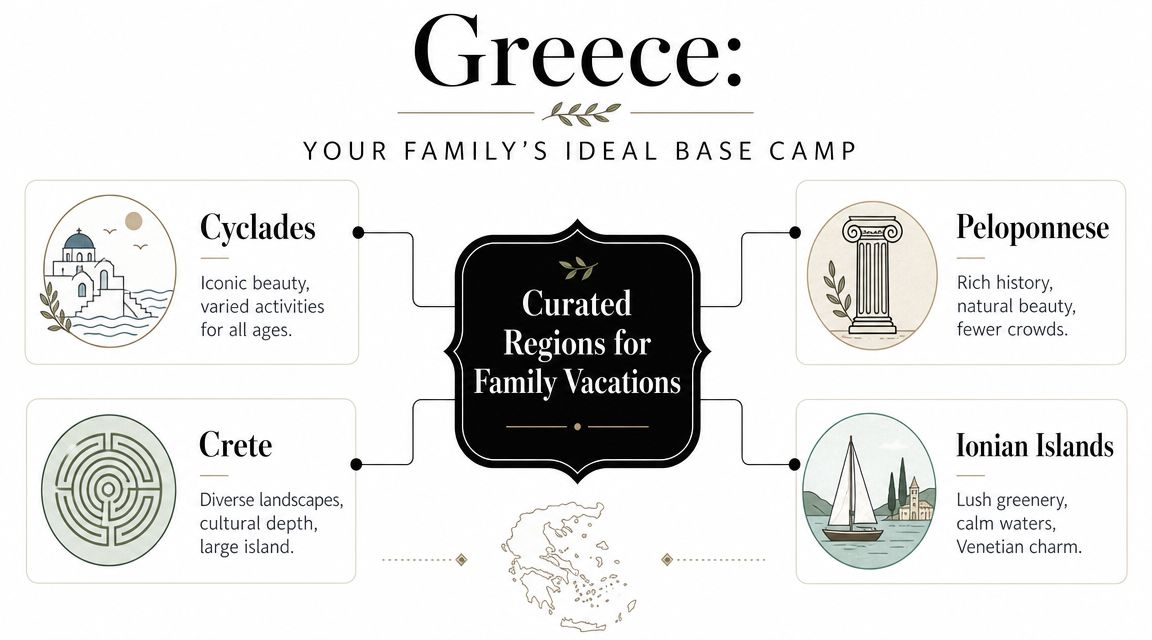
For multi-generational travel, I choose the place that reduces friction first and photographs well second. Grandparents need easy movement. Parents need service that anticipates problems before they spread. Children need space, shade, and a pool they can reach without a production. The right base gives every generation what it needs without turning the holiday into a daily negotiation.
The mainland answer with the fewest headaches
The Peloponnese is my strongest recommendation for families who want Greece to feel generous rather than effortful. You get archaeological depth, long coastal stretches, and serious hotels or estates, all without committing the group to a ferry schedule.
It suits families who want proper lunches, cultural mornings, beach afternoons, and evenings that begin on time because nobody spent the day in transit. Private houses perform particularly well here. Large groups need distance as much as togetherness, and well-chosen luxury villas in Greece solve that cleanly with staff space, separate bedroom wings, and outdoor living that works for a mixed-age group.
The all-in-one island
Crete is the most capable one-island answer. If you want a single destination to carry a full family holiday, choose it. It has enough variety to keep teenagers interested, enough substance for grandparents, and enough good coastline to justify staying put.
Crete rewards discipline. Pick one pocket of the island and commit to it. Families who try to "see Crete" spend too much time in the car. Families who anchor near the right town get beaches, tavernas, history, and boat access without feeling stretched.
Choose Crete if the family wants range, privacy, and one hotel or villa to anchor the week.
The elegant middle ground
Corfu works for clients who care more about grace than bragging rights. It is green, polished, and easier on older relatives than the sharper, windier Cycladic circuit. The town has real charm, the sea is calmer in many areas, and the rhythm suits families who prefer terrace dinners and gentle boating to constant movement.
I recommend Corfu when the family wants beauty with a softer tempo. It is particularly good for mixed-age groups who value pretty scenery, short drives, and a civilised day.
The Cycladic choice that still makes sense
Naxos earns its place because it delivers the Cyclades without so much theatre. Families still get the whitewashed village atmosphere and beach life they came for, but with more room to breathe and fewer operational headaches than the flashier names.
That matters. The iconic islands ask more of a family party than people admit. Naxos is simpler to live with, which makes it stronger for a private family brief. As noted earlier by Scott Dunn's guide to Greece for families, families tend to do well in places such as the Peloponnese, Crete, and Naxos because they combine cultural interest, beach time, and manageable logistics.
A simple decision matrix
| Base | Best for | Watch out for |
|---|---|---|
| Peloponnese | Families who want history, coastline, and easy operations from one mainland base | Long driving days if you get ambitious |
| Crete | Families who want one island to carry the entire trip | Choosing too broad an area and spending the week in transit |
| Corfu | Families prioritising charm, greenery, and a gentler pace | Less satisfying for clients focused on classic Cycladic imagery |
| Naxos | Families wanting island atmosphere with fewer complications | Pairing it with extra islands and losing the simplicity |
The wrong base creates daily compromise. The right one lets the trip run quietly in the background, which is exactly what an ultra-luxury family holiday should do.
The Art of the Itinerary Sample Bespoke Journeys
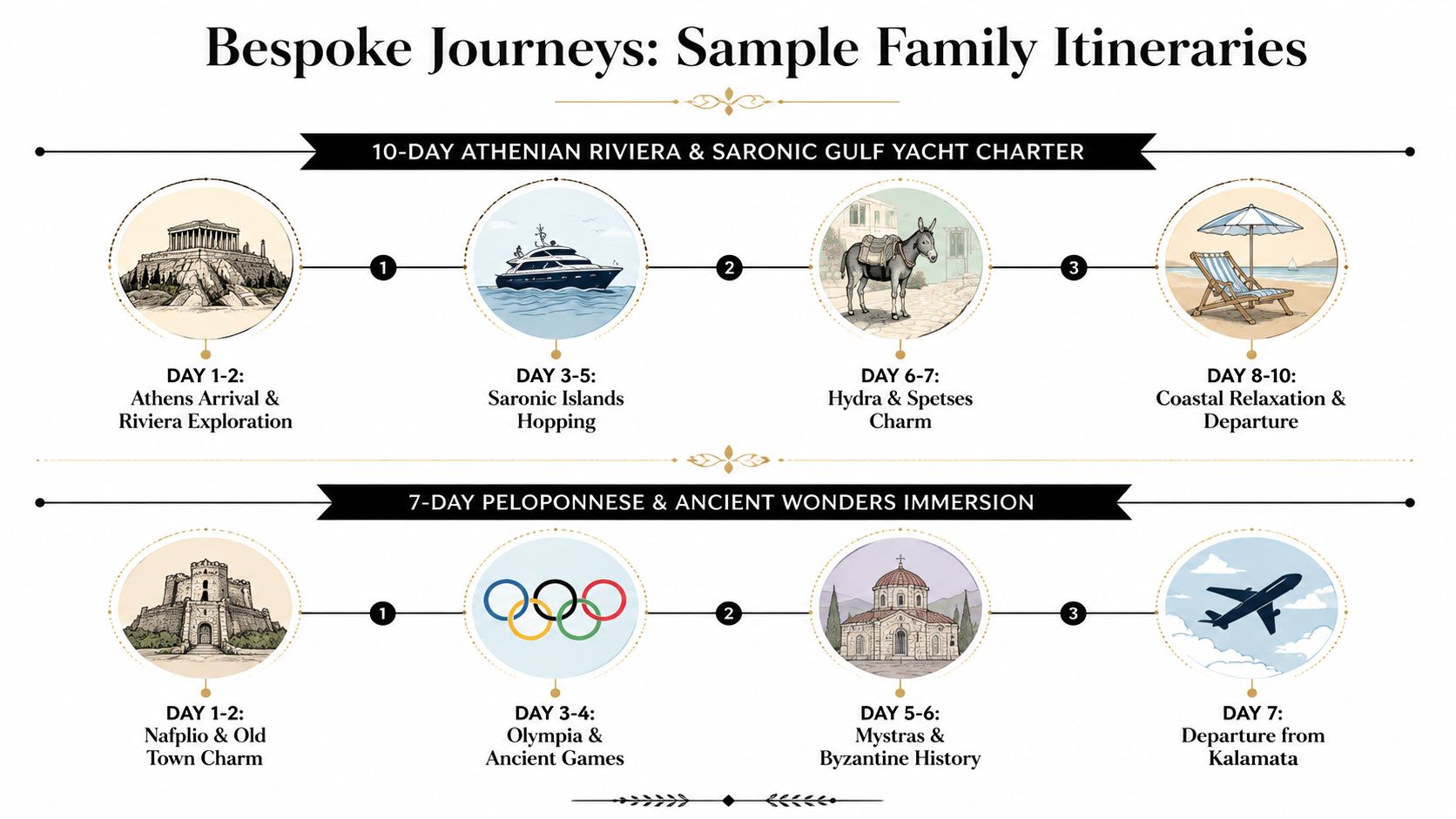
A strong itinerary doesn't read like a checklist. It has rhythm. Arrival days should feel soft. Cultural days should end near water. The family should never need to earn its rest.
Athenian Riviera and Cyclades balance
The first itinerary suits a family that wants polish, iconic scenery, and flexibility without looking over-programmed. Start in Athens, but don't linger in a city mode too long. Use it as an arrival buffer. The first two nights belong on the Riviera, where everyone can reset after the flight, dine outdoors, and let children adjust by the pool instead of being marched immediately through museums.
On day three, shift into a curated island sequence rather than broad island hopping. A route built around sea access and private transfers works far better than trying to mimic a backpacker circuit with nicer luggage. One island can provide the photogenic harbor life. Another can provide beach ease. A final stop should be chosen for villa privacy and slower afternoons.
Families drawn to this format usually want the visual pleasure of the Cyclades without giving up comfort. That's exactly where a specially designed Athens and Cyclades journey makes sense. The point isn't to tick off islands. It's to preserve the glamour while removing the friction.
Later in the trip, schedule one fully unscripted day. No drivers on standby. No guide. Just swimming, lunch, and the option of doing nothing. That's often the day everyone remembers best.
To get a feel for the atmosphere, this short film captures the kind of pace and scenery families usually respond to in Greece.
Crete and mainland mythology immersion
The second itinerary is slower and, in many cases, smarter. Begin with a substantial villa stay in Crete. Let the house carry the holiday. Morning swims, a private breakfast setup, a shaded garden, and enough room for children to disappear into their own routines changes the whole tone of the trip.
Use the days selectively. One day for Knossos with a guide who can hold a child's attention. One day for a beach with lunch built in. One evening for a chef-led dinner at the villa so grandparents don't need to rally for another restaurant. The family experiences Greece, but not at the cost of comfort.
Then move to a mainland historical base for a final chapter rooted in old stone towns and major sites, a period when Greece becomes especially rich for families. Children get the mythology. Adults get the depth. The setting stays manageable because you're not changing beds constantly.
The best bespoke journeys have contrast, but they don't have whiplash.
What these itineraries get right
- They avoid constant reset days. Packing and unpacking is where family energy goes to die.
- They let one property do real work. A serious villa creates privacy, service flow, and calm.
- They balance spectacle with recovery. One high-output day should be followed by something easy.
- They respect different ages. A ten-year-old, a grandparent, and a parent don't need the same Greece.
The measure of success isn't how much ground you covered. It's whether the holiday felt composed from beginning to end.
Curated Experiences for Every Generation
The best family vacations in Greece don't require compromise. They require layering. Everyone should have access to something that feels designed for them, but the trip still needs a coherent mood. That's where poor planning usually collapses. It either becomes too child-centric or too adult-heavy.
Families that travel well build their days like a private members' club. Shared anchors. Optional branches. Smooth reassembly by lunch or aperitivo. For families looking at that kind of structure, family travel planning with a luxury lens is often the right benchmark for what “kid-friendly” should mean.
For the youngest explorers
Children under ten don't need a long list of activities. They need engagement with minimal transition time.
A few experiences work especially well:
- Mythology made tactile. Private guides who turn ancient stories into scavenger-style discovery tend to hold attention far better than formal tours.
- Gentle water days. Calm beaches with easy entry, shade, and nearby lunch matter more than dramatic scenery.
- Villa-based cooking sessions. Bread shaping, simple mezze assembly, and dessert making keep children involved without overextending them.
The rule is simple. If the experience requires too much waiting, it's wrong for this age group.
For teens who need autonomy
Teenagers want freedom, but they still need a structure that doesn't unravel the trip. Greece is ideal for this because the setting naturally supports semi-independent rhythms. A teen can snorkel, paddle, shop in a harbor town, or take a photography-focused walk without forcing everyone else into the same agenda.
Good planning gives them options such as:
1. Boat afternoons with built-in privacy. Teens can swim and sunbathe while adults remain close but not intrusive.
2. Street-food or market tastings in a town setting. These feel less instructional and more social.
3. Adventure with limits. Short hikes, sailing introductions, or guided coastal exploration work better than full-day endurance outings.
For adults and grandparents
Older family members usually want two things. Beauty and comfort. They don't want to be treated like delicate passengers, but they also don't want to spend the holiday recovering from bad logistics.
A grandparent-friendly itinerary isn't slower because it's lesser. It's slower because it's smarter.
The best choices include private vineyard visits, long lunches in attractive settings, cultural touring with transport arranged close to site access, and evening experiences that don't require a late-night return drive.
For the whole family at once
Shared experiences should be broad enough to include everyone and polished enough to feel worth the effort.
| Experience | Why it works |
|---|---|
| Private caique day | Easy access to swimming coves without committing to a full yacht-heavy schedule |
| Chef-led villa dinner | Children can eat early, adults can linger, nobody needs to transfer |
| Archaeology with storytelling | Gives the adults substance and gives children a narrative |
| Sunset harbor outing | Low exertion, high atmosphere, ideal for mixed ages |
The best itineraries don't ask each generation to tolerate the others. They give each one a place in the trip.
Seamless Logistics for High-Touch Travel
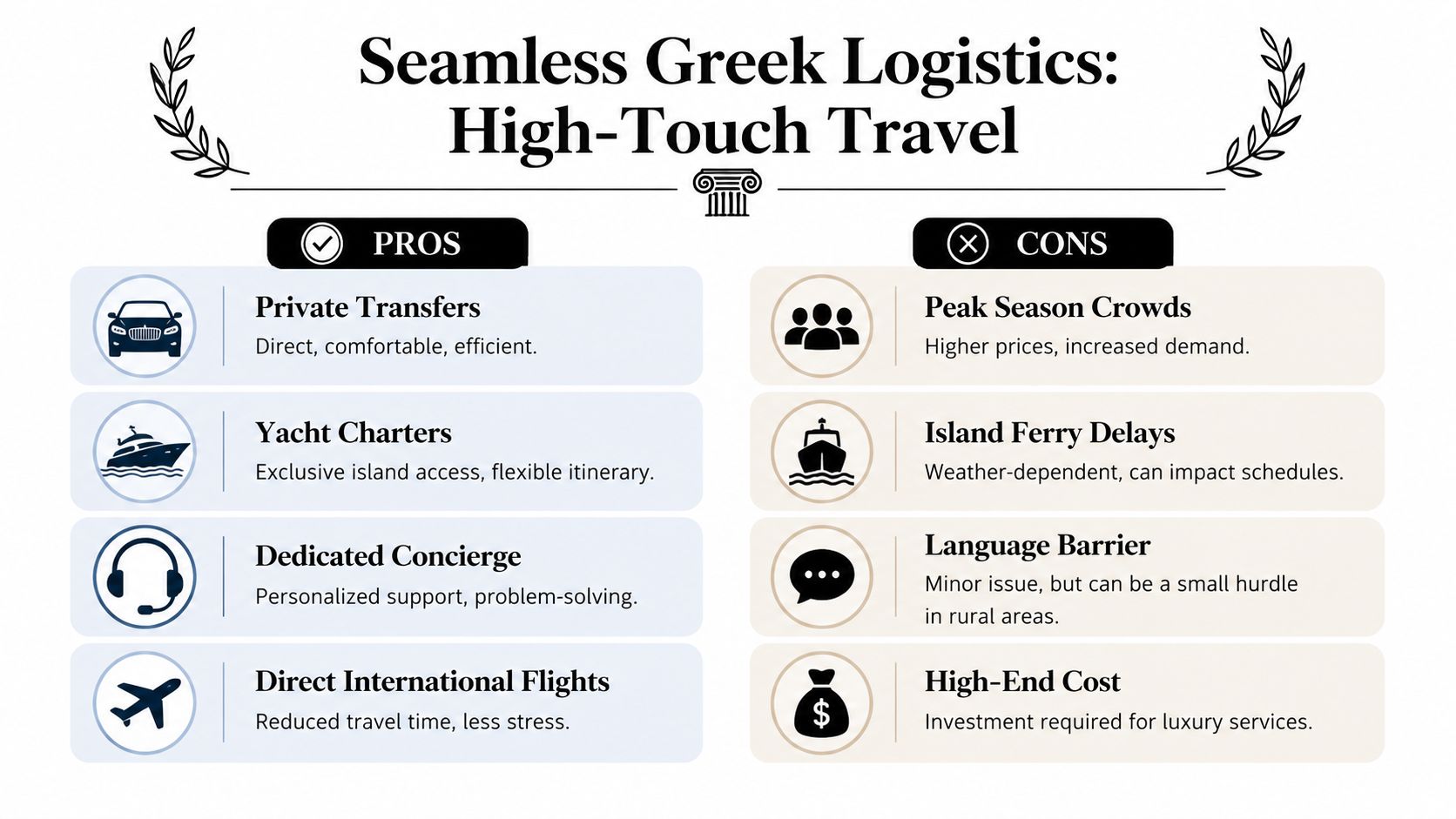
Logistics decide whether family vacations in Greece feel polished or exhausting. The country rewards elegant routing and punishes casual optimism. If your plan depends on every ferry running perfectly, every child staying cheerful in the heat, and every adjoining room still being available at the last minute, the plan is bad.
Timing changes everything
For family vacations in Greece, timing is operational, not cosmetic. July and August bring peak demand, and specialist guidance notes that many Greek hotels have only a small number of family suites or adjoining rooms, which makes inventory a genuine constraint for school-holiday travel. The same guidance recommends booking early and, for summer trips, targeting the first week after school lets out to reduce heat and congestion, according to Odynovo's planning advice for a family vacation in Greece.
That advice is exactly right. The best dates aren't the ones everyone asks for. They're the ones that preserve energy.
Choose your arrival strategy with discipline
There are only two sensible ways to begin. Either arrive in Athens and use it as a controlled landing point before moving on, or fly directly into a regional base if the rest of the itinerary is designed around that region. What you should not do is land tired, connect sloppily, and pretend children and grandparents don't notice.
A good logistics plan usually follows this logic:
- Use Athens for sequencing. It works well when the trip includes the mainland or a short city chapter.
- Go direct to a regional airport when the destination can carry the whole stay. Crete is the obvious example.
- Replace public ferry dependence with private transfers when the family mix is complex. This matters more than commonly realized.
- Pre-book every ground movement that touches luggage or nap time. Those are the moments that break the day.
Strollers, bags, and the myth of casual mobility
Families often underestimate how quickly Greece becomes awkward when they overpack. Ports, stairs, uneven surfaces, and town layouts can punish bulky gear. If you're traveling with younger children, it helps to think carefully about what the stroller needs to do versus what you're asking it to endure.
For parents refining that decision, NINI and LOLI's article on stroller travel is a useful practical read before flights and transfers are locked in.
Operational note: Every item a parent has to push, drag, fold, or carry becomes part of the itinerary design.
What to pre-arrange before departure
| Element | Why it should be locked early |
|---|---|
| Family suites or adjoining rooms | Limited inventory disappears fast in peak summer |
| Airport and marina transfers | Removes the most fragile points of the journey |
| Meal strategy for arrival days | Prevents the first evening from becoming a scramble |
| Backup weather options | Protects the trip if sea conditions shift plans |
Smooth travel in Greece isn't accidental. It's choreographed discreetly before the first boarding pass is printed.
The HauteBlack Difference VIP Access and Peace of Mind
A Greek family trip usually starts to unravel before anyone reaches the suite. One branch of the family lands early, another arrives by boat, grandparents need an easy check-in, teenagers want space, and the hotel still has only a partial picture of the group. Greece is full of beautiful places. Very few trips are arranged well enough to feel private, calm, and intelligently paced from the first hour.
That is the true value of expert planning here.
Greece rewards families who treat the trip like a private residence, not a string of hotel bookings. The best journeys are built around household-style logic. Who needs quiet. Who needs connecting space. Which arrival requires a buggy at the gate. Which villa should hold lunch on day one so nobody is herded straight into a formal restaurant after flights.
An advisor earns their fee by getting those details right before the family departs. Rooming plans are set with intention. Pre-arrival notes are specific. Transfers are coordinated around the family, not around standard operating hours. Dining reservations reflect actual family rhythm, including early dinners, flexibility for children, and privacy for grandparents or staff traveling with the group.
Preferred partner relationships matter because they improve execution. VIP recognition, upgrade priority when available, resort credits, and direct contact with on-property teams help the hotel prepare properly. The difference is practical. Correct bedding is in place. Welcome amenities suit the ages of the children. Sensitive requests are handled with discretion. Problems are often resolved before the family notices them.
For multi-generational travel, that level of control is the difference between a trip that looks luxurious and one that actually feels easy.
If you're planning family vacations in Greece at the highest level, choose the advisor as carefully as you choose the island. Privacy, timing, and service do not arrange themselves.
If you want a Greek family journey that feels calm, private, and impeccably handled from the first transfer to the final farewell, work with HauteBlack. Their advisors design high-touch itineraries with the access, precision, and quiet problem-solving that discerning families need.
Explore Our Guides

Signature Experiences