Haute Black Journal
Top Places to Visit in Sri Lanka 2026: Luxury Journeys

Marlene Azeez
Director, HauteBlack
View all articles →
# Top Places to Visit in Sri Lanka 2026: Luxury Journeys
June 24, 2026
Sri Lanka rewards precision more than range. The island is small enough to tempt rushed itineraries and varied enough to punish them.
Its long appeal is obvious to anyone who has spent time selling or designing Asia journeys. What separates an ordinary trip from a strong one is not the list of stops. It is the order, the timing, the access strategy, and the standard of handling on the ground. In Sri Lanka, a 90-minute difference in arrival time can change Sigiriya completely. The right local fixer can turn a temple visit from crowded and performative into calm, well-briefed, and respectful. A coastal stay can feel either disconnected or beautifully coherent depending on how transfers, privacy, and downtime are arranged.
The island works best as a series of distinct atmospheres with deliberate transitions between them: ancient royal capitals, Buddhist sacred sites, tea highlands, colonial seafronts, wildlife territory, and ocean-facing retreats. Experienced travelers usually know the sights already. The harder question is how to experience them without flattening them into one more circuit.
That is where bespoke planning earns its keep. Through a network such as Haute Black, the conversation is about who meets you airside, which properties justify a detour, whether a helicopter sector saves a day or wastes one, and which moments deserve a private guide rather than a standard escort. Luxury in Sri Lanka is rarely about excess alone. It is about controlling friction, protecting atmosphere, and getting the timing right.
The places that follow are the ones I would still recommend to a well-traveled client. Each can be done poorly. Each can also be shaped into something memorable with the right access, pacing, and local judgment.
1. Sigiriya Rock Fortress
Sigiriya is the cultural stop that exposes weak itinerary design fastest. Handle it badly and it becomes a hot, crowded climb with a few obligatory photos. Handle it well and it becomes one of the most commanding archaeological experiences in South Asia, with enough privacy, context, and pace to justify building part of the journey around it.
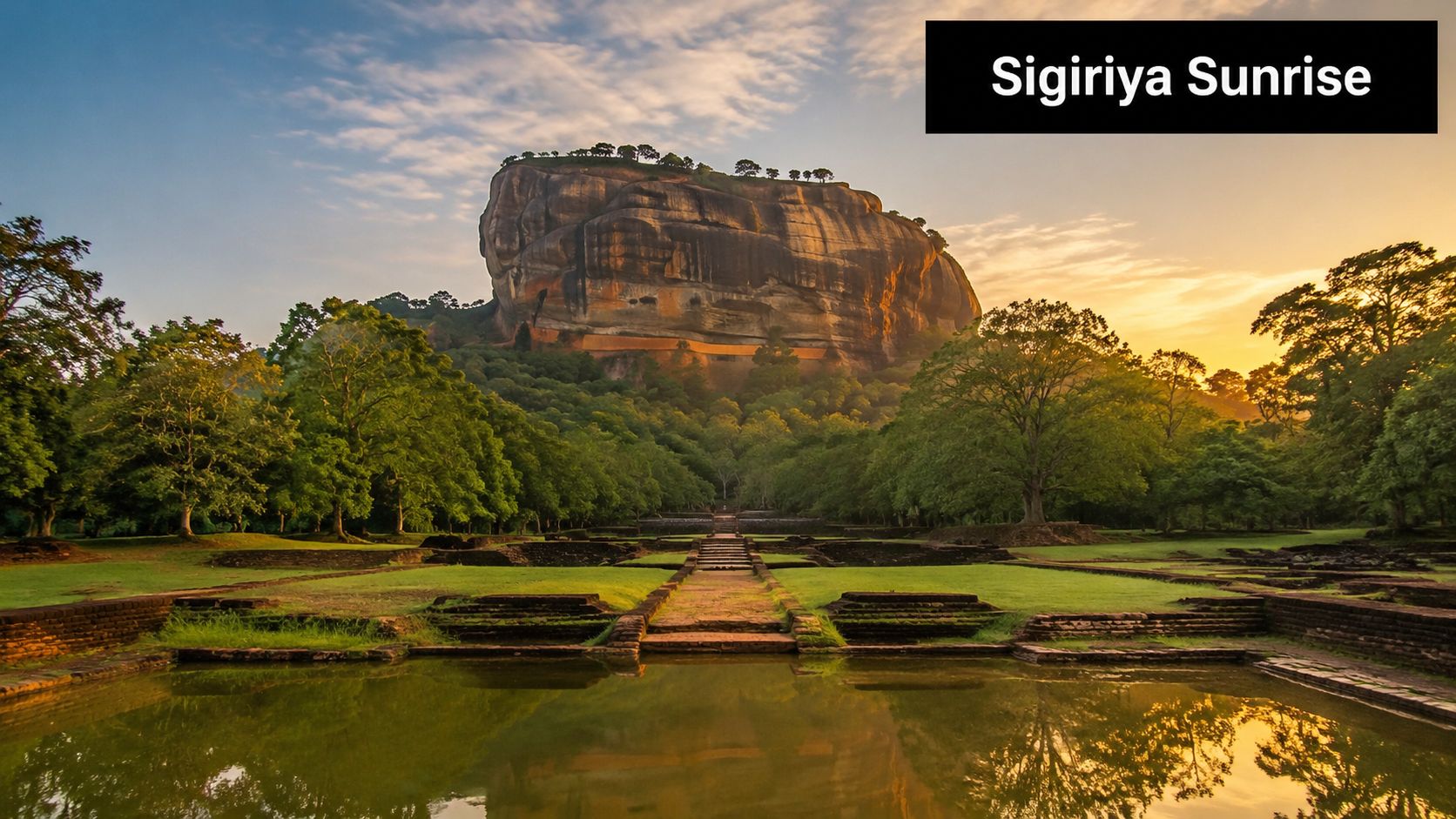
The rock rises out of the central plains with unusual force, but its sophistication sits below the summit as much as on it. The water gardens, boulder gardens, reservoirs, defensive planning, and surviving traces of court life are what separate a serious visit from a quick climb. Sigiriya also anchors the island's Cultural Triangle, so it works best as part of a carefully paced inland chapter rather than a rushed detour.
How to do Sigiriya well
Arrival time decides the mood. I would usually push clients toward a dawn or near-dawn ascent after staying nearby the night before, or after a helicopter arrival arranged to avoid wasting half the day on the road. The trade-off is straightforward. Helicopters save time and preserve energy, but an overnight stay in the region often gives the stronger sense of place, especially if the program includes private dining, spa time, or a second cultural visit later in the day.
A strong private guide matters here more than polished transport. Sigiriya rewards interpretation. The frescoes, mirror wall, royal symbolism, and hydraulic engineering can feel fragmented without someone who can explain what was built, why it mattered, and where scholarly debate still exists. Standard guiding often reduces the site to a staircase and a viewpoint. That is a poor use of one of Sri Lanka's most layered monuments.
Treat the climb as a scheduled event.
For a Haute Black style itinerary, the best version usually includes more than tickets and transfers. That can mean a pre-opening game plan, a specialist guide rather than a general escort, a breakfast set after the descent, and a region-wide schedule built around heat, light, and recovery time. Clients who want photography handled properly can also benefit from a dedicated stop sequence, because some of the strongest perspectives are missed when the visit is rushed.
A polished day here often pairs Sigiriya with a later visit to Dambulla, then returns to a well-run lodge for lunch and downtime by the pool instead of forcing another long transfer. That balance matters. Central Sri Lanka can feel spiritually and visually rich, but it can also become tiring very quickly if every cultural stop is stacked without pause.
A quick visual primer helps before you go.
2. Galle Fort
Galle Fort suits travelers who like history they can inhabit. Unlike archaeological sites that require imagination, this one still lives as a walkable compound of ramparts, villas, cafes, galleries, and old administrative buildings facing the Indian Ocean. You don't come here for scale. You come for atmosphere and for the pleasure of staying inside the story.
The fort's appeal is strongest when you sleep within the walls rather than commute in for an afternoon. Properties such as Amangalla shape the experience because they let you move through the fort early and late, when day-trippers have thinned and the sea breeze softens the heat. That's when Galle feels less performative and more personal.
What works and what doesn't
What works is a slow build. Begin with a private historical walk late in the afternoon, pause for tea or cocktails in a restored courtyard, then continue onto the ramparts at sunset. What doesn't work is treating Galle as only a photo stop for the lighthouse and departing before dusk.
The cultivated aspect of Galle also extends beyond architecture. The fort can support private antiquities conversations, textile shopping, and art-led itineraries, especially if your advisor arranges introductions rather than leaving you to browse randomly. This is one of the easiest places in Sri Lanka to make feel elegant with very little effort, provided the hotel choice is right.
- Stay inside the fort: Ocean-facing or courtyard suites create the mood. Driving in and out strips away much of the point.
- Use sunset wisely: The ramparts are most attractive in softer light, and private walking commentary adds far more than a self-guided lap.
- Pair coast and culture: Galle combines well with a beach afternoon in nearby Unawatuna or a longer southern-coast circuit.
Galle is one of the best places to visit in Sri Lanka for travelers who prefer layered charm over spectacle. It rewards taste more than stamina.
3. Kandy Temple of the Tooth Relic
Kandy contains the part of Sri Lanka that money alone cannot buy. The Temple of the Tooth Relic is one of the country's highest-order sacred sites, and the quality of a visit depends less on privilege than on judgment, timing, and cultural fluency.
Travelers who arrive with the right handling usually come away with a much fuller reading of the city. The temple is active, devotional, and regulated by ritual rhythms that can feel opaque without proper interpretation. A strong guide does more than recite dates. They explain why offerings matter, how the movement through the complex is structured, where to pause, and when to step back.
That is the true luxury standard in Kandy. It is not spectacle. It is access to context.
For a network such as Haute Black, the bespoke opportunity lies in how the visit is built around the temple rather than squeezed into a transfer day. Private chauffeured arrival, pre-briefing on attire and etiquette, a guide with real religious and historical literacy, and carefully chosen timing around puja hours all change the experience materially. The trade-off is straightforward. You do not control the sacred choreography of the site, but you can control how intelligently you enter it.
Dress also matters more here than at many other cultural stops. Clients who misread the standard often lose time adjusting at the entrance or feel self-conscious once inside. A concise packing brief before arrival helps, and even style-focused travelers benefit from reviewing what to wear on a beach holiday if their Sri Lanka itinerary combines coast, temples, and the hill country. The smartest wardrobes for this trip handle both humidity and religious protocol without looking improvised.
Kandy works best as part of a layered cultural itinerary. I would rarely position it as an isolated luxury city stay. One well-paced night or two, anchored by the temple and paired with a refined residence above the city or en route to tea country, is usually the stronger move. That combination gives Kandy a clear role. It becomes the spiritual and ceremonial hinge of the journey, before the mood shifts toward estates, cooler air, and private plantation life.
Handled properly, the Temple of the Tooth Relic gives travelers something rarer than visual drama. It gives them entry into Sri Lanka's inner logic.
4. Mirissa Beach and Southern Coastal Hideaways
Sri Lanka's south coast is not a beach add-on. It is where a polished itinerary either becomes generic or starts to feel privately engineered.
Mirissa earns its place because it offers access to the Indian Ocean without requiring the client to accept a loud, compromised seaside experience. The trade-off is simple. Staying in the center puts restaurants and public beach life at your door, but privacy drops sharply. For most high-end travelers, the better answer is a villa or low-key resort outside the busiest strip, with Mirissa used selectively for departures, a long lunch, or a short stretch on the sand.
The draw most travelers know is whale watching. The detail that matters more is how you do it. Shared boats often mean early chaos, variable standards, and too many passengers chasing the same sightline. A well-vetted private charter changes the day completely. Better crew, better timing, more deck space, and the option to turn the outing into a proper half-day on the water rather than a rushed box-ticking exercise. Through a network with the right local relationships, that can also mean priority handling at departure, upgraded onboard catering, and a captain who will abort bad conditions rather than force a disappointing trip.
Mirissa also works best as part of a wider southern coast strategy, not as a standalone beach town. I usually advise clients to read the shoreline in zones. Mirissa suits marine outings and easy access. Weligama is stronger for surf culture with polish. Tangalle gives more space and a more insulated mood. Galle remains the social and dining anchor. Haute Black style planning is valuable here because the coast rewards combinations, not guesswork. Two nights in the wrong base can flatten the whole southern leg.
Clothing matters on this stretch for practical reasons as much as aesthetics. Boat mornings start early, midday heat builds quickly, and lunch often shifts straight into a smarter setting. For travelers refining resort wear before departure, what to wear on a beach holiday is a useful reference because the right wardrobe here needs to handle salt, sun, and a polished lunch scene without costume changes.
A few decisions usually separate a strong coastal stay from an average one:
- Base yourself for privacy: Quiet villas and discreet resorts outside the busiest beachfront usually deliver better rest, service, and security.
- Charter carefully: Private or very small-group whale outings are worth the premium if marine life is a priority.
- Use the coast with intent: Pair beach time with a chef-led seafood lunch, a spa afternoon, or a sunset cruise instead of filling the schedule with random stops.
- Respect logistics: Distances look short on a map, but coastal traffic can be slow. Build the south around fewer moves and longer stays.
Remote beaches farther along the coast can sound appealing in standard travel content, but isolation is often oversold. Empty sand means little if the access road is poor, dining is weak, and return transfers become irritating after dark. Discerning travelers usually value controlled privacy over performative remoteness. On Sri Lanka's south coast, that distinction matters.
5. Nuwara Eliya Hill Station and Tea Plantations
Nuwara Eliya changes the temperature and the tone of the trip. After the coast and cultural triangle, the central highlands can feel almost improbable. The climate is cooler, the architecture more overtly colonial, and the environment shaped by tea rather than by beaches or ruins. It's one of the best places to visit in Sri Lanka if your client values mood, gardens, and estate-based hospitality.
This is a destination where old-fashioned hotels still have a role. The Grand Hotel and similar properties can make sense when the goal is historical texture, but private estate stays tend to deliver a more polished luxury experience. The key is to decide whether you want town, nostalgia, or true immersion in the plantation environment. They are not the same product.
Tea country with proper access
The best days here begin early. Morning is when the light is clean, the hills are readable, and estate visits feel alive rather than staged. A private host or estate manager can turn a plantation tour from a standard walk-and-taste into something much more rewarding, particularly if it includes a blending session, veranda lunch, or a route through lesser-seen parts of the property.
Nuwara Eliya also benefits from realistic pacing. The roads can be winding, and trying to cram too much into one day makes the highlands feel tiring instead of restorative. If a client wants scenic drama without logistical fatigue, helicopter transfers or well-planned private vehicle routing earn their keep.
Insider note: Tea country becomes luxurious when you remove rush, not when you add more stops.
There's also a practical access issue many public itineraries ignore. Sites in the highlands are often celebrated as “must-see” without addressing crowding, comfort, or private alternatives. In practice, luxury travelers need early estate openings, controlled vehicle movements, and places to pause well. Otherwise the day becomes scenic but inefficient.
6. Ella and Nine Arch Bridge
Ella is one of the easiest places in Sri Lanka to get wrong. Handled casually, it turns into queues, heat, and a predictable photo stop. Handled well, it becomes one of the island's strongest hill-country interludes, with a private rail segment, controlled bridge access, and enough space around the headline sights to keep the experience intact.
The appeal is obvious. Ella sits on the hill-country rail corridor, and that route gives the area far more depth than a single viewpoint. The Nine Arch Bridge matters because it captures the engineering romance of the highlands, but discerning travelers should treat it as one component of a better-composed day, not the whole reason to come.
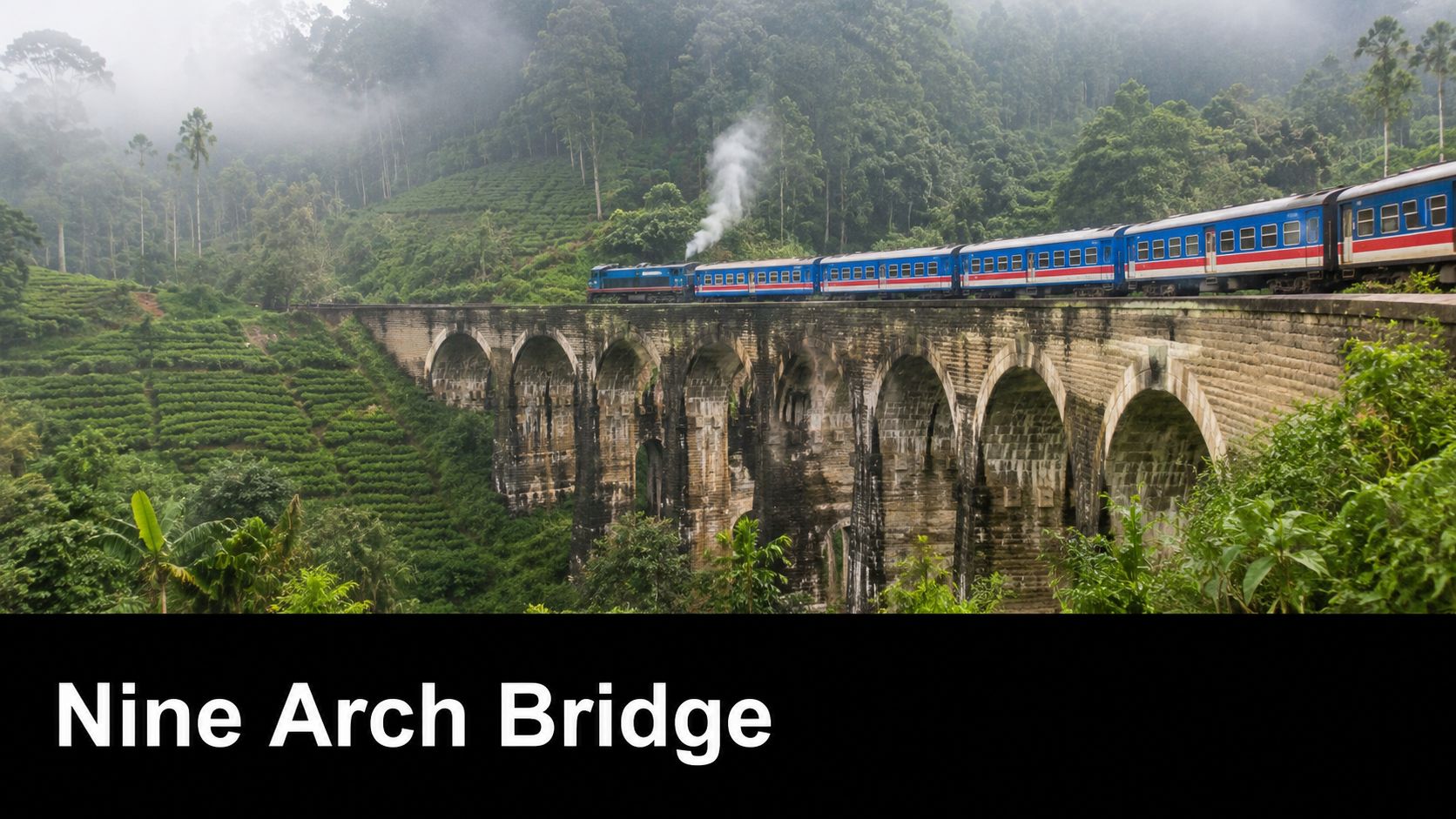
Use Ella for access, not performance
The common mistake is to arrive at the bridge at peak hours, stand shoulder to shoulder with day-trippers, and build the schedule around one train pass. That is poor use of Ella. The better version starts early, uses a local fixer or guide who knows the quieter approach paths, and pairs the bridge with a private breakfast, a lesser-used tea visit, or a waterfall stop timed around crowd movement rather than internet checklists.
For a network like Haute Black, Ella works best as a customized hill-country insert. One strong option is a short private rail experience on the scenic line with reserved positioning, followed by off-peak bridge access and lunch at a discreet estate or design-led retreat. Another is to skip the performative train photo entirely and focus on walking routes, high viewpoints, and a hosted afternoon that keeps you out of the town-center churn.
There is also a practical comfort issue here. Distances can look modest on a map and still feel slow on the ground. The roads twist, viewpoints fill up, and public timing is unreliable enough that overloading the day usually lowers the quality fast. Advisors who know Ella well protect against that by keeping the schedule narrow and by arranging transport, entry timing, and stopping points with intent.
A good Ella stay is edited.
- Treat Nine Arch Bridge as a timed access play: Go early or at a controlled off-peak window, with someone handling route choice and train timing.
- Build around privacy: Add an estate lunch, private picnic, guided walk, or wellness element so the day has texture beyond the standard photo.
- Be selective with effort: Some viewpoints are crowded enough that a quieter alternative delivers a better result, especially for travelers who value calm over bragging rights.
Ella earns its place on a high-end Sri Lanka itinerary when the logistics are curated and the obvious parts are kept brief. The goal is not to collect the same image everyone else leaves with. The goal is to use the setting, the railway heritage, and the surrounding hills to create a day that feels considered, private, and difficult to replicate without the right local access.
7. Colombo Colonial District and Luxury Shopping
Colombo decides whether the rest of a Sri Lanka itinerary feels polished or improvised. Handled well, it gives travelers a controlled start point for recovery, wardrobe adjustments, private buying, and a first read on the country's design, food, and social codes.
For luxury travel, that matters. Colombo is the one stop on the island where colonial architecture, strong hotel service, serious retail, and high-touch logistics sit close enough together to make the day efficient. I use it to solve practical needs before clients disappear into tea country, the south coast, or safari camps, where choices narrow and timing gets less forgiving.
The colonial district rewards context, not casual wandering. The better approach is a hosted route through the old commercial quarter and grand civic buildings, paired with access that the average visitor will not arrange alone. That can mean a private architectural guide, a curated antiques appointment, or a museum visit timed outside the busiest public flow. The point is not to tick off old buildings. It is to read Colombo as the island's trading front door, then connect that history to what the city buys, wears, serves, and builds now.
Shopping also works differently here than many travelers expect. Colombo is strongest for custom and curation, not brute-force retail volume. Fine jewelry consultations, private showroom access, made-to-measure menswear, resort wardrobe sourcing, and art-led home pieces all make sense in the capital. Trying to force those errands into Galle or a beach stay usually wastes half a day in transit and still produces weaker options.
One or two nights is usually enough.
That window gives room for a proper arrival, one excellent dinner, a late-start morning if needed, and a focused set of appointments that improve the rest of the journey. Through a network such as Haute Black, this is also where VIP airport handling, fast-tracked hotel check-in, security-aware driving, and discreet personal shopping support can be arranged with the least friction. For principals, families traveling with staff, or advisors managing complex preferences, Colombo offers the highest level of control.
The trade-off is simple. Colombo is useful more than it is escapist. Travelers expecting romance on the scale of the hill country or drama on the scale of Yala often underrate it. Travelers who value precision usually get it immediately. Used properly, Colombo is not a filler stop. It is the operational and stylistic reset that makes the rest of Sri Lanka feel considered, private, and far better executed.
8. Arugam Bay and East Coast Living
Arugam Bay gives Sri Lanka a second beach identity, and experienced travelers should treat it that way. The south is easier, more polished, and better supplied. The east offers a stronger sense of release. Days open up, the crowd skews more independent, and the right setup turns that relaxed rhythm into a high-end stay rather than a compromise.
The appeal starts with water, but it does not end there. Arugam Bay's peak season runs from May to October, with over 15 surf breaks within a 10-kilometer stretch and international competitions attracting athletes from more than 30 countries annually. That density gives the coast its pulse. Even guests who never paddle out benefit from the energy, the wide beaches, and the fact that the day naturally organizes itself around tide, light, and weather.
This is a place to curate carefully.
Arugam Bay works best for travelers who value privacy, informality, and strong local knowledge over old-school ceremonial service. Families with older children, couples who surf or want to learn properly, and repeat Sri Lanka visitors usually understand it fastest. Guests expecting the fully insulated feel of a major southern resort often prefer to keep the east coast shorter or skip it altogether.
Property choice decides the outcome. A well-run villa or small design-led hotel with proper staffing, good food, and transport handled in advance can feel wonderfully private. A trendy beachfront stay chosen for buzz alone can leave you exposed to road noise, thin service, and a beach-town scene that feels more public than intended. That trade-off matters here more than in Galle or the hill country.
The best itineraries also leave room. Arugam Bay rarely improves with packed schedules. A strong version of this stop is simple: dawn on the beach, a private surf session timed to conditions, a slow lunch back at the house, then yoga, massage, or pool time before dinner. Through a network such as Haute Black, that simplicity can be sharpened with private instructors, a villa buyout, discreet security-aware transfers, chef-led dining, and side trips arranged around guest energy rather than fixed departure times.
There is also a wider east coast story available for travelers who want more than surf. The region can be shaped into a quieter coastal chapter with lagoon outings, birdlife, lesser-known beaches, and early access to the best breaks before the public lineup builds. Done well, Arugam Bay stops feeling like a backpacker town with a few nice rooms and starts reading as a seasonal insider address.
Arugam Bay is selective by nature. That is part of its value. For the right traveler, it delivers an east coast chapter that feels loose, current, and highly personal without losing control of the details.
9. Yala National Park Safari Experiences
Yala can deliver the most exciting wildlife chapter in Sri Lanka. It can also deliver the noisiest and least refined if it is handled like a standard sightseeing stop. The difference comes down to access, timing, and field discipline.
The park's reputation rests on leopard sightings, but serious travelers should read that as possibility, not guarantee. The better reason to include Yala is range. Dry forest, scrub, lagoons, and coastline create a safari that feels varied even across a short stay, with elephants, crocodiles, birdlife, sloth bears in season, and long stretches where the value is in tracking and interpretation rather than a single dramatic sighting.
Safari in Sri Lanka rewards precision
A poor Yala day usually follows a familiar pattern. Too many vehicles enter at the same gate, too many drivers chase the same radio call, and the morning turns into a queue with engines idling near the sighting. That is not a wildlife experience worth paying for at the top end.
A strong Yala program is built differently. Use a well-maintained private jeep, a naturalist with real field sense, and a lodge or tented camp that can adjust drive times around conditions rather than forcing every guest into the same schedule. Through a network such as Haute Black, that can mean priority handling from arrival, a top tracker-naturalist pairing, private bush breakfasts in permitted areas, sundowners set up back at camp rather than in a crowded public spot, and a stay chosen for access and privacy rather than social media profile.
The trade-off is simple. Properties closest to popular park entrances save drive time but often sit closer to the mainstream safari circuit. More secluded camps and higher-touch lodges can offer a quieter rhythm, stronger guiding, and better recovery between drives, but they require stricter logistics and early confirmation in peak periods. For clients who care about the quality of the day, that is usually the right compromise.
Yala also works best as part of a shaped southern route, not as an isolated detour. Pair it with the tea country, the south coast, or a private coastal hideaway, and the contrast becomes part of the appeal. Cool highlands, then wildlife, then the Indian Ocean is one of the cleanest itinerary arcs in Sri Lanka.
A good Yala safari feels calm, observant, and intelligently paced.
Plan at least two nights. That gives room for multiple drives, a reset in the middle of the day, and the option to adapt if weather, sightings, or traffic conditions change. A rushed in-and-out visit turns Yala into a box-ticking exercise. Handled properly, it becomes one of the island's most convincing examples of why luxury in Sri Lanka is really about judgment, access, and control of pace.
10. Dambulla Cave Temple Complex and Cultural Heritage
Dambulla is where Sri Lanka's cultural story becomes intimate. Sigiriya announces power from a distance. Dambulla rewards close attention, quiet pacing, and the right guide. For travelers building a serious cultural route, this is not a secondary stop. It is the place that explains how devotion, patronage, and artistic continuity shaped the island.
The value of Dambulla lies in what happens inside the caves. Light is low, the surfaces are layered, and the iconography can blur into visual overload without interpretation. A strong scholar-guide changes the visit completely. Instead of walking past rows of Buddha images, guests begin to read differences in posture, chronology, restoration, and royal sponsorship. That is the difference between seeing a famous temple and understanding why it still matters.
Dambulla also works best as a curated experience, not as a tired add-on after Sigiriya. I usually recommend visiting early in the day, with enough time to pause rather than rush from cave to cave. Through a network such as Haute Black, that can mean a properly briefed cultural specialist, well-timed arrivals that avoid the busiest flow, and a day built around attention span rather than road logistics.
There is a real trade-off here. Pairing Dambulla with Sigiriya in one day is efficient and often sensible for tight itineraries, but it can flatten both sites into a checklist if the heat, climb, and transfers are poorly sequenced. A stronger version is to base nearby, do Sigiriya at first light or late afternoon, and give Dambulla its own quieter window. The reward is better concentration and a much richer read on central Sri Lanka's sacred and political history.
Dambulla belongs to Sri Lanka's living religious geography as much as it does to any luxury itinerary. That matters. The site feels active, observed, and locally meaningful, which gives it a very different energy from monuments preserved mainly for visitors.
A few practical rules improve the visit:
- Go early: Cooler temperatures and lighter foot traffic make the caves easier to absorb.
- Dress properly: Covered shoulders and legs are part of temple protocol and should be treated with respect.
- Use an expert guide: The murals and sculpture repay explanation. Without it, much of the nuance is lost.
- Protect the afternoon: Pair Dambulla with rest, a private lunch, or a well-planned transfer, not another demanding cultural push.
For travelers who want Sri Lanka with depth, Dambulla is one of the clearest answers. It offers atmosphere, scholarship, and living heritage in a form that still feels personal. Handled well, it becomes less a stop on a list and more a key to the island's interior life.
Top 10 Sri Lanka Destinations Comparison
| Destination | 🔄 Implementation Complexity | ⚡ Resource Requirements | 📊 Expected Outcomes | 💡 Ideal Use Cases | ⭐ Key Advantages |
|---|---|---|---|---|---|
| Sigiriya Rock Fortress | 🔄 Moderate, 200m climb, timed-entry logistics | ⚡ Medium, guide, tickets; VIPs may use helicopter | 📊 High cultural & photographic payoff; panoramic views · ⭐⭐⭐⭐ | 💡 Sunrise photography, VIP guided ascents, combine with Dambulla | ⭐ Iconic UNESCO site, frescoes, engineered gardens |
| Galle Fort | 🔄 Low, walkable but preservation limits vehicle access | ⚡ Low–Medium, walking tours, boutique hotel bookings | 📊 Strong cultural-luxury experience and coastal vistas · ⭐⭐⭐⭐ | 💡 Romantic stays, art & culinary itineraries, sunset rampart walks | ⭐ Intimate colonial architecture with in-fort luxury hotels |
| Kandy Temple of the Tooth Relic | 🔄 Medium, strict protocols, access restrictions | ⚡ Low–Medium, guide, proper attire; possible VIP arrangements | 📊 High spiritual and ceremonial value; living pilgrimage site · ⭐⭐⭐⭐ | 💡 Pilgrimage, exclusive cultural briefings, after-hours access | ⭐ Sacred relic, ornate craftsmanship, active devotional ceremonies |
| Mirissa Beach & Southern Hideaways | 🔄 Low, simple beach logistics; seasonal variability for whales | ⚡ Medium, boat charters, resort transfers; optional helicopter | 📊 High marine wildlife viewing and relaxation; season-dependent · ⭐⭐⭐⭐ | 💡 Whale watching, luxury beach retreats, diving/snorkeling | ⭐ Marine wildlife, exclusive beachfront resorts, private charters |
| Nuwara Eliya Hill Station & Tea Plantations | 🔄 Medium, winding mountain roads, altitude effects | ⚡ Medium, private transport, estate guides, comfortable lodging | 📊 Strong scenic and tea-focused experiences; cool-climate retreat · ⭐⭐⭐⭐ | 💡 Tea estate tastings, sunrise hikes, colonial hotel stays | ⭐ Premier tea region, Victorian charm, cooler climate |
| Ella & Nine Arch Bridge | 🔄 Low–Medium, train scheduling and hiking coordination | ⚡ Low–Medium, local guides, train or private transfers | 📊 Excellent photography and hiking opportunities; authentic village feel · ⭐⭐⭐⭐ | 💡 Scenic train journeys, dawn photography, waterfall hikes | ⭐ Iconic bridge, scenic rail route, intimate highland atmosphere |
| Colombo Colonial District & Luxury Shopping | 🔄 Low, urban access but traffic and timing considerations | ⚡ High, luxury shopping, fine dining reservations, concierge services | 📊 Strong urban-luxury impact; connectivity and cultural access · ⭐⭐⭐ | 💡 Arrival/departure hub, bespoke shopping, museum tours | ⭐ Connectivity, high-end amenities, significant cultural institutions |
| Arugambe Beach & Positano-Style Living | 🔄 Low, beach-town logistics; seasonal crowding at peak | ⚡ Medium, villa rentals, surf instructors, wellness bookings | 📊 High lifestyle and wellness experiences; surf culture focus · ⭐⭐⭐ | 💡 Surf holidays, wellness retreats, boutique art & dining | ⭐ World-class surfing, bohemian-chic vibe, wellness offerings |
| Yala National Park Safari Experiences | 🔄 Medium, permits, rough internal roads, expert guides required | ⚡ High, private safari vehicles, luxury camps, seasoned naturalists | 📊 Very high wildlife viewing potential (leopards); conservation engagement · ⭐⭐⭐⭐ | 💡 Wildlife safaris, photography expeditions, conservation trips | ⭐ Exceptional leopard density, diverse fauna, luxury safari camps |
| Dambulla Cave Temple Complex | 🔄 Low–Medium, respectful protocols and some stair access | ⚡ Low, guide recommended, modest access needs | 📊 High archaeological and spiritual value; extensive murals · ⭐⭐⭐⭐ | 💡 Cultural tours, art-history study, pair with Sigiriya visit | ⭐ Extensive ancient murals and statues; UNESCO heritage site |
Orchestrating Your Sri Lankan Masterpiece
Sri Lanka rewards precision far more than volume. The strongest itineraries are not the ones that try to cover every headline stop. They are the ones that control pace, sequence, access, and recovery time so the island feels coherent rather than crowded.
That changes the way a serious traveler should plan. Sigiriya earns an early start and, for the right schedule, a helicopter arrival that cuts road fatigue and gives the fortress its proper dramatic reveal. Galle works best with time to settle into the fort after day visitors leave. Yala depends less on lodge size than on the quality of your naturalist and the discipline of your game-drive timing. Ella is often over-allocated. Colombo is often underused. Good judgment matters more here than sheer distance covered.
Selectivity also has a practical side. Sri Lanka's visitor numbers and travel spending have rebounded strongly, as noted earlier, and that has real implications on the ground. Better suites book earlier. The best safari guides are not always attached to the biggest camps. Temple visits, scenic transfers, and south coast stays all improve when timing is handled around traffic patterns, weather windows, and local crowd flow rather than broad tourist assumptions.
Luxury in Sri Lanka is rarely about excess for its own sake. It is about removing friction that weakens the experience. A long inland transfer can become a short private air hop. A cultural visit lands differently when dress protocol, offering customs, and arrival hour are handled correctly in advance. A family beach stay feels more secure when the villa, driver, and coastal routing have been vetted as one plan, not booked as separate parts by separate providers.
The island has the range to support that level of travel. It also has enough variability that poor planning shows quickly.
I usually advise clients to build around two or three anchor experiences, then connect them with intention. For one traveler, that may mean Colombo, Kandy, Tea Country, and the south coast, with private museum access, a planter-led estate visit, and a fortified-house stay in Galle. For another, it is Sigiriya, Dambulla, and Yala with archaeology briefings, closed-format guiding, and a photographic safari calibrated around light rather than standard departure times. The point is not to add more. The point is to make each stop land properly.
Done well, these places to visit in Sri Lanka stop feeling like pins on a map. They become a private narrative with rhythm, contrast, and ease.
Through Haute Black, travelers, families, founders, executives, and assistants booking for principals can arrange Sri Lanka journeys with VIP hotel recognition, private aviation and helicopter support, vetted chauffeurs, villa and resort access, and the kind of insider coordination that turns a strong itinerary into one that runs exactly as it should.
Explore Our Guides


Signature Experiences