Haute Black Journal
Surprise Vacation Planner: A Luxury Insider's Guide

Marlene Azeez
Director, HauteBlack
View all articles →

# Surprise Vacation Planner: A Luxury Insider's Guide
Published August 2, 2026 by Marlene Azeez
You're probably staring at two calendars right now, one full of meetings and one full of flights, and trying to figure out how to pull off a trip that feels effortless without letting anyone catch on. That's the tension in luxury surprise travel. The more important the person, the more moving parts you have to protect, from passports and private aviation to school pickups, assistants, and board calls.
A thoughtful surprise vacation planner doesn't just hide the destination. They manage consent, timing, vendor silence, and contingency paths so the surprise lands cleanly instead of creating a mess. The market has grown large enough to prove this isn't a niche gimmick, with a report estimating the surprise-trip planning market at USD 1.42 billion in 2024 and projecting USD 5.09 billion by 2033 at a 16.8% CAGR from 2025 to 2033 (Dataintelo report). For high-touch clients, that growth reflects a simple truth, surprise travel only works when the logistics are handled with precision.
Why Surprise Vacations Defy Standard Planning
A couple's surprise weekend can be reduced to a hotel reservation and a packed bag. A luxury surprise for a UHNW traveler is a different operation entirely. Now you are coordinating private aviation, estate-level accommodations, dietary requirements, security preferences, children's schedules, and business commitments, all while keeping the traveler from seeing the wiring underneath.
The luxury paradox behind the surprise
That tension is why standard travel advice breaks down so quickly. Most consumer guidance focuses on the reveal moment, yet the work happens long before that, when an executive assistant or advisor has to make sure the trip does not collide with a board meeting, a child's exam week, or a passport issue that would have been easy to catch if the trip were not secret.
The category is large enough to confirm the demand is real, with a report estimating the surprise-trip planning market at USD 1.42 billion in 2024 and projecting continued growth through 2033 (Dataintelo report). For high-touch clients, that growth reflects a simple reality, surprise travel only works when the logistics are handled with precision.
Practical rule: the more expensive the traveler's time, the less room you have for sloppy secrecy.
Why the public guidance misses the real job
Public content often treats surprise travel like a romantic gesture. In practice, it is a confidentiality project with a hospitality finish. The trip has to be exciting, safe, executable, and invisible until the right moment.
A senior planner reads the calendar first, then the destination. That order matters. If the traveler has a sensitive week, if a nanny schedule needs to be preserved, or if the family office needs visibility into emergency access, the trip has to be designed around those realities before anyone starts shopping for villas or seat maps. The operational side is where guidance on luxury travel concierge services becomes relevant, because the core job is coordinating preference, access, and execution under one roof.

Building the Confidential Planning Framework
A strong intake starts before there's a destination, and it starts in private. The best operators don't ask, “Where do you dream of going?” They ask structured questions about budget range, trip length, past trips, mobility constraints, dietary restrictions, activity style, and the traveler's comfort level with uncertainty. That's how you preserve the surprise without gambling on fit.
What to collect before any booking exists
The smartest surprise vacation planner treats the intake as a controlled data-gathering exercise. A questionnaire is useful, but for high-net-worth clients I prefer a brief video interview when possible, because tone and hesitation often reveal more than a form. A traveler who says they want “relaxation” but lights up when speaking about museums, golf, or fine dining gives you a direction you can build around.
The intake should also capture the practical basics early. This guide to luxury travel concierge services sits naturally alongside that kind of intake process because the core job is coordinating preference, access, and execution under one roof. If you don't collect enough detail up front, you're left trying to retrofit the surprise later, and that usually means either awkward compromises or a broken reveal.
Don't ask for a fantasy destination first. Ask what would make the trip fail.
Handling identity data and keeping it quiet
Border-control details belong in the intake, not at the end of the process. NerdWallet notes that planners should obtain the traveler's full legal name, date of birth, passport copy for international travel, and Known Traveler Number for TSA PreCheck or Global Entry (NerdWallet). That information isn't glamorous, but it prevents preventable failure.
For UHNW households, secure handling matters as much as collection. Assistant teams often touch shared calendars, loyalty accounts, and inboxes, so confirmation chains need to be tightly controlled. I've seen cleaner operations when the planner owns the reservation trail from first hold to final ticketing, then releases only what's necessary at the last moment.
The reveal itself can stay elegant and restrained. The Inquirer described surprise-trip operators as sending packing and weather guidance about a week before departure, then revealing destination details only in a sealed envelope shortly before travel (The Philadelphia Inquirer). That sequence works because it answers the questions the traveler needs while keeping the emotional reveal intact.
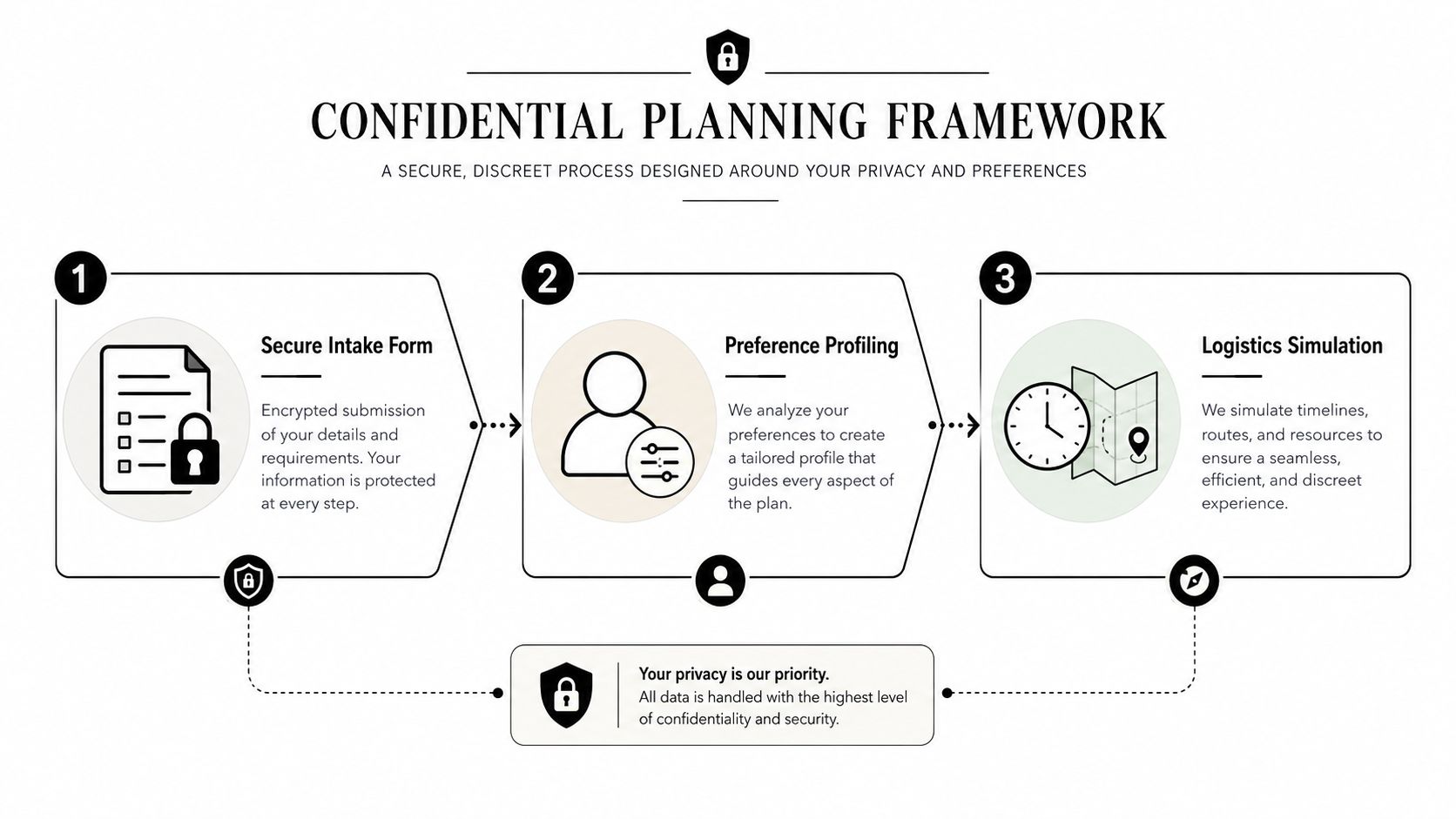
Vendor Coordination Under Secrecy Protocols
The moment a surprise trip leaves the planner's desk, confidentiality becomes an operations problem. Every vendor you involve, from chauffeurs to hotels to aviation teams, becomes a potential leak point if you don't control how information moves. The New York Times described this model as organizing vacations with varying levels of specificity while only disclosing key trip details at the last minute (The New York Times).
How to brief vendors without giving away the game
Private aviation is where many surprises go sideways. If the traveler might overhear an aircraft tail number, a route, or an airport assignment, the secret can unravel early. The cleanest approach is to brief only the people who need the minimum possible information, then stage the rest of the details close to departure. That usually means separating what the traveler must know to travel legally and comfortably from what only the planner and a tiny operations team need to know.
The same discipline applies at hotels and estates. Property managers often have to coordinate arrivals, but they don't need the whole backstory. They need timing, guest names, room requirements, and any special handling notes. The less you say, the less there is to leak, and the easier it is to keep the experience polished.
The trade-off between secrecy and service
Total secrecy sounds romantic until it starts hurting service quality. A traveler still needs weather guidance, packing notes, and passport awareness close to departure, and the public-facing advice around surprise travel repeatedly emphasizes those essentials. The useful distinction is that essentials are not the same as destination disclosure.
A strong planner also watches for confirmation traps. Shared credit cards can push notifications. Loyalty numbers can trigger emails. Assistant calendars can show location clues. In luxury travel, secrecy is less about one dramatic trick and more about eliminating tiny exposures across several systems.
Confidentiality isn't hiding everything. It's revealing the right things to the right person at the right time.
Private jet charter services definitive 2026 guide belongs in the same mental toolkit because aviation coordination has to be handled with the same discipline as the rest of the trip. If the aircraft, hotel, and transfer team are not aligned on what the traveler can see, the surprise is already leaking.
Designing Reveal Moments That Land
A reveal only feels magical when the planner has already done the hard operational work. I've seen private jet reveals at boarding, sealed-envelope reveals at an estate, and quieter moments where the traveler learns the destination over dinner the night before departure. The right choice depends on the traveler, not on what looks dramatic in a social post.
Match the reveal to the person, not the script
Some clients love suspense. Others want enough notice to settle work, childcare, or medication routines before the trip begins. If the traveler is highly organized, a reveal too late can feel disrespectful rather than exciting. If the traveler loves theater, a staged reveal can become the emotional high point of the entire experience.
The best reveal moments also stay consistent with the intake. If the traveler has mobility constraints, the reveal can't be built around a last-minute stair-heavy arrival or a surprise connection that creates stress. The reveal should feel surprising, not destabilizing.
The most useful research backs that balance. In one experiential-service study, the surprise condition produced higher utility one week later than anticipation, with M = 4.453 versus M = 4.069, and a significant design-strategy effect of F(1,394) = 9.621 (Calhoun NPS study). The practical takeaway is simple, surprise works best when preferences are specified well enough that the traveler feels delighted, not boxed in.
Why the reveal should never be the first real decision
The reveal can be theatrical, but it should never carry the burden of poor planning. If the hotel isn't right, if the route is awkward, or if the timing ignores the traveler's life, the reveal can't save the trip. A sealed envelope only lands when the planner has already solved the unglamorous parts.
Haute Black's Maldives private island experience is a good example of the kind of itinerary where reveal timing, transfer timing, and privacy all have to be coordinated carefully. The destination can be extraordinary, but the experience still depends on whether the logistics respect the traveler's pace and preferences.

Contingency Planning for High-Stakes Travel
Surprise travel gets risky fast when the traveler's life is already full. A missed business call, a passport issue, a medical concern, or a family obligation can turn a lovely idea into a problem that affects more than one person. That's why contingency planning isn't optional in luxury surprise work, it's the part that protects the relationship behind the trip.
Build for conflict before it happens
The weakest surprise plans assume the traveler is fully available and fully flexible. That's not how UHNW travel usually works. Real clients have executive calendars, children's activities, elder-care responsibilities, and standing commitments that can't just disappear because the itinerary is exciting.
A good planner anticipates the obvious pressure points. If the traveler might need to take a business call, the itinerary needs a quiet window. If a passport is near expiration, it has to be checked early. If a client has mobility or dietary needs, those details need to shape the trip from the start, not as a last-minute patch.
The gap in public guidance is real. Most surprise-trip advice focuses on dream destination, timing, budget, and the reveal moment, but doesn't deal seriously with accessibility, medical needs, aging parents, kids, or multi-generational logistics. That's where high-stakes planning diverges from the mainstream advice economy.
Create backup paths that stay invisible
The safest planners run secondary options in parallel, even if the traveler never sees them. A different arrival window, an alternate room assignment, or a quieter transfer plan can save the trip if something shifts. The point isn't to over-engineer every detail, it's to make sure a single disruption doesn't expose the whole surprise.
Communication access matters too. When a surprise trip crosses time zones, the planner needs a clean chain for urgent updates that doesn't rely on guesswork. If a family office, assistant, or security team is involved, everyone has to know exactly who can approve a change and who should never receive the details.
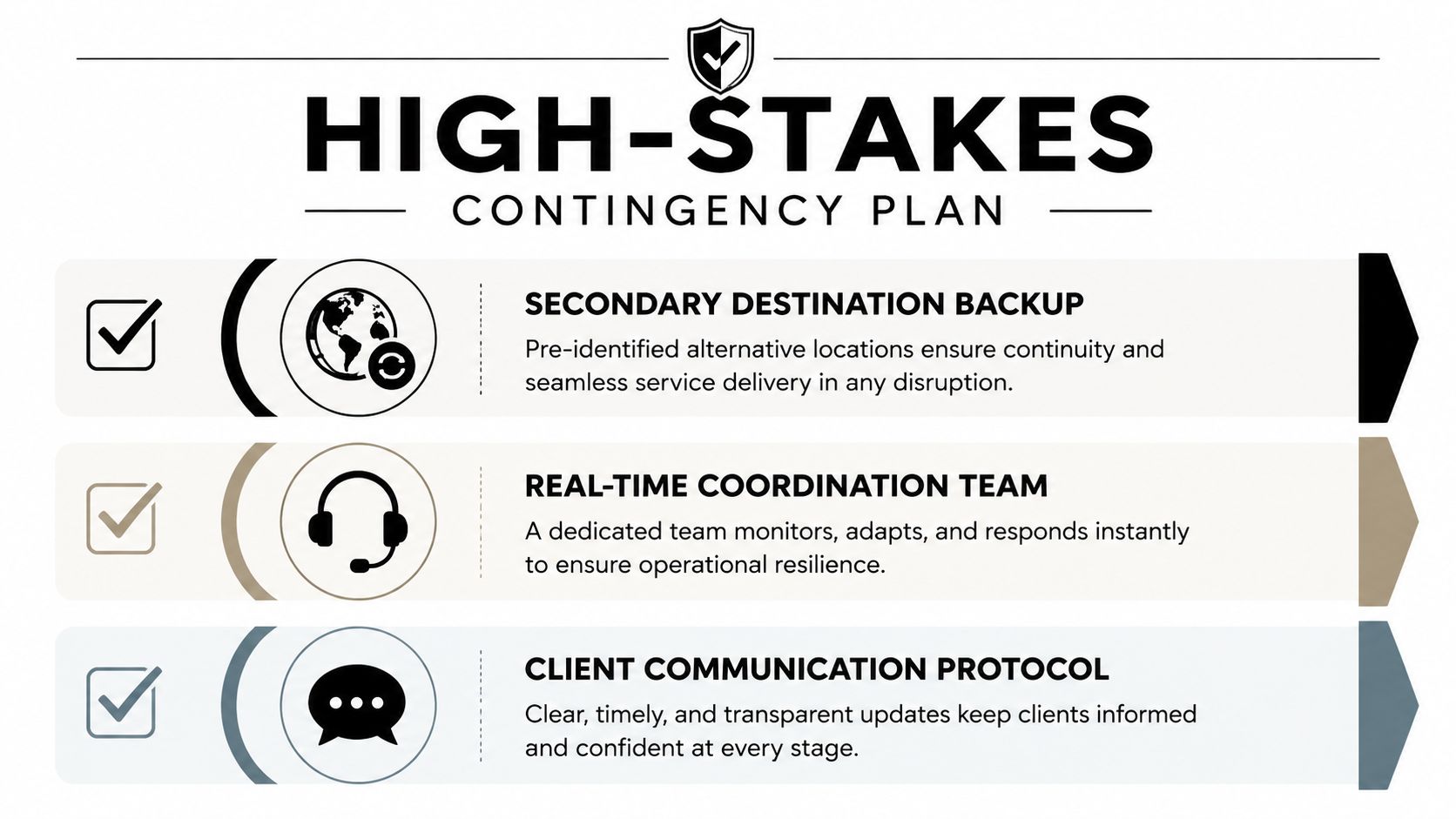
Practical Templates and Planning Checklists
A usable surprise vacation planner process lives in documents, not vibes. If you don't have a clean intake form, a vendor timeline, and a contingency matrix, you're relying on memory at the exact moment memory becomes unreliable. That's especially true for affluent households where assistants, shared calendars, and overlapping trips can create confusion fast.
Confidential intake fields that actually matter
The best intake template is short enough to complete, but detailed enough to protect the trip. I would always include traveler names as they appear on documents, date flexibility, dietary restrictions, mobility notes, sleep preferences, likely work conflict windows, and whether the traveler is comfortable with air, rail, road, or a mix of all three.
I also ask about privacy boundaries in plain language. Who can see confirmations, who can receive calls, and what should never be left in shared inboxes? Those questions feel administrative, but they prevent the kind of accidental disclosure that ruins a reveal weeks before departure.
Vendor timing and risk by stage
A clean working checklist can be organized by timeline rather than by vendor category. Early planning is for profile gathering and feasibility checks. Mid-planning is for holds, quiet vendor outreach, and backup routing. Final planning is for document verification, packing guidance, and the reveal sequence.
A few practical items belong on every version of that checklist:
- Security of records: keep passport copies, loyalty numbers, and confirmation numbers in one controlled place.
- Disclosure discipline: tell each vendor only what they need to execute their role.
- Emergency access: make sure one trusted person can act if the traveler's phone is unavailable.
- Calendar review: confirm the trip doesn't collide with business travel, school events, or family obligations.
- Packing logic: issue weather and clothing guidance before reveal day, not after.
Where this fits with broader luxury planning
For teams already managing celebrations, the structure will feel familiar. A strong hen party planning checklist has the same underlying logic, clear responsibilities, timing discipline, and the elimination of avoidable surprises. The difference in luxury surprise travel is that the privacy and risk stakes are higher, so the checklist has to cover consent and access, not just fun.
A final template should include a consent boundary note. If the traveler is being surprised by a spouse, friend, or adult child, make sure the planner knows what can be handled without disclosure and what must be approved directly. That single discipline protects both the trip and the relationship around it.
For clients who want this handled discreetly and end to end, Haute Black builds bespoke travel through its luxury travel and concierge platform, including custom booking support, premium hotel and villa coordination, and private aviation touchpoints. If you're ready to plan a surprise trip that respects privacy, timing, and the realities of an executive life, visit Haute Black and start a conversation with a team that understands high-touch execution.
Explore Our Guides


Signature Experiences


